From Papyrus Waste to Sanitary Pads: MakaPads in Uganda
 Uganda produces large quantities of papyrus and other plants found in wetlands. However, for many years, their by-products were ignored while imported sanitary pads dominated the market. For many girls and women, especially in rural areas, those imported pads are too costly or hard to find, contributing to widespread unmet menstrual hygiene needs.
A national audit published in January 2025 found that 64% of female students miss school regularly because sanitary materials and proper water, sanitation and hygiene (WASH) facilities are lacking. In this context, MakaPads emerged as a social enterprise, through which local engineers and social entrepreneurs began producing sanitary pads from papyrus reeds and recycled paper. MakaPads’ aim was straightforward: create a hygiene product affordable enough for low-income families while relying on materials available in Uganda itself.
MakaPads Project
The manufacturing remains deliberately low-tech and locally based. Papyrus stems are harvested from wetlands, stripped into fibers or pulp, mixed with recycled paper and shaped into absorbent pads. The finished pads are reportedly up to 95% biodegradable, chemical-free and cost roughly half as much as many imported pads available on the Ugandan market.
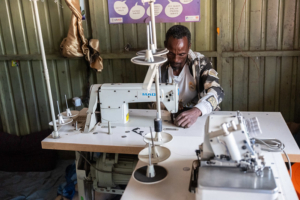
MakaPads has also provided employment and economic opportunity, particularly for women from vulnerable backgrounds. According to the project’s own documentation, production at its peak involved as many as 225 people, including both skilled and unskilled workers, as well as refugees, across various factories and stages of production. In one refugee camp factory at Kyaka II, a 2015 report describes 76 women employed, producing more than 800 pads daily and scaling production from 30,000 pads in 2009 to more than one million in 2014.
Women involved in production reported earning enough to cover their children’s school fees or invest in small assets, such as land or motorcycles, illustrating the tangible economic benefits of the project.
Social Impact and Challenges
On the social side, users and distributors have reported that locally made pads have helped reduce reliance on improvised alternatives, such as cloth and rags, which are often uncomfortable, unhygienic and stigmatizing. One user in the camp, Evelyne Banyamisa, reported that access to MakaPads allowed her to maintain consistent school attendance and participate fully in daily activities during her menstrual cycle.
However, the initiative has faced challenges. The UNHCR contract to supply pads to refugee camps was discontinued in 2015 after a quality inspection by the Uganda National Bureau of Standards (UNBS) revealed deficiencies. Some users also noted limitations, including leakage on heavier flow days, narrow pad width and occasional odor issues, highlighting the ongoing need to balance affordability, accessibility and product quality.
Final Remarks
Despite these setbacks, MakaPads remains a rare example of a social enterprise that simultaneously addresses menstrual health, local employment and environmental sustainability through low-cost, biodegradable sanitary products. Nevertheless, MakaPads demonstrates what community-rooted, resource-aware innovation can achieve: a model that combines menstrual hygiene with local manufacturing, environmental sustainability and economic opportunity. In a country where period poverty affects the majority of schoolgirls, low-cost, biodegradable pads made from native plant waste stand out as a hopeful, home-grown solution.
– George Horberry
George is based in York, UK and focuses on Technology and Global Health for The Borgen Project.
Photo: Flickr
