• Link to X
  • Link to Facebook
  • Link to Instagram
  • Link to TikTok
  • Link to Youtube
  • About
    • About Us
      • President
      • Board of Directors
      • Board of Advisors
      • Financials
      • Our Methodology
      • Success Tracker
      • Contact
  • Act Now
    • 30 Ways to Help
      • Email Congress
      • Call Congress
      • Volunteer
      • Courses & Certificates
      • Be a Donor
    • Internships
      • In-Office Internships
      • Remote Internships
    • Legislation
      • Politics 101
  • The Blog
  • The Podcast
  • Magazine
  • Donate
  • Click to open the search input field Click to open the search input field Search
  • Menu Menu

Archive for category: USAID

Topics covering about USAID

USAID

USAID Provides Restitution for Victims of Agent Orange

Victims of Agent Orange
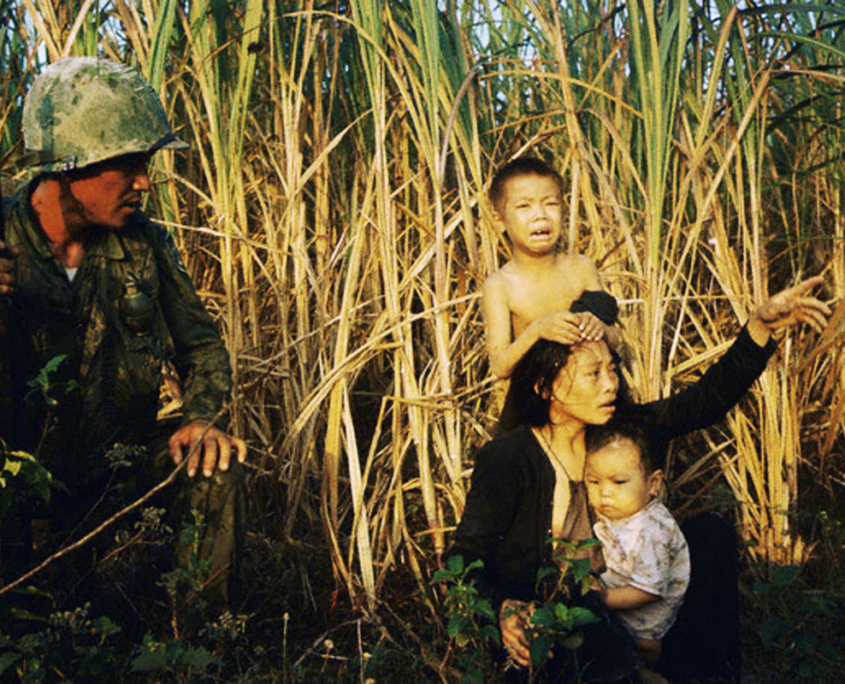
Countless Vietnamese people fell victim to the Vietnam War, which devastated Vietnam for two decades. Millions not only fell victim to conventional weapons of war, but millions have also suffered from the unconventional methods of that war, namely herbicidal warfare. Decades later, the United States government is working toward rectifying that wrong by assisting those who have suffered from the gas. Primarily, the U.S. is working through the United States Agency for International Development (USAID) by providing restitution for victims of Agent Orange.

Herbicidal Warfare

The Vietnam War has its roots in post-World War II when Vietnam temporarily split into two separate entities. Communist guerillas controlled the North, while the French Backed Emperor Bao Dai controlled the South. As the conflict between the two grew, the French became further entwined in the conflict, eventually leading the fight. Although a small, largely untrained force, the communist group, led by the charismatic leader Ho Chin Minh, successfully fought the French, winning the decisive Battle of Dien Bien Phu in 1954. Both sides signed the treaty at the Geneva Conference in 1954 and created an officially split Vietnam with promises of a nationwide election and reunification in 1956.

Although U.S. involvement in Vietnam was initially marginal, the CIA provided training and equipment to the South government, then controlled by Ngo Dinh Diem. Afterward, the U.S.’s involvement quickly escalated. After the torpedoing of two U.S. warships in the Gulf of Tonkin, the United States began bombing campaigns and eventually deployed over 2.7 million soldiers throughout the war.

Agent Orange in the Vietnam War

The war officially lasted from 1955 to 1975, and over the two decades, nearly 3 million Vietnamese died, 2 million of whom were civilians. Although conventional warfare was primarily responsible for these deaths, herbicidal warfare provided its contributions. The United States dropped 20 million gallons of herbicides across the country, subjecting over 4 million Vietnamese to the toxic compounds. Primarily, the U.S. government used Agent Orange, an orange herbicide comprising two different types of herbicides, 2, 4-D and 2, 4, 5-T, containing the poisonous chemical compound dioxin.

Although the U.S. stopped using dioxin in 1971, Agent Orange has had disastrous effects on the Vietnamese population. Everything from multiple forms of cancers, congenital disabilities, soft tissue sarcomas and peripheral neuropathy links to Agent Orange. The effects are widespread. Of the 4.8 million people across Vietnam that have had exposure to the herbicide, 3 million are suffering deadly diseases as a result. Tragically, the herbicide spans generations as many born two generations removed from the conflict suffer from congenital disabilities and health problems directly from Agent Orange. The lifespan of dioxin is complicated, but in human bodies, it can last up to 20 years, while it can last more than 100 years in sediments of bodies of water. It has contaminated soil, water supplies and food.

United States Liability

Although the U.S. government has provided over $197 million in payments to Vietnam veterans, providing restitution to Vietnamese citizens has been more complicated. The U.S. government has yet to apologize or accept responsibility for the after-effects of the herbicide. Even so, for the sake of strong bilateral ties with the U.S., much of the blame has gone to the chemical companies involved in the production of Agent Orange. However, companies insist that the responsibility falls on the U.S. government.

Vietnamese organizations have made multiple attempts to receive financial reparations for the Agent Orange that the U.S. used during the war. In 2004, a Vietnamese group sued over 30 companies involved in the production and manufacturing of Agent Orange; they alleged that the chemical agent’s use constituted a war crime. A Brooklyn district court dismissed the case in 2005.

Restitution in Vietnam

Nevertheless, as Vietnam and the U.S. improve their bilateral relations through USAID, the U.S. has taken on the initiative to help clean up the residual dioxin. In 2019, national security advisor Robert O’Brien announced that over $110 million of the USAID budget would go toward cleaning up the primary site for the storage of Agent Orange during the war, Bien Hoa Airbase Area. The joint project between USAID and Vietnam’s Air Force Air Defense Command will take up to 10 years. USAID is building upon the successful 2018 project with the Vietnamese government to clean up the area around the Da Nang Airport.

More so, it is providing relief for the victims of Agent Orange. The Obama Administration started this with the Trump Administration continuing the program. Afterward, the Biden Administration renewed the program. The U.S. Agent Orange/Dioxin Assistance to Vietnam report from the Congressional Research Service claims that aid for health-related services and assistance began being appropriated to USAID to use in Vietnam in 2009 but has continued with the dedication of a total of $94 million for just health-related services since 2011. Each year, the total has increased, apart from 2011 and 2013 when it dropped by $200,000. The most recent appropriations came in December 2020, dedicating $14.5 million to health-related activities. However, the majority of the appropriations went toward funding medical infrastructure and capacity building.

Looking Forward

More recently, USAID has moved to direct assistance. In April 2019, USAID announced a memorandum of intent to support people with disabilities. Shortly after, USAID set up staff in the country to collect information to understand the problem better. With this knowledge, the organization announced a grant to fund initiatives to improve the quality of life for those dealing with dioxin’s adverse effects. As Xuan Dung Phan describes it, “USAID will work with local NGOs to provide hospital-based/home-based rehabilitation, palliative care, home modifications, training, personal assistance services and assistive products.”

Although the U.S. government has refused to accept responsibility, through USAID, it has provided life-changing service for the millions of Vietnamese dealing with the residual consequences of its Agent Orange spraying during the Vietnam War. Thus, USAID is providing restitution for victims of Agent Orange.

– Vincenzo Caporale
Photo: Flickr

May 17, 2021
https://borgenproject.org/wp-content/uploads/borgen-project-logo.svg 0 0 Kim Thelwell https://borgenproject.org/wp-content/uploads/borgen-project-logo.svg Kim Thelwell2021-05-17 16:15:262024-05-30 07:56:18USAID Provides Restitution for Victims of Agent Orange
USAID

How the US Helps Reconstruction in Haiti

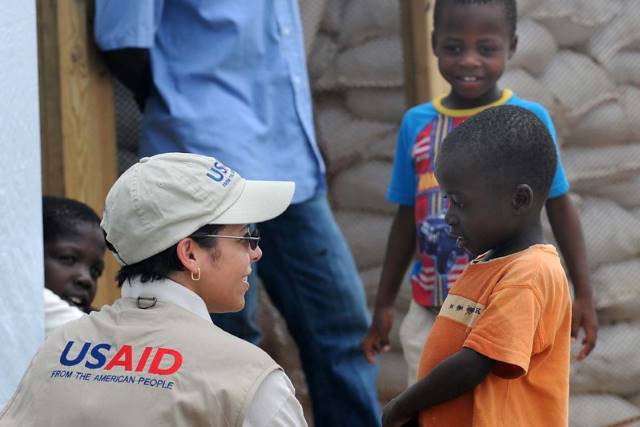
Reconstruction in HaitiHaiti is a country in the Caribbean with a population of 11.2 million. In 2010, more than 200,000 Haitians died in a 7.0 magnitude earthquake that also destroyed much of the country’s properties and infrastructure. Destruction from the earthquake has since been compounded by other natural disasters, unrest and disease outbreaks. The United States allocated USAID funding for reconstruction in Haiti back when the crisis first developed. In April 2021, a new report by the Government Accountability Office (GAO) examines how effective this aid was in helping Haiti recover. The report analyzes $2.3 billion of aid over the course of 10 years. The chairman of the House Foreign Affairs Committee, Rep. Gregory Meeks, believes that this report will help identify which U.S. development projects best help Haitian people. In turn, this report has the potential to shape how U.S. aid in Haiti changes going forward.
Overview of Past Aid

The GAO found that USAID dispersed 89% of the total allocated aid to Haiti, with a canceled project to build a new port accounting for much of the remaining portion. In addition to operating expenses, the funding spent on Haiti fell into several categories. Health and disabilities as well as economic and food security made up the majority of spending at a combined 60%. Cholera outbreaks and droughts made these two sectors a high priority for funding. However, the aid that helped Haiti recover from cholera and food insecurity means a smaller portion of USAID funding focused on the physical infrastructure needed for reconstruction in Haiti.

Future USAID Projects

The U.S. Government continues to allocate aid in support of Haiti. Three months before the GAO  published the April 2021 report, the  United States announced additional developmental assistance aid to Haiti worth almost $76 million. U.S. ambassador to Haiti, Michele Sison, commended the work USAID has done so far in advancing health, education, food security and Haiti’s economy. Future projects through the most recently allocated aid will attempt to further progress.

In April 2020, the U.S. committed $16.1 million to exclusively address the COVID-19 outbreak in Haiti. Due to the urgent nature of crisis outbreaks in Haiti, the U.S. Government developed a rapid aid response for the country’s most pressing needs.

The World Bank

Other development agencies also responded directly to the relief required as a result of the earthquake. The World Bank responded to Haiti’s crisis by forming the Infrastructure and Institutions Emergency Recovery Project. This gave special attention to rebuilding vital institutions and infrastructure as part of reconstruction in Haiti. The overall aim was to benefit long-term recovery. These reconstruction activities helped more than 1.1 million Haitians as of May 2019. While the $11.3 billion required to reconstruct the damage from the earthquake far eclipses USAID funding for Haitian aid, the United States can more effectively impact this process by shifting the focus of aid.

The Road Ahead

More than 10 years ago, the country of Haiti experienced a devastating earthquake and USAID formed an aid relationship to assist in the country’s recovery. Since then, the U.S. Government involved itself heavily in improving Haiti’s dire needs when new crises emerge. Through the efforts of the United States and other fundamental organizations, significant progress has been made with regard to reconstruction in Haiti. Further efforts will build the foundation for more long-term recovery.

– Viola Chow
Photo: Flickr

April 30, 2021
https://borgenproject.org/wp-content/uploads/borgen-project-logo.svg 0 0 Kim Thelwell https://borgenproject.org/wp-content/uploads/borgen-project-logo.svg Kim Thelwell2021-04-30 04:49:352024-05-30 22:23:31How the US Helps Reconstruction in Haiti
Global Poverty, USAID

Understanding USAID’S Self-Reliance Framework

USAID's Self-Reliance Framework
In 2017, under then-administrator Mark Green of the United States Agency for International Development (USAID), USAID reorganized its mission of development and aid. In a break from the past, administrator Green initiated a fundamental reorganization. He proposed a mission of providing aid for the very purpose of eventually ending any reliance or need for developmental and humanitarian assistance offered by USAID. Understanding USAID’s self-reliance framework begins with understanding USAID’s mission and new measurement system to end the need for international aid.

Purpose of USAID’S Mission

While USAID’s capabilities and knowledge have not changed, its beliefs about its mission and approach have. In the words of its policy framework, “This approach marks a new direction for USAID, but draws on our deep experience and the lessons we have learned.” Illustrating its shift in thinking, USAID explains its assistance is most effective and compassionate when strengthening its partners’ abilities to provide for themselves and their citizens.

Looking forward to the future, the journey to self-reliance (J2SR) expresses recognition of two opportunities. It works to see the possibility for ending the need for foreign assistance by pointing to the fall in global poverty, improvements in health infrastructure, greater gender parity and safety across the globe. In addition, it also points to continuing barriers and moving challenges impeding progress and self-reliance.

USAID’s Measurement System

Subsequently, helping USAID in ending the need for foreign assistance is a set of concretely defined concepts and measurable figures. They address USAID’s full reorientation towards its mission statement of “ending the need for foreign assistance.”

As a keystone metric, self-reliance gains its weight through the measurement of two factors. The first is capacity. This acts as a measurement of a given country’s capacity to deal with its own developmental challenges. The second is commitment. This measures a country’s demonstration of commitment to using efficacy, inclusivity and accountability when dealing with challenges.

Moreover, USAID selected capacity and commitment for their efficacy in solving three fundamental developmental problems. These include improving productivity and sustainable expansion, equitable distribution of goods to raise well-being and deciding how to share resources fairly and legally. Positive improvements in these three challenges ultimately contribute to the greatest possible gains to set countries moving toward self-reliance.

Congressional Oversight

However, USAID’s J2SR pathway is not without concern. In the same report by the Congressional Research Service, the authors described the 17 indicators as ‘reflective’ of a sweeping theory of development long debated. They explained that the chosen indicators connect to theories that economic growth comes from democratization and open markets.

For instance, the “Trade Freedom” indicator comes from a theory that developing countries must lower trade barriers in order to achieve prosperity. This theory has undergone hot debate. The CRS also notes that the previously mentioned metrics have been worrying to commentators due to the fact that some might use them as excuses to cut aid.

The 17 Metrics

The self-reliance pathway includes 17 unique third-party metrics. These help in determining the degree of a partner country’s commitment or capacity metric. The 17 metrics serve as target goalposts for USAID initiatives and projects. In turn, they guide and measure a country in the metrics of self-reliance.

In the words of a Congressional Research Service (CRS) report on Transformation at USAID, these 17 metrics help to quantify a country’s progress toward ending its need for foreign assistance and have been selected for its “perceived alignment with the self-reliance concept, the reputation of reporting institutions, public availability of the underlying data and methodology, comparability across countries, and comprehensiveness of reporting across countries.”

Understanding USAID’s Self-Reliance Framework

Above all, USAID’s Self-Reliance Framework intends to guide USAID’s programmatic approach to aid. This includes defining and outlining projects and determining a nation’s end state with respect to USAID’s assistance to it. In conclusion, the journey to self-reliance seeks to better serve the U.S. public while advancing individual countries towards greater self-autonomy and independence.

– Marshall Wu
Photo: Flickr

April 25, 2021
https://borgenproject.org/wp-content/uploads/borgen-project-logo.svg 0 0 Kim Thelwell https://borgenproject.org/wp-content/uploads/borgen-project-logo.svg Kim Thelwell2021-04-25 14:48:302021-05-12 14:48:45Understanding USAID’S Self-Reliance Framework
Aid, Global Poverty, USAID

Examining USAID Programs in Kenya

USAID programs in Kenya
Former U.S. President John F. Kennedy created the United States Agency for International Development in 1961. Kennedy’s goal was to spearhead the United States’ international development and humanitarian initiatives. Additionally, the highest executive position is the Administrator of the USAID. This position’s responsibilities include executing foreign aid programs under the guidance of the President. Furthermore, the Administrator of the USAID selects members of the President’s cabinet and the State Department. USAID coordinates with different levels of the United States government. As a result, this agency often works closely with the State Department to achieve common goals. USAID programs in Kenya also contribute to the global economy and aid in alleviating global poverty.

USAID’s mission statement is to dedicate itself to the promotion of democratic values in its works and advance freedom and prosperity. As such, USAID is well-integrated into the United States’ foreign policy vectors and gives perspective in improving the lives of many in the developing world.

Mark Green is the most recent non-acting Administrator for USAID since 2017. USAID’s agenda underwent reorientation and Administrator Mark Green’s tenure resulted in the reframing of its definition of foreign assistance. Journey to Self-reliance is a new policy that emerged to reforge all existing USAID policies and strategies.

USAID’s Program Cycle’s policies and decisions reinforced its initiatives. In addition, an evaluative set of processes regarding a structured cycle of self-examination, planning, implementation and re-examination of outcomes helps countries become more self-reliant.

USAID Today in Kenya

USAID programs in Kenya have been making a difference for more than 60 years. Kenya received $540 million in aid from USAID in the 2019 fiscal year. Thus, this ranks Kenya as the fourth most-funded African country. As a result, USAID programs in Kenya provide more than the average $144 million funding that these regions typically receive. The HIV/AIDS sector receives the greatest amount of aid from USAID. It contributes a total of $260 million.

Kenya’s performance scores of self-reliance lag behind the average low and middle-income countries. However, Kenya surges ahead in having an open and accountable government. Yet, Kenya’s safety and security rates at 33 points out of 100. This is significantly lower than the statistical average. Thus, the nation’s lowest-performing index is the poverty rate. Kenya’s poverty rate is a mere 14 out of 100, whereas the statistical average rests at 44.

USAID Programs’ Focuses

USAID programs in Kenya have three primary focuses. First, it aims to effectively implement governmental devolution. This requires devolving the powers of the central government to regional bodies. Second, it aims to strengthen the health and human capacities of Kenyans. Lastly, it has the goal of driving environmentally sustainable economic growth.

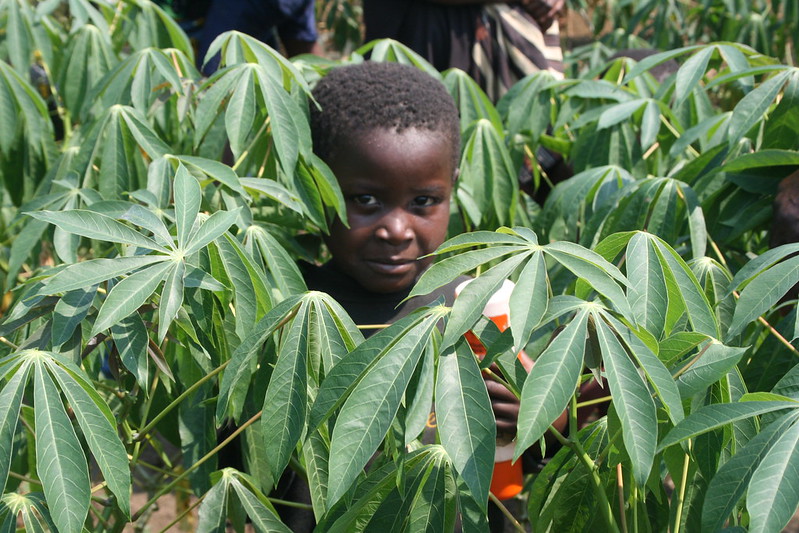
Kenya’s economy is the largest and most diverse economy in all of East Africa. It serves as an important trading hub for the African continent. However, agriculture makes up the backbone of Kenya’s economy today. Agriculture provides an obvious pathway for economic development and poverty reduction. Furthermore, agribusiness accounts for roughly 40% of Kenya’s overall workforce and roughly a quarter of its annual GDP.

As an example of the United States government’s integrated approach to foreign aid, USAID’s Feed the Future initiative is currently improving social, business and human health in Kenya by increasing productivity and income. Moreover, its greater agenda is to develop a more effective and sustainable agricultural future.

– Marshall Wu
Photo: Flickr

April 10, 2021
https://borgenproject.org/wp-content/uploads/borgen-project-logo.svg 0 0 Kim Thelwell https://borgenproject.org/wp-content/uploads/borgen-project-logo.svg Kim Thelwell2021-04-10 01:31:432024-05-30 22:23:06Examining USAID Programs in Kenya
Humanitarian Aid, Politics, USAID, War and Violence

Plans to End US Involvement in the War in Yemen

involvement in the war in YemenPresident Biden announced his plan to end all U.S. involvement in the war in Yemen in February 2021. The President stated the U.S. will take on a mediator role with a focus on ending the war instead. This reversal is one of many steps Biden feels will serve as a course correction for U.S. foreign policy. The Trump administration and many others prior have often taken the side of foreign authoritarian leaders all for the sake of stability. This has only aggravated the humanitarian crises in conflict-riddled countries like Yemen. The U.S. is working to remedy its contribution to the dire state of war-torn Yemen.
Effects of the War in Yemen

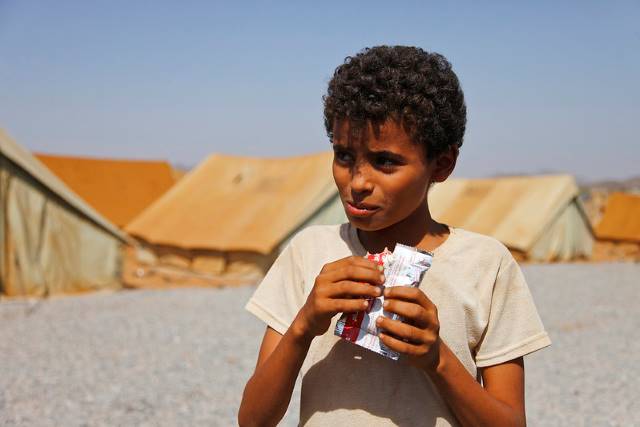
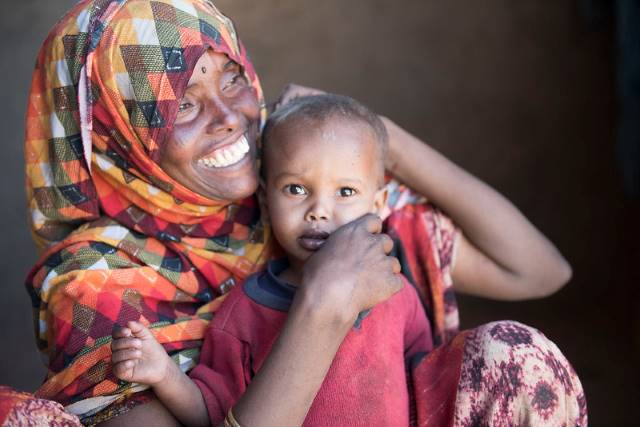
The military conflict created mass instability throughout the country of Yemen. As a result, Yemen experienced extreme poverty, starvation, violence and the displacement of millions of people. Thus, the situation in Yemen has been labeled as the world’s largest humanitarian crisis. More than 24 million people are in need of humanitarian assistance. This includes more than 12 million vulnerable children.

About 4.3 million people have lost their homes due to displacements. Additionally, more than 230,000 people have died as a result of the consequences of war and conflict in Yemen. This includes more than 3,000 children. Furthermore, more than 20,100 airstrikes have been conducted on Yemen. The Obama administration conducted an estimated 185 airstrikes over eight years while the Trump administration conducted nearly 200 in four years. These attacks contributed to more than 17,500 deaths and injuries. Moreover, the airstrikes have destroyed schools, hospitals, water wells, civilian homes and other essential infrastructure.

USAID in Yemen

While the U.S. has played a significant role in creating the world’s largest humanitarian crisis, the nation is also the leading contributor of foreign aid to Yemen. According to the United States Agency of International Development (USAID), the U.S. has provided more than $1.1 billion of foreign aid to Yemen since 2019. This aid has provided funding for food, shelter, medical care and other essential resources. In addition, USAID states that the U.S. allocates funding for development initiatives that focus on helping put the country on a stable path to recovery and prevent continued dependence on humanitarian aid.

The U.S. involvement in the war in Yemen is shifting from tactical to mediation. This is putting the nation on the path to recovery. Furthermore, the end of the war benefits Yemeni civilians and the U.S. economy. As the U.S. is pulling out of the offensive efforts, the foreign aid provided to Yemen can be fully utilized.

President Biden emphasizes the importance of this decision in his foreign policy address, stating, “this war has to end.” He decided to take a step in the opposite direction of the last two administrations, including the Obama administration in which he served as vice president. Additionally, President Biden claims this decision to be one of many in a plan to restore U.S. emphasis on diplomacy, democracy and human rights.

– Kendall Couture
Photo: Flickr

March 26, 2021
https://borgenproject.org/wp-content/uploads/borgen-project-logo.svg 0 0 Kim Thelwell https://borgenproject.org/wp-content/uploads/borgen-project-logo.svg Kim Thelwell2021-03-26 06:37:302024-12-13 18:02:26Plans to End US Involvement in the War in Yemen
Developing Countries, Global Poverty, USAID

Everything to Know About USAID Programs in Somalia

USAID Programs in SomaliaSomalia is one of the most poverty-stricken countries in the world, plagued by frequent violence, widespread food insecurity and natural disasters. To address the nation’s incredibly precarious situation, the United States Agency for International Development (USAID) programs in Somalia are expansive and well-funded. USAID programs in Somalia aim to provide humanitarian relief and reduce poverty in the area.

Causes of Poverty in Somalia

Droughts are partly responsible for the severe food insecurity in Somalia. From 2011 to 2019, Somalia experienced a devastating drought. The drought was so severe that it was even given a name, Sima. When it first started, it triggered a famine that killed 250,000 Somalians. In the years following, Sima devastated livestock populations in Somalia. Sima has also forced Somalians to relocate: in 2017, drought was responsible for displacing more than one million people. While Somalia has seen several devastating droughts over the past half-century, Sima has been the most catastrophic one yet.

Civil war and political unrest have also contributed to Somalia’s struggle with poverty and food insecurity. Since the collapse of the military regime led by President Siad Barre in 1991, Somalia has experienced near-constant warfare. The lack of a functioning Somali government has only made it more difficult for Somalians living in poverty and left the country increasingly reliant on foreign aid.

The numbers illustrate Somalia’s dire situation. In 2017, 6.2 million Somalians were experiencing acute food insecurity. Of that number, half were experiencing crisis or emergency levels of food insecurity. Since that time, the U.S. Government had increased funding to the country by more than double when it offered an additional $257 million to USAID programs in Somalia in 2019.

USAID Programs in Somalia

The functions of USAID programs in Somalia are wide-ranging and amounted to about $500 million in 2019. USAID’s proclaimed mission statement says “USAID strengthens the foundations for a more stable, democratic and prosperous Somalia while saving lives, alleviating human suffering and reducing the economic impact of disasters.” USAID programs cover several key humanitarian areas.

Firstly, the Office of Food for Peace (FFP) received $300 million in funding for the fiscal year of 2019. FFP aims to alleviate food insecurity among Somalia’s most vulnerable populations. A different initiative attempts to strengthen trust in Somalia’s Government while also working to counteract violent extremist groups. The Democracy, Stabilization and Governance initiative consists of five separate initiatives with separate goals.

The multi-donor trust fund contributions consist of four parts and aim to assist local governments in becoming more effective. Social services initiatives in Somalia work to improve education for marginalized communities. Lastly, economic growth initiatives in Somalia work to revitalize the Somalian economy.

Somalia’s struggle with poverty and food insecurity has been lengthy and difficult. Nevertheless, USAID programs have seen quantifiable improvements. For example, USAID provided access and benefits to alternative basic education for 20,248 students. Even with the positive progress, the U.N. predicts further issues in Somalia and that more foreign aid will be necessary to fully restore the country.

– Leo Ratté
Photo: Flickr

March 4, 2021
https://borgenproject.org/wp-content/uploads/borgen-project-logo.svg 0 0 Kim Thelwell https://borgenproject.org/wp-content/uploads/borgen-project-logo.svg Kim Thelwell2021-03-04 01:30:012024-05-29 23:22:53Everything to Know About USAID Programs in Somalia
Global Poverty, USAID

Colombia Needs Help Helping Venezuelan Refugees

Helping Venezuelan Refugees
Colombia is helping Venezuelan refugees following instability in Venezuela. Colombia has received over one million Venezuelan refugees and the Colombia-Venezuela border has been relatively porous. These Venezuelans are escaping hunger, hyperinflation and generally poor living standards while Colombia faces many problems of its own.

Background

Colombia and its people, although needing humanitarian aid for their own country, have continued to allow Venezuelans to come in. Colombia far surpasses other countries as the number one receiver of Venezuelan refugees. The government provides them services in refugee camps such as orthodontic treatment, legal assistance, psychological guidance, haircuts, manicures and food. This has been described by various Venezeulen refugees to be beneficial. However, there are concerns that Colombia might not sufficiently meet the demands for this new mass influx of people considering its existing problems with its own people.

Colombia today sees high rates of terrorism and crime, from dissidents of the Revolutionary Armed Forces of Colombia (FARC) and groups like The National Liberation Army (ELN). Armed robberies are also common there, and Colombia’s social systems and law enforcement have failed to address this issue. This results in events like a car bomb incident in January 2019 in Bogota which killed 22 people and injured 66 more, a bomb in January 2018 when a bomb exploded in front of a police station in Barranquilla, a bomb in June 2017 when three people were killed in a shopping mall and an incident in 2018 where two Ecuadorian journalists and their driver were killed along the Colombia-Ecuador border. The U.S. State Department rates Colombia with a Level 3: Reconsider Travel rating, citing these issues as well as health concerns from COVID-19.

Current Sources of to Help

Despite this news, there are things people can do to aid in helping Venezuelan refugees. The USAID program in the country is one example of helping Venezuelan refugees and aiding Colombia’s effort for this task. USAID has provided ventilators as well as $30 million of aid to Colombia amid the COVID-19 pandemic and humanitarian aid after Hurricane Iota struck the region in November 2020. But most of all, it is the Colombian people who are helping Venezuelan refugees.

At border towns, people have taken Venezuelan refugees into their homes, often indefinitely at no cost at all. In the 1980s and 1990s, Colombia was experiencing a decade-long conflict with FARC. This destructive conflict displaced more than seven million people, and groups of Colombians migrated to the then prosperous Venezuela. The Venezuelans during this conflict took Colombians in the same way as Colombians are taking in Venezuelans now. The Colombian border state of La Guajira is the perfect example of this, as over 160,000 Venezuelan refugees have taken refuge in La Guajira. Venezuelans now make up one-fifth of the population. The selfless help from local Colombians has made a difference in helping Venezuelan refugees.

Aid outside the Colombian government does a lot in helping Venezuelan refugees. This is true whether it goes directly to the local people or arrives through sources like USAID. The intertwining between Venezuelans and Colombians, promoted by Venezuelan refugee events hosted by Colombians before COVID-19, can also help alleviate anti-Venezuelan sentiment and provide the region more stability.

– Justin Chan
Photo: Flickr

February 22, 2021
https://borgenproject.org/wp-content/uploads/borgen-project-logo.svg 0 0 Lynsey Alexander https://borgenproject.org/wp-content/uploads/borgen-project-logo.svg Lynsey Alexander2021-02-22 16:05:502024-12-13 18:02:20Colombia Needs Help Helping Venezuelan Refugees
Foreign Aid, Foreign Policy, Global Poverty, USAID

4 New Members of the 117th Congress Who Could Shape America’s Approach to Foreign Aid

4 Incoming Members of the 117th Congress Who Could Shape America’s Approach to Foreign Aid
At least 65 representative-elects and senator-elects joined the 117th Congress in January 2021 to serve with a president who wants to “bring aid back to the center of our foreign policy.” The next two years could represent a sea of change in the U.S.’s approach to foreign policy and foreign aid under an administration committed to global development. Several new representatives want to increase foreign aid and improve the U.S.’s approach to peacekeeping and diplomacy. Here are four new members of the 117th Congress who could shape the U.S.’s approach to foreign aid.

4 New Members of the 117th Congress

  1. Sara Jacobs (CA-53) served as a policy advisor to the Hillary Clinton 2016 Presidential Campaign. Jacobs has worked to end child poverty through her nonprofit San Diego For Every Child. Jacobs was elected to represent California’s 53rd district in the U.S. House of Representatives. The Foreign Policy for America Action Network, a non-partisan advocacy organization that promotes safe foreign policy and endorses a slate of candidates each cycle who are believed to serve on key committees or lead on key legislation, endorsed Jacobs. The organization stated that she is ready to tackle issues such as immigration reform and global health on day one. According to Jacobs’ website, she supports protecting and maintaining current funding levels for USAID. However, she also supports properly funding the State Department and USAID to maximize efficiency.
  2. Mondaire Jones (NY-17) has worked in the Department of Justice and provided legal counsel with the Legal Aid Society. When inaugurated, he and fellow New York Representative-elect Ritchie Torres will be the first openly gay Black men in Congress. Jones promotes a “Diplomacy-First” foreign policy, sharing the belief that if the U.S. can dedicate more funding to foreign aid. He has criticized budget cuts to USAID (the president’s Fiscal Year (FY) 2020 budget provided $41 billion for USAID, as opposed to $50 billion in the FY 2016 budget) and plans to push for reinvestment in the State Department to allow the U.S. to take initiatives in humanitarian efforts. According to his website, Jones supports redirecting funds designated for conflict and weapons sales toward aid and promoting peace and development in foreign countries.
  3. Jake Auchincloss (MA-4), a former city councilor, was recently elected to the district formerly held by Joseph Kennedy III. With an extensive background in foreign policy and service in Panama and Afghanistan, Auchincloss supports a nuanced apportionment of foreign aid. Auchincloss advocates for a recommitment to “the types of foreign aid programs that strengthened America’s alliances and improved our security in the 20th century.” He supports continued aid to countries like Iraq in combatting COVID-19 and terrorism, and he wants the U.S. to commit to increasing foreign aid. Like The Borgen Project, he believes that foreign aid is a national security asset to the U.S.
  4. In June, Jamaal Bowman (NY-16), a Bronx middle school principal, defeated 16-term incumbent Eliot Engel. Bowman has emphasized the necessity for a foreign policy that gives voice to developing nations, particularly in Africa, as those countries emerge as world leaders on the global market. Bowman also supports a new Marshall Plan, which lent assistance to Europe after World War II. This new Marshall Plan put forward by Representative Joaquin Castro (TX-20) is meant to address the economic and social disparities in Central America that have led to mass migration, poverty and violence. By addressing the root causes of these issues, Bowman believes the U.S. can help millions of vulnerable people.

A Look to the Future

Jacobs, Jones, Auchincloss and Bowman have come out in favor of innovative solutions to addressing global poverty. However, any of the new members of the 117th Congress could advance the U.S.’s approach to foreign aid. The bold approaches put forth by some of these representatives have the potential to set a standard for the future of U.S. foreign aid as Congress takes on the COVID-19 pandemic and faces a changing foreign and economic landscape.

– Kieran Graulich
Photo: Flickr

February 21, 2021
https://borgenproject.org/wp-content/uploads/borgen-project-logo.svg 0 0 Kim Thelwell https://borgenproject.org/wp-content/uploads/borgen-project-logo.svg Kim Thelwell2021-02-21 07:30:512024-05-30 07:55:524 New Members of the 117th Congress Who Could Shape America’s Approach to Foreign Aid
Global Poverty, Humanitarian Aid, USAID

Humanitarian Aid in Nagorno-Karabakh

Humanitarian Aid in Nagorno-KarabakhNagorno-Karabakh is a region in the country Azerbaijan and is home to an Armenian majority. While the region is within Azerbaijan’s borders, Armenia has claimed the region for itself. The first intense conflict between Armenia and Azerbaijan over the Nagorno-Karabakh region was in 1988 when the Soviet Union was nearing the end of its existence. Recently, conflict in the region began again in late September 2020 and lasted for about a  month until a ceasefire was brokered by Russia. Additional ceasefires were brought into fruition by France with the help of Russia and the United States. Despite the ceasefires, the conflict in the region is continuing. The fighting in the region has drastically impacted the civilian population of the region. This has in turn created a strong need for humanitarian aid in Nagorno-Karabakh.

The European Union Assists

The European Union (EU) is actively providing aid to the civilian populace affected by the conflict and has done so since early October 2020. The initial amount of aid provided by the EU was €900,000. Then, in November, the EU commissioned an additional €3 million to the civilians in the Nagorno-Karabakh region. According to the EU, this humanitarian aid will provide the necessary assistance that humanitarian organizations partnered with the EU need to carry out their duties. This includes providing food, winter clothing and medical assistance.

The United States’ Aid

The United States is also providing its share of financial assistance. In total, the United States has provided around $10 million in humanitarian assistance to Armenia and Azerbaijan since the 2019 fiscal year. Of the $10 million, $5 million has been allocated to the International Committee of the Red Cross and similar humanitarian organizations to help civilians caught in the crossfire of the conflict. Assistance coming from the U.S. Department of State and the U.S. Agency for International Development (USAID) will also be used for humanitarian aid in Nagorno-Karabakh. The support these two institutions will be providing will come in the form of food, shelter and medical support for the people impacted by the conflict.

People in Need

There are also NGOs that have provided humanitarian aid in Nagorno-Karabakh as well. One organization, People in Need, has done just this. People in Need is an organization dedicated to providing immediate aid to countries should a natural disaster or war take place.

People in Need has provided support, not to Nagorno-Karabakh, but to the city of Goris in Armenia. People in Need directed its humanitarian aid to this Armenian city because many of the displaced civilians in Nagorno-Karabakh have gone there for refuge. The displaced people either move on or stay in the city. People in Need have been able to provide hygienic supplies to 1,200 displaced families in Goris. Additionally, People in Need have provided 480 children, 600 women and 110 seniors with their own individual hygienic kits. People in Need have also taken into consideration the psychosocial needs of children impacted by the conflict. To help these children, People in Need opened a child-friendly space in the city library where children can engage with other children and partake in other activities.

While the conflict in Nagorno-Karabakh continues, international institutions, individual countries and humanitarian organizations are trying to provide all the support possible to help the civilians impacted by the conflict.

– Jacob E. Lee
Photo: Flickr

February 15, 2021
https://borgenproject.org/wp-content/uploads/borgen-project-logo.svg 0 0 Yuki https://borgenproject.org/wp-content/uploads/borgen-project-logo.svg Yuki2021-02-15 07:30:532021-02-11 10:19:43Humanitarian Aid in Nagorno-Karabakh
Children, Developing Countries, Education, Global Poverty, Poverty Eradication, USAID

USAID Helps Youth Development in the Philippines 

Youth Development in the PhilippinesThe Philippines has an opportunity for rapid economic growth and the potential to greatly innovate industry across the country. This opportunity comes from the number of young people in the country. Young people account for 50% of the entire population of the nation, leaving it with immense potential for economic growth as these young people begin to enter the workforce. Youth development in the Philippines is crucial for the country’s transformation into a resilient nation.

The Education Problem

Unfortunately for the Philippines, an alarming portion of these young people are currently not in any form of education or employment. One-fifth of all youth in the Philippines are either jobless or not attending school or employment training.

Even before the COVID-19 pandemic, the Philippines was facing an education crisis. The country placed last in reading comprehension and second to last in both science and mathematics in an international student assessment.

USAID: Youth Development in the Philippines

USAID has committed to help improve and promote public education and other forms of education in the Philippines. Starting in 2018, USAID began a five-year effort to create a series of programs aimed at uplifting economically disenfranchised Filipino youth who are at the most risk of poverty.

One program, in particular, YouthWorks PH is a five-year partnership between USAID and the Philippine Business for Education that engages the private sector to address the education needs of youth as well as the skill requirements of employers. This partnership will improve access to training and employment opportunities for at least 40,000 youth through an innovative work-based training approach. Young people are able to earn a competency certificate from a university or training institute while working in partner companies.

More than 5,000 young Filipinos will have access to free technical and vocational training as a result of this initiative partnering with Aboitiz Construction and D.M. Consunji, Inc. (DMCI), two of the biggest construction companies in the country.

This type of on-site vocational training will help prepare youth for well-paid employment opportunities and will create more skilled workers in the Philippines.

There are also other programs created by USAID specifically to increase the quality and accessibility of education in the Philippines. All Children Reading (ACR), is a program to increase the reading skills of Filipino children. ABC+ aims to address the interconnected factors that contribute to low education outcomes in the poorest performing areas of the Philippines.

Youth Development Potential

Young Filipino people could potentially bring about massive economic growth in the country. In order to fully capitalize on this opportunity, resources and development opportunities must be provided to the youth so that they can fully integrate into the workforce as skilled workers. For this reason, the youth development work of USAID is integral. Not only will it lift thousands of poor Filipino youth out of poverty but it will help create a stronger economy for the Philippines.

– Christopher McLean
Photo: Flickr

February 12, 2021
https://borgenproject.org/wp-content/uploads/borgen-project-logo.svg 0 0 Kim Thelwell https://borgenproject.org/wp-content/uploads/borgen-project-logo.svg Kim Thelwell2021-02-12 05:33:352021-02-12 05:33:35USAID Helps Youth Development in the Philippines 
Page 10 of 33«‹89101112›»

Get Smarter

  • Global Poverty 101
  • Global Poverty… The Good News
  • Global Poverty & U.S. Jobs
  • Global Poverty and National Security
  • Innovative Solutions to Poverty
  • Global Poverty & Aid FAQ’s
Search Search

Take Action

  • Call Congress
  • Email Congress
  • Donate
  • 30 Ways to Help
  • Volunteer Ops
  • Internships
  • Courses & Certificates
  • The Podcast
Borgen Project

“The Borgen Project is an incredible nonprofit organization that is addressing poverty and hunger and working towards ending them.”

-The Huffington Post

Inside The Borgen Project

  • Contact
  • About
  • Financials
  • President
  • Board of Directors
  • Board of Advisors

International Links

  • UK Email Parliament
  • UK Donate
  • Canada Email Parliament

Get Smarter

  • Global Poverty 101
  • Global Poverty… The Good News
  • Global Poverty & U.S. Jobs
  • Global Poverty and National Security
  • Innovative Solutions to Poverty
  • Global Poverty & Aid FAQ’s

Ways to Help

  • Call Congress
  • Email Congress
  • Donate
  • 30 Ways to Help
  • Volunteer Ops
  • Internships
  • Courses & Certificates
  • The Podcast
Scroll to top Scroll to top Scroll to top