• Link to X
  • Link to Facebook
  • Link to Instagram
  • Link to TikTok
  • Link to Youtube
  • About
    • About Us
      • President
      • Board of Directors
      • Board of Advisors
      • Financials
      • Our Methodology
      • Success Tracker
      • Contact
  • Act Now
    • 30 Ways to Help
      • Email Congress
      • Call Congress
      • Volunteer
      • Courses & Certificates
      • Be a Donor
    • Internships
      • In-Office Internships
      • Remote Internships
    • Legislation
      • Politics 101
  • The Blog
  • The Podcast
  • Magazine
  • Donate
  • Click to open the search input field Click to open the search input field Search
  • Menu Menu

Archive for category: Technology

Information and stories about technology news.

Global Poverty, Technology

Tablet Computers: Enhancing Global Literacy Rates

 Literacy

Researchers from MIT, Tufts and Georgia State University are conducted a study to determine whether tablet computers that have with literacy applications can improve global literacy rates among children living in extremely poor communities.

As part of the first phase of the study, tablets were sent to a pair of Ethiopian villages with no schools or written culture, a suburban South African school with a student-to-teacher teacher ratio of 60 to 1 and a rural school in the U.S. with mostly low-income students.

The tablets contained specially designed apps to help illiterate children ages four to 11 learn letters, sounds and reading fundamentals. The children in Ethiopia had never seen electricity or paper before this study.

Maryanne Wolf, founder and director of Tuft’s Center for Reading and Language Research, visited Ethiopia in 2013 and saw how excited the children were to use the tablets.

“The children learned to be facile so quickly—it was breathtaking,” Wolf said, according to a Tufts Now article.

In the African deployments, students who used the tablets scored much higher than those who did not. The American students also improved their scores dramatically after using the tablets for just four months.

“The whole premise of our project is to harness the best science and innovation to bring education to the world’s most under-resourced children,” associate professor of media arts and sciences at MIT Cynthia Breazeal said, reports an MIT News article.

The main theme of this project is that it is self-starting. The research team purposely did not tell the children what to do with the tablets because if the project expands, they will not be able to bring in coaches to teach the children how to use the apps.

Within minutes of receiving the tablet, one Ethiopian boy figured out how to turn it on. Within a week, the Ethiopian children had the apps up and running.

The research team is currently analyzing the data collected from the trials. They have also created a nonprofit organization called Curious Learning, which is now looking for partners to help launch larger pilot programs in an effort to improve global literacy rates.

– Kerri Whelan

Photo: Flickr

June 7, 2016
https://borgenproject.org/wp-content/uploads/borgen-project-logo.svg 0 0 Borgen Project https://borgenproject.org/wp-content/uploads/borgen-project-logo.svg Borgen Project2016-06-07 01:30:342024-12-13 17:54:24Tablet Computers: Enhancing Global Literacy Rates
Global Poverty, Philanthropy, Technology

Gates Foundation Invests $5 Million on Malaria Research

Malaria Research

According to the Gates Foundation, malaria continues to be a major health concern in almost 100 countries, infecting 207 million people and killing 627,000 individuals in 2012 alone. Despite an increase in malaria funding over the past several years, challenges remain in completely eradicating this disease.

However, fighting malaria is one of the Foundation’s main missions and the organization has contributed $2 billion to the cause to date. Notably, the Gates Foundation launched a multi-year strategy known as Accelerate to Zero in 2013 that focuses on making new partnerships for more efficient, affordable drugs.

In addition, this past April, the organization offered the biotechnology innovations firm Amyris an additional $5 million, in the form of a stock buyback, for its malaria research project.

Amyris is a biotechnology innovation firm whose partnership with the Gates Foundation spans roughly ten years. Replacing the relatively expensive and time-consuming method of directly extracting artemisinin from the Chinese Sweet Wormwood plant, Amyris created a new strain of Baker’s yeast microbes that produce artemisinic acid. According to the firm, the result is a “precursor of artemisinin, an effective anti-malarial drug.”

With malaria research grants from the Gates Foundation and partnership with the Institute for OneWorld Health and the University of California, Berkley, the organization has since distributed the microbes to Sanofi for mass manufacture.

In 2015, the company was awarded the United Nations Global Citizen Award for this continued effort to meet the Millennium Development Goals.

Amyris is also expected to develop faster, cheaper methods of manufacturing pharmaceuticals that otherwise require elaborate processes for extraction.

This year’s renewed grant will ensure the application of this technology and the actual reduced cost of malaria medicine.

According to John Melo, the CEO of Amyris, the firm’s goal is the complete eradication of malaria through low-cost and sustainable cures. He further stressed the importance of future cooperation between private and public sectors in battling other epidemics.

– Haena Chu

Photo: Flickr

June 5, 2016
https://borgenproject.org/wp-content/uploads/borgen-project-logo.svg 0 0 Borgen Project https://borgenproject.org/wp-content/uploads/borgen-project-logo.svg Borgen Project2016-06-05 01:30:272024-12-13 17:54:23Gates Foundation Invests $5 Million on Malaria Research
Global Poverty, Technology

Startup Converts Plastic Waste into 3D Printing Material

3D Printing
Reflow, an Amsterdam-based startup, is using 3D printing technology to transform plastic waste into a valuable resource. According to its website, the company converts recyclable plastic into ethical, high-quality 3D print filament, which is the material needed for 3D printing.

Every day, millions of waste collectors in developing countries earn $2 a day sifting through endless masses of garbage. In the developing world, cities are experiencing rapid urbanization, brought about by fast population growth and high immigration rates.

Rapid urban expansion, combined with a lack of infrastructure, leads to the buildup of open waste in low-income neighborhoods, slums and squatter areas. The result is informal waste collection by members of those communities.

Reflow works directly with waste collectors to convert the plastic they pick up into high-quality print filament. The company increases the value of the recycled plastic by up to 20 times, increasing the waste collectors incomes so they earn the wage they deserve.

According to Kickstarter, the Reflow process begins by carefully selecting the plastic needed to make the print filament. The startup then works with local waste collectors to clean PET bottles and shred them into tiny, 6-millimeter plastic flakes.

PET stands for polyethylene terephthalate, which is used in common plastic packaging such as water bottles, soft drink packaging and cosmetics bottles. A report by The Planet Bottle states that PET is popular for its strength, thermo-stability and transparency, while being inexpensive, lightweight and recyclable.

Once the plastic has been shredded, Reflow uses a low-cost, open-source extruder to convert the plastic flakes into 3D print filament. The company partners with universities and their corporate partners to test the filament, before shipping it in recyclable packaging to individuals who use the product for 3D printing.

Of note, 25 percent of Reflow’s profits are invested in local manufacturing and $3 from each roll of filament contributes to waste collectors’ incomes.

According to the Huffington Post, 120 plastic bottles can produce one kilogram of filament. However, Reflow said that the process is not so much about the final product as it is about empowering individual waste collectors and improving their lives.

Typically, waste collectors have to deal with unfair pricing from middle men in the recycling process. Their working conditions are extremely poor, as they collect garbage in toxic areas and must wade through unhygienic environments to find the appropriate waste to recycle.

Reflow also aims to provide the waste collectors with necessary tools to pick up and carry the plastic, so their health is not at risk.

The company is launching their project in Dar es Salaam, Tanzania. According to a report by the Global Alliance of Waste Pickers, there are approximately 1,267 waste pickers in Dar es Salaam, who collect, move and trade 20 kilograms of recyclable waste per day. Most waste pickers that were interviewed for the report stated that the nature of their work was “exhausting”, “dangerous” and “unhealthy.”

“Of fifty waste pickers interviewed, forty-three reported that they had been ‘injured or admitted to a health facility’ in the past twelve months due to their recycling operations,” said the report.

So far, Reflow has raised €2,943 of their €25,000 goal (US$ 28,520). “We know this technology is going to transform our societies and lives,” said the company in a statement on their website. “We want to harness this innovation to create a better and more equal world. We want to ensure the revolution is shared.”

– Michelle Simon

June 4, 2016
https://borgenproject.org/wp-content/uploads/borgen-project-logo.svg 0 0 Borgen Project https://borgenproject.org/wp-content/uploads/borgen-project-logo.svg Borgen Project2016-06-04 01:30:182024-12-13 18:06:02Startup Converts Plastic Waste into 3D Printing Material
Global Poverty, Refugees and Displaced Persons, Technology

Surprising Ways Smartphones are Helping Refugees

Aid_refugees

Smartphones can go a long way in helping refugees to stay safe, connected and assimilate into new communities.

According to research conducted by Penn State University, about 86 percent of young Syrian refugees at Zaatari Camp of Jordan own cell phones and more than half access the Internet daily.

During dangerous and long journeys, the luxury of smartphones helps ensure safety by keeping refugees connected with their family members. In addition, something as simple as taking and sharing photos helps to maintain a sense of community.

Navigation applications like Google Maps have also drastically changed the scene by helping refugees to travel without a heavy dependence on guides. When they do need to hire guides, information and reviews on social networking services including Facebook and WhatsApp ensure quality of service and prevent trafficking related crimes.

Some applications specifically target refugees and their needs. Google’s Crisis Info Hub lists travel information for those entering Europe through the island of Lesbos, with hotline Red Cross contacts and lodgings.

Gherbtna (“exile” or “loneliness” in Arabic), developed by Mojahed Akil who is himself a Syrian refugee, provides resettlement advice and guidelines. On the other side of the border, countries accommodating refugees have established similar information services such as Germany’s Refugee Welcome.

Another way that smartphone use is helping refugees is through increased accessibility to educational tools. In a situation where access to a formal education is near impossible, the Internet provides ubiquitous access to educational material.

The Guardian notes that there are “more than 80,000 education apps in Apple’s App Store, ranging from phonics to physics.”

The nonprofit organization Aiim develops education apps for refugees between the ages of 12 and 16 that are available offline, even in areas without Internet connection. The organization hopes to reach 10,000 Syrian refugees  by the end of next year through pilot programs in Jordan and Lebanon.

– Haena Chu

Photo: Flickr

June 1, 2016
https://borgenproject.org/wp-content/uploads/borgen-project-logo.svg 0 0 Borgen Project https://borgenproject.org/wp-content/uploads/borgen-project-logo.svg Borgen Project2016-06-01 01:30:232024-12-13 17:54:23Surprising Ways Smartphones are Helping Refugees
Global Poverty, Technology

“Africa Code Week” Seeks to Make a Sustainable Impact

Africa_computer Africa Code Week

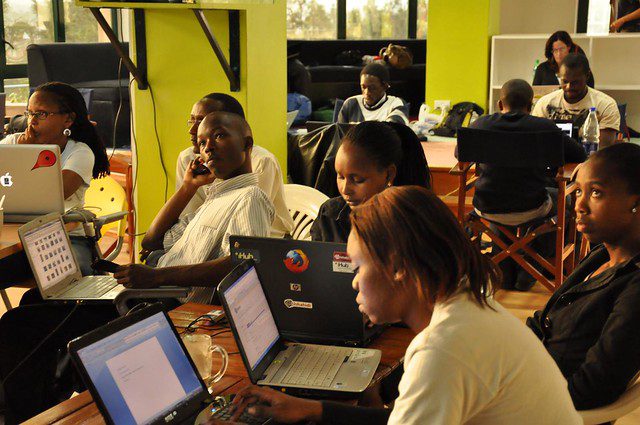
In October 2015 nearly 89,000 African youth in 17 countries took part in “Africa Code Week” where they had the opportunity to attend free online sessions and coding workshops. The event was created to empower African youth to become fluent in the language of the digital age and stimulate the continent’s economic development.

For some of the youth who took part in the week-long celebration of digital literacy, Africa Code Week marked the first time they had ever written a single line of code. For others, it was their first time using a computer.

“Africa Code Week gives us an opportunity to marvel at what the future holds,” said Bill McDermott, CEO of SAP, in an article for Forbes. “It’s true that today less than one percent of African children leave school with basic coding skills. I’m confident that figure is about to rise dramatically, just as Africa prepares to claim its rightful place as a soaring economic power in this new digital economy.”

Throughout the world, coding is becoming an increasingly critical skill for those entering the workforce. Over the next 10 years, it is estimated that there will be 1.4 million jobs in computer sciences but only around 400,000 graduates qualified to do them, according to International Business Times.

As we wind our way deeper into the 21st century, individuals with coding skills will become more and more valuable in the workplace. Digital literacy could become a key strategy for strengthening economic infrastructure in developing countries.

“Digital literacy has the power to put millions of young Africans on the path to successful careers,” Moroccan Minister of Education and Vocational Training, Rachid Belmokhtar, said to IT News Africa. “Trained, tech savvy graduates are needed to improve Africa’s position in the globally competitive knowledge economy. Everyone from governments and educational institutions all the way to NGOs and corporations has a role to play to spread digital literacy across Africa.”

It was foundations like Ampion, SAP, Simplon.co and more that saw the need and came to help. They founded Africa Code Week to bestow young Africans with a set of useful skills through hands-on teaching.

Despite the fact that the event is the largest digital literacy initiative ever held on the African continent, SAP and its partners are not satisfied. Next year, the Africa Code Week team hopes to reach 150,000 youth in at least 30 countries.

“The digital economy is here and the opportunities it presents are manifold,” said Pfungwa Serima, Executive Chairman, SAP Africa. “If we equip young Africans with the best technology, give them skills that make them relevant to the job market and empower them to be bold and innovative, we’ll see them do amazing things.”

– Jen Diamond

Photo: Flickr

May 8, 2016
https://borgenproject.org/wp-content/uploads/borgen-project-logo.svg 0 0 Borgen Project https://borgenproject.org/wp-content/uploads/borgen-project-logo.svg Borgen Project2016-05-08 01:30:282024-12-13 17:54:21“Africa Code Week” Seeks to Make a Sustainable Impact
Activism, Global Poverty, Technology, Women, Women and Female Empowerment

Why Every Woman in Africa Should Have Access to a Cell Phone

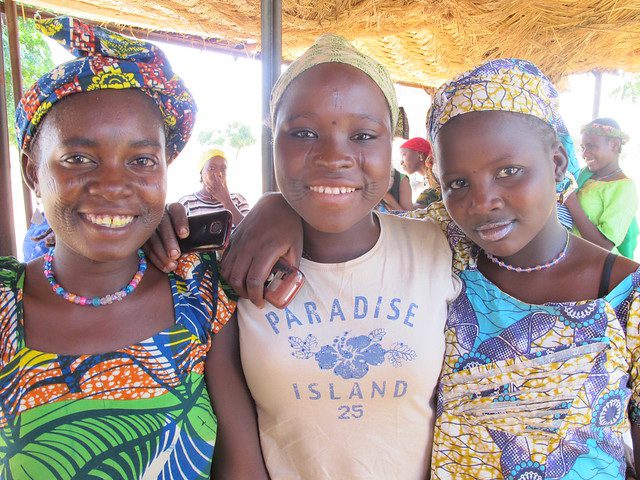
Cell PhoneAs technology continues to advance and grow more accessible, women around the world are increasingly gaining access to a cell phone for the first time. Though it is taken for granted in much of the developed world, cell phone use opens multiple doors that were not there before. According to Africa in Focus, technology can be thought of as a tool that creates opportunities for women. Specifically, technology has permitted women entry into the realms of finance, education and health and employment, thereby encouraging female empowerment and democratization in low-income countries.

Firstly, cell phone ownership gives women the ability to be financially independent, because they can open an online bank account separate from their husbands’. Impatient Optimists claims that “A private account gives women in developing nations control over their money as well as the ability to put food on the table.”

Currently, 1.7 million women in low-income countries don’t own a cell phone, according to the GSMA (an association representing mobile operators worldwide). Women are also 14 percent less likely to own a phone than men. Therefore, technology is a vital component of big-picture solutions to gender inequality and female disempowerment.

Secondly, cell phones are beneficial in the realm of women’s education and health. Impatient Optimists notes that “The East African nation has rolled out an ambitious program allowing parents to register their child’s birth via mobile phone. Under the program, midwives can request a child’s birth certificate by sending a text message.”

The East African program will save women time and money because they will not have to travel to the capital to acquire a birth certificate for their child. The Millennium project reported that most women live on less than 1 dollar per day. Under such conditions, the option of an online birth certificate can have a dramatic impact. Significantly, children in Africa need a recorded birth certificate in order to access schools, medical care, and, eventually, a bank account.

Thirdly, cell phone access can increase employment for women in Africa. Impatient Optimists points out that having a mobile phone allows women to open their own businesses in remote villages, as opposed to walking a great distance in order to register the business.

The New York Times recognizes that, “economically empowered women are one of the most important engines of growth in developing countries, and they play a central role in building prosperous communities.” That is why women in Africa must have their own phones, instead of sharing with family members.

When women have access to their own phones, bank accounts, and financial situations, they often invest in health-care, nutritious food and education. In fact, The New York Times reports that, “A child born in a household where the mother controls the family budget is 20 percent more likely to survive and much more likely to thrive.”

Women in Africa should be given the power and authority to make financial decisions for their family, given that they tend to prioritize moral and just causes. A mobile phone in the hands of a determined woman could benefit not only the economy, but the daily lives of families across Africa.

– Megan Hadley

Photo: Flickr

April 17, 2016
https://borgenproject.org/wp-content/uploads/borgen-project-logo.svg 0 0 Borgen Project https://borgenproject.org/wp-content/uploads/borgen-project-logo.svg Borgen Project2016-04-17 01:30:582020-06-19 14:05:23Why Every Woman in Africa Should Have Access to a Cell Phone
Global Poverty, Technology

Design 2 Transform Hackathon

Design 2 Transform HackathonOver 80 volunteers met at the Nairobi innovation hub (iHUB) in March 2016 to participate in the second edition of an event dubbed “Design 2 Transform Hackathon.” The event involves a one-day challenge that brings together diverse individuals to create professional websites for community based organizations (CBOs) across Kenya.

CBOs are nonprofit, private or public outfits that represent a significant segment of the community. Each CBO is engaged in meeting human, educational, environmental or public safety needs.

The organizing principle of the event is that involving a diverse mix of individuals will generate richer outputs. Thus a background in software development and web design is not a pre-requisite.

“Anyone with whatever skill can come and be part of the change we all want to see,” says Nelson Kwaje, team leader of Design 2 Transform. “The person with the web design skills in the team will teach the rest of the members how to do it, practically, the accountant will help create the content, the photographer will advise on the photos…everybody can do something!”

At the event’s inaugural edition in January 2016, 45 volunteers worked together to successfully create six websites for six orphanages that previously did not have a presence in cyberspace.

According to organizers of the hackathon, the capability of a CBO to connect with donors and partners is severely limited when they lack an online presence. The organizers’ hope is that the websites created during the hackathon will address this issue. In addition, the websites serve to create platforms where the CBOs can broadcast their stories and projects to a greater audience.

The second edition of the event, much like the first, involved volunteers working in teams. Each team was assigned a CBO and was asked to deliver a website, social media pages, a logo, a business card, a letterhead and a banner.

For example, Kenya Deaf Agenda, which deals with disability stigma, and Karinde Child Love, which provides a home to Kenyan street children, are two of the 10 CBO’s that will soon have active websites designed during the second edition of Design 2 Transform Hackathon.

One of the key supporters of the second Design 2 Transform Hackathon was the Kenyan company LIVELUVO. Through its app, LIVELUVO has created a “Digital Village” that connects individuals and organizations with the services and information they seek. Though this network, businesses can reach new customers and individuals can gain access to potential employers.

Ryan Doyle, Head of Community Development at LIVELUVO says that the company was happy to support the hackathon due to the beautiful meeting of talent, community and enthusiasm that the event promotes. According to Doyle, a professional website amplifies an organization’s voice. He hailed the collaborative efforts of Design 2 Transform to empower the community.

Organizers of the Design 2 Transform Hackathon echo the sentiment that volunteers not only contribute to a good cause, but can also gain opportunities from the hackathon. Some such opportunities include training by professionals, interaction with web designers and business opportunities and partnerships.

— June Samo

Sources: Design 2 Transform 1, Design 2 Transform 2, LUVO, My Luvo 1, My Luvo 2, NNLM, Shiku Ngigi
Photo: Flickr

April 6, 2016
https://borgenproject.org/wp-content/uploads/borgen-project-logo.svg 0 0 Borgen Project https://borgenproject.org/wp-content/uploads/borgen-project-logo.svg Borgen Project2016-04-06 01:30:302024-12-13 18:05:55Design 2 Transform Hackathon
Global Poverty, Technology

How to Utilize Big Data in the Fight Against Poverty

Big Data Fight Against Poverty
Big Data, as its name would suggest, refers to large sets of unstructured and structured data generated at high speeds from digital and traditional data sources around the globe. The big data movement has gained momentum over the years, particularly in the business sphere, but experts have also realized that insights derived from big data have implications for the fight against poverty.

In the agricultural space for example, The Forum for Agricultural Research in Africa has found that farmers in Africa barely produce what they need to get by.

Food Policy experts have found that helping these farmers in Africa and other parts of the world produce more food is key to lifting millions out of poverty. One of the key ways of attaining this goal, according to the experts, is by providing farmers, scientists and entrepreneurs in the agricultural sector with adequate access to data and information generated at agricultural research centres worldwide.

Ft Magazine highlights how big data is being used to mitigate the harmful effects that accompany natural disasters. It explains that in the aftermath of the devastating Haiti earthquake of 2010, researchers at the Karolinska Institute of Columbia University successfully managed to track the locations of 600,000 displaced people using data mining techniques.

The article in Ft Magazine also illustrates how analyzing data from social media sites like Twitter and Facebook can provide early warning systems for both human and natural disasters. For example, increased references to food or ethnic strife on these sites can serve as indicators of possible famine or civil unrest.

Mark Van Rijmenam, the founder of Datafloq, further empathizes the use of Big data in the disaster response field, saying “Big data offers, for example, the possibility to predict food shortages by combining variables such as drought, weather conditions, migrations, market prices, seasonal variation and previous productions.”

In the area of public health and sanitation, Van Rijmenam talks about harnessing data from call detail records to map variations in the population of low-income dwellers in order to direct efforts at building water pipes and latrine facilities for the slum dwellers. This effort will see improved sanitation in such areas, bringing about better health.

A pilot program by the World Bank in Tanzania called SMS for life has generated major improvements in the distribution of malarial medical stock. By getting clinical workers to send an SMS with their stock count every week, the program has enabled senior coordinating staff to re-stock clinics more accurately.

SMS for life has managed to reduce the number of rural health facilities in Tanzania without medical stock from 78 percent to 26 percent.

World Bank blogger Alla Morrison has likened the transformative potential of big data to the transformative effect that electricity had on industry in the 19th century. She argues that big data is a game changer for business, and notes the unprecedented productivity gains in the second industrial revolution due to businesses in all sectors taking advantage of the new electrical resource.

Likewise, as humanity forges ahead, it is important that organizations, governments and individuals take advantage of big data to address the seemingly intractable challenge of poverty.

— June Samo

Sources: Enterra Solutions 1, Enterra Solutions 2, FT Magazine, IEEE, SAS, Smart Data Collective, UN GLOBAL PULSE, World Bank 1, World Bank 2
Photo: Flickr

April 1, 2016
https://borgenproject.org/wp-content/uploads/borgen-project-logo.svg 0 0 Borgen Project https://borgenproject.org/wp-content/uploads/borgen-project-logo.svg Borgen Project2016-04-01 01:30:412024-12-13 17:54:12How to Utilize Big Data in the Fight Against Poverty
Global Poverty, Technology

Four Reasons to be Excited About Nanosatellites

Nanosatellites
Recently, there has been a lot of hype surrounding nanosatellites. These satellites are an emerging technology in space development and offer the potential for more developing countries to reap the benefits of traditional satellites without the hefty costs associated with them.

Nanosatellites are small satellites weighing between 1kg and 10kg. CubeSats are box-shaped versions of nanosatellites and are currently one of the most widely-used forms. They are very light compared to traditional satellites, which can weigh up to several tons.

Why are nanosatellites so exciting? The reasons range from their cost and convenience to unique benefits that they can bring to the table. Here are four of the main reasons:

1. They are cheap and convenient. Compared to traditional satellites, nanosatellites retain the same or similar capabilities, while costing significantly less. According to the online publication The Conversation, while the cost of traditional satellites can be hundreds of millions of dollars, a CubeSat can be built for around $100,000 and can be launched for many of the same missions that their traditional counterparts can. “Including the launch, a nanosat of CubeSat dimensions might cost $150,000-1m, rather than $200m-1 billion for a full-sized one,” an article in the Economist corroborates.

Furthermore, nanosatellites are more convenient to build. According to the Economist, due to their low cost and less stringent standards of regulation, they can be built faster. Nanosatellites also have a relatively short lifespan of perhaps no more than a year or two in low-Earth orbit before re-entering the atmosphere and burning up. This allows for less risk-management during the building and launch phases.

2. They will help the space programs of developing countries. Funding is often a big problem for these programs; they are constrained by the high cost of traditional satellites and supporting infrastructure. The low costs of nanosatellites, however, offer a solution.

“From being cheaper to build and launch into space, they provide a cost-effective platform for training and research, especially for countries where heavy investment in a space industry has to be weighed against more immediate needs such as health and welfare,” the article on The Conversation says.

In addition, nanosatellites will encourage more youth to enter the space industry. Speaking about Africa, the Conversation notes that young people are entering careers in STEM at low rates. Nanosatellites, though, can be integrated into training at a lower cost and will thus give young people more first-hand exposure to the technology. They also have a “cool” factor: “Combining the vibrant ingenuity and creativity of this generation with an equally ingenious and cool space technology can no doubt have a profoundly positive socioeconomic impact on Africa,” says the Conversation.

3. They are closely integrated with modern, advanced technology. According to the Economist, small satellites benefit from the constant improvements in price and performance being achieved by the consumer-electronics industry, particularly in smartphone technology.

A modern phone is equipped with technologies such as an accelerometer to measure how fast it is moving, a magnetometer to detect magnetic fields and provide a compass reading, a gyroscope to measure its position, a barometer to detect pressure and much more. These technologies provide nanosatellites with a wealth of resources to work with.

4. They provide unique benefits. Though traditional satellites are able to certain complex tasks that nanosatellites cannot, nanosats have their own unique advantages.

According to the Conversation, because they are low cost, multiple nanosatellites can be launched into low-Earth orbit. The satellites in these constellations pass over a specific geographic area more frequently than single, big-satellite missions. This allows nanosatellites to be used for rapid responses to disasters or to gather timely information relating to telemedicine, environmental management and asset tracking.

The unique potential of nanosatellites is also being seen in other projects. According to the online publication Inverse, the company SkyFi is working on creating a nanosatellite network to provide the entire world with free internet access. The cheap costs and flexibility of nanosatellites would allow them to circumvent the problems preventing traditional satellites from providing reliable wifi.

“The high flexibility of our nanosatellites and the ability to provide multiple services to different customers enables us to offer free internet access to the whole planet in the same manner as GPS services are free. We think this has the potential to bridge great divides and give everyone worldwide a part in the great global connected community,” Raz Itzhaki Tamir, Co-Founder and CEO of SkyFi, said in a press release.

– Anton Li

Sources: The Conversation, The Economist, Inverse, PRWeb
Photo: Kirtland Air Force Base

March 30, 2016
https://borgenproject.org/wp-content/uploads/borgen-project-logo.svg 0 0 Borgen Project https://borgenproject.org/wp-content/uploads/borgen-project-logo.svg Borgen Project2016-03-30 01:30:202020-06-20 23:18:50Four Reasons to be Excited About Nanosatellites
Global Poverty, Technology

Mapping Startup Helps Identify Unmapped Areas

mapillaryIn spite of modern digital services like Google Street View, many locations in developing countries, such as Dar es Salaam in Tanzania, remain inaccessible to much of the world.

Swedish startup Mapillary and the World Bank have teamed up to solve this problem. Mapillary enables individuals to map their own streets by collecting street level photos simply by using their smartphones.

Such maps can help cities anticipate and recover from natural disasters, track traffic congestion, distribute resources to the impoverished communities that need them and build public transportation systems.

Mapillary CEO Jan Erik Solem told NPR News, “Dar es Salaam has really poor map data. The reason is that the mapping companies need people on the ground or in the local area to create the actual map.”

Maps that detail roads, homes, rivers and terrain may help kickstart city planning.

“In order for it to flourish into the metropolitan city [Dar es Salaam] has the potential to become, we began a community-based mapping project called Dar Ramani Huria (Swahili for “Dar Open Map”),” states a blog post from the World Bank, “to bring disaster prevention and response to previously unmapped areas, training the local community to create highly-accurate maps by the residents who know their city best.”

25 wards have been charted so far in Dar es Salaam with Mapillary. The task was accomplished by attaching a camera to a local Tanzanian rickshaw and by using photos taken by a motorist. These photos were then uploaded to Mapillary and constructed in 3D. A blog post by the World Bank on Mapillary’s website says that this information allows them to “pinpoint troubled areas” and to map out the routes locals often use.

As these maps are developed, they are run through software that develops natural disaster scenarios to help citizens improve planning and preventive efforts.

NPR reports that more than 260 citizens have volunteered to take photos for the mapping project. Locals have taken around 23,000 photos, which will map 300 miles of road.

“Sparking the community’s interest in mapping has the potential to truly transform Dar es Salaam into a prosperous city with the infrastructure to prevent floods, bring awareness to the need for flood prevention and risk reduction, and arm its citizens with the right tools and skills to build a better city,” states the same blog post.

– Kaitlyn Arford

Sources: NPR, Mapillary, World Bank
Photo: Flickr

March 26, 2016
https://borgenproject.org/wp-content/uploads/borgen-project-logo.svg 0 0 Borgen Project https://borgenproject.org/wp-content/uploads/borgen-project-logo.svg Borgen Project2016-03-26 01:30:012024-06-04 01:03:14Mapping Startup Helps Identify Unmapped Areas
Page 67 of 89«‹6566676869›»

Get Smarter

  • Global Poverty 101
  • Global Poverty… The Good News
  • Global Poverty & U.S. Jobs
  • Global Poverty and National Security
  • Innovative Solutions to Poverty
  • Global Poverty & Aid FAQ’s
Search Search

Take Action

  • Call Congress
  • Email Congress
  • Donate
  • 30 Ways to Help
  • Volunteer Ops
  • Internships
  • Courses & Certificates
  • The Podcast
Borgen Project

“The Borgen Project is an incredible nonprofit organization that is addressing poverty and hunger and working towards ending them.”

-The Huffington Post

Inside The Borgen Project

  • Contact
  • About
  • Financials
  • President
  • Board of Directors
  • Board of Advisors

International Links

  • UK Email Parliament
  • UK Donate
  • Canada Email Parliament

Get Smarter

  • Global Poverty 101
  • Global Poverty… The Good News
  • Global Poverty & U.S. Jobs
  • Global Poverty and National Security
  • Innovative Solutions to Poverty
  • Global Poverty & Aid FAQ’s

Ways to Help

  • Call Congress
  • Email Congress
  • Donate
  • 30 Ways to Help
  • Volunteer Ops
  • Internships
  • Courses & Certificates
  • The Podcast
Scroll to top Scroll to top Scroll to top