• Link to X
  • Link to Facebook
  • Link to Instagram
  • Link to TikTok
  • Link to Youtube
  • About
    • About Us
      • President
      • Board of Directors
      • Board of Advisors
      • Financials
      • Our Methodology
      • Success Tracker
      • Contact
  • Act Now
    • 30 Ways to Help
      • Email Congress
      • Call Congress
      • Volunteer
      • Courses & Certificates
      • Be a Donor
    • Internships
      • In-Office Internships
      • Remote Internships
    • Legislation
      • Politics 101
  • The Blog
  • The Podcast
  • Magazine
  • Donate
  • Click to open the search input field Click to open the search input field Search
  • Menu Menu

Archive for category: Technology

Information and stories about technology news.

Global Poverty, Technology

The First Next Einstein Forum in Africa

Einstein ForumAs leaders in Africa packed up their bags at the conclusion of the first-ever Next Einstein Forum Global Gathering in Dakar, Senegal, there was new hope for the future of science and technology in the region.

The event, which was held from March 8-10, addressed various topics pertinent to the state of African science and technology research, such as gender disparity and the need for more advanced education. These issues brought commentary from local leaders to the Secretary-General of the United Nations, Ban Ki-moon.

The Next Einstein Forum (NEF) was created in 2013 but this year marked the first global gathering, which was focused on promoting “a vibrant and cohesive scientific community.” The focus is on Africa in particular because it believes that the “next Einstein will be African.”

Panelists focused on the mobilization of the science, technology, engineering and mathematics (STEM) sector of Africa. Secretary-General Ban Ki-moon showed his support for STEM research as a weapon against poverty when he said, “Science is a force multiplier for advancing progress across all the Sustainable Development Goals.” The Next Einstein Forum supports a number of the Sustainable Development Goals proposed by the United Nations by inspiring change in a continent with the capability to grow rapidly.

However, this growth has been stunted by the need to outsource STEM-based jobs worth almost $4 billion a year. PR Newswire reported that this yearly sum accounts for about 35 percent of the continent’s aid. This expense could easily be reduced with the emergence of STEM-educated Africans that could keep the jobs local.

The 2016 NEF also focused on the barriers African women interested in jobs in the STEM sector face. Many speakers supported the removal of the gender disparity in the industry as a solution to the lack of innovators.

The panel leading the fight, named “Driving the Agenda for African Women in STEM,” featured prominent female scientists such as France Cordova, the director of the U.S. National Science Foundation, and Naledi Pandor, South Africa’s Minister of Science and Technology. But they weren’t alone, as women made up about 40 percent of the NEF Fellows class.

In a culture described as “less progressive than most,” this number shows the group’s recent success in combating the gender gap in employment.

With the 2016 event over, the forum looks forward to its next meeting in Kigali, Rwanda in 2018. Supporters of the cause can still take action now, though, by signing the I Am Einstein petition and staying connected through the forum’s Twitter page with daily updates.

With its international backing and optimistic outlook, the Next Einstein Forum has inspired a new generation of African STEM students. By advancing education and providing more opportunities for growth, it has put itself in a good position to fight poverty in the region.

– Jacob Hess

Sources: NEF, PR Newswire
Photo: Flickr

March 23, 2016
https://borgenproject.org/wp-content/uploads/borgen-project-logo.svg 0 0 Borgen Project https://borgenproject.org/wp-content/uploads/borgen-project-logo.svg Borgen Project2016-03-23 01:30:052024-05-27 09:33:24The First Next Einstein Forum in Africa
Children, Development, Education, Global Poverty, Technology

Remote Learning as Key to Expanding Global Education

Remote-Learning
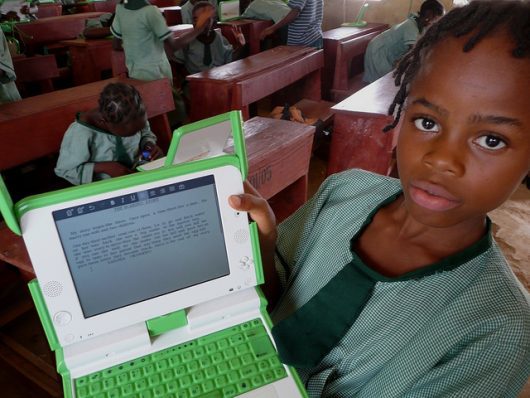
Remote learning, or the process of acquiring knowledge and skills through a program accessible through mobile or computer technologies, has the ability to expand access to education throughout the developing world.

Provided in the form of online lectures, quizzes and projects, online course material may allow large numbers of students worldwide to gain access to a world-class education that would otherwise be unavailable to them.

The number of students not enrolled in school has been rising in recent years, often due to poverty, conflict or financial issues. According to the United Nations Educational, Scientific and Cultural Organization (UNESCO), 124 million children between the ages of six and 15 were not enrolled in school as of 2013, up from 122 million in 2011. One out of every 11 primary-school-age children continues to be denied the right to education across the globe.

According to the Gates Foundation’s 2015 annual letter, remote learning will revolutionize education for people around the world by 2030 by giving citizens in impoverished areas educational opportunities that were previously inaccessible.

“Before a child even starts primary school, she will be able to use her mom’s smartphone to learn her numbers and letters, giving her a big head start,” Bill Gates said in the letter. “She will collaborate with teachers and other students in a much richer way. If she is learning a new language, she’ll be able to speak out loud and the software will give her feedback on her pronunciation.”

Educational access has always been a significant issue in developing and poverty-stricken areas. Students are limited when it comes to the classes and materials offered at the schools in their own communities. Digital education gives students within these developing or conflict-marred regions the ability to access educational materials.

In areas without significant funding for building heavy infrastructure, children would still be able to access education without traveling hours to schools in nearby communities. A shift to digital materials for use in learning courses also saves a significant amount of money for communities that may be struggling to provide educational materials such as textbooks.

Due to the lowering cost of mobile phones and tablets with online connectivity, technology is connecting students with teachers like never before. While many areas still lack service, Internet access and communications technologies have rapidly been emerging and expanding in developing nations over the last several years. Google Inc. is currently planning to spend more than $1 billion to bring service to these communities and expand Internet access to unwired regions of the globe via small, high-capacity satellites orbiting the earth, according to the Wall Street Journal.

The challenge of keeping children in school after primary school is tremendous, as the costs associated with secondary schooling are much higher, which is often difficult for families with lower income levels to afford. Also, secondary schooling facilities are often located farther away from rural communities, making transportation a challenge. Though online classes will never be able to replace a teacher, the technology may give children the ability to continue their education after primary school, while also pursuing other commitments.

Online education also has the ability to impart literacy skills and market-worthy training to adults who missed out on formal schooling opportunities when they were younger. It allows these individuals to pursue their education in their spare time by fitting in learning after they work a day job, provide for their families or while they are in between jobs or unemployed.

One organization, Lynda.com, an online education site providing e-learning platforms to more than two million subscribers worldwide, currently provides access to over 80,000 instructional videos relating to job skills in areas such as retail, construction and graphic design.

Many concerns remain about the challenges mobile education may pose. The cost of electricity in developing areas, the cost of network use, and the constant risk of theft or damage to the devices the children use are all threats to the sustainability of remote learning. Though these challenges in the current implementation of online education in these communities persist, technological advancement in the field continues to progress.

– Lauren Lewis

Sources: Business Insider, CNBC, CNN, Gates Notes, The Verge, The Wall Street Journal, UNESCO 1, UNESCO 2
Photo: Google Images

February 22, 2016
https://borgenproject.org/wp-content/uploads/borgen-project-logo.svg 0 0 Borgen Project https://borgenproject.org/wp-content/uploads/borgen-project-logo.svg Borgen Project2016-02-22 01:30:082020-06-23 08:29:03Remote Learning as Key to Expanding Global Education
Global Poverty, Technology

Knight Foundation: Welfare Benefits for Chicago’s Poor

Knight FoundationOn Jan. 26, the Knight Foundation announced the winners of its annual contest, the Knight News Challenge on Data. The challenge, which was inaugurated in 2007 amid the disruption that the digital age brought to journalism and news generally, grants select winners a share of $3 million.

Knight News Challenge winners can receive substantial funding to carry out their projects, said Anusha Alikhan, Knight Foundation Communications Director in an email.

“For example, eight of the Knight News Challenge on Data winners received investments of $237,589 to $470,000,” she said. “Nine early-stage ideas received $35,000 each through the Knight Prototype Fund, which helps innovators take media and information projects from idea to demo.”

This year’s challenge was the most competitive to date, capping at 1,060 submissions.

“The project unlocks information about how data can be used for community problem solving,” said Nina Zenni, the foundation’s Media Innovative Associate. “It makes data easier to interact with.”

Among the 17 winners this January was mRelief’s Documents Empowerment Project, a project that helps low-income users prove eligibility for public benefits programs. The project was established in September 2014 by a Chicago-based, all-female software development team. It received $250,000 as a winner of the Knight News Challenge on Data.

mRelief began as a medium through which those eligible for public assistance – including food stamps, free public transit and family health care – could bypass long lines and receive fast information about whether they qualify for state and nation-wide welfare programs.

Through a series of questions, the web application determines a user’s eligibility, local resources and the next steps to take in procuring the provided public benefits. Since its founding, mRelief says that its tool has reduced eligibility determination time by 75 percent.

The project has also evolved to include a wide variety of programs, partnering with the Chicago Public Library and Catholic Charities and expanding to a larger user base.

Through a partnership with Purple Binder, an application that refers to low-income communities to local services like food pantries or homeless shelters, mRelief was able to extend its reach beyond those who qualify for welfare benefits. mRelief is now accessible in a number of Chicago-based community centers, having created an eligibility tool capable of multi-program screening.

The mRelief project previously received funding from Knight Foundation as part of its Knight Prototype Fund in May 2015.  During its prototype stage, the mRelief board participated in a Knight Foundation-sponsored human-centered design workshop, becoming familiar with a wider user base to understand its needs.

They found, for example, that 54 percent of Illinois residents are not smartphone users, and would therefore not benefit from a smartphone application. Hence the creation of the SMS-functionality, allowing non-smartphone users to type “hello” to a number and fill out a text-delivered questionnaire.

This modernization of public assistance allows underprivileged populations streamlined access to welfare benefits within the area — in this case, the greater Chicago area. How such data usage could expand to an international level, however, remains on the horizon.

The Knight News Challenge on Data supports ideas that make data work for individuals and communities. A growing number of applicants begets a growing number of entrepreneurial projects seeking to merge data usage for increased impact.

As Jonathan Sotsky, Knight Foundation Director of Strategy and Assessment, writes: “Data provides an opportunity for fundraisers to allocate resources to the most effective nonprofits and increase the impact of programs they support.”

If this were to happen on an international level, it might change the landscape of global philanthropy for the better.

– Nora Harless

Sources: The Knight News Challenge on Data, The Knight Foundation, mRelief
Photo: StockMedia

February 20, 2016
https://borgenproject.org/wp-content/uploads/borgen-project-logo.svg 0 0 Borgen Project https://borgenproject.org/wp-content/uploads/borgen-project-logo.svg Borgen Project2016-02-20 01:30:462024-12-13 18:05:43Knight Foundation: Welfare Benefits for Chicago’s Poor
Development, Global Poverty, Technology

The Digital Divide

Digital Divide
A report released by the World Bank shows that while technology has expanded, more people have remained poor. This phenomenon is often referred to as the digital divide.

The World Bank finds that more households in developing countries own a mobile phone than have access to electricity or clean water, according to “Digital Dividends,” its 2016 World Development Report.

The digital divide is created because most benefits for private enterprises arrive instantly, such as streamlined communication and information, online convenience and social connectivity throughout the global community.

The investments from these enterprises would ideally generate employment growth and services for those in the developing world — but progress there is more stagnant.

According to the World Bank report, digital dividends have not grown at the same rate as digital technologies because 60 percent of the world’s population does not have Internet access and are therefore unable to participate in the digital economy.

There are also emerging risks – such as polarized labor markets and inequality – that contribute to the digital divide. Routine jobs are replaced when technological advancements are made, which means more unskilled individuals compete for fewer low-wage jobs.

To combat these effects, solutions include infrastructure investment, providing worldwide Internet access and monitoring offline factors of technologies by region.

“While technology can be extremely helpful in many ways, it’s not going to help us circumvent the failures of development over the last couple of decades. You still have to get the basics right: education, business climate and accountability in government,” said Digital Dividends Co-Director Uwe Deichmann.

Education in the developing world can provide people with the skills needed to utilize digital technologies and become more productive in the workplace, which reduces polarity within the job market, according to the World Bank.

Accountable government agencies should implement policies and regulations that create a competitive digital market so that information costs go down and societies have the opportunity to become more inclusive.

Though growth has slowed in the developing world, organizations have found ways for the poor to benefit from the information and communication technology sector.

Question Box exists as a telecommunications network that provides populations suffering from high illiteracy rates and social or technical barriers with access to information.

According to the Guardian, Question Box has installed a series of ‘call boxes’ in areas of Uganda, that connect disconnected communities to someone with Internet access who can relay answers to questions regarding health, employment or other related issues.

Otherwise disconnected communities have the ability to create successful societies if given access to the digital information many of us take for granted.

– Kelsey Lay

Sources: The Guardian, Question Box, World Bank 1, World Bank 2
Photo: Google Images

February 19, 2016
https://borgenproject.org/wp-content/uploads/borgen-project-logo.svg 0 0 Borgen Project https://borgenproject.org/wp-content/uploads/borgen-project-logo.svg Borgen Project2016-02-19 01:30:112020-06-23 13:17:08The Digital Divide
Development, Global Poverty, Technology

Digital Tech Saving People from Natural Disasters

Digital-Tech-Saving-People-from-Digital TechIn multiple developing countries, more families now have access to digital tech, such as cellphones, than to purified water or electricity. There is still a massive digital separation, however, between the poor and wealthier areas of the world in terms of Internet access.

According to “Digital Dividends,” an annual development report put out by the World Bank, greater strides must be made to connect more individuals to the Internet and to create a space that unchains the benefits of digital technologies for all.

Access to the Internet is crucial in vulnerable regions before, during and after a disaster occurs. Organizations like the Global Facility for Disaster Reduction and Recovery (GFDRR) have begun to create a wide range of tools that will deal with disaster risk management — but the tools rely heavily on the Internet’s unlimited potential.

Natural disasters can cause terrible damage, especially to the poorest parts of the world. As efforts step up to improve the Internet’s reach across the world, the GFDRR has helped over 160 million people in 60 countries gain improved access to risk information. Using its Open Data for Resilience Initiative (OpenDRI), the GFDRR also helps countries to establish open disaster information platforms.

Innovative approaches to disaster risk, such as crowdsourcing and social data mining, also expand the information base quickly and cheaply. OpenDRI’s community mapping projects deploy local citizens to collect and maintain data about the environment and how it changes during the different stages of a disaster.

By allowing more people to have access to digital tech, not only will they have access to better jobs and opportunities, they will have first-hand knowledge and awareness of impending disasters heading their way. Digital technology also encourages tighter-knit collaboration with the different parts of a region’s government and the private sector.

A prime example of using crowdsourcing to save lives, the FloodTags project is developing a tool to utilize data via Twitter for eye-witness flood observations. Concepts like this provide a constantly updated understanding of the situation, hopefully saving lives that would otherwise be lost in disasters.

After floods hit Jakarta, Indonesia in February 2015, tweets peaked at about 900 per minute, with a major number including information about location and water depth. FloodTags then utilized this information to devise a method for creating real-time maps based on the messages and regional statistics.

While digital tech like FloodTags and GFDRR’s OpenDRI system have steadily improved and saved lives over the last few years, they fall short in areas that do not have access to the Internet. For digital tech to aid everyone everywhere in the world, the remaining countries need to eventually close the gap in Internet access.

– John Gilmore

Sources: GFDRR, Reuters, WE Forum
Picture: Google Images

February 17, 2016
https://borgenproject.org/wp-content/uploads/borgen-project-logo.svg 0 0 Borgen Project https://borgenproject.org/wp-content/uploads/borgen-project-logo.svg Borgen Project2016-02-17 01:30:142024-12-13 18:05:39Digital Tech Saving People from Natural Disasters
Education, Global Poverty, Technology

Etisalat Raise ICT Literacy Through Donations

EtisalatEtisalat contributed 30 desktop computers in an attempt to improve Information Communication Technology (ICT) education at the Nuhu Bamali Primary School in Kano State. Etisalat hopes the computer donations will raise ICT literacy at the primary school.

The computers were presented to the school during a commissioning of facilities ceremony where Etisalat also unveiled school renovations, according to It News Africa.

The Vice President of Government and Regulatory Affairs for Etisalat, Ibrahim Dikko, said the donation was in line with their commitment to improving education in Nigeria through partnerships with the government.

ICT education has become a basic component of learning and will provide a greater benefit if students in primary and secondary schools are exposed to it early on. The company is dedicated to creating an improved and conducive learning environment for Nigerian children, according to Dikko.

Headmistress of Nuhu Bamali Primary School, Hajia Asmau Mohammed Lawan, hopes the computers will go a long way in giving pupils the cutting edge education to prepare them for their individual career paths according to It News Africa.

In October 2015, Etisalat donated desktop computers to the ICT center of Girls’ Government College in Nigeria, which is also located in Kano State.

According to Etisalat’s Head of Government and Community Relations, Mohammed Suley-Yusuf, “Etisalat is proud to be able to contribute positively to achieving the government’s objective of improving Kano State, especially in the area of education.”

Etisalat Group is a telecommunications provider who offers services to 18 countries throughout the Middle East, Asia and Africa. It is one of the world’s leading telecom groups and ranks among the most profitable telecom groups in the world. They work with the British Council to provide a Pan-Nigerian teacher training program and they continue to focus on improving education through their Adopt-a-School program.

The company is currently working on an initiative to create an Etisalat Telecommunications Engineering Postgraduate Program within the education sector.

– Jordan Connell

Sources: Etisalat, It News Africa, Prompt News Online
Photo: Manic

February 1, 2016
https://borgenproject.org/wp-content/uploads/borgen-project-logo.svg 0 0 Borgen Project https://borgenproject.org/wp-content/uploads/borgen-project-logo.svg Borgen Project2016-02-01 01:30:342024-05-27 09:28:46Etisalat Raise ICT Literacy Through Donations
Global Poverty, Technology

Yudala Makes First Drone Delivery in Nigeria

YudalaYudala made the first drone delivery in Nigeria during its Black Friday sale.

A group of spectators and several media organizations came with camera crews to watch the drone take off from the Yudala headquarters in Gbagada.

The drone delivered a Nokia smart phone to a customer who ordered from the Yudala website. It flew all the way to an Access Bank branch located along the Gbagada-Oshodi Expressway where the item was successfully delivered, according to Vanguard.

The customer who received the smart phone, Yetunde Lawal, said, “I am extremely delighted and indeed short of words to explain how I feel to be the first person to receive an item via drone delivery in Nigeria, all thanks to Yudala. This is an innovative concept in the evolution of e-commerce in the country, which I am sure other competitors will want to copy.”

Yudala continued to make drone deliveries throughout the rest of its Black Friday sales, which took place from November 26 to November 30.

Lawal said, “Yudala has met and exceeded my expectations, and I can only encourage all my colleagues, friends and family to shop and shop on Yudala. Black Friday is here, and I am glad that the Yudala offer will run till Monday.”

Companies such as Amazon are working to incorporate drone deliveries into their businesses, according to CNN. Drone deliveries are believed to be the future for online delivery companies.

Yudala is Nigeria’s first true composite online and offline retail chain. The word means “best wishes, peace of mind and prosperity” and is the first organization in Nigeria to combine an online platform with offline stores located in cities across Africa.

According to MSN News, Yudala has a strong ambition to control the pace and set new milestones for online and offline retail business. The company started up four months ago and has been very successful ever since.

They have been working on some powerful campaigns to break through to Africa, including “Neighbor to Neighbor Mega-Deals” and “October Mid-Day Madness,” according to Innov8tiv.com.

They have also entered into partnerships with other companies such as HP, Lenovo, Apple, Microsoft, Sony and Dell.

– Jordan Connell

Sources: CNN, Innov8tiv.com, MSN News, Vanguard
Photo: Somtoo

January 26, 2016
https://borgenproject.org/wp-content/uploads/borgen-project-logo.svg 0 0 Borgen Project https://borgenproject.org/wp-content/uploads/borgen-project-logo.svg Borgen Project2016-01-26 01:30:362024-12-13 18:05:35Yudala Makes First Drone Delivery in Nigeria
Global Poverty, Technology

Google Launches Wi-Fi in Uganda

wi-fi_in_uganda
Google launched Wi-Fi in Uganda for the first time as part of a project to broaden access to affordable high-speed Internet.

Google is making the wireless network available to local Internet providers, who can then charge customers for access. Wi-Fi is now available in 120 key locations in Uganda’s capital, Kampala.

According to statistics, Uganda has nearly 8.5 million Internet users, which makes up 23 percent of the population.

The use of smartphones has dramatically increased in Africa, but high-speed Internet access continues to be too expensive for many Africans to enjoy. Google is working to make access to high-speed Internet affordable for them.

Google estimates that one day of unlimited data using the network will cost around 1,000 Ugandan shillings, the equivalent of 30 cents in the United States, but local providers will ultimately decide how much they want to charge customers for access to the network.

Google said they hope that by improving Internet capacity in the city, local companies will be able to offer faster broadband access for cheaper.

Ugandans would like to see Internet access in rural and hard to reach areas as well.

So far, Google has laid 500 miles of cables in Uganda in order to establish a fiber-optic network. They are working on a more expansive project to improve web infrastructure in Africa.

There are plans to expand the project to the Ghanaian cities of Accra, Tema and Kumasi.

Facebook and Microsoft are also working on their own projects in developing countries with hopes that the whole world will soon have access to Internet.

Tech Times said they believe the more connected countries are, the better the world could be. Google is working to do its part to ensure more places around the globe have Internet access. Wi-Fi in Uganda is just the start of what the company said they hope to achieve.

– Jordan Connell

Sources: AllAfrica, BBC News, Tech Times  
Photo: Flickr

January 14, 2016
https://borgenproject.org/wp-content/uploads/borgen-project-logo.svg 0 0 Borgen Project https://borgenproject.org/wp-content/uploads/borgen-project-logo.svg Borgen Project2016-01-14 08:00:412020-06-24 16:32:33Google Launches Wi-Fi in Uganda
Global Poverty, Technology

Break Poverty Hackathon Will Improve Lives of Kenyans

dev without borders
A 24-hour break poverty hackathon between Kenyans and Canadians aims to develop a solution to tackle rural poverty and to improve lives of Kenyans.

Developers Without Borders, a Canadian non-profit organization, hosted the hackathon. The non-profit runs an online platform connecting software developers worldwide with international development projects.

The hackathon took place in Nairobi and Toronto over Skype and provided an opportunity for more than 200 Canadian and Kenyan software developers to work together. The hackathon trained software developers to build SMS, hardware and mobile web solutions, which will improve health, education and agriculture to the people of rural Kenya.

Danielle Thé, founder of Developers Without Borders, said, “The core of Break Poverty Hackathons are to build cross-continental relationships between software developers in different countries. By listening to others before we build, hackathon attendees at Break Poverty will create technology that aren’t just cool, but immensely life changing for people living in poverty.”

Participants in Toronto spent part of the event learning about real issues on the ground in Kenya, then coming up with ideas that could improve conditions and issues people face on a daily basis. The developers worked together to create realistic solutions to education, business and farming problems. Some of the apps created could help residents in areas such as measuring the market prices of their agriculture or monitoring maternal health.

“The number one goal is increasing access to information,” Thé said.

The winning solutions from the Break Poverty hackathon will be implemented by Free the Children in some of Kenya’s most remote areas. Free the Children is an international charity and educational partner that works to free children and their families from poverty and exploitation.

Developers Without Borders believes that solutions to international development issues will not come about if people work in isolation. The non-profit wants to continue to tackle rural poverty around the world.

– Jordan Connell

Sources: Development Diaries, Disrupt Africa, Free the Children, Metro News
Photo: Devs Without Borders

December 20, 2015
https://borgenproject.org/wp-content/uploads/borgen-project-logo.svg 0 0 Borgen Project https://borgenproject.org/wp-content/uploads/borgen-project-logo.svg Borgen Project2015-12-20 09:46:212024-12-13 18:05:28Break Poverty Hackathon Will Improve Lives of Kenyans
Global Health, Malaria, Technology

Fighting Malaria with Genetically Modified Mosquitoes

genetically_modified_mosquitoes
Scientists have genetically modified mosquitoes in an effort to combat the spread of malaria globally. This technological advancement could substantially reduce the transmission of malaria which continues to have devasting impacts especially in developing countries.

Malaria Facts

According to the World Health Organization (WHO):

  • In 2015, there were 214 million malaria cases across the globe and approximately 438,000 deaths.
  • Sub-Saharan African countries, such as Chad, Sudan, and Angola, are the most at risk for contracting malaria and 90 percent of all malaria deaths occur in these areas.
  • Children are one of the most high-risk groups – 482,000 children under the age of five died from malaria in 2012 alone.

Researchers affiliated with Imperial College London will seek to genetically modify Anopheles gambiae, the mosquito species most responsible for malaria transmission. Using a technology called “gene drive,” the researchers will use a modified gene to “disrupt” the egg production in female mosquitoes, making them sexually unable to reproduce.

However, some mosquitoes will simply become carriers of the modified gene. The gene will then be passed down “at an accelerated rate to offspring,” slowly discontinuing the spread of malaria throughout the population over time.genetically_modified_mosquitoes

In order to test the gene drive, the team identified three genes that were important in female fertility. After diagnosing those genes, they altered them, resulting in an adjustment that “disrupted the activity.”

The genes were modified with the CRISPR/Cas9 endonuclease, a special type of tool that is able to cut designated parts of the genetic code. Having the enabled ability to cut DNA at an exact location, researchers could then mutate them, rendering female mosquitoes infertile.

The researchers are optimistic that the spread could not only drastically reduce the number of malaria cases, but, in three years’ time, local populations of malaria-carrying mosquitoes could be eliminated.

“If successful, this technology has the potential to substantially reduce the transmission of malaria,” said co-author Andrea Crisanti from the Department of Life Sciences at Imperial.

The technique, although only targeting the Anopheles gambiae, could be tested on other mosquito species as well. The team did target other species while conducting their research; however, they decided to focus their efforts on Anopheles gambaie. Their range of testing proves that their “gene drive” is flexible and can be applied to a range of varied genes.

However, it will still be a substantial amount of time before the gene-altered mosquitoes will be ready. Professor Austin Burt from Imperial’s Department of Life Sciences told The Economic Times that he expects it will be “at least 10 more years before gene drive malaria mosquitoes could be a working intervention”.

Naturally, there is more work that needs to be accomplished before genetically modified mosquitoes can be introduced. Safety assessments and extensive reports must be generated before field trials can take place. However, the futuristic technology is encouraging and could dramatically alter the spread of malaria, as well as change the way scientists will attack other diseases.

– Alyson Atondo

Sources: WHO 1, WHO 2, IFLScience, India
Picture: Flickr1, Flickr2

December 20, 2015
https://borgenproject.org/wp-content/uploads/borgen-project-logo.svg 0 0 Borgen Project https://borgenproject.org/wp-content/uploads/borgen-project-logo.svg Borgen Project2015-12-20 01:30:172024-05-27 09:18:20Fighting Malaria with Genetically Modified Mosquitoes
Page 68 of 89«‹6667686970›»

Get Smarter

  • Global Poverty 101
  • Global Poverty… The Good News
  • Global Poverty & U.S. Jobs
  • Global Poverty and National Security
  • Innovative Solutions to Poverty
  • Global Poverty & Aid FAQ’s
Search Search

Take Action

  • Call Congress
  • Email Congress
  • Donate
  • 30 Ways to Help
  • Volunteer Ops
  • Internships
  • Courses & Certificates
  • The Podcast
Borgen Project

“The Borgen Project is an incredible nonprofit organization that is addressing poverty and hunger and working towards ending them.”

-The Huffington Post

Inside The Borgen Project

  • Contact
  • About
  • Financials
  • President
  • Board of Directors
  • Board of Advisors

International Links

  • UK Email Parliament
  • UK Donate
  • Canada Email Parliament

Get Smarter

  • Global Poverty 101
  • Global Poverty… The Good News
  • Global Poverty & U.S. Jobs
  • Global Poverty and National Security
  • Innovative Solutions to Poverty
  • Global Poverty & Aid FAQ’s

Ways to Help

  • Call Congress
  • Email Congress
  • Donate
  • 30 Ways to Help
  • Volunteer Ops
  • Internships
  • Courses & Certificates
  • The Podcast
Scroll to top Scroll to top Scroll to top