SDG 7 in China
Updates on SDG 7 in China show that the country is taking strides to ensure its entire population has access to sustainable energy. U.N. member nations adopted the United Nations’ 2030 Agenda for Sustainable Development, otherwise known as the U.N. Sustainable Development Goals (SDG), in 2015. Altogether, the SDGs comprise 17 goals that countries aim to meet by the year 2030. The seventh of these goals, SDG 7, aims for the entire world to receive access to affordable and sustainable energy. The United Nations has laid out SDG 7 through five different sub-targets by which it will tally and measure world progress.

Divided into numerous sub-targets, the ultimate aim of SDG 7 is to offer the world a mutually cooperative and unified destination for clean and affordable energy by 2030. In particular, it includes universally agreed-upon concepts such as establishing universal access to affordable, reliable and modern energy services, increasing shares of renewables in the energy mix and improving efficiency as well as international cooperation on energy.

World Progress So Far

Progress on SDG 7 has not been enviable. For instance, one challenging factor has been the low implementation of renewables across various states. The world’s two largest polluters, the United States and China respectively, utilize about 10% and 13% of renewables in their energy consumption. The onset of COVID-19 has only put global progress toward achieving these objectives on hold. However, COVID-19 has also left room for a positive and enthusiastic push toward meeting the SDGs. As of 2019, just before the COVID-19 pandemic hit, approximately 759 million people did not have energy access. Its unfortunate implications were that during the COVID-19 pandemic, in the worst cases, up to one in four hospitals lacked access to electricity, a sign of the importance of making further progress on SDG 7.

Updates on SDG 7 in China

Many are watching China in regards to both the environment and SDG 7, as it has been a significant contributor to global carbon emissions. Like many other countries, it has made significant progress on some targets while lagging on others.

For instance, China’s progress on SDG 7.1, which is the goal of granting affordable energy access to everyone, has received high marks. Since 2010, it has managed to connect electricity to virtually all 1.4 billion of its citizens and has kept pace with both its growing energy and population needs. However, the country’s reliance on industrialization still means it uses a heavy amount of non-renewable energy.

China’s energy efficiency, which relates to SDG 7.3, has also been improving. An indicator known as National Energy Intensity displays the energy efficiency of an economy by showcasing the amount of energy it has per point of GDP. China has shown a steady and accelerating drop in intensity, a sign of good news about the energy necessary per point of its GDP.

As it relates to the above and with the Paris Agreement of 2016, China has committed to growing its proportion of non-fossil fuels in primary energy consumption to 20% before 2030. It is ultimately aiming to achieve net carbon neutrality by 2060.

China’s Challenge

China is a significant player when it comes to progress on SDG 7; the scale of its economy makes it the largest investor in clean energy, peaking in 2018 with $125 billion in investments. This makes it the de facto leader in many renewables, from solar and to hydroelectric and wind. China’s greatest challenge going forward will be to replace its less sustainable forms of energy generation with more renewables.

With China’s massive rate of economic growth now clocking in at 18.3% in Q1 of 2021, finding a way to accelerate renewable energy use will be a crucial objective. As such a large country, meeting all of its citizens’ needs without non-renewables in the picture is unsustainable as it is difficult. As global climate infrastructure competition heats up, China, along with the rest of the world, should find the enthusiasm to convert post-pandemic recovery into progress the U.N.’s Sustainable Development Goals.

– Marshall Wu
Photo: Flickr
UNICEF’s Work During COVID-19In June 2021, the United Nations Children’s Fund (UNICEF) released its annual report outlining the work done during the prior year. This year, the report focused on UNICEF’s work during the COVID-19 pandemic. While complete data on how COVID-19 impacted global poverty may never be available, what is available paints a dire picture. Compared to the baseline projection of global poverty prior to the pandemic, 2020 saw 144 million more people in extreme poverty. At least half of this rise “could be permanent.”
Beyond the immediate impact of families falling below the poverty line, the pandemic is also likely to impact growth. Without policy action, the pandemic may “trigger cycles of higher income inequality, lower social mobility among the vulnerable, and lower resilience to future shocks.

Despite the difficulty, UNICEF works hard to counter the negative impact of the COVID-19 pandemic. UNICEF is an organization under the United Nations with the express purpose of protecting children’s rights across the globe. The organization mainly focuses on helping children in some of the toughest places in the world. It supports “child health and nutrition, safe water and sanitation, quality education and skill building, HIV prevention and treatment for mothers and babies, and the protection of children and adolescents from violence and exploitation.”

The Impact of COVID-19

The pandemic touched nearly every part of the globe in 2020. Its impact worsened global progress toward reaching the U.N.’s Sustainable Development Goals. Progress was already off track due to a range of humanitarian crises, climate change and inequalities across the world. This led to 142 million additional children living in “monetarily poor households” in 2020. The pandemic led to about 15% of all children spending the majority of the year under stay-at-home orders. An estimated 94% of students were affected at some point by school closures. These disruptions caused the most harm to children living in poverty. At least one-third of students didn’t have access to remote learning, and food disruptions led to 44 million children facing hunger.

While absolute mortality appeared to be less of a danger for children, the effects of the virus had a negative impact on almost every key measure of progress. Disruptions to health services impacted children across the world. An estimated 80 million children under the age of one “may miss out on life-saving vaccines.” The pandemic and its secondary effects also led to a rise in abuse as disruptions to violence prevention and response services rose.

UNICEF’s Response

Despite these disheartening consequences, UNICEF’s work during the COVID-19 pandemic has not stopped. It has been working continuously to provide the necessary services to handle COVID-19. It also dedicates resources to responding to non-virus-related situations. This global crisis has highlighted UNICEF’s ability to adapt to new challenges and find new ways to help children living in poverty across the world. One way in which UNICEF’s work during COVID-19 had a large impact was its efforts toward providing necessary supplies and helping with the rollout of vaccines.

Throughout 2020, UNICEF provided “water, sanitation, hygiene services and supplies” for 106 million people. It also provided PPE to 2.6 million health care workers and training to an additional 4 million health care workers. UNICEF also worked with COVAX to make sure that vaccines were procured and distributed equitably across the world. UNICEF’s work to help children across the world extended to efforts not directly related to health care. The organization also used its leadership to reach more than 130 million children through its social protection initiatives and cash transfers.

Future Work

As the world moves forward, necessary work remains to help rebuild much of what the pandemic brought down. To this end, UNICEF’s work during COVID-19 continues. Executive Director Henrietta Fore laid out five goals for UNICEF to work on as nations rebuild and reimagine the systems children across the world rely on:

  1. Provide equal access to vaccines for all.
  2. Revolutionize learning through bridging the digital divide.
  3. Provide proper investment and attention to mental health.
  4. End discrimination.
  5. Address climate change.

The pandemic continues to have a massive impact on children across the globe. Not only did the virus directly affect millions, but it also shone a light on many already existing inequalities. UNICEF’s work during COVID-19 was vital and helped millions throughout the year. In the future, UNICEF will continue to work to improve the lives of children across the world.

– Taryn Steckler-Houle
Photo: Flickr

Updates on SDG Goal 14 in VietnamVietnam is a tropical country in Southeast Asia with a coastline along the South China Sea. The livelihoods of Vietnam’s people and much of its economy depends on oceans for fishing and tourism. It also has a connection to the global economy through shipping lanes. SDG Goal 14: Life Below Water became a top priority for the Vietnamese government in the past few years. Updates on SDG Goal 14 in Vietnam show that the government believes in a multilateral approach to protecting marine life. Achieving SDG Goal 14 would prevent the collapse of one of Vietnam’s largest industries and protect citizens from slipping into poverty.
Overview of SDG Goal 14

SDG Goal 14 calls for the conservation and sustainable use of all marine resources. The U.N. finds that “improved regulations, together with effective monitoring and surveillance, have proven successful in reverting overfished stocks to biologically sustainable levels.” The U.N. also finds that such conservation efforts are low in developing regions. A commitment to SDG Goal 14 is also imperative because, economically speaking, the global value of marine and coastal resources amounts to $3 trillion annually. This equates to an estimated 5% of global GDP. Vietnam’s multilateral approach to implementing marine conservation efforts could have a significant impact on SDG Goal 14.

The U.N. identified several targets for SDG Goal 14 with individual timelines for each. Upcoming deadlines for targets include reducing marine pollution significantly by 2025 and sustainable management of fishing and tourism industries by 2030. SDG Goal 14 indicates that Vietnam successfully prevented overexploitation of ocean fish stocks. However, the U.N. found that major challenges remain for Vietnam in achieving clean ocean waters. The setbacks on ocean cleanliness counteract the progress on marine life protection. Because of this, the U.N. determined in 2019 that Vietnam’s progress on SDG Goal 14 is stagnant. To achieve the 2025 target and make progress on SDG Goal 14 overall, Vietnam must prioritize marine pollution.

Vietnam’s Actions Toward SDG Goal 14

The Vietnamese government identifies plastic litter as a significant cause of marine pollution. This creates a barrier to achieving SDG Goal 14. In 2020, Vietnam developed the National Action Plan for Management of Marine Plastic Litter, which sets ambitious goals to reduce pollution in government-controlled waters. This plan aims to reduce plastic litter in oceans by 50% by 2025 and by 75% by 2030. To do so, the government developed strategies to target the pollution from the source. This includes eliminating single-use plastic in coastal tourist areas and cooperating with international partners to find better ways to manage land waste.

This long-term strategy for combating marine pollution builds upon the progress made from short-term initiatives. For example, Vietnam hosts a national Sea and Islands Week every June since 2009 to motivate citizens to engage in ocean-conserving activities. This inspires local action to stop marine pollution such as beach clean-ups and behavior-changing campaigns to reduce litter.

Partnerships for SDG Goal 14

In addition to national initiatives, Vietnam engages in multilateral strategies to combat marine pollution. Vietnam signed on to the Bangkok Declaration on Combating Marine Debris as part of the Association of Southeast Asian Nations (ASEAN). The declaration commits Southeast Asian countries to protecting oceans and promoting international cooperation to achieve sustainable management of shared ocean space. Cooperation on the issue is crucial for Southeast Asia as much of the coastlines overlap and are governed by multiple authorities. In line with targets set by the U.N. for SDG Goal 14, the declaration aims to greatly minimize marine pollution by 2025.

To accommodate the goal, ASEAN released the Regional Action Plan for Combating Marine Debris in May 2021. The five-year plan offers countries very specific strategies for reducing marine pollution. Some strategies mirror Vietnam’s national initiatives such as reducing the inputs to marine pollution that originate from land and finding alternatives to plastic. However, ASEAN also developed highly specific guidelines for long-term projects, such as phasing out single-use plastics and improving the measurement and surveillance of marine debris. Partnering with multilateral institutions increases Vietnam’s ability to achieve SDG Goal 14.

Sustaining the Economy

As a coastal nation, Vietnam relies heavily on oceans to sustain its economy and support its population to rise out of poverty. SDG Goal 14 directs developing countries such as Vietnam to conserve marine life and restore clean waters to oceans. The Vietnamese government’s plans of action show its commitment to fully achieving this objective. Overall, the updates on SDG Goal 14 in Vietnam look hopeful. With plans in place, Vietnam is set to make significant progress on SDG Goal 14 in the next few years.

Viola Chow
Photo: Flickr

Updates on SDG Goal #8 in China
The global economy is an ever-changing and ever-expanding system. Whether through the opening of new markets, job creation or GDP fluctuations, one can measure the success of an economy in numerous ways. However, attempts at sustainability goals receive more specific judgment. The Sustainable Development Goals (SDGs) measure the success of an economy not only in regard to its growth but also that growth’s sustainability. Many countries with SDGs are those that have a pivotal impact on the world economy overall. This correlates with positive updates on SDG 8 in China, which commits the nation to the achievement of full employment for all citizens by 2030.

Laying the Economic Foundation

The Chinese economy has undergone many changes over the centuries. In the first 1,500 years, China followed the policy of Isolationism strictly. In the next few centuries, China gradually opened to the European countries. Many countries such as Germany, Russia and England vied for control over many of China’s crucial exports and markets. By the 20th century, China faced more pervasive and detrimental economic factors. It suffered from the toll of its countless Opium Wars as well as the resulting strain of having to compete with other countries vying for its resources. But by the mid-21st century, the post-WWII economic boom rejuvenated and then expanded China into the economic force that it is today.

Positive Correlations for SDG 8 in China

There are positives to China’s economic growth. World reliance on Chinese goods does not have a parallel, with China occupying a large percentage of the world’s imports. Furthermore, the particular rise in GDP in Beijing, which now accounts for 5% of China’s GDP, indicates the importance of Beijing as an ever-growing and pertinent city in China and the world’s economy.

Beijing itself has also sought to expand the visibility of industrialization in China. For example, Beijing devised a plan to push 15 million people into workplace training, as well as the expansion of 11 million more jobs by the end of 2021. China’s rise in GDP is so colossal that it actually managed to grow by 2.3% during the COVID-19 pandemic while many other prominent economies have dropped by 2.3%. This suggests positive updates on SDG 8 in China for development and job creation. Furthermore, estimates of China’s GDP, if its growth continues, could overtake the U.S. economy by 2028. If the value of Chinese currency continues to increase, it could accelerate this rise by 2026.

The Challenges

The results of these estimates are promising, but they are still only estimates. Moreover, there are prominent issues when it comes to the area of decent work. China’s advancing industrialization puts profound stress and lack of availability on its rural citizens. Those left behind in China account for about 30.46 million and are confined to the rural areas in China.

One of China’s main problems is the uncertainty of it all. Furthermore, a Communist government controls China. As a result, the political system suffers from high amounts of censorship and misinformation. Eric Hu accounted in the New York Times that “China is both the world’s newest superpower and its largest authoritarian state.”

Hu’s and similar statements acknowledge the economic power of China. However, the nature of China’s political system does question the validity of its informative claims, including those of an economic nature. China resists forfeiting government control or enlisting the aid of NGOs. In fact, many successful NGOs have to operate without government permission in order to assist people facing poverty. Yet, there is some improvement in this area, with available NGOs like Jiangxi bringing 500,000 yuan to struggling Chinese villages as well as financial plans for its disbursement.

Meeting Opportunities

China’s middle class may be on the rise, as well as its GDP and hopeful updates on SDG 8 in China. However, in order for true advancement to occur, there needs to be a greater emphasis upon financial aid and transparency towards its citizens who are in poverty and even extreme poverty. If this occurs, coupled with China’s impressive GDP growth, the country could attain many economic benefits.

– Jacob Hurwitz
Photo: Flickr

Updates on SDG Goal 10 in ArgentinaIn Argentina, the COVID-19 pandemic and ensuing economic unrest has stalled efforts to close the inequality gap. Before the pandemic hit, Argentina was making progress on a series of Sustainable Development Goals (SDGs), which is a framework of global objectives created by the United Nations, designed as a “blueprint to achieve a better and more sustainable future for all” by 2030. The country was “well-positioned” compared to its Latin American counterparts, according to the Argentine Network for International Cooperation (RACI). The onset of COVID-19 has impacted updates on SDG Goal 10 in Argentina.
Achieving SDG 10: Reducing Inequality

Argentina had been struggling to achieve SDG 10, which focuses on reducing inequalities within a county’s population and among different countries around the world. To measure inequality, the SDGs use a scale of 0 to 100. The lower the score, the closer the country is to achieving economic equality. The goal is to achieve a ranking of 30 or lower by 2030. Before the COVID-19 pandemic, Argentina had a ranking of 51. The pandemic has siphoned resources out of the government and stalled updates on SDG Goal 10 in Argentina and other progressive reforms. On top of that, millions of Argentinians have lost their jobs and inequality is expanding as a result.

President Alberto Fernández

In December 2019, President Alberto Fernández won the presidential election over conservative incumbent, Mauricio Macri. President Fernández’s political style is that of his mentor, former president, Néstor Kirchner. However, “the COVID-19 pandemic might very well shatter the center-left president’s dreams of following in his mentor’s footsteps and bringing social progress and economic growth to Argentina,” writes Hugo Goeury.

Despite Fernandez’s progressive goals for his administration, reforms have all been put on the back burner since the arrival of COVID-19 in Argentina.

Poverty, Unemployment and the Wealth Gap

In the first half of 2020 alone, the poverty rate among Argentinians increased to almost 41%, the Americas Society/Council of the Americas reported, nearly a 5% increase from the previous year. The Central Bank is also predicting the GDP to contract by nearly 11%.

With almost a third of Argentine workers facing unemployment, President Fernandez is scrambling to financially support his unemployed constituents, while also negotiating the country’s debt owed to the International Monetary Fund (IMF).

According to the World Inequality Database, as of 2019, the top 10% wealthiest Argentinians controlled nearly 40% of the country’s income, while the bottom 50% only possessed 17.9% of the nation’s income.

Better Days Ahead for Argentina

Even though updates on SDG Goal 10 in Argentina seem especially challenging right now, Argentinians are still
pushing forward to make their country more equitable for everyone. The U.N. says, “In the post-pandemic world, Argentina must strengthen its productive apparatus and continue to eliminate inherited social inequities and those aggravated by COVID-19.”

– Laney Pope
Photo: Wikimedia Commons

SDG 1 in Guatemala
The United Nations put the Sustainable Development Goals (SDGs) in motion in September 2015. World leaders put the SDGs into place to reach worldwide financial equality while protecting the world’s environment. To reach this globally beneficial achievement, the United Nations created 17 goals for every country, poor and rich, to focus on transforming the world into a healthier, safer and prosperous place. Guatemala has joined its fellow countries in the United Nations to try and meet the requirements for goals one to 17. Here is some information on what Sustainable Development Goal 1 is along with updates on SDG 1 in Guatemala.

About SDG 1

SDG 1 is for no poverty and to end poverty by 2030. While this may seem like an outrageous goal with limited hope of success, past records show that it is very possible. In fact, 1.9 billion people lived in extreme poverty in 1990, but 25 years later in 2015, that number was less than half of what it had been. In the span of 25 years, more than a billion people are not living in extreme poverty anymore.

The outline to meet SDG 1 comprises seven targets. Some of these targets include equal rights to land, access to basic services, appropriate new technology and the implementation of programs and policies to end poverty. The point of the targets is that each one helps move countries toward no poverty through new resources, programs and equal rights.

Poverty in Guatemala

Approximately 60% of Guatemalan people live in poverty and that number is even higher for indigenous people. Additionally, more than half of Guatemala’s population living in poverty and 95% of employed people are unable to make enough money to meet their family’s basic needs.

Much of Guatemala’s poor economy is due to a civil war that left its people divided. From 1960 to 1996, Guatemala was in a brutal civil war involving the government’s military forces and a rebel group of indigenous Mayans. About 200,000 people lost their lives and 83% of those killed in the war were Mayan. The country eventually signed a peace accord in 1996 but the war left its people distressed. Even before the war, Mayans made up most of the rural poor and by 1996, they were in worse conditions than before.

Mayan Families

Mayan Families is an organization located in Guatemala that helps families advance through Economic Development programs. It provides opportunities like trade schools and artisan programs. The trade schools teach youth and adults new skills they can use to get jobs to have a reliable income for their families. Meanwhile, the artisan program helps women who were unable to attend school learn how to create a budget and make money from selling products involving beadwork, weaving, sewing and embroidery, playing a crucial role in reaching SDG 1 in Guatemala. In 2019, Mayan Families provided 1,500 students access to education and nutrition. Meanwhile, about 250 adults were able to gain skills and an income through the trade schools and the artisan program that Mayan Families started.

The World Bank and COVID-19

Guatemala still has significant challenges to overcome, but the U.N.’s index shows moderate progress in reaching SDG 1 of no poverty. The COVID-19 pandemic has made it more difficult to achieve SDG 1 in Guatemala because the country has been directing money towards preventing an outbreak instead. However, thanks to institutions like the World Bank, Guatemala and countries alike are receiving the financial support they need to deal with the worldwide pandemic.

The World Bank has loaned Guatemala $20 million, “to prevent, detect and respond to the threat posed by COVID-19 and strengthen national systems for public health preparedness in the Republic of Guatemala.” Guatemala’s government has had a challenging time dealing with the pandemic due to its poor economy. This project includes indicators to show the progress in achieving this objective.

 Some of the indicator targets include 16 laboratories with COVID-19 equipment, 10 health care facilities with isolation capacity, 5,000 health staff trained in infection prevention and 22 hospitals that received equipment for COVID-19 response services. With this loan from the World Bank helping Guatemala control the coronavirus pandemic, Guatemala should be able to return its focus to the SDGs.

Guatemala is still currently off-track to reach SDG 1 according to the World Poverty Clock. However, with the loan from the World Bank and organizations like Mayan Families, Guatemala is receiving the help it needs to grow its economy and make it possible to reach SDG 1 of no poverty.

Joshua Botkin
Photo: Flickr

SDG 3 in South SudanProsperous health and well being are the backbone of a progressive society. Unfortunately, countless people in the developing world struggle to access affordable and effective healthcare. South Sudan is an Eastern African country riddled in an ongoing ethnic conflict. In addition, it is one of the hardest-hit nations on the issue of healthcare.
So far, South Sudan has dealt with over 3,500 cases of COVID-19. While that number may seem small, it’s astronomical for a country with such sparse medical supplies and trained personnel.

Thankfully, South Sudan has been working with the international community for the past couple of years. They are working to bolster its progress toward better healthcare, otherwise known as Sustainable Development Goal 3 (SDG 3). As outlined by the United Nations Development Programme, the SDGs are a set of benchmarks to help developing nations overcome structural poverty. The third goal, good health and well-being, focuses on resolving “account widening economic and social inequalities, rapid urbanization, threats to the climate and the environment, the continuing burden of HIV and other infectious diseases and emerging challenges such as non-communicable diseases.” The fundamental goal of SDG 3 is universal healthcare.

Out of the 1.6 billion people worldwide who lack sound healthcare systems, a portion lives in South Sudan. Thus, it is important to understand and explore the implications of SDG 3 in South Sudan.

Progress Overview

As part of Sustainable Development Goal 3, South Sudan has been working with international partners to implement a new universal healthcare system. In 2018, the South Sudanese Ministry of Health (MoH) announced it would be working with the World Health Organization (WHO) and its partners on the Boma Health Initiative (BHI). The BHI will deliver healthcare packages to communities for no charge. It will also place an extra focus on those living in hard-to-reach rural areas.

The program came out to address SDG 3 and the country’s lack of access to healthcare services. As of 2018, “only 44% of the population [is] living within a 5-kilometer radius of a health facility.”

So far, the WHO and South Sudanese MoH are still debating the costs and budget gaps to finance the program. These debates especially focus on maternal care. Fortunately, policymakers have the 40-year-old primary healthcare system to build off of. With the said system in place, the WHO and South Sudanese officials focus on critical areas of healthcare disparities. They want to ensure the universal system will be efficient and effective once it rolls out.

COVID-19 Response

However, with the recent pandemic, South Sudan’s MoH and other officials have focused on the response to COVID-19. So far, they have made substantial progress. In May 2020, South Sudan successfully trained over 100 health workers on “COVID-19 case management and infection prevention and control.” Participants were said to have “knowledge and skills on patient screening, isolation, contact tracing, use of Personal Protective Equipment (PPE) and waste management.” The rapid increase in health management training is especially helpful to expand contract tracing and to limit the severity of COVID-19 in at-risk communities.

Additionally, The South Sudanese MoH recently partnered with the World Food Programme and the International Medical Corps to expand infectious disease units. The initiative has equipped South Sudanese hospitals with a “new 82-bed capacity treatment unit [with] a temperature-controlled dispensing pharmacy and a fully equipped laundry to boost infection prevention and control.”

Aid From Other Countries

Moreover, to ensure long-term success for SDG 3, South Sudan is partnering with other countries to improve its health infrastructure. For instance, CARE, an international non-profit, received part of a $2 million grant to “strengthen healthcare infrastructure through preparedness, surveillance and response; empower, train and educate local women leaders, including community health workers; and increase water, sanitation, and hygiene support.” Furthermore, CARE is also coordinating with the Sudanese Education and Health Ministries. Their goal is to expand medical education in local communities and fight off misinformation.

In addition, the U.S. recently announced a $108 million aid package for South Sudan to develop more advanced health infrastructural systems.

From targeted efforts from international organizations like the WHO to non-profits and world superpowers like the U.S. donating aid, the world is gradually taking action. South Sudan is facing its darkest hour and limited healthcare options. Therefore, the international community must continue its efforts to help South Sudan realize its goal.

– Juliette Reyes
Photo: Flickr

Food SystemsIn the next 30 years, the world population will grow by two billion: approximately 25% of the current population. Food demand will increase significantly during this time and international organizations are prioritizing the development of strategies to address this concern. Framing the future of food systems, which encompass producing, processing, transporting and consuming food, is key to continued efforts in reducing poverty and extreme hunger.
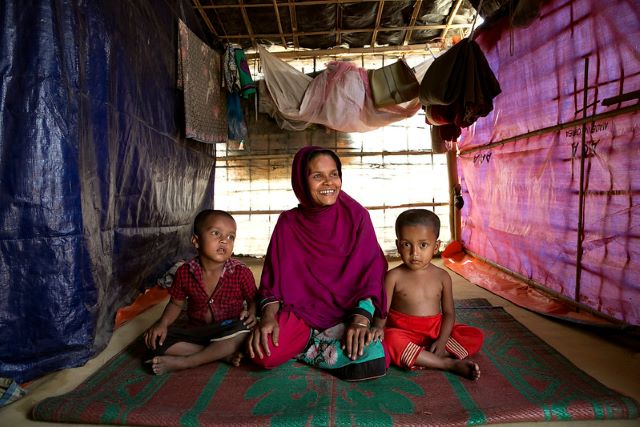
Population Growth in Africa

Global population growth does not imply an equal or even proportional increase in every region of the world. The population of sub-Saharan Africa, for example, is estimated to double by 2050, from approximately one to two billion. This number accounts for half of the global population growth expected. Such substantial growth in a population already experiencing food insecurity, if not coupled with sustainable food system developments, will exacerbate the issue and make advancement more difficult.

Facets of Food Security

Increasing demand for food is not the only threat to the future of food systems around the world. The cultivability of land is changing with the climate, requiring workers in the agriculture sector to adjust crop selection and techniques. Instability in the industry detracts from the appeal of such an occupation and further strains the food supply.

Many producers of food are among the hardest hit by the effects of food insecurity. In India, 41% of the workforce falls under agriculture, yet the country is home to the largest number of people experiencing hunger in a single nation — approximately 189 million. With the food supply responsibility falling on some of the most at-risk populations, food systems are even more vulnerable when confronted with adversity.

The COVID-19 pandemic is an example of adversity faced by food systems. Limits put in place to prevent further spread of the virus weaken the agriculture sector of the workforce and economy. This stress on food systems extends to the global economy, education, peace efforts and human rights, among others.

The Decade of Action

Just 10 years remain to meet the United Nations’ 17 Sustainable Development Goals (SDGs) by 2030. The second SDG necessitates improvements in food security, nutrition and agriculture across the globe, marking the next 10 years as the Decade of Action. The 2021 U.N. Food Systems Summit (UNFSS) has been planned to foster discussions of global challenges, priorities, opportunities and solutions in the food system sector, hopefully resulting in unified and inclusive efforts toward achieving the SDGs. In a lead up to the 2021 UNFSS, 13 organizations collaborated to host the two-day Bold Actions for Food as a Force for Good event in November 2020.

Food System Innovations

Along with the need to shift toward more sustainable consumption, gender-equity in food systems, agricultural innovations and financing for solutions, the Bold Actions for Food as a Force for Good event emphasized the importance of novel approaches to reducing extreme hunger with the Food Systems Innovation Challenge. In this challenge, teams of students from 20 universities proposed innovative ideas to transform the future of food systems. Solutions proposed by these teams include online systems connecting producers and consumers to keep all facets of the food market current on need and capacity. Apps and food labels to provide guidance on reducing food waste and making more sustainable dietary choices as well as food packaging that minimizes waste and carbon footprints formed part of these solutions.

A Sustainable Future

Projections for global population growth alongside new challenges stemming from climate change and COVID-19, make food security a top concern. By promoting the now-underway Decade of Action, the U.N. is leading unified efforts to establish sustainable and equitable food systems worldwide. Progress will depend on effective mobilization, collaboration and innovation— the backbones of development toward more stable food systems.

– Payton Unger
Photo: Flickr

Public Development BanksIn November 2020, the world’s 450 Public Development Banks (PDBs) gathered at the first-ever global summit, the Finance in Common Summit. The summit emphasized that PDBs have an essential role in meeting the U.N. Sustainable Development Goals (SDGs) that encompasses both short-term responses and sustainable recovery measures. The commitment of PDBs to a joint effort in support of vulnerable communities around the world is an unprecedented step toward inclusive global development.

Public Development Banks

Public Development Banks are essential to the global economy and play a key role in fighting extreme poverty and hunger by bridging finance and public policy. PDBs are supported or controlled by governments but are legally and financially independent. Investments by PDBs made up 10% of yearly public and private investments in 2018, though all PDB investments are public, allowing the banks to openly and actively direct finances toward the evolution of international economic order and inclusion of declining countries with fewer limitations. This makes PDBs especially effective at supporting change for institutions, economies and infrastructure that reflects their public mandate to work in favor of entrepreneurs and vulnerable groups, such as women and children. None of the financing done by PDBs is related to consumers, individual accounts or credit.

A Cause for Cooperation

Conditions in areas suffering from extreme poverty are declining due to climate change and COVID-19. Developing countries have limited capacity to adapt their unstable agricultural methods and systems to changing climates. The capacity that does exist, including aid received, has been strained by the COVID-19 pandemic and the economic and social issues that accompany it. Common hardships have shed light on the need for united relief efforts that reach all regions and societies, and Public Development Banks have taken action by joining in unprecedented discussion and collective decisionmaking. The desired outcome was a diverse and collaborative movement to achieve the SDGs and respond to the challenges arising from COVID-19 and climate change.

The Future of PDB Financing

The developments made at the Finance in Common summit are clearly communicated in a joint declaration made by all 450 PDBs. The Public Development Banks came to a consensus for aligned strategies and investments that will support sustainable growth in societies and the global economy, all while prioritizing eco-friendliness. Future activity of PDBs will be targeted at attaining the SDGs and responding to a changing climate. Another outcome of the summit was a group of PDBs that will focus investments on rural sectors and agriculture around the world to help eradicate poverty and hunger.

Steps that PDBs have committed to taking together include transitioning investments to support low-carbon and climate-resilient solutions, renewable and clean energy and ecosystem restoration. Also on the global PDB agenda is improving the accessibility of education, housing, hygiene and sanitation as well as advancing social and financial inclusion. These measures were developed with the world’s most vulnerable in mind: young people and the elderly, members of rural communities, refugees and small-scale producers, among others. The alliance of PDBs is dedicated to achieving these goals while upholding best practices in finance and global inclusion.

PDBs Fighting Global Poverty

Public Development Banks have displayed a capacity to serve as leaders in the fight against extreme poverty and hunger. Their landmark summit can be a model for future progress toward equality in all parts of the world. In the middle of widespread crisis and instability, such international cooperation is needed more than ever.

– Payton Unger
Photo: Flickr

SDG Goal 1The Sustainable Development Goals (SDGs) are a set of 17 U.N. goals aiming to achieve global sustainability through smaller subgoals like eradicating poverty and moving toward clean energy. Member states of the U.N. aim to achieve all of the SDGs by 2030. Goal 1, in particular, hopes to “end poverty in all its forms everywhere.” In recent times, achieving the SDGs by the target date has become uncertain due to the COVID-19 pandemic. However, Canada has shown progress in meeting SDG Goal 1.

Poverty Overview

Canada is the second-largest country in the world by land area. The country has a universal healthcare system and a high standard of living. Despite this, the country is not immune to poverty. In 2018, 5.4% of Canadians were experiencing deep income poverty, which means having an income below 75% of Canada’s official poverty threshold. In addition, Canada’s indigenous population, which make up around 5% of the population, are often subject to extreme political and societal marginalization, making them more susceptible to poverty and homelessness.

Poverty remains a reality in Canada, in spite of its reputable presence on the global stage. The country has not yet met SDG Goal 1 but continues to make efforts toward it. The Canadian Government has developed several initiatives and allocated resources to attempt to meet these goals. In 2018, a budget of $49.4 million spread over 13 years was approved to help meet the SDGs.

Tracking Canada’s Poverty Progress

The Canadian Government has been funding and supporting numerous initiatives to alleviate poverty in the country. In total, since 2015, the Canadian Government has invested $22 billion in efforts to alleviate poverty and grow the middle-class. The results have been positive. In 2015, the Canadian Poverty Reduction Strategy resolved to reduce poverty by 20% before 2020. The 2015 poverty rate was 12% and this strategy aimed to achieve a 10% poverty rate by 2020. Canada achieved this goal in 2017 when the Canadian Income Report reported that the country had reached its lowest poverty rate in history.

These improvements are due to several poverty reduction initiatives. Canada’s Guaranteed Income Supplement, for example, provides monetary assistance to senior citizens with low incomes, preventing them from falling into poverty. The reforms also introduced the Canada Child Benefit, granting families with young children more financial assistance. Additionally, the Canada Workers Benefit was introduced with an aim to lift 74,000 people out of poverty.

The Canadian Government has also resolved to aid its indigenous populations. In 2010, just over 7% of individuals who identified as indigenous were found to make less than $10,000 annually. Recent government initiatives have attempted to remedy these poverty gaps, including the National Housing Strategy’s promise to help indigenous populations.

Looking Forward

While Canada is yet to meet SDG Goal 1, the country has made substantial progress in reducing poverty. As of 2018, the poverty rate was measured to be 8.7%, a decrease from the 12% poverty rate in 2015. Increased poverty-related challenges are apparent as the COVID-19 pandemic threatens people’s economic security. Still, however, the data on Canada’s progress shows just how much the country has done in the fight against poverty and the positive impact of its poverty reduction initiatives.

Maggie Sun
Photo: Flickr