Information and stories on social activism.

Rebuilding Afghanistan
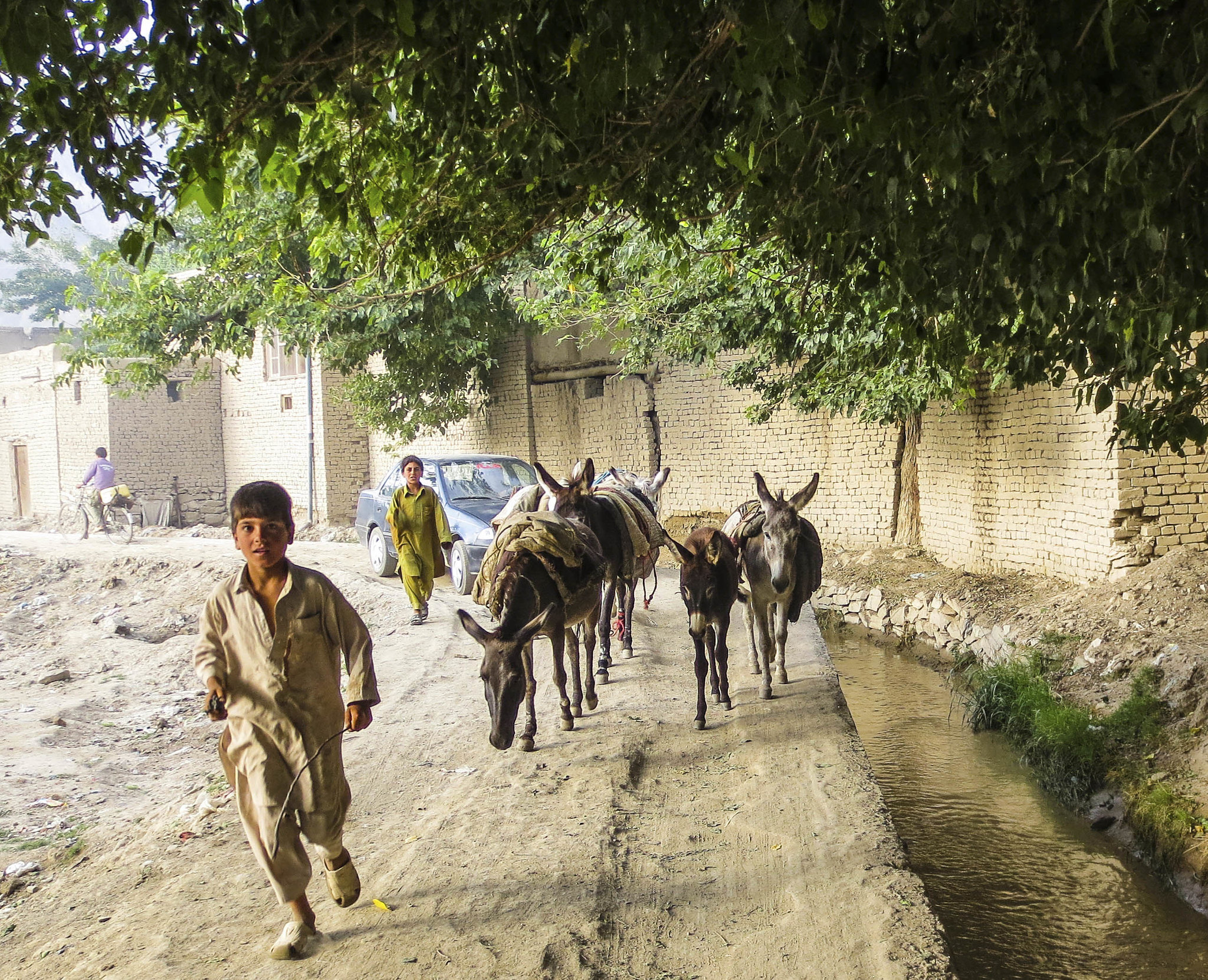
Rebuilding Afghanistan has been no small feat for President Ashraf Ghani. His innovative political career started when he returned to Afghanistan in 2002 from the United States after leaving his job at the World Bank. Upon returning in 2002, he served as finance minister after the collapse of the Taliban Government and proved essential in the reconstruction of Afghanistan.

Ghani took many steps to rebuild Afghanistan between the end of his term as finance minister and the beginning of his presidency in 2014.

He is the co-founder of the Institute for State Effectiveness, a program that addresses the challenge of accountability and governance through refining governments, markets and people. This program greatly improved many countries. The Afghanistan Project was also created, which supported security, governance, economic and civic transitions.

More recently, in his role as president, Ghani instated a new Anti-Corruption Council. As corruption has been identified as one of the greatest threats to efforts to rebuild countries, the new council will make a great difference in the development of Afghanistan.

Ghani has also been a vocal critic of the way international aid money was being wasted in Afghanistan before he became president. This is one of the many problems he sought to fix when he finally became president in 2014 after running and losing in 2009.

Additionally, in 2006 Ghani gave a Ted talk titled “How to Rebuild a Broken State.” The talk was on his theories regarding the necessary steps to rebuild suffering and broken countries; and showcased his extensive knowledge on governments and what it would take to rebuild a country.

Broken and struggling countries who desire to successfully rebuild themselves need leaders like Ghani. Ghani’s expertise and programs have also helped countries internationally. These implemented programs specifically geared toward rebuilding Afghanistan can serve as an example for other leaders in their quest to rebuild their own countries.

Julia Arredondo
Photo: Flickr

Gender-Based Violence in BrazilAccording to the U.N., gender-based violence in Brazil is a major issue. A woman in São Paulo is assaulted every 15 seconds. A group of girls from Maranhão, Brazil hopes to change that. The girls are participating in Plan International’s Girl Leadership Project. Part of the initiative entails getting involved in local government and petitioning congresspeople for change. Eighteen-year-old participant Luanna Natalia spoke her mind on the issue of gender-based violence and discrimination.
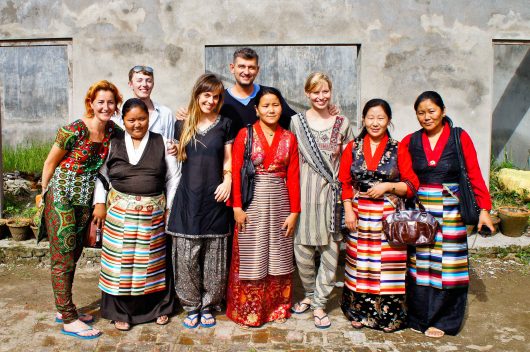
“No woman or girl deserves to suffer violence or prejudice just because they’re female,” Natalia said. “We can only achieve equality if we work together to build a better world and a better society in Brazil.”

Gender-based violence is not just a problem in Brazil. It affects women worldwide. According to the U.N., as many as 76% of women are targeted for physical and/or sexual violence in their lifetimes. This pandemic undermines the safety, stability and security of all women, not just those personally affected. It also presents a serious issue in terms of global poverty. Women generally make up half a country’s potential workforce. Gender-based violence can:

  • Prevent women from working due to illness, injury or fear;
  • Increase lost wages, as well as health care, police and legal expenditures;
  • Limit women’s access to reproductive health care and family planning, making work difficult after pregnancy;
  • Increase the likelihood of miscarriages, stillbirths or abortions;
  • Force women to have more children than they’d like (these children may also experience a lower quality of life, putting more strain on a developing country’s already sparse resources).

In order to more actively fight gender-based violence, the U.N. proposed a Millennium Development Goal to promote gender equality and empower women by 2015. In 2015, the U.N. reiterated this sentiment in its Sustainable Development Goals, reflecting the work that still needs to be done by 2030.

Plan International’s Girl Leadership Project represents a promising step toward ending gender-based violence in Brazil and elsewhere. By raising awareness and empowering girls to advocate on behalf of themselves and other women, Plan International and other organizations are working to convince world leaders that the problem of gender-based violence deserves more attention. In the words of Natalia, “If we stand together, it proves we are not in this fight alone.”

Sabrina Santos

Photo: Flickr

Volunteering
A common reason for conflict, whether cultural, racial or economic is lack of empathy. The solution to this problem may be simpler than previously believed. An article on psychology website Spring suggests that empathy can increase with as little as two positive experiences with a group.

To collect their research, scientists paired Swiss people with people of Balkan descent. The Swiss-Balkan relationship has historically been tense due to anxiety about immigrants in Switzerland. In the experiment, Swiss participants expected to receive a painful electric shock but were rescued by people with traditional Balkan names.

The Swiss participants then received brain scans while observing other people being shocked. If earlier in the experiment a Balkan person had helped the Swiss person in question, the Swiss participant’s brain would demonstrate a similar empathetic response toward both Balkan and Swiss victims. If, however, the Swiss person had not had that positive encounter with a Balkan participant, he or she exhibited lower levels of empathy toward Balkan victims than towards Swiss victims.

According to this study’s researchers, “Our findings show that empathy with an out-group member can be learned and generalizes to other out-group individuals.”

How can these findings be applied globally? Simply put, they may indicate that volunteering can increase empathy. Not only can volunteering help reduce some of the immediate symptoms of global poverty; it can also decrease inter-group tension.

Bridging the gap preventing different groups from interacting with each other is an important step in reducing conflict. Volunteerism does just that by putting human relationships first. It places members of different communities that may never have had positive inter-community encounters in close proximity to each other. Positive volunteering experiences can lead to increased empathy and decreased conflict between them.

In an article by the New Zealand Red Cross, Warwick Armstrong, a volunteer driver for the Cross Town Shuttle wrote about the benefits of volunteering. The Cross Town Shuttle provides transportation for people in Christchurch who have no transportation means of their own. Armstrong said he enjoys the companionship his position provides.

“It’s good for your health!” he wrote. “It gives your empathy batteries a recharge”.

Volunteerism puts human relationships first and encourages personal interaction. It is a powerful tool for increasing empathy, and thus reducing tension, between groups.

Jordan Little

Photo: Flickr

Poverty in South Korea Poverty Rate 2016
In 2012, speakers and screens worldwide played “Gangnam Style,” a song that illustrated the life of the city that contains seven percent of South Korea’s GDP in an area of 15 square miles. The hit surpassed two billion views on YouTube, but the opulence within the video is in no way representative of the true poverty in South Korea.

However, beneath the luxury, technology, and consumerism that characterize the nation is a forgotten and struggling generation largely responsible for transforming South Korea into a modern economy — the elderly.

Elderly Disproportionately Affected by Poverty in South Korea

Every Thursday, seniors line up for hours outside churches to receive the equivalent to 50 cents and a juice box or a banana. Organizers of this short-term relief program for poverty in South Korea report 300 to 500 seniors at each church every week.

“Half of the elderly is poor in [South] Korea. So it’s really a very serious problem,” Seoul National University professor Ku In-hoe told NPR. The country has the highest elderly poverty rate of the 34 developed nations.

The elderly living in poverty in South Korea earn 50% or less of the median household income, which amounts to U.S. $9,890 per year, according to the IB Times.

The government does provide alleviation with pensions of $200 per month for the retired, but the National Pension Research Institute Survey revealed this amounts to merely a quarter of the minimum income needed for single households. Furthermore, only an estimated 35% of seniors receive the pension.

While 7.9% of households with a retired senior describe their living expenses as “comfortable,” 41.7% rated them as “inadequate” and 20.4% as “extremely inadequate”.

Those living in poverty in South Korea increasingly rely on loans to survive. The national household debt recently topped US $971.6 billion, or 81% of the South Korean GDP.

“Before the 1990s, usually younger people supported their parents during their retirement so it was not that serious of a problem,” Ku added in his interview with the NPR. “But elderly people [now] live longer, and younger people also experience economic difficulty.”

In fact, the declining birth rate in South Korea will stymie the ability of the young to meet the demands of a growing population. The most recent Korean Census shows the elderly rose from seven percent of the population in 2000 to 12% in 2013. Experts expect a continued increase as more baby boomers age and retire.

An organizer of the church and mobile soup kitchen services, Pastor Choi Won, also cites the waning of Confucian traditions as a contributor to the elderly poor in an interview with Korea Portal.

“Gone are the days when children looked after their parents,” he said. One in three seniors lives alone in South Korea.

The South Korean government plans to provide more assistance in the future, as the pension system that began in 1988 evolves. Officials predict, “90 percent of people aged 64 and over will receive pension by 2060,” according to Korea Portal.

In the meantime, churches will continue to provide additional assistance to elders who experience poverty in South Korea.

Ashley Leon

Photo: Flickr

Hunger in Israel
Israel’s economy is indisputably very strong. Despite being the size of New Jersey, the Jewish State has the second-most high-tech startups on Earth and has unemployment charting at 4.8 percent. While this data may be encouraging, the economic report fails to mention the issue of hunger in Israel.

The National Insurance Institute reported that almost a quarter of Israel’s population lives below the poverty line, putting this country among the poorest nations of all OECD countries. As many as a third of Israeli children are impoverished.

Along with staggering beggary, about 110,000 of the 444,000 poor Israeli families live day by day with a shortage of food supplies.

In light of these conditions, Social Affairs Minister Haim Katz passed an ambitious plan to tackle food insecurity in a situation starving for solutions.

The four-month-old National Food Security Program aims to combat hunger in Israel by granting subsidies to households with limited purchasing power. Households are deemed eligible if their income is near poverty levels — Israel’s Social Affairs Ministry will give $85 per month to families that qualify.

Katz’s lofty goals will not be palpable for a while. The National Nutritional Security Council, an advisory group within the Social Affairs Ministry, will only fund vouchers for around 20,000-25,000 families, leaving over 75,000 families without assistance.

The United States allocates $3.1 billion annually in foreign aid to the Jewish State, yet 100 percent of the funding goes to “peace and security.” In addition, 25 percent of Israel’s defense budget comes from American taxpayers.

Without allocating any funds to food security, the U.S. government announced in July that it will grant Israel “the largest pledge of military assistance to any country in U.S. history.”

Although evident why the requisite of renewing this military assistance must occur, the money’s allocation unfortunately neglects the 444,000 families who suffer from severe hunger in Israel.

Providing humanitarian aid to malnourished Israelis is not impossible. Americans who are keen to contact their elected officials can incite change towards improving Israel’s food insecurity.

Calling Congress can have a potentially huge impact on hunger in Israel. Legislators like Betty McCollum admit to being influenced by constituents when hundreds of them dial to enact legislation.

Famished families in Israel are not just hungry for food, they are ravenous for change. Investing in food security is investing in stability, and that stability can also help bolsters Israeli consumers in an American-dominated market.

Noah Levy

Photo: Flickr

Health Service_IndiaMedical researchers hailing from Punjabi, and fellow contributors M. Teotia and Rinku Sharma, have closely examined the effects of pollution on children in India.

In a 1998 document, Teotia relays that Indian children bearing low calcium levels are the most susceptible to bodily distortions after drinking polluted water. One of the noted disfigurations included clubfoot, an occurrence that totals 500,000 cases per native children on an annual basis.

Follow-up reports by Sharma’s team found that infants suffering from air pollutants can develop heart defects and Down Syndrome. It is further described that the recent influx of unplanned pregnancies and poor nutritional status oftentimes worsen the defects.

In the late 2000s, health investigators learned of compound Uranium’s effects. This element not only held notoriety as the power wheel for India’s money making markets, but it also was accountable for mobile and mental disability in natives.

Experts dug deeper and soon found that the early 1960’s Euro-run firm Uranium Corporation of India Limited (UCIL) played a large role in the pollutant crisis, especially given that records showed the company designating small units to nearby villages of indigenous people, thereby exposing them to radiation.

These findings have since met debatable terms. One side defends that uranium power has been essential in saving noted regions from debt, while the other dissents that no native benefits financially other than accumulating “cancer[ous] diseases.”

In 2009, threats were made against international researchers that if they did not keep quiet about their findings, the medical professionals would be stripped of their legal visitation and have their operated clinics within the country closed.

In one scenario, friction was ignited when The Guardian was notified by a classified health operative that his Indian-based resource center was aborted and redirected to Germany after it was found that his reports contained “unflattering” text about massive mining firms. When The Guardian attempted to get a word from Indian industrial powers, officials declined to comment.

With little to no assistance from the Indian health service in terms of a complete outlook on the situation, several locals have taken matters into their own hands.

Under the guidance of a 2010 “Indian Express” write-up, handicapped children are encouraged to eat vitamin B9-enriched foods to reduce and reverse certain deformity effects. Meals containing flour or leafy greens have also been considered.

The report informs natives that an Indian health service like CURE International could limit high chances of accumulating bodily deformities. Moderating long-held customs like incestuous marriage and outdoor defecation should also be evaluated, for these practices can create the development of further defects.

Other solutions vary. Experts have noted many Indian natives oftentimes succumb to the lack an Indian health service to treat a deformity when medical insurance is not cost-effective, and as a result, many of them have no choice but to turn to a personal homemade solution.

Many have yet to answer why there are such restrictions on thorough research regarding the dangers of uranium production. However, the bigger question remains: how much longer until change ends such continually distressing events?

-Jeff Varner

Photo: Flickr

d
The North Korean refugee situation is not one to be taken lightly. While the American media predominantly focuses on the recent refugee crises in Syria and other Middle Eastern countries, the totalitarian regime of North Korea impedes on the human rights of North Korean refugees everyday and such injustices cannot be ignored.

10 Facts about North Korean Refugees

  1. The people who live in North Korea are governed by Kim Jong-un under a completely totalitarian regime. Totalitarianism as a form of government theoretically prohibits individual freedom and expression; all aspects of an individual’s life are subject to the government’s authority. As such, media access and information about life outside of North Korea is extremely restricted.
  2. Most North Korean refugees defect to either China or South Korea. Refugees must usually travel through China to reach South Korea, as the border between North and South Korea is extremely regulated.
  3. South Korea’s media usually does not publicize individual defections, but large groups of North Koreans who defect all at once, such as the group of thirteen restaurant workers who left North Korea in April 2016, are more likely to be reported.
  4. The government of South Korea offers citizenship to all North Korean refugees who legitimately try to claim refugee status. The people seeking refuge are extensively interviewed to filter out any North Korean spies. As of May 2016, around 29,000 North Korean refugees live in South Korea.
  5. South Korea also offers reorientation classes for refugees from NK. These courses teach refugees basic life and job skills that don’t apply in North Korea, such as how to withdraw money from an ATM or shop in a Western-style supermarket.
  6. If any refugees from NK manage to escape to China, most face the fear of Chinese government discovery and the forcible repatriating that follows. Despite a signatory on the United Nations convention on refugees stating that China is not obligated to repatriate people seeking refuge, China still cooperates with the North Korean government and will even pay Chinese citizens to turn in undocumented refugees.
  7. Once they arrive back in North Korea, the refugees generally face torture, harsh physical labor and internment in political prisoner camps. It is therefore important to make sure people who want to leave North Korea can leave without fear of repatriation and punishment for leaving their country of birth.
  8. Organizations like Liberty for North Korea use donations to provide rescue and rehabilitation for North Korean refugees without any direct cost to the refugees themselves. It costs about $3,000 to fully rehabilitate one refugee. So far they have rehabilitated 505 refugees.
  9. As of May 2016, over 200,000 North Korean refugees live secretly in China. Most of them live in fear of repatriation and simply want to move on to South Korea or another country that will offer legal protection to refugees. However, tightly restricted travel between China and other countries’ borders often prevents such an opportunity.
  10. Many refugees from NK suffer from a host of mental health problems, including but not limited to depression and PTSD, even after they leave North Korea.

The cooperation of the Chinese with North Korea’s government makes the Chinese government complicit in the refugee injustices. North Korean refugees need help, and they’re looking to the rest of the world for aid.

Bayley McComb

Photo: Liberty in North Korea

Myanmar
Earlier this summer, the state counsellor and minister for foreign affairs  (also a Nobel Peace Prize winner) of Myanmar, Daw Aung San Suu Kyi, spoke at the opening ceremony of an International Development Association (IDA) meeting held in Myanmar to spread awareness about conditions in her country.

IDA is a sector of the World Bank that aims to assist the world’s poorest nations. IDA is currently working towards a triannual replenishment initiative and Myanmar is one of the possible recipients. The recent meeting was the second of four talks about the replenishment plan in 2016.

While the meeting was held in a more urban area of the country, Suu Kyi urged attendees to consider sending aid to the rural villages of her country. According to Suu Kyi, these areas suffer from a lack of electricity, hunger, poor education, and a lack of jobs.

She told her audience, “We would like to work together with you to lift our people…out of a situation where they are dependent either on other institutions or on other people to survive. We want our people to feel that they are capable of carving out their own destiny.” While Myanmar has already received financial report from IDA, the country hopes to receive greater aid in the future.

While speaking, Suu Kyi organized her points to fit with the numerous themes of the meeting. She worked to highlight how each theme would impact the small nation. She also shared that two of the nation’s current goals include working towards national reconciliation and internal peace.

Suu Kyi does not wish to take aid away from other countries that may need it as much, if not more, than Myanmar, and acknowledges that she knows many other nations working towards development too.

She believes that Myanmar needs more material and logistical support from the IDA to address some of the current issues plaguing the country. In the words of Suu Kyi, “ending poverty is a difficult task, and we all have to join in.” Suu Kyi supports Myanmar, now it’s up to the IDA if they do too.

Carrie Robinson

Photo: Flickr

The Compassion Experience
The Compassion Experience is a unique take on raising awareness for global poverty while simultaneously alleviating children out of poverty. Compassion International is providing a first-hand look at the daily lives of the global poor through their interactive Compassion Experience.

The Compassion Experience is an exhibit currently touring the country, hosted by Compassion International, a non-profit organization that provides opportunities for child sponsorship to help lift children out of poverty. Operating since 1952, Compassion has grown from aiding 35 children in South Korea to helping millions of children worldwide become healthy adults.

Compassion’s Accomplishments

The organization also accepts one-time donations to do things such as build a well, provide literacy classes, and cover the neonatal care of a pregnant woman. The Experience is meant to build upon these goals by allowing for a better understanding of the daily difficulties imposed by poverty.

To Lynnelle, an Ohio-based volunteer who has worked with the organization for over 20 years, the work Compassion is doing through their interactive experience is invaluable.

In an interview, she explained, “We talk about [global poverty] all the time, but we don’t have any idea what people in the rest of the world go through.” Raising awareness for global poverty needs to be more than just words, and Compassion knows how to do just that.

A Day in a Compassion Exhibit

The exhibit itself operates out of a large, climate-controlled tent and series of trailers. An audio tour chronicles the lives of three children whose lives have been changed by Compassion, highlighting the positive effects sponsorship has had for them. In the Compassion Experience’s Mentor, Ohio location, these children were Olive, from Uganda; Carlos, from Guatemala; and Kiwi, from the Philippines.

In Olive’s case, Compassion provided for treatment for her tuberculosis and then, once healthy, helped her return to school. She eventually received a volleyball scholarship in the United States, where she went on to earn a master’s degree in social work. She now works for the same organization that changed her life.

The Compassion Experience provides human faces and compelling narratives that demonstrate the daily realities of those living in poverty. Lynnelle described her visit to Rwanda, where she saw those living conditions first hand: a small, closet-sized room and no running water.

However, thanks to the efficacy of foreign aid and organizations such as Compassion International, things are changing. The Gates Foundation cites that the percentage of poor people around the world has dropped by more than half since 1980, with countries such as Brazil and India more than quadrupling their real income per person.

According to Bill Gates in his 2014 Annual Letter, children who have been lifted up out of poverty, “do more than merely survive. They go to school and eventually work, and over time they make their countries more self-sufficient.” Raising awareness for global poverty and increasing levels of activism is a necessity for all countries, not an option.

Lynnelle put it much more simply.

“This to me,” she said, “is changing the world.”

Sabrina Santos

Photo: The Compassion Experience

Sustainable DevelopmentThe High-level Political Forum on Sustainable Development (HLPF) will meet in July 2017 at the U.N. Headquarters in New York to discuss the U.N. 2030 Agenda, which was adopted on September 25, 2015 at the United Nations Sustainable Development Summit. The theme of the forum is “Leaving No One Behind,” and it will meet from July 11 to 20.

The HLFP replaced the Commission on Sustainable Development in 2013 and meets every four years under the U.N. General Assembly and under the Economic and Social Council (ECOSOC) during other years.

According to the Sustainable Development Knowledge Platform, the goals of the Forum include to guide the execution of the Sustainable Development Goals (SDGs), give suggestions about the 2030 Agenda, incorporate and apply science and international experiences and track the SDG.

The President of the ECOSOC, Oh Joon, stated that the Forum also aims to focus on the national ownership of the SDGS and incorporating the Goals into development plans.

Among its many objectives, the Forum will review the 2030 Agenda and the SDGs with help from reviewers from 22 countries across the world. The President of ECOSOC stated that the reviews are part of the new ways that the Forum works to secure that the world achieves the 2030 Agenda amidst changing global conditions.

The Forum will also take into account the inaugural report entitled “Progress towards the Sustainable Development Goals” presented by Wu Hongbo, U.N. Under-Secretary-General for ECOSOC. The document is the first real report of the progress of the 17 SDGs.

As Wu said in an interview, eliminating poverty is both “the greatest global challenge” and a “requirement for sustainable development” that the Forum aims to address with improved methodology.

Although the HLPF is just one event among the many that it will take to create a sustainable, poverty-free world, the deliberations of the Forum are a crucial first step to continual progress.

Addie Pazzynski

Photo: Flickr.