• Link to X
  • Link to Facebook
  • Link to Instagram
  • Link to TikTok
  • Link to Youtube
  • About
    • About Us
      • President
      • Board of Directors
      • Board of Advisors
      • Financials
      • Our Methodology
      • Success Tracker
      • Contact
  • Act Now
    • 30 Ways to Help
      • Email Congress
      • Call Congress
      • Volunteer
      • Courses & Certificates
      • Be a Donor
    • Internships
      • In-Office Internships
      • Remote Internships
    • Legislation
      • Politics 101
  • The Blog
  • The Podcast
  • Magazine
  • Donate
  • Click to open the search input field Click to open the search input field Search
  • Menu Menu

Archive for category: Sanitation

Global Poverty, Sanitation, Water Sanitation

10 Facts about Sanitation in Vietnam

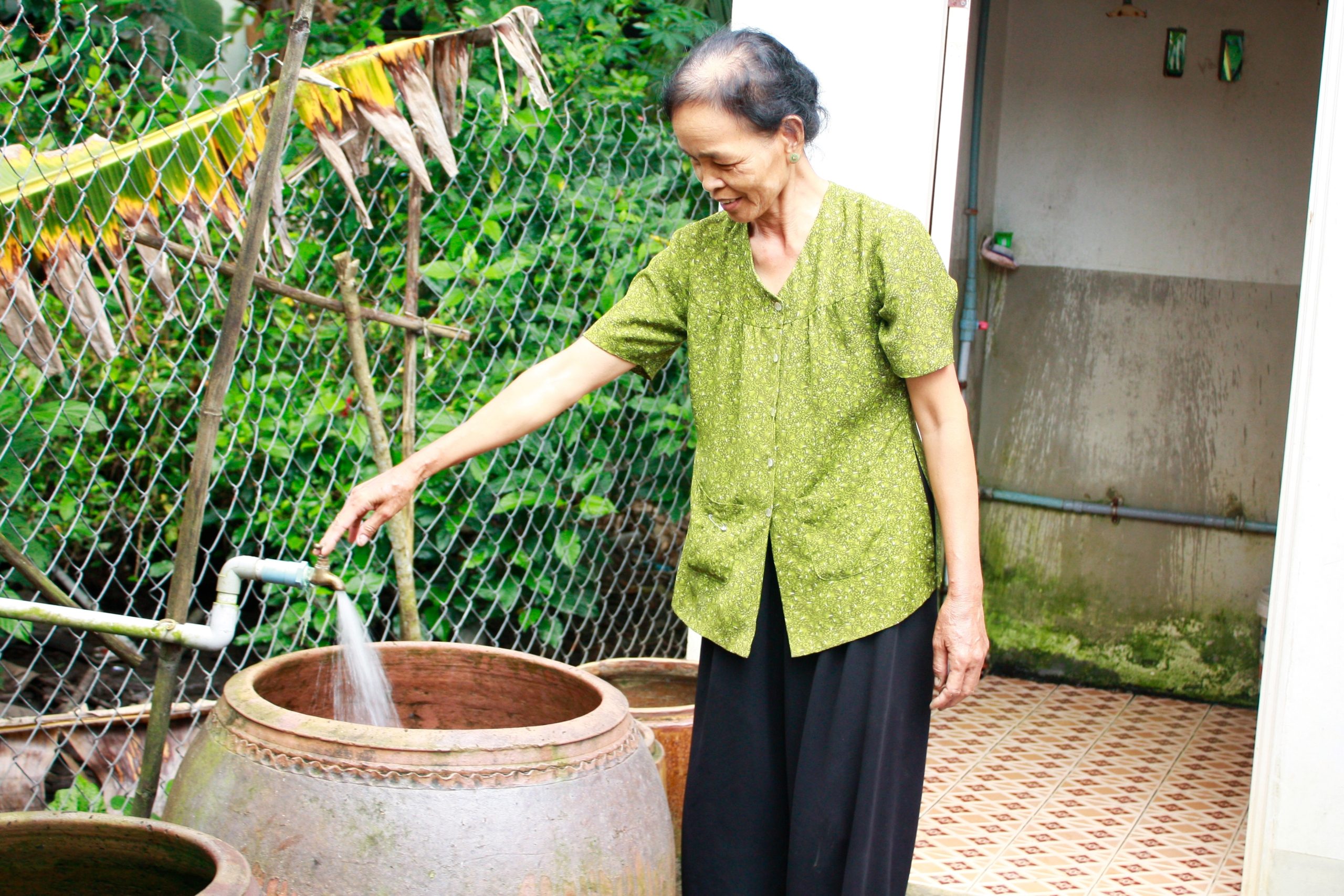
10 Facts about Sanitation in VietnamVietnam, once one of the world’s poorest nations, has seen remarkable growth after the economic and political reforms in 1986, transforming it into a middle-income country with one of the world’s fastest-growing economies. The rapid economic expansion has lifted millions out of poverty and provided them with access to services and goods that improve the quality of life. However, Vietnam does not prioritize some important aspects of development which affects the most vulnerable and low-income communities in the country. Sanitation is one such aspect that the government has not properly attended to. While 99 percent of people in industrialized nations have access to improved sanitation, only 69 percent of Vietnamese people had such access in 2006. Here are 10 facts about sanitation in Vietnam.

10 Facts About Sanitation in Vietnam

  1. Vietnam has seen considerable progress in improving water supply and sanitation. From 1990 to 2011, the access rate to improved facilities of water supply rose from 88 percent to 99 percent in urban areas, and from 50 percent to 94 percent in rural areas. The access rate to improved sanitation facilities rose from 64 percent to 93 percent over the same period in urban areas, and from 30 percent to 67 percent in rural communities.
  2. Vietnam has experienced financial losses from poor sanitation. Vietnam lost an estimated $780 million due to issues related to poor sanitation. The cost of treating illnesses, losing income through reduced or lost productivity and losing time and effort finding access to sanitation facilities has driven the economic losses.
  3. Urban wastewater does not receive adequate treatment. The number of operational treatment plants is small, with the majority of households in urban areas relying on on-site facilities such as septic tanks or soakage pits and discharging overflow into waterways or drains. These household facilities tend to function inefficiently and rarely empty. Estimates determine that less than 10 percent of urban wastewater receives treatment. The drainage and sewage systems in Vietnam combine and often overflow in the rainy season, discharging waste into the streets.
  4. There are severe health impacts of poor sanitation. Poor sanitation and hygiene cause almost 11 million cases of diseases and over 7,000 deaths. Diarrhea is the main disease and also the number one cause of deaths from poor sanitation and hygiene, with reports of seven million cases and over 4,000 deaths. Vietnam estimates that improvements in sanitation and hygiene could reduce health-related costs by $228 million.
  5. Vietnamese people have limited access to sanitary latrines. As of 2011, only 55 percent of the rural population had access to hygienic latrines. In the Northern Mountains, Central Highlands and Mekong River Delta regions, 15 to 22 percent of the population do not have access to any kind of latrines, while 45 to 55 percent of the communities use unhygienic latrines. Only 20 to 30 percent of households own a hygienic latrine in these regions.
  6. Open defecation is still common in rural areas. While the national rate of open defecation has reduced to 1 percent, one in 10 people from rural areas still practices defecating in the open. The rate of open defecation is about three in 10 people for the ethnic minorities in poor and remote regions. This behavior contaminates the environment and water sources, making people vulnerable to various diseases. It is both a concern for health and economic reasons. Vietnam is committed to eradicating open defecation by 2025.
  7. Vietnam has provided an investment in its water supply. The public sector of Vietnam has invested $6.4 billion into 140 water programs and projects between 2006 and 2015. It is currently financing at $1 billion annually for the water and sanitation sector alone but still falls short of the investment requirements, which it estimates to be $2.7 billion annually. While public investment is declining, there are opportunities for developing and increasing the investment and operations of private sectors in Vietnam, as well as public-private partnerships.
  8. Vietnam is undergoing a Water and Sanitation Project for Schools in Vietnam. In 2016, UNICEF started the five-year project with funding from KAO corporation to improve environmental hygiene in rural areas of Vietnam. The project has renovated poor condition WASH (water, sanitation and hygiene) facilities in 18 schools and provided training and hygiene promotion to 170 teachers in 40 schools since its inception. One hundred and forty villages in An Giang Province have achieved Open Defecation Free (ODF) status. The project aims to reach 60 elementary schools by the end of the five-year period, benefiting 35,000 children in rural communities.
  9. Vietnam has international support and the SSH4A program. SNV collaborated with local partners to develop the Sustainable Sanitation & Hygiene for All (SSH4A) program from 2010 to 2013, which the Australian and the United Kingdom governments funded. The program has benefited 200,000 people from poor households in the remote areas of Vietnam, enhancing access to improved sanitation and developing hygienic practices.
  10. Women have challenges accessing water in Vietnam. Many women in rural Vietnam face discrimination and many challenges in accessing WASH services, resulting in unmet sanitation needs due to existing gender norms and low income. The Women Led Output Based Aid (WOBA) project, which Water for Women Fund and Thrive Networks support, aims not only to improve access to clean water and sanitation but also to create gender empowerment and ensure social inclusion in marginalized households.

These 10 facts about sanitation in Vietnam highlight some of the challenges and achievements that Vietnam has made. It is undeniable that the country has made considerable progress in improving access to clean water and sanitation services over the past few decades. Thanks to both the national and international efforts, Vietnam was able to exceed both the Millennium Development Goal target for water and sanitation after a 15-year commitment. Vietnam is now working toward the goals of eradicating open defecation by 2025 and providing access to safe drinking water to all Vietnamese by 2030. To achieve these goals, it is important not only to focus on constructing new facilities but also to instill behavior change and public awareness campaigns at the community level.

– Minh-Ha La
Photo: Wikimedia Commons
 

February 4, 2020
https://borgenproject.org/wp-content/uploads/borgen-project-logo.svg 0 0 Kim Thelwell https://borgenproject.org/wp-content/uploads/borgen-project-logo.svg Kim Thelwell2020-02-04 09:00:052024-05-29 23:14:3410 Facts about Sanitation in Vietnam
Global Poverty, Sanitation, Water, Water Quality, Water Sanitation

10 Facts About Sanitation in Cuba

10 Facts About Sanitation in Cuba
Although the Cuban Communist Party has relaxed some aspects of the nation’s government-directed socialist economic policies, Cuba remains one of the world’s only communist states. Cubans face many economic challenges due to their somewhat politically isolated status, especially since the dissolution of the Soviet Union and subsequent loss of Soviet aid. Despite this, Cuba perseveres and continues to address domestic quality of life concerns. Here are 10 facts about sanitation in Cuba.

10 Facts About Sanitation in Cuba

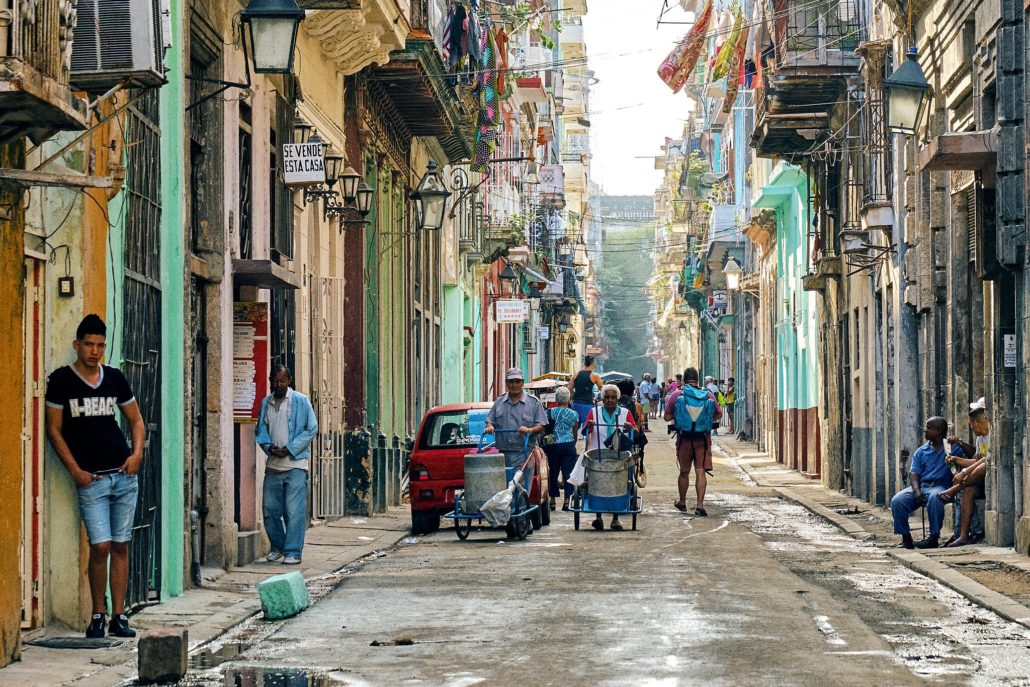
  1. Water Shortages: The extreme drought in 2017 highlighted the limitations of Cuba’s outdated water infrastructure and revealed the Cuban government’s inability to quickly mitigate water shortages. Urban residents without water could request government water delivery, but the overburdened government struggled to respond adequately. Instead, citizens often turned to the black market to acquire water.
  2. National Hydraulics Program: The second point among these 10 facts about sanitation in Cuba is that the country’s ancient water pipelines are prone to leakage and inconsistent water flow, often resulting in flooded streets and homes without running water. Even in periods of drought, water loss and inefficient water distribution are more of an obstacle than a straight lack of water. To correct these problems, Cuba implemented a national hydraulics program funded with loans from OPEC, Saudi Arabia, China and others. So far, workers have installed 227,000 new water meters and cut water loss by 10 percent.
  3. Water and Sanitation Improvements: As of 2015, access to drinking water and sanitation facilities had improved drastically. Many (94.9 percent) of the population has improved access to drinking water sources in the form of safely piped water, clean public taps and rainwater collection while 93.2 percent have better access to sanitation facilities. These improvements are more apparent in urban settings, as 96.4 percent of city-dwellers and only 89.8 percent of the rural populace have benefited from refurbished water infrastructure. Droughts have disrupted the available and consistent delivery of clean water, but Cuba continues to revamp its water and sanitation infrastructure.
  4. Environmental Challenges and UNESCO: Decades of periodic oil spills and the release of wastewater into the historic Bay of Cienfuegos has harmed Cuba’s fishing industry, damaged the environment and threatened tourism. UNESCO’s designation of the bay as a protected World Heritage site spurred some environmental recovery efforts. Cuba’s government estimates that restoration will cost approximately 1 million pesos.
  5. Class and Demographics: Despite frequent shortages and infrastructure issues, Cuba’s drinking water supply is safe in most parts of the country. However, there are class and demographic divides in water access as the urban poor and rural populations are the most likely to go without, while Cuba often caters to tourists. The goal of Cuba’s hydraulics program is to completely supply the entire population with adequate amounts of clean water so that the Cuban government actively engages itself in fixing these problems.
  6. Water Treatment Facilities: Cuba’s surface water treatment facilities use rapid sand filtration methods, which are not always effective due to a shortage of chemicals and equipment. Consequently, only 62 percent of Cuban citizens have access to clean water. Aiding domestic efforts aimed at fixing Cuba’s water issues, China installed fourteen water purification plants in central Cuba.
  7. Water Affordability: Although clean water is not as readily available as Cubans might desire, it is always affordable. As is the case with most social institutions in Cuba, water utilities receive government subsidies and are therefore cheap. As of 2018, a household of four paid less than $0.25 USD for water service.
  8. Sanitation Infrastructure Improvements: Much of Cuba’s sanitation infrastructure is decades old and does not serve most of the rural population. Cuba is in the process of modernizing its wastewater treatment facilities with assistance from the United Nations Development Program. Additionally, Italy’s TECOFIL is responsible for opening 300 functional and environmentally sustainable wastewater treatment plants.
  9. Benefits of Tourism: Tourism is a critical component of Cuba’s economic activity, so the nation sometimes caters to tourists at the expense of the native populace. While tourists have ready access to clean bottled water, ongoing droughts and other troubles sometimes leave the locals rationing a limited supply of available drinking water. On the bright side, tourism brings international attention to Cuba and may lead to beneficial foreign enterprise along the lines of TECOFIL’s operations.
  10. The EU and UNDP: The EU pledged 600,000 Euros to Cuba in order to combat the effects of the 2017 drought. This fund is to preserve Cuba’s capacity for agricultural production and maintain drinking water supplies. Between 2014 and 2018, the UNDP spent 25.4 million Euros on 46 environmental and biodiversity focused projects in Cuba, including improvements to water quality and quantity. The UNDP plans to intensify its efforts in this regard.

These 10 facts about sanitation show that although the country struggles to provide its citizens with adequate sanitation facilities and consistent clean water supply, the government is taking concrete steps towards improving the status quo. Economic reform and continued foreign investment will contribute to Cuba’s progress.

– Dan Zamarelli
Photo: Flickr

February 1, 2020
https://borgenproject.org/wp-content/uploads/borgen-project-logo.svg 0 0 Jennifer Philipp https://borgenproject.org/wp-content/uploads/borgen-project-logo.svg Jennifer Philipp2020-02-01 07:30:382024-05-29 23:14:4510 Facts About Sanitation in Cuba
Global Poverty, Sanitation, Water Quality, Water Sanitation

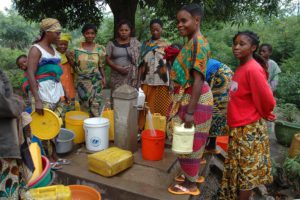
10 Facts About Sanitation in Kenya

Sanitation in KenyaLike many regions of Africa, Kenya is a country that has a history of problems regarding sanitation and access to clean water. As of 2019, the levels of clean water and sanitation in Kenya are still critically low but efforts are being made to change the status quo. Water.org and other organizations are responsible for many of these improvements. Below are 10 facts about the sanitation and water crisis in Kenya.
10 Facts About Sanitation in Kenya

  1. According to Water.org, 41 percent of people in Kenya rely on water sources such as ponds, rivers and wells. However, 71 percent use unimproved sanitation solutions. Water.org has also reported that only nine out of 55 public water services in Kenya have provided continuous access to water.
  2. In 2010, Water.org introduced a large-scale initiative known as “WaterCredit,” which provides small loans to enable greater access to clean water and sanitation services. Through this initiative, the organization partnered with microfinance and commercial financial institutions, managing to provide more than 425,00 Kenyans and Ugandans with access to clean water.
  3. The United Nations has classified Kenya as a water-scarce nation. This means the country has one of the lowest national water replenishment rates. Furthermore, only 56 percent of the nation’s citizens have access to clean water.
  4. In Kenya, 50 percent of people who check into a hospital due to preventable diseases suffer from illnesses related to sanitation and water.
  5. Approximately 50 percent of rural households in Kenya do not have toilet facilities. In addition, the ones that do have access are often known to be unhygienic.
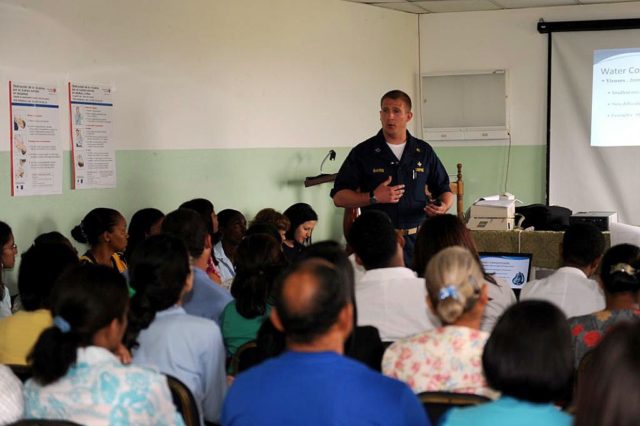
  6. One program attempting to solve the issue of water and sanitation in Kenya is the Water and Environmental Sanitation program (WES). Their main goal is to increase the utilization of safe drinking water. They also aim to improve sanitation and hygiene practices in houses, schools and health facilities. The program has led to the adoption of the Hygiene and Sanitation policy.
  7. As of 2019, estimates show that less than 60 percent of people in Kenya have access to safe and basic drinking water. In addition, only 29 percent of Kenyans have access to safe and basic service sanitation.
  8. U.S. government agencies such as USAID have made various investments in Kenya to help solve the water and sanitation crisis. They utilize market-based models that aim to close financing gaps through sustainable business models, increased public funding and expanded market finance for infrastructure investments. These efforts will allow for universal access to water and sanitation in Kenya. By 2020, it is estimated that the USAID’s work will provide more than one million people in Kenya with access to basic water and sanitation supplies.
  9. Throughout 2018 and 2019, Kenya suffered from two seasons of poor rainfall. This resulted in deteriorating rates of water, hygiene and sanitation in Kenya’s arid and semi-arid areas. As a result, the Kenyan government reported worsening drought conditions in 20 ASAL counties. This also includes 15 counties in the Alert phase and 5 counties in the Alarm phase.
  10. Thanks to the organization, World Vision, it is estimated that around 15,000 people in Kenya have benefitted from clean water as a result of various boreholes, rainwater tanks and pipelines. Among these benefits includes the ability to shower and wash clothes.

A lack of access to clean water and sanitation in Kenya continues to affect much of the country. Thankfully, the efforts from organizations such as Water.org, USAID and World Vision are alleviating these problems. Like much of Africa, Kenya has a long way to go before reaching sanitation goals; however, hope remains a part of these organizations’ driving factors.

– Adam Abuelheiga
Photo: Flickr

January 29, 2020
https://borgenproject.org/wp-content/uploads/borgen-project-logo.svg 0 0 Kim Thelwell https://borgenproject.org/wp-content/uploads/borgen-project-logo.svg Kim Thelwell2020-01-29 15:00:092024-05-29 23:13:5410 Facts About Sanitation in Kenya
Global Poverty, Health, Sanitation, Water Sanitation

10 Facts About Sanitation in the Dominican Republic

10 Facts About Sanitation in the Dominican Republic
In the Dominican Republic, legislative efforts to curb outbreaks of cholera and waterborne diseases in rural and urban populations have steadily improved sanitation, water and hygiene levels. National commitment has pushed both government and non-government organizations to develop and improve much of the Dominican Republic’s infrastructure. Below are 10 facts about sanitation in the Dominican Republic.

10 Facts About Sanitation in the Dominican Republic

  1. Cholera Outbreaks: Only 74 percent of residents have access to clean water, which primarily led to the cholera outbreaks in November 2010. According to the Centers for Disease Control and Prevention, more than 8,000 people have died as a result of cholera.
  2. Natural Disasters: The Dominican Republic encountered 40 natural disasters from 1980 to 2008 that have severely damaged water systems and contaminated tanks. Approximately 2.65 million residents faced water shortages and illnesses due to poor weather conditions.
  3. Waterborne and Diarrheal Diseases: Waterborne and diarrheal diseases in the Dominican Republic spread mainly due to a lack of sanitary restrooms. Almost 24 percent of residents do not have access to bathrooms. Additionally, many, particularly children, do not have access to routine vaccinations for these diseases.
  4. Government Projects: Government partnerships and projects with the World Health Organization and UNICEF Joint Monitoring Programme for Water Supply and Sanitation have controlled epidemic outbreaks. These organizations have also improved accessibility to drinking water sources to 86 percent of the population. Further, sanitation facilities increased accessibility to 83 percent of residents between 1990 and 2010.
  5. The Inter-American Bank’s Loan: In 2012, the Dominican Republic partnered with the Inter-American Development Bank to obtain a $25 million loan. This loan would improve energy efficiency and provide access to water services for at least 12 hours to more than 200,000 residents. Despite ongoing measurements of the impact, about 84 percent of the population experienced an improvement in sanitation facilities and drinking water.
  6. The Dominican Red Cross: In response to the cholera outbreak, the Dominican Red Cross imported 28 water treatment plants to magnify emergency responses. The Haitian and Dominican governments developed a 10-year plan with the Red Cross to ensure cholera-free islands. The countries curated a two-year campaign that pushed their key objectives in eradicating the disease.
  7. USAID Batey Community Development Project: The USAID Batey Community Development Project is pushing to improve water access and sanitary conditions in the Dominican Republic’s bateyes. Bateyes, which are towns surrounding sugar mills, traditionally have no running water, electricity or cooking facilities. The project aims to improve water distribution systems, build restroom facilities and train the population on environmental hygiene.
  8. The Regional Coalition on Water and Sanitation to Eliminate Cholera in Hispaniola: The Regional Coalition on Water and Sanitation to Eliminate Cholera in Hispaniola emerged in June 2012 as a blueprint for cholera-affected countries, primarily Haiti and the Dominican Republic, to help mobilize resources and reduce cholera-related deaths by 90 percent by 2030. The coalition consists of the World Health Organization, Pan American Health Organization, UNICEF and the U.S. Centers for Disease Control and Prevention.
  9. Surge for Water: In partnership with Project Hearts in 2016, Surge for Water installed 45 water tanks, 16 water filters and education and training opportunities to the people in Baitoa, Dominican Republic. This increased the population’s access to safe drinking water to 97 percent.
  10. The ACCIONA Agua’s Water Plant: A potable water plant that the ACCIONA Agua instituted in the south of the Dominican Republic improved the region’s network by providing access to more than 138,000 residents. This number will likely rise up to 300,000 in the coming years. For residents, this makes cooking a simple meal such as rice and beans more feasible.

These initiatives and developments are important in the progress of the Dominican Republic’s water, sanitation and hygiene levels. It is important to recognize many of the constituents that have compromised the country’s water supplies and sanitary conditions. Illnesses that are preventable through sustainable action often affect residents. These 10 facts about sanitation in the Dominican Republic, involving training, education and accessibility efforts, are vital to the country’s quality of life.

– Brittany Adames
Photo: Wikimedia Commons

January 28, 2020
https://borgenproject.org/wp-content/uploads/borgen-project-logo.svg 0 0 Kim Thelwell https://borgenproject.org/wp-content/uploads/borgen-project-logo.svg Kim Thelwell2020-01-28 01:30:322024-06-06 00:32:5010 Facts About Sanitation in the Dominican Republic
Global Poverty, Sanitation, Water Sanitation

10 Facts About Sanitation in Morocco

10 Facts About Sanitation in Morocco
Morocco has made significant progress in sanitation during the past decade. Although there are still many issues, improvements in water sanitation in Morocco are in the near future. Here are 10 facts about sanitation in Morocco.

10 Facts About Sanitation in Morocco

  1. H2O Maghreb: USAID and the United Nations Industrial Development Organization (UNIDO) implemented an activity called H2O Maghreb in order to help establish advanced and sustainable water management practices in Morocco. H2O Maghreb includes a two-year degree accredited by the government of Morocco. Furthermore, the H20 Maghreb activity provides training and job opportunities in waste management. About 80 percent of the students participating are women.
  2. The Douira Sea Water Desalination Plant: Morocco plans to build the world’s largest seawater desalination plant in the city of Agadir in 2021. The Douira Sea Water Desalination Plant will provide drinking water to the people of the Chtouka Ait Baha region in Morocco. Further, the Douira Sea Water Desalination Plant should be able to irrigate 15,000 hectares of land and produce up to 450,000 cubic meters of desalinated water every day.
  3. Dakhla’s Wasterwater Treatment Plant: Morocco is also building a wastewater treatment plant in Dakhla. The plant will help prevent wastewater from polluting groundwater resources. Additionally, the wastewater sludge can also act as a fertilizer.
  4. Improvements to the Wastewater Sector: During the past decade, Morocco has made many improvements in its wastewater sector. Of the 34 million people in Morocco, 25 percent of the people are not connected to the sewer network and 38 percent of the people are not connected to wastewater treatment plants.
  5. Leprosy: Leprosy is on the decline in Morocco. From 2000 to 2012, the number of leprosy cases decreased by 4.68 percent each year. In 2012, Morocco began a program to distribute rifampicin to help prevent the spread of leprosy. From 2012 to 2017, the number of cases of leprosy in Morocco decreased by 16.38 percent each year. The rifampicin program helped prevent leprosy and improved sanitation in Morocco
  6. Trachoma: Morocco eliminated trachoma in 2016. Trachoma is an infectious disease that causes blindness. Morocco implemented the World Health Organization-endorsed SAFE strategy in the 1990s. This included surgery for trichiasis, antibiotics to treat trachoma, facial cleanliness and environmental improvements to help prevent the spread of trachoma.
  7. Acid Mine Drainage: Acid mine drainage is an issue in Morocco. When people do not clean mine sites, the acid mine drainage at the mines can contaminate the land and the groundwater.
  8. Water, Sanitation and Hygiene in Schools (WinS): Morocco implemented the program Water, sanitation and hygiene in schools (WinS) in order to provide clean water and improve sanitary facilities in 19 primary schools in the country. Improving sanitary facilities at schools can help prevent water-related diseases and encourage children to stay in school and graduate.
  9. European Space Agency Technology: The University of Kenitra utilizes technology developed by the European Space Agency to clean groundwater so that it is safe for people to drink. The water treatment facility will provide water for 1,200 students.
  10. Safely-Managed Drinking Services: As of 2017, 70.266 percent of the people in Morocco have access to safely-managed drinking water services. This also means that as of 2017, 29.734 percent of the people in Morocco do not have access to safely-managed drinking water services.

These 10 facts about sanitation in Morocco show that the water supply is improving and will continue to improve. As technology and new initiatives increase the water supply, more people will gain access to safe drinking water.

– Frank Decapio
Photo: Wikimedia Commons

January 27, 2020
https://borgenproject.org/wp-content/uploads/borgen-project-logo.svg 0 0 Kim Thelwell https://borgenproject.org/wp-content/uploads/borgen-project-logo.svg Kim Thelwell2020-01-27 07:30:162020-01-27 09:12:4510 Facts About Sanitation in Morocco
Global Poverty, Sanitation, Water

10 Facts About Sanitation in the DRC

10 Facts About Sanitation in the Democratic Republic of the Congo
The Democratic Republic of the Congo (DRC), a country located in Central Africa, has been the victim of oppression, colonization and enslavement by European nations dating back to the year 1890. Violence and war continued for decades as a result. The Central African country currently lacks some essential sanitation resources, which has led to the spread of diseases such as cholera within the nation. Part of this is because half of the people of the DRC receive improved drinking water from wells and public standpipes. Here are 10 facts about sanitation in the DRC.

10 Facts About Sanitation in the DRC

  1. In 2018, only 29 percent of people in the DRC had access to basic sanitation services. There is 42 percent of people in the DRC currently using unimproved methods of sanitation. This includes pit latrines and bucket latrines.
  2. In the Democratic Republic of the Congo, there is an indisputable crisis in the availability of clean and pure drinking water. UNICEF reports that despite the fact that 50 percent of Africa’s water reserves exist there, there are still millions of people living without pure drinking water. In fact, more than half the population of the DRC lacks clean drinking water.
  3. Many people and schoolchildren have benefitted from the national program, Healthy School and Village. This national program aims to provide clean drinking water to villages in Africa to prevent diarrheal diseases. Waterborne diseases, like cholera, claim the lives of thousands of people of the DRC per year. UNICEF reports that as many as 7 million people and 983,000 schoolchildren have seen an improvement in their quality of life from this program since 2008.
  4. Women in the DRC and other sub-Saharan African countries are bearing the burden of having to deliver clean drinking water to their families. Women and girls in the developing world, such as the DRC, spend up to 90 percent of their valuable time collecting water. The women and girls in the DRC rarely finish their schooling due to this need for water. In the DRC, the participation of boys in the secondary school system has been 25 percent higher than girls since 2009.
  5. In 2011, a program called We Are Water successfully raised 20,000 euros in an effort to give accessible drinking water to the DRC. The program estimates that with the funds raised, it will be able to minimize the cholera epidemic. It is giving 20,000 people from 30 different villages clean water to drink and maintain their hygiene. This will only increase the efforts for creating better sanitation in the DRC.
  6. The U.N. Refugee Agency’s Cash for Shelter project has given funds to people in the DRC so they may build their own homes with real functioning toilets. Most people can only dream of owning a toilet because they are living on a mere $2 a day. Through this program, they do not have to construct makeshift pit latrines. They can now create a sense of security and ownership for themselves. Since its inception in 2016, the UNHCR’s cash-based interventions have reached more than 20 million people.
  7. There are many initiatives that bring clean drinking water to the people of the DRC like Concern Worldwide. It has provided the village of Mulombwa with its very own water pipe, which has revitalized the village in so many ways. Throughout its 50 years, this program has reached 24.2 million people in 23 different countries.
  8. The proportion of people drinking surface water, which includes contaminated lakes and rivers, was 11 percent, as of December 2018. The use of unimproved water sources like surface water is nearly universal in rural areas, according to the World Bank. Urban areas have 81 percent access to improved water sources, while it is as low as 31 percent in rural areas.
  9. According to the World Bank, access to improved water, sanitation and hygiene services is low, improving only by 3 percent. In urban areas, however, access to water, sanitation and hygiene services is much higher.
  10. There is a trend of constant outbreaks of cholera in various regions of the DRC due to contaminated drinking water. The infection can lead to severe dehydration and diarrhea which, if people leave unchecked, could lead to death. From November 2015 to February 2018, there were 1,065 cases of cholera in the capital Kinshasa alone, according to the World Health Organization. Of these 1,065 cases, there were 43 confirmed deaths.

The Democratic Republic of the Congo has seen little improvement in water quality and sanitation services. Thankfully, people and organizations are consistently working on improving everyday life for the people of the DRC. Whether it be funding Congolese families to have a functioning toilet in their homes or building a protected well for an entire village, there are several ways these organizations can make an impact

– William Mendez
Photo: Flickr

January 27, 2020
https://borgenproject.org/wp-content/uploads/borgen-project-logo.svg 0 0 Kim Thelwell https://borgenproject.org/wp-content/uploads/borgen-project-logo.svg Kim Thelwell2020-01-27 01:30:012024-05-29 23:14:3710 Facts About Sanitation in the DRC
Global Poverty, Sanitation, Water Sanitation

10 Facts About Sanitation in India

Sanitation in India
In recent years, India has invested tremendous resources to mitigate its public health pressure, especially with respect to sanitation. The problem of the Ganges catches most eyes, however, uneven distribution of precipitation and demographic density cause issues as well. Due to the lack of appropriate access to clean water and related infrastructures such as toilets, waterborne diseases cost India more in actual societal and economic losses than the average level across the world. Here are 10 facts about sanitation in India.

10 Facts about Sanitation in India

  1. The Ganges River provides water access for around 400 million nearby dwellers, and unfortunately, cities directly inject over three-quarters of untreated sewage into the river. The government approved Namami Genge program has achieved operation of 75 sewage treatment plants, a river surface cleaning action plan and a desire to rejuvenate the river from heavy pollution.
  2. Open defecation and communicable waterborne disease are highly concerning in India. Water relates to 21 percent of diseases in India. Around 99 million people have no access to safe water and 500 children in India each day cannot survive through their fifth year on the earth due to diarrheal disease.
  3. Lack of adequate and appropriate toilets used to contribute to the main reason for open defecation in India. Only 32.7 percent of its rural households previously had access to toilets. This figure has now grown to 98.8 percent as 92 million newly constructed toilets cover most of the rural area. Research suggests that a great decrease is emerging while the coverage rate of toilets is rising.
  4. Mental and societal reasons determine the preference for open defecation. Research suggests that even in rural households with toilets or latrines, some of the household members prefer open defecation because they believe it is more pleasurable and desirable compared to the use of available toilets.
  5. Women’s risk of being sexually assaulted is higher when private and safe toilets are not available. At least 50 percent of sanitation structures remain unused or not used properly. Many women (300 million) have no or limited access to safe bathrooms. In some extreme cases, the problem puts females’ life at stake because of the unfamiliarity of toilet facilities.
  6. Vulnerability against seasonal changes undermines the capacity to provide sanitation in India. In the monsoon season, water treatment plants in low lying basins must shut down to avoid flash floods and power outages, while some water scarcity villages will only use the toilets during this period. In turn, villages cannot maintain sustainable water supply when periodic drought strikes.
  7. Water supply is the cornerstone of the sanitation system, yet the network is incomplete in both urban and rural areas. In rural areas, villages are draining unsafe underground water for daily usage, and in cities, poor water management rises the potential pressure for water shortage.
  8. Limited water access in rural regions directly impedes children’s possibility to receive an education. In general, the shortage of water in rural areas gives people the added burden of carrying the water home. Instead of attending school, children are supporting their families with such undesired labor.
  9. The Swachh Bharat (Clean India Mission) contributed incredible achievements. India built about 1.5 million toilets in 2019 and over 100 million toilets during the past 5 years. In total, when the mission completed in October 2019, 60,000 villages were open-defecation free. The Individual Household Latrine (IHHL) coverage reached 100 percent of the state’s households.
  10. Partnership with Water Sanitation and Hygiene (WASH) represents an outstanding international intervention of sanitation improvement in India’s local communities. It secured over $5 million in funding from the private sector. Fueled by this funding, 175,000 people have access to safe water and 25,000 communities are open-defecation free.

Today in India, diseases from untreated water and unhygienic defecation impact society not only through triggering the public health crisis, but also impacting females and children. Limited drainage systems and a lack of water preservation systems are two issues that could prevent India from fully integrating sanitation into rural areas. Fortunately, the Indian government’s campaigns keep sanitation in India on the top of its to-do list. The imperfections cannot overshadow the progress that India has made in promoting its sanitation.

– Dingnan Zhang
Photo: Flickr

January 26, 2020
https://borgenproject.org/wp-content/uploads/borgen-project-logo.svg 0 0 Kim Thelwell https://borgenproject.org/wp-content/uploads/borgen-project-logo.svg Kim Thelwell2020-01-26 07:30:312020-01-24 12:56:5010 Facts About Sanitation in India
Global Poverty, Sanitation, Water Quality

10 Facts About Sanitation in Albania

10 Facts About Sanitation in Albania
Albania is one of the poorest countries in Europe. Today, 40 percent of its households lack basic education, heat and sanitation, and only 50 percent in both rural and urban areas have access to safe drinking water. Albania is located in southeastern Europe with neighboring countries Montenegro, Kosovo and Greece. The population estimates just over 3 million people. Albania became free from communist rule and later established a multiparty democracy holding its first multiparty election in 1991. Albania joined NATO in 2009 and became a candidate to join the European Union in 2014. In 2017, Albania received a European Commission recommendation to open EU accession negotiations. The unemployment rate has steadily decreased from 13.6 percent in 2017 to 11.4 in 2019. To learn more about its sanitation issues, here are 10 facts about sanitation in Albania.

10 Facts About Sanitation in Albania

  1. Basic sanitation services are increasing. People living in the rural section of Albania are using basic sanitation services, which is nearly a 15 percent increase from its lowest value of 82.19 percent in 2000. That means these people are using basic services that other households do not share.
  2. Sanitation conditions have grabbed the EU’s Attention. Since achieving the candidacy of the EU in 2014, Albania has made a commitment to bring its water and sanitation sector up to EU standards. The Albanian government has implemented numerous reforms, already reducing municipalities and local authorities from 300 to 61. The government is also progressively decentralizing public services, which means more decision-making responsibilities have gone to local governments and public authorities.
  3. National service providers are improving commercial and technical expertise. Albania’s water sector institutions are in cooperation with the National Ministry of Infrastructure and Energy. This partnership gives the project an outreach that extends to all cities to help communication flow between water users and the public with the institution using an online customer portal for service providers.
  4. Albania has resources for fresh water. Albania is a small country with over 150 rivers, including streams and lakes. Ninety-five percent discharge into the Adriatic Sea and only 5 percent of rivers go into the Ionian Sea. There are two periods of water flow during a calendar year. The shorter dry period runs from June through September. The wet period spans from October through May.
  5. The European Union supports clean water supply in Albania. In 2018, the EU contributed a 24 million euro grant to Albania. In the last 10 years, the grant support to its water supply exceeded 110 million euros. A large percentage of the grant goes to wastewater collections and treatment in Albania coastal regions.
  6. Albanian schools are promoting personal hygiene. A health fair occurred as part of the Vechan School Water Project and it included local nurses, students, the Red Cross and the local State Health Department. The project resulted in renovating and reconstructing bathrooms and plumbing to improve the conditions of the school due to damages from clogged toilets and sinks without running water or sinks running dirty water. The health fair gave lessons in personal hygiene to young students. It also tested students for diabetes and gave blood pressure checks. Following the fair, local experts, students and school staff took on the assistance in reconstructing the school.
  7. Worcester Polytechnic Institute (WPI) students provide data to remedy water issues in Albania. Each year, 24 WPI students go to Albania to work in four-person groups on six projects to address topics that include the water issues and how to solve them. These projects include documenting environmental conditions along major rivers, developing a water education program for Albanian high schools and promoting community-based tourism in villages that have previously inaccessible caves.
  8. The Albanian Water Regulatory Authority and Consumer Protection Commission developed a partnership to alleviate water and sanitation issues. The Water Regulatory Authority and Consumer Protection Commission have created a model contract between providers of water and sewerage services and their customers. The intent of the contract is to protect consumers’ interests with provisions for consumer protection and Albania’s water and environmental resources. This addresses issues concerning the access and quality of water and sanitation. This also educates both parties on ways to improve the quality of water and sanitation services.
  9. The Western Balkan Investment Framework (WBIF) supports water supply and sanitation services among other needs for Albania. The WBIF has supported 30 projects that value up to 2 billion euros which provide better schools, energy sources, modern sanitation services and supply water for its sectors eligible for rebuilding and renovation. The achieved results include wastewater systems for over 260,000 people with expectations to exceed another 100,000, in addition to improved waste services to 180,000.
  10. Water Charity contributes to rebuilding sanitation efforts in Albania. Water Charity has started a program to work on 100 water projects in Albania, including 10 school bathroom projects. The program falls under the Let Girls Learn Initiative. It is a collaborative effort from former First Lady Michelle Obama and the Peace Corps, which expands access to education for girls around the world.

Efforts from organizations in these 10 facts about sanitation in Albania have been exemplary for aiding Albania’s sanitation efforts overall. Thanks to multiple team efforts, Albania is optimistic about its conditions and overall health concerns. With more work ahead, this country is on its way to reaching EU potential.

– Thomas Cintula
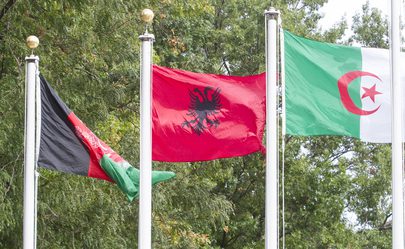
Photo: UN Multimedia

January 24, 2020
https://borgenproject.org/wp-content/uploads/borgen-project-logo.svg 0 0 Jennifer Philipp https://borgenproject.org/wp-content/uploads/borgen-project-logo.svg Jennifer Philipp2020-01-24 07:30:492024-05-29 23:14:3410 Facts About Sanitation in Albania
Global Poverty, Sanitation

9 Facts about Cholera in Burundi

Cholera in BurundiThe World Health Organization (WHO) has identified more than 1,000 cases of cholera in cities across the Republic of Burundi. Burundi is an East African country that has been plagued by violence, disease and poor sanitation for years. Most of the population lives in rural areas where drinking water is unsafe and sanitation practices are nearly non-existent. This has created the perfect storm for cholera to spread quickly across the country. It has led to six deaths from an otherwise treatable disease. Below are nine facts about the outbreak of cholera in the Republic of Burundi.
9 Facts about Cholera in Burundi

  1. Cholera is a gastrointestinal infection caused by bacteria. Generally, it is attributed to unsafe drinking
    water and often associated with raw or undercooked fish. It is transmitted from person to person through oral-fecal contamination due to improper sanitation and poor hygiene.
  2. This outbreak started in a time of political peril in Burundi. Rebel forces and the country’s army are fighting across rural areas, which is displacing people. Instability and lack of security make it difficult for people to find safety and sources of income. This has created a high level of poverty for Burundi’s people and exacerbated the poor water conditions.
  3. Most patients are displaced persons (IDPs) from rural Bujumbura. Fighting in Bujumbura became so violent that the government moved the capital to Gitega in February 2019. When the capital moved, many people were left without the support and resources of the government.
  4. Treatment usually takes several days per patient. Patients typically present symptoms related to dehydration. Dehydration occurs because of the excessive vomiting and diarrhea that comes with cholera. Patients are usually treated with an oral rehydration solution made up of a sugar and salt mixture in clean water. In extreme situations, patients may need intravenous fluids and antibiotics.
  5. Médecins Sans Frontières (MSF) has three treatment centers for cholera in Burundi where professionals are trained and supervised. The goal of these facilities is to provide free patient care and increase the local public health staff. These centers provide care when most of the hospitals are unable to respond to the needs of cholera patients. MSF has also set up a 50-person treatment center in Bujumbura.
  6. Sterilization is a very important part of reducing the spread of cholera, so the MSF staff uses a chlorine solution to disinfect the center. This reduces the chances of another outbreak or infecting the staff. This solution can also be used to disinfect the homes of families who have been infected.
  7. Disinfecting isn’t the only solution to preventing the spread of cholera because the problem is directly related to the distribution of water. Without proper containment of poor water sources, the disease will continue to spread. To ameliorate the risks of cholera related to unsafe drinking water, MSF installed two water distribution bladders in the most affected areas. These bladders supply 30,000 liters of potable water.
  8. UNICEF has been providing cholera kits to people in Burundi. There are four different kinds of kits to help with various aspects of need. UNICEF has also established two cholera treatment centers to control the spread of the disease.
  9. To avoid contamination, experts suggest drinking disinfected water and eating a balanced, thoroughly cooked diet. Organizations like WHO are emphasizing the importance of washing hands frequently with soap and water or an alcohol-based sanitizer to reduce the risk of transmission.

Cholera is an easily treatable and preventable disease that occurs in poverty-stricken areas with poor sanitation. Many organizations have reached out to add potable water sources and aid by training the people of Burundi to treat and prevent the disease themselves. With rebel fighting and insurgent forces crossing the country, the disease is projected to spread to further areas of rural poverty.

– Kaylee Seddio, PhD
Photo: Iwacu

January 15, 2020
https://borgenproject.org/wp-content/uploads/borgen-project-logo.svg 0 0 Kim Thelwell https://borgenproject.org/wp-content/uploads/borgen-project-logo.svg Kim Thelwell2020-01-15 07:30:042024-05-29 23:14:249 Facts about Cholera in Burundi
Economy, Global Poverty, Sanitation

How Everest is Affecting Nepal

How Everest is Affecting NepalThe country of Nepal is often an afterthought to Mt. Everest, the mountaineering mecca of the world and the tallest peak. Unfortunately, tourism to Mt. Everest is affecting Nepal through the unstable economy it brings and sanitation concerns. The environment and the permanent residents of the mountain must be considered.

Tourism-based Economy

Throughout most of the cold war, Mt. Everest was closed on the Tibetan side and highly restricted within Nepal. Only climbers who were accompanied by scientists could climb. However, in 1993, the government relaxed the rules and regulations surrounding the mountain. Travel and adventure agencies began to crop up. They sell the dream, the ultimate bucket list item of summiting Everest.

Now, more than 7 percent of Nepal’s economy depends on the three months of March, April and May when people come from across the globe to take their shot at summiting one of the world’s seven wonders.  People from all across the world come to the region of Khumbu, located at the base of the mountain and home to the indigenous Sherpas. Between tourists and Nepali people coming from other areas to work, the population climbs from 40,000 to a staggering 700,000 people. However, this tourism-based economy is unstable and leaves many Nepali excluded from the enterprise.

Impact on Nepali People

Though this tourism boom has helped the Nepali government, its impact on the Nepali people is very isolated. The main benefactors are those connected to the few popular tourist attractions in the country, mainly Kathmandu and Everest. Tourism to Everest is Affecting Nepal. It is having a negative impact on sanitation in Khumbu. Climbers leave heaps of trash at camps, which becomes increasingly more difficult to remove as elevation rises. As the ice melts on the mountain, it washes the trash and human waste down into the villages bellow, creating an unsanitary environment and physical destruction from flooding.

However, despite these health and safety risks, the Nepali government has declined to stop tourism for any given time. While they have made some clean-up efforts throughout the past few years, sanitation continues to be an issue on the mountain and in the villages below.

Keeping the Mountain Clean

To help mitigate some of the impact made by tourists, organizations like KEEP (Kathmandu Environmental Education Program) have made efforts to educate both the Nepali people and tourists on how they can better care for the mountain and minimize their footprint. KEEP is a non-profit organization that works to conserve the mountains of Nepal. It has started programs in Eco-tourism, environmental awareness and rural community development.

In August of 2019, Nepal announced a ban of single-use plastics on the mountain, which will significantly reduce the amount of plastic waste that will be left behind by climbers. Additionally, in 2019 the country released the decision to make getting a climbing permit more difficult.

Economy or Environment?

The Nepali government is trying to decide what should and can be done about conserving Everest and other mountains in the country. If they limit the number of climbing permits allotted, it would improve the health of the mountain. However, it would take away money and a significant number of jobs from the Nepali people. Money from Everest has allowed people from one of the poorest countries in the world to send their children to secondary schools outside of the country. It has allowed people to create their own businesses. Also, it has fostered incomes for the Sherpas that far exceeds that of the average Nepali person.

Tourism-based income is unstable in the long run because it only provides a steady income for a short period of time. However, in the short term, it provides people with better living. Everest is affecting Nepal negatively in many ways, but the positives it brings cannot be ignored. It is difficult to know what to do about the issues tourism to Everest is causing when its short-term benefits have such a strong impact on the people of Nepal. Work is being done, but just like the trek to summiting Everest, this will be a long and challenging road for the Nepali people and government.

– Emma Hodge
Photo: Flickr

January 13, 2020
https://borgenproject.org/wp-content/uploads/borgen-project-logo.svg 0 0 Kim Thelwell https://borgenproject.org/wp-content/uploads/borgen-project-logo.svg Kim Thelwell2020-01-13 01:30:482020-01-08 19:02:37How Everest is Affecting Nepal
Page 16 of 29«‹1415161718›»

Get Smarter

  • Global Poverty 101
  • Global Poverty… The Good News
  • Global Poverty & U.S. Jobs
  • Global Poverty and National Security
  • Innovative Solutions to Poverty
  • Global Poverty & Aid FAQ’s
Search Search

Take Action

  • Call Congress
  • Email Congress
  • Donate
  • 30 Ways to Help
  • Volunteer Ops
  • Internships
  • Courses & Certificates
  • The Podcast
Borgen Project

“The Borgen Project is an incredible nonprofit organization that is addressing poverty and hunger and working towards ending them.”

-The Huffington Post

Inside The Borgen Project

  • Contact
  • About
  • Financials
  • President
  • Board of Directors
  • Board of Advisors

International Links

  • UK Email Parliament
  • UK Donate
  • Canada Email Parliament

Get Smarter

  • Global Poverty 101
  • Global Poverty… The Good News
  • Global Poverty & U.S. Jobs
  • Global Poverty and National Security
  • Innovative Solutions to Poverty
  • Global Poverty & Aid FAQ’s

Ways to Help

  • Call Congress
  • Email Congress
  • Donate
  • 30 Ways to Help
  • Volunteer Ops
  • Internships
  • Courses & Certificates
  • The Podcast
Scroll to top Scroll to top Scroll to top