• Link to X
  • Link to Facebook
  • Link to Instagram
  • Link to TikTok
  • Link to Youtube
  • About
    • About Us
      • President
      • Board of Directors
      • Board of Advisors
      • Financials
      • Our Methodology
      • Success Tracker
      • Contact
  • Act Now
    • 30 Ways to Help
      • Email Congress
      • Call Congress
      • Volunteer
      • Courses & Certificates
      • Be a Donor
    • Internships
      • In-Office Internships
      • Remote Internships
    • Legislation
      • Politics 101
  • The Blog
  • The Podcast
  • Magazine
  • Donate
  • Click to open the search input field Click to open the search input field Search
  • Menu Menu

Archive for category: Refugees and Displaced Persons

Information and news on Energy and Electricity

Global Poverty, Refugees and Displaced Persons

Architectural Award Winner Receives Acclaim for Refugee Work

Celebrated architects are mostly known for the great buildings they design in expensive, multi-million dollar projects. Thus, when the Japanese architect Shigeru Ban was honored with the Pritzker Architecture Prize, it was remarkable in that he has largely been known for his innovation in refugee shelters. The refugee work that Ban has done in his home nation of Japan has helped many displaced by the earthquake/tsunami disaster of 2011, as well as refugees in other parts of the world.

The innovation from Ban comes from his use of disposable and recyclable material. The voters of the award said of Ban, “His buildings provide shelter, community centers and spiritual places for those who have suffered tremendous loss and destruction.” In 2011 the famous Christchurch Cathedral was decimated after a New Zealand earthquake. Ban built a temporary devotional structure out of cardboard tubes for those left without their religious sanctuary, giving the community an outlet in their time of difficulty.

Ban first got involved with refugee structures in the wake of the Rwandan genocide in 1994. Ban saw the conditions the refugees were living in, and he said, “I thought we could improve them.” Working with the United Nations High Commissioner for Refugees (UNHCR) Ban designed tents using paper tent poles that gave a cheap yet efficient and easily transportable shelter for the refugees. The UNHCR made Ban a consultant after his work in Rwanda.

His work in Kobe, Japan after the 1995 earthquake foreshadowed the work he would do in this decade. Ban designed houses made of cardboard for those displaced and even built a “Paper Church community center.” Some of the structures he made in Kobe were “meant to be used for three years were used for 10.” Ban’s work in these places has not only made a lasting emotional impact, but clearly a physical impact on the landscape as well.

The work that Shigeru Ban has done is exactly the type of innovative refugee work that should be encouraged in dealing with burgeoning international crises. Resources are stretched thin when working at so many different levels at once, and innovative minds like Ban’s can help remedy that strain. The Borgen Project and advocacy groups like it encourage funding for this type of innovative relief work.

The work that Ban has done in Japan since the 2011 disaster has capped off a career of humanitarian work. Ban has built partitions for families living in gyms, making life easier in a difficult situation. He even designed a three-story refugee shelter on the grounds of a baseball stadium. Ban sees the work that he has done in his home country as a necessity that is seen too little among the best of his profession. Ban says, “I was very disappointed in our profession. Because we are mostly working for privileged people, with power and money.”

With this recent award and the $100,000 grant that comes with it, one can hope that Ban is starting a wider trend in the architectural profession.

– Eric Gustafsson

Sources: BBC, New York Times, PBS
Photo: CNN

April 9, 2014
https://borgenproject.org/wp-content/uploads/borgen-project-logo.svg 0 0 Borgen Project https://borgenproject.org/wp-content/uploads/borgen-project-logo.svg Borgen Project2014-04-09 04:00:072024-05-26 23:24:51Architectural Award Winner Receives Acclaim for Refugee Work
Global Poverty, Refugees and Displaced Persons

Reinvigorated Childhood, Courtesy of Shakespeare

childhood
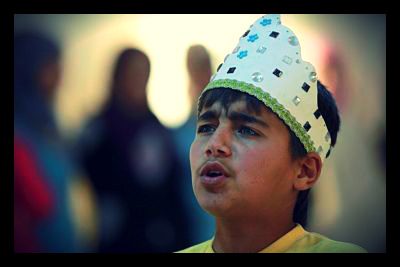
Struck by the catastrophic circumstances of their previous lives in Syria, children in the Zaatari refugee camp in Jordan spoke of bullets, bombs and death. Nawwar Bulbul wanted to change that. A prominent soap opera actor until being blacklisted by the Syrian government on account of joining in protests against the regime, Bulbul brought his love for theater with him as he fled.

The Zaatari Camp in northern Jordan has ballooned with the recent inundation of Syrian refugees fleeing over the border and, with a lofty 102,704 residents, according to United Nations High Commissioner for Refugees, currently stands as the world’s second-largest refugee camp. Basic needs such as food and water are met on a marginalized basis by various international organizations attempting to help quell the trauma of the current Syrian crisis, yet children require more than that in order to live with the hope of successful and fulfilling futures. With less than 40 percent of refugee children attending school, there is a huge deficit of arts and culture among traumatized population.

For over two months, Bulbul has worked to bring happiness to the lives of these children. Because of the impressive initiative taken by this actor-turned-director, 100 refugee children come together to rehearse Shakespeare’s “King Lear.” Translated to classical Arabic from its original Bard’s English, the play brings joy to its performers and a renewed sense of childhood innocence to those who have been stripped of such rights and privileges.

One young girl named Ammari, who came to Jordan along with five sisters and a brother, says she feels the transformation.

“I do not feel lonely any more in this place,” she told reporters. She has found something to finally entertain her and take her mind off of the victims of calamity around her.

Though some may claim that this particular Shakespeare tragedy is not suitable for children, Bulbul argues otherwise. He says he took only the roots of the story for the children’s adaptation, and focused primarily on the differences between lying and telling the truth. While Bulbul’s initiative received no support from international organizations and only minimal support from friends in the Syrian community, the past two months of play practice have shown outstanding success for the youth.

In discussions of Shakespeare’s plays, the participants showed behavioral and emotional development. The children involved learned quite a bit about controlling anger as well as the violent and destructive consequences of seeking revenge. For a group that has spent a good portion of life so far living amid death, destruction and humiliation, these are lessons some may have thought unfathomable in previous months.

Yet Shakespeare is not the only poetry in this situation. Bulbul translates from Arabic to mean bird, or oftentimes nightingale, a bird primarily known for singing in the dark. So as Nawwar Bulbul brings the song of hope and joy to the inner darkness of an overpopulated refugee camp, he does, so beautifully, live up to his name.

– Jaclyn Stutz

Sources: Ahram Online, Times of Israel, Global Arab Network
Photo: Times of Israel

April 7, 2014
https://borgenproject.org/wp-content/uploads/borgen-project-logo.svg 0 0 Borgen Project https://borgenproject.org/wp-content/uploads/borgen-project-logo.svg Borgen Project2014-04-07 13:37:332024-06-05 01:57:20Reinvigorated Childhood, Courtesy of Shakespeare
Global Poverty, Refugees and Displaced Persons

Thailand Deports Rohingya Muslims Back to Myanmar

rohingya_muslims_thailand
Rohingya Muslims are a stateless people.

Their homeland is in dispute; some argue that it is Bangladesh and others argue that it is Myanmar. The sitting government in Myanmar’s organized persecution of the Rohingya has caused hundreds of thousands to flee to other countries in any means that they are able.

A great number have fled to nearby Thailand assuming that they would be safe from deportation back to a state that does not recognize or want them; however, they were wrong.

The situation in Thailand for the Rohingya is not a welcome one. Since the early 2000s, the Rohingya have been fleeing persecution in Myanmar to any country that is close at hand. However, Thailand is not the sanctuary that it used to be for the Rohingya, according to Abdul Kalam, a Rohingya who has lived in Thailand after escaping forced labor in his home.

Kalam is the head of the Thailand’s Rohingya national organization. The plight of the Rohingya in Thailand is not widely known save for a brief international spotlight in 2009, when media captured boatloads of Rohingya refugees being towed back out to see by Thai naval ships.

The Rohingya are trapped in vicious circle.

Thailand is one of the few countries in the world that has indefinite imprisonment terms and due to this unusual fact, this is often the fate of those being detained by Thai authorities. A group of reporters filmed the appalling conditions that many Rohingya face while being indefinitely detained in Thailand.

The conditions that the Rohingya were found in are deplorable and it is a travesty that such treatment of human beings is still occurring. The cells that were being used as holding areas were designed to house just 15 men each, yet Thai authorities had placed 276 Rohingya men in them. The Thai government should be aiding the Rohingya in their escape from persecution; however, Thailand does not recognize the Rohingya as refugees.

The troubling news for the Rohingya in Thailand is compounded by the fact that reports document how the Thai government has been secretly selling Rohingya to human trafficking camps deep within the Thai jungle. Reuters found evidence of these camps and reported on the plight of the Rohingya trapped in them. Reuters presented one of Thailand’s highest police officials with the evidence that was uncovered about the camps and when asked, police Major-General Chatchawal Suksomjit, Deputy Commissioner General of the Thai Royal Police gave the startling reply that he indeed knew about the camps, but called them “holding cells.”

The plight of the Rohingya is known to the world, but little is being done by the United Nations or any other international aid group. The persecution that the Rohingya face at every turn in their struggle to cement their lives somewhere should be considered one of the most flagrant abuses of human rights in the 21st century.

There are many pressing issues occurring around the world every day, but people can exist in a world free of persecution for any peoples regardless of ethnic or religious status.

– Arthur Fuller

Sources: BBC, Fox, Time, CNN, Reuters, IRIN, Human Rights Watch
Photo: Press TV

March 7, 2014
https://borgenproject.org/wp-content/uploads/borgen-project-logo.svg 0 0 Borgen Project https://borgenproject.org/wp-content/uploads/borgen-project-logo.svg Borgen Project2014-03-07 10:45:082024-06-04 01:08:03Thailand Deports Rohingya Muslims Back to Myanmar
Developing Countries, Development, Refugees and Displaced Persons, United Nations

Typhoon Recovery in the Philippines: 100 Days

typhoon_recovery
It’s been more than 100 days after the devastating Typhoon Haiyan hit the Philippines and recovery efforts are still underway for those who have been displaced from their homes.

The storm, one of the most powerful ever recorded, hit the archipelago on November 8th, killing nearly 6,000 people and displacing 4.1 million.

A government-led recovery effort, known as the Strategic Response Plan (SRP), was launched following the typhoon. The plan covers the next twelve months and requires $788 million, of which 45% has already been received.

Along with these typhoon recovery efforts, the United Nations and its affiliated partners have helped to provide food, medicine, water, and sanitation and hygiene assistance to those affected. Tents and tarpaulins have been distributed to approximately 500,000 families, but many more still remain without shelter.

UN Humanitarian Coordinator for the Philippines, Luiza Carvalho notes that, “the need for durable shelter for millions of people whose homes were damaged or destroyed is critical.”

In Tacloban, a city of 250,000, major typhoon recovery efforts have been underway to pump money back into the local economies. Coconut farmers and fishermen represent the backbone of the economy in this area but their livelihoods have been severely threatened by the storm. In response, the UN development programme has recently implemented both short-term and long-term plans to help farmers get back on their feet.

Oxfam has noted that the Filipino government has been slow to deliver funds for agricultural and reconstruction support.

Thanks to generous donor contributions, great things have been achieved in the relief phase of the recovery effort. In the coming weeks, it is critical that the international community continues to provide support to those whose lives have been devastated by Typhoon Haiyan.

In a recent UN statement, Carvalho noted, “the Filipino people should be commended for the pace of progress that we have seen in the first 100 days. But we cannot afford to be complacent.”

– Mollie O’Brien

Sources: The Guardian, UN
Photo: Aljazeera

February 26, 2014
https://borgenproject.org/wp-content/uploads/borgen-project-logo.svg 0 0 Borgen Project https://borgenproject.org/wp-content/uploads/borgen-project-logo.svg Borgen Project2014-02-26 22:20:022024-06-05 01:57:11Typhoon Recovery in the Philippines: 100 Days
Refugees and Displaced Persons

Syrian Refugee Resettlement in the U.S.

Syria_Immigration_Refugee_United States
The United States currently leads the world in refugee resettlement yet could fall short in the case of the crisis in Syria. With more than two million Syrians fleeing the country and another 6.5 million displaced within Syria’s borders, this is quite possibly the worst refugee crisis since the Rwandan genocide of 1994.

The demand for resettlement is huge.

In a Senate hearing on January 7, State Department Assistant Secretary Anne Richard stated that the United States expected to begin resettling more refugees, increasing referral acceptances to several thousand Syrians in 2014. Additionally, the United Nations a few weeks ago stated that the United States would be accepting around 30,000 vulnerable Syrians referred for resettlement.

Unfortunately, post-9/11 immigration laws may pose some difficulties.

Under U.S. laws, not all of these vulnerable individuals can be legally received. Those people who are considered to have given ‘material support’ in some form or other to rebels are considered to have possibly supported terrorism, even if the ‘material support’ was approved by the United States.

In this manner, Syrians who gave so much as a sandwich or a cigarette to a soldier fighting for the Free Syrian Army will not be accepted, according to Illinois Senator Dick Durbin.

Human Rights First has called for the U.S. to resettle some 15,000 Syrians per year. While this perhaps should be feasible for the world’s leader of refugee resettlement, it is a particularly lofty goal for a country that will have a tough time finding Syrians with no connection to either side of the conflict.

As such, the United States is working on easing the anti-terrorism laws to some degree with respect to Syria in order to support the global effort to take in and support Syrian refugees.

The United Nations calculates that Syria has lost at least 35 years of human development from the multitude of tragedies that have occurred in the past three years. The strongest nation in the world should be doing more to work with the international community in aiding the victims of such devastating circumstance.

– Jaclyn Stutz

Sources: Huffington Post, Wall Street Journal
Photo: Think Progress

February 12, 2014
https://borgenproject.org/wp-content/uploads/borgen-project-logo.svg 0 0 Borgen Project https://borgenproject.org/wp-content/uploads/borgen-project-logo.svg Borgen Project2014-02-12 04:00:542017-11-30 10:52:51Syrian Refugee Resettlement in the U.S.
Refugees and Displaced Persons

European Countries Open Doors for Syrian Refugees

Europe_Syria_Refugee_Immigrant
The Syrian civil war has been the cause of daily consternation for those affected by the war and the humanitarian groups looking to administer to victims’ needs. This past week saw the opening of peace talks in Switzerland as representatives from both sides of the war and nations with interests in the region looked to find some way to bring the conflict to a close.

With chances of a settlement looking grim, a number of European nations including the United Kingdom and Sweden have announced plans to bring in some of the refugees of the war. The refugee crisis resulting from the civil war has stretched the beleaguered nation’s neighbors to their limits.

The United Nations Higher Council for Refugees recently announced that the number of Syrian refugees in Lebanon had exceeded 890,000, with over two million Syrians now living abroad in total. With these staggering figures have come questions over how best to administer to the refugees’ needs, and how well the host nations could sustain this influx.

With these concerns in mind, Sweden has opened its doors to the refugees, more so than any other Western nation according to the CBC. Since 2012, the Nordic nation has taken in 14,000 refugees, far exceeding Germany, which has taken in the second-most refugees of any EU nation.

The path from Syria to Sweden is rather perilous, as refugees flee their homes with little luggage and must rely on smugglers to take them into Western Europe. In a nation they presumably know fairly little about, Syrians have gotten a warm welcome in Sweden.

One Syrian interviewed by the CBC said, “They are providing almost everything,” when questioned about their living conditions.

Sweden and Germany had taken in 64% of the Syrian refugees entering Europe from the beginning of 2012 until May 2013, according to the European Asylum Support Office. None of the other European countries in the study come close to their totals, but it looks some nations are willing to share the burden of hosting these downtrodden people.

Despite this seeming lack of interest by European nations in housing the Syrian migrants, some governments are debating opening their doors to more Syrians. William Hague, the foreign secretary of the United Kingdom, has said that his government is planning on “helping people who are particularly vulnerable,” particularly these refugees.

This represents a significant change from a government that had not committed to any refugee plan, and had up till now declined to sign for a United Nations refugee sanctuary program.

The peace talks in Switzerland and the plans that the United Kingdom has announced are being worked on represent promises being made to the Syrian people. Yet these people have been dealing with the results of the conflict for three years now, with their homes and lives being torn apart.

The lack of support for refugees beyond that done by a select few nations represents a failure on the part of the Western world. The burgeoning crisis that is engaging Syria’s neighbors is a dangerous scenario, and show the need for foreign aid that developing nations still need.

– Eric Gustafsson

Sources: CBC News, DNA India, The Guardian
Photo: NPR

February 10, 2014
https://borgenproject.org/wp-content/uploads/borgen-project-logo.svg 0 0 Borgen Project https://borgenproject.org/wp-content/uploads/borgen-project-logo.svg Borgen Project2014-02-10 15:04:352017-12-11 02:55:12European Countries Open Doors for Syrian Refugees
Global Poverty, Refugees and Displaced Persons

Small Islands and Environmental Refugees

small_islands_environmental_refugees
For a long time, human civilization has seen refugees from all kinds of nations, due primarily to political or militaristic reasons. However, there is set to be an occurrence of some of the first mass cases of “environmental refugees,” who will be forced to leave their homes as a result of climate change.

For example, small island nations with extensive low-lying coastal areas are placed in a difficult position because of rising seas. While for most developed countries the issue of climate change does not implicate intensive and readily apparent consequences, the same does not apply for many developing island nations—whose very existence is threatened by the projected rising seas of the near future.

The necessity for adaption is an especially prominent issue that these island nations face. This is particularly true since many of them are small and still developing, making it difficult for them to counter rising seas on their own. Moreover, public money that may be spent towards healthcare or education is often required to be reallocated towards protecting their shores. This ends up putting a drain on the economies of various island nations, making the situation for their people looks quite bleak.

The United Nations have identified 52 small island developing states that will face the brunt of climate change effects. All of them—very unique with their own lasting culture—may see their way of life come to an end, as communities will eventually become heavily displaced. However, the issue extends to a plethora of other people on a global scale as well. For instance, the majority of the global population is situated among coastal areas, while many others, over 600 million people worldwide to be exact, may also face the possibility of displacement since they are living within low-lying coastal areas less than 10 meters above sea level.

To address some of the issues presented, the United Nations General Assembly convened late in 2013. Speaking on behalf of small island developing states, the Prime Minister of Antigua and Barbuda—Winston Baldwin Spencer—spoke about the rising greenhouse gas concentrations stemming almost exclusively from a number of nations within the developed world. Pleading his case, Spencer stated that, “Developed countries should shoulder their moral, ethical and historical responsibilities for emitting the levels of anthropogenic greenhouse gases into the atmosphere. It is those actions which have now put the planet in jeopardy and compromised the well-being of present and future generations.”

Following the Kyoto Protocol, which unsuccessfully attempted to put a cap on the atmospheric carbon concentration, the United Nations has established the 2014 Climate Summit. World leaders from across the globe are expected to congregate in order to address climate issues and push for innovative solutions that span across areas including government, business, finance, industry and civil society.  The Summit is planned to take place in New York during September of 2014 and will attempt to accomplish a global climate agreement. This will be of monumental significance for small island developing states as they are already doing as much as they can to limit the number of environmental refugees, but find that they still need the help and cooperation of the entire international community.

– Jugal Patel

Sources: World Issues 360, Inter-Research, United Nations, United Nations
Photo: The Age

January 25, 2014
https://borgenproject.org/wp-content/uploads/borgen-project-logo.svg 0 0 Borgen Project https://borgenproject.org/wp-content/uploads/borgen-project-logo.svg Borgen Project2014-01-25 08:33:002024-06-11 02:19:44Small Islands and Environmental Refugees
Global Poverty, Refugees and Displaced Persons

U.S. Response to the Syrian Refugee Crisis

us_response_to_syrian_refugee_crisis
CNN reports that the U.S. only accepted 30,000 Syrian refugees this fiscal year. Over the past three years, civil war has claimed the lives of 50,000 Syrians and produced 2.3 million refugees, half of them children.  The United Nations High Commission for Refugees wants to settle 30,000 of these people this year.

Yet, in the past, the United States has led the world in resettlement and humanitarian efforts.

U.S. Senator Dick Durbin said that the United States’ overly broad immigration bars are preventing Syrian refugees from taking asylum here — approximately 135,000 refugees have applied for asylum in the U.S.

The small nations surrounding Syria have welcomed refugees. Lebanon and Jordan began accepting refugees early on with individual families taking friends, family members and even strangers into their homes. Refugee camps were later built to house Syrians.

Lebanon has taken in more than 860,000 asylum seekers, more than 20% of its entire population. The town of Arsal, with a population of only 35,000, had taken in 19,000 refugees when it received an additional 20,000 in November.

Some 700,000 Syrian refugees are residing in Turkey. While 200,000 of these are being housed in 21 refugee camps, the remainder have found shelter in towns and cities.

While these countries have been generous, they do not have the space or resources to house this number of refugees and are beginning to see a rise in social and economic tensions. Schools and hospitals are running out of space and incomes have been dropping as residents compete for work.

The U.S. Department of State and USAID have been major sources of funding for humanitarian programs, providing basic necessities such as food, water, tents and medical supplies.

The United States has provided $300 million to Jordan since 2012. It has helped the country to expand its social services to be able to house Syrian refugees, for example 5 schools were built and 62 others were expanded.

However the U.S. is still lagging behind other countries in resettlement. Since the beginning of the Syrian civil war only 90 Syrians have found asylum in the United States. In contrast, Sweden has accepted 14,700 refugees and Germany has accepted 18,000.

Both Senator Dick Durbin and Senator Lindsay Graham are pushing for immigration reform that will allow for the acceptance of more Syrian refugees into the U.S.

– Elizabeth Brown

Sources: CNN, U.S. Department of State, U.S. News, Think Progress
Photo: UN News Centre

January 21, 2014
https://borgenproject.org/wp-content/uploads/borgen-project-logo.svg 0 0 Borgen Project https://borgenproject.org/wp-content/uploads/borgen-project-logo.svg Borgen Project2014-01-21 08:46:332024-06-11 02:18:20U.S. Response to the Syrian Refugee Crisis
Activism, Advocacy, Food & Hunger, Food Aid, Foreign Aid, Global Poverty, Migration, Nonprofit Organizations and NGOs, Philanthropy, Poverty Reduction, Refugees and Displaced Persons

Heavyweight Helps Syrian Refugees

evander
Evander Holyfield, former world heavyweight boxing champion, is taking on an even greater role in helping displaced communities of the Syrian refugee crisis.

On November 13, Holyfield announced that he would be working to aid the alleviation cause for an estimated of 6,500 refugees fleeing from the war-torn Syrian nation, those of whom have settled in Bulgaria. During the announcement, Holyfield noted, “Somebody helped me and that gives me the opportunity to help someone else.”

The refugee crisis that has taken shape out of the Syrian civil war has become staggering. It’s estimated that 9 million Syrians have been displaced out of a population of 23 million.  Syrians are settling in nearby countries such as Jordan and Turkey, most of where large camps have drawn the majority of foreign assistance — muting attention for the relatively small amount that has ended up in Bulgaria.

Holyfield and the Global Village Champions Foundation, the organization where he works as a Goodwill Ambassador, hope to raise awareness and deliver support for these refugees. To future add to the impact of celebrities bridging successful traction to raise awareness, the head of the Global Village Champions Foundation is musician, Yank Barry, from the 1960s band “The Kingsmen.”

The pairing might seem odd, but they are united in their hope to make the lives of the Syrian refugees at least somewhat easier.  In an interview with CNN, Holyfield stated, “at some point in time, when you leave this earth… they’ll say: What did you do for the least of them?”

Yank Barry may not be as well known in modern pop culture, but he has been actively philanthropic in recent years.  Barry founded the Global Village with Mohammed Ali in 1995, and they worked together until Holyfield took Ali’s place within the organization in 2012.  Since the founding of the organization, it has sent out 900 million meals to the needy around the globe and, according to Barry, including “5,000 tons of food to (Syrian) camps” since last year.
https://www.youtube.com/watch?v=VEInSPRIVDY

During the 1990s, Holyfield’s biggest worries were Mike Tyson’s left hook and how he would retake a heavyweight championship belt that he ended up winning five separate times.  Now, he has taken it upon himself to help the world community that he once entertained.  While recent reports have claimed that Holyfield has not retained the fortune he accumulated over the course of his boxing career, his reputable standing as a celebrity can still help causes for those that never had the opportunities he did.

While the help from private foundations like the Global Village is welcomed and inspiring for others to emulate, the global community still has plenty of work to do.  The UN says that the number of Syrian refugees registered in various EU countries ranks over 62,000 with more likely to come.  With so many of them looking for ways to get by, the hungry continue to appreciate the influencers like those in the U.S. for the help that such refugee communities could barely survive without.

– Eric Gustafsson

Sources: Fox News, CNN, Huffington Post
Photo: Vintage 3D

January 19, 2014
https://borgenproject.org/wp-content/uploads/borgen-project-logo.svg 0 0 Borgen Project https://borgenproject.org/wp-content/uploads/borgen-project-logo.svg Borgen Project2014-01-19 01:41:142024-05-26 23:01:29Heavyweight Helps Syrian Refugees
Global Poverty, Human Rights, Migration, Politics and Political Attention, Refugees and Displaced Persons

Lack of Media Coverage For Syrian Refugees

media_coverage_syrian_refugees
Syrians have recently become the highest population of refugees on the planet at nearly 2.4 million people strong. The UN has, in fact, labeled the Syrian refugee crisis as “the greatest humanitarian crisis in modern history.” However, media throughout the world is strangely quiet about their monumental struggle.

In nearly every host country that Syrian refugees have been forced to flee into, they have been met with indifference, hatred or open hostility. Many have even chosen to go back to their Syrian homeland despite the overwhelming violence, deciding it best, if die they must, to die in their homeland. The international community has also been negligent to their needs while the aid that is being given lags far behind what the dire situation calls for.

This is only part of their plight, so why is there such silence in the media considering the scale of the issue? A simple reason may be reflective of the refugees’ inability to articulate for themselves; according to Nancy Baron, a UN psychologist who provides mental health to Syrian refugees in Egypt, “the Syrians don’t have a voice.”

Rattled by warfare and hostility in a foreign land, Syrian refugees are doing their best simply to stay alive. Most find it hard to talk about what they have been through, and even if they did want to talk, few (if any) are willing to listen. The international community seems to still be trying to figure out exactly what is going on in Syria. Most are eager for the peace talks scheduled for January 22 to begin both as a respite from the civil warfare as well as for a chance to hear both sides of the story and garner a better picture of the situation.

Furthermore, a great deal of the problem with attaining media coverage involves the lack of proper reportage. This dearth is caused by several issues, not least of which is the difficulty of finding a ‘fixer,’ a person who can provide interviewees, translations and safe passages to areas of interest. Due to this scarcity, many media outlets are forced to use the same fixers, and therefore have less to report, leading to empty and sometimes sensationalized news stories.

Moreover, if international media continues to be reticent in interceding on behalf of the Syrians, media outlets within host countries may become anxious to condemn the new Syrian presence. In Egypt, for example, TV presenters affiliated with the Muslim Brotherhood have accused Syrians of undermining their country’s well-being and have threatened violence upon the refugees.

Compelling stories have helped the United States and other countries rally on behalf of refugees in the past. There are stories waiting to be told, stories that need to be told. Hopefully, for the sake of millions of innocent lives, they will be.

– Jordan Schunk

Sources: FIDH, The Interpreter, Reuters
Photo: Religious Action Center

January 17, 2014
https://borgenproject.org/wp-content/uploads/borgen-project-logo.svg 0 0 Borgen Project https://borgenproject.org/wp-content/uploads/borgen-project-logo.svg Borgen Project2014-01-17 19:19:022024-05-26 23:06:03Lack of Media Coverage For Syrian Refugees
Page 25 of 29«‹2324252627›»

Get Smarter

  • Global Poverty 101
  • Global Poverty… The Good News
  • Global Poverty & U.S. Jobs
  • Global Poverty and National Security
  • Innovative Solutions to Poverty
  • Global Poverty & Aid FAQ’s
Search Search

Take Action

  • Call Congress
  • Email Congress
  • Donate
  • 30 Ways to Help
  • Volunteer Ops
  • Internships
  • Courses & Certificates
  • The Podcast
Borgen Project

“The Borgen Project is an incredible nonprofit organization that is addressing poverty and hunger and working towards ending them.”

-The Huffington Post

Inside The Borgen Project

  • Contact
  • About
  • Financials
  • President
  • Board of Directors
  • Board of Advisors

International Links

  • UK Email Parliament
  • UK Donate
  • Canada Email Parliament

Get Smarter

  • Global Poverty 101
  • Global Poverty… The Good News
  • Global Poverty & U.S. Jobs
  • Global Poverty and National Security
  • Innovative Solutions to Poverty
  • Global Poverty & Aid FAQ’s

Ways to Help

  • Call Congress
  • Email Congress
  • Donate
  • 30 Ways to Help
  • Volunteer Ops
  • Internships
  • Courses & Certificates
  • The Podcast
Scroll to top Scroll to top Scroll to top