• Link to X
  • Link to Facebook
  • Link to Instagram
  • Link to TikTok
  • Link to Youtube
  • About
    • About Us
      • President
      • Board of Directors
      • Board of Advisors
      • Financials
      • Our Methodology
      • Success Tracker
      • Contact
  • Act Now
    • 30 Ways to Help
      • Email Congress
      • Call Congress
      • Volunteer
      • Courses & Certificates
      • Be a Donor
    • Internships
      • In-Office Internships
      • Remote Internships
    • Legislation
      • Politics 101
  • The Blog
  • The Podcast
  • Magazine
  • Donate
  • Click to open the search input field Click to open the search input field Search
  • Menu Menu

Archive for category: Refugees and Displaced Persons

Information and news on Energy and Electricity

Refugees and Displaced Persons

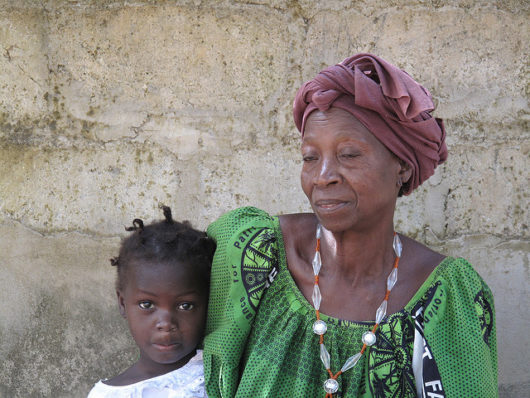
4 Organizations Working to Decrease Migration from The Gambia

Migration from The Gambia
Migration from The Gambia, a nation located in West Africa, has become extremely common due to widespread poverty and the belief that Europe offers more opportunities for success. Thousands of Gambians have begun the difficult journey across Africa to Libya, where they hope to cross the Mediterranean and enter Europe. Families sometimes believe so strongly that Europe is the solution for their children that they spend the last of their money to sponsor the trip.

Journey to Europe

Many migrants are not successful with this journey, however, and get stuck in Libyan prisons, where they often face gruelling conditions. Women are also particularly vulnerable, some of whom have been kidnapped and sold while attempting to reach Europe. Migrants who return to The Gambia because they are unable to get to Europe, perhaps due to detention in Libya, are often looked down upon by other Gambians, who believe that they simply did not try hard enough.

In response to the growing dangers associated with migration, several organizations are working to decrease migration from The Gambia and help Gambians who tried to migrate resettle in their country. In The Gambia, Youths Against Irregular Migration (YAIM) and Returnees From The Backway (RFTB) were formed, while international organizations including the European Union’s Trust Fund for Africa (EUTF) and the International Organization for Migration (IOM) developed programs for this cause.

Youths Against Irregular Migration (YAIM)

YAIM was created in 2017 by Gambian youths detained in a Libyan prison. One of the founders, Ndow, told IRIN News, “We were treated like slaves; we didn’t take a bath for months, so we tried to escape and they beat us seriously.” After this experience, Ndow, along with Sallah, Tunkara and Keita decided that once they got out of the prison they would share their stories and try to prevent other Gambians from attempting to migrate.

YAIM is also working to help Gambians find opportunities in The Gambia, rather than looking to Europe. They advocate for looking for local opportunities, although they recognize this persepcitve requires a significant change in the mindsets of many Gambians, as Europe has been idealized for so long.

YAIM spreads their message through social media, roadshows and airwaves. They finished their second “youth caravan” in the summer of 2018, both of which were sponsored by the German Embassy in Banjul. Thirty YAIM members traveled as a part of the caravan to two different regions in The Gambia, and spoke in public, high-traffic areas. YAIM recognizes the importance of its work and hopes that their efforts will make a difference in reducing migration from The Gambia.

Returnees From The Backway (RFTB)

Like YAIM, RFTB was founded in a Libyan detention center. This group focuses on helping migrants who have returned to The Gambia transition back into society by reducing the stigma associated with returning to the nation. RFTB spreads their message through tea ritual sessions, known as attaya, which are often attended by Gambian men.

Ultimately, RFTB wants to provide agricultural training to returnees and use the land given to them by the Kerewan local government to set up a farm run by returned migrants. If this project is successful, RFTB would like to expand and set up farms across the nation.

European Union’s Trust Fund for Africa (EUTF)

At an international level, the European Union established the Trust Fund for Africa in 2015 to help manage the flow of migrants from Africa into Europe. As a part of this Trust Fund, the Youth Empowerment Program (YEP) — which currently has 11 million Euros in funding — wants to help young people in Africa gain entrepreneurial skills to help create jobs and expand markets.

In The Gambia, YEP plans to help over 7,000 youths complete technical or vocational training, support the return of migrants from Europe, encourage the creation of modern manufacturing jobs and services, and raise awareness amongst young populations about the importance of skills training. Their goal is to decrease migration from The Gambia by invigorating the Gambian economy and showing youths that they do not need to leave.

International Organization for Migration (IOM)

IOM launched their Migrant Protection and Reintegration program in November of 2017. This program will offer reintegration packages to migrants that will help them rebuild their lives in The Gambia. Like the other three organizations, they are attempting to change the mindset of Gambians, encouraging them to view The Gambia as a place with opportunity and potential.

One of the specific projects the IOM is supporting is the founding of a large-scale chicken raising business in Parkour that will provide employment to returnees and help them regain their social standing and earn an income. Similar to the RFTB’s plan to create a migrant-run farm, this initiative will empower returnees and perhaps inspire others to consider returning if they know there are opportunities.

Advocacy and Prosperity

These local and international organizations are taking an important step by focusing on the improvement of The Gambia and discouraging people from embarking on a journey that is often unsafe and sometimes fatal.

Once more people understand the realities of migrating and develop more faith in their country, migration from The Gambia will hopefully begin to decline, increasing safety and prosperity.

– Sara Olk

Photo: Flickr

November 4, 2018
https://borgenproject.org/wp-content/uploads/borgen-project-logo.svg 0 0 Kim Thelwell https://borgenproject.org/wp-content/uploads/borgen-project-logo.svg Kim Thelwell2018-11-04 01:30:542019-10-22 13:59:424 Organizations Working to Decrease Migration from The Gambia
Refugees, Refugees and Displaced Persons

Movement in Progress: 10 Facts on Forced Migration

10 Facts on Forced Migration
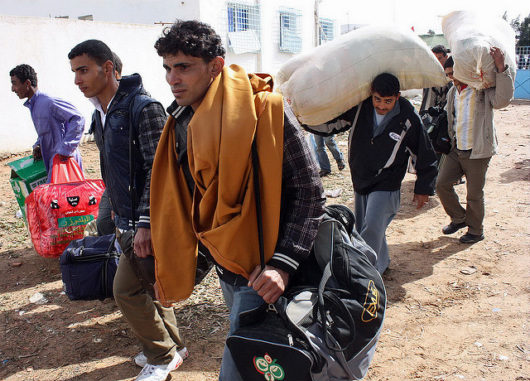
Forced migration is ever-present in society due to various coercive factors. From cases in the United States to Syria and the Democratic Republic of Congo, the practice can be seen on almost every continent. The International Organization for Migration defines forced migration as the “movement of people caused by threats to their livelihoods.” This article will discuss 10 facts on forced migration that are the most critical in the world right now.

10 Facts on Forced Migration

  1. Columbia University gives categories to displaced persons: conflict-induced and disaster-induced. Those who are displaced by conflict are those who fled their homes due to violence — this circumstance accounts for about 12 million people. Disaster-induced displaced persons are those who undergo and escape natural disaster or human-made disasters such as floods, earthquakes, monsoons, deforestation or industrial accidents; this type of situation displaced about 19 million people in 2017.

  2. The most common distinctions between displaced persons are refugees, asylum seekers and Internally Displaced Peoples (IDPs).  As defined by the UNHCR, refugees are people who live outside of their home country due to the fear of persecution. Gaining refugee status is a legal process in which a person must be determined a refugee by international, national or local law. This process can be carried out by a country or by the UNHCR, and this process differs everywhere. Asylum seekers are those who have crossed borders to flee violence, but whose refugee status is undetermined.  In contrast, IDPs are those who have been forced to flee their homes due to conflict or disaster but have yet to cross an international border.

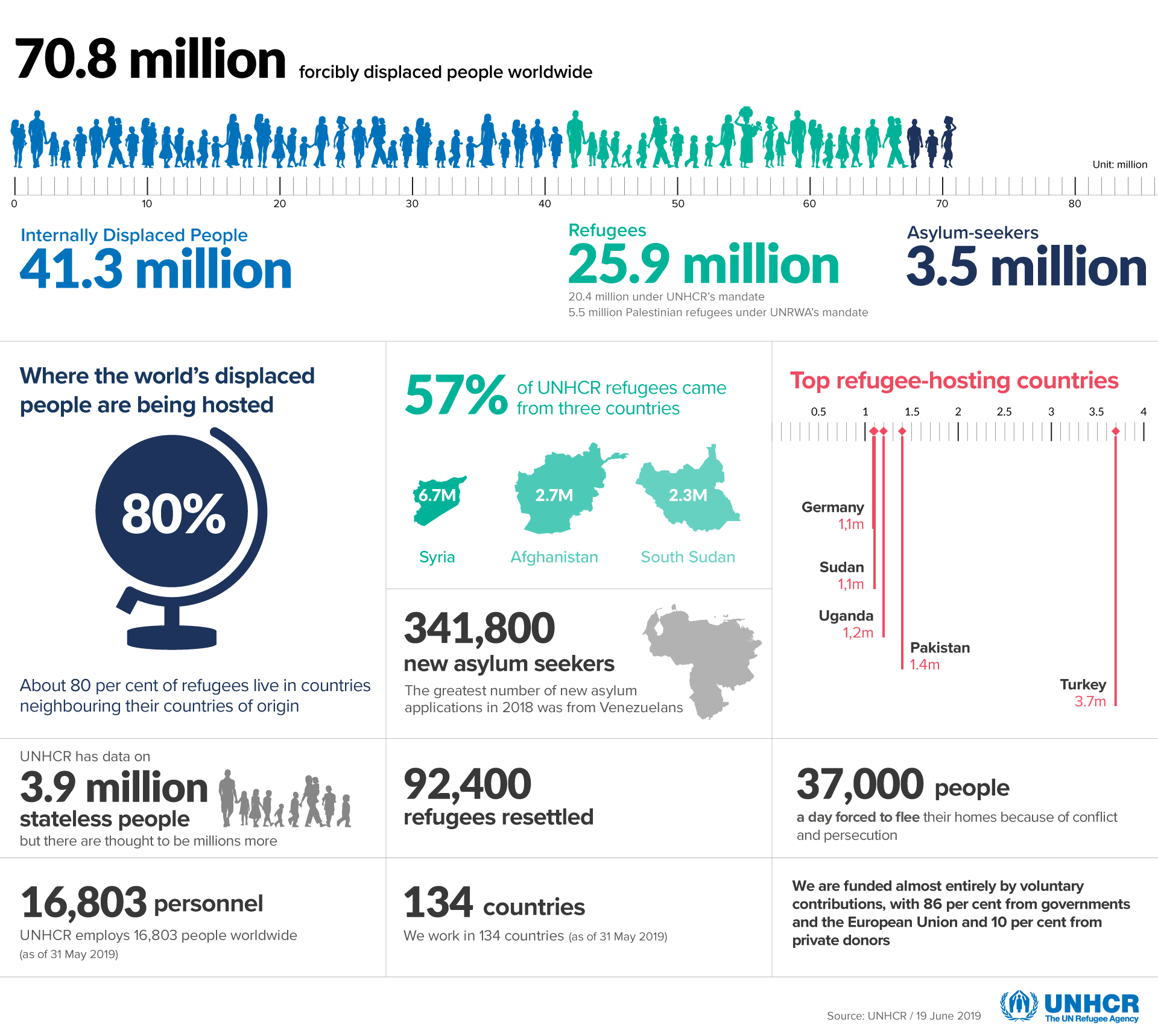
  3. Approximately 68.5 million people — mostly from Syria, Afghanistan, and South Sudan — have been forcibly displaced from their homes, which is the highest level of displacement in history. In 2017 alone, there were 30.6 million people displaced from their homes, approximately 11.8 million due to violent conflict or war, and 18.8 million due to natural disasters.

  4. Forced migration impacts the most vulnerable of people. According to the UNHCR, 52 percent of refugees were under the age of 18, and there were approximately 174,000 unaccompanied or separated children. Children may experience obstacles to education as forced migrants, and experience many social and cultural challenges in a place away from their home country. Unaccompanied children experience different challenges as they often lack the same protections and support as children with adult care, and many may suffer or be taken advantage of in a new environment.

  5. Sixty-eight percent of refugees came from Syria, Afghanistan, South Sudan, Myanmar and Somalia in 2017. In fact, 6.3 million refugees came from Syria, 2.6 million from Afghanistan, and 2.4 million from South Sudan. Out of the 25.4 million refugees reported in the world, these three countries, in particular, make up more than half of the refugee population. These refugees come from conflict and war-torn regions where choosing to stay could mean risking their lives.

  6. One reason for the current peak refugee crisis is that only about 103,000 refugees were resettled in 2017. Resettlement is the relocation and integration of people (forced migrants in this case) into another country. The UNHCR lists resettlement as one of the three durable solutions to the refugee crisis as it is a long-term solution for those who cannot go back to their home country. Approximately 44,400 people are being displaced a day, and unfortunately, this resettlement number does not make up the difference. Resettlement numbers are so low because many developed countries are not resettling as many people as they usually do. This decrease could be due to the highly dependent nature of resettlement on political climates as well as the current administrations in charge.

  7. The countries hosting the most refugees are Iran, Lebanon, Pakistan, Uganda and Turkey. Relative to the national population, Lebanon hosted the most refugees of these countries with 1 out of 6 inhabitants being refugees. Jordan is next with 1 out of 14, followed by 1 out 23 in Turkey. Eighty-five percent of refugees in the world are going to other developing countries, and large amounts of displaced peoples can have severe effects on the global economy. There may be serious problems for national economies that lack enough jobs for displaced peoples who seek work, pressure can be put on already fragile infrastructure.

  8. Refugees can benefit economies. In fact, many refugees in the United States pay more in taxes than they receive in benefits. In places that aided refugees in finding work, most were employed within 6 years of their settlement.

  9. Forcible displacement is an issue receiving more attention in the media and one that people are becoming increasingly passionate about. The UNHCR is dedicated to helping those who are displaced in 128 countries, including those in Syria. The UNCHR not only aids refugees that live in Syria but also Syrian Internally Displaced Peoples. The UNHCR provides economic and legal assistance, as well as shelters, health services and violence protection.

  10. Many local cities around the globe have resettlement agencies that aid refugees and other displaced peoples through their resettlement process. Many cities across the United States have an Ethiopian Community Development Council (ECDC), a non-profit responsible for resettling refugees into their communities. The ECDC’s work also involves community integration and education initiatives which shows their commitment to ensuring a happy and healthy future for their clients.

Work to Do

These 10 facts on forced migration help to show that there does not exist a simple solution to combat the forced migration crisis. Vulnerable people are still being forced from their homes and their livelihoods, and there is plenty of work that needs to be done. This work, however, has a dedicated workforce of people working hard for those who need it the most.

– Isabella Niemeyer

Photo: Flickr

November 3, 2018
https://borgenproject.org/wp-content/uploads/borgen-project-logo.svg 0 0 Kim Thelwell https://borgenproject.org/wp-content/uploads/borgen-project-logo.svg Kim Thelwell2018-11-03 01:30:342024-12-13 18:06:05Movement in Progress: 10 Facts on Forced Migration
Global Poverty, Refugees and Displaced Persons

Raising Awareness: Ai Weiwei and the Refugee Crisis

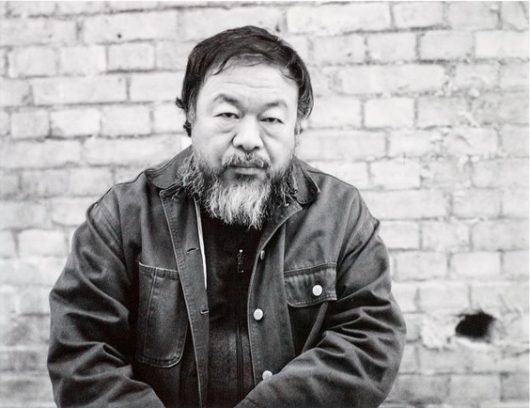
ai weiweiAi Weiwei, perhaps the most important artist alive, has found an interesting topic of study over the past couple of years: the global refugee crisis. Ai’s work has always had a social bend. He has shown his disdain and criticism of the Chinese government, particularly after the Sichuan earthquake, in many of his previous art pieces. In fact, his political activism even landing him in jail for 81 days.
Ai Weiwei: Inspiring with Art

In recent years, however, he has been working outside China in either a subterranean studio in Berlin or working in New York with the Public Art Fund. Ai Weiwei and the refugee crisis are hardly a surprising pair. Though he is veering away from the domestic politics that prompted many of his earlier works, tackling the global refugee crisis, nonetheless, inspires the same poignant and emotionally resonant works for which Ai has become internationally celebrated.

Ai’s art is certainly deserving of its reputation. “Remembering,” perhaps one of his most famous projects, was a massive art piece created in response to the Sichuan earthquake. Ai lined up thousands of backpacks along the Haus der Kunst in Munich. Each backpack represented a child who was lost in the earthquake. In addition, the backpacks spelled out a sentence written by one of the victim’s mother: “All I want is to let the world remember she had been living happily for seven years.”

The sensitivity Ai showed in focusing on the tragedy of a large number of people while highlighting the individual—in that case, the child’s mother—is how he has been able to approach the global refugee crisis. It is also that level of sensation, that which marked “Remembering” as an art piece, that should keep Ai Weiwei and the refugee crisis in the headlines.

Ai Weiwei and the Refugee Crisis

Ai Weiwei has responded to the crisis with several art projects and a documentary film, “Human Flow,” now available for streaming on Amazon. The documentary, as well as the project of combatting the refugee crisis, is ambitious. It is grand. It is wide in scope.

The film opens with an aerial shot of the sea. A refugee reception is soon underway as refugees come ashore from their boat on that sea. The image, the tiny heads adrift surrounded by impossibly small waves, conveys the immeasurability of the scene. Yet, as the film progresses, faces are visible, close-up. And, for a moment in this opening see, the audience sees the director.

The film isn’t just about the refugee crisis; it is about the international figure Ai Weiwei and the refugee crisis. He, the director, appears in many crucial scenes throughout the film. It is his documentary and his exploration of the crisis. Yet, his image is used sparingly. The audience sees him react to people organically; they see his emotional reactions, but the focus is always on the other people—the refugees.

The documentary spans several countries and jumps from location to location; not creating a story, but an especially moving tapestry of lives woven together by the different crises they experience. Close-ups highlight the individual while aerial shots from drone cameras create a sense of scale.

Ai Weiwei’s New York Art Project

As part of his work for New York’s Public Art Fund, with proceeds also going to the IRC and the UNHCR, Ai Weiwei used portraits of 300 of the refugees he encountered doing research and creating the documentary to create banners on display around the city. The banners are part of his “Good Fences Make Good Neighbors” exhibition, in which the artist also created several fence or cage installations around New York City as a commentary on the tendencies to not treat refugees with the respect and humanity they deserve.

Moreover, the images of individuals, used as part of a massive and publicly accessible art projects deal, are a testament to the massive scale of the crisis, and yet they imbue the subject, the refugee, with individuality and emotional resonance. These pieces are guaranteed to be seen when walking around New York.

The documentary and his other art projects serve to create and propagate awareness. It is not just an awareness of the refugee crisis, but of the otherwise unseen humans who are affected by the crisis. It is the emotion behind the art of Ai Weiwei and the refugee crisis itself that needs to be shared. And a readily streamable documentary along with a strong public art project serve as excellent ways of spreading awareness. His work can be seen as a call for action to address the needs of the global poor and the world’s refugees.

Ai Weiwei is far from finished making a statment on the refugee crisis. His next project, entitled “Laundromat,” will be in Qatar. The artist uses 2,046 articles of clothing left behind by refugees when fleeing the Greek island of Lesbos. In an email interview about this new project with the New York Times, Ai asserts this call for action, noting “We cannot reject the idea that humanity is one.”

– William Wilcox

Photo: Flickr

October 14, 2018
https://borgenproject.org/wp-content/uploads/borgen-project-logo.svg 0 0 Borgen Project https://borgenproject.org/wp-content/uploads/borgen-project-logo.svg Borgen Project2018-10-14 01:30:222019-07-09 16:36:25Raising Awareness: Ai Weiwei and the Refugee Crisis
Aid, Foreign Aid, Global Poverty, Refugees and Displaced Persons

US Aid Benefits Refugees from Venezuela

Aid that Benefits Refugees VenezuelaLatin America is experiencing one of its worst ever migration crises. This region has experienced multiple population movements in its history. Venezuela has seen a mass exodus of people due to four years of economic downfall and the subsequent impoverishment of the citizens.

The Reasons Behind Venezuela Crisis

The problem has been further exacerbated by the re-election of the dictatorial President Nicolas Maduro. The economic policies of President Maduro and former President Hugo Chavez have mismanaged the country’s vast oil reserves and sent the country spiraling into depression. The government has cut imports by over 75 percent, choosing to use its own currency to balance the $140 billion debt. This is an extremely bad decision in a country that produces almost exclusively oil.

The result has been an enormous lack of services within the country and the decrease in GDP. These policies have remained unchanged or challenged because of Maduro’s stranglehold on the country’s media and legal system, in addition to his brutal responses to protests. Accusations of corruption and conspiracies surrounding drug trafficking have plagued Maduro’s career but haven’t challenged his rule in any meaningful way. The United States has responded to these allegations by sanctioning Maduro but this had relatively no effect on Maduro’s behavior. Realizing this fact, the U.S. turned their attention towards aid that benefits Venezuela refugees.

Refugee Crisis in Venezuela

Hopes for change internally seem bleak and have pushed over two million refugees into surrounding countries. At first, refugees are going to neighboring Ecuador, Peru and Columbia, countries that have been very welcoming in the past. Recently, however, the sheer number of migrants leaving Venezuela has forced its neighbors to take more aggressive policies.

Ecuador began blocking entry to refugees fleeing Venezuela with no passports. This policy came after the country declared a state of emergency due to the crisis. Peru and Columbia also announced their plan to adopt a similar policy and to deport migrants that are already within the country but without proper documentation. The policies of both the Government of Venezuela and its neighbors have trapped Venezuelan migrants in makeshift towns along the border, with limited resources. Most Venezuelan migrants sold their possessions in order to leave their country and have little to nothing in these towns.

The Aid of United States to Venezuela

Fortunately, the United States has played an instrumental role in providing aid that benefits refugees from Venezuela. The U.S had already provided $16 million in aid for the refugees through the United Nations Refugee Agency and another $6 million to help Columbia deal with their influx of refugees.

This money helped establish the infrastructure that is maintaining abovementioned makeshift towns and providing necessary health care for millions of people. Recently, the United States sent a life-saving resource to the shores of Columbia. Secretary of Defence, Jim Mattis, is sending a U.S. Navy Hospital Ship to help treat refugees in Colombia and surrounding Latin American countries. Hospital ships provide surgical care from some of the top military physicians in the world. They are protected by international law and help ease the burden on domestic medical institutions, which could influence many of these Latin American countries to take more beneficial positions towards refugees.

U.S. aid for refugees has a ripple effect on the countries that are hosting them because they have more resources at their disposal. This could change their policies in a meaningful way and end this migration process in the most positive way positive.

– Anand Tayal

Photo: Flickr

October 12, 2018
https://borgenproject.org/wp-content/uploads/borgen-project-logo.svg 0 0 Borgen Project https://borgenproject.org/wp-content/uploads/borgen-project-logo.svg Borgen Project2018-10-12 13:30:182019-07-09 16:39:35US Aid Benefits Refugees from Venezuela
Global Poverty, Refugees, Refugees and Displaced Persons

The Bidi Bidi Refugee Settlement: The World’s Largest

Bidi Bidi Refugee Settlement The Bidi Bidi refugee settlement is one of several located in Northern Uganda and covers an area mass of 250 square kilometers. It is the biggest refugee camp in the world and houses over 270,000 refugees. Most of the refugees come from South Sudan, a country that gained independence in 2013 but witnessed a new wave of instability and famine in 2016, forcing over 1.6 million South Sudanese to flee their homes. Out of the 1.6 million, 800,000 fled to Uganda. Uganda has one of the most compassionate refugee policies, allowing people to set up their own homes, and refugees are given the right to work and travel, which is uncommon. Uganda has, therefore, become a hot spot for refugees, which has brought an economic strain on the nation, forcing it to rely on humanitarian assistance to sustain millions of refugees.

Who Are the Bidi Bidi

The Bidi Bidi refugee settlement is home to a mostly South Sudanese population. Many of the inhabitants of Bidi Bidi fled because of the threat of murder or imprisonment from rebels or government soldiers. Having left their homes, often walking for days at a time, they arrive at the settlement center with nothing more than the clothes on their back. The process of becoming a refugee is often slow and hectic, but basic needs are met in a timely manner thanks to the NGOs and volunteers’ tremendous effort and funds that have been dedicated to making this refugee camp more livable.

Insecurities

Many of the inhabitants are affected by disease, predominantly malaria and HIV/AIDS. Malaria-carrying mosquitoes breed in wet environments, and due to the rains in Uganda, no one is safe from malaria. Therefore, it is imperative that these settlements have proper access to medical aid and resources to ensure the well-being of refugees. In addition to a lack of medical resources, malnutrition affects most of the population of Bidi Bidi and the rest of Uganda. The Ugandan government has been under pressure to provide food for those malnourished, but it is almost impossible without humanitarian aid and support.

Opportunities in Bidi Bidi

Each organization working within the Ugandan settlement camps and Bidi Bidi offers different and varied opportunities for refugees to support themselves and regain a sense of normalcy. Caritas is an organization aimed at promoting justice and helping the poor, and they have mobilized efforts to give aid to the people of Bidi Bidi. Depending on which zone of the camp refugees live in, some receive a plot of land, agricultural tools and seeds to begin to sustain themselves and create opportunities for businesses.

Many women in Bidi Bidi have access to psycho-social support and empowerment resources that have been set up within the camp. The U.N. has created a system of revolving funds, meaning that funds are replenished when used, which allows women to learn vocational skills such as hairdressing and helping women build their own businesses. This leads to empowerment and creates a sense of stability in an unstable world.

The Future of the Bidi Bidi Refugee Settlement

The Bidi Bidi refugee settlement is the largest of its kind in the world, it uses what it can to create and offer opportunities and resources to refugees, so they may live more independently. It focuses on rehabilitation and independence and creates a sense of hope for the future of the inhabitants of Bidi Bidi. The unrest and violence in South Sudan still create thousands of refugees on a daily basis. The long-term solution is to achieve peace in South Sudan, so people can return home. However, in the short-term, it is imperative that Uganda receives humanitarian aid to ensure the safety and wellbeing of its inhabitants.

– Trelawny Robinson 
Photo: Flickr

October 4, 2018
https://borgenproject.org/wp-content/uploads/borgen-project-logo.svg 0 0 Borgen Project https://borgenproject.org/wp-content/uploads/borgen-project-logo.svg Borgen Project2018-10-04 01:30:352019-07-09 17:00:43The Bidi Bidi Refugee Settlement: The World’s Largest
Humanitarian Aid, Refugees, Refugees and Displaced Persons

Equal Humanitarian Assistance for Elderly Refugees

Humanitarian Assistance for Elderly Refugees
Despite UNHCR regulations that call for adequate humanitarian assistance for elderly refugees, older people are often not the focus of aid programs. Organizations such as HelpAge International, however, along with UNHCR, are working to improve services and care for elderly refugees by developing a more comprehensive understanding of their struggles and needs.

Lack of Humanitarian Assistance for Elderly Refugees

Older persons, defined by the UN as people over 60 years of age, are particularly vulnerable when displaced from their homes. Lack of mobility, chronic illness or weakened vision can hinder their ability to flee. They may also be reluctant to leave, concerned about becoming socially isolated or physically separated from their families. A study of eastern Ukraine found that approximately half of all the older people remained home when the conflict began and that many were left behind due to their reduced mobility.

Even after older people manage to leave, humanitarian assistance to elderly refugees may not fully address their needs. An Overseas Development Institute report explains that “while humanitarian principles require that aid is delivered in an impartial manner, based on needs alone, in emergencies humanitarian organizations tend to implement blanket, one-size-fits-all programmes that fail to adequately address the specific vulnerabilities of older people.”

One of the primary reasons for this is that elderly refugees make up a small percentage of refugee populations, approximately 8.5 percent. This leads them being deprioritized in favor of larger demographic groups, including women and children. It is estimated, however, that by 2050 there will be more people over the age of 60 than under the age of 12.

Needs of Older Refugees Neglected

Areas in which the needs of elderly refugees are not always properly addressed include safety, protection, nutrition, medical services and mental health. Elderly refugees have a greater risk of experiencing violence, including sexual and domestic abuse. They are also likely to be exploited by family members. These risks are greater for women, those with disabilities and LGBT individuals.

Additionally, older people need food that is easy to eat and digest, and may become malnourished due to their inability to consume regular food. UNHCR reported in 2016 that humanitarian assistance for elderly refugees generally does not meet the food requirements of older people.

Two-thirds of elderly refugees have been found to suffer from poor physical health. In a study about older Syrian refugees in Lebanon, it was found that most of them had at least one non-communicable disease: 60 percent had hypertension, 47 percent had diabetes and 30 percent had some form of heart disease, indicating a need for more comprehensive health services.

Mental health is also a significant area of concern. Older people, who often have a great deal of prestige and important societal roles, find that they lose much of their influence, power and resources when they become refugees. This is partly due to the fact that one of their main resources, life experience, is less relevant in new, unknown settings. Western values and education serve to give more prominent roles to younger people.

The loss of their traditional roles in addition to the trauma resulting from conflict and fleeing was found to have caused depression and mental illness among older South Sudanese refugees in a study published by the Overseas Development Institute. Respondents indicated that they felt isolated from their community and families, sensing that younger generations no longer respected them. They were also concerned that their families would grow tired of having to care for them.  

Uncertainty about being able to return to their homes can also cause psychological stress in elderly refugees. The family of Dagha, a 101-year-old Syrian refugee, stated that she often cries in her sleep and that her greatest fear is that she will die in Lebanon. Dagha reportedly asked her family to promise that they will bury her in Syria.

Providing Humanitarian Assistance

Improving humanitarian assistance for elderly refugees is an attainable goal. Aid organizations have the funding needed to make older refugees a greater priority, and an article in The Guardian explains that “mindset is the main barrier to inclusive humanitarian assistance, not money.”

UNHCR has a renewed commitment to focusing on elderly refugees and has outlined several practices ensuring aid is used to meet their needs. First, it is important to communicate with older people, both about their specific needs and concerns, and the services available to them. Important messages need to be in a format that elderly refugees can access. Working with older people to determine what works best for them is vital.

Older people should also be prioritized in reunification efforts and moving forward they should not be separated from family members. Additionally, the needs of elderly refugees should be considered when designing shelters and settlements.

In response to mental health concerns, aid workers need to improve their understanding of what elderly refugees want out of their lives in new and unfamiliar locations. Many South Sudanese informants stated that they wished to regain the societal and familial roles they had held before leaving.

With the help of organizations such as HelpAge International and UNHCR, humanitarian assistance for elderly refugees will hopefully begin to improve, moving toward fully addressing their needs and concerns. Life for elderly refugees will likely continue to be difficult, but better aid can lessen their struggles and improve their general livelihoods.  

– Sara Olk
Photo: Flickr

October 2, 2018
https://borgenproject.org/wp-content/uploads/borgen-project-logo.svg 0 0 Borgen Project https://borgenproject.org/wp-content/uploads/borgen-project-logo.svg Borgen Project2018-10-02 14:37:012019-07-19 07:47:32Equal Humanitarian Assistance for Elderly Refugees
Global Poverty, Health, Refugees, Refugees and Displaced Persons

Mental Health Support for Refugees

Mental Health Support for RefugeesThe global refugee crisis is becoming more and more widespread. In 2017, there were 2.9 million asylum seekers and this represented the biggest single-year rise in history. Those who fall victim to war, natural disaster, and famine are displaced and seek to find security in other countries. Their fleeing journey comes with many hardships, some of which provoke serious mental trauma during these vulnerable times. This text underlines the importance of mental health support for refugees.

Mental problems of refugees

When leaving the host country, refugees seek out protection camps and detention centers where they are placed in the uncertain housing and are at risk of being displaced from their families. Challenges that arise from resettlement are a loss of culture, community, or feeling ostracized from the current environment. Post-traumatic stress disorder (PTSD) symptoms in refugees range from 10 to 40 percent. Children, on the other hand, experience these symptoms in even higher figures, from 50 to 90 percent.

When refugees arrive in other countries, they are subject to screenings for physical illnesses. In 2010, only 18 percent of refugee mental health coordinators used effective screening to identify mental illnesses. Barriers to mental health support for refugees include lack of access to interpreters, lack of access to mental health centers in poor, needy communities, shortages of mental health professionals in native countries and many more as well.

Providing mental health support to refugees in America

Centers across the U.S. are also providing mental health support for refugees. Bellevue Hospital in New York City created the program Survivors of Torture to assist asylum seekers and others who had a misfortune to be victims of torture. This is incredibly important, as 50 percent of refugees have experienced some form of torture.

California Department of Health screens refugees for signs of mental trauma as well as physical conditions. Today, about half of the states in the U.S. have mental health screenings. The Minnesota Department of Health helps refugees resettle and successfully integrates them into the community. The Harvard Program in Mental Trauma brings advances of modern medicine to refugees who desperately need mental attention.

Mental health support to refugees in other countries

Mental health experts around the world are working with UNHCR and non-governmental organizations to ensure refugees receive the help they deserve. Some organizations include:

  1. Psycho-Social Services and Training Institute in Cairo. Founded by Nancy Baron in 2009, the institute delivers mental health service to low-income communities in the Middle East.
  2. Syria Bright Future. Mohammad Abo-Hilal was an asylum seeker who fled from Jordan in 2011. He founded Syrian Bright Future to train volunteers to identify mental health symptoms. This non-profit organization recently expanded to other countries and provides immediate services to refugees.
  3. Center for Mind and Body Medicine. The organization specializes in holistic approaches to trauma such as meditation and mindfulness behavioral programs.

Due to the problematic refugee crisis around the world, mental health support for refugees in needed more than ever. Through programs like cognitive behavioral therapy to art mindfulness, professionals are finding ways to help refugees combat traumas. These programs can provide refugees with the necessary mental health support they need.

– Lilly Hershey-Webb
Photo: Flickr

September 15, 2018
https://borgenproject.org/wp-content/uploads/borgen-project-logo.svg 0 0 Borgen Project https://borgenproject.org/wp-content/uploads/borgen-project-logo.svg Borgen Project2018-09-15 13:58:132019-08-01 23:38:46Mental Health Support for Refugees
Global Poverty, Nonprofit Organizations and NGOs, Refugees, Refugees and Displaced Persons

Top 10 Refugee Nonprofits Giving Hope

10 Refugee NonprofitsWe are living in a tense political time, especially pertaining to immigration and international conflict. Therefore, the work of refugee nonprofits is more important than ever. Not only do they help people who have been torn from their homes to find housing and work but they also assist them with getting acclimated to new countries. Here are 10 refugee nonprofits that are providing a light for those individuals who are displaced and struggling.

10 Refugee Nonprofits Giving Hope

  1. The International Rescue Committee (IRC) – This organization responds to humanitarian crises all over the world by providing money transfers, access to schooling and healthcare and even safe spaces for women. In 2017, IRC helped almost 23 million people attain primary healthcare and created 16,179 business—more than half of which are female-owned.
  2. Refugees International – Founded in 1979 as a movement to protect Indochine refugees, Refugees International has since expanded to become a leading advocacy group, working to pressure global officials to focus on assisting refugees.
  3. HIAS – This Jewish nonprofit covers advocacy as well, but also focuses on providing refugees with legal assistance as needed. They are committed to helping refugees of all faiths from all countries. Additionally, HIAS helps relocate those who have been displaced to the U.S.
  4. American Refugee Committee (ARC) – Another one of the 10 refugee nonprofits is ARC which provides a wide variety of services to refugees in need. Since 1979, ARC has supplied emergency response teams to assist with man-made and natural disasters on the Thai-Cambodian border. It also provides education, healthcare and water sanitation to refugee communities.
  5. REFUNITE – This group uses technology to reconnect separated refugee families. REFUNITE created a database that displaced peoples can use to try and find their lost loved ones. Thanks to their efforts, their website now has over 1 million profiles, making it much easier to reunite separated relatives.
  6. World Relief – Though it covers many other sectors beyond refugee issues, World Relief plays an important role in helping the displaced. This group gets in on the ground floor and meets refugees at the airport to help them find housing, learn English and even get jobs.
  7. Mercy Corps – Specifically doing work with the Syrian crisis, Mercy Corps has provided food and other resources to families who are displaced. Mercy Corps has also provided safe spaces for children and communities that need to start over in a new country such as the work in the U.S. Mercy Corps, which is currently helping 1.8 million people who have been affected by the Syrian crisis.
  8. Save The Children – As can be inferred from the name, Save the Children focuses on children in need. The group is active in 120 countries responding to disasters like refugee crises and advocating for the children affected. They also provide basic care such as shelters and food for children separated from their families.
  9. Lutheran Immigration and Refugee Service (LIRS) – LIRS meets in person with refugee families and provides them with legal and social services such as education, housing and language training. To date, they have helped more than 500,00 immigrants and refugees.
  10. Doctors Without Borders – Focusing mainly on medical assistance and healthcare, Doctors Without Borders works by responding to humanitarian crises in impoverished countries across the world. Displaced refugees often have no access to professional healthcare, and Doctors Without Borders fills that void.

With 68.5 million people displaced in the world today, groups like these 10 refugee nonprofits are giving hope to those who have experienced more than their share of despair. These organizations and the many more who work to alleviate poverty and suffering around the world are more important than ever.

– Amelia Merchant
Photo: Flickr

September 15, 2018
https://borgenproject.org/wp-content/uploads/borgen-project-logo.svg 0 0 Borgen Project https://borgenproject.org/wp-content/uploads/borgen-project-logo.svg Borgen Project2018-09-15 06:30:282019-08-01 23:40:08Top 10 Refugee Nonprofits Giving Hope
Global Poverty, Migration, Refugees and Displaced Persons

Reasons Impoverished People Come to the United States

Reasons Impoverished People Come to the United States
Most Americans will never know what it is like to be forcibly displaced from their home country. Living in a place where there is no threat of violence is a luxury when compared to the hardships faced by many other people. For those who are not privileged, every day can seem like a struggle. The reasons for impoverished people coming to the United States are many. 

Asylum-Seeker and Refugee

What is the difference between an asylum-seeker and a refugee? Refugees are those who have to seek safety in neighboring counties during times of war or other perils and are recognized by the International Law. Asylum-seekers, however, are migrants whose identity as a refugee is not recognized by their home country. Their reason for fleeing may be related to personal threats of violence and they have not yet claimed refugee status. These two can fall under the term “migrant”.

In the current political climate, a pilgrimage to the United States is a great risk. Therefore, it is important for the natural born citizens of this nation to align themselves with the reasons impoverished people come to the United States. 

Top 10 Reasons Impoverished People Come to the United States

  1. Persecution: Impoverished people come to the United States to escape persecution, whether it is related to race, religion or political affiliation. Migration is the last option for safety and it is all many families can afford.
  2. Escape Violence: Many people coming to the southern border of the United States hail from the Northern Triangle of Central America, i.e. Guatemala, Honduras and El Salvador. The rate of targeted killings and gang-related violence has spiked in these countries in the past few years, causing many citizens to flee.
  3. Environmental Factors: Drastic changes in the natural environment is a prevalent reason for migration to the United States. After the devastation caused by Hurricane Maria, around 179,000 people living in Puerto Rico came to the continental U.S.
  4. Healthcare: The impoverished migrants coming into the United States often come from countries with unaffordable or extremely limited access to healthcare.
  5. Jobs: Searching for employment is a top priority for migrants at the southern border. It is nothing short of astounding that nearly two-thirds of adults are able to find work within five weeks of entering, often accepting low wages to provide for themselves and their families.
  6. Children’s Bright Future: In the hopes of offering a better life for their children, many families have sent them out alone. Since the beginning of this year, over 74,000 children have been met at the U.S. southern border without being accompanied by a parent.
  7. Family Reunification: For parents who often have to send their children away ahead of them, coming to the United States is their chance to live as a family free of poverty and persecution.
  8. Protection: In their search for a place that offers an obligation to protect its citizens, migrants come with the hope that they will be protected in the United States. Displacement is something no person would want to go through more than once in their lifetime, so these people are looking for permanence as well. About 60 percent of the undocumented immigrants living in the United States has been there for the past decade.  
  9. Education: Public education is a luxury many impoverished people do not have access to. Coming to the United States provides not only an immediate better life for their families but a long-term plan for their children’s education.
  10. Quality of Life: Overall, this was the promise made to immigrants going back almost 200 years, that a better life was waiting for them if they were willing to work for it.

The above reasons for impoverished people to come to the United States will not only help American citizens empathize with their struggle but possibly look for ways to help them out. Embracing migrants is something that has been an enormous struggle for centuries in the United States, and while every immigrant’s reasons for leaving their home country may be different, their desire to build new, bright future is what brings them here.

– Tresa Rentler
Photo: Flickr

August 20, 2018
https://borgenproject.org/wp-content/uploads/borgen-project-logo.svg 0 0 Borgen Project https://borgenproject.org/wp-content/uploads/borgen-project-logo.svg Borgen Project2018-08-20 16:15:102019-08-15 12:04:02Reasons Impoverished People Come to the United States
Global Poverty, Refugees and Displaced Persons, United Nations

Dwindling UN Funds Threaten Millions of Palestinians

Threatens Millions of Palestinians
The United Nations Relief and Works Agency (UNRWA) was established in 1949, after the 1948 Arab-Israeli conflict, in order to offer relief and works programs for Palestinian refugees. Since its inception, UNRWA has gone from helping some 750,000 Palestinian refugees to approximately 5 million Palestinians today.

Funding

Funded entirely by the contributions of U.N. member nations, UNRWA directs its efforts towards services ranging from education to healthcare to microfinance. Their budget is divided into 54 percent to education, 17 percent to health, 16 percent to support services, 9 percent to relief and social services, and 4 percent to infrastructure and camp improvement.

Unfortunately, these services are at risk due to a potential $250 million shortfall. A significant decline in the United States’ contribution, from $364 million last year to $60 million this year is said to be responsible for the shortage of funds.

Impact in Syria

Amidst the destructive conflict in Syria, 560,000 Palestinian refugees are among the worst affected. Through the Syria Crisis Response Plan, UNRWA provides vital humanitarian assistance through emergency healthcare, education, food and household items. In Syria alone, $411 million is necessary to maintain these crucial provisions.

The UNRWA has provided 44,000 young Palestinian refugees with the opportunity to pursue primary and secondary education. However, if the funding shortage cannot be met, their safety, as well as their education, is at risk.

Impact in Gaza

Through 22 health centers, UNRWA provides healthcare services to over 1.2 million Palestinian refugees in Gaza. Due to the ongoing conflict in Gaza and limited resources available, UNRWA also offers emergency food assistance to 830,000 Palestinian refugees living below the poverty line as well as 45,870 cash-for-work opportunities and counseling for upwards of 25,000 refugee children. Funding shortages place all of these essential services at risk.

UNRWA has 252 schools in Gaza that educate more than 240,400 students. These schools now face a similar, bleak fate to their Syrian counterparts should this massive funding gap fail to be filled. Aside from providing students a basic education, many of these schools include a dedicated human rights curriculum that promotes conflict resolution.

Impact in the West Bank

Palestinian refugees living in the West Bank are also at significant risk should the UNRWA not be able to resolve its funding shortage. UNRWA provides emergency food assistance to almost 36,000 households, in addition to working to improve camp environments for female and youth refugees. In 2012, for example, UNRWA assisted 113,374 food-insecure Palestinian refugees.

Significance of UNRWA Funding

According to Pierre Krahenbuhl, the commissioner general of the UNRWA, the most urgent threat the funding shortage poses is to emergency food aid to Palestinians in Gaza and Syria. However, the UNRWA has also been instrumental in offering high-quality education throughout the region, promoting gender equality, providing near-universal immunization, investing in small businesses, and providing food assistance to 1.7 million refugees.

What do all of these services have in common? They have been integral to raising Palestinian refugees out of poverty and ensuring basic human rights. We cannot allow UNRWA’s efforts to disappear. Failure to offer these resources threatens millions of Palestinians and only guarantees continued hardship for their communities and the region. 

– McAfee Sheehan
Photo: Flickr

July 19, 2018
https://borgenproject.org/wp-content/uploads/borgen-project-logo.svg 0 0 Borgen Project https://borgenproject.org/wp-content/uploads/borgen-project-logo.svg Borgen Project2018-07-19 01:30:392019-09-13 20:04:29Dwindling UN Funds Threaten Millions of Palestinians
Page 10 of 29«‹89101112›»

Get Smarter

  • Global Poverty 101
  • Global Poverty… The Good News
  • Global Poverty & U.S. Jobs
  • Global Poverty and National Security
  • Innovative Solutions to Poverty
  • Global Poverty & Aid FAQ’s
Search Search

Take Action

  • Call Congress
  • Email Congress
  • Donate
  • 30 Ways to Help
  • Volunteer Ops
  • Internships
  • Courses & Certificates
  • The Podcast
Borgen Project

“The Borgen Project is an incredible nonprofit organization that is addressing poverty and hunger and working towards ending them.”

-The Huffington Post

Inside The Borgen Project

  • Contact
  • About
  • Financials
  • President
  • Board of Directors
  • Board of Advisors

International Links

  • UK Email Parliament
  • UK Donate
  • Canada Email Parliament

Get Smarter

  • Global Poverty 101
  • Global Poverty… The Good News
  • Global Poverty & U.S. Jobs
  • Global Poverty and National Security
  • Innovative Solutions to Poverty
  • Global Poverty & Aid FAQ’s

Ways to Help

  • Call Congress
  • Email Congress
  • Donate
  • 30 Ways to Help
  • Volunteer Ops
  • Internships
  • Courses & Certificates
  • The Podcast
Scroll to top Scroll to top Scroll to top