• Link to X
  • Link to Facebook
  • Link to Instagram
  • Link to TikTok
  • Link to Youtube
  • About
    • About Us
      • President
      • Board of Directors
      • Board of Advisors
      • Financials
      • Our Methodology
      • Success Tracker
      • Contact
  • Act Now
    • 30 Ways to Help
      • Email Congress
      • Call Congress
      • Volunteer
      • Courses & Certificates
      • Be a Donor
    • Internships
      • In-Office Internships
      • Remote Internships
    • Legislation
      • Politics 101
  • The Blog
  • The Podcast
  • Magazine
  • Donate
  • Click to open the search input field Click to open the search input field Search
  • Menu Menu

Archive for category: Nonprofit Organizations and NGOs

Information and stories about nonprofit organizations and NGOs

Advocacy, Global Poverty, Hunger, Nonprofit Organizations and NGOs

Top 10 Global Poverty Advocacy Nonprofits

Top 10 Global Poverty Advocacy Nonprofits
Progress is happening. In 2000, the world’s leaders set out to cut the number of people living in extreme poverty in half by the year 2015. Not only were they successful, but they achieved their goal seven years early thanks to global poverty advocacy nonprofits. Now, the world’s most prosperous nations have decided to end world hunger entirely by the year 2030.

While The Borgen Project fights endlessly to assist in this goal, it also recognizes that this is a battle that cannot be fought alone. The Borgen Project takes this opportunity to acknowledge the crucial work being done by its fellow advocates by presenting its pick of the top 10 global poverty advocacy nonprofits.


Top 10 Global Poverty Advocacy Nonprofits

  1. Action Against Hunger – For the past 40 years, Action Against Hunger has been saving the lives of undernourished children. The organization has provided access to clean drinking water, food and healthcare services to more than 20 million people across 50 countries. Recognizing the amazing work being done, Charity Navigator has given Action Against Hunger its highest rating for the past 13 years. This organization was also awarded the title of “Best in America” from Independent Charities in America.
  2. The Hunger Project – The Hunger Project fights for “the sustainable end of world hunger.” In order to achieve this, the organization focuses on empowering women. It workshops with communities in order to determine what the community considers a priority and works in tandem to develop a long-term plan to achieve this goal. The Hunger Project operates across Africa, South Asia and Latin America. To date, the Hunger Project has worked with more than 16,000 communities.
  3. Global Food Banking Network – The Global Food Banking Network delivers over 940 million pounds of food to those in need every year by redistributing surplus food. Their network of food banks spans across 29 countries. The organization works both to develop new food banks in impoverished communities as well as supporting the ones that already exist. In Hong Kong, the Global Food Banking Network started implementing an IT Starter Kit that will enable an additional 260,000 pounds of food to be delivered each year through improved efficiency. They hope, that with success, they will be able to spread this innovation to other countries.
  4. Heifer International – Heifer International has over 70 years of experience working with individuals in 25 different countries. Through its program Passing on the Gift, supporters are able to donate an animal. That animal is then gifted to a farming family, but in return, the family must give the animal’s first female offspring to another family in need. While over the years the logistics of the program have fluctuated, the notion of continuing the goodwill of others has remained a core component of their approach.
  5. Rise Against Hunger – In 2017, Rise Against Hunger benefited 1.4 million people across 74 countries. The organization’s 398,000 volunteers package meals for food insecure peoples. To date, more than 441 million meals have been delivered. In addition, the organization assists communities in expanding their agricultural production capabilities, acquiring business skills and garnishing an understanding of how to best operate markets.
  6. The ONE Campaign – Similar to The Borgen Project, The ONE Campaign seeks to implement change through lobbying for the world’s poor. In 9 years, the organization’s 9 million volunteers have secured $37.5 billion for funding health initiatives that treat preventable diseases in African communities. The organization has lobbied for legislation in the U.S., Canada and EU that would help fight corruption.
  7. Freedom From Hunger – Freedom from Hunger micro-finances small businesses in impoverished communities. In 2016, 5.7 million people benefited from these programs. Recognizing the need for additional resources, the organization also provides information on agricultural techniques, savings programs, family planning and accessing healthcare. In 2012, Philanthropedia ranked Freedom from Hunger 5 out of 119 international microfinance organizations.
  8. The Alliance to End Hunger – The Alliance to End Hunger is a 90 member coalition of both private and public institutions that seek solutions to those living in extreme poverty. Its National Alliance Partnership Program supports communities in more than 60 countries, including Ghana, Guatemala, Kenya, Malawi, Tanzania, Uganda, and Zambia. The organization advocates by getting numerous diverse stakeholders to invest in the same cause. The Alliance to End Hunger works with USAID, USDA, WFP,  FAO and the IFAD.
  9. MEDLIFE – Founded in 2005, MEDLIFE is an organization that actively addresses medical concerns of impoverished communities. The organization operates in underserved areas outside of the capital cities of Peru and Nicaragua as well as rural areas throughout Ecuador and Tanzania. In these countries, the organization sends volunteers to run mobile clinics, provide basic health education and work on community development projects. These projects include providing classrooms, daycare centers and restroom facilities.
  10. Hunger Relief International – Hunger Relief International focuses on developing long-term plans to address the developmental needs of impoverished communities in Haiti and Guatemala, such as nutrition, water and sanitation and child protection. In 2016, the organization regularly supplied 27 Haitian orphanages with high-quality food baskets. In the aftermath of Hurricane Matthew, Hunger Relief International worked to ensure the safety of 1,500 children. The organization also distributed over 2,000 personal hygiene kits to children in need.

This list of the top 10 global poverty advocacy nonprofits provides only a glimpse into the numerous efforts being made to assist the world’s poor. The Borgen Project would like to extend its thanks to the countless other organizations working for this same cause and encourage the reader to join any these top 10 global poverty advocacy nonprofits and others in the campaign to end world hunger.

– Joanna Dooley

Photo: Flickr
December 12, 2018
https://borgenproject.org/wp-content/uploads/borgen-project-logo.svg 0 0 Borgen Project https://borgenproject.org/wp-content/uploads/borgen-project-logo.svg Borgen Project2018-12-12 01:30:162024-05-29 22:53:35Top 10 Global Poverty Advocacy Nonprofits
Global Poverty, Human Trafficking, Nonprofit Organizations and NGOs

Top 5 Nonprofits Combatting Human Trafficking

Top Five Nonprofits Combatting Human Trafficking
Human trafficking is a problem that affects the entire world. In 2017, 100,409 victims of human trafficking were identified worldwide. That is a dramatic increase from 2012, the year that saw the total number of victims reach 46,570 people. However, there are several organizations in the United States and abroad that are working to end human trafficking. In the text below, top five nonprofits combating human trafficking are presented.

Top 5 Nonprofits Combatting Human Trafficking

  1. The Polaris Project began in 2002, with the objective of tracking and ending human trafficking. This program aims to achieve this goal through several objectives. One of the objectives is running National Human Trafficking Hotline that provides support for victims inside the United States. Recently, the Polaris Project began to expand its work beyond the United States. The organization partnered with Consejo Ciudadano organization and begun work in Mexico and Latin America. The partnership with Consejo Ciudadano allowed both projects to merge their hotlines to track victims being smuggled to the United to Mexico and vice versa. In 2016, the partnership helped 508 victims find support after being trafficked. Support included psychological evaluation and legal advice. Also, calling the hotline number provided crucial details that lead to the identification of 559 traffickers.
  2. A21, since 2008, works to end slavery and human trafficking across the world and wants to ensure that freedom is a right secured to every human. A21 has 14 offices across the world including the United States, South Africa, Thailand and Ukraine. One of A21’s largest programs is the Walk for Freedom, which is a march that raises awareness of slavery and human trafficking. The march is also an opportunity for A21 to raise money to help its other causes like the Can You See Me campaign that aims to raise awareness of trafficking through social media. Last year, 400 marches took place in 50 countries. Seventy million people saw these marches either in person or through the media.
  3. Stop the Traffik, like other nonprofits combatting human trafficking, focuses on intelligence-led preventative measures that lead to disruption of human trafficking worldwide. The most important service that Stop the Traffik offers is the Stop App. This app can be downloaded by anyone in the world and is a place for victims of human trafficking to share their stories. The app allows victims to feel heard but also provides Stop the Traffik with valuable data. The information shared on the app allows Stop the Traffik to create hotspots and predict further activity in these areas. The data and findings are published online and are accessible to everyone. In August 2018, Stop the Traffik released a three-page report on child trafficking in Kenya that included the areas most affected by human trafficking, the most popular types of exploitation, the ways in which traffickers trick victims and how to spot the signs that someone is trafficked.
  4. Love146 fights to end child trafficking and exploitation through prevention and care for survivors. One of the many caring services that Love146 offers is the Round Home. The Round Home is a recovery house for girls who are victims of human trafficking. The goal of the house is to help girls renter society by helping them overcome trauma and realize their potential. The home is located in the Philippines and has several facilities including a volleyball court, a treehouse designated for therapy and a punching bag to help girls take out their aggression. While girls are staying at the house, Love146 helps locate the girls’ families to ensure they do not re-trafficked and that they can return to a stable living situation.
  5. Shared Hope’s goal is to bring an end to sex trafficking through prevention, justice and support. While Shared Hope focuses on human trafficking in the United States it also expanded its support programs to Nepal, India and Jamaica. In 2005, Shared Hope founded Asha Nepal, a Village of Hope that offers to house women who are victims of human trafficking. The village hosts 11 women and 15 children year round and offers counseling, HIV and STI treatment and vocational training. Like the Round House, the goal of Asha Nepal’s housing is to help victims of human trafficking re-enter the society with valuable skills so they do not get re-trafficked.

In recent years human trafficking increased worldwide. Despite these harsh facts, the nonprofit organizations like the Polaris Project, A21, Stop the Traffik, Love146 and Shared Hope are working hard to end it. These and many other organizations are fighting for a world where no will have to worry about being exploited for sex or labor.

– Drew Garbe

Photo: Flickr


November 24, 2018
https://borgenproject.org/wp-content/uploads/borgen-project-logo.svg 0 0 Borgen Project https://borgenproject.org/wp-content/uploads/borgen-project-logo.svg Borgen Project2018-11-24 01:30:482024-05-29 22:57:25Top 5 Nonprofits Combatting Human Trafficking
Global Poverty, Nonprofit Organizations and NGOs

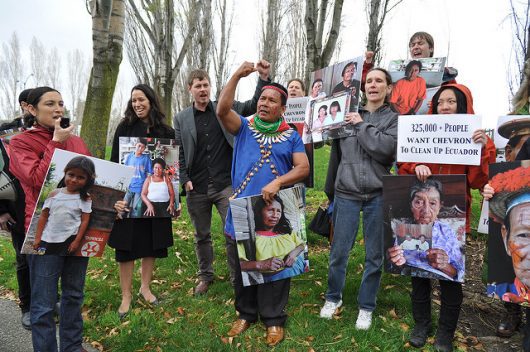
Amazon Watch Is Protecting the Indigenous Lands of the Amazon

Amazon Watch Protects the Indigenous Lands
The Amazon Rainforest is the largest rainforest in the world, covering 1.7 billion acres in the heart of Brazil. It is also the ancestral home of an estimated one million indigenous people who are apart of around 400 tribes. Each of these tribes has its own individual language, culture, and territory. Yet, these tribes and their homes are being threatened due to deforestation. At the current rates, The Amazon Rainforest will be severely degraded by the year 2020. 

Amazon Watch

Amazon Watch is protecting the indigenous lands of the Amazon. Founded in 1996, this nonprofit not only protects the rainforest but to also campaigns for the indigenous human rights of the people living in the Amazon. According to their website, Amazon Watch strives “for a world in which governments, corporations and civil society respect the collective rights of indigenous peoples to free, prior and informed consent over any activity affecting their territories and resources.”

Amazon Watch is protecting the indigenous lands of the Amazon by advancing solutions, including green development and autonomous solar power. The organization has launched an indigenous solar communications project with Empowered By Light. This project provides clean energy for lights and communication systems for indigenous people in Brazil, Colombia, and Ecuador. Amazon Watch will continue to install these solar and communication systems while providing training about their uses and upkeep.  

Sending a Message to Large Corporations

Amazon Watch is protecting the indigenous lands of the Amazon one campaign at a time. Its current campaign, #EndAmazonCrude, is educating others on the dangers of oil drilling in the Amazon. Oil drilling threatens the survival of indigenous people as well as the land and indigenous species that live there. Each day, around ten million gallons of Amazon crude is delivered to The USA.

One of the biggest consumers of this fuel is Amazon.com, due to their transport operations. Many consider it unacceptable to be profiting off the name “Amazon” while destroying the real Amazon Rainforest. Amazon Watch is helping people spread the #EndAmazonCrude message via social media and sending emails Amazon CEO Jeff Bezos about this issue.

Amazon Watch has also called out big companies, such as JPMorgan Chase and BlackRock, for funding the destruction of The Amazon Rainforest and violating indigenous rights. The organization’s petition demands that the CEOs stop financing oil and gas producers in the Amazon. The petition states, “Oil and gas operations that you invest in are actively violating indigenous rights and worsening our climate crisis. Stop financing Amazon destruction!” Over 12,000 people have signed it thus far.

Encouraging People to Act

Amazon Watch is protecting the indigenous lands of the Amazon by educating others on how to take action for the Earth and for the indigenous people. Their website provides information on how to take action to help protect the Amazon through email and/or social media. 

The organization is also asking others to stand in solidarity with Brazil’s indigenous rights agency. Indigenous people in Brazil are suffering under the country’s agribusiness industry. The National Indigenous Foundation (FUNAI) is a key target of the Brazilian government, which has undermined its critical role in protecting indigenous territories and severely cut its budget.

In 2017, Amazon Watch began working with Brazilian allies and international communities in order to fight environmental and human rights threats from Brazil’s “ruralista government leaders. Amazon Watch started a petition to reject President Temer and the Attorney General’s attacks on the rights and advocates of the Amazon’s indigenous people. Over 16,000 people have signed the petition so far.

Amazon Watch is protecting the indigenous lands of the Amazon by encouraging the public to get involved with their events. Every year in San Francisco, Amazon Watch holds its annual gala called “Amplify! A Celebration of Voices from the Amazon”. The special guests this year will be Achuar leaders from the Peruvian Amazon.

The government leaders in Brazil must start doing their part to protect the Amazon as well as the indigenous population within. By partnering with indigenous and environmental organizations, Amazon Watch is protecting the indigenous lands of the Amazon while campaigning for human rights and preservation of the Amazon’s ecosystem before it is too late. Hopefully, their work, plus the voices of those signing petitions to strengthen protections and rights, will also inspire the government to take action.  

– Ariane Komyati
Photo: Flickr

October 28, 2018
https://borgenproject.org/wp-content/uploads/borgen-project-logo.svg 0 0 Borgen Project https://borgenproject.org/wp-content/uploads/borgen-project-logo.svg Borgen Project2018-10-28 01:30:022024-05-29 22:53:12Amazon Watch Is Protecting the Indigenous Lands of the Amazon
Global Poverty, Nonprofit Organizations and NGOs

HIV/AIDS in Eastern Europe and Central Asia

AIDS in Eastern Europe and Central Asia
“We all deserve a quality life with HIV and without it,” declared Russian activist Maria Godlevskaya at the International AIDS Conference. Godlevskaya is a loving mother and dedicated peer counselor who has been living with HIV for 18 years. Advances in the prevention and treatment of HIV mean that the number of new HIV infections is decreasing globally. Only two regions lag behind; in Eastern Europe and Central Asia, new cases of HIV are on the rise.

The State of the AIDS Crisis

To combat the global epidemic, UNAIDS has issued “90-90-90 targets” to be reached globally by 2020. The goal is that of all of the people living with HIV, 90 percent should be aware of their status. Of these people, 90 percent should receive treatment. And of those receiving treatment, 90 percent should achieve viral suppression.

Eastern Europe and Central Asia are currently the furthest from reaching this goal. In these regions, 73 percent of people infected with HIV are aware of their status, 36 percent of those people are receiving treatment and 26 percent have achieved viral suppression.

There is no indication that the epidemic of HIV/AIDS in Eastern Europe and Central Asia has even reached its peak. There is, however, hope. By understanding the key populations affected by the epidemic and funding prevention, testing and treatment methods, transmission can be slowed and even stopped altogether.

Advances Against AIDS in Eastern Europe and Central Asia

Currently, only about three percent of HIV/AIDS funding in the region is targeted toward key vulnerable populations, including men who have sex with men, transgender people, sex workers, and people who use intravenous drugs. The stigma against these populations often makes them invisible to the government and to the healthcare system.

About one-third of new HIV infections in Eastern Europe and Central Asia are in people who use intravenous drugs. Fortunately, strategies to reduce the risk of spreading the disease have been helping. Needle-syringe programs are an example of effective harm reduction strategies. They distribute free, sterile needles to drug users.

Additionally, opioid substitution therapy allows drug users to stay away from needle use. The therapy provides methadone, which is taken orally and eases drug withdrawal symptoms. Belarus, Kazakhstan, the Republic of Moldova, and Ukraine have significantly ramped up such harm-reduction programs; as a result, they have seen a decrease in HIV infections among people using intravenous drugs.

Mother-to-child transmission of HIV  has accounted for only one percent of all incidences in 2017. In 2016, the World Health Organization (WHO) declared that mother-to-child transmission was stopped altogether in Armenia and Belarus.

In the fight against AIDS in Eastern Europe and Central Asia, Saint Petersburg has become a model city. As a result of increased funding for prevention initiatives and harm-reduction programs for drug users, the number of new HIV infections has decreased. On a national level, however, the Russian Federation has neglected to fund effective prevention and treatment services.

Grassroots Nonprofits Helping Their Communities

When the government turns a blind eye, ordinary people step up. Maria Godlevskaya founded E.V.A, a nonprofit that advocates for women affected by HIV. From providing peer counseling to helping women communicate with medical officials, E.V.A gives marginalized women hope. The organization is about building bridges from woman to woman and from this network of women to their government.

The fight against HIV/AIDS knows no gender, no race and no age. Adolescents are coming together to fight HIV/AIDS in Eastern Europe and Central Asia. Across the region, 80 adolescents are part of a nonprofit called Teenergizer. They visit local HIV clinics and record any roadblocks to testing they experience. The teenagers then use this information to create an interactive map of testing and treatment facilities for other youth in their region. Teenergizer reduces stigma and empowers youth to take their health into their own hands: as a result of the initiative, nearly two thousand adolescents from Eastern Europe and Central Asia have been tested for HIV.

The crisis of AIDS in Eastern Europe and Central Asia has been bleak, and the future is uncertain. But, the leadership of several countries, nonprofit organizations and dedicated citizens has the potential to crush social stigmas and the associated legislative obstacles to funding prevention and treatment. Armen Agadjanov of Teenergizer affirms that a brighter future is on the horizon. “I’m convinced that the future is in the hands of adolescents—they are the people who will change and build a new world.”

– Ivana Bozic
Photo: Flickr

October 1, 2018
https://borgenproject.org/wp-content/uploads/borgen-project-logo.svg 0 0 Borgen Project https://borgenproject.org/wp-content/uploads/borgen-project-logo.svg Borgen Project2018-10-01 01:30:212019-07-19 08:00:57HIV/AIDS in Eastern Europe and Central Asia
Global Poverty, Nonprofit Organizations and NGOs

Top 10 Disaster Relief Nonprofits

Top 10 Disaster Relief Nonprofits
In 2017, 318 natural disasters were recorded worldwide with repercussions in at least 122 countries. These disasters killed over 9,500 people and affected 96 million. The majority of those affected by natural disasters reside in India and Sierra Leone.

Natural Disasters and Poverty

According to the World Bank, natural disasters force 26 million people into poverty annually and can erase years of poverty reduction progress. The estimated effects that natural disasters can have on welfare in most countries is equivalent to a loss of $520 billion per year in consumption.

Natural disasters and poverty are linked together as impoverished populations are unequally affected and have an inability to subsist. The poor are more likely to be exposed to natural hazards due to climate change. Furthermore, those affected lose a portion of their income and are often unable to receive aid from the government and financial systems.

An example of the disproportionate burden of natural disasters endured by the poor is Cyclone Nargis in Myanmar. Following the cyclone in 2008, at least 50 percent of poor farmers were forced to sell land as means to pay off debt after the storm. The cyclone’s social and economic consequences still exist 10 years later.

President Jim Yong Kim of World Bank Group said: “Storms, floods and droughts have dire human and economic consequences, with poor people often paying the heaviest price. Building resilience not only makes economic sense, it is a moral imperative.”

In order to rebuild a country after a natural disaster, there must be an immediate response from governments and disaster relief programs. Those affected need access to resources like food, shelter and medical care. Various disaster relief nonprofits are working to lessen the burden of the impacts of natural disasters around the world.

Top 10 Disaster Relief Nonprofits

  1. The International Red Cross (IRC) acts as the globe’s largest humanitarian network, delivering instant aid with trained disaster responders and relief supplies. By supplying water containers, shelter tools and cooking kits, IRC helps 100 million people who are affected by natural disasters every year. To date, IRC has also reunited over 9,900 families separated by natural disasters.
  2. All Hands and Hearts is one of the world’s leading disaster relief nonprofits. After All Hands and Happy Hearts merged into one group, they began working nationally and internationally to provide disaster relief. The group created the “Smart Response” method to acknowledge the immediate and long-term effects of natural disasters. Over 35,000 volunteers act as first responders to rebuild disaster-resilient homes and schools for affected communities.
  3. Médecins Sans Frontières/Doctors Without Borders (MSF) provides emergency response medical aid to communities affected by natural disasters, epidemics and conflict. Following the 2010 earthquake in Haiti, MSF began treating those injured within minutes. MSF offers long-term care to affected populations and distributes medical disaster kits to countries even before they arrive on the ground.
  4. Samaritan’s Purse is a non-denominational evangelical Christian organization that works with ministry partners to meet the urgent needs of crisis areas. Samaritan’s Purse distributes staple food kits, relief essentials, emergency medical care and, when needed, constructs traditional shelters for families in recovery.
  5. Active in over 80 countries, Direct Relief International improves the lives of those affected during emergencies by providing shelter, water, food and medicine. Direct Relief tailors medical aid to the location’s circumstances while prioritizing search-and-rescue, emergency medical services and logistical flexibility.
  6. Currently responding to the global food security crisis, Mennonite Central Committee (MCC) also responds to global disasters, funding relief kits, shelter and food to disaster-hit areas. MCC works to rebuild homes, provide employment, help individuals cope with trauma and prepare for future natural disasters. After the 2010 earthquake in Haiti, MCC educated populations on secure building construction.
  7. REACT International is a nonprofit organization consisting of volunteers who work to increase local resources in an effort to expand disaster relief work. REACT teams use communication technology to provide first-aid, special equipment and tend to other needs of the community.
  8. AmeriCares has three main courses of action: Ready, Respond and Recover. This group tries to anticipate need based on vulnerable areas and have supplies on hand so that they can respond as quickly as possible. Responders work with government and health sectors to prepare local hospitals and position medical supplies. AmeriCares remains in the affected location as long as necessary to help the health system recover and prepare for future disasters.
  9. Since 1988, International Relief Teams (IRT) has been mobilizing volunteers to provide immediate and long-term relief, medical supplies and funding to partner organizations. In the last 30 years, IRT has deployed 420 disaster relief teams, distributed over $100 million in emergency supplies and assisted families in 95 global disasters, including the Armenian earthquake in 1988.
  10. ShelterBox puts families first and believes that no family should be without shelter. They provide emergency shelter and tools to lessen the impact following a disaster and enable a faster recovery for families.

Listed above are only a few nonprofit organizations making an effort to relieve communities of as much suffering as possible after a disaster. Though there are many more disaster relief nonprofits dedicated to providing aid, this list highlights some of the support is available after a disaster. For a more comprehensive list of disaster relief nonprofits, take a look at The Humanitarian Travel website.

Since natural disasters can have catastrophic effects, the issue is being taken seriously as various improvements are being made annually. In order to successfully rebuild communities, it is crucial to support disaster relief nonprofits with a long-term impact and policies in favor of foreign aid.

– Diane Adame

Photo: Flickr


September 30, 2018
https://borgenproject.org/wp-content/uploads/borgen-project-logo.svg 0 0 Borgen Project https://borgenproject.org/wp-content/uploads/borgen-project-logo.svg Borgen Project2018-09-30 01:30:232024-05-29 22:53:06Top 10 Disaster Relief Nonprofits
Global Poverty, Nonprofit Organizations and NGOs, Refugees, Refugees and Displaced Persons

Top 10 Refugee Nonprofits Giving Hope

10 Refugee NonprofitsWe are living in a tense political time, especially pertaining to immigration and international conflict. Therefore, the work of refugee nonprofits is more important than ever. Not only do they help people who have been torn from their homes to find housing and work but they also assist them with getting acclimated to new countries. Here are 10 refugee nonprofits that are providing a light for those individuals who are displaced and struggling.
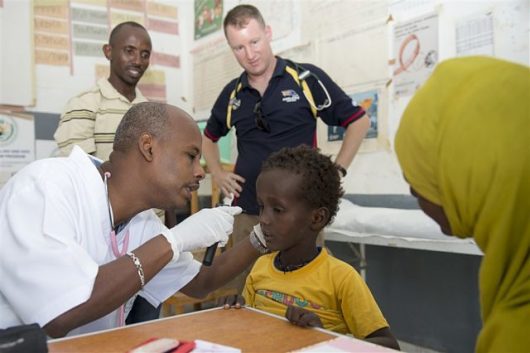
10 Refugee Nonprofits Giving Hope

  1. The International Rescue Committee (IRC) – This organization responds to humanitarian crises all over the world by providing money transfers, access to schooling and healthcare and even safe spaces for women. In 2017, IRC helped almost 23 million people attain primary healthcare and created 16,179 business—more than half of which are female-owned.
  2. Refugees International – Founded in 1979 as a movement to protect Indochine refugees, Refugees International has since expanded to become a leading advocacy group, working to pressure global officials to focus on assisting refugees.
  3. HIAS – This Jewish nonprofit covers advocacy as well, but also focuses on providing refugees with legal assistance as needed. They are committed to helping refugees of all faiths from all countries. Additionally, HIAS helps relocate those who have been displaced to the U.S.
  4. American Refugee Committee (ARC) – Another one of the 10 refugee nonprofits is ARC which provides a wide variety of services to refugees in need. Since 1979, ARC has supplied emergency response teams to assist with man-made and natural disasters on the Thai-Cambodian border. It also provides education, healthcare and water sanitation to refugee communities.
  5. REFUNITE – This group uses technology to reconnect separated refugee families. REFUNITE created a database that displaced peoples can use to try and find their lost loved ones. Thanks to their efforts, their website now has over 1 million profiles, making it much easier to reunite separated relatives.
  6. World Relief – Though it covers many other sectors beyond refugee issues, World Relief plays an important role in helping the displaced. This group gets in on the ground floor and meets refugees at the airport to help them find housing, learn English and even get jobs.
  7. Mercy Corps – Specifically doing work with the Syrian crisis, Mercy Corps has provided food and other resources to families who are displaced. Mercy Corps has also provided safe spaces for children and communities that need to start over in a new country such as the work in the U.S. Mercy Corps, which is currently helping 1.8 million people who have been affected by the Syrian crisis.
  8. Save The Children – As can be inferred from the name, Save the Children focuses on children in need. The group is active in 120 countries responding to disasters like refugee crises and advocating for the children affected. They also provide basic care such as shelters and food for children separated from their families.
  9. Lutheran Immigration and Refugee Service (LIRS) – LIRS meets in person with refugee families and provides them with legal and social services such as education, housing and language training. To date, they have helped more than 500,00 immigrants and refugees.
  10. Doctors Without Borders – Focusing mainly on medical assistance and healthcare, Doctors Without Borders works by responding to humanitarian crises in impoverished countries across the world. Displaced refugees often have no access to professional healthcare, and Doctors Without Borders fills that void.

With 68.5 million people displaced in the world today, groups like these 10 refugee nonprofits are giving hope to those who have experienced more than their share of despair. These organizations and the many more who work to alleviate poverty and suffering around the world are more important than ever.

– Amelia Merchant
Photo: Flickr

September 15, 2018
https://borgenproject.org/wp-content/uploads/borgen-project-logo.svg 0 0 Borgen Project https://borgenproject.org/wp-content/uploads/borgen-project-logo.svg Borgen Project2018-09-15 06:30:282019-08-01 23:40:08Top 10 Refugee Nonprofits Giving Hope
Global Poverty, Nonprofit Organizations and NGOs

Updates on Healthcare in Kenya

healthcare in KenyaKenya is one of the most populated nations in Africa with over 45 million people. While it is one of the top tourist spots with its various national parks and sights, Kenya is burdened by poor healthcare. College students and non-profit organizations are making strides to provide healthcare in Kenya by doing medical missions and providing citizens with top medical care from dental to pediatrics.
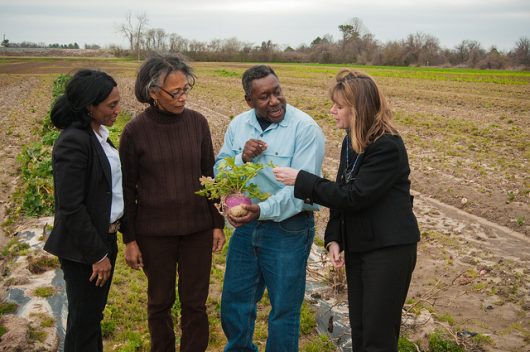
Facts about Healthcare in Kenya

Kenya faces many hardships including widespread poverty and a lack of access to healthcare. According to ChildFund International, over 35 million Kenyan citizens do not have health insurance, which means life expectancy for both men and women living in Kenya is 60-65 years old. In 2013, only 4.5 percent of Kenya’s GDP was spent on healthcare, which is quite low compared to other countries. With 19 million children under the age of 15, healthcare in Kenya cannot keep up with the growing population.

The top three causes of death in Kenya are: diarrheal diseases, HIV/AIDS and other noncommunicable diseases. Malaria is another big issue, causing around 4,000 deaths a year. Lack of access to healthcare paired with unsanitary living situations worsens these conditions.

One major cause of poor healthcare is not enough healthcare professionals, with only one nurse for every 1,000 patients. Most healthcare providers are centered in the wealthy parts of Kenya, instead of the poor ones where healthcare is needed most.

Another major concern for healthcare in Kenya is infant mortality rates. Infant mortality is 48 percent in Kenya, according to HERAF. This high number is caused from diseases such as malaria and HIV/AIDS as well as malnutrition.

What are People Doing to Help?

Paige Berkey, a Georgia Southern University nursing student, went to Nairobi, Kenya in 2018 to do medical missions for citizens suffering from poor healthcare due to poverty. Berkey went with an organization called International Medical Relief, a non-profit organization based in the United States where they bring medical assistants to over 57 impoverished countries each year. They set up free clinical sites in areas where a medical team was most needed to help with healthcare in Kenya.

The medical team consisted of a pediatrician, wound care, podiatrist, obgyn, mental health doctors, internist doctors, cardiologist, dentists and an eyeglass station. A pharmacy was also open, where patients could pick up prescriptions, as well as educate them on proper procedures while taking certain medications.

The team saw about 300 patients a day and saw a total of 1,377 patients over the course of their time in Kenya. Berkey mainly worked with the triage team, but also helped in the pharmacy and eyeglass station. “We would start with vital signs and then do a quick head to toe assessment and get their chief complaint and the history of the complaint,” Berkey said. “We would then decide which doctor to send to them.” Pediatrics was the most popular service that Berkey and her team provided. The pediatrician would have a wait of over two and a half hours every day and he was always the last one finished.

With help from organizations like International Medical Relief, Kenya is able to get better healthcare for its citizens, especially those who live in poverty.

– McKenzie Hamby
Photo: Google

September 15, 2018
https://borgenproject.org/wp-content/uploads/borgen-project-logo.svg 0 0 Borgen Project https://borgenproject.org/wp-content/uploads/borgen-project-logo.svg Borgen Project2018-09-15 01:30:342024-05-29 22:53:12Updates on Healthcare in Kenya
Global Poverty, Hunger, Nonprofit Organizations and NGOs, Poverty Reduction

Top 10 Hunger Nonprofits

Top 10 hunger nonprofitsAccording to the World Food Programme, some 815 million people in the world do not have enough food to lead a healthy and active life, with a vast majority of the world’s hungry people living in developing countries. With many governments struggling to provide aid to their citizens and a calculated $3.2 billion needed per year to start reaching children across the world, many individuals have banded together to bring about change on their own. These top 10 hunger nonprofits have started making a change in the world in the hopes of ending world hunger once and for all.
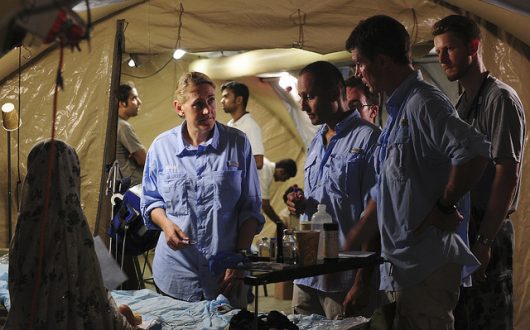
List of Top 10 Hunger Nonprofits

  1. A Growing Culture: This organization works to boost farmer independence by providing them with the means to adapt to change. It also helps farmers in having a say in the system, something that they currently lack because of industrial farming. A Growing Culture has been working on creating a farmer networking program to connect agriculture enthusiasts from around the world to boost innovative ideas and creating a lasting food system for all.
  2. Bioversity International: This research nonprofit works on saving agricultural and tree biodiversity in order to improve nutrition security as well as to fight climate change. The Bioversity International is a part of an international food security research partnership and works with low-income countries to work on food management practices and new policies to protect biodiversity within their nation.
  3. Community Alliance with Family Farmers: This organization focuses on farming and food systems through many grassroots programs. It tackles current challenges to the food system and supports family farmers and those who live in low-income populations. As an organization, the Community Alliance with Family Farmers tries its best to uphold sustainability within food and farming systems.
  4. Agricultural Biodiversity Community: Made up of more than 100 individuals and organizations, the Agricultural Biodiversity Community shares the idea that agricultural biodiversity can save the world. By utilizing conservation techniques and the development of food security in many regions, this organization seeks to enhance food security on a global scale.
  5. Green Shoots Foundation: Based in six different countries in Asia, the Green Shoots Foundation aims to improve healthcare and education through a program called the Food and Agriculture and Social Entrepreneurship program. These programs combine agriculture, peer education and community building to help communities in Asia create a better future for all.
  6. Groundswell International: As one of the top 10 hunger nonprofits, Groundswell International is unique in that it is a global partnership consisting of multiple nonprofits, local organizations and communities that all work to combat food insecurity. It also works to improve and start healthy food systems in many low-income countries and teaches new farming techniques to help improve community health.
  7. Heifer International: This global nonprofit aims to erase poverty through community development. It helps train families in sustainable food practices and its goal is to increase self-reliance among families. From teaching environmentally friendly farming techniques to helping families improve their lives, Heifer International is an effective organization.
  8. IFOAM Organics International: At the center of the organic movement worldwide is the IFOAM organization. IFOAM’s goal is to improve transparency with organic standards and balance local adaption and food diversity. Operating in over 100 countries worldwide, IFOAM is a force to be reckoned with.
  9. INGA Foundation: The Inga alley cropping is an alternative to the slash and burn agriculture practice that the INGA Foundation teaches to farmers and communities globally. This practice restores degraded land and protects rainforests from destruction. Soil fertility is retained and trees also benefit from this method of agriculture.
  10. Kiss the Ground: With the mission statement “We can do this!”, Kiss the Ground tries to balance climate using technology and science and its goal is to recreate the food system. Every initiative this organization starts is based on a message of a hopeful future.

The top 10 hunger nonprofits all have a similar goal: to end world hunger. Stopping world hunger isn’t easy but these organizations have taken on the challenge and work tirelessly for a better future. We need more individuals and organizations to do the same.

– Michael Huang
Photo: Flickr

September 13, 2018
https://borgenproject.org/wp-content/uploads/borgen-project-logo.svg 0 0 Borgen Project https://borgenproject.org/wp-content/uploads/borgen-project-logo.svg Borgen Project2018-09-13 13:08:512024-06-08 03:59:23Top 10 Hunger Nonprofits
Global Health, Nonprofit Organizations and NGOs

Transparent Hands: Providing Life-Saving Healthcare in Pakistan

Poverty contributes to poor health and prevents people from access to treatment, which traps the world’s poor in a vicious cycle. The inverse is true as well. Poor health often forces people to purchase expensive care and medications, which over time reduces spending money on anything other than healthcare. Additionally, poor health can limit a person’s ability to work and earn an income, which, combined with the cost of healthcare, can lead to poverty. This has been the case with healthcare in Pakistan.

A study by the World Bank reported that 100 million people worldwide are forced to survive on merely $1.90 a day because of healthcare expenses for themselves or a family member. This problem is exacerbated in developing countries where healthcare services are underfunded and understaffed. Millions of families are being pushed into poverty for less than ideal care. Poverty is both a cause and consequence of poor health, especially in developing countries, which makes finding a solution crucial to ending the cycle of poverty caused by poor health. Affordable and accessible healthcare in Pakistan can help end this cycle.

Healthcare in Pakistan

Pakistan is one of the developing countries searching for a way to alleviate poverty for its citizens. Healthcare in Pakistan needs a great deal of improvement. In June 2016, the Ministry of Planning, Development and Reform found that 39 percent of the country lived in poverty. While poverty rates in the country are declining, there are still over 70 million Pakistanis living on less than $2 a day.  The majority of families living on $2 a day do not have the resources to afford expensive life-saving treatment.

The problem is compounded by the lack of adequate care for the families that can afford health expenses. Less than 3 percent of Pakistan’s domestic budget is targeted towards healthcare, which has impeded medical research and infrastructure from flourishing. The public Pakistani healthcare system has a current backlog of more than 2 million people who are waiting to get surgery due to this lack of infrastructure and funding. Affordable and accessible healthcare is almost nonexistent for poor Pakistanis. This has motivated several non-governmental organizations (NGOs) within Pakistan to work to improve health care and make it more affordable.

Transparent Hands

One of the NGOs in Pakistan is Transparent Hands.  Transparent Hands seeks to make life-saving surgery more affordable and accessible for poor Pakistanis by crowdfunding expensive surgeries and building medical camps where patients can receive these surgeries. Currently, the organization has performed 342 surgeries, spent over $350,000 and developed 25 medical camps that have served 8133 patients. Each of these surgeries has had a life-changing impact on different poor Pakistani families.

A representative for Transparent Hands told The Borgen Project that “most of the patients who reach us suffer from serious health conditions due to which they are unable to even perform their household chores. After they undergo surgical treatment, not only do they become active again, they also start working and earning for their family.”

As an example, they shared the story of a patient who actualized this incredible recovery process. “There was a patient who was unable to sit and walk due to Ankylosing Spondylitis. He was dependent on his family for every little need. After the surgery, he is not only able to walk and sit, but he has also started working and is now an independent person.” This alone shows how proper access to healthcare could have a positive impact on the economy.

Affordable and accessible surgery can change someone’s life for the better. It is crucial to bolster the efforts of organizations like Transparent Hands in order to expand their impact throughout the country. Transparent Hands plans to eventually expand their operations from the province of Punjab to all provinces of Pakistan. Affordable and accessible healthcare in Pakistan will help 70 million Pakistanis escape the devastating cycle of poverty and poor health.

– Anand Tayal
Photo: Flickr

September 10, 2018
https://borgenproject.org/wp-content/uploads/borgen-project-logo.svg 0 0 Borgen Project https://borgenproject.org/wp-content/uploads/borgen-project-logo.svg Borgen Project2018-09-10 06:30:002024-05-28 00:03:24Transparent Hands: Providing Life-Saving Healthcare in Pakistan
Developing Countries, Global Poverty, Nonprofit Organizations and NGOs

A Developing Country: Bangladesh

A Developing Country: Bangladesh
As a new academic year draws near in the fall, we reminisce spring graduation celebrations for secondary and post-secondary students in the United States, but also the heralding of a special graduation for one South Asian nation. During the March 2018 review, the United Nations’ Committee for Development Policy (CDP) predicted Bangladesh to satisfy the criteria to become a developing country.

Bangladesh Growth

With just 47 years of independence, Bangladesh is expected to earn a status of a developing country from the least developed country in the next six years. The CDP will most likely recommend Bangladesh at its triennial review of least developed countries in 2021, and full endorsement is expected to follow at its 2024 meeting.

Consideration for becoming a developing country means demonstrating years of satisfactory human and economic advancements, and Bangladesh has been gaining on the developing community with precocious stride.

Foreign aid, non-government organizations and state-operated agencies have been key in Bangladesh’s development. Since 1973, the Asian Development Bank has assisted Bangladesh with $20.75 billion in aid. Close to 70 cents per dollar has been allocated to four sectors—energy, transportation, education and agriculture, as well as to natural resources and rural development.

Criteria for a Developing Country

Eligibility for becoming a developing country is based on three standards: an economic vulnerability index, a human assets index and per capita income. The United Nations’ most recent standards to graduate from least developed to a developing country are scores of 32 and below for its economic vulnerability index, scores of 66 and above for its human assets index, and a gross national income per capita of at least $1,230.

These thresholds must be met on two of the three categories for six years or the course of two successive, triennial Committee reviews. Bangladesh is on pace to fulfill all three requirements since its economic vulnerability, human assets and per capita income graduation thresholds were respectively met in 2003, 2015, and 2017.

Economic Vulnerability

Economic vulnerability is calculated considering eight factors: population size, the population living in low coastal zones, remoteness, the share of agriculture, forestry and fisheries, export instability, export concentration, and victims of natural disasters.

In a show of economic ascendancy and national pride, Bangladesh launched its first communications and broadcasting satellite, the Bangabandhu-1, transported by an American manufactured SpaceX rocket in May 2018. In addition to accelerating telecommunication development, the Bangladesh Space Research and Remote Sensing Organization has developed remote-sensing technology that can be used in agriculture, forestry, fisheries, water resources and oceanography. Remote sensors collect data on energy emitted from the Earth and can be used for shoreline erosion prevention, natural disaster preparation and natural resource management. This type of growth is vital to becoming a developing country.

Bangladesh’s strong textile and fabric industry drives 80 percent of the country’s export economy, the 57th largest in the world. Only China and the European Union topped Bangladesh’s clothing exports in 2015. Clothing exports made up almost 14 percent share ($26 billion) of Bangladesh’s 2015 gross domestic product (GDP).

Bangladesh has experienced GDP growth of 6 percent or more since 2011 and 7.3 percent in 2017, the second-most of all South Asian countries behind Bhutan.

Human Assets Index

Becoming a developing country also requires notable progress in education and health. The CDP’s human assets index is calculated by maternal and under-five infant mortality, malnourishment, gross literacy, and gross secondary school enrollment.

From 2011 to 2016, Bangladesh boosted its literacy rate from 47 to 73 percent. Room to Read, a non-profit organization, dedicated to girl’s education and child literacy in Asia and Africa, has opened 6,000 classroom libraries for over 300,000 Bangladesh children in 1,000 primary schools. The organization has concentrated its outreach in rural areas such as the Brahamanbaria District, a flood-prone area just 14 meters above sea level, and the Natore District, an agriculturally dependent rural area. Bangladesh has also reached all-time highs of secondary school enrollment rates: 72.5 percent for girls and 69 percent for both sexes.

The Strengthening Household Ability to Respond to Development Opportunities II (SHOUHARDO II)–Bangladesh project has reduced physical growth failure due to chronic malnutrition, known as stunting, by 13 percent in children under the age of five. Bangladesh villages affected by the SHOUHARDO II project are Cox’s Bazar, Mymensingh, Rangpur and Sirajganj regions. As part of the SHOUHARDO II project, women learned optimal breastfeeding, life-skills, and investment and finance strategies. This project also implemented a monthly food ration program consisting of wheat, vegetable oil and yellow split peas. There is also an indication of improving health conditions for women in Bangladesh as maternal mortality ratios dropped by 32 percent from 2012 to 2015.

Per Capita Income

With a current economy worth $686.5 billion and a gross national income per capita of $1,433, Bangladesh has exceeded the average least developed country for over 20 years. On its road to becoming a developing country, about 50 million people in Bangladesh have escaped extreme poverty (living on $1.90 a day) since 1991. This rate has declined from 40 percent to 14 percent today.

While Bangladesh still faces challenges, such as Rohingya refugees, overpopulation, flooding and insufficient sanitation, it is well on its way to becoming a developing country within the years to come.

– Thomas Benjamin
Photo: Flickr

September 4, 2018
https://borgenproject.org/wp-content/uploads/borgen-project-logo.svg 0 0 Borgen Project https://borgenproject.org/wp-content/uploads/borgen-project-logo.svg Borgen Project2018-09-04 01:30:092024-05-29 22:53:01A Developing Country: Bangladesh
Page 31 of 60«‹2930313233›»

Get Smarter

  • Global Poverty 101
  • Global Poverty… The Good News
  • Global Poverty & U.S. Jobs
  • Global Poverty and National Security
  • Innovative Solutions to Poverty
  • Global Poverty & Aid FAQ’s
Search Search

Take Action

  • Call Congress
  • Email Congress
  • Donate
  • 30 Ways to Help
  • Volunteer Ops
  • Internships
  • Courses & Certificates
  • The Podcast
Borgen Project

“The Borgen Project is an incredible nonprofit organization that is addressing poverty and hunger and working towards ending them.”

-The Huffington Post

Inside The Borgen Project

  • Contact
  • About
  • Financials
  • President
  • Board of Directors
  • Board of Advisors

International Links

  • UK Email Parliament
  • UK Donate
  • Canada Email Parliament

Get Smarter

  • Global Poverty 101
  • Global Poverty… The Good News
  • Global Poverty & U.S. Jobs
  • Global Poverty and National Security
  • Innovative Solutions to Poverty
  • Global Poverty & Aid FAQ’s

Ways to Help

  • Call Congress
  • Email Congress
  • Donate
  • 30 Ways to Help
  • Volunteer Ops
  • Internships
  • Courses & Certificates
  • The Podcast
Scroll to top Scroll to top Scroll to top