• Link to X
  • Link to Facebook
  • Link to Instagram
  • Link to TikTok
  • Link to Youtube
  • About
    • About Us
      • President
      • Board of Directors
      • Board of Advisors
      • Financials
      • Our Methodology
      • Success Tracker
      • Contact
  • Act Now
    • 30 Ways to Help
      • Email Congress
      • Call Congress
      • Volunteer
      • Courses & Certificates
      • Be a Donor
    • Internships
      • In-Office Internships
      • Remote Internships
    • Legislation
      • Politics 101
  • The Blog
  • The Podcast
  • Magazine
  • Donate
  • Click to open the search input field Click to open the search input field Search
  • Menu Menu

Archive for category: Health

Information and stories on health topics.

Health, Nonprofit Organizations and NGOs, United Nations

AMREF USA’s Pledge for a Healthy Africa

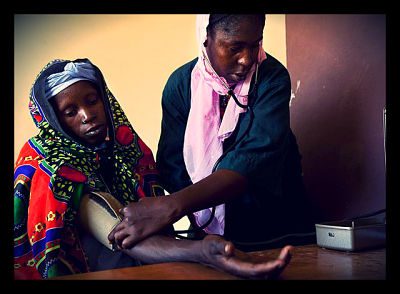
AMREF USA’s Pledge for a Healthy AfricaDespite the substantial improvements made in the last few decades, Africa still faces major public health problems. The continent accounts for two-thirds of the global population infected with HIV/AIDS, with 22.5 million citizens suffering. Malaria and diarrhea continue to kill children daily. The rise of tuberculosis, prevalent in mining areas across Africa, infected 2.3 million citizens in 2011 and killed 220,000. And childbirth still remains very dangerous, with 1 in every 16 women dying while giving birth.

African Medical and Research Foundation USA seeks to improve the health standards of all African nations, one community at a time. Founded in 1957, AMREF looks to improve the quality of life for African communities and eradicate public health problems.

AMREF understands local health systems are essential in developing quality, sustainable health standards. AMREF has trained many African locals to return to their communities in order to improve health conditions. The organization educates volunteers and on the symptoms and treatment of diseases to prevent diseases from spreading further and decrease the number of citizens infected. AMREF has trained over 10,000 health workers in over 40 African nations.

AMREF estimates that a million more health workers need to be properly trained and educated to meet the United Nation’s Millenium Development Goals for improved public health. As the fight for better health conditions in Africa continues, educating and training citizens may be the solution for healthier African communities and improved health standards.

– William Norris

Sources: AMREF USA, All Africa
Photo: Flickr

July 22, 2013
https://borgenproject.org/wp-content/uploads/borgen-project-logo.svg 0 0 Borgen Project https://borgenproject.org/wp-content/uploads/borgen-project-logo.svg Borgen Project2013-07-22 06:47:362020-07-16 18:54:21AMREF USA’s Pledge for a Healthy Africa
Health, Nonprofit Organizations and NGOs

Global Links 101

Global Links is a medical relief organization that is committed to promoting both environmental steward shipment and better healthcare in poor communities. Each year, hospitals in the United States wind up with hundreds of tons of “medical surplus” supplies. Usually, these still very useful materials are simply thrown into landfills. Global Links takes the surplus from the U.S. healthcare industry and delivers it to under-served communities that lack the supplies and equipment necessary for proper medical care.

Global Links’ model of recycling and reusing medical equipment connects two social issues: excess waste and lack of resources in developing areas. In linking the two, Global Links is able to convert an environmental burden into a beneficial tool.

The Global Links model breaks down into 5 simple steps:

1.     Global Links Staff assess nine program countries and meet with health authorities, medical staff, and Pan American health organization officials. The organization does this in order to evaluate and ensure medical donations would be useful to that location.

2.     Global Links trucks visit hospitals that have been saving surplus medical supplies and equipment for the organization.

3.     At a sorting facility, the donated material is sorted and shelved. Volunteers organize supplies and check for expiration dates. Materials are also cleaned and re-vamped if necessary.

4.     Volunteers pack supplies into boxes and staff members load them onto a 40-foot shipping container.

5.     The shipping containers are sent to communities that need the supplies.

Since its founding in 1989, the organization has shipped over 410 tractor-trailer sized loads of medical material to developing countries. These containers have contained over 6 million pounds of equipment and material that otherwise would have been dumped into landfills. The value of the materials exceeds $173 million.

– Grace Zhao

Sources: Global Links, Charity Navigator
Photo: Global Links

July 20, 2013
https://borgenproject.org/wp-content/uploads/borgen-project-logo.svg 0 0 Borgen Project https://borgenproject.org/wp-content/uploads/borgen-project-logo.svg Borgen Project2013-07-20 06:23:032024-05-25 00:03:02Global Links 101
Food & Hunger, Global Poverty, Health

Four Focuses of Hunger Prevention

four-ways-hunger-prevention-borgen-project-global-poverty_opt
Millions of people worldwide live with the absence of available food sources. From our Western perspective, this is often difficult to understand as well as painful to imagine. However, the world without food is not without hope. Here, we focus on 5 ways to not only stop hunger in its current state, but also prevent it from happening in the first place.

1. Look to the Future.
Breaking the cycle of hunger is not possible without future-mindedness. So many countries go hungry due to lack of investment—no one sends aid because the hungry population is not prospering, the population is not prospering because they don’t have enough food to function…and the nightmare goes on. Investing in the future and electing smart leaders who have a plan to fight this epidemic is crucial to ending current and preventing future starvation.

2. Focus On Women.
Women make up 60% of the world’s hungry. Starving women means malnourished babies or failed pregnancies, and even those pregnancies that do come to term often lead to another hunger-stricken life.

Women tend to go hungry more often than men, because women are more likely to have unequal access to resources, education, and income—all because they tend to participate less in decision-making. Healthy women will bear healthy babies, raise them into healthy children, and create healthy adults.

3. Invest in Livestock and Agriculture.
Think of the famous saying,  “Catch a man a fish, and feed him for a night. Teach a man to fish, feed him for a lifetime.” Sustainable production of food is essential for starvation prevention, and healthy communities. Most starving countries have poor agricultural systems due to drought or lack of water sanitation.

However, it is not the drought itself that erodes food security in a population. The real issue here is an areas vulnerability to drought because of chronic underinvestment in their lands and livestock.

A population’s land may be infertile so no one invests in improving it for fear of little return, but the land is infertile because the people don’t have the resources to cultivate it; the people don’t have the resources to cultivate the land because no one is investing in it. A modest investment can break this cycle.

4. Find Out How You Can Help.
Hunger won’t end without all of our help. All of us—every human being on the planet—need to commit to fighting starvation in order for it to end. Something as simple as volunteering at a food back, or something as radical as campaigning on Capitol Hill will move our world toward an age where no one dies of starvation.

– Kali Faulwetter

Source: Ready Nutrition, Revolution Hunger, Trust, World Food Programme
Photo: ICNA Relief

July 19, 2013
https://borgenproject.org/wp-content/uploads/borgen-project-logo.svg 0 0 Borgen Project https://borgenproject.org/wp-content/uploads/borgen-project-logo.svg Borgen Project2013-07-19 05:00:192024-05-25 00:00:09Four Focuses of Hunger Prevention
Extreme Poverty, Family Planning and Contraception, Global Poverty, Health, Women and Female Empowerment

Worst Countries in Which to Give Birth

worst-countries-to-give-birth-in-borgen-project-rural-poverty_opt
Many of us spent some time in May being thankful for our mothers. Something else that we may not think to be thankful for is the healthy and sanitary conditions mothers were able to give birth in. For women living in developing countries, this is a huge concern for pregnant women. One country, however, has proven to be the worst place to give birth: Chad.

This statistic was identified by the organization, Save the Children, in their annual Mother’s Index. The group uses an index that includes a woman’s risk of death during childbirth or pregnancy. Chad was deemed the worst place for a mother to give birth because 1 in 15 mothers are at high risk of dying while pregnant or in child labor.

A contributing factor to these startling statistics is that women get married and become pregnant at a young age. 50% of girls are mothers by the age of eighteen. These girls are at risk because their bodies are not fully developed enough to safely experience pregnancy and childbirth. Malnutrition is also a concern for mothers in Chad. High levels of poverty make healthy diets unattainable for many mothers.

The second worst country for women to give birth in is Somalia. This country is the highest ranking in not providing proper care during pregnancy, with 74% of women not receiving adequate care. Somalia also is barely behind Chad in terms of the risk of death during pregnancy and childbirth. In Somalia, one in sixteen women are at risk. The newborn child is also at danger when it is born in Somalia. About eighteen newborns die per 1,000 live births.

Other countries that are ranked in worst places to have a child are Niger, Sierra Leone, Liberia, Guinea-Bissau, Central African Republic, Mali, Nigeria and Guinea. In order to improve childbirth conditions in these developing countries, it is necessary to invest in health systems and the training of health employees, midwives and other who may assist in the birth process. With these improvements in healthcare, more women will survive and be able to celebrate Mother’s Day with their children.

– Mary Penn

Source: Devex, Save the Children
Photo: Global Giving

July 19, 2013
https://borgenproject.org/wp-content/uploads/borgen-project-logo.svg 0 0 Borgen Project https://borgenproject.org/wp-content/uploads/borgen-project-logo.svg Borgen Project2013-07-19 05:00:012024-12-13 17:49:20Worst Countries in Which to Give Birth
Health

The Fight against Schistosomiasis

bm_opt
The Bill and Melinda Gates Foundation contributed $3.4 million to help in the fight against schistosomiasis, a tropical debilitating disease that has infected over 200 million people all over the world. The University of Georgia Research Foundation received the Foundation’s grant and the Director of UGA’s Center for Tropical and Emerging Global Diseases remarked that the project has seen much success in reducing infections as continuous work is put towards eliminating the disease once and for all.

The Center for Tropical and Emerging Global Diseases was established to foster research, education and services related to tropical and emerging infectious diseases and this grant by the Bill and Melinda Gates Foundation will help the Center in its mission particularly as it relates to the fight against schistosomiasis, a disease caused by parasitic worms and second only to malaria as the most devastating parasitic disease.

Schistosomiasis is contracted when a person’s skin comes in contact with water that has been contaminated with the disease. Contamination occurs when cercariae, the infectious form of the parasite, emerges from certain types of freshwater snails.

The fight against schistosomiasis is extremely important in combating one of the most debilitating diseases in the world and thanks to the Bill and Melinda Gates Foundation, $3.4 million will go to that cause.

– Taheera S. Randolph

Source: GPB News, Centers for Disease Control and Prevention, UGA Center for Tropical and Emerging Global Diseases

July 15, 2013
https://borgenproject.org/wp-content/uploads/borgen-project-logo.svg 0 0 Borgen Project https://borgenproject.org/wp-content/uploads/borgen-project-logo.svg Borgen Project2013-07-15 05:26:292024-05-25 00:01:42The Fight against Schistosomiasis
Food & Hunger, Food Aid, Global Poverty, Health

“Nutrition for Growth” and Hunger Alleviation

Nutrition for Growth
With last month’s G8 Summit, and the ‘Nutrition for Growth’ summit hosted in London before that, a lot of the focus has been on large amounts of international aid earmarked to combat global hunger and malnutrition.

Small-scale, localized projects play just as large a role as international aid efforts, and possibly more beneficial. The original Green Revolution increased crop yields dramatically, but at no small environmental cost. If this large-scale intervention played its role, multiple small-scale projects could produce the same results.

One such project fighting food insecurity is the Soil, Food, and Healthy Communities (SFHC) program in Malawi. This program began ten years ago with efforts to educate local farmers and diversify their crops. The original aim of the project was to improve the health, food security, and soil fertility of poor households in Northern Malawi. This goal was additionally tied into participatory research, testing legume systems and looking at more sustainable approaches to achieving greater food security.

By introducing a variety of different legume options, as well as agricultural techniques, the quality and quantity of food can both be increased, as well as improving soil quality through organic input. This Ecohealth approach, focusing on the health of the entire system and humans’ interaction with it, can be simultaneously beneficial to the communities’ short-term needs, as well as allowing for longer-term sustainability.

Ten years on from the initiation of the project there have been many encouraging signs of success. The introduction of semi-perennial rotation systems, and the diversification of crops, led in some cases to annual return yields double that of the previous system. In addition to these straightforward agricultural benefits, a further goal of SFHC was to educate the local populace regarding nutrition.

The introduction of diverse legumes into the crop rotation system improves soil quality and yield, and also diversifies the local diet. This additional food production can then directly influence the health of the children of the community. As a result of this project, child malnutrition has been reduced by two-thirds over the past ten years in a hospital catchment area serving about 70,000 people and covering 600-square kilometers. This is largely due to farmers now producing soybeans, groundnuts, and other legumes, and incorporating them into the local diet.

– David Wilson

Sources: The Guardian, Winnipeg Free Press

July 15, 2013
https://borgenproject.org/wp-content/uploads/borgen-project-logo.svg 0 0 Borgen Project https://borgenproject.org/wp-content/uploads/borgen-project-logo.svg Borgen Project2013-07-15 05:16:442020-06-26 14:34:18“Nutrition for Growth” and Hunger Alleviation
Activism, Aid Effectiveness & Reform, Development, Health

Paul Farmer Fights for Human Right to Health

farmer_human_health
While many human rights activists address a wide spectrum of issues, Paul Farmer focuses his efforts on an often-overlooked human right – the right to health.

Farmer is a medical anthropologist at Harvard Medical School and the founding director of Partners in Health, an international organization that seeks to address the health problems of the poor. An enthusiastic human rights advocate, Farmer believes that human rights organizations have focused too much on political and civil rights, which cannot be enjoyed when people lack access to basic healthcare and nutrition.

Farmer says that his experience working as a doctor in countries like Haiti and Rwanda revealed to him that ill health is usually “a symptom of poverty and violence and inequality” that can only be remedied by “bringing…many others” into a movement to recognize basic human rights.

Farmer points out that many of his patients “can vote but…can’t get medical care or clean water,” highlighting the discrepancy between the constitutional rights of the world’s poor and the basic human right to health that they are regularly denied. So how, when millions of people die each year due to poverty-induced ill health, can the global community even begin to establish health as a fundamental and inalienable human right?

Farmer says that the key is to “go to people with power and try to get their help.” He acknowledges that Partners in Health and similar aid organizations cannot singlehandedly establish health as a globally-recognized human right, but ordinary people can make a difference in the lives of the world’s poor and sick simply by letting those in power know they care.

While the poverty and illness present in the world may appear overwhelming, Farmer stresses that we must not assume that those in power will not help. In order to change the world, though, we have to ask.

– Katie Bandera

Sources: NPR, NY Times, WHO
Photo: The Daily Beast

July 14, 2013
https://borgenproject.org/wp-content/uploads/borgen-project-logo.svg 0 0 Borgen Project https://borgenproject.org/wp-content/uploads/borgen-project-logo.svg Borgen Project2013-07-14 05:48:492024-12-13 17:49:27Paul Farmer Fights for Human Right to Health
Development, Health

Why Mental Healthcare Is Important to Development

world_globe_borgen_africa
Mental healthcare is important to development. Last month, the World Health Organization adopted the Comprehensive Mental Health Action Plan of 2013-2020 to emphasize the importance of global mental health and to establish goals pertaining to mental healthcare.  The Action Plan is the first ever to make mental health its primary concern.

The main objectives of the Action Plan are to “implement strategies for promotion and prevention in mental health”, provide necessary mental health care when needed, and to strengthen research for mental health.

The Action Plan was created due to the fact that much of global health care overlooks mental health problems as a serious concern. The World Health Organization states that “people with mental and psychological disabilities are a vulnerable group as a result of the way they are treated by society”.

Those with mental disabilities are more likely to face physical and sexual victimization, and often times have trouble with school performance and finding employment, leading to a higher risk of living in poverty. On a larger scale, a lack of adequate mental health care for those in need can lead to “reduced social capital” and “hindered economic development”.

In order to reduce the risk of those with mental disabilities living in poverty, the World Health Organization seeks to incorporate adequate mental health support into schools in addition to making opportunities for employment available to those with mental disabilities. While many development efforts focus on ensuring that physical needs are met, the importance of mental health must not be overlooked.  When adequate mental health care is available to those in need, the individuals affected, their families, and their communities experience improved development outcomes.

– Jordan Kline

Sources: WHO, Forbes

July 13, 2013
https://borgenproject.org/wp-content/uploads/borgen-project-logo.svg 0 0 Borgen Project https://borgenproject.org/wp-content/uploads/borgen-project-logo.svg Borgen Project2013-07-13 16:00:582024-05-25 00:01:31Why Mental Healthcare Is Important to Development
Health

What is the Nanject?

What is the Nanject?
Two students at the University of York are launching a project to develop a pharmaceutical called “the Nanject.” Atif Syed and Zakareya Hussein are currently raising money to crowdfund the research. If successfully completed, the Nanject will allow drugs to be administered without the use of injections.

Syed and Hussein identify the numerous issues associated with injections as one of the motivations of their research. Firstly, all injections carry some risk of infection. And in the developing world, syringes are often disposed of unsafely – kids who live near garbage piles and landfills risk stepping on exposed needles. Perhaps more worrisome is that up to 40% of syringes in the world are reused in the absence of sterilization, according to the WHO. This puts patients at risk of contracting new diseases. Injections also often require professional administration, which can be expensive and make it difficult to administer vaccines and medicine in the developing world. Nanject could potentially solve that problem.

The students plan to start their research by developing a patch-administered nanoparticle cancer treatment. The treatment will hopefully be able to target cancerous cells without significantly damaging healthy cells. Eventually, though, they envision the Nanject being able to administer a range of drugs. By allowing medicine to be administered in the developing world without injections, this technology would potentially improve the lives of the poor.

For their research to actually happen, Syed and Hussein must first raise enough money to buy all the necessary materials. Those interested in supporting their research can visit their crowd funding page at https://www.microryza.com/projects/targeted-drug-delivery-by-using-magnetic-nanoparticles.

– Peter Lessler

Sources: Microryza, Wired

July 11, 2013
https://borgenproject.org/wp-content/uploads/borgen-project-logo.svg 0 0 Borgen Project https://borgenproject.org/wp-content/uploads/borgen-project-logo.svg Borgen Project2013-07-11 07:53:342024-06-11 01:36:27What is the Nanject?
Activism, Education, Food & Hunger, Food Security, Health, Sanitation, Water

Bruno Mars Sings for Poverty Relief

bruno mars sings for poverty relief
Bruno Mars isn’t just another handsome face singing catchy love songs. He — along with over 70 artists — is partnering with the Global Poverty Project to address poverty worldwide by using a fanbase to raise awareness and funds.

Global Citizen is a website managed by the Global Poverty Project that centralizes information about global poverty and opportunities to help. Its ultimate goal is to increase the number of citizens actively advocating for change. The site is comprised of actions related to education and advocacy campaigning, all of which address 13 key issues:

  • Food and Hunger
  • Primary Education
  • Gender Equality
  • Child Mortality
  • Maternal Health
  • Fighting Diseases
  • Water and Sanitation
  • Environmental Sustainability
  • Global Partnerships
  • Fighting Corruption
  • Effective Governance
  • Polio Eradication
  • Fair Trade

Participation in Global Citizen actions such as watching a video about extreme poverty, signing petitions, contacting representatives or volunteering time or money earn points for users, which can be redeemed for prizes.

14-time Grammy Award nominee Bruno Mars is one of over 70 artists who realize the importance of ending global poverty. As touring recording artists, they are exposed to areas of the world that suffer the effects of extreme poverty in outrageous percentages. Recognizing the power of their celebrity, they have stood up to support the movement. Mars joins a group of industry power-players like Jay-Z, Beyoncé, Bruce Springsteen, Pearl Jam, Kings of Leon, Kesha, Kanye West, John Mayer and more who have donated at least 2 tickets from each show scheduled in their current tour, resulting in over 20,000 tickets donated to Global Citizen. Once users reach enough points, they can enter a drawing for a chance to win concert tickets. Another option is simply redeeming a higher number of points for tickets, similar to the ‘Buy It Now’ feature on eBay.

Extreme poverty has been cut in half in the last 30 years, and the knowledge and resources necessary to end the crisis completely within a generation are available. It won’t happen overnight, but Global Citizen is breeding an army: an army with the power to end extreme poverty by making informed consumer decisions and advocating for change. Global Citizen and artists like Bruno Mars are helping people to see that every voice counts and every person is capable of changing lives around the world.

– Dana Johnson

Source: Global Citizen, New York Times
Photo: Smash Vault

July 10, 2013
https://borgenproject.org/wp-content/uploads/borgen-project-logo.svg 0 0 Borgen Project https://borgenproject.org/wp-content/uploads/borgen-project-logo.svg Borgen Project2013-07-10 07:00:312016-04-07 18:48:02Bruno Mars Sings for Poverty Relief
Page 206 of 212«‹204205206207208›»

Get Smarter

  • Global Poverty 101
  • Global Poverty… The Good News
  • Global Poverty & U.S. Jobs
  • Global Poverty and National Security
  • Innovative Solutions to Poverty
  • Global Poverty & Aid FAQ’s
Search Search

Take Action

  • Call Congress
  • Email Congress
  • Donate
  • 30 Ways to Help
  • Volunteer Ops
  • Internships
  • Courses & Certificates
  • The Podcast
Borgen Project

“The Borgen Project is an incredible nonprofit organization that is addressing poverty and hunger and working towards ending them.”

-The Huffington Post

Inside The Borgen Project

  • Contact
  • About
  • Financials
  • President
  • Board of Directors
  • Board of Advisors

International Links

  • UK Email Parliament
  • UK Donate
  • Canada Email Parliament

Get Smarter

  • Global Poverty 101
  • Global Poverty… The Good News
  • Global Poverty & U.S. Jobs
  • Global Poverty and National Security
  • Innovative Solutions to Poverty
  • Global Poverty & Aid FAQ’s

Ways to Help

  • Call Congress
  • Email Congress
  • Donate
  • 30 Ways to Help
  • Volunteer Ops
  • Internships
  • Courses & Certificates
  • The Podcast
Scroll to top Scroll to top Scroll to top