• Link to X
  • Link to Facebook
  • Link to Instagram
  • Link to TikTok
  • Link to Youtube
  • About
    • About Us
      • President
      • Board of Directors
      • Board of Advisors
      • Financials
      • Our Methodology
      • Success Tracker
      • Contact
  • Act Now
    • 30 Ways to Help
      • Email Congress
      • Call Congress
      • Volunteer
      • Courses & Certificates
      • Be a Donor
    • Internships
      • In-Office Internships
      • Remote Internships
    • Legislation
      • Politics 101
  • The Blog
  • The Podcast
  • Magazine
  • Donate
  • Click to open the search input field Click to open the search input field Search
  • Menu Menu

Archive for category: Health

Information and stories on health topics.

Development, Economy, Global Poverty, Health

Tourism and COVID-19: The Pandemic’s Impact on 3 Tourist Countries

tourism and COVID-19COVID-19 has caused major disruptions for travel on a global scale. The tourism industry has already experienced a loss of over $300 billion in the first five months of 2020, and that number is projected to increase to as much as $1.2 trillion due to the pandemic. Additionally, 100 to 120 million jobs associated with tourism are at risk. Tourism and COVID-19 have struggled to co-exist amidst the turmoil of 2020, especially in three major tourist countries. However, organizations are working to protect the future of the travel industry.

Global Tourism and COVID-19

Tourism is considered the third-largest export sector. It is an essential component of the global economy, comprising 10.4% of total economic activity in 2018. Some countries rely on tourism for 20% or more of their total GDP. Many countries rely on capital from tourists, ranging from small, low-income island countries to larger, high-income countries. However, according to a U.N. policy brief, there will be an estimated 58-78% decrease in tourists in 2020 compared to 2019. Three countries that have been especially affected by COVID-19 and tourism are Spain, Thailand and Mexico.

  1. Spain: Spain experienced the second-largest overall economic loss in tourism due to the pandemic, behind the United States. The country lost $9.7 million in revenue due to travel restrictions and decreased tourism. Because Spain is a high-income country and has various other contributors to its economy, it is expected to recover with greater resilience than similarly impacted, lower-income countries.
  2. Mexico: In 2018, Mexico gained a total of 7.15% of its GDP from tourism. However, Mexico’s income from tourism in April 2020 was a mere 6.3%. Additionally, the tourism sector accounts for approximately 11 million jobs in Mexico alone, many of which are now at risk.
  3. Thailand: Thailand has lost nearly $7.8 million due to travel restrictions since the start of the pandemic. The country has taken these limitations seriously in order to prevent the spread of COVID-19. However, this action has come at the cost of earning a ranking as one of the countries hit hardest by economic losses associated with tourism. The tourism sector is responsible for about 10% of the country’s total GDP.

Government Response to Tourism and COVID-19

Although COVID-19 has introduced an unprecedented economic strain on a global scale, governments are working to help countries recover. Spain released an aid package allocating €400 million to the transport and tourism sectors, €14 million to boost the local economy and €3.8 million for public health. Mexico’s government is distributing 2 million small loans of 25 thousand pesos (about $1000) to small businesses. Lastly, Thailand has approved three tourism packages to assist the local economy and small businesses.

NGO Policy Response to Tourism and COVID-19

With government and NGO action, experts predict that the travel sector will return to 2019 economic levels by around 2023. Many organizations are stepping in with policy solutions, providing hope for the industry’s revival. The U.N. World Tourism Organization released the COVID-19 Tourism Recovery Technical Assistance Package, highlighting three main policy areas: “Managing the crisis and mitigating the impact,” “providing stimulus and accelerating recovery” and “preparing for tomorrow.” Similarly, the International Labour Organization released a policy framework with four main pillars to protect workers, stimulate the economy, introduce employment retention strategies and encourage solutions-based social dialogue.

The Organization for Economic Cooperation and Development provides “Travel in the New Normal,” a series of six policy areas. These include helping businesses to implement “touchless” solutions, sanitation supplies, health screenings and other protective measures to prevent COVID-19. The OECD states that domestic travel will be vital for the recovery of tourist nations, contributing to 75% of the tourism economy in OECD member countries.

These efforts, along with other policy strategies, are vital to the recovery of the tourism industry. They will be particularly important for small- and medium-sized enterprises, industry-employed women and the working class as a whole. These policies will also further U.N. Sustainable Development Goals like No Poverty, Reduced Inequality, Partnership, Sustainable Cities & Communities and Decent Work & Economic Growth.

The tourism sector has suffered major losses in response to COVID-19, with a significant amount of revenue and jobs lost or at severe risk. Countries of all regions and income levels have been affected by the pandemic, including Spain, Mexico and Thailand. However, these setbacks provide unique opportunities to both transform the tourism industry and promote the Sustainable Development Goals.

– Sydney Bazilian
Photo: Flickr

September 25, 2020
https://borgenproject.org/wp-content/uploads/borgen-project-logo.svg 0 0 Kim Thelwell https://borgenproject.org/wp-content/uploads/borgen-project-logo.svg Kim Thelwell2020-09-25 10:03:452024-05-30 07:52:39Tourism and COVID-19: The Pandemic’s Impact on 3 Tourist Countries
COVID-19, Global Poverty, Health, Homeless, Homelessness

6 Facts About Homelessness in Estonia

Homelessness in EstoniaIn the mid-90s and early 2000s, Estonia, a country in Northern Europe, oversaw a housing reform. This reform sought to improve the living conditions for Estonians and reduce the number of people who were experiencing homelessness in Estonia. Here’s the situation today:

6 Facts About Homelessness in Estonia

  1. A small percentage of Estonians are homeless – The Institute of Global Homelessness reported that around 864 Estonians were homeless in 2011, which amounts to 0.06% of the population. However, in 2018, the European Journal of Homelessness estimated that 1.5% of Estonians are homeless, which amounts to between 1,900 and 2,100 people.
  2. Unemployment can be a major influence on homelessness in Estonia – A 2014 study in the European Journal of Homelessness found that 5.5% of Estonians are unemployed (2% of which reside in Tallinn, the capital.)
  3. Alcohol dependency can inhibit self-subsistence – The percentage of Estonians who are homeless with mental health issues is increasing, and some of these issues may result from alcohol dependency, alongside other factors. Alcoholism can make it more difficult for people who are trying to gain self-sufficiency.
  4. Testing (for respiratory diseases such as COVID-19) is insufficient for homeless shelters in many European countries – People in shelters who test positive for airborne illnesses must be isolated, according to a report by members of the European Federation of National Organisations working with the Homeless (FEANTSA), yet self-isolation is not always easy in shelters. In an Estonian shelter, after one individual in the shelter tested positive for COVID-19, testing was made available for the other residents, and 56% of those who lived in the shelter tested positive as well. FEANTSA argues that “housing must be reaffirmed as a human right” in order to help those who are experiencing homelessness in Estonia.
  5. Certain shelters and programs provide the homeless with residential services – Shelters like the one in Nõmme District in Tallinn provide the homeless in Estonia with a resocialization plan where residents work on gaining work skills to be able to afford residential spaces of their own. Half of the shelter’s residents pay their own fees that they gained from employment to stay in the shelter, and if a resident cannot pay, the city pays on his/her behalf. This plan lasts for six months, though residents are allowed to stay for longer if they aren’t able to afford their own place of residence at that time.
  6. Housing has improved for Estonians since the 90s – In 1989, there were more households in Estonia than there were residences. From 1994-2004, a housing reform took place, and by 2011, the number of residences was 16% greater than the number of households. Though factors such as rising rental costs can still make it hard for a struggling family to afford to live in their own residence, living conditions have improved overall.

As Estonia’s government has been working to reduce homelessness, programs that have helped reform housing have been effective in reducing homelessness in Estonia since the 1990s. Yet there is still work to be done – lessening the situations which cause homelessness is imperative.

– Ayesha Asad
Photo: Unsplash

September 24, 2020
https://borgenproject.org/wp-content/uploads/borgen-project-logo.svg 0 0 Kim Thelwell https://borgenproject.org/wp-content/uploads/borgen-project-logo.svg Kim Thelwell2020-09-24 18:51:312020-09-25 04:44:246 Facts About Homelessness in Estonia
Development, Global Poverty, Health

3 Ecovillage Projects Changing the Face of Poverty

Ecovillage ProjectsEcovillages focus on the regeneration of the social, cultural, ecological and economic aspects of communities around the world. It is an approach that aims to achieve sustainable development goals by eradicating poverty. Every Ecovillage is conceived and planned by the people living within the community; therefore, each development fits the area’s unique circumstances, customs, traditions and values. Ecovillage projects are constantly operating and developing as they seek to rehabilitate the environment and reconstruct communities’ very conceptions of social interaction.

Global Ecovillage Network

Founded in 1995, the Global Ecovillage Network (GEN) is an alliance of communities and individuals committed to sustainability and eco-restoration. Through this network, Ecovillages and those working on Ecovillage projects exchange education, technology, information and plans. Although GEN has multiple goals, all of its initiatives are centered around restoration through interactions with people and the environment.

Some of GEN’s main focus areas include human rights, global interaction, cultural inclusion, local influence and the shift to restoration and sustainability. Ecovillages are centered around community action, and GEN is committed to helping members of those communities become influential decision-makers in the issues that affect them.

3 Ecovillage Projects Changing the Face of Poverty

Many villages have developed to represent the diverse circumstances under which an Ecovillage lifestyle can thrive. In fact, some have even earned titles as recipients of the Hildur Jackson Award. This recognition is named after one of the founders of GEN, and provides $3,000 in recognition of Ecovillage projects that have been especially influential in their impact, permanence and scope. Here are three such Ecovillage projects changing the face of poverty.

  1. Colombia. The Nashira Ecovillage in rural Colombia is a matriarchal society composed of many families. Born from victims of domestic violence and displacement, the members of Nashira Ecovillage have eradicated crime and violence by removing all male violators and creating an environment concentrated on support and combined effort. Each member of the community is appointed into one of eight units that contribute to the daily life and welfare of their environments and the people living within them. These units take on tasks such as cultivating local organic crops or working in solar-powered kitchens. The village is equipped with a recycling center, bike-powered showers and composting toilets, and leisure time is spent enjoying sustainable activities like pottery.
  2. Mexico. Bioreconstruye, one Ecovillage in Mexico, prioritizes collective interests and participation from local communities to respond to post-disaster hardships such as the 2017 Puebla Earthquake that damaged families and homes. This initiative reconstructs communities by implementing building techniques with minimal environmental impact to provide strong and resilient homes, whether they be temporary or permanent. Community centers are also a large focus of development for Bioreconstruye: in addition to providing workshops for the community, these facilities serve as a temporary shelter for refugees.
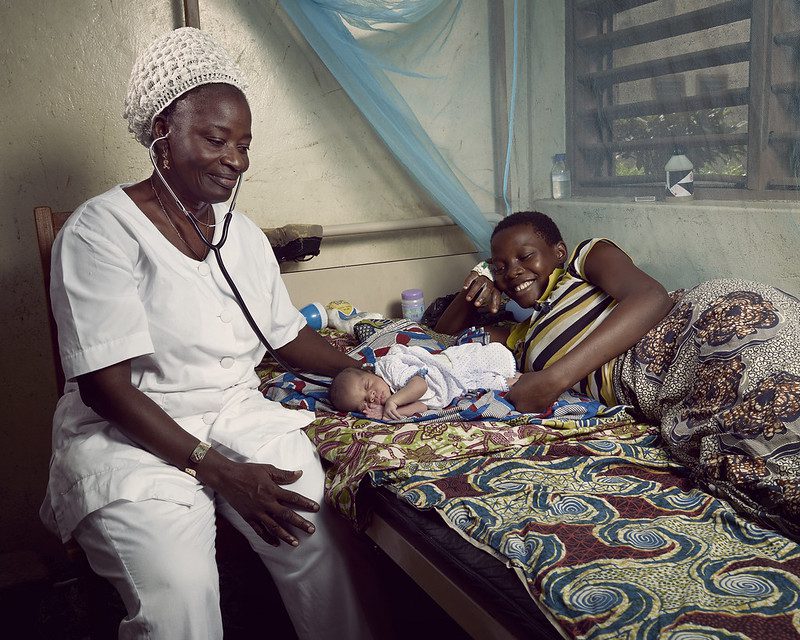
  3. Kenya. The Organic Technology Extension and Promotion of Initiative Centre (OTEPIC) implemented an Ecovillage project aiming to reduce maternal deaths in Sabwani, Kenya. This initiative helps build birth centers that provide a financially accessible and safe method of giving birth. At-home births remain high-risk, and some women face impeding accessibility barriers when considering hospital wards. The community’s Ecovillage project has enabled women to give birth in the presence of a midwife while surrounded by their loved ones. OTEPIC also provides special pre- and post-natal training, such as safe food preparation for mother and child.

The Global Ecovillage Network poses the question “How can we live high quality, low impact, lifestyles that heal and restore, rather than destroy our environment?” As demonstrated by the Ecovillage projects in these three countries, communities worldwide have already taken steps to answer this question and are providing hope for a poverty-free, resilient and sustainable world.

– Amy Schlagel
Photo: Flickr

September 24, 2020
https://borgenproject.org/wp-content/uploads/borgen-project-logo.svg 0 0 Kim Thelwell https://borgenproject.org/wp-content/uploads/borgen-project-logo.svg Kim Thelwell2020-09-24 13:41:272024-05-30 07:52:153 Ecovillage Projects Changing the Face of Poverty
Global Poverty, Health

3 Reasons the Maternal Mortality Rate in Ghana has Decreased

Maternal Mortality Rate in GhanaIn September 2000, the United Nations launched the Millennium Development Goals (MDG): eight steps aimed at making the world a better place. These goals ranged from establishing universal primary education to slowing the spread of HIV/AIDS. The fifth goal in the MDG plan is to improve maternal health, with one of the specific targets being to reduce the maternal mortality rate by 75% between 1990 and 2015. The World Health Organization defines maternal death as “the death of a woman while pregnant or within 42 days of termination of pregnancy, irrespective of the duration and site of the pregnancy, from any cause related to or aggravated by the pregnancy or its management but not from accidental or incidental causes.” Unfortunately, the World Health Organization could only report a 44% decrease in global maternal mortality by the end of 2015. The African nation of Ghana was one of these countries that sat right at 44%. In comparison to the original goal, the overall statistics seem poor; however, a 44% decrease is still a notable feat. Here are three factors that have been especially influential in reducing the maternal mortality rate in Ghana.

3 Reasons Why the Maternal Mortality Rate in Ghana has Decreased

  1. Free maternal health services. Free services for those who could not afford to pay full price made a huge impact on pregnant women in Ghana. This assistance was especially helpful given that, at that time, the country used a “cash and carry” healthcare system that required upfront payments to receive attention from healthcare professionals. This requirement restricted low-income women from obtaining adequate maternal care. In 2003, affordable services were extended to all Ghanaian women—regardless of economic status—after the country adopted universal healthcare. The combination of universal healthcare and maternal health services provided by the United Nations enabled more women to schedule maternal care visits within their first trimester: in 2017, 98% of pregnant women received antenatal care by a professional, and 84% received postnatal care. With this improved accessibility, women could now monitor their babies’ health, prepare for any special cases and get the help they needed during pregnancy and following childbirth.

  2. Midwives. About 79% of women giving birth in Ghana were assisted by a nurse or midwife, a trained professional who helps during pregnancy and labor. Due to lower education requirements relative to medical professionals, midwives are often more accessible than doctors. Despite less schooling, these individuals are still able to provide physical and emotional support throughout pregnancy, write prescriptions and advise mothers on safely preparing for labor. Two training schools have recently opened in Ghana, accompanied by a 13% increase in national enrollment.

  3. High Impact Rapid Delivery Program (HIRD). The High Impact Rapid Delivery program was established by the Ministry of Health. This program addresses the need for quick and effective change in health policies to increase safety and maximize health within a given nation. Examples of high-priority items include promoting the use of iron tablets during pregnancy, guaranteeing skilled attendance during deliveries and regular de-worming. Of note, Project Fives Alive!, a group assisting HIRD from 2008-2015, advocated for stronger “coverage, quality, reliability and patient-centeredness” in the health industry. The initiative engaged future health professionals in a 12- to 18-month training program designed to quickly teach effective ways to improve their skills in caring for pregnant women and children under the age of 5. Project Fives Alive! made significant progress: the organization helped foster an 11% increase in skilled delivery, a neonatal care institution that boasted a coverage rate seven times higher than its baseline and representation in 33 of Northern Ghana’s 38 districts.

There has indeed been considerable progress in lowering the maternal mortality rate in Ghana over the past 25 years. However, there is still much progress left to make: the country still experiences an alarming rate of 308 deaths per 100,000 (2017), whereas the global rate stands at 211 deaths per 100,000. With continued help from the aforementioned initiatives, the development of new drugs and technology and a commitment to improving maternal health, there is hope that these numbers will further decline.

– Rebecca Blanke
Photo: Flickr

September 24, 2020
https://borgenproject.org/wp-content/uploads/borgen-project-logo.svg 0 0 Jennifer Philipp https://borgenproject.org/wp-content/uploads/borgen-project-logo.svg Jennifer Philipp2020-09-24 11:36:232024-05-30 07:52:113 Reasons the Maternal Mortality Rate in Ghana has Decreased
Development, Global Poverty, Health

Innovations Combating Energy Poverty in Greece 

Energy Poverty in Greece
According to the European Union Energy Poverty Observatory, energy poverty impacts 50 to 125 million people within the European Union population. With 58% of Greek households identified as lacking efficient energy, this issue has significantly impacted the overall physical and mental well-being of Greek citizens. Further, over 90% of Greek families below the poverty level suffer from energy poverty.  Physical and mental health stressors due to unaffordable energy bills demonstrate the need for innovation in energy poverty eradication in Greece. Also, due to low incomes, poor-quality housing and high energy prices, innovation in energy poverty eradication in Greece is critical.

Innovative Energy Initiatives Create Jobs

Since its transition to renewable energy in the 1990s, Greece has faced unforeseen obstacles due to government legislation, business regulations, investor subsidies and funding deficits. Since 2010, modifications of such initiatives have led to progressive developments and growth opportunities.

Some expect that innovations eradicating energy poverty in Greece through renewable energy could boost employment and economic opportunities. In fact, projections have determined that job openings including electro-mechanics, construction and energy farm installation could contribute to 50% of these potential opportunities. Job generation will increase household income and minimize the inability to afford adequate energy by reducing unemployment and creating growth.

Global Organizations Addressing Energy Poverty

Greece has demonstrated its commitment to resolving energy poverty among vulnerable households, and international organizations are supporting that commitment. For example, in 2015, Greenspan Greece launched the Solarize Greece crowdfunding campaign that promoted solar energy in an effort to alleviate energy poverty. This initiative involved the installation of photovoltaic systems in low-income family households. The Greek government had passed legislation that allowed citizens to create cheap energy for their own use, and that made the crowdfunding initiative viable.  As the Huffington Post advocated, “Installing solar power in Greece’s oil-dependent islands will bring relief to low-income households in need; it will help reduce oil consumption and pollution and it will save money for Greek consumers on the mainland.”

Innovations in Renewable Energy Production

Plans to further increase renewable energy sources in Greece continue. In 2020, the Ministry of the Environment and Energy of Greece asked the European Commission to fund a system anchored by two pumped storage hydropower plants and two artificial lakes in Western Greece.  This system is expected to last 50 years with 70.1% efficiency. The hope is to replace coal-supported energy that is unsafe and contributes to pollution with solar energy that is safer and does not pollute.  This system would provide the electricity for that transition.

Energy reform within Greece must remain a priority to rectify the social, economic and environmental destruction that energy poverty causes. Through the development of innovative energy technologies, Greece is making strides to achieve 60% of renewable energy sources by 2030. These actions will reduce the use of harmful coal technologies used to generate electricity by shifting to solar energy and pumped storage. Given the benefits of renewable energy in reducing household energy poverty, Greece is becoming a role model for other nations in protecting its people.

– Brandi Hale
Photo: Flickr

September 24, 2020
https://borgenproject.org/wp-content/uploads/borgen-project-logo.svg 0 0 Jennifer Philipp https://borgenproject.org/wp-content/uploads/borgen-project-logo.svg Jennifer Philipp2020-09-24 08:39:492022-03-08 13:29:12Innovations Combating Energy Poverty in Greece 
Global Poverty, Health

10 Facts about Healthcare in New Zealand

Healthcare in New Zealand
New Zealand is a small island country situated just southeast of Australia. Its healthcare system is known as one of the best in the world. While there are still improvements to be made, the government of New Zealand has worked to make healthcare affordable and accessible. Here are ten facts about healthcare in New Zealand.

10 Facts About Healthcare in New Zealand

  1. The national government runs New Zealand’s universal healthcare system. This means the government handles the public healthcare system from its budget to the agency that oversees it. This allows healthcare to be free to access, as it is funded publicly through taxes and by the national government. However, the government does not handle the responsibilities for providing health services, leaving this up to regional and private healthcare centers in the system.
  2. New Zealand’s average life expectancy is about 82 years. The nation ranks 15th in the world for highest life expectancy rates. New Zealand’s healthcare system has contributed to the high life expectancy and the country is striving to increase life expectancy even further.
  3. Healthcare in New Zealand is not completely centralized. Instead, it is a mixture of both public and private. However, universal healthcare still exists in the form of public funding. The government provides a universal healthcare package for all residents. If a New Zealander wishes for more benefits or wishes to have non-essential services such as cosmetic surgery, then they must pay for these services themselves.
  4. Compared to most developed countries, healthcare in New Zealand receives more government funding than private funding. Most of the funding comes from taxation. This ensures that the taxes New Zealanders pay is put towards their healthcare services.
  5. The government also provides financial compensation for injuries. The Accidental Compensation Corporation (ACC) is a government agency that works with the national government to provide financial compensation for injuries during work and other events. Because of this, health services for injuries are often free of cost.
  6. Drugs and medicine are not provided by the state under the healthcare system. Instead, private pharmacies and pharmaceutical companies provide medicine to individuals via prescription or over the counter.
  7. Private health insurance is still available in New Zealand. However it only compensates for 5% of health insurance. Nonprofit and for profit non-government organizations offer private health insurance, which is mainly used for elective surgery or to cover cost sharing requirements.
  8. Mental health, cardiovascular diseases and diabetes are the main health concerns in New Zealand. However, the number of physicians, nurses, specialists and dentists are steadily increasing in the country. Moving forward, this could help the nation more effectively tackle these persistent health concerns.
  9. One problem New Zealand faces is a decrease in hospital bed availability. Although New Zealand’s healthcare system is seen as very effective, there are some problems. One of these is the decreasing number of available hospital beds in the country. Although the reason for this is that many elderly patients are shifting to nursing homes and senior centers, this could be a problem in the future especially if the COVID-19 pandemic continues to be a significant concern.
  10. Inequality is also an issue in New Zealand’s healthcare system. Although the healthcare system is effective overall, the indigenous Maori do not have the same access to healthcare as the other residents of New Zealand. This inequality often prevents the Maori from receiving the same care and treatment.

New Zealand has a very effective healthcare system that is able to treat many diseases. However healthcare in New Zealand can still be improved, the most pressing issue to address being inequality. Moving forward, it is imperative that the government of New Zealand continue to support universal healthcare and expand its availability to everyone living in the country.

– Sadat Tashin
Photo: Flickr

September 23, 2020
https://borgenproject.org/wp-content/uploads/borgen-project-logo.svg 0 0 Kim Thelwell https://borgenproject.org/wp-content/uploads/borgen-project-logo.svg Kim Thelwell2020-09-23 14:48:342020-09-23 14:48:3410 Facts about Healthcare in New Zealand
Global Poverty, Health, Hunger

Hunger in Hungary: What’s Being Done?

Hunger in HungaryHungary is a landlocked country in central Europe with a population of nearly 10 million. Of these 10 million people, almost 14.6% of Hungarians live below the poverty line, meaning hunger in Hungary remains a critical issue. Moreover, 44% of Hungarians reportedly do not have access to essential resources.

Malnourishment in Children

As estimated, some 3.3 million people suffer from food insecurity in the country. Many of those impacted are children. According to an OECD study conducted between 2007 and 2012, the number of Hungarian children living in poverty has risen from 7% to 17%.  According to the Save the Children Foundation, 6.1 out of every 1,000 children die from food-related issues before their fifth birthday. While starvation kills some, others die from a lack of a nutritious diet. Those who are not starving do not receive the bare minimum of healthy nutrients to live a sustainable life.  This combination of malnourishment and a lack of a nutritious diet leads to more vulnerability to infection and disease.

The seriousness of the situation is highlighted by the fact that 20% of women aged 15 to 49 suffer from anemia. According to the World Bank, as of 2020, there are 15 maternal deaths per 100,000 live births. Limited access to a nutritious diet often leads to premature births and contributes to high maternal mortality rates.

Hungarian Climate and Resources

The majority of Hungarian land lies in the Great Hungarian Plain. The arid climate, lack of rainfall and prevalent droughts limit the ground for farming and sometimes lead to famines. The primary crops in Hungary are corn, wheat, sugar beets, potatoes, and rye.  The country exports most of the crops produced instead of using them to feed Hungarians in need. Some Hungarian agricultural exports have reached as high as $716 million U.S. dollars, as more than 25% of the country’s crop is exported to other countries.

Alleviating Hunger in Hungary

To reduce the high number of hungry children, the Hungarian government provides meals in nurseries and schools for those in need. Approximately 370,000 children receive government-provided meals.  Food programs, such as the Food Aid Program, distribute nearly 50 million pounds of food. The EU Food Assistance Program also supplies food to almost 1.2 million Hungarians, which accounts for roughly 11% of the total population.

While the country’s rate of poverty and hunger remains high, there is still hope to alleviate hunger in Hungary. The state is working continuously to solve the hunger problems faced. Through community programs and governmental support, slow, continuous progress is being made, proving that alleviating hunger in Hungary is achievable.

– Jacey Reece
Photo: Flickr
Updated: October 21, 2024

September 22, 2020
https://borgenproject.org/wp-content/uploads/borgen-project-logo.svg 0 0 Kim Thelwell https://borgenproject.org/wp-content/uploads/borgen-project-logo.svg Kim Thelwell2020-09-22 17:00:312024-10-21 12:35:24Hunger in Hungary: What’s Being Done?
Global Poverty, Health, Women and Female Empowerment

4 Brilliant Women Improving Global Health

Women improving global healthBreaking down barriers preserved by societies for centuries, these inspiring scientists and doctors are among the many women improving global health. As they make the world a better place, these four revolutionary women are inspiring females of every generation to do the same.

Hawa Abdi, MD

Human rights activist and one of Somalia’s first female gynecologists, Dr. Hawa Abdi was committed to providing free health care to her community and fighting for the rights of women and children. Fearlessly helping others and persevering despite countless dangers, she helped thousands of people seek refuge in her lifetime.

Her mission started as a child when she watched her mother grow ill and pass away during childbirth. Feeling helpless, she was determined to prevent others from feeling the pain she felt as a child. Abdi began working as a physician and caring for people in a one-room clinic she founded on her family’s land.

Abdi created a haven for thousands of Somalis who were fleeing from fighting and famine during the Somali Civil War. As problems grew, so did her tenacity and force. Soon, the one-room clinic turned into a 400-bed hospital. Studying law, education and agriculture, Abdi fought against poverty and inequality in her community. She set up farming to secure food for Somalis, fished to feed children and fought for justice and equal rights.

She lived through wars, was taken hostage and witnessed up to 50 people die a day. As a winner of the BET Social Humanitarian Award and a Nobel Peace Prize Nominee, she is celebrated for her work as one of many women improving global health. Her legacy lives on through the Hawa Abdi Foundation and her two daughters, who are also physicians.

Godliver Businge

A strong and influential woman from Uganda, Godliver Businge was the only female in her civil engineering program and graduated at the top of her class. A childhood with struggles like hauling water daily, having to miss class and experiencing inequality as a girl motivated Businge to make a difference in her community and empower women.

Determined to eliminate polluted water and reduce the hours women spent collecting it, Businge co-founded the Uganda Women’s Water Initiative with Comfort Jarja. As head technology trainer, she taught over 300 women in Gomba, Uganda to construct rainwater harvesting tanks and Biosand filters. Thanks to these filters, fewer children suffer from diseases normally found in contaminated water like hepatitis A and typhoid. With healthier kids, Gomba’s school absenteeism rate has dropped by nearly two-thirds.

Businge also works in hygiene technology, building specialized toilets, promoting WASH programs and developing hydro-electric schemes to generate electricity. She is devoted to inspiring women to be independent and resourceful while shattering gender stereotypes. In addition to training women and girls to build sanitary toilets for their communities, she encourages females to pursue education and engineering professions and become women improving global health.

Hayat Sindi, PhD

Dr. Hayat Sindi of Saudi Arabia recognized the staggering amount of people dying around the globe without tools to detect, monitor and treat medical conditions. Sindi became the first woman from the Persian Gulf to receive a doctorate in biotechnology and now works to solve this problem.

As the co-founder of Diagnostics For All, Sindi helps create and deliver low-cost diagnostic tools to developing communities. These tools include a Magnetic Acoustic Resonance Sensor (MARS) and a device that can detect breast cancer. Because the devices don’t require electricity or even a trained doctor, the most isolated and impoverished communities can utilize Sindi’s life-saving inventions.

As a key figure in the science community, Sindi serves as senior advisor to the Islamic Development Bank’s president of science, technology and innovation. She has won many awards, including the Makkah Al-Mukarama Prize for Scientific Innovation, and was chosen as an Emerging Explorer by the National Geographic Society. Through her work, Sindi aims to empower women to pursue education and science careers and join her as women improving global health.

Segenet Kelemu, PhD

In an Ethiopian village where girls were married off young, Dr. Segenet Kelemu chose education instead and became the first female from her village to get a college degree, despite coming from a humble farming family. Kelemu made it her mission in life to improve agriculture in Africa and better the lives of others.

Kelemu is now a molecular plant pathologist and scientific leader. Her analysis uncovered how plants survive common threats like changes in climate, drought and pests. This trailblazing research led to new applications of biotechnology, helping farmers yield more crops and secure ecosystems. In doing so, Kelemu’s work improved food security and helped break the cycle of poverty, making her one of many women improving global health.

Dr. Kelemu holds many accolades, including the Woman of the Decade in Natural and Sustainable Ecosystems Award from the Women Economic Forum and the L’Oréal-UNESCO Award for Women in Science. She is also recognized as one of the Heroes in the Field by Bill Gates for using her talents to fight hunger, disease and poverty.

Working for a Better Tomorrow

Despite many challenges and social constructs, these women made new things possible for the benefit of their communities. Although they come from different regions, their missions are similar: to empower women to educate themselves, enhance the community and help others at all costs. These brilliant women improving global health are also fighting global poverty in turn.

– Tara Hudson
Photo: Unsplash

September 22, 2020
https://borgenproject.org/wp-content/uploads/borgen-project-logo.svg 0 0 Kim Thelwell https://borgenproject.org/wp-content/uploads/borgen-project-logo.svg Kim Thelwell2020-09-22 15:51:152024-12-13 18:02:124 Brilliant Women Improving Global Health
Global Poverty, Health

Concerns for Other Outbreaks During COVID-19

Other Outbreaks During COVID-19
All eyes are constantly on the lookout for surges in COVID-19 cases both in one’s own country and around the world, but other outbreaks during the COVID-19 pandemic are on the rise and getting very little attention or preventative measures. The CDC and WHO are monitoring current outbreaks, which include alerts and warnings about an Ebola outbreak in the Democratic Republic of the Congo, MERS-CoV in Saudi Arabia, Influenza A in Brazil and yellow fever in French Guiana.

“Disruption to immunization programs from the COVID-19 pandemic threatens to unwind decades of progress against vaccine-preventable diseases like measles,” said Dr. Tedros Adhanom Ghebreyesus, director-general of the WHO. The question now, with most hospitals worldwide overflowing with COVID-19 cases, is how can people suffering from any other disease get the aid that they need? Taking a look at individual states around the world and how they each are handling outbreaks within the current pandemic will allow for discussion on keeping more people safe and healthy.

CDC Guidelines for Non-COVID-19 Care

The CDC has created a framework for providing non-COVID-19 care in hospitals and clinics, with a graph depicting what a patient is advised to do depending on the seriousness of their sickness or condition. Potential for patient harm, level of community transmission and symptom lists are all considered.

The CDC also lists a few key considerations for healthcare providers at this time, asking that they are prepared to detect and monitor COVID-19 cases in the community, provide care with safety procedures in mind and consider other services that may require expansion. While in theory, these are positive factors to implement during a health crisis of this magnitude, many countries with high poverty levels do not have adequate resources or staffing to ensure these practices.

Ebola and Measles in the Democratic Republic of the Congo

While the two-year Ebola outbreak was just declared over on June 25, 2020, the DRC is facing a rise in measles cases due to a lack of vaccines while it prioritizes COVID-19 treatments. In 2019, the percentage of vaccinated children increased from 42% to 62% in Kinshasa but the plans for a national immunization program in 2020 experienced delay.

Now, staffing is short, vaccinations are not a priority and those who are receiving vaccinations are doing so in danger of contracting COVID-19 due to lack of resources. Progress toward polio eradication is also suffering, and over 85,000 children have not received immunizations. The DRC is seemingly engaging in a three-front war, fighting numerous other outbreaks during COVID-19. Thabani Maphosa, Gavi managing director, hopes that if the pandemic clears in three months, immunizations will catch up to necessary levels within the next year and a half.

SII Concerned Over Clinical Trial Postponements

The Serum Institute of India is cautioning the public about the concerns for other outbreaks during COVID-19. Clinical preliminaries may be in danger and CEO Adar Poonawalla shared his thoughts about the findings: “The resulting dosing of the enlisted subjects has been postponed, therefore affecting the immunization plan given in the convention. In addition, follow-up visits for inoculation, well-being appraisal just as blood withdrawal are postponed.” He also mentioned the fear of hospitals due to COVID-19 contamination and the flipping of general hospitals to COVID-19-only clinics.

There have been a few other outbreaks during COVID-19 but the world has yet to see the long-term effects. While the whole world scrambles for a vaccine for COVID-19, it is not surprising that other medical and health concerns seem to be on hold, especially when countries are highly recommending or, in some cases, enforcing social distancing and quarantine. These limitations for worldwide immunization trials and vaccines mostly concentrate in low-income and low-resource areas, like the case in the DRC. While funding these areas always desperately need funding, information and discussion about the concerns are also quite valuable at this time.

– Savannah Gardner
Photo: Flickr

September 21, 2020
https://borgenproject.org/wp-content/uploads/borgen-project-logo.svg 0 0 Kim Thelwell https://borgenproject.org/wp-content/uploads/borgen-project-logo.svg Kim Thelwell2020-09-21 07:30:112024-05-29 23:23:12Concerns for Other Outbreaks During COVID-19
Global Poverty, Health

6 Facts About Healthcare in Liechtenstein

Healthcare in Liechtenstein
Liechtenstein is a small nation in Western Europe, between Switzerland and Austria. The country has a universal healthcare system that covers not only citizens but everyone residing within its borders. Moreover, the healthcare standard is high, well-developed and the citizens suffer from few communicable diseases. Here are six facts about healthcare in Liechtenstein.

6 Facts About Healthcare in Liechtenstein

  1. Liechtenstein is not a member of the World Health Organization. This is because membership in the WHO is expensive and with such a small amount of citizens and land — the country cannot afford to be a member. However, the country is a member of the United Nations and is committed to improving healthcare around the world. They have signatory and ratification status to the Biological and Toxin Weapons Convention and have submitted Confidence Building Measures for the Biological and Toxin Weapons Convention.
  2. There is only one hospital in Liechtenstein. Known as the National Hospital, it is located in the capital of Vaduz. The hospital provides basic services to the country’s citizens. However, for more advanced care, citizens must travel to nearby hospitals in Switzerland or Austria, which notably have agreements with the Liechtenstein government. Additionally, the country’s Federal Office of Public Health is responsible for monitoring the Liechtenstein healthcare system and communicating important information to the public.
  3. Although Liechtenstein has a well-developed healthcare system, it ranks average among other nations. According to the Global Health Security Index, the country is 60th in immunization, 161st in laboratory systems and 76th in risk communication. However, it is strong in other areas, as it ranks 36th in its epidemiology workforce, 6th in infection control practices and availability of equipment and 14th in capacity to test and approve new medical countermeasures.
  4. Everyone older than the age of 16 must have health insurance in Liechtenstein. The constitution guarantees a state-run, healthcare system. As a result, either private insurance, employers or the government provides health insurance.
  5. Liechtenstein has a strong history of establishing a state-run, healthcare system in the country. Starting in 1874, the country’s first healthcare law set out the duties of the national doctor and the national veterinarian. Additionally, the country’s constitution specifically enumerates fighting alcoholism and caring for the sick as significant responsibilities. Furthermore, multiple laws necessitate providing healthcare in schools.
  6. Currently, the top and most common health concerns in the country are complications from air pollution, COVID-19 and STDs. A less common health concern, though still important, is tick-borne encephalitis, which is prevalent in the area of Vaduz.

A Semi-Outsourced System

As a whole, Liechtenstein has a sufficient healthcare system and resources to care for its citizens. However, because the country is so small and its reach is limited by the number of healthcare professionals in the country — Liechtenstein will continue to struggle to reach the success of other developed countries. Currently, the country has been successful in containing the new coronavirus with such a small population. Yet, for finding success in other medical areas, Liechtenstein has resorted to engaging with other governments like Switzerland and Austria through contracts to meet the needs of its citizens.

– Julia Canzano
Photo: Wikimedia Commons

September 21, 2020
https://borgenproject.org/wp-content/uploads/borgen-project-logo.svg 0 0 Kim Thelwell https://borgenproject.org/wp-content/uploads/borgen-project-logo.svg Kim Thelwell2020-09-21 07:28:342024-05-29 23:23:196 Facts About Healthcare in Liechtenstein
Page 100 of 212«‹9899100101102›»

Get Smarter

  • Global Poverty 101
  • Global Poverty… The Good News
  • Global Poverty & U.S. Jobs
  • Global Poverty and National Security
  • Innovative Solutions to Poverty
  • Global Poverty & Aid FAQ’s
Search Search

Take Action

  • Call Congress
  • Email Congress
  • Donate
  • 30 Ways to Help
  • Volunteer Ops
  • Internships
  • Courses & Certificates
  • The Podcast
Borgen Project

“The Borgen Project is an incredible nonprofit organization that is addressing poverty and hunger and working towards ending them.”

-The Huffington Post

Inside The Borgen Project

  • Contact
  • About
  • Financials
  • President
  • Board of Directors
  • Board of Advisors

International Links

  • UK Email Parliament
  • UK Donate
  • Canada Email Parliament

Get Smarter

  • Global Poverty 101
  • Global Poverty… The Good News
  • Global Poverty & U.S. Jobs
  • Global Poverty and National Security
  • Innovative Solutions to Poverty
  • Global Poverty & Aid FAQ’s

Ways to Help

  • Call Congress
  • Email Congress
  • Donate
  • 30 Ways to Help
  • Volunteer Ops
  • Internships
  • Courses & Certificates
  • The Podcast
Scroll to top Scroll to top Scroll to top