 Located in southeast Zimbabwe, Gonarezhou National Park is home to 11,000 African elephants, which is how it earned its name as the “Place of Elephants.” Unfortunately, it is also the site of thousands of buried landmines. These landmines were placed by the Rhodesian army during Zimbabwe’s Liberation War and have remained there for more than 40 years. Although there have been efforts to remove these mines, they continue to be a constant threat to the people of Zimbabwe and local wildlife. Demining Zimbabwe’s national park will have several benefits for the country.
APOPO: Demining Efforts
The United States has provided a grant of $750,000 to the nonprofit APOPO to demine the Sengwe Wildlife Corridor, where a large portion of the undetonated landmines reside. The Sengwe Wildlife Corridor covers a stretch of land that connects the park to South Africa and is used regularly by migrating elephants.
The area that APOPO has been designated to work is one of the largest in the world: 37 kilometers lengthwise and 75 kilometers in width. With almost 6,000 landmines per kilometer, communities in the surrounding area are unable to access potential land for farming and endangered species are at constant risk.
The presence of the minefield prevents the elephant population of the park from migrating and potentially mixing with other elephant populations. This presents a long-term risk of limiting the already shrinking African elephant gene pool.
APOPO has established a five-year plan for demining Zimbabwe’s national park, expecting to remove all undetonated landmines from the area by 2025. It estimates that it will remove more than 15,000 landmines before the end of its operation in the corridor.
The nonprofit will be working in tandem with the Gonarezhou Conservation Trust to maintain that the process will not impede conservation goals for the park.
The project also complements USAID programs to support community-based natural resource management, provide climate-smart agricultural technologies and improve the value chain for communities to sell their products for a fair market price.
Poverty in Zimbabwe and COVID-19
Zimbabwe is currently facing severe economic hardships that have only worsened due to the COVID-19 pandemic. In 2019, 50% of Zimbabweans experienced food insecurity and 40% faced extreme poverty. This number is projected to increase as conditions worsen with the onset of the pandemic and severe droughts. Inflation in the country has been rampant, with prices of food increasing by 725%, resulting in a severe loss of purchasing power for the poor. The pandemic has impacted the already economically challenged country by decreasing trade and tourism.
Aiding Economic Recovery in Zimbabwe
The United States and APOPO hope that by clearing out the Sengwe Wildlife Corridor, ecotourism in Zimbabwe will begin to thrive. As it stands currently, only 8,000 tourists on average visit Gonarezhou National Park compared to the 1.8 million tourists that visit the neighboring Kruger National Park of South Africa. Demining Zimbabwe’s national park means providing an extended opportunity for increased tourism in the struggling country. The efforts of APOPO, with the support of the United States, may be able to help economic recovery, reduce the impact of the pandemic and uplift communities that are battling poverty.
-Christopher McLean
Photo: Flickr

 Although schooling is compulsory in Pakistan for kids aged 5 to 16, it is not as accessible as it could be. Nearly
  By 2063, The African Union (AU) hopes to accomplish a “socio-economic transformation” across the continent where poverty is eradicated. This is impossible without achieving gender inequality. Although Africa has made significant progress toward this foreseeable future, progress is still painfully slow. Several countries’ progress is stagnant and only addresses the issue by “acknowledging” that
  As of 10 years ago, nearly 15 million people in Ethiopia were
  The United Nations has warned of a recent
 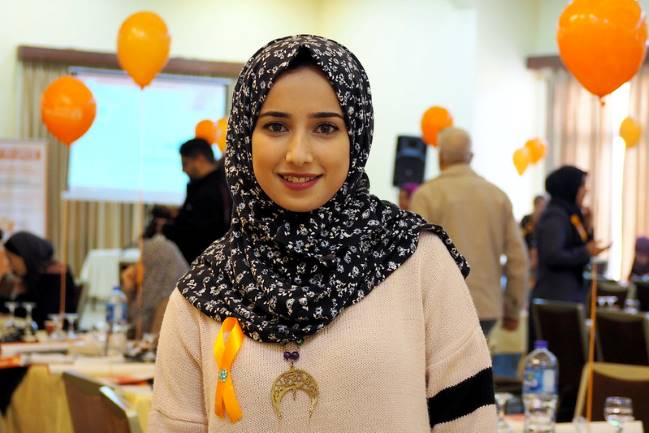 The Haya Joint Programme, in partnership with United Nations efforts, is working to reduce violence against women in the West Bank and Gaza Strip. A vital resource protecting women and girls, the program works toward achieving gender equality for generations to come.
 In 2001,
  Located on the western edge of the Persian Gulf, Kuwait is a small Arab state comparable to the size of New Jersey. Nevertheless, Kuwait holds the sixth-largest oil reserve in the world. This has helped its citizens become among the wealthiest in the world. Kuwait has consistently ranked among the Arab world’s best for food security. However, its reliance on food imports, as well as having underdeveloped agriculture and fishing industries, could hinder its future. Here are five facts about food security in Kuwait.
 The issue of women’s rights in Malaysia is one that has people divided throughout the peninsula. Women in Malaysia are increasingly engaging in the workforce as well as in the government. This does not, however, diminish the gender inequality that still exists. Women in this country have further struggles that inhibit them from gaining equality.