• Link to X
  • Link to Facebook
  • Link to Instagram
  • Link to TikTok
  • Link to Youtube
  • About
    • About Us
      • President
      • Board of Directors
      • Board of Advisors
      • Financials
      • Our Methodology
      • Success Tracker
      • Contact
  • Act Now
    • 30 Ways to Help
      • Email Congress
      • Call Congress
      • Volunteer
      • Courses & Certificates
      • Be a Donor
    • Internships
      • In-Office Internships
      • Remote Internships
    • Legislation
      • Politics 101
  • The Blog
  • The Podcast
  • Magazine
  • Donate
  • Click to open the search input field Click to open the search input field Search
  • Menu Menu

Archive for category: Global Poverty

Key articles and information on global poverty.

Global Poverty, Water

Thankyou Water

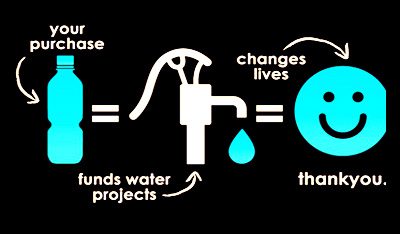
Thankyou WaterAbout 900 million people around the world do not have access to clean water. Yet, here in the United States, safe and clean water costs between $2 to $3. Dan Flynn embarked on a journey where he put together two radicals and created Thankyou Water in 2008. Profits from Thankyou Water water bottle sales are directed to fund various safe water projects; a purchase equates to “one month’s worth of safe water to someone in need.”

Flynn discovered that many people around the world not only lack access to water but also that water is usually unsafe and unsanitary to drink to the point that it may cause serious illness. Flynn also found that Australians are a part of a 600 million dollar bottled water industry. Flynn’s project to tackle the global Water Crisis gives all its profit to fund safe water projects all around the world.

For over three years, Flynn and four other college students, volunteered and managed part-time jobs to cover their costs of living. This year marks the enterprise’s fourth year and the project is showing expansive growth. In December of 2012, Thankyou Water sold its five millionth bottle. Australians are increasingly supporting this project and have switched to Thankyou Water making it their new bottled water brand of purchase. Australians can “track [their] impact” through a newly developed web app where they can see which specific project is being funded by their purchase.

For more information, check out Thankyou Water.

– Leen Abdallah

Source: The Global Poverty Walk
Photo: Google

March 27, 2013
https://borgenproject.org/wp-content/uploads/borgen-project-logo.svg 0 0 Borgen Project https://borgenproject.org/wp-content/uploads/borgen-project-logo.svg Borgen Project2013-03-27 10:09:012024-12-13 17:49:15Thankyou Water
Global Poverty

Kenya is Going Green and Improving Its Economy

Kenya is Going Green and Improving Its EconomyKenya is pushing a number of initiatives that could improve its green footprint, as well as its economy. In efforts to fight climate change and enhance development, Kenya, in the last ten years, has begun to implement a number of green initiatives that could have major benefits in the future. Kenya, in support of going green, has even added constitutional requirements to protect the environment.

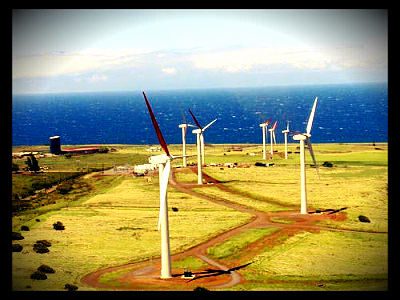
One of these initiatives, entitled the Lake Turkana Wind Power project, is a very large proponent of wind-power.  In fact, this wind-power project is the biggest in the entirety of Africa. It is set to begin operating this year and is predicted to bring about 2,500 new jobs, as well as protect the environment. This alone is a great success for Kenya. And the Lake Turkana Wind Power project keeps on giving. The creation of an alternative energy source means lower energy costs, making it easier to produce goods and making services cheaper.

Another one of these initiatives, which offers similar benefits to Kenya, is the Olkaria IV Geothermal Power Project. Upon its completion in 2014, the Olkaria IV Geothermal Power Project will add 288 megawatts of power.

Green energy and power sources are desperately needed in Kenya, where polluting fuels, such as coal, are the current energy sources. Currently, 80% of Kenyans utilize wood-based fuels for their daily needs. This leads to a lot of waste going into the environment, as well as waste as tons and tons of trees are cut down and only a portion are used in the creation of charcoal.

Finding alternative fuel sources and coming up with the funding necessary to build farms like the Lake Turkana Wind Power project – which is 100% privately funded – is helping Kenya in their move towards being green and creating social equity. A lot of the benefits of such projects require long-term maintenance and support; yet they are important in making Kenya stronger economy.

– Angela Hooks

Source: allAfrica
Photo: EcoMENA

March 27, 2013
https://borgenproject.org/wp-content/uploads/borgen-project-logo.svg 0 0 Borgen Project https://borgenproject.org/wp-content/uploads/borgen-project-logo.svg Borgen Project2013-03-27 10:00:322020-05-26 00:44:20Kenya is Going Green and Improving Its Economy
Global Poverty

Violence in Myanmar Continues to Spread

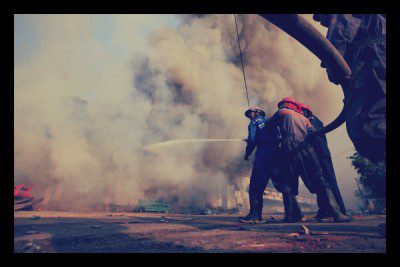
Violence in Myanmar Continues to SpreadViolence in central Myanmar has broken out in recent days between Buddhists and Muslims. Estimates of the death toll from a recent rampage through a Muslim area are anywhere from 20 to 40; some of the victims include children. Buddhist attackers have burned mosques and entire Muslim neighborhoods to the ground in bitter offensives against one of the few minority groups in an overwhelmingly Buddhist nation.

Regions of Myanmar have experienced protracted violence, with a majority of the victims being Muslim. Over 150 people have died in the past year as attacks spread inland from coastal areas. Often, police and military units fail or outright refuse to intervene. The national government has ceded some of its authoritarian power in recent years, which had previously helped to quash inter-ethnic violence swiftly. While human rights advocates have been cautiously optimistic about these reforms, the lack of protection for victims of vicious attacks demonstrates how far Myanmar has yet to go.

President Obama has made Myanmar a focus of his travels in Southeast Asia; in November 2012 he was the first American president to ever visit the country. He met with the opposition leader, longtime political dissident Aung San Suu Kyi, who cautioned him against being too optimistic when victory appears close. Mr. Obama’s efforts to foster democracy in Myanmar are reflective of his overarching strategy of diplomacy and engagement with those leaders who he seeks to persuade on human rights issues. Now, as inter-ethnic clashes are on the rise, it is time for Myanmar to demonstrate its commitment to a society that protects the livelihoods of all its citizens.

– Jake Simon

Sources: New York Times, Reuters

March 27, 2013
https://borgenproject.org/wp-content/uploads/borgen-project-logo.svg 0 0 Borgen Project https://borgenproject.org/wp-content/uploads/borgen-project-logo.svg Borgen Project2013-03-27 10:00:182020-05-26 00:45:45Violence in Myanmar Continues to Spread
Global Poverty

Dennis Rodman Travels to North Korea and Meets Kim Jong Un

dennis and kim

Last month, ex-NBA basketball player, Dennis Rodman, did what many political leaders will never have the opportunity to do. He made the long trip over to North Korea and met with its mysterious and very powerful leader, Kim Jong Un.

North Korea is known for its isolation, yet, recently, has begun to make huge headlines in the United States. North Korea and the United States have never been allies and tension between the two countries have existed for years. North Korea’s nuclear test last month has only increased this tension, making new threats against American military bases in Japan and in Guam even more pressing and serious. The threat came earlier this month from a spokesperson for the Supreme Command of the North Korean People’s Army, who said “the U.S. should not forget that the Andersen Air Force Base on Guam, where B-52s take off, and naval bases in Japan proper and Okinawa, where nuclear-powered submarines are launched, are within the striking range of the D.P.R.K.’s precision strike means.” Videos depicting the White House and Congress buildings being blown up have recently come out of North Korea.

Yet, even with all of this, communication between President Obama and Kim Jong Un has been very little. In fact, any communication on the matter, is made through the media. The spokesperson for the Supreme Command of the North Korean People’s Army made his statement to the state-run Korean Central News Agency. The Pentagon retaliated by making a rare announcement about the missions nucelar-capable B-52 bombers have and will continue to take over South Korea.

Chances of any U.S. political official making his or her way to a police state, such as North Korea is very rare. And, yet, Dennis Rodman recently acted as an ambassador for the Harlem Globetrotters, flying to North Korea to meet and spend two days with Kim Jong Un.

Dennis Rodman has come back with a lot of insight into Kim Jong Un, making it seem as if the North Korean dictator is willing to speak directly with President Obama to meet some sort of peace agreement. He even offered advice to Kim Jong Un in talking to President Obama, saying, “[Kim] loves basketball. And I said the same thing, I said, ‘Obama loves basketball.’ Let’s start there.” While President Obama has not made any efforts to talk to Kim Jong Un, Dennis Rodman has been making his rounds to talk about his trip to North Korea, appearing on many talk and news shows. Recently he appeared on The Tonight Show with Jay Leno and referred to Kim Jong Un as his friend and a nice guy. In an interview on “This Week,” Dennis Rodman on talking about Kim Jong Un said, “I love him. He’s awesome.”

Whether or not Dennis Rodman’s knowledge of North Korea and Kim Jong Un will be helpful to the United States in its dispute with North Korea is unknown as U.S. State Department officials have no plans to debrief the former basketball star. Former deputy assistant secretary of state, Col. Steve Ganyard, finds this ridiculous as  “There is nobody at the CIA who can tell you more personally about Kim Jong Un than Dennis Rodman.”

-Angela Hooks

Sources: CNN, NY Times, ABC News
Photo: CBS News
March 27, 2013
https://borgenproject.org/wp-content/uploads/borgen-project-logo.svg 0 0 Borgen Project https://borgenproject.org/wp-content/uploads/borgen-project-logo.svg Borgen Project2013-03-27 09:49:292024-05-24 23:45:38Dennis Rodman Travels to North Korea and Meets Kim Jong Un
Global Poverty

What Is The Poverty Line?

What Is The Poverty Line?Determining what the poverty line is and who lives below it is a task often left to international organizations. It requires much analysis and research as well as a substantial amount of estimation. That’s exactly what propelled husband and wife pair Stefen Chow and Hui-yi Lin to travel the world, combining their passions and professions, to document how much food someone living on the poverty line can actually buy.
Stefen is a photographer while his wife Hui-yi is an economist. From their frequent traveling, both had become affected by the vast differences between not only the rich and poor but the differences between the poor in each country. The question and this mission became to document what it really meant to be poor.

Although calories are the same around the world, how much can $4.91 buy-in America compared to 64 cents in Madagascar? Through their investigation, the couple spoke with the poor, trying to gain real insight into how they shop for their food. They took into account the basic essentials such as grains, fish, and vegetables but also included food such as candy and more extravagant meats to see how much could be bought in each country.

Going through the markets, Stefen Chow would photograph each amount of food against a newspaper. When asked why he chose this specific setting, he responded that as a photojournalist, the newspaper was merely a product of the artistic process. His focus was on poverty and before visiting each country, they only had in mind the set currency amount they had to work with and nothing else.

Recently, their website received a makeover. It is absolutely amazing how interactive it is with all prices listed in USD. Site visitors can easily see how much meat could be bought in Switzerland, a country whose food allowance for those at the poverty line is $10.25, compared to Nepal, where the poor are expected to survive on 45 cents per day. Images are separated based on developed countries, developing countries, food groups, and even processed or unprocessed foods.

Simple awareness through such well-assembled visual representation will no doubt bring hundreds of thousands of visitors to the site. It may shock some while confirming the assumptions of others. It can also exemplify a need for policy changes in certain countries where controversy exists whether the set caloric intake as well as money allocated to food is enough for someone to survive on.

– Deena Dulgerian
Source: BBC
Photo: The Poverty Line

March 26, 2013
https://borgenproject.org/wp-content/uploads/borgen-project-logo.svg 0 0 Borgen Project https://borgenproject.org/wp-content/uploads/borgen-project-logo.svg Borgen Project2013-03-26 12:00:592020-05-26 01:05:53What Is The Poverty Line?
Global Poverty

Abu Dhabi at the Forefront of Solar Energy Development

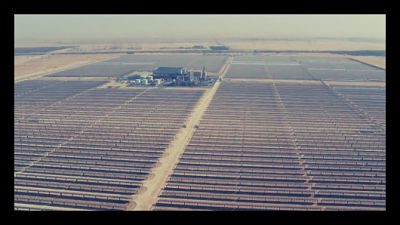
Abu Dhabi at the Forefront of Solar Energy DevelopmentAbu Dhabi has used its oil profits to open the largest solar power plant in the world. The United Arab Emirates is among many Middle Eastern nations, including Saudi Arabia, to focus on solar energy development. The plant cost about $750 million and will provide 20,000 residences with electricity.
The energy produced by the plant, called Shams 1, will increase Abu Dhabi’s renewable energy source consumption to 7% of its total energy consumption. The plant is part of what the head of Abu Dhabi Future Energy Co., Ahmed al Jaber, called a “strategic plan to diversify energy sources in Abu Dhabi.” It is the first of several plants scheduled for development in the coming years.

Shams 1 has a similar design to California’s Solar Energy Generating System (SEGS). Even though Shams 1 is the largest single plant, the nine SEGS plants combined generate three times as much energy.

The irony of Abu Dhabi’s use of its oil money cannot be overlooked: by investing in solar energy development for its own electricity needs, Abu Dhabi will be able to export even more of its bountiful oil resources. Shams 1 will eliminate 175,000 tons of carbon dioxide each year, the equivalent carbon dioxide production of 15,000 cars.

But how many more cars across the globe will the city’s oil reserves enable to run, even as Abu Dhabi cleans up its own energy usage?

– Kat Henrichs
Source: NPR
Photo:Giz Mag

March 26, 2013
https://borgenproject.org/wp-content/uploads/borgen-project-logo.svg 0 0 Borgen Project https://borgenproject.org/wp-content/uploads/borgen-project-logo.svg Borgen Project2013-03-26 12:00:392020-05-26 01:07:56Abu Dhabi at the Forefront of Solar Energy Development
Global Poverty

Author Chinua Achebe Dies at 82

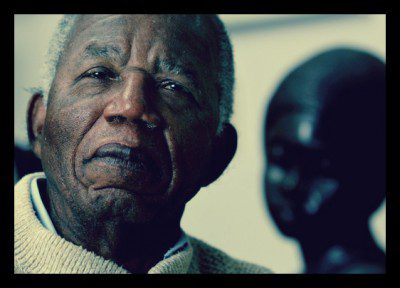
Author Chinua Achebe Dies at 82Chinua Achebe, author of “Things Fall Apart,” and widely considered to be the father of modern African literature, has died at the age of 82. His passing was confirmed by his publisher on March 22, 2013. For nearly his entire life, Chinua Achebe passionately advocated for democracy in his home country of Nigeria; he was and is an inspiration to millions who still yearn for peace and freedom.
Living in London in the late 1950s, Achebe struggled to find a publisher for his first work. “Things Fall Apart” was finally published in 1958, and its influence cannot be overstated. It has been described as “among the most important books of the 20th century, [and] a universally acknowledged starting point for postcolonial, indigenous African fiction.” A story about a tribal Nigerian man’s troubles with British colonialists, Achebe’s novel influenced famous authors like Toni Morrison and Junot Diaz.

After catapulting into the center of the debate over Nigerian democracy, Achebe had found himself at times being labeled an enemy of the state, and at other times refusing prestigious literary awards from what he considered to be an illegitimate government. A tireless critic of authoritarianism, he claimed that it stifles individuals and creates mediocrity, which “destroys the very fabric of a country as surely as a war.” He urged Nigerians and all Africans to be passionate about the future and to use that passion to work to bring their visions into reality. Achebe lived much of his life in the United States, mostly for his own safety. He had taught at Brown University since 2009, previously working at Bard College. He leaves behind a legacy that will undoubtedly stand the test of time and inspire millions more.

– Jake Simon

Source: Washington Post

March 26, 2013
https://borgenproject.org/wp-content/uploads/borgen-project-logo.svg 0 0 Borgen Project https://borgenproject.org/wp-content/uploads/borgen-project-logo.svg Borgen Project2013-03-26 10:08:102020-05-26 01:12:00Author Chinua Achebe Dies at 82
Global Poverty

UN’s Conversation on Millennium Development Goals

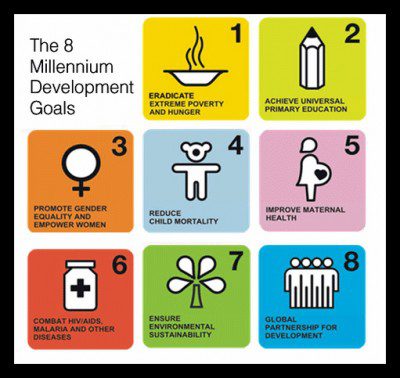
UN's Conversation on Millennium Development GoalsThe United Nations recently released a report entitled “The Global Conversation Begins,” which serves to illustrate progress towards the universal understanding of and support for the UN’s Millennium Development Goals (MDGs). Almost a quarter of a million people from nearly 200 countries were contacted, all in a variety of ways which included conferences, mobile apps, and paper surveys. This project focused on communicating with those groups who normally do not have the means to make their voices heard, such as native tribes and the disabled. By developing more diverse lines of communication, the UN hopes to fine-tune its strategies for achieving its MDGs.
The Millennium Development Goals have served as an overarching global framework for improving the lives of the billions who do not benefit from (and sometimes are actively harmed by) today’s globalized economy. Several categories have benchmarks designed to measure and improve the factors which contribute to poverty and development traps, like poor maternal health, a lack of education, and preventable diseases. Projects all over the world are ongoing every day to help bring everyone forward, even if it is only a little bit at a time.

“The Global Conversation Begins” report will be distributed to over 100 Member States, which take part in the negotiations which cover the creation and implementation of these goals. Major findings called for an acceleration of progress, while also pointing to the desire of people all around the world to help oversee and implement programs that work towards the MDGs. John Hendra, Co-Chair of the MDG Taskforce, explains that he sees “huge energy and appetite to engage in these global consultations,” and for that reason, many at the UN are optimistic about humanity’s ability to coalesce around development goals for the benefit of our common future.

– Jake Simon

Source: UNDP

March 26, 2013
https://borgenproject.org/wp-content/uploads/borgen-project-logo.svg 0 0 Borgen Project https://borgenproject.org/wp-content/uploads/borgen-project-logo.svg Borgen Project2013-03-26 09:12:312020-05-26 01:13:00UN’s Conversation on Millennium Development Goals
Global Poverty

2 Seeds Network: An Innovative Partnership to Fight Poverty

african-village-farmers-2seeds-network_opt
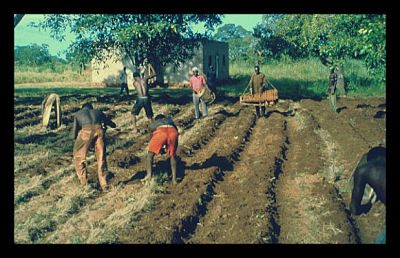
2Seeds Network pairs recent university graduates with African village communities in order to develop and implement small, sustainable, and efficient agricultural projects designed to meet the needs of each village. The projects aim to support and enhance food and income security by training rural farmers in effective agricultural practices. 2Seeds trains its young project coordinators in leadership, accountability, and cooperation for the betterment of local African communities.

2Seeds Network seeks a partnership between Africa and America for the improvement of both continents. It fosters globally engaged and empathetic leadership on the American side, while improving basic living conditions for those on the African side. African community leaders and farmers benefit from the energy, passion, and creativity of young Americans, who in turn will engage others in global, humanitarian action.

The ultimate goals of the 2Seeds Network are to:

  • promote self-directed initiative and ownership in African agricultural production and trade
  • initiate sustainable change in local and national African economies
  • develop critically-needed transformative leaders in America

2Seeds Network uses the metrics of food security and income security to measure its programs’ effectiveness  Though each project is tailored to the needs of its partner community, Project Coordinators work to achieve two primary goals: that every family grows enough food to eat throughout the year, and that each family increases its income to more than $1 per day.

Stay tuned for an interview with a 2Seeds Network Project Coordinator working on the Lutindi Project in Tanzania. For more information about the organization, visit the 2Seeds Network website.

– Kat Henrichs
Source: 2Seeds Nework
Photo:Agra Soils Research Group

March 25, 2013
https://borgenproject.org/wp-content/uploads/borgen-project-logo.svg 0 0 Borgen Project https://borgenproject.org/wp-content/uploads/borgen-project-logo.svg Borgen Project2013-03-25 12:00:532024-05-24 23:45:462 Seeds Network: An Innovative Partnership to Fight Poverty
Global Poverty

Export Impact For Good

India-spices-ITC-development

The International Trade Center (ITC) is a joint agency of the World Trade Organization and the United Nations. Its mission is to build and promote businesses in developing countries, assist in becoming more competitive in global markets, speed economic development, and further the achievements of the UN’s Millennium Development Goals (MDGs). It now has more than 40 years of hands-on trade and business experience in the developing world, and a very focused approach to export-led poverty reduction. Their slogan, “Export Impact for Good.”

For ITC, the “true story of development” is the small, low-cost project that aims to give poor people “a hand to get started on the ladder of success.” After a modest level of support and funding, they are on their own path to self-sufficient living, and their success is exponential in impact for the immediate community. Three examples:
• Lifestyle products, derived from a local plant of the Eastern Cape in South Africa, are helping create jobs in one of that country’s poorer regions. Expert help from ITC, funding from an innovative public-private partnership and guaranteed commitments from overseas markets, will raise some 1,000 local people out of poverty.
• Brazilian tourist resort provides job opportunities to surrounding, impoverished areas: like a low-cost, organic waste recycling project – based on a local invention, and the sale of products made by local communities – leading to a significant rise in incomes.
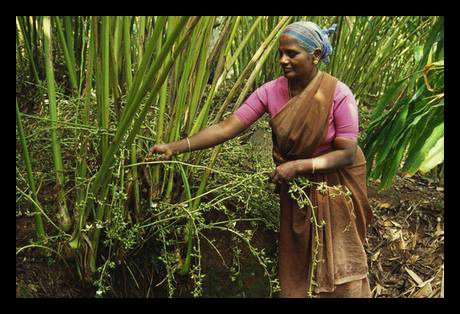
• In India, rural populations are being lifted out of poverty through a program of selling locally produced spices and aromatic herbs on the international market. In just four years, exports grew seven fold and the average income increased five fold, benefiting well over 2,000 people.
The ITC article “New Jobs for Poor Communities Through Trade” gives the full story of the above projects.
– Mary Purcell

Source: ITC
Photo: Independent.co.uk

March 25, 2013
https://borgenproject.org/wp-content/uploads/borgen-project-logo.svg 0 0 Borgen Project https://borgenproject.org/wp-content/uploads/borgen-project-logo.svg Borgen Project2013-03-25 10:08:032024-05-24 23:45:26Export Impact For Good
Page 2166 of 2176«‹21642165216621672168›»

Get Smarter

  • Global Poverty 101
  • Global Poverty… The Good News
  • Global Poverty & U.S. Jobs
  • Global Poverty and National Security
  • Innovative Solutions to Poverty
  • Global Poverty & Aid FAQ’s
Search Search

Take Action

  • Call Congress
  • Email Congress
  • Donate
  • 30 Ways to Help
  • Volunteer Ops
  • Internships
  • Courses & Certificates
  • The Podcast
Borgen Project

“The Borgen Project is an incredible nonprofit organization that is addressing poverty and hunger and working towards ending them.”

-The Huffington Post

Inside The Borgen Project

  • Contact
  • About
  • Financials
  • President
  • Board of Directors
  • Board of Advisors

International Links

  • UK Email Parliament
  • UK Donate
  • Canada Email Parliament

Get Smarter

  • Global Poverty 101
  • Global Poverty… The Good News
  • Global Poverty & U.S. Jobs
  • Global Poverty and National Security
  • Innovative Solutions to Poverty
  • Global Poverty & Aid FAQ’s

Ways to Help

  • Call Congress
  • Email Congress
  • Donate
  • 30 Ways to Help
  • Volunteer Ops
  • Internships
  • Courses & Certificates
  • The Podcast
Scroll to top Scroll to top Scroll to top