• Link to X
  • Link to Facebook
  • Link to Instagram
  • Link to TikTok
  • Link to Youtube
  • About
    • About Us
      • President
      • Board of Directors
      • Board of Advisors
      • Financials
      • Our Methodology
      • Success Tracker
      • Contact
  • Act Now
    • 30 Ways to Help
      • Email Congress
      • Call Congress
      • Volunteer
      • Courses & Certificates
      • Be a Donor
    • Internships
      • In-Office Internships
      • Remote Internships
    • Legislation
      • Politics 101
  • The Blog
  • The Podcast
  • Magazine
  • Donate
  • Click to open the search input field Click to open the search input field Search
  • Menu Menu

Archive for category: Global Poverty

Key articles and information on global poverty.

Global Poverty

The 100 Richest People In the World Could End Global Poverty

The 100 Richest People In the World Could End Global Poverty
It would cost $30 billion annually to end global poverty. This would mean that billions of people would no longer suffer from malnutrition, food insecurity, unsanitary conditions, preventable disease, and lack of education. A new study by Oxfam shows that the world’s 100 richest people earned $240 billion in 2012, enough to end global poverty four times.

While a majority of businesses and individuals were financially hurt by the economic crisis, the wealthiest have benefited from it. Oxfam reported that “The richest 1 percent has increased its income by 60 percent in the last 20 years with the financial crisis accelerating rather than slowing the process,” thus contributing to the growing gap between the rich and poor of the world.

It can be difficult to fathom how the richest 100 people can earn hundreds of billions of dollars in a year while billions of people can live on less than $1.25 a day. Oxfam’s report, “The Cost of Inequality: How Wealth and Income Extremes Hurt us All,” suggests that having so few people controlling such a large amount of the world’s wealth makes it more difficult to end global poverty. The philanthropic organization urges world leaders to address this alarming financial inequality by ending extreme wealth by 2025.

In order to return to 1990’s inequality levels, Oxfam suggests that world leaders get rid of tax havens and regressive taxes, implement a “global minimum corporation tax rate,” increase wages in proportion to corporate earnings, and “increase investment in free public services.” These extreme inequality gaps are spreading to countries like China, the United Kingdom, South Africa, and the United States. Oxfam states that inequality levels in South Africa are worst now than during the end of apartheid.

Jeremy Hobbs, Executive Director of Oxfam International, is adamant that the study shows the idiocy behind trickle down economics. He says, “We can no longer pretend that the creation of wealth for a few will inevitably benefit the many – too often the reverse is true.” He also stresses how when the wealthy control politics, they will often employ policies that only benefit the rich. World financial leaders are meeting April 3rd to discuss these issues and how to overall improve the global economy.

– Mary Penn

Source: SCMP
Photo: Global Giving
March 31, 2013
https://borgenproject.org/wp-content/uploads/borgen-project-logo.svg 0 0 Borgen Project https://borgenproject.org/wp-content/uploads/borgen-project-logo.svg Borgen Project2013-03-31 12:00:582024-12-13 17:49:15The 100 Richest People In the World Could End Global Poverty
Global Poverty

NIU Engineers Without Borders Tackle Mexico and Tanzania

NIU-Engineers-Without-Borders                            

For almost a decade, universities from across the United States have participated in thousands of trips to locations around the world to help improve low-income communities, whether it be through development, medical and health, or social advocacy.

Northern Illinois University’s Engineers Without Borders chapter has been in partnership with two organizations in both Mexico and Nyegina, Tanzania building sustainable and easy-to-manage appliances.

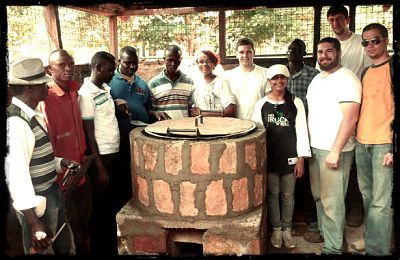
NIU’s EWB is entering its last year in a 5 year contract with Nyegina Secondary School, located in a village about an hour from the Kenya Tanzania border. Here, their first project was to install a solar lighting system to help supply cheap electricity to 6 classrooms and the library.

Their next project is focused on the kitchen. It includes designing a ‘lion stove’ which will use wood more efficiently to lower costs for the school as well as a solar water heater. These three additions to the school are important not only because they utilize a renewable energy source but because they allow the school to keep their expenses down. The less money they have to spend on basic lighting and cooking, the less children will have to pay to attend.

In Mexico, with support and guidance from iCatis (International Centers for Appropriate Technology and Indigenous Sustainability), students have been working to improve the water filtration system in remote villages.

Throughout their experimentation, these young engineers must keep in mind who they are designing these systems for. What works in the developed world cannot be sustained with the limited resources in developing countries. The villagers must be well trained and educated before students leave so that they understand how to repair appliances if they break and make improvements themselves if necessary.

– Deena Dulgerian

Source:NIU Today

March 31, 2013
https://borgenproject.org/wp-content/uploads/borgen-project-logo.svg 0 0 Borgen Project https://borgenproject.org/wp-content/uploads/borgen-project-logo.svg Borgen Project2013-03-31 11:00:132020-05-04 07:36:02NIU Engineers Without Borders Tackle Mexico and Tanzania
Global Poverty

Drought: The World’s Costliest Natural Disaster

Drought: The World's Costliest Natural Disaster
Drought is the world’s most expensive natural disaster. It causes an estimated loss of between $6 and $8 billion each year. As temperatures increase and erratic weather becomes normal in much of the world, droughts are increasing in frequency and severity in both developed and developing nations. Drought costs cannot be measured with certainty in poor nations, where their impact on those without insurance and who practice subsistence farming is often life-threatening.

The first-ever global conference on drought and drought policy took place this March in Geneva. The meeting exposed the disparity between national drought policies and the implementation of such policies on the ground. Despite recognition that a country cannot be forced to develop or implement disaster relief policies, conference participants issued a declaration urging all nations to do just that. The declaration was accompanied by a 10-step program for recommended policy action. The program, which is based on US drought preparation policies, combines crisis prevention and response, drought resilience, and scientific recommendations.

It includes steps such as:

  • appointing a national task force on drought
  • consulting with all stakeholders, from rural communities to top policymakers
  • resolving water-related conflicts and fostering cooperation
  • collect data on drought vulnerability
  • build public awareness of drought policy through education and science
  • evaluate and address drought research needs

Natural resource management plays an important role in drought management. Drought-resistant seeds, soil conservation techniques, and food storage facilities can minimize the effects of drought on vulnerable farming communities. But the policies of many countries often do not amount to much relief for their inhabitants. Recent droughts have had a massive impact on people all over the world. Droughts in the Horn of Africa and Sahel have had devastating consequences for food production, food security, and malnutrition in those regions, while droughts in the US have caused global food prices to rise, contributing to social and political unrest.

Since 2011, natural disasters have cost over $100 billion each year. That figure accounts primarily for insured losses in rich countries, and does not cover losses in poor countries, where such measurements are unavailable. Millions of the world’s poor continue to experience hunger on a daily basis as a result of drought and other natural disasters.

According to the International Organization for Migration, drought is the second biggest instigator of migration.

– Kat Henrichs

Sources: IRIN, IRIN
Photo: Follow the Piper

March 31, 2013
https://borgenproject.org/wp-content/uploads/borgen-project-logo.svg 0 0 Borgen Project https://borgenproject.org/wp-content/uploads/borgen-project-logo.svg Borgen Project2013-03-31 09:45:552024-05-24 23:46:09Drought: The World’s Costliest Natural Disaster
Global Poverty

One World Futbol Spreading the Love of Soccer

One World Futbol Spreading the Love of Soccer
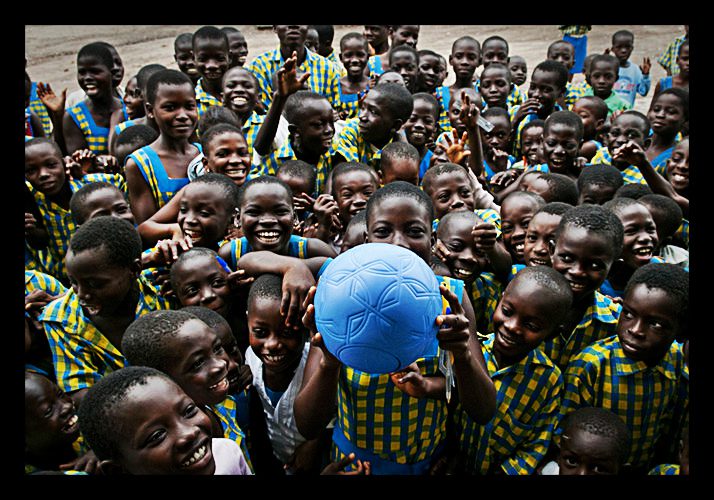
Growing up, many of our toy boxes were full of tennis balls, NERF balls, and soccer balls. As no surprise, even these simple toys are expensive and hard to come by in developing countries such as Darfur and Malawi. But with soccer being the most popular sport in the world, it has come to symbolize a strong sense of community. It is an obsession and passion with children who can barely afford a meal but will scavenge through trash to find anything that could remotely serve as a makeshift soccer ball.

In 2006, Tim Jahnigen was moved by a report on children in Darfur using pieces of trash and rocks as toys. A musical producer and multi-patent holding inventor, he decided to put his connections and passion for soccer to use. With a starting grant of $30,000 from friend and fellow musician Sting, Jahnigen created a prototype for an indestructible soccer ball. Made out of a material called ‘PopFoam’ (think the flexible but tough plastic used for Crocs), these balls can be left outdoors in rough conditions, played on dirt fields, and basically be beaten up and still have a natural bounce to them. These characteristics make them perfect for the environments children play in developing countries.

Within the past two years, One World Futbol has delivered over 200,000 balls. Despite these efforts, Jahnigen is determined to reach millions, if not all 1.3 billion children under the age of 12, through his organization. With financial support from Chevrolet, manufacturing is still continuing but the organization needs much more funding.

OWF is not a non-profit. It functions more or less like TOMS Shoes does (buy-one-donate-one) so about 25% of its soccer balls have been bought through their website and delivered with this business model. However, Jahnigen is much keener on having partner organizations and donors to help with the production costs since online purchases actually cause the price of the balls to go-up.

Ever so optimistically, Jahnigen has already been in talks with creating PopFoam cricket balls, focusing specifically on the South Asian market, where cricket is widely played. With the support of five major cricket organizations for this project, it boosted Jahnigen’s confidence in not only expanding the indestructible balls to cricket but to other sports such as football, volleyball, rugby, and basketball.

With so many intensive organizations around the world, it is always important to remind ourselves how a child’s life can be so easily changed. Soccer brings together the rich and the poor, the hungry and the full, and has the power to break across political boundaries. Supporting ventures such as One World Futbol can have an immediate impact on those worried about donating their money to other causes. Humanitarian aid can take many shapes and forms but the most basic ones, whose goals are simply to bring joy to children, also have the strongest impact.

– Deena Dulgerian

Source: Co.Exist

March 30, 2013
https://borgenproject.org/wp-content/uploads/borgen-project-logo.svg 0 0 Borgen Project https://borgenproject.org/wp-content/uploads/borgen-project-logo.svg Borgen Project2013-03-30 11:43:502024-06-10 02:51:28One World Futbol Spreading the Love of Soccer
Global Poverty

Fog Catchers Project at U of W

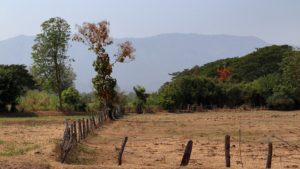
Fog Catchers Project at U of WWhile morning dew may settle and dry within a couple of hours, the persistence of fog especially in coastal areas creates a valuable resource for irrigation. Students at the University of Washington have been producing mist and testing various materials to create a long-lasting and efficient fog catching system over the past year.
Fog catching is in no way a brainchild of the 21st century. Inhabitants of the Canary Islands 2,000 years ago used trees to capture water droplets. These days, however, with much of the forests having been cut down in countries such as Peru, man-made fog catchers are being used to irrigate land and provide water to villagers.

How fog catchers work is actually quite simple. A mesh plastic net is held up by poles and while the layers of fog move through the nets, water droplets settle and eventually drip down into a bucket. More complex systems such as one in the highlands of Guatemala use piping and divert the water that’s collected, about 2,000 gallons a day, to supply a village of 200 people with a reliable flow of water.

Under the supervision of Susan Bolton, an ecologist and civil engineer at UW, graduate students use their $15,000 in prize grant money from the EPA’s People, Prosperity, and the Planet program to find what materials will catch more droplets while lowering the cost and maintenance of the nets. Robert Schemenauer, an atmospheric physicist from British Columbia who founded the nonprofit FogQuest and has been a part of the creation of most of the fog catching systems around the world, has also been active in the research program. He maintains a strict reminder to the students and professors that they need to think of their audience on the smallest scale. Fog collectors cannot provide enough water for large towns or cities so they should not be looked as replacements for municipal water facilities. The material must be cheap enough but durable to last in conditions where they will be used.

Currently, the UW team is experimenting with a fibrous plastic mat, much like the ones that are used to cover turf. They are also changing up the shapes of the nets themselves; instead of using rectangles, making it more of a triangular shape to allow the water droplets to trickle down better.

The students make it clear that the natural fog will not be diverted from an original source. It’s a fog that usually goes unharnessed but can help turn around the agriculture in the community they hope to work within Lomas de Zapallal near Lima, Peru.

Next month, the UW team will present their results along with the other winners of the EPA’s $15,000 grant at the National Sustainable Design Expo in Washington, D.C. They then have a chance to win a $90,000 grant to help continue to initiate sustainable programs that will help solve environmental problems, big or small. The grant money will also help them actually execute their program in Lomas de Zapallal.

– Deena Dulgerian

Source:Seattle Times

March 30, 2013
https://borgenproject.org/wp-content/uploads/borgen-project-logo.svg 0 0 Borgen Project https://borgenproject.org/wp-content/uploads/borgen-project-logo.svg Borgen Project2013-03-30 09:00:362020-06-01 00:59:11Fog Catchers Project at U of W
Development, Global Poverty, Philanthropy

International Women Development Champion Award

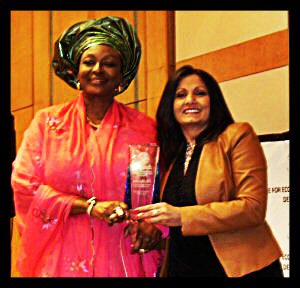
International Women Development Champion AwardThe International Women Development Champion Award honors exemplary women who have dedicated their lives and have committed their efforts to the economic development of Africa and African women. On 24th March, the President of UN Women National Committee Canada, Almas Jiwani, was awarded the International Women Development Champion Award in Paris. She is the first Canadian and the first UN Woman representative to receive this award. The initiatives she took in trying to connect the gaps between the corporate world and the humanitarian world made her a new face for humanitarianism. She has put tremendous efforts into establishing change through excellence and dedication to philanthropy.

Almas Jiwani expressed how this award promotes equality, “We must continue investing in African women and increase their involvement in the political structures in place and in everyday life.” Furo Giami, the Executive Director of the Center for Economic and Leadership Development said that it’s an honor to present Almas Jiwani with this award to recognize her efforts and achievements at contributing to the end of global poverty and “all forms of vices militating the development of African women.”

Some of the women who have received this award in the past include President Joyce Banda of Malawi, Vice President Joice Mujuru of Zimbabwe, Business Leader Wendy Luhabe of South Africa, Ida Odinga (wife of the Prime Minister of Kenya), Rt. Hon. Anne Makinda (the Speaker of Parliament in Tanzania) and others.

– Leen Abdallah

Source: Market Wire

March 29, 2013
https://borgenproject.org/wp-content/uploads/borgen-project-logo.svg 0 0 Borgen Project https://borgenproject.org/wp-content/uploads/borgen-project-logo.svg Borgen Project2013-03-29 10:00:542024-05-24 23:46:07International Women Development Champion Award
Global Poverty

WHO Raises Awareness on Indoor Air Pollution

WHO Raises Awareness on Indoor Air PollutionFor many families, the simple act of heating their apartment or preparing a cooked meal can result in long-term health consequences ranging from respiratory infections to lung cancer. In an effort to combat the effects of indoor air pollution, the World Health Organization (WHO) is promoting a policy of greater awareness and education on the dangers of certain biomass fuels.

The luxury of an oven fan or electric stove is out of reach for many poverty-stricken countries in the Global South, necessitating the use of charcoal as a primary source of fuel for cooking. Unfortunately, charcoal-fueled cooking releases pollutant-laden smoke that, without proper ventilation, can lead to chronic air pollution-related health problems later in life.

The number of hazardous pollutants released in the smoke in staggering; containing carcinogens such as benzene, pyrene, and toxic chemicals such as formaldehyde and nitrous oxides. Sadly, the diseases that result from frequent exposure to indoor air pollution are just as severe, ranging from acute lower respiratory infections, chronic obstructive pulmonary disease (COPD), lung cancer, and asthma. Additionally, because the societies that use such materials for fuel have most of their meals prepared by females, air pollution disproportionately affects the women and children of the household.

The WHO, in cooperation with UNICEF and USAID, is actively working to educate target publics about the dangers of indoor air pollution. Additionally, by raising awareness of the health problems caused by indoor air pollution with various NGOs and development agencies, a realistic policy in finding practical fuel alternatives to charcoal and other hazardous materials can be identified and implemented.

– Brian Turner

Source: WHO
Photo: Howstuffworks

March 28, 2013
https://borgenproject.org/wp-content/uploads/borgen-project-logo.svg 0 0 Borgen Project https://borgenproject.org/wp-content/uploads/borgen-project-logo.svg Borgen Project2013-03-28 15:23:332024-05-24 23:45:35WHO Raises Awareness on Indoor Air Pollution
Global Poverty

Faces Of Africa: Making Africa Laugh

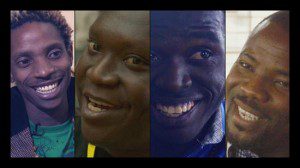
Faces Of Africa: Making Africa LaughAll over Africa, social activity rising in popularity is comedy. “Faces of Africa” is a CCTV show documenting people living in Africa who have a story to tell. In an episode titled “Making Africa Laugh,” the lives of four comedians from Kenya, Uganda, and Nigeria with the mission of doing just that are documented.

Nigerian comedian Bowoto Jephta, more commonly known by his stage name Akpororo, attributes his success in comedy to poverty stating that it forced him to recognize his own talents. Besides comedy, Akpororo is well known as a singer planning to release his music album next year. Akpororo who used to be a choir member receives inspiration from the Bible and the church. Most of his jokes, he says, are “about pastors and madmen because in my church they cure madmen.” He currently resides in the Niger Delta region where he lived before his break into comedy saying that he wants to give hope to the youth. Everybody in Niger Delta, he says, is a comedian.

Kenyan Erick Omondi and Ugandan Patrick Salvador are two comedians who both starred in an event called the Battle of Migingo, a competition that pitted Kenyan comedians against Ugandan comedians. Members of the audience were in agreement that regardless of who wins, the expectation was to laugh and have fun. Salvador comments that the importance of comedy in Africa is to show that there is much more to Africa than war and poverty.

Nigerian Oke Bakasi McAntony comments that there is much growth and development occurring in Africa and lives with the philosophy that “Life is just about happiness.” He says that “It is an irony that they say we are the happiest people. Maybe because our shock absorbers are too tough.”

– Rafael Panlilio

Source: Huffington Post, Tribune

March 28, 2013
https://borgenproject.org/wp-content/uploads/borgen-project-logo.svg 0 0 Borgen Project https://borgenproject.org/wp-content/uploads/borgen-project-logo.svg Borgen Project2013-03-28 11:00:042024-06-05 01:35:00Faces Of Africa: Making Africa Laugh
Global Poverty

UN Pushes Arms Trade Treaty

UN Pushes Arms Trade TreatyThe United Nations is attempting to establish tighter rules for regulating the international gun trade. UNDP Administrator Helen Clark explained that these weapons “fuel conflict, violence and high levels of crime in dozens of countries,” as she argued in favor of a treaty that covers all forms of international gun transfers. After a failed round of talks in 2012, this week has seen a fresh attempt in New York City to crack down on the spread of violence worldwide.
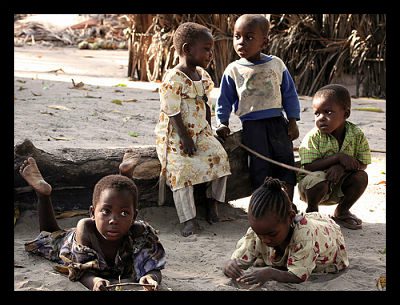
Historically, arms control treaties have been far more successful in restricting weapons of mass destruction than small arms. The Nuclear Non-Proliferation treaty has been largely successful since its inception, and the UN wants desperately to reduce the number of deaths from armed violence worldwide, which totaled over 500,000 in 2011—largely due to easy access to firearms.

The biggest obstacle to such a treaty would likely be opposition from the United States. In 2008, the Supreme Court ruled that the Second Amendment explicitly protects an American’s right to own a handgun, in the case District of Columbia v. Heller. The proposed Arms Trade Treaty would require all countries to adhere to a universal standard on regulating the sale of firearms, and while such a change is not guaranteed to force significant modifications upon US policy, the cessation of autonomy on such a divisive issue has already created a fire in the belly of American gun advocates.

– Jake Simon

Source: UNDP
Photo: The Commentator

March 28, 2013
https://borgenproject.org/wp-content/uploads/borgen-project-logo.svg 0 0 Borgen Project https://borgenproject.org/wp-content/uploads/borgen-project-logo.svg Borgen Project2013-03-28 09:05:422024-06-04 02:43:50UN Pushes Arms Trade Treaty
Global Poverty

World Poverty Still Urgent

World Poverty Still UrgentThe World Bank leaked strategy documents revealed what critics have called an “unambitious” and “business-as-usual” approach to development, prioritizing economic growth over pressing social issues such as rising inequality. That could fail all the optimism about the significant change in world poverty and world poverty is still urgent and needs more attention.

The documents, outlining “A common vision for the World Bank Group,” introduced two new goals to guide the bank’s development work: reducing the percentage of people living in extreme poverty to 3% globally by 2030 and promoting “shared prosperity” by monitoring the income growth of the bottom 40% in every country.

Critics say the “shared prosperity” target merely expands the bank’s focus on the world’s poorest people rather than shifting it to tackle inequalities and growing gaps between rich and poor.

David Woodward, the fellow at the New Economics Foundation and previously an adviser at the IMF and World Bank, said the documents reveal a “business-as-usual scenario, with little or no change in the basic thrust of its development approach”. He said the documents showed the bank is still subordinating development goals to an overall economic growth agenda. “What we’ve still got is a global version of trickle-down economics,” he said. “We should not be designing policies promoting growth on the assumption that this will deliver everything else.”

Nuria Molina, policy director at Save the Children UK, said the targets were “very unambitious”. “The narrative is right, the terminology is right, but the devil is always in the details,” she said. To address inequality you must also rein in growth at the top, she argued. “You need to have a meaningful measure, and just looking at the bottom is not sufficient. It’s very important to look at the gaps.”

“Increasing the income growth of the bottom 40% in every country will necessarily require accelerating the pace of overall economic growth,” Woodward said the goal to reduce to 3% the share of the world’s population living on less than $1.25 a day would still leave 200 million people in extreme poverty.

Alex Cobham, a research fellow at the Center for Global Development in Europe, said the document was “disappointing.” “What this document says is we’re not going to look at ratios. It feels very much against the flow of where the global conversation has gone,” he said.

World poverty is still urgent. It is a very big issue that needs to be fixed whether the world economy is good or bad. And that is also the whole world’s task, for which we cannot just depend on the World Bank. It may not reach our expected level but maybe this is a signal to tell us we need to find more ways to solve or change the situation about world poverty.

– Caiqing Jin (Kelly)

Source: Guardian
Photo:Flickr

March 27, 2013
https://borgenproject.org/wp-content/uploads/borgen-project-logo.svg 0 0 Borgen Project https://borgenproject.org/wp-content/uploads/borgen-project-logo.svg Borgen Project2013-03-27 11:48:472020-06-01 00:33:00World Poverty Still Urgent
Page 2165 of 2176«‹21632164216521662167›»

Get Smarter

  • Global Poverty 101
  • Global Poverty… The Good News
  • Global Poverty & U.S. Jobs
  • Global Poverty and National Security
  • Innovative Solutions to Poverty
  • Global Poverty & Aid FAQ’s
Search Search

Take Action

  • Call Congress
  • Email Congress
  • Donate
  • 30 Ways to Help
  • Volunteer Ops
  • Internships
  • Courses & Certificates
  • The Podcast
Borgen Project

“The Borgen Project is an incredible nonprofit organization that is addressing poverty and hunger and working towards ending them.”

-The Huffington Post

Inside The Borgen Project

  • Contact
  • About
  • Financials
  • President
  • Board of Directors
  • Board of Advisors

International Links

  • UK Email Parliament
  • UK Donate
  • Canada Email Parliament

Get Smarter

  • Global Poverty 101
  • Global Poverty… The Good News
  • Global Poverty & U.S. Jobs
  • Global Poverty and National Security
  • Innovative Solutions to Poverty
  • Global Poverty & Aid FAQ’s

Ways to Help

  • Call Congress
  • Email Congress
  • Donate
  • 30 Ways to Help
  • Volunteer Ops
  • Internships
  • Courses & Certificates
  • The Podcast
Scroll to top Scroll to top Scroll to top