• Link to X
  • Link to Facebook
  • Link to Instagram
  • Link to TikTok
  • Link to Youtube
  • About
    • About Us
      • President
      • Board of Directors
      • Board of Advisors
      • Financials
      • Our Methodology
      • Success Tracker
      • Contact
  • Act Now
    • 30 Ways to Help
      • Email Congress
      • Call Congress
      • Volunteer
      • Courses & Certificates
      • Be a Donor
    • Internships
      • In-Office Internships
      • Remote Internships
    • Legislation
      • Politics 101
  • The Blog
  • The Podcast
  • Magazine
  • Donate
  • Click to open the search input field Click to open the search input field Search
  • Menu Menu

Archive for category: Global Poverty

Key articles and information on global poverty.

Food Security, Global Poverty

Indonesia and Regional Food Security

regional-food-security-in-indonesia
Sufficiency, self-reliance, accessibility, utilization and affordability are key principals in providing food security. Policy makers must focus on maintaining a balance in these principals. When demand is not met by supply, the shortfall can lead to unstable food accessibility. 

Self-sufficiency, in many countries, remains the key to continuously providing food security. However, in Indonesia, self-sufficiency has come under threat and the integral agricultural market is at risk. The livelihood of subsistence farmers is increasingly impacted by global issues such as climate change, international food price volatility, and the increasing demand for food from a growing population. The fluctuation and rise in prices of staple foods such as rice, garlic, and onions is leading Indonesia to cooperate with its neighbors to ensure the future of food security nationally and regionally. 

Currently, Indonesia’s food policy is based on the aim of self-sufficiency and production is sustained within the economy to such a level that it could eventually lead to a food crisis. While this encourages small-scale farming, it makes food availability uncertain for many of the nation’s poor and compromises a well-balanced diet. While recent changes in dietary patterns and private-sector investment in agriculture will allow for growth and diversification in agricultural production, it may not be enough. As the country of highest productivity and production of rice in the Association of Southeast Asian Nations, Indonesia could potentially generate earnings in the regional market. Subsequently, local markets would gain a boost from the benefits of an export-oriented economy. 

Since 1979, East Asian countries have integrated rice reserves to create a formal Strategic Plan of Action on Food Security in 2009 with the end goal being regional food security. While regional food security still has yet to be accomplished, many strides have been made in regional crop risk management, insurance schemes, strategies for regional transportation, and public-private partnerships. Indonesia holds the potential to strengthen self-sufficiency and national food security through aid to domestic competitiveness, systematic cash transfers, and cooperation with non-state stakeholders to minimize the adverse impacts of open food trade regimes. Implementation of these policies and principals would eventually lead to the accomplishment of national and regional food security for Indonesia and East Asia.

– Kira Maixner

Source: The Jakarta Globe
Photo: New Security Beat

May 2, 2013
https://borgenproject.org/wp-content/uploads/borgen-project-logo.svg 0 0 Borgen Project https://borgenproject.org/wp-content/uploads/borgen-project-logo.svg Borgen Project2013-05-02 12:31:042020-05-26 07:57:34Indonesia and Regional Food Security
Global Poverty

Top 10 World Hunger Blogs

world-hunger-smiles
Below is a list of some of the best and most influential world hunger blogs around. The following blogs use various journalistic styles to spread the word about world hunger and news from around the world. After you finish reading through The Borgen Project blog, take a look at some of these!

1. Action Against Hunger- regular postings on major global hunger news and breaking events. The blog is part of the organization’s website. Action Against Hunger is a global humanitarian organization committed to ending world hunger.

2. Bread Blog- part of the Bread for the World organization. This blog reports US national events and important global stories in the fight against global poverty.

3. From Poverty to Power- a blog from OXFAM. It discusses the avenues individuals can take to achieve power. It is based on the thoughts from the Author, Duncan Green, and is meant to serve as a conversation and debate starter about development policy.

4. The Hunger and Under-nutrition Blog– aims to promote an informed dialogue, and serve as a resource for those in the field, and empower people at all levels to do what they can to make undernutrition and nutrition-related deaths and diseases a thing of the past.

5. International Food Policy Research Institute– the organization seeks sustainable solutions for ending world hunger and poverty. They have a vision of a world free of poverty and hunger and their blog focuses on what the IFPRI is doing as well as major news stories.

6. ONE blog- is part of the ONE organization. ONE’s goal is to fight the absurdity of extreme poverty by asking people to advocate for the world’s poor by taking action instead of simply talking about the problem.

7. Plenty to Think About– a blog highlighting, “the thinking persons guide to feeding a hungry planet”. This blog focuses on dietary solutions that can help end world hunger

8. Universities Fighting World Hunger- this organization works with the UN World Food Programme to mobilize US and international universities to make fighting world hunger a core value of higher education institutions. The blog is informative and journalistic and it provides a summary of the actions individuals within the organization are taking to fight world hunger.

9. WhyHunger blog- shares the stories of community-based organizations that are leading by example and working together to build the movement to end hunger and poverty.

10. OXFAM blogs- these blogs come from OXFAM staff around the world and document the problems, successes, and news coming from their local regions.

– Caitlin Zusy 
Source: Action Against Hunger, Bread for the World, OXFAM Blogs, Hunger and Under-nutrition Blog, International Food Policy Research Institute, ONE blog, Plenty to Think About, Universities Fighting World Hunger, WhyHunger blog, OXFAM blogs
Photo: Africa Dream

May 2, 2013
https://borgenproject.org/wp-content/uploads/borgen-project-logo.svg 0 0 Borgen Project https://borgenproject.org/wp-content/uploads/borgen-project-logo.svg Borgen Project2013-05-02 09:21:082024-06-05 01:53:28Top 10 World Hunger Blogs
Global Poverty

Olivia Wilde and the Half the Sky Movement

Olivia Wilde and the Half the Sky MovementActress, Olivia Wilde grew to fame for her role on one of the world’s most-watched television shows, House. However, she is also known for her role as a humanitarian. She has worked in Haiti, as well as produced her own documentary highlighting crises in various developing countries. She seamlessly transitions herself between the glamour of Hollywood to nonprofit work in the developing world.

Wilde recently participated in a PBS documentary and movement known as Half the Sky. Half the Sky is a movement aimed at igniting the change necessary to eliminate the oppression of women and girls worldwide. The Half the Sky movement was started by Nickolas Kristof and Sheryl WuDunn. Kristof and WuDunn wrote a book by the same name, which focused on turning oppression into an opportunity for women worldwide.

The movement uses videos, websites, games, and educational tools to spread awareness of women’s issues as well as to help create solutions to empower women. The video series is a four-hour series broadcast on PBS and other international channels. It was shot in ten countries and includes several celebrities such as Olivia Wilde, America Ferrara, Meg Ryan, and Gabrielle Union. The series displays portraits of women and girls living in some of the worst conditions imaginable, yet fighting to improve and change them.

Wilde appears on the second night of the series. She traveled to the Umoja Women’s Village in Kenya where the women of Umoja make beautiful handmade beaded items. The women in the village depend on the sale of their beaded items to support themselves and their families. The profits fund community projects selected by the women including scholarships for young girls, teacher’s salaries, lunches for preschoolers, and a freshwater and health care project.

Wilde also traveled to visit Jamii Bora. Jamii Bora is a micro-financing organization providing small loans to women in extreme poverty to start their own small businesses.  The organization has an incredible success rate, helping women escape poverty and establish themselves independently.

The series hopes to raise global awareness of extreme poverty and hopes to educate and empower women worldwide to help each other out of poverty. The movement spreads a strong message of hope and progress.

– Caitlin Zusy
Source: Half the Sky

May 2, 2013
https://borgenproject.org/wp-content/uploads/borgen-project-logo.svg 0 0 Borgen Project https://borgenproject.org/wp-content/uploads/borgen-project-logo.svg Borgen Project2013-05-02 09:03:412020-06-17 01:43:56Olivia Wilde and the Half the Sky Movement
Extreme Poverty, Global Poverty

Ben Affleck Lives Below the Line

Academy Award winner actor Ben Affleck is taking part in the Living Below the Line challenge. Next week, he will be living on just 1 dollar and 50 cents a day. The challenge requires participants to bid farewell to their comfortable and stable lives for 5 days to experience poverty on a personal scale. Living Below the Line was “cofounded in 2009 by Rich Fleming from the Global Poverty Project and Nick Allardice from the Oaktree Foundation in Australia.”

The U.S. Country Director of the Global Poverty Project, Michael Trainer, said that last year approximately 15,000 people were part of this Living Below the Line challenge and more than 3 million dollars were raised. According to the Yahoo report, Ben Affleck’s participation will build awareness and raise funds for the Global Poverty Project. The Project’s main emphasis is to get people to recognize their potential effectiveness by coming together and fighting to end global poverty. Next week anyone can be, and everyone should be, in solidarity with the poor with this humbling poverty experience.

–Leen Abdallah
Source: Examiner

May 2, 2013
https://borgenproject.org/wp-content/uploads/borgen-project-logo.svg 0 0 Borgen Project https://borgenproject.org/wp-content/uploads/borgen-project-logo.svg Borgen Project2013-05-02 09:00:472020-05-26 07:59:51Ben Affleck Lives Below the Line
Global Poverty

Where Children Sleep

World renowned Kenyan photographer James Mollison is most known for his photo book Where Children Sleep. In it, he presents portraits of children from around the world and their bedrooms. The book, intended for a younger audience, is meant to not necessarily create a sense of guilt but more so a sense of appreciation and awareness of the different lives and home environments children around the world live in.

Indira, 7, Kathmandu, Nepal

nepal portrati_opt nepalroom_opt


Douha, 10, Hebron, The West Bank

douha portrait_opt douhna room_opt


Anonymous, 9, Ivory Coast

anyportrait_opt any room_opt


Jasmine, 4, Kentucky, USA

jasmine_opt jasmine room_opt


Ahkohxet, 8, Amazonia, Brazil

amazon_opt amazon room_opt


Risa, 15, Kyoto, Japan

risa portrait_opt risa room_opt


Alex, 9, Rio de Janeiro, Brazil

alex portrait_opt alex room_opt


The different conditions of each room can also be seen on the faces of the children in their portraits. Whether its pride, humility, confidence, or defeat, its possible to learn as much from their faces and poses in the portraits as it is from their rooms. While many of the poorer children live in small homes with multiple people, children with their own rooms can’t simply be stereotyped to be spoiled and ungrateful. To learn more about these children’s individual stories and lives, visit Telegraph’s article.

– Deena Dulgerian
Source: Bored Panda

May 1, 2013
https://borgenproject.org/wp-content/uploads/borgen-project-logo.svg 0 0 Borgen Project https://borgenproject.org/wp-content/uploads/borgen-project-logo.svg Borgen Project2013-05-01 10:00:322024-12-13 17:49:18Where Children Sleep
Global Poverty

Food Security – Hydrogen Sulphide and Enhanced Plant Growth

Giant Leek_opt
Hydrogen sulphide, a gas known for its toxicity to both plants and humans, has rarely even been studied in small quantities. Recently, a scientist researching the effects of hydrogen sulphide on plants made a simple dilution mistake-accidentally exposing the plants to low as opposed to high levels of the gas-that yielded completely unexpected results. In a discovery that has huge implications in regards to global food security, a surprising link was discovered between hydrogen sulphide and enhanced plant growth.

Researchers at the University of Washington were researching the toxicity effects of hydrogen sulphide and mistakenly exposed the plants to a much lower concentration of the compound then they originally intended. Unbelievably, instead of dying the plants responded with an accelerated rate of growth, with seeds germinating in half the time and crop yields nearly doubling. Just to make sure, researchers replicated the experiment several times in order to verify the relationship between hydrogen sulphide and enhanced plant growth, and the plants responded with the same accelerated growth patterns.

This recent development has exciting implications with respect to global food security, as the ability to grow plants at a larger and faster rate will help meet the demands of a rapidly increasing world population.

In regards to the link between hydrogen sulphide and enhanced plant growth, University of Washington Doctoral student Frederick Dooley remarked that, “They germinate faster and they produce roots and leaves faster. Basically what we’ve done is accelerate the entire plant process.”

The ability to both expedite and enhance the germination of plants from seeds to readily available crops carries with it great implications for the future of food security. Moreover, by unexpectedly finding the previously unknown link between hydrogen sulphide and enhanced plant growth, agricultural researchers are helping to solve the world hunger problem.

– Brian Turner

Source Science Daily
Photo Kazak

April 30, 2013
https://borgenproject.org/wp-content/uploads/borgen-project-logo.svg 0 0 Borgen Project https://borgenproject.org/wp-content/uploads/borgen-project-logo.svg Borgen Project2013-04-30 10:00:182024-06-05 01:53:27Food Security – Hydrogen Sulphide and Enhanced Plant Growth
Children, Food Aid, Food Security, Foreign Aid, Global Poverty, Health

What is Childhood Stunting?

childhood stunting
Childhood stunting effects a massive percentage of the world’s youth. UNICEF estimates that some 39% of children in the developing world are stunted. 40% of children in sub-Saharan Africa are stunted and in East and South Asia, estimates climb as high as 50% of children. The numbers tally in at 209 million stunted children in the developing world.

Childhood stunting is a condition that is defined as height for age below the fifth percentile on a reference growth curve. If, within a given population, substantially more than 5% of an identified child population have heights that are lower than the curve, then it is likely that said population would have a higher-than-expected prevalence of stunting. It measures the nutritional status of children. It is an important indicator of the prevalence of malnutrition or other nutrition-related disorders among an identified population in a given region or area.

Aside from inadequate nutrition, there are several other causes of childhood stunting. These include: chronic or recurrent infections, intestinal parasites, low birth weight, and in rare cases, extreme psychosocial stress without nutritional deficiencies. Several of these factors are influenced by each other. Low birth weight is correlated with nutritional deficiencies, and inadequate nutrition is correlated to chronic or recurrent infections.

One of the serious consequences of stunting is particularly impaired cognitive development.  When a child has inadequate access to food, their body conserves energy by first limiting social activity and cognitive development in the form of apathetic and incurious children. These children may not develop the capacity to adequately learn or play. Then the child’s body will limit the energy available for growth.

Fortunately, studies have found that improvement in diet after age two can restore a child to near-normal mental development. Conversely, malnutrition after age two can be just as damaging as it is before age two. However, it is important to note that once stunting is established, it typically becomes permanent.

The reasons stated above serve as important reminders of why foreign aid and programs aimed at eliminating extreme malnutrition and nutritional deficiencies are so vital. The impact of new legislation focusing on increasing USAID and other foreign aid is substantial. Stunting can be seriously limited through the introduction of increased access to food security in the developing world. Knowledge of the facts surrounding stunting is also an important step in working to combat and eliminate childhood stunting worldwide.

– Caitlin Zusy

Sources: UNICEF, Future of Children

April 29, 2013
https://borgenproject.org/wp-content/uploads/borgen-project-logo.svg 0 0 Borgen Project https://borgenproject.org/wp-content/uploads/borgen-project-logo.svg Borgen Project2013-04-29 10:34:522024-05-24 23:49:03What is Childhood Stunting?
Global Poverty

Double Cropping in Brazil

Mato Grosso_opt
The country of Brazil, long known for its biologically-diverse rainforests and unique ecosystems, has been practicing the method of double cropping – or planting two crops per year instead of one – as a means of intensifying the amount of agricultural goods grown in a given area. Recently, much research has been centered on the state of Mato Grosso, known for its heavy use of the double cropping method and position as the undisputed hub of Brazil’s agricultural production area. The data gleaned thus far in regards to economic benefits have been nothing less than astounding, as there is mounting evidence that double cropping encourages economic development in Brazil.

Researchers at Brown University have been conducting extensive research into the GDP, educational infrastructure, and public sanitation of Mato Grossso in order to take a closer look at the ramifications of the agricultural program known as double cropping. Surprisingly, they found that the large production of soybean, cotton, and corn from the area resulted in huge economic opportunities for the residents of the Mato Grosso area. How are they linked? Double cropping encourages economic development in Brazil primarily due to the huge amounts of labor required to harvest, transport, and process the crops grown in area, leading to the low unemployment and high local investment absent from area’s that employ the single cropping method.

In regards to exactly how double cropping encourages economic development in Brazil, Associate Professor at Brown University Leah VanWey noted that the industry has created thousands of jobs, also noting that, “In the long run there isn’t much money in just growing things and selling them, but processing allows the local area and workers to retain more of the per-unit cost of the final product.”

Exiting new methods of agricultural development are being implemented and assessed across the globe, leading to innovative ways of encouraging growth and ameliorating local poverty levels. Furthermore, recent evidence showing that double cropping encourages economic development in Brazil should serve as a reason for continued support of agricultural aid agencies such as the FAO.

– Brian Turner

Source: Science Daily
Photo: Terra Project

April 29, 2013
https://borgenproject.org/wp-content/uploads/borgen-project-logo.svg 0 0 Borgen Project https://borgenproject.org/wp-content/uploads/borgen-project-logo.svg Borgen Project2013-04-29 09:51:122020-05-26 07:44:16Double Cropping in Brazil
Global Poverty

5 Fun Events to End Global Poverty

5-events-to-end-world-poverty
These 5 fun events are bringing people together with one common goal, to expose and eliminate poverty around the world. Whether the focus is on one specific country, or the world, the magnitude of learning about world poverty and efforts to end it are being multiplied.

1. The Borgen Project’s “Downsizing Poverty” Online Auction– Taking place from April 12 to April 28, the online auction boasts numerous items from trips to Mexico, artwork, outdoor passes, electronics, to the flag flown at the Obama’s 2013 Inauguration, online bidders from around the world can help the completely volunteer-organized and -run Borgen Project stop global poverty. Proceeds from this event will assist the Borgen Project in marketing initiatives to build public and political support to reduce poverty.

2. Concern Worldwide US Leadership Network Meeting – On May 9 in Chicago, IL, Concern Worldwide US will host an event to bring together young, like-minded professionals to connect and discuss the elimination of extreme poverty in developing countries. Participants will enjoy their first beverage on Concern Worldwide US while the rest of the proceeds from this event will benefit various projects supported the organization.

3. The Bretton Woods Committee 30th Anniversary Annual Meeting – Themed “Can the IFIs, Business, Government, and Society End Poverty in a Generation?” this conference will bring together representatives from multilateral, non-profit, and government organizations such as Oxfam America, The World Bank Group and the International Monetary Fund. The dialogue will encompass the “development ecosystem” and how it is changing and how these organizations can support and assist those countries at the bottom of the pyramid. This event will take place on May 15 in Washington, D.C..

4. UNICEF’s Next Generation Photo Benefit – On May 17 at the Milk Gallery in New York City, photographers (both professional and amateur) and givers will come together to raise funds for UNICEF’s Next Generations Colombia Project. The theme of this event is “Seeing ZERO” and guests will have the opportunity to partake in a silent auction alongside an open bar, enjoying hors d’oeuvres and music.

5. Devendra Banhart Concert Tour –This spring and summer at concerts across America, Oxfam will have outreach tables as well as volunteer opportunities to generate awareness to end world hunger and start saving lives. Visit Oxfam to view a complete list of events.

– Kira Maixner

Source: The Borgen Project, Concern Worldwide US, Bretton Woods Committee, Unicef USA, Oxfam America
Photo: United Nations Information Center Washington

April 29, 2013
https://borgenproject.org/wp-content/uploads/borgen-project-logo.svg 0 0 Borgen Project https://borgenproject.org/wp-content/uploads/borgen-project-logo.svg Borgen Project2013-04-29 09:00:362024-06-10 03:06:555 Fun Events to End Global Poverty
Global Poverty

Eradicating Polio: We’re Getting There

rsz_poliovaccine2
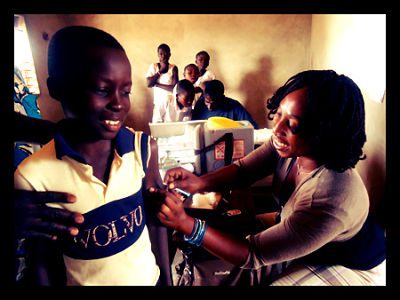
The global community is painstakingly close to eradicating polio. Increases in vaccinations have spared the lives of more than 10 million people worldwide. Polio, a disease which used to claim the lives of up to 500,000 people a year, is almost gone. Its eradication would be a crucial milestone in transforming global health and demonstrating the effectiveness of collective action.

Global collective efforts have brought together UN agencies, governments, foundations, private businesses, and individuals to combat this disease. Worldwide, the number of recorded cases last year fell to an all-time-low of 223. There are only three countries where polio remains endemic: Afghanistan, Pakistan, and Nigeria.

These countries are susceptible to polio because of the fringe communities such as nomads, migrant workers, and displaced populations. People are much more likely to contract polio in areas of conflict and insecurity. In order to eradicate polio, vaccines must be delivered to the most marginalized of our society. This requires belief that every person has equal worth.

If the global community is not careful, and do not maintain its commitment to vaccinations and eradication, the World Health Organization has warned that the disease could break out again, reversing the last few decades of progress. This caveat has motivated UN Secretary General Ban Ki-moon to intensify efforts to eliminate the disease.

This ambition has lead the Global Polio Eradication Initiative to develop a six year strategy requiring countries where polio remains, to step up their efforts to vaccinate all children. Additionally, they are pressuring over 100 other countries to refine their polio immunization programs to ensure all children have access to the vaccines.

Kofi Annan has been urging the international community to provide the necessary funding to make vaccinations for marginalized and hard to reach children possible. The Global Vaccine Summit in Abu Dhabi this week implores partners and philanthropists to dig deep to support increased access to polio vaccinations.

It is vital that people understand that vaccinations improve overall health and drive development. Additionally, there are impressive financial benefits to eradicating polio – in the sum of an estimated $40 billion or more – with most of them accruing in the world’s poorest countries. Success of this nature begs the question: what do we, the global community, have to lose?

– Caitlin Zusy 
Source: Guardian

April 29, 2013
https://borgenproject.org/wp-content/uploads/borgen-project-logo.svg 0 0 Borgen Project https://borgenproject.org/wp-content/uploads/borgen-project-logo.svg Borgen Project2013-04-29 08:30:092020-05-29 21:19:33Eradicating Polio: We’re Getting There
Page 2142 of 2161«‹21402141214221432144›»

Get Smarter

  • Global Poverty 101
  • Global Poverty… The Good News
  • Global Poverty & U.S. Jobs
  • Global Poverty and National Security
  • Innovative Solutions to Poverty
  • Global Poverty & Aid FAQ’s
Search Search

Take Action

  • Call Congress
  • Email Congress
  • Donate
  • 30 Ways to Help
  • Volunteer Ops
  • Internships
  • Courses & Certificates
  • The Podcast
Borgen Project

“The Borgen Project is an incredible nonprofit organization that is addressing poverty and hunger and working towards ending them.”

-The Huffington Post

Inside The Borgen Project

  • Contact
  • About
  • Financials
  • President
  • Board of Directors
  • Board of Advisors

International Links

  • UK Email Parliament
  • UK Donate
  • Canada Email Parliament

Get Smarter

  • Global Poverty 101
  • Global Poverty… The Good News
  • Global Poverty & U.S. Jobs
  • Global Poverty and National Security
  • Innovative Solutions to Poverty
  • Global Poverty & Aid FAQ’s

Ways to Help

  • Call Congress
  • Email Congress
  • Donate
  • 30 Ways to Help
  • Volunteer Ops
  • Internships
  • Courses & Certificates
  • The Podcast
Scroll to top Scroll to top Scroll to top