• Link to X
  • Link to Facebook
  • Link to Instagram
  • Link to TikTok
  • Link to Youtube
  • About
    • About Us
      • President
      • Board of Directors
      • Board of Advisors
      • Financials
      • Our Methodology
      • Success Tracker
      • Contact
  • Act Now
    • 30 Ways to Help
      • Email Congress
      • Call Congress
      • Volunteer
      • Courses & Certificates
      • Be a Donor
    • Internships
      • In-Office Internships
      • Remote Internships
    • Legislation
      • Politics 101
  • The Blog
  • The Podcast
  • Magazine
  • Donate
  • Click to open the search input field Click to open the search input field Search
  • Menu Menu

Archive for category: Global Poverty

Key articles and information on global poverty.

Global Health, Global Poverty

A Call for Agriculture in Africa

No dollar does more for the people of the African continent than a dollar invested in agriculture. In fact, as a means of poverty alleviation, growth within agriculture in Africa is 11 times more effective than growth in any other industry.

Recognizing that agricultural investments are crucial to eliminating poverty in Africa, many African leaders promised in 2003 to allocate 10 percent of their national budgets specifically toward agriculture. Unfortunately, very few of those leaders were able to keep that promise – today, over 10 years later, African governments spend on average only 4 percent of their national budgets on agriculture.

Despite this, development experts are hopeful that more African leaders will commit to agricultural investment at the African Union Summit to be held in Equatorial Guinea at the end of this month.

Citizens from a plethora of African nations put pressure on their leaders to target poverty through funding agriculture at the African Union’s Conference of Ministers of Agriculture, Rural Development, Fisheries, and Aquaculture, held in Addis Ababa in May. At this conference, African leaders, farmers and agriculture advocates discussed topics including decreasing food insecurity, supporting female farmers and assisting small farms. Prominent advocates also presented a petition urging leaders to invest in agriculture in order to create jobs and feed families. At the time of the conference, over 600,000 African citizens had signed the petition.

Because governments across the continent have declared 2014 the “year of agriculture and food security,” politicians would be wise to listen to their constituents and make agriculture a priority.

Another result of May’s conference was a list of 10 policy recommendations attendees had for African leaders. Among their recommendations were to “work to eliminate the gender and youth gap in agriculture,” “foster access to markets for small-scale farmers” and “integrate sustainability and climate resilience into national agriculture plans.”

These recommendations are not only reasonable and sustainable, but address a number of flaws in the agriculture industry.

Clearly, the people of Africa are working to prioritize agriculture. International aid organizations should follow their lead – after all, it’s the most effective way of eliminating poverty in Africa.

—Elise L. Riley

Sources: African Union, ONE 1, ONE 2, ONE 3
Photo: African Organisation for Standardisation

June 20, 2014
https://borgenproject.org/wp-content/uploads/borgen-project-logo.svg 0 0 Borgen Project https://borgenproject.org/wp-content/uploads/borgen-project-logo.svg Borgen Project2014-06-20 10:09:562024-05-26 23:46:37A Call for Agriculture in Africa
Global Poverty

10 Ways to Live on $1.25 a Day

$1.25 a day
The World Bank defines extreme poverty as living on a budget of $1.25 a day. To promote awareness of this alarming statistic, many people participate in challenges to see if they can go a certain number of days “living below the line” of poverty. Celebrities like Ben Affleck and Sophia Bush, just to name a few, have participated in the challenge.

For anyone willing to try the challenge, here is a list of 10 possible food combinations, each totaling $1.25 or slightly less.

1. 2.5 oz of store brand lunchmeat + 4 oz of apple sauce = $1.24

2. 1.1 oz bag of corn chips + one banana + half of a 6 oz container of store brand flavored yogurt = $1.24

3. Protein bar = $1.25
Yes, some protein or granola bars can consume an entire day’s budget for the extreme poverty challenge, but only when they are not on sale.

4. Ice cream sundae cup + one banana = $1.25

5. One apple + 6 oz flavored yogurt = $1.09

6. One loaf of store brand white bread + one banana = $1.24
For challenge participants looking to extend the experiment more than a day, buying a loaf of bread for 99 cents is an economically intelligent decision.

7. 10 oz package of sliced American cheese + one chocolate chip cookie = $1.25
Much like the loaf of bread, a package of store brand sliced cheese, priced at $1, can last multiple days.

8. One candy bar + one quarter of a box of frozen spinach + half of a 6 oz container of plain yogurt = $1.24

9. One cereal cup + half of a cucumber = $1.23

10. Half of a can of chicken and rice soup + one bagel + half of an apple = $1.13

A common misinterpretation of the $1.25 statistic is that one American dollar will buy a lot more in an impoverished area than it would in the U.S. The conversion has already been taken into account, though, and tailored for the U.S. to understand better. So, for example, in Kenya, people living in extreme poverty are surviving on the food that approximately 56 cents worth of American currency would buy in their markets.

 — Emily Walthouse 

Sources: The World Bank, Peapod, Giving What We Can, Living on One, Home Shop
Photo: Flickr

June 20, 2014
https://borgenproject.org/wp-content/uploads/borgen-project-logo.svg 0 0 Borgen Project https://borgenproject.org/wp-content/uploads/borgen-project-logo.svg Borgen Project2014-06-20 10:08:182024-06-05 01:57:3310 Ways to Live on $1.25 a Day
Global Poverty

Favelas and the World Cup

June 12, 2014 marks one of the most exhilarating international competitions that spreads to millions of homes across the world. This year, the FIFA World Cup is taking place in Brazil. As a country that lives and breathes soccer, it makes a fitting choice. However, as the tournament draws nearer, more pressure and focus is being put on Brazil’s ability to step up to expectations.

In the midst of excited anticipation, Brazil has been faced with many threatening obstacles including strikes by police as well as government workers, causing fear that Brazil may not be ready in time. On the other side of the glorious soccer stadiums that will be filled with thousands of international visitors, lies the sprawling hills of favelas outside of Rio de Janeiro.

A favela is the Portuguese term for slum, and just outside of the bustling city center lies miles of low socioeconomic life, a juxtaposed sight to the nearby city. The contrast of life is extreme. As charter jets fly in holding national teams from participating countries, drug gangs still rule the favelas, not far from where foreign tourists will be staying.

Brazil has been making efforts to keep the areas under a state of control, implementing pacification programs. This effort may come too little too late, with CNN acknowledging “Rio’s favelas were neglected by authorities, considered no-go zones even by police” for many years, so the actions that began in 2008 when Brazil was announced host for the World Cup and 2016 Summer Olympics were necessary long before action was taken.

Since the beginning of the pacification program, only 176 of about 600 favelas are monitored with any consistency, leaving much unknown to neighboring cities and tourists. While the program has helped decrease the number of violent crimes and murders in Brazil since 2008, 6,000 people are killed a year, turning Brazil into basically an active war zone.

The city of Rio lacks a sense of calm as the government scurries about trying to finish stadiums on time while maintaining a professional international appearance. As the World Cup begins, tourists swarm into the country and will send the government into high alert to maintain safety for such a high number of visitors who may be lacking understanding the severity of the situations in the favelas.

Due to the around the clock media focus on the World Cup, the reports are sure to fly in should anything go awry. The world is watching Brazil as it stands on unstable footing.

— Elena Lopez

Sources: Truth-Out, CNN, The Guardian 1, The Guardian 2, Real Truth
Photo: For the love of the beautiful game

June 20, 2014
https://borgenproject.org/wp-content/uploads/borgen-project-logo.svg 0 0 Borgen Project https://borgenproject.org/wp-content/uploads/borgen-project-logo.svg Borgen Project2014-06-20 10:06:312024-05-26 23:46:47Favelas and the World Cup
Activism, Advocacy, Global Poverty, Poverty Reduction, Volunteer

5 Ways to Put Your Time Toward Change

In just one month in 2012, Americans spent a combined 230,060 years on social media according to the annual Nielsen Report. That’s about 6.5 hours per person, if every American used social media, and a whopping 121 billion minutes total. That was two years ago, and social media platforms and usage continue to grow.

That we have managed to collectively squeeze thousands of years worth of time out of just one month is amazing, a true feat that proves the potential for impact when an entire society chooses to dedicate time to one purpose. That this feat was accomplished in the name of liking, posting, commenting and pinning is disheartening. We can do better.

Imagine the improvements to our world if every American spent even half that time, about three hours every month, addressing global poverty issues and working toward solutions. We can no longer claim we don’t have time to make the world a better place.

Here are five ways to put your time toward change:

1. Take a free class on global issues (1-5 hours per week)

Educate yourself on the problems and solutions of global poverty! There are many free courses offered online by prestigious universities that focus on issues like global health and development. Auditing or taking a class for credit is a great way to learn about the current landscape of global poverty issues, and what we can do about them.

Check out sites like coursera.com and openculture.com to access free classes from top universities around the world. Many universities now offer free classes through their websites as well.

Multiply your impact: Take it one step further and share what you’ve learned with your friends, family and community. Give a talk at a local school, write an op-ed for your newspaper or hold a fundraiser. Most importantly, spread the good news; although it sounds too big to conquer, we CAN (and have) reduced global poverty rates.

2. Send a care package (1-2 hours to a weekend project)

Basic supplies can make all the difference. Consider the fact that women and girls around the world miss days of school and work because they lack access to feminine hygiene products/menstrual pads. These collective days of missed income and education add up to real economic losses, keeping women in the cycle of poverty. Girls are forced to use whatever they can find — newspapers, leaves, rocks — as sanitary supplies, and are sometimes exploited in exchange for hygiene.

Days for Girls distributes sustainable feminine hygiene kits made by individuals and groups in the U.S. to women and girls around the world. The website includes patterns, instructions and videos so that you can get involved and sew reusable pads for the organization to send. There is also information about joining a kit-sewing chapter near you and tips for starting your own, as well as ways to help if you can’t sew.

Imagine trying to run a school without chalkboards, books or pencils. Check out organizations like Books for Africa, International Book Project and Kids to Kids International to learn more about how to send books and supplies to schools and kids around the world.

Multiply your impact: Enlist the help of your team, group or classroom to hold book and school supply drives, and make care packages together. Gather your crafty friends and have a hygiene kit sewing party.

3. Contact Congress to secure support for essential poverty-reducing legislation (30 seconds to 2 minutes)

Getting in touch with your congressional leaders is surprisingly easy and highly effective. Because congressional leaders want to track what issues are important to constituents, their staffers tally every issue and bill the office receives calls, letters and emails about. Every contact you make counts (literally) and even one email means your issue or bill is on the leader’s radar.

The Borgen Project’s Action Center page lists current bills relevant to global poverty and includes links to send a formal email to congressional leaders for each. Just fill out your contact info once, and then click to send emails urging support for crucial legislation. Use the link at the bottom of the page to read more about each bill.

Click here to search congressional phone numbers by your zip code, and here for tips on making the call. It’s as easy as saying, “I’m a constituent and a Borgen Project supporter, calling to ask (leader name) to support the (Water for the World Act).”

And if you have more than two minutes to spare, you can write your own letter or email to Congress. Click here for tips and samples to get started!

Multiply your impact: Call weekly, and enlist friends and family members to do the same. Forward a link to the Action Center to your address book. Host a letter and/or email-writing party on your campus, with your friends or in your community.

4. Volunteer your time and skills to the cause

There are plenty of ways to impact global poverty without leaving your city. A quick Google or GuideStar search will return many volunteer opportunities and ways to get involved with international aid organizations based in your area. These groups need volunteers for everything from packing boxes of supplies for relief efforts, to helping organize runs, fundraisers and other community events, to representing the organization by tabling events.

Hands-on volunteer projects abroad are also great — if you possess the skills necessary to be successful. Consider your skill sets when choosing a project, and avoid things like signing up to build a school if you know nothing about bricklaying. Taking part in projects in which you can’t actually be helpful can do more harm than good. Instead, focus on what skills you have to offer and choose volunteer opportunities accordingly.

Multiply your impact: Ask staff to stay in touch about upcoming activities, and volunteer regularly. Bring friends and family along. Use social media to advertise any organization events or upcoming volunteer opportunities.

5. Write a check (30 seconds!)

There are many deserving organizations working on a host of issues related to global poverty. GuideStar is a great place to search for nonprofits of interest to you, or start right here and give to The Borgen Project! Donating is a quick and easy way to make a difference.

Multiply your impact: Sign up to give monthly. Practice deferring — writing a small donation check instead of that cup of coffee, movie or dinner out you could do without. Ask the company you work for to consider donating to The Borgen Project and other global poverty organizations.

— Sarah Morrison

Sources: Nielsen, The Borgen Project, BooksForAfrica, CongressMerge
Photo: Wallpapers Craft

June 20, 2014
https://borgenproject.org/wp-content/uploads/borgen-project-logo.svg 0 0 Borgen Project https://borgenproject.org/wp-content/uploads/borgen-project-logo.svg Borgen Project2014-06-20 10:03:272024-05-26 23:46:465 Ways to Put Your Time Toward Change
Food & Hunger, Global Poverty

The Jaden Tap Tap Initiative In Haiti

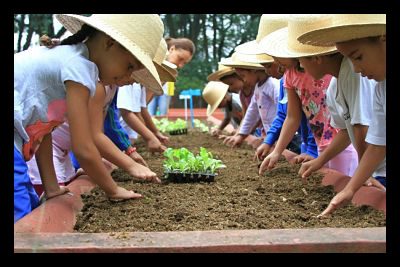
In the scorching city of Cité Soleil, Haiti, what was formerly a landfill in one of the most dangerous slums in the western hemisphere has grown into a beautiful community garden called Jaden Tap Tap that serves the people of the city.

Three men native to the city, Daniel Tillias, Herode Gary Laurent and Franz Francois, started the garden three years ago with the hope of providing a safe place for members of the community to come and take a break from their everyday lives.

“Making a garden is about more than cultivating plants, it’s about cultivating people,” Tillias said. “We want to give the people of Cité Soleil a model of success. Something to do. And something to eat too.”

The name of the garden, Jaden Tap Tap, is Haitian Creole for “garden taxi.” Tap tap is the name for the brightly colored taxis that circulate in the capital city of Port-au-Prince. The community has embraced the meaning of the name by planting various colored flowers and a tree nursery.

The main tree that grows in the garden is called moringa. This type of tree is very beneficial for the people of the community. Its leaves are rich in protein and vitamins and can be added to juice, soup, cornmeal and rice. There are also 20 different types of vegetables and herbs grown in the garden, including peppers, chard, radishes, basil and parsley.

The garden has fostered a sense of self-sufficiency for many of its gardeners. Many families get their food from this garden, or they use this garden as a starting place for creating their own gardens. This has allowed the community to become more sustainable and has given many people a sense of pride in their community and themselves.

The Jaden Tap Tap initiative has grown into the largest urban garden in Haiti, and it has inspired other community-developing activities in the country. Various other gardens have been created and organizations have been formed to empower youth and develop sustainable lifestyles for Haitians.

– Hannah Cleveland 

Sources: The Guardian, Haiti Rewired
Photo: City Farmer News

June 20, 2014
https://borgenproject.org/wp-content/uploads/borgen-project-logo.svg 0 0 Borgen Project https://borgenproject.org/wp-content/uploads/borgen-project-logo.svg Borgen Project2014-06-20 10:02:182024-05-26 23:46:34The Jaden Tap Tap Initiative In Haiti
Global Poverty

Israeli Doctors Will Not Force-Feed Palestinian Prisoners

The hunger strike began in response to Israel’s policy of administrative detention, which permits Israel to hold any Palestinian indefinitely as a prisoner without charges or trial. The policy allows detainment from a period of one to six months, which can then be extended to 5 more years through Israeli military court. Israel currently imprisons 5,000 Palestinians of which 191 are imprisoned through the administrative detention policy.

A hundred Palestinian prisoners went on hunger strike in April 2014 and since then hundreds more have joined. Over the past two to three years, thousands of Palestinians have refused meals and there has not been one day without a prisoner on hunger strike since 2011.

Solidarity protests are occurring in support of the prisoners throughout several of Israeli occupied Palestinian territories including Gaza. Prisoner rights group, Addameer, calls the strike the longest in Palestinian history. Israel’s response is a bill that would allow the legal force-feeding of Palestinian prisoners, which gained initial approval this week.

This has resulted in the opposition of Israeli doctors and the medical community. This community includes Israel’s National Council of Bioethics, the World Medical Association and Physicians for Human Rights-Israel. Israeli doctors have equated force-feeding to torture. They note that they have no place in torture.

The opposing argument is centered on the concept of not letting people die. However, Mustafa Barghouthi, secretary-general of the Palestine National Initiative, notes that force-feeding may also lead to death. The process can commonly result in aspiration, lung infections, and other serious problems.

The other concern is that this legislation is being used as a tool to stop international attention caused by the hunger strikes. Instead of having to address policy issues this will enable Israel to end the hunger strike using force.

In 2012, Samer Issawi, along with 2,000 other prisoners on hunger strike, gained international attention after refusing food for eight months. It is suspected that he was fed intravenously during this time. This dangerous but effective form of protest resulted in his eventual release from prison. Had this force-feeding legislation been in place during this time it is likely Issawi would have never been released.

Many are used to speaking and thinking of poverty in terms of resources. However, poverty comes in many forms all of which are connected. This network of suffering is not solvable without addressing all its aspects. Human rights is one of these aspects.

Poverty is often a result of oppression and in many cases that oppression enables further poverty. Force-feeding, in this case, is an act of oppression. By enacting this legislation Israel can suppress these prisoners and ultimately halt their escape from what is their poverty.

– Christopher Kolezynski

Sources: Al Jazeera, Ma’an News Agency, Daily Sabah, Daily Sabah
Photo: Huffington Post

June 20, 2014
https://borgenproject.org/wp-content/uploads/borgen-project-logo.svg 0 0 Borgen Project https://borgenproject.org/wp-content/uploads/borgen-project-logo.svg Borgen Project2014-06-20 09:59:452024-12-13 17:53:53Israeli Doctors Will Not Force-Feed Palestinian Prisoners
Activism, Advocacy, Global Poverty

The History of Advocacy

How long has advocacy been around, where did it start and where does the word advocate come from?

There isn’t a lot known about the history of advocacy programs or where advocacy began.

Advocacy has not always been considered “advocacy.”A long time ago, back when homo sapiens had barely begun to dominate planet earth, advocacy was considered common courtesy. People lived in large groups and helped each other out when they could.

However, as societies advanced and technology came into the picture, helping others seemed like it required a little too much effort. There is no set “first” advocacy program, but many advocacy programs claim to be the first of their kind.

However, perhaps one of the oldest advocacy programs still alive today is The Salvation Army. The Salvation Army began in 1852 just before The Red Cross, who is a close second and began its work in 1881.

Even before these two giant programs, there were orphanages and safe houses and programs to feed the hungry. Helping one another can be traced back to the very first animals.

Perhaps these earlier instances of advocacy are a little less “public support” and a little more “helping your fellow man,” but humans often learn from their surroundings.

According to the Oxford English dictionary the word advocate was first recorded in the English language in the 1300s as a noun. The word stemmed from the French word avocat and before that the Latin word advocatus.

Advocatus means to be called to or summoned, or more specifically to come to someone’s aid in the courtroom. This could mean the very first public advocacy program in the world involved the beginning of law and lawyers.

However, before lawyers there were churches that fed the hungry and protected the weak. There were armies who helped protect the city people from outside harm. There were people who gave the homeless shelter and the needy possessions and all of them called on others to do the same.

These actions were not considered advocacy the way we know it today. When they first started, these instances were just the act of standing up for someone who could not stand up for nor protect themselves. To speak for someone whose voice was being ignored or could not be heard.

In the beginning, advocacy was not something that had to be bought, bartered or begged for. It was something people did because it was what was right, not because they needed volunteer experience.

Over the years advocacy has morphed into something much different. Today, it is more organized to provide more aid to more people throughout the world that do not have anyone with enough power to provide and aid them nearby. Advocacy has become a global responsibility rather than a local one and needs more funding, more political support and more power to become something even greater.

Now, advocacy makes it everyone’s responsibility to rise to the needs of serious global issues and to help in any way they can.

– Cara Morgan

Sources: Grammaphobia, Oxford English Dictionary, The Free Dictionary, The Red Cross, The Salvation Army

June 20, 2014
https://borgenproject.org/wp-content/uploads/borgen-project-logo.svg 0 0 Borgen Project https://borgenproject.org/wp-content/uploads/borgen-project-logo.svg Borgen Project2014-06-20 09:46:202016-02-16 12:11:06The History of Advocacy
Global Poverty, Violence Against Women, Women & Children

Nigeria Still Marred by Instability

On April 14 approximately 276 girls were abducted from a boarding school in Chibok, Nigeria, by the militant group Boko Haram. The international attention and social media activism that have followed since have all been indicators of universal outrage. But most importantly they have underscored the instability which has crippled Nigeria in recent years.

With a $6 billion national annual budget for security forces, Nigeria’s recent mass kidnapping might seem surprising, but it is indicative of a broader spectrum of disarray. Nigeria is the most populous state in Africa and its leading economy, laying claim to the 26th largest economy in the world. However, its citizens are often bound by dire living constraints.

In Nigeria’s Borno state, home to capital city Maiduguri, the birthplace of Boko Haram, the per capita income is $1,631 compared to $4,000 in political capital Abuja. It is evident that poverty has planted the seeds for violent extremism. Since 2009 Boko Haram, in their quest to create an Islamic state in Nigeria, has been implicated in the deaths of over 12,000 Nigerian citizens. In 2013 they were officially declared a terrorist group by the United States government.

Despite Nigeria’s trouble with internal uprisings, it has become clear that its government has been troubled by its own internal issues. Recent Nigerian media reports have revealed that 10 generals and five other senior officers have been court martialed and found guilty of supplying info and ammunition to Boko Haram. This level of extremist sympathizing, while detestable, is not altogether shocking given Nigeria’s current state of affairs.

Corruption on the level of high-ranking government officials has long been linked to poverty throughout Africa. Nigeria has been operating at annual levels of around seven percent economic growth over the past few years but its correlation between national economic growth and increasing living standards has become tenuous at best.

Nigerian president Goodluck Jonathan has framed his country’s growing poverty problems as a problem of wealth distribution. Considering the highly concentrated nature of wealth and political capital amongst the country’s oil barons, this assessment is worth considering. With oil reserves of upwards of 37 billion barrels, only second to Libya in all of Africa, Nigeria is surely not pressed for revenue generating natural resources. However, its influx of oil revenue has not made it a wealthy state.

By 2030 Nigeria’s population size is expected to increase from its 2010 level by upwards of 60 percent, making it the world’s eventual fifth largest population. There are currently over 160 million people living in Nigeria, 42.8 percent of whom are age 14 or younger. However, of the school age children who actually begin formal education, only two-thirds complete primary school. Like the rest of the world, lack of education coupled with the presence of poverty makes for a corrosive pair. It will surely take increasing levels of stability and government accountability to fend the two off.

On June 9, 20 more girls were kidnapped by Boko Haram in the northeastern town of Garkin Fulani, Nigeria. The abductions took place only a few miles from where the 200-plus girls were kidnapped in Chibok in mid-April. This most recent example of Nigeria’s internal security woes comes after President Goodluck vowed to protect this vulnerable and embattled area of Nigeria. Instead, another instance of atrocity has once again marred a Nigerian community still reeling from the effects of the past five years.

 — Taylor Dow

Sources: CNN, BBC, Global Public Square, Tribune, Business Day
Photo: The Indian Express

June 20, 2014
https://borgenproject.org/wp-content/uploads/borgen-project-logo.svg 0 0 Borgen Project https://borgenproject.org/wp-content/uploads/borgen-project-logo.svg Borgen Project2014-06-20 09:35:542024-06-04 01:17:37Nigeria Still Marred by Instability
Global Poverty

10 Quotes on Poverty


poverty quotes and sayings


“Poverty is relatively cheap to address and incredibly expensive to ignore.”

– Clint Borgen, President of The Borgen Project


In June of 1998, all heads of the U.N. agencies signed a statement defining the term “poverty.” The statement read,“Fundamentally, poverty is a denial of choices and opportunities, a violation of human dignity…It means not having enough to feed and clothe a family, not having a school or clinic to go to…It means insecurity, powerlessness and exclusion of individuals, households and communities. It means susceptibility to violence, and it often implies living on marginal or fragile environments, without access to clean water or sanitation.”

After the World Summit on Social Development in Copenhagen in 1995, the U.N. recognized the need to reduce “overall” poverty, as 117 member-states adopted a declaration and program of action dedicated to this cause.

What is significant about this concept of overall poverty is the idea that the U.N. considers it present in all countries, whether it exists as “mass poverty in many developing countries,” “pockets of poverty amid wealth in developed countries” or “the utter destitution of people who fall outside of family support systems, social institutions and safety nets.

Poverty has made itself a presence in everyone’s lives, whether it is in the form of a classmate, colleague, a friend in the neighborhood or a friend in a neighboring country. Below are several quotes on poverty from past and present prominent leaders, defining what poverty looks like to them.


Best Poverty Quotes


  1. “We think sometimes that poverty is only being hungry, naked and homeless. The poverty of being unwanted, unloved and uncared for is the greatest poverty. We must start in our own homes to remedy this kind of poverty.” — Mother Teresa, Missionary and Saint.
  2. “These days there is a lot of poverty in the world, and that’s a scandal when we have so many riches and resources to give to everyone. We all have to think about how we can become a little poorer.” — Pope Francis, current Head of the Catholic Church.
  3. “Wars of nations are fought to change maps. But wars of poverty are fought to map change.” — Muhammad Ali, Professional Boxer.
  4. “People…were poor not because they were stupid or lazy. They worked all day long, doing complex physical tasks. They were poor because the financial institution in the country did not help them widen their economic base.” — Muhammad Yunus, Author of “Banker to the Poor: Micro-Lending and the Battle against World Poverty.”
  5. “Where you live should not determine whether you live, or whether you die.” — Bono, Singer and Philanthropist.
  6. “If human beings are perceived as potentials rather than problems, as possessing strengths instead of weaknesses, as unlimited rather than dull and unresponsive, then they thrive and grow to their capabilities.” — Barbara Bush, former First Lady of the U.S.
  7. “Overcoming poverty is not a gesture of charity. It is an act of justice. It is the protection of a fundamental human right, the right to dignity and a decent life.” — Nelson Mandela, former President of South Africa.
  8. “Just because a child’s parents are poor or uneducated is no reason to deprive the child of basic human rights to health care, education and proper nutrition.” — Marian Wright Edelman, Founder and President of the Children’s Defense Fund.
  9. “If poverty is a disease that infects the entire community in the form of unemployment and violence, failing schools and broken homes, then we can’t just treat those symptoms in isolation. We have to heal that entire community.” — President Barack Obama, 44th and current President of the U.S.
  10. “Poverty is not only about income poverty, it is about the deprivation of economic and social rights, insecurity, discrimination, exclusion and powerlessness. That is why human rights must not be ignored but given even greater prominence in times of economic crisis.” — Irene Khan, former Secretary-General of Amnesty International, 2010.

– Blythe Riggan

Sources: BBC, Brainy Quote 1, Brainy Quote 2, Goodreads, OHCHR, Standford, The Book of the Poor
Photo: Bio

June 20, 2014
https://borgenproject.org/wp-content/uploads/borgen-project-logo.svg 0 0 Borgen Project https://borgenproject.org/wp-content/uploads/borgen-project-logo.svg Borgen Project2014-06-20 09:23:242024-06-11 02:17:5610 Quotes on Poverty
Education, Global Poverty, Health

10 Facts About Poverty India

According to the World Bank, India is one of the poorest countries in the world. Some of the main issues responsible for widespread poverty in India are poor health services, child malnutrition and inadequate education and training. Almost half of India’s population drops out of school by the age of 13 and only one in 10 people receive some form of  job training.


Top 10 facts about Poverty in India

1. India is estimated to have one-third of the world’s poor.
2. In 2012, 37 percent of India’s 1.21 billion people fell below the international poverty line, which is $1.25 a day, according to the Indian Planning Commission.
3. According to 2010 World Bank data, India’s labor participation rate (for those individuals over the age of 15) totaled 55.6 percent; however, the percent of wage and salaried workers of those employed only equaled about 18.1 percent.
4. According to the World Health Organization, it is estimated that 98,000 people in India die from diarrhea each year. The lack of adequate sanitation, nutrition and safe water has significant negative health impacts.
5. Families can’t grow enough crops to feed themselves each year due to the lack of new farming techniques, difficult weather conditions, poor storage conditions, misuse of insecticides and lack of water.
6. A third of the world’s malnourished children live in India according to UNICEF, where “46 percent of all children below the age of three are too small for their age, 47 percent are underweight and at least 16 percent are wasted.”
7. India has the highest rate of child marriage in the world, where one in three girls become child brides. Many girls are married off at an early age, become servants or even prostitutes just to survive.
8. The poorest parts of India are Rajasthan, Madhya Pradesh, Uttar Pradesh, Bihar, Jharkhand, Orissa, Chhattisgarh and West Bengal.
9. According to the World Bank, in 2009 an estimated 2.4 million were living with HIV/AIDS, with children (less than 15-years-old) accounting for 3.5 percent and 83 percent making up the age group 15-49 years. Around 39 percent of those infected were women.
10. Men are more than twice as likely as women to hold salaried jobs in the large and medium-sized towns that are increasingly important centers of economic life in the Indian countryside. As such, in 2013 women only earned 62 percent of a men’s salary for equal work.

However, it is possible to end poverty in India. The first step would be to help the poor create their own businesses so that they may develop their own incomes. The second step is to create jobs that would allow those in poverty to increase their incomes through wages or salaries. Lastly, selling products to those living in poverty would help them earn or save money.

 – Priscilla Rodarte

Sources: Huffington Post, The Telegraph, BBC, The Wall Street Journal, UNICEF 1, Inter Press Service News Agency, The World Bank 1, The World Bank 2, UNICEF 2, Catalyst, Rural Poverty Portal
Photo: U.N.

June 20, 2014
https://borgenproject.org/wp-content/uploads/borgen-project-logo.svg 0 0 Borgen Project https://borgenproject.org/wp-content/uploads/borgen-project-logo.svg Borgen Project2014-06-20 09:09:192024-12-13 17:50:2010 Facts About Poverty India
Page 2006 of 2162«‹20042005200620072008›»

Get Smarter

  • Global Poverty 101
  • Global Poverty… The Good News
  • Global Poverty & U.S. Jobs
  • Global Poverty and National Security
  • Innovative Solutions to Poverty
  • Global Poverty & Aid FAQ’s
Search Search

Take Action

  • Call Congress
  • Email Congress
  • Donate
  • 30 Ways to Help
  • Volunteer Ops
  • Internships
  • Courses & Certificates
  • The Podcast
Borgen Project

“The Borgen Project is an incredible nonprofit organization that is addressing poverty and hunger and working towards ending them.”

-The Huffington Post

Inside The Borgen Project

  • Contact
  • About
  • Financials
  • President
  • Board of Directors
  • Board of Advisors

International Links

  • UK Email Parliament
  • UK Donate
  • Canada Email Parliament

Get Smarter

  • Global Poverty 101
  • Global Poverty… The Good News
  • Global Poverty & U.S. Jobs
  • Global Poverty and National Security
  • Innovative Solutions to Poverty
  • Global Poverty & Aid FAQ’s

Ways to Help

  • Call Congress
  • Email Congress
  • Donate
  • 30 Ways to Help
  • Volunteer Ops
  • Internships
  • Courses & Certificates
  • The Podcast
Scroll to top Scroll to top Scroll to top