• Link to X
  • Link to Facebook
  • Link to Instagram
  • Link to TikTok
  • Link to Youtube
  • About
    • About Us
      • President
      • Board of Directors
      • Board of Advisors
      • Financials
      • Our Methodology
      • Success Tracker
      • Contact
  • Act Now
    • 30 Ways to Help
      • Email Congress
      • Call Congress
      • Volunteer
      • Courses & Certificates
      • Be a Donor
    • Internships
      • In-Office Internships
      • Remote Internships
    • Legislation
      • Politics 101
  • The Blog
  • The Podcast
  • Magazine
  • Donate
  • Click to open the search input field Click to open the search input field Search
  • Menu Menu

Archive for category: Global Poverty

Key articles and information on global poverty.

Developing Countries, Disease, Global Poverty, Government

No Over-the-Counter Aspirin in Delhi Spotlights Government Action

No Over the Counter Aspirin in Delhi Spotlights Government Action

The Delhi government has banned the sale of nonsteroidal anti-inflammatory drugs (NSAIDs) without a prescription. The restriction is set to last from August 15 until November 30, which is peak dengue fever season. For patients with dengue fever, NSAIDs can increase the risk of hemorrhage or death. Other precautions taken include increasing the number of beds available and keeping extra NS1 Antigen detection kits, blood and supplies in hospitals.

Additionally, all government buildings, including hospitals, have been asked to procure the National Center for Disease designed mosquito-proof air coolers (MPCs). Mosquito nets will also be provided to sentinel surveillance hospitals. The government has also made moves to reward or penalize those areas where breeding is or is not found, respectively. New warnings are expected to be drafted featuring more correct and simplified information so that the public can be better informed of the change and why it is being implemented.

Because dengue fever plagues nearly the entire developing world, it can be considered a developing country disease. The people that are most affected rely on correct information and government action to protect themselves. The cooperation of the Delhi government in response to an impending potential for a health crisis showcases how both health officials and government officials can work together to bring about a more efficient action. The ban will likely be successful in decreasing dengue-related deaths and could perhaps serve as a model for other places where dengue fever claims the lives of many. The emphasis on encouraging correct public knowledge of risks and preventing the spread of misinformation is a huge step towards public transparency and again can serve as a model.

The cross-sectional cooperation and move to enact such a ban before peak dengue season is also noteworthy, as the government was able to act quickly enough that they should see drastic results with the ban in regards to dengue-related deaths. Cooperation and a prevention-based movement are both good indicators of the success of a public health initiative. Results pending, the Delhi restriction can serve as a model prevention program for not only other countries plagued with dengue fever but for other illnesses with known risky associations.

– Emma Dowd

Sources: Financial Express, India Times, Merinews
Photo: One Healthcare Worldwide

August 19, 2015
https://borgenproject.org/wp-content/uploads/borgen-project-logo.svg 0 0 Borgen Project https://borgenproject.org/wp-content/uploads/borgen-project-logo.svg Borgen Project2015-08-19 07:23:132020-04-03 13:49:57No Over-the-Counter Aspirin in Delhi Spotlights Government Action
Education, Global Poverty

Five Facts About Education in Tunisia

5 Facts About Education in Tunisia
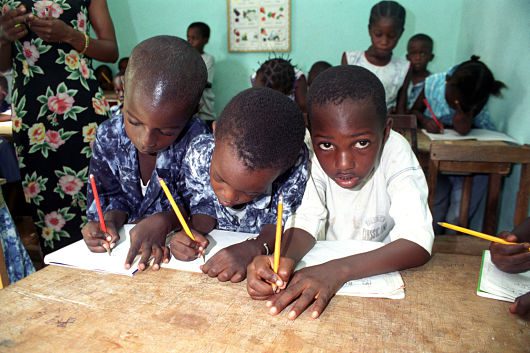
Since the 1980s, Tunisia has experienced success in increasing its human development index score through investments in education and improving the quality of life. However, there are challenges to providing quality education in Tunisia due to unorthodox practices, such as private tutoring practiced by educators.

Here are five facts about education in Tunisia:

1. Tunisia ranks ninth in the world in private tutoring and 70 percent of students participate in tutoring services. About 54 percent of these students received private tutoring from their own teachers. Many of these private lessons include parts of the curriculum that are only available through payment.

2. In order to combat corruption in the education system, Tunisia has an external integrity analysis of education. This allows the country to take appropriate actions to reduce corruption. Recommendations to Tunisia’s government include implementing a new code of conduct for teachers and reforming the admission process for universities.

3. Tunisia ranks 69th in the world in access to basic knowledge. Basic knowledge includes literacy, primary school enrollment, secondary school enrollment and gender parity in secondary school enrollment.

4. About 82 percent of people over the age of 15 are considered to be literate, which ranks Tunisia 93rd in the world in literacy. In 2008, the World Bank reported that 96.79 percent of people between the ages of 15 and 24 were literate, which provides a strong foundation of hope for the future of literacy in Tunisia.

5. The mean years of schooling in Tunisia have increased 4.5 years since 1980 and Tunisia remains one of the top countries in Africa for access to information. Around 43.8 percent of the population has access to the Internet, which contributes to a better education for students.

Education in Tunisia is showing remarkable progress in enrollment numbers for higher education and access to primary education. It will remain important in Tunisia to engage students and their parents to ensure educational reform is successful.

– Donald Gering

Sources: Open Society Foundation, Social Progress Imperative, Trading Economics, UN, UNDP
Photo: Tunisient Tunisia

August 19, 2015
https://borgenproject.org/wp-content/uploads/borgen-project-logo.svg 0 0 Borgen Project https://borgenproject.org/wp-content/uploads/borgen-project-logo.svg Borgen Project2015-08-19 01:30:572024-06-11 02:48:13Five Facts About Education in Tunisia
Food & Hunger, Global Poverty, Hunger, Volunteer

Golden Temple in India Feeds 100,000 Per Day

Golden Temple in India Feeds 100,000 People Per Day
Every year, thousands of tourists line up to see the Taj Mahal in India, which is the most popular tourist destination in the country. In Amritsar, India, a Golden Temple serves 100,000 meals to the hungry every day, which is more people than the Taj Mahal attracts in a day.

The Sikhs believe the langar is a symbol of equality and not just a place for people to come eat for free. The kitchen needs an extensive number of ingredients each day, including 12,000 kilos of flour and 13,000 kilos of lentils. Most of the food is paid for up to two years in advance through donations.

At the langar, everyone gets a free hot meal regardless of their socioeconomic status or their religion. There are 450 people running the kitchen with the help of hundreds of volunteers. Over 300,000 plates, spoons and bowls are washed each day.

“There are only three things in our religion,” says a Sikh volunteer from California. “Chant the name of God, sing religious hymns and volunteer. I work as long as my legs allow me to stand.”

About 15 percent of the people in India are undernourished and 194 million people are hungry. This means a quarter of the undernourished people in the world belong to India. Also, India’s population is one of the fastest-growing populations in the world; it will one day become the most populous country.

More than 3,000 children in India die every day from illnesses related to poor nutrition. Hunger in India remains an alarming issue due to rising food prices and available agricultural land. While food grain production is increasing, it hasn’t been sufficient enough to feed the entire population.

Volunteering goes beyond the Golden Temple: donations from around the world help reduce hunger for thousands of people in India. Akshaya Patra, an NGO in India, feeds 1.4 million schoolchildren every day.

India hosts a large number of mega kitchens that feed people all over the country. Despite the rapidly growing population, the percentage of people who are undernourished and hungry is declining.

– Donald Gering

Sources: Al Jazeera, Good News Network, India Food Banking, India Times, Social Progress Imperative, UNDP, WFP
Photo: SkitHub

August 19, 2015
https://borgenproject.org/wp-content/uploads/borgen-project-logo.svg 0 0 Borgen Project https://borgenproject.org/wp-content/uploads/borgen-project-logo.svg Borgen Project2015-08-19 01:30:442024-05-27 09:27:31Golden Temple in India Feeds 100,000 Per Day
Economy, Global Poverty

China’s Central Bank: RRRs and Rural Villages

china_bank
With official approval from the State Council, China’s central bank decided to cut reserve requirement ratios and benchmark interest rates for the third time in nearly five months in July. These cuts will specifically affect commercial banks that serve agricultural and rural areas, as well as provide loans to small businesses. The reserve requirement ratio (sometimes called the deposit-reserve ratio, or the RRR) is a regulation from the central bank which sets a minimum ratio (or fraction) of customer deposits that banks must hold in reserves (as currency, or note) within the bank. A decrease in RRR allows banks to more easily lend money to the institutions it supports, as a smaller amount of physical cash is required to finance loans.

Adjusting the RRR is common practice in China and is often used as a tool of domestic monetary policy. The deposit-reserve ratio has been altered several times in recent years and this is, in fact, the fourth round of interest cuts since 2014. While central banks in many nations refuse to make similar types of cuts in light of liquidity concerns, China has in the past shown leadership in this type of aggressive monetary policy. Such a policy is intended to allow for a positive credit flow towards rural and poverty-stricken areas.

Despite China’s rapid rise in recent years, growth has lately slowed—representing a transition from an economy characteristic of a rapidly-emerging nation, to a growth rate that is less fast-paced, but more sustainable. This new round of cuts reveals a strategy by China to restructure its borrowing mechanisms, as well as boost and stabilize its economy. Part of this strategy involves offering competitive advantages and lending options to small, independent businesses and agricultural enterprises.

This change, a lowering of the deposit-reserve ratio by 50 basis points (bps) for banks lending to rural, agricultural areas and to small businesses is intended to encourage financial institutions to invest in farmers, micro-businesses and rural development in many poverty-stricken areas of China. China explained its most recent round of cuts in the deposit-reserve ratios and benchmark interest rates by citing plans to “stabilize economic growth, upgrade structure and lower financing costs in society,” and describes the cuts as “conducive for financial institutions to support mass entrepreneurship and innovation.”

The new measure allows institutions to more easily lend money to small businesses in rural China and will provide more credit influx towards these small (but crucial) enterprises, which make up an important part of China’s economy. The cuts not only lower the costs of financing small enterprises but lower loan rates. This allows China’s financial institutions to encourage innovation and entrepreneurship amongst the least developed areas of society.

– Melissa Pavlik

Sources: CCTV, The New York Times, The People’s Republic of China
Photo: China.org.cn

August 18, 2015
https://borgenproject.org/wp-content/uploads/borgen-project-logo.svg 0 0 Borgen Project https://borgenproject.org/wp-content/uploads/borgen-project-logo.svg Borgen Project2015-08-18 10:39:252020-04-03 14:02:53China’s Central Bank: RRRs and Rural Villages
Global Poverty

World Bank Approves Millions for Ghana’s Gas Project

World_Bank
Ghana’s Sankofa Gas Project will soon be getting help from the World Bank in the sum of $700 million. It is the hope that with such an infusion of funds, Ghana will be able to address its serious energy needs through development and affordable domestic natural gas production.

The Republic of Ghana is a small African sovereign nation situated off the coast of the Atlantic Ocean and in the Gulf of Guinea. With a population of approximately 25 million, it has enjoyed a growing economy and is anticipated to be the first African country to become developed between 2020 and 2029.

“Ghana Vision 2020,” as their economic plan is called, also projects it to be a newly industrialized country between 2030 and 2039. However, in recent years, despite its energy-rich natural resources, the nation has suffered macroeconomic shocks partly due to challenges being faced by the country’s power sector.

Ghana is believed to have between 5 billion barrels and 7 billion barrels of petroleum in reserves, which is the fifth-largest in Africa and the 21st to 25th largest proven reserves in the world. It also has up to 1.7×1,011 cubic meters (6×1,012 cubic feet) of natural gas in reserves, which is the sixth-largest in Africa and the 49th largest natural gas proven reserves in the world.

Yet, public resources have been significantly drained in recent years. The government has spent millions in fuel subsidies as water shortages for hydropower, erratic gas supplies from external sources and delays in the development of domestic gas resources and new power plants have led to frequent power outages mostly affecting the poor. The new project is meant to help offset these issues with the development of the vast natural energy resources Ghana has.

Recently, the World Bank’s Board of Directors approved a unique combination of two guarantees for the Sankofa Gas Project—one from the International Development Association (IDA) and another from the International Bank for Reconstruction and Development (IBRD).

The IDA payment guarantee of $500 million will support timely payments for gas purchases by Ghana National Petroleum Corporation and an IBRD Enclave Loan guarantee of $200 million will enable the project to secure financing from its private sponsors.

Together, the guarantees are expected to mobilize $7.9 billion in new private investment for offshore natural gas, representing the biggest foreign direct investment in Ghana’s history.

The Sankofa Gas Project and its exploration and commercialization of the gas, located 60 kilometers (37.37 miles) offshore will fuel up to 1,000 megawatts of clean power generation, replacing polluting and expensive oil-burning electricity.

The Sankofa field is expected to begin production in 2018, and, once operational, Ghana will be able to reduce its oil imports by up to 12 million barrels a year and cut carbon emissions by 1.6 million metric tons of carbon dioxide annually.

The energy project will be crucial in securing Ghana’s natural gas resources and a more affordable reliable power supply. It will also be essential for economic development and a boost in the quality of life for Ghanaians and the rest of Sub-Saharan Africa.

– Jason Zimmerman

Sources: The World Bank, Bloomberg, Graphic
Photo: WAdr

August 18, 2015
https://borgenproject.org/wp-content/uploads/borgen-project-logo.svg 0 0 Borgen Project https://borgenproject.org/wp-content/uploads/borgen-project-logo.svg Borgen Project2015-08-18 08:24:192020-04-03 14:13:42World Bank Approves Millions for Ghana’s Gas Project
Global Poverty, Politics and Political Attention

Global Poverty Ignored at GOP Debate

G.O.P._debate

While the potential Republican presidential candidates wasted no time discussing illegal immigration and the Clinton Administration at this Thursday’s GOP debate, one topic was noticeably absent from the table: global poverty.

According to the U.S. Census Bureau, in the United States alone there are around six million more people living below the poverty line than there were in 2008. About 45 million Americans are registered as poor—around 15 percent of the country’s total population.

On a more global scale, according to UNICEF, 22,000 children die worldwide every day due to poverty-related causes. In 2014 alone, 98,000 died in India due to a lack of sanitation, clean drinking water and nutrition. In 2014, over 82 million people in China lived on less than $1 a day.

Still, even in the face of such pressing issues, the GOP candidates chose to spend their allotted speaking time by further alienating women, immigrants and the poor. According to The Huffington Post, the words “immigration” and “illegal” were spoken around 40 times during the debate, while “poverty” and “poor” chalked up only three and four mentions, respectively.

Presidential campaign debates should be a platform for discussing the country and the world’s most prominent issues. If this GOP debate was any indication, the current Republican Party presidential candidates care little about the world’s poor.

– Alexander Jones

Sources: Deutsch, McCoy, Redden
Photo: Flickr

August 17, 2015
https://borgenproject.org/wp-content/uploads/borgen-project-logo.svg 0 0 Borgen Project https://borgenproject.org/wp-content/uploads/borgen-project-logo.svg Borgen Project2015-08-17 13:44:302024-12-13 18:04:43Global Poverty Ignored at GOP Debate
Developing Countries, Global Health, Global Poverty

World Bank: Public in Favor of Global Health Initiatives

world bankA new study from the World Bank shows a growing emphasis on global health concerns among the public in developed countries.

The study asked respondents in France, Germany, Japan, the United States and the United Kingdom a series of questions about global issues. A total of 4,000 interviews were conducted, including some that focused on members of the public with university degrees who follow global news closely.

The study reached three important conclusions.

First, many people were concerned about global health and outbreaks of infectious diseases. This is largely due to the outbreak of Ebola, which made headlines around the world in previous months.

In total, 72 percent of those polled followed Ebola news closely over the past year. Among those respondents who are college-educated and who follow global news closely, 85 percent followed Ebola news closely.

Many respondents (31 percent) ranked global health as one of their top three important concerns, just behind terrorism (60 percent) and global warming (40 percent).

Respondents were also concerned that their country was not ready for the next global health outbreak. According to 40 percent of responses, the global community will face an epidemic within the next ten years. Those living in the United States, the United Kingdom and France were most concerned about global infectious disease preparedness.

Finally, and perhaps most importantly, respondents in the survey agreed that it would be of great benefit to increase funding for global health measures in the developing world.

Doing so, most believed, would protect their own countries from the spread of infectious diseases originating abroad. Many felt this would be cost-effective and were supportive of doctors and nurses from their own countries going abroad to help.

The results shed light on changes in public perception of global health following the Ebola outbreak. The anxiety stemming from that event has launched global health into the forefront of international issues, alongside terrorism and global warming.

There is hope that this increased awareness might result in greater levels of funding for preventive measures.

– Kevin McLaughlin

Sources: Devex, Newsweek, World Bank

Sources: Pixabay

August 16, 2015
https://borgenproject.org/wp-content/uploads/borgen-project-logo.svg 0 0 Borgen Project https://borgenproject.org/wp-content/uploads/borgen-project-logo.svg Borgen Project2015-08-16 01:30:552024-12-13 18:04:47World Bank: Public in Favor of Global Health Initiatives
Global Poverty, Health

New Efforts to End TB

New Efforts to End TB
Tuberculosis (TB) is a disease that is largely associated with countries’ health care systems and with other factors relating to health such as nutrition, sanitation and housing. Therefore, it is crucial to help combat TB in developing countries, especially where the disease continues to be a problem.

In 2014, the World Health Assembly approved the End TB Strategy, which aims to end the epidemic of Tuberculosis by 2035. Because of this, the Stop TB Partnership Task Force is developing a plan to make significant progress toward the End TB Strategy goal.

Additionally, Ministers of Health from Brazil, Russia, India, China and South Africa (BRICS) developed a strategy to help end Tuberculosis in their countries. The Ministers established a plan that would provide universal access to medicines for all people with Tuberculosis in BRICS countries, as well as low or middle-income countries. Also, they developed a 90-90-90 goal. In BRICS countries, 90 percent of people should be screened for Tuberculosis, 90 percent should be diagnosed and started on treatment and 90 percent of treatments should be successful. Scientific research on things like drug-resistant strains of Tuberculosis and service delivery of TB were also agreed upon by the Ministers. Given that 50 percent of all TB cases and about 60 percent of MDR-TB cases occur in BRICS countries, these efforts could make a large impact.

There are also two new drugs that can be used to treat Tuberculosis: bedaquiline and delamanid. These drugs can help fight TB strains that are resistant to other antibiotics. The United States Agency for International Development (USAID) and the Johnson & Johnson affiliate, Janssen Therapeutics, will provide bedaquiline to patients for free in more than 100 low and middle-income countries where people are suffering from strains of Tuberculosis that are resistant to two or more antibiotics.

Tuberculosis is still a problem in developing countries. There are 24,000 new cases and 4,000 deaths from the disease every day. Recently, however, there have been many new efforts that aim to end TB. If we continue to try and combat Tuberculosis, the tides will change in the war against this disease.

– Ella Cady

Sources: Impatient Optimists, Stop TB, WHO
Photo: Stop TB

August 16, 2015
https://borgenproject.org/wp-content/uploads/borgen-project-logo.svg 0 0 Borgen Project https://borgenproject.org/wp-content/uploads/borgen-project-logo.svg Borgen Project2015-08-16 01:30:482024-05-27 09:26:37New Efforts to End TB
Global Poverty, Technology, Water

Clean Drinking Water in Kenya

Clean_Drinking_Water
Water and sanitation. Proper access to both is an issue that bedevils developing countries all over the world, and Kenya is no different. A new water-dispensing service is trying to change that.

Water has always been a huge issue in development work. Its importance is paramount to life itself – without water, humans cannot survive. While millions of people in the developing world do have access to water, oftentimes it is not safe for drinking. This causes diseases to spread and death to follow.

The Millennium Development Goals (MDGs) set out targets for clean drinking water. Goal 7, Target 7.C’s aim was to “halve, by 2015, the proportion of the population without sustainable access to safe drinking water and basic sanitation.” This goal was met five years ahead of schedule – between 1990 and 2012, 2.3 billion more people gained access to safe drinking water. However, some have claimed that Target 7.C set the bar too low in terms of achievement.

A major issue connected to clean drinking water is access to proper sanitation for all. While the clean drinking water MDG has been met, sanitation has not done as well. One billion people still openly defecate all around the world, for lack of a better option. This then affects drinking water – it is a vicious cycle.

Part of the problem with supplying clean drinking water to the world’s population is that it is growing, making the task even harder. The population of Nairobi in 1963 was 300,000. Now, it is home to 4.2 million, and this figure is expected to grow to 14 million by 2050. If the world cannot supply its current population with clean drinking water, then how will it possibly keep up with the globe’s rapidly expanding populace?

The answer might begin with four new water dispensers that have been installed in Nairobi’s slums, which might help to change Kenya’s water infrastructure. They operate like vending machines – put money in, and water is dispensed out. This has reduced both the cost of water for slum residents as well as the distance needed to travel to acquire it. The water is purer and cleaner than other options – before the machines were installed, many residents got their water from sellers that dragged jerry cans on carts through the streets. Without water pipes in the slums, this was the only option.

The water-dispensing machines present a cheaper and cleaner option than the street vendors. It is a win-win situation for all involved – the government, who has put the machines in place, makes money on the water, and the citizens pay cheaper prices. Before, people would venture to neighborhoods with water pipes and break them to siphon off water, essentially stealing water from the government.

Now, prices are six times cheaper than they were before. Pre-dispensing machine, water prices hovered around three shillings, the equivalent of around three pennies in the U.S. Now, prices have been reduced to half a shilling. This might not seem like much, but to some that are unemployed or only make US$2 a day, the reduction is huge.

The payment system is done through mobile payments or water smart cards that residents can load money on. The machines are also operated by local residents who earn up to 40 percent of the profits from the machines as an incentive to keep them running and prevent vandalism. If Nairobi can continue to set an example for what these machines can do, they might go much further than a few slums in Kenya’s capitol.

– Gregory Baker

Sources: The Guardian, All Africa, UN
Photo: Stratfor

August 16, 2015
https://borgenproject.org/wp-content/uploads/borgen-project-logo.svg 0 0 Borgen Project https://borgenproject.org/wp-content/uploads/borgen-project-logo.svg Borgen Project2015-08-16 01:30:432020-07-02 10:46:05Clean Drinking Water in Kenya
Global Poverty

“Smart Tractors” Help Small Farmers Grow Profits

Smart_Tractors
Nigeria is home to 35 million small farmers, 80 percent of whom hire laborers to help cultivate their fields. However, a shortage of labor combined with the expense of maintaining their land leads to vast under-cultivation, late planting and lost profits.

Access to better farming equipment would combat the labor shortages, but Nigerian farmers by and large cannot afford individual tractor ownership. The country lags an estimated 750,000 tractors behind the global average of tractors per 100 square kilometers of farmland.

A new company, Hello Tractor, believes they have a solution. Introducing a “smart tractor” designed for versatile use on small farms, Hello Tractor offers their product for $3,500, about the cost of cultivating 16 small farms in Nigeria.

Smart tractors are networked to the company’s cloud software, which connects tractor owners with farmers in need of equipment. Much like ride-sharing organization Uber, Hello Tractor’s sharing economy is designed to supply farmers with a low-cost, efficient alternative to time-consuming traditional labor.

“It takes about 40 days of manual labor to prepare the land,” said Jehiel Oliver, Hello Tractor founder. “Our tractors do it in eight hours.”

As with Uber, the Hello Tractor system operates by way of mobile technology, as the company clearly outlines: “A farmer simply sends a text requesting tractor service and our powerful software pairs that request with the nearest Smart Tractor owner in the market.”

Tractors then arrive within days of the request and enable farmers to complete the required labor 40 times more quickly than they would have been able to without tractor service. Farmers also use mobile banking to pay smart tractor owners for services, approximately one third of the cost of hiring manual laborers.

Hello Tractor asserts their smart tractors will enable higher land utilization as farmers more efficiently cultivate land, leading to a 25 percent increase in income and improved food security for Nigerian communities. The company believes that by its second year, use of smart tractors will enable 27,000 farmers to plant and harvest crops in a more timely and cost-effective manner.

They also estimate that 715 smart tractor owners and 2,500 service jobs will be created by the second year, offering those jobholders increased earning potential.

Hello Tractor also hopes to establish a lasting, sustainable system in Nigeria and other sub-Saharan countries. With farming resources often supplied by organizations dependent on grants and public funds, in Nigeria such equipment is limited in scale and impact. Oliver’s company hopes to promote economic growth from return on smart tractor investments and increased crop yields that will propel the nation toward greater self-sufficiency.

Based on Hello Tractor’s work, Oliver has been selected as a 2015 Echoing Green Fellow. Over the course of the next two years, fellows will receive funding ranging up to $90,000 to advance the implementation of their visions. Fellows also have the opportunity to participate in leadership development events and benefit from mentorship by top business professionals.

Oliver spoke fervently about Hello Tractor’s work: “We utilize technology to meet real needs for people that have been highly marginalized. These are women farmers who are living on, in some instances, two dollars a day or less. They have families.”

“For us to be able to bring technology to this population, to improve livelihoods, is powerful,” he continued. “And in a sustainable way. We’re really excited about it. We’re passionate about the cause.”

– Emma-Claire LaSaine

Sources: Hello Tractor, USAID, Echoing Green, ChicagoInno
Photo: ChicagoInno

August 16, 2015
https://borgenproject.org/wp-content/uploads/borgen-project-logo.svg 0 0 Borgen Project https://borgenproject.org/wp-content/uploads/borgen-project-logo.svg Borgen Project2015-08-16 01:30:432024-06-05 03:46:40“Smart Tractors” Help Small Farmers Grow Profits
Page 1866 of 2163«‹18641865186618671868›»

Get Smarter

  • Global Poverty 101
  • Global Poverty… The Good News
  • Global Poverty & U.S. Jobs
  • Global Poverty and National Security
  • Innovative Solutions to Poverty
  • Global Poverty & Aid FAQ’s
Search Search

Take Action

  • Call Congress
  • Email Congress
  • Donate
  • 30 Ways to Help
  • Volunteer Ops
  • Internships
  • Courses & Certificates
  • The Podcast
Borgen Project

“The Borgen Project is an incredible nonprofit organization that is addressing poverty and hunger and working towards ending them.”

-The Huffington Post

Inside The Borgen Project

  • Contact
  • About
  • Financials
  • President
  • Board of Directors
  • Board of Advisors

International Links

  • UK Email Parliament
  • UK Donate
  • Canada Email Parliament

Get Smarter

  • Global Poverty 101
  • Global Poverty… The Good News
  • Global Poverty & U.S. Jobs
  • Global Poverty and National Security
  • Innovative Solutions to Poverty
  • Global Poverty & Aid FAQ’s

Ways to Help

  • Call Congress
  • Email Congress
  • Donate
  • 30 Ways to Help
  • Volunteer Ops
  • Internships
  • Courses & Certificates
  • The Podcast
Scroll to top Scroll to top Scroll to top