• Link to X
  • Link to Facebook
  • Link to Instagram
  • Link to TikTok
  • Link to Youtube
  • About
    • About Us
      • President
      • Board of Directors
      • Board of Advisors
      • Financials
      • Our Methodology
      • Success Tracker
      • Contact
  • Act Now
    • 30 Ways to Help
      • Email Congress
      • Call Congress
      • Volunteer
      • Courses & Certificates
      • Be a Donor
    • Internships
      • In-Office Internships
      • Remote Internships
    • Legislation
      • Politics 101
  • The Blog
  • The Podcast
  • Magazine
  • Donate
  • Click to open the search input field Click to open the search input field Search
  • Menu Menu

Archive for category: Food & Hunger

Information and stories on food.

Children, Food & Hunger, Global Poverty, Hunger

Hunger in Zimbabwe: Overcoming Child Malnutrition

Hunger in Zimbabwe

Thousands of children are facing starvation and hunger in Zimbabwe due to the worst drought in two decades. According to the World Food Programme, nearly four million Zimbabweans are struggling to meet their basic food needs.

Zimbabwe is considered a food-deficit country, ranked 156 out of 187 on the Global Hunger Index. Although food insecurity affects people of all ages, it is even more detrimental to children.

Studies show that proper nutrition is critical to children’s physical and emotional development. Children struggling with hunger are more likely to repeat a grade in primary school, experience impairments in language and motor skills, or have social and behavioral problems.

In Zimbabwe, only 17.3% of children between the ages of two and six receive the recommended minimum diet for adequate nutrition. A child suffering from malnutrition is more likely to contract diseases, such as HIV, or suffer from stunting. Currently, one in every three Zimbabwean children suffers from chronic malnutrition or stunting. Stunting alone contributes to more than 12,000 deaths per year.

Hunger in Zimbabwe has become a major issue, particularly for low-income families and their children. Struggling families are often pressured to accept a dowry for their young daughters. This provides food for the rest of the family, as well as a potentially more food-secure situation for their daughter.

Approximately one out of every three girls in Zimbabwe are married before their 18th birthday. Girls living in the poorest 20% of households were more than four times as likely to marry before the age of 18 than those living in the wealthiest 20% of households.

Both poverty and hunger in Zimbabwe have resulted in an unsafe environment for children.

In order to combat hunger in Zimbabwe, the World Food Programme has implemented the Protracted Relief and Recovery Operation (PRRO). The three primary focus areas of the operation are disaster response, food assistance and nutrition.

The disaster response and risk reduction program are designed to support food-insecure households affected by severe drought during the growing season.

Food Assistance for Assets provides cash and in-kind transfers, along with activities that promote self-reliance. It empowers vulnerable communities to move away from a dependence on food assistance.

The health and nutrition promotion is responsible for the Moderately Acutely Malnourished treatment, which assists pregnant and nursing women and children under the age of five. A stunting prevention program was also established in the same district.

With the help of the World Food Programme and other international organizations, hunger in Zimbabwe is decreasing and children are able to live healthier and happier lives.

– Kristyn Rohrer

Photo: Flickr

August 29, 2016
https://borgenproject.org/wp-content/uploads/borgen-project-logo.svg 0 0 Borgen Project https://borgenproject.org/wp-content/uploads/borgen-project-logo.svg Borgen Project2016-08-29 01:30:432024-06-07 05:07:37Hunger in Zimbabwe: Overcoming Child Malnutrition
Children, Education, Food & Hunger, Global Poverty

Gov’t Supports School Programs to Reduce Hunger in Jamaica

Hunger in Jamaica

Hunger in Jamaica has improved tremendously among primary and early childhood students with the various programs and strategies implemented by The Program of Advancement through Health and Education (PATH) and the School Feeding Program (SFP).

The Program of Advancement through Health and Education (PATH) enabled by the Government of Jamaica (GOF) continues to play an integral role in providing free lunches for primary school students with the aim of improving the nutrition of vulnerable children and eradicating hunger in Jamaica with Early Childhood students being the target group.

The Hon. Rev Ronald Thwaites in his presentation of the 2015-2016 sectoral debate revealed the aim of the Ministry of Education to expand the breakfast programs in schools initiated to provide free breakfast for 138,000 students inclusive of PATH beneficiaries.

The Ministry assigned J$2.2 billion to this program. The SFP in partnership with the Nutrition Products Limited (NPL) breakfast solutions ensures that all meals are made from local agricultural products.

Board Chairman of Nutrition Products Limited James E.D. Rawle gave a synopsis of the various products offered in the NPL Annual Report, “Segments of the Early Childhood Cohort, inclusive of hot solution (porridge), sandwiches, muffins, breads, cakes and an improved juice drink, made utilizing locally produced fruit puree”.

The NPL has provided breakfast solutions to 12,000 designated children located in Kingston & St Andrew, St Thomas, St Catherine and Clarendon each day. This initiative has helped to reduce hunger in Jamaica among students in Primary level institutions.

The SFP provides additional Nutribun snacks for these students in line with the strategy Ministry of Education to spend approximately 20 percent of the school feeding budget of J$4.6 billion on locally grown products. The Ministry intends to achieve 50 percent in three years.

The Hon. Rev Ronald Thwaites revealed that 40 percent of children lack proper nutrition and another 30 percent experience hunger on a daily basis.

“Providing nutrition in schools is adding value to the lives of our young children and the brightening of their prospects,” said Thwaites. This step towards improving the nutrition of Early Childhood students via proper victuals is a resourceful means by the GOF to improve hunger In Jamaica.

– Shanique Wright

Photo: Flickr

August 25, 2016
https://borgenproject.org/wp-content/uploads/borgen-project-logo.svg 0 0 Borgen Project https://borgenproject.org/wp-content/uploads/borgen-project-logo.svg Borgen Project2016-08-25 12:27:382024-05-27 23:52:59Gov’t Supports School Programs to Reduce Hunger in Jamaica
Activism, Education, Food & Hunger, Global Poverty

4 Influential Humanitarian Athletes

Humanitarian Athletes
Athletes spend numerous hours during the week training and preparing for their next matches, games and adventures. Through their unmatched hard work, they are able to capture titles while simultaneously building a career and global fame.

Going above and beyond, many athletes use their popular status and successful careers to improve the world around them. These four humanitarian athletes utilize their fame and the small amount of free time they have to contribute to global charities.

  1. Cristiano Ronaldo (Professional Soccer Forward)
    Ronaldo is known as one of the most generous athletes in the world. He often donates his bonus checks and portions of his salary to various charities and countries in need of reconstruction and help. For example, he donates millions of dollars to foundations like UNICEF and “World Vision,” which aim to enhance the lives of children in impoverished countries through the enhancement of health and education. When he’s not sweating on the field, he also takes time to physically participate in fundraising campaigns.
  2. Serena Williams (Professional Tennis Player)
    When Williams isn’t grinding on the court winning grand slams, she’s looking to improve the status of the world’s poor. She was named a UNICEF Goodwill Ambassador in 2011 because of her commitment to helping the youth around the globe. In 2010, Williams announced the New Schools for Asia Campaign under UNICEF, which looks to provide children in the Asia-Pacific area with schooling. Around the world, there are 67 million people who are not enrolled in school. Of those 67 million people, 26 million live in the Asia-Pacific area. UNICEF’s executive director talked about Serena, explaining that she “isn’t just a tennis champion, she is a champion for children—and a passionate advocate for providing every child with a quality education.”
  3. David Beckham (Professional Soccer Midfielder)
    Beckham was also appointed a UNICEF Goodwill Ambassador. His focus under UNICEF is the Unite Against AIDS campaign. After visiting Sierra Leone in 2007, he said, “In Sierra Leone, one in four children dies before reaching their fifth birthday – it’s shocking and tragic especially when the solutions are simple – things like vaccinations against measles or using a mosquito net to reduce the chance of getting malaria.” Beckham hopes to draw attention to the safety and health of children through his global presence.
  4. Jessica Watson (Sailor)
    Watson is known for circumnavigating the globe solo at the age of 16. Now at the age of 23, she continues to the explore the world as a representative for the World Food Program. This humanitarian athlete focuses her time and energy on Laos, saying, “At age 16 I achieved my dream. I want the school children in Laos to be able to achieve their dream. And stopping hunger is the first step in that process.”

Watson works with the School Meals program, making sure that kids in school are able to eat a nutritious meal every day. Global hunger affects 1 out of 7 people in the world. Jessica Watson, along with the World Food Program, aims to help 80 million people in 80 different countries combat lack of food.

These four humanitarian athletes have been able to use their global status to make a positive difference. By representing various foundations, they are not only able to raise awareness of global crises to fans around the world, but their use of fame also makes fighting global poverty a little easier.

– Casey Marx

Photo: Flickr

August 24, 2016
https://borgenproject.org/wp-content/uploads/borgen-project-logo.svg 0 0 Borgen Project https://borgenproject.org/wp-content/uploads/borgen-project-logo.svg Borgen Project2016-08-24 01:30:492024-12-13 17:54:504 Influential Humanitarian Athletes
Food & Hunger, Food Aid, Global Poverty

Hunger in Kenya: Organizations that are Helping

Hunger in KenyaHunger in Kenya is a prominent issue, with more than 600,000 Kenyans in urgent need of food aid after the region was hit by a drought, which started in February when most farmers were preparing for planting season. The weather has dried up waterholes and rivers leading to crop failure.
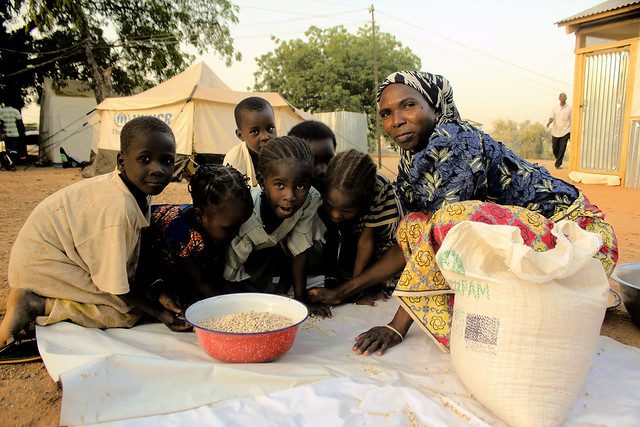
The Kenyan government has promised to release 50 million Kenya shillings, or $5 million, to be used to purchase food aid, but the government has yet to release the funds. West Pokot deputy governor Titus Lotee said, “We have started distributing food but the 4,000 bags of maize is not enough,” and called on humanitarian organizations to help fight the hunger in Kenya.

Action Against Hunger has implemented a strategy for 2015–2017 in Kenya in order to address two main pillars: ending the drought emergency and addressing all forms of malnutrition.

Action Against Hunger has strengthened its approach to addressing health problems in Kenya by implementing programs in nutrition, food security, water, sanitation and hygiene. Thus far, 275,552 people have received nutritional support and 25,060 people have accessed safe water and sanitation.

Another charity, Feed the Children, provides access to food, water and schooling in four of Kenya’s counties. The organization focuses on the most vulnerable: malnourished children under the age of five, pregnant and lactating women, and people living with HIV/AIDS.

Feed the Children has built water pans and rainwater harvesting systems, which can hold water for up to seven months after the rain stops for the year. The Australian government assisted Feed the Children in building 35 latrines in six schools and supplied 8,000-cubic-meter water tanks to seven schools.

The Feed Hungry Children in Kenya project is providing health clinics, where children are weighed and measured and given food supplements. Poor families are given a food ration of beans and maize each month.

In addition to the two organizations, the World Food Programme works with Feed the Children to serve regular meals to children in 170 schools throughout Kenya in hopes of mitigating the crisis.

These humanitarian organizations will work to tackle starvation and hunger in Kenya until the country’s food availability problem improves.

– Jackie Venuti

Photo: Flickr

August 21, 2016
https://borgenproject.org/wp-content/uploads/borgen-project-logo.svg 0 0 Borgen Project https://borgenproject.org/wp-content/uploads/borgen-project-logo.svg Borgen Project2016-08-21 01:30:332024-12-13 17:54:45Hunger in Kenya: Organizations that are Helping
Aid, Food & Hunger, Food Aid

The Dangote Foundation Donates Food in Abuja, Nigeria

Dangote FoundationThe Dangote Foundation delivered food items worth millions of Nigerian naira to thousands of vulnerable internally displaced persons (IDPs) in Abuja, the Federal Capital Territory of Nigeria.

During a visit to the IDP camps of Abuja, Dangote Foundation chairman Alhaji Aliko Dangote was saddened by what he saw and pledged to alleviate the suffering of thousands of IDPs. The Dangote Foundation is a branch of the Dangote Group. The foundation provides charitable funds to a variety of causes in Nigeria and other African states.

Abuja currently has 13,481 internally displaced persons according to the latest assessment by the International Organization for Migration’s Displacement Tracking Matrix. The Dangote Foundation donated food items to the IDPs during Ramadan as a philanthropic action geared toward alleviating poverty in Nigeria.

The Federal Capital Territory (FCT) Minister Malam Muhammad Musa Bello directly received the donation and ensured that the IDPs would expressly benefit from the donations. These items included Dangote sugar, Dangote salt, Dangote Spaghetti, rice, Danvita and wheat meal.

The FCT Minister stated that the donation Abuja received was extremely generous and the country is grateful to the foundation. Moreover, the FCT Administration is committed to alleviating poverty and respects non-governmental organizations with a similar mission.

This donation has been one of many recent philanthropic actions by the Dangote Foundation in Nigeria. Within a span of five years, the foundation has donated N6.3 billion to various IDP camps in Nigeria. Currently, one US dollar equals 315.25 Nigerian Naira.

Previously, the Foundation made donations to Nigerian universities and women’s causes. They have also provided donations during ethnoreligious crises. In addition, the Dangote Foundation donated to the World Food Program to help Pakistan during massive flooding in 2010 and raised over N11billion for flood relief in Nigeria.

In coordination with the Gates Foundation; the Dangote Foundation, USAID and Nigerian governors joined together to secure political and financial resources to enhance immunization programs within Nigeria in order to keep the country polio-free.

The Dangote Foundation focuses on health, education, economic development and disaster relief through their commitment to decreasing the amount of people suffering or dying from poverty-related issues.  The Dangote Foundation’s donations work to rectify the lack of education for children, to create quality healthcare and support underprivileged adults by improving access to education and healthcare.

– Kimber Kraus

Photo: Flickr

August 20, 2016
https://borgenproject.org/wp-content/uploads/borgen-project-logo.svg 0 0 Borgen Project https://borgenproject.org/wp-content/uploads/borgen-project-logo.svg Borgen Project2016-08-20 01:30:092024-05-27 09:35:03The Dangote Foundation Donates Food in Abuja, Nigeria
Education, Food & Hunger, Women's Empowerment

3 Keys to Ending World Hunger Forever

World HungerThe plight of world hunger is nothing new. On average, one in eight individuals go hungry every day. Currently, about 795 million people suffer from chronic hunger.

This is especially critical in developing countries. There, food productivity and sustainability are just one amongst a plethora of other issues, including overpopulation, civil conflict and lack of education.

However, while the effects of hunger are not limited by race, religion or country, the answer to ending the world’s food shortage problem lies in many, perhaps unexpected places.

Women’s Empowerment

For instance, one such solution can be found in empowering women. Of the 600 million small farmers, herders and food providers in the world, half are women. However, this large fraction of food providers is hindered from producing adequate quotas due to cultural and gender boundaries.

Typically, women have less access to education, ownership of land or livestock. They also receive less credit than their male counterparts. As a result, half of the world’s food providers are unable or not producing nearly enough to sustain themselves, let alone the world’s population.

If these restrictions on female agriculturists decreased, however, according to the Food and Agriculture Organization of the United Nations (FAO) the number of hungry people in the world would drop 17%.

Education

Another solution to ending world hunger revolves around education. Countries in Africa and South America have fertile land, but with ignorant farmers, food production remains low. These uneducated agriculturists practice outdated farming techniques and in turn reap poor results.

But programs such as Food for Training projects focus on educating food providers in developing nations. They can dramatically improve food production levels and encourage long term self-sustainability at very little cost.

Moreover, school meal projects also reduce hunger amongst children, who most heavily feel the effects of food shortages. In turn, the free or reduced meals schools provide encourage families to send their children to school, which supports education.

Reducing Food Waste

Lastly, a crucial part of reducing and eventually ending world hunger lies in ending global food waste. If the world were to reduce its food waste, a third of the world’s entire food supply would be saved, which is enough to feed 3 billion people.

Ultimately, this would result in a food surplus that could sustain entire countries. However, food recycling projects and campaigns such as Feedback, which focuses on saving leftover produce and creating nutritious meals from marketable food scraps, help reduce hunger. This provides thousands of people around the world with free, nutritious meals.

World hunger has reduced significantly since the 1990s; however, it has since leveled in 2010. Strategies such as food waste reduction campaigns, education and discouraging gender inequality can make significant dents in the fight to end this battle.

– Jenna Salisbury

Photo: Pixabay

August 16, 2016
https://borgenproject.org/wp-content/uploads/borgen-project-logo.svg 0 0 Borgen Project https://borgenproject.org/wp-content/uploads/borgen-project-logo.svg Borgen Project2016-08-16 01:30:232024-12-13 17:54:393 Keys to Ending World Hunger Forever
Activism, Development, Food & Hunger, Global Poverty

10 World Hunger Facts from the UN World Food Programme

World hunger facts

Sixteen years ago, the world decided it was time to formally prioritize ending world hunger. The United Nations (U.N.) Millennium Development Goal One (MDG1) was to eradicate extreme poverty and hunger. MDG1, Target 1.C, was to “halve, between 1990 and 2015, the proportion of people who suffer from hunger.”

The U.N.’s target was largely met: the proportion of undernourished people in the world’s developing regions has fallen by almost half since 1990. But, there are still 795 million people hungry in the world and more than 90 million children under age five are underweight and malnourished. World hunger facts offer us insight into why this is still a problem in the world today.

According to the U.N. World Food Programme (WFP), there are two faces to world hunger and 10 crucial facts to understand. The two sides to world hunger are crises and chronic malnutrition. Emergencies such as wars and natural disasters “account for less than eight percent of hunger’s victims.”

Chronic hunger can continue with no end in sight with people living on less than the recommended 2,100 kilocalories daily intake of food. This chronic hunger accounts for mental disadvantages in adults, stunted growth in children and weakened immune systems.

10 World Hunger Facts from the U.N. World Food Programme

  1. Approximately one in nine or 795 million people worldwide do not receive enough food to lead a healthy, active life.
  2. Most of the world’s hungry live in developing countries: 12.9% of the inhabitants of these areas do not have enough food.
  3. Asia is the continent with the largest number of hungry people, making up two-thirds of the total number of malnourished peoples.
  4. Sub-Saharan Africa has one in four people undernourished; it is the region with the highest percentage of its population going hungry.
  5. Malnutrition causes 45% of the deaths of children under five. This accounts for 3.1 million deaths of children each year.
  6. In developing countries, one in six children is underweight.
  7. Stunting affects one in four of the world’s children and one in three children in developing countries.
  8. The number of malnourished could be reduced by 150 million if female farmers had the same access to resources as their male counterparts do.
  9. In the developing world, 66 million primary children attend classes hungry, 23 million of those in Africa.
  10.  WFP believes that the 66 million school-aged children could be fed with $3.2 billion per year.

Just as there are more than 10 world hunger facts, so too are there many organizations working to combat world hunger. One group that is helping to end world hunger is The World Bank. The group has been working with other international groups by “investing in agriculture, creating jobs, expanding social safety nets, expanding nutrition programs that target children under two years of age, universalizing education, promoting gender equality and protecting vulnerable countries during crises.”

– Rhonda Marrone

Photo: Flickr

August 14, 2016
https://borgenproject.org/wp-content/uploads/borgen-project-logo.svg 0 0 Borgen Project https://borgenproject.org/wp-content/uploads/borgen-project-logo.svg Borgen Project2016-08-14 01:30:212024-12-13 17:54:4910 World Hunger Facts from the UN World Food Programme
Food & Hunger, Global Poverty

Eliminating Hunger In The Philippines: More Than Just Food Aid

Hunger in the Philippines
Despite an increase in the rate of employment (by about 5 percent), poverty in the Philippines has seen relatively no improvement. The Philippine Statistics Authority (PSA) conducted research in order to guide policymakers in their efforts to alleviate hunger in the Philippines.

In 2015, 17.2 percent of the population lived under the poverty threshold.

Amado Parawan is the health and nutrition advisor for an organization called Save the Children. He recently urged Filipino presidential candidates to re-evaluate their methodologies to address hunger in the Philippines.

Parawan stated that feeding programs are really only a “band-aid solution” to solving the infection of hunger and malnutrition. In addition, he encouraged them to seek foreign aid and consult experts on globally accepted intervention policies.

His plea to candidates follows a recent initiative by Save the Children Philippines called the ‘Lahat Dapat’ campaign. This movement highlights the importance of healthcare in the prenatal and early stages of development for Filipino children.

Current foreign initiatives include the World Food Programme (WFP) of the U.N., which began their work in 1968. However, they had to reestablish their presence in 2006, after the government requested more aid in light of increasing armed conflict.

The program focuses on improving food insecurity and helping communities to build resilience in preparing for natural disasters. In addition, the program also emphasizes the importance of providing healthy meals for children in school.

Each school year, over 65,000 children in the areas of Lanao del Sur, Lanao del Norte and Maguindanao receive crucial nourishment school meals. Good nutrition then increases school retention rates, as well as the quality of the education children receive.

Additionally, Action Against Hunger works to eliminate hunger in the Philippines. Armed conflicts have displaced many Filipinos. One such area is Zamboanga, where efforts have been directed towards providing clean water, sanitation, and nutrition education.

The government of the Philippines is known for its $450-million conditional cash transfer program, Pantawid Pamilyang Pilipino Program. It also recently received a new financing package from the World Bank. This social safety net program helps to reduce the vulnerability of families to sudden economic difficulties. The money ensures that children receive ample nutrition and access to education. It also gives pregnant mothers access to regular health exams.

By assessing the methodologies that have been successful in other nations and modifying them to fit the Philippines’ unique needs, the partnership of the government and the international community established a successful food aid program.

The most important consideration when working to eliminate hunger in the Philippines is fostering independence. Humanitarian organizations and the governments involved will not only provide food, but they will also help families become self-sufficient.

If aid continues to be this sustainable and organizations continue to educate households about efficient and healthy lifestyles, Filipinos will develop their own economy and reduce hunger in the process.

– Veronica Ung-Kono

Photo: Rappler

August 12, 2016
https://borgenproject.org/wp-content/uploads/borgen-project-logo.svg 0 0 Borgen Project https://borgenproject.org/wp-content/uploads/borgen-project-logo.svg Borgen Project2016-08-12 06:01:452024-12-13 17:54:42Eliminating Hunger In The Philippines: More Than Just Food Aid
Food & Hunger, Global Poverty

CEO Fights to End Food Shortages in Venezuela

Food shortages in VenezuelaBeginning in 2014, oil prices around the world began to plummet. This sparked an extreme financial crisis in Venezuela, whose economy is based solely on its immense reserves of the fossil fuel. This evolving crisis has contributed to dire food shortages in Venezuela. The CEO of Empresas Polar, Lorenzo Mendoza, is working to aid fellow Venezuelans in need. Oil became a source of vast political influence in Venezuela once the industry became nationalized in 1975. The Washington Post reports that oil currently makes up about 95 percent of the region’s revenue from exports.

Oil Profits Plummet

In 2013, following the death of Hugo Chávez, former Vice President and current Head of the United Socialist Party of Venezuela Nicolas Maduro was elected president and promised to continue the policies of his predecessor. According to The Washington Post, Maduro is “discouraging private industry that could have diversified the nation’s economic base” and using revenues from PDVSA, the state oil company, to “pay for generous social welfare benefits that won votes.” This lack of diversification and unruly spending, combined with the harsh drop in oil prices, has left the economy and citizens of Venezuela in turmoil. The International Monetary Fund’s figures show that Venezuela “went from earning $80 billion from oil in 2013 to a projected $20-25 billion in 2016.” This discrepancy of billions of dollars has created food shortages in Venezuela, resulting in riots and violence. Numerous looters have been shot and killed, hundreds have been arrested and lines of hungry families continue to grow.

Uncooperative Government

Political and economic instability has allowed crime to prosper. According to the Los Angeles Times, “gangs on motorcycles have fought over the right to control and distribute food.” Instead of taking responsibility for the lack of revenue, mounting inflation and food shortages, President Maduro has shifted blame onto the U.S. government, as well as Mendoza. Mendoza’s business, a large-scale food processing and brewery corporation, is a unique entity within Venezuela’s socialist society. Empresas Polar is the largest privately owned enterprise in a country whose government controls a substantial portion of businesses.

President Maduro accused Mendoza of withholding goods and slowing production during the crisis. The Wall Street Journal reports that the government views Mendoza as “a traitor responsible for the scarcities.” Mendoza denies all accusations and believes that it is the government’s control of prices, lack of imports and halts in production forced by a lack of federal funds that is fueling the food shortages. In fact, Mendoza is actively fighting to end the overwhelming food shortages in Venezuela. The CEO is urging his government to cooperate with organizations that can offer aid.

Venezuela Refusing Help

In February, The Wall Street Journal reported that Mendoza contacted Harvard economics professor Ricardo Hausmann to speak of “Venezuela’s need for up to $60 billion of loans from the International Monetary Fund and World Bank to avoid economic meltdown.” This cry for help will most likely go unheard, as Venezuela’s government has denied foreign aid from most countries, especially the U.S., since the time of Hugo Chávez.

While President Obama and President Maduro did meet for a few moments at the Summit of the Americas in April, Maduro spent most of his time lambasting Obama for his sanctions, which are based on human rights violations by a handful of Venezuelan officials.

Moving Forward

In this time of crisis, Empresas Polar and its charismatic CEO Lorenzo Mendoza are bringing hope to Venezuela. Empresas Polar represents a bright future for Venezuelan business, as it is responsible for the employment of thousands, offers price-conscious products, a provides a profitable business plan and diversification of the Venezuelan market. Moreover, despite attacks on his character and livelihood made by the government, Mendoza will continue to fight for foreign aid to end the food shortages in Venezuela.

– Liam Travers

Photo: Business Insider

August 12, 2016
https://borgenproject.org/wp-content/uploads/borgen-project-logo.svg 0 0 Borgen Project https://borgenproject.org/wp-content/uploads/borgen-project-logo.svg Borgen Project2016-08-12 01:30:062024-05-27 09:34:07CEO Fights to End Food Shortages in Venezuela
Food & Hunger, Food Security, Global Poverty

How Quinoa Production Helps Alleviate Poverty in Peru

Popularity of Quinoa

Prior to quinoa’s surge in popularity, few Americans had heard of this South American grain. U.S. imports alone quadrupled between 2006 and 2010 as quinoa’s virtues of versatility and high protein content spread.

Negative Speculations

Unbeknownst to the public, quinoa production had a direct impact on the levels of poverty in Peru. So, soon after quinoa “took off,” a slew of inflammatory articles in 2013 reprimanded quinoa consumers for raising the demand and price of the nutritious food, which restricted access for poor Andean people.

Poverty in Peru and Bolivia affects over 50 percent of people in the Andean region. Many suffer from lack of education, food insecurity, poor health care and a life expectancy 20 years lower than people in Lima.

Due to conditions in this region, “foreign quinoa consumption is keeping locals from a staple grain” is a serious accusation. However, the popularity of this protein-rich food has provided many economic benefits for the area. A NPR study showed how living conditions drastically improved for people in the Andes during the boom in quinoa sales.

In 2013, the Guardian published an inflammatory article called, “Can Vegans Stomach the Unpalatable Truth About Quinoa?” claiming that fame has driven the prices so high that locals can no longer afford it. The argument seemed sound as poverty in Peru is a major issue. It seemed though, that the Guardian brought up a touchy subject–droves of articles then began cropping up both defending and debunking this argument.

Positive Effects

The good news is that quinoa prices are still within reach for Peruvians. A recent article from NPR explains two different studies focusing on the super grain: one found that the people in quinoa-growing regions, farmer or otherwise, experienced an economic flourishing that favored farmers and generally overcame any additional quinoa costs; the second study focused on quinoa consumption in the Puno region where 80 percent of Peruvian quinoa is grown.

The author of the second study, a Berkeley graduate student, discovered that people in the Puno region consumed a similar amount of the grain without cutting any valuable nutrients from their diets.

While quinoa is culturally important, it is not a staple crop like rice or maize. On average, only between 0.5 and 4 percent of an average Peruvian family’s budget is spent on quinoa–thus the extra cost is not debilitating. In fact, quite the opposite of debilitation occurred: domestic quinoa consumption tripled in 2013.

While the positive economic effects continue to boost the region, there are reasonable concerns about the sustainability or longevity of quinoa production. Demand has caused farmers to decrease the amount of quinoa varieties grown, as well as reduce llama farming which used to provide fertilizer.

Degradation of soil and biodiversity are also risks of extensive quinoa production. Unfortunately, quinoa’s popularity also attracts competitors, and as other countries began to grow the super grain and supply increases, Peruvian demand falls. Prices are sinking, which is great for frugal, health conscious shoppers but very concerning for Bolivian quinoa farmers.

Sustaining Success

While unclear how long benefits will last, quinoa’s popularity proves extremely beneficial towards alleviating rural poverty in Peru and Bolivia. In order to extend the grain’s benefits, some organizations are trying to encourage the sale of more varieties of quinoa to conserve biodiversity and renew interest in South American grown grains.

On the positive side, quinoa has provided some temporary relief for those facing poverty in Peru.

– Jeanette I. Burke

Photo: Pixabay

August 7, 2016
https://borgenproject.org/wp-content/uploads/borgen-project-logo.svg 0 0 Borgen Project https://borgenproject.org/wp-content/uploads/borgen-project-logo.svg Borgen Project2016-08-07 01:30:332024-12-13 17:54:49How Quinoa Production Helps Alleviate Poverty in Peru
Page 40 of 78«‹3839404142›»

Get Smarter

  • Global Poverty 101
  • Global Poverty… The Good News
  • Global Poverty & U.S. Jobs
  • Global Poverty and National Security
  • Innovative Solutions to Poverty
  • Global Poverty & Aid FAQ’s
Search Search

Take Action

  • Call Congress
  • Email Congress
  • Donate
  • 30 Ways to Help
  • Volunteer Ops
  • Internships
  • Courses & Certificates
  • The Podcast
Borgen Project

“The Borgen Project is an incredible nonprofit organization that is addressing poverty and hunger and working towards ending them.”

-The Huffington Post

Inside The Borgen Project

  • Contact
  • About
  • Financials
  • President
  • Board of Directors
  • Board of Advisors

International Links

  • UK Email Parliament
  • UK Donate
  • Canada Email Parliament

Get Smarter

  • Global Poverty 101
  • Global Poverty… The Good News
  • Global Poverty & U.S. Jobs
  • Global Poverty and National Security
  • Innovative Solutions to Poverty
  • Global Poverty & Aid FAQ’s

Ways to Help

  • Call Congress
  • Email Congress
  • Donate
  • 30 Ways to Help
  • Volunteer Ops
  • Internships
  • Courses & Certificates
  • The Podcast
Scroll to top Scroll to top Scroll to top