• Link to X
  • Link to Facebook
  • Link to Instagram
  • Link to TikTok
  • Link to Youtube
  • About
    • About Us
      • President
      • Board of Directors
      • Board of Advisors
      • Financials
      • Our Methodology
      • Success Tracker
      • Contact
  • Act Now
    • 30 Ways to Help
      • Email Congress
      • Call Congress
      • Volunteer
      • Courses & Certificates
      • Be a Donor
    • Internships
      • In-Office Internships
      • Remote Internships
    • Legislation
      • Politics 101
  • The Blog
  • The Podcast
  • Magazine
  • Donate
  • Click to open the search input field Click to open the search input field Search
  • Menu Menu

Archive for category: Employment

Employment, Global Poverty, Migration

Migrant Workers in the UAE

Migrant Workers in the UAEThe population of the United Arab Emirates (UAE) has rapidly grown alongside its economy in recent years. With a population of approximately 10 million, 87.9% of the UAE’s total population are international migrants as of July 2020. As the UAE has become a hub for tourism, real estate and more, migrants worldwide have relocated to the country. About 38% of migrants are from India, 10% from Bangladesh, 10% from Egypt, 9% from Pakistan and 6% from the Philippines.

Economic Dependency on Migrant Workers in the UAE

According to the Migration Policy Institute, the UAE “has become a popular destination for temporary labor migrants seeking employment opportunities and higher standards of living.” Attracting low and high-skilled workers, migrants make up more than 90% of the private workforce in the UAE. Government systems, like the Kafala Sponsorship System, have incentivized companies to hire international migrants. However, the Kafala Sponsorship System has been controversial, leading to the abuse of many migrant workers.

The Kafala Sponsorship System

The Kafala System allows migrant workers an opportunity for financial security in a new chapter of their lives in return for providing labor to an oil-driven economy. However, many private companies have used this to their advantage, becoming a stemming point for human rights abuses. With workers’ residential and employment status dependent upon their sponsor’s jurisdiction, workers have little power to move jobs, challenge unpaid wages and fight against unsafe workplace conditions.

With little mobility in their choice of work, quitting or resigning from a job is an offense that can lead to the termination of sponsorship and deportation. As a result, many domestic workers excluded from labor laws in the UAE become trapped in the Kafala System with no legal path out. In recent years, the UAE government has passed laws to address the flaws in the Kafala system. These new laws include prohibiting the confiscation of an employee’s documents and introducing wage protection measures. While human rights groups have found that work-right abuses are still vibrant, the potential for a flawless Kafala System has become a hope for the future.

Economic Benefit

The UAE has become a popular migration hub due to the economic opportunity the country presents. The country’s tax-friendly laws, such as no personal income tax, have made it attractive for everyone. With the extra money, many migrant workers can send remittances back to their families in their home country. Once financially able, families of migrants are relocated to the UAE to be reunited with family, furthering the UAE economy.

Conclusion on Migrant Workers in the UAE

Due to economic development, the rapid migration to the UAE has caused many migrant workers to be exploited under the UAE’s lack of labor laws. With major flaws in government systems, many migrant workers are stuck in inhuman situations that are at the discretion of their sponsoring company. The government is actively working to pass laws in hopes of reforming systems like the Kafala Sponsorship System. However, migration to the country has not slowed in recent years and many migrants risk employment imprisonment.

– Naseem Rahman

Naseem is based in Staten Island, NY, USA and focuses on Business and Global Health for The Borgen Project.

Photo: Wikimedia Commons

February 15, 2025
https://borgenproject.org/wp-content/uploads/borgen-project-logo.svg 0 0 Hemant Gupta https://borgenproject.org/wp-content/uploads/borgen-project-logo.svg Hemant Gupta2025-02-15 01:30:252025-02-14 02:55:48Migrant Workers in the UAE
Employment, Gender Equality, Global Poverty

Examining the Gender Wage Gap in El Salvador

Gender Wage Gap in El SalvadorEl Salvador is a Central American country that lies between Guatemala and Honduras. The gender wage gap in El Salvador is a prevalent issue, as it prevents many women from earning the same wage as men. According to Fusades, women in El Salvador receive $0.89 for every dollar men receive for labor. Having equal wages is essential in every country in order to make sure that everyone is afforded the same opportunities regardless of their gender. ​

Men’s and Women’s Wages

The World Bank conducted research that shows that El Salvador scores higher than the regional average in Latin America in an index regarding the life cycle of working women, scoring an 88.8 in 2022 compared to the average of 80.4 out of 100. While a higher score shows progress, there is still room for improvement regarding the gender wage gap in El Salvador. Women in El Salvador are less likely to own or control their own assets, and only 29% of Salvadoran women have bank accounts, compared to 45% of Salvadoran men.

Women in El Salvador also spend roughly 20% of their day doing unpaid household or domestic work, which is significantly more time than men in El Salvador spend on domestic work. Men only spend 7% of their day on domestic work, which means they have more time in their day for paid labor, which puts women at an additional disadvantage. On average, employers pay women around 10 cents less than men on the dollar for their work, which means they have to work more to receive the same pay as men.

Legal Challenges

Certain legal roadblocks also impact the gender wage gap in El Salvador. As of 2022, lawmakers failed to pass any recent reforms to assist gender wage equality. Similarly, men’s and women’s retirement ages are different in El Salvador. Women in El Salvador are able to retire at the age of 55, while men must wait until age 60. While this is not an example of gender wage equality because there are different standards for men and women, there is another retirement requirement of 30 years of work that is universal for both men and women. A universal retirement age regardless of gender is a step in the right direction for equalizing the gender wage gap.

While legal issues contribute to the lack of closure of the gender wage gap in El Salvador, there are also social norms and expectations that make it more difficult for women to receive the same wage as men. Women in El Salvador experience higher rates of poverty, because they do not have equal access to economic resources. There are no laws preventing women from having equal access to these resources, but men in El Salvador are more privileged in regards to the right to land due to social norms that believe women belong in the home.

Solutions

El Salvador still has a long way to go in closing the gender wage gap, but the country has been making strides towards wage equality. In 2011, El Salvador passed a law that prohibits discrimination in the workplace based on gender, positively impacting women in the workplace. 

Although laws forbid gender discrimination, they do not fully close the gender wage gap in El Salvador. While the government has not enacted the necessary changes, several organizations, including Women and Girls Empowered (WAGE), are working towards closing the gender wage gap. WAGE works with several other organizations to fight societal restrictions on wage equality, in addition to legal restrictions. It began in 2018 with a goal to aid women who are looking to grow their agency, and have done substantial research in addition to providing assistance to women in poverty in several different countries, including El Salvador. The Grameen Foundation, which is a lead partner in WAGE, accepts donations and helps to provide more information about the organization and their goals.

Looking Ahead

El Salvador is a diverse country located in South America that is working towards gender wage equality. While it has had some setbacks, including gendered retirement ages and social norms that prevent the gender wage gap from being closed, many organizations such as WAGE and The Grameen Foundation are working towards closing that gap by empowering women throughout the country.

– Lizzie Mazzola

Lizzie is based in Raleigh, NC, USA and focuses on Business and New Markets for The Borgen Project.

Photo: Flickr

February 1, 2025
https://borgenproject.org/wp-content/uploads/borgen-project-logo.svg 0 0 Jennifer Philipp https://borgenproject.org/wp-content/uploads/borgen-project-logo.svg Jennifer Philipp2025-02-01 07:30:262025-02-22 02:35:39Examining the Gender Wage Gap in El Salvador
Economy, Employment, Global Poverty

Poverty in Jamaica: The World Bank Renovates Kingston’s Waterfront

Poverty in jamaicaOn October 18, 2024, Jamaica’s government and the World Bank announced a $12 million investment to renovate Kingston’s Waterfront. The project aims to boost tourism, improve job accessibility and reduce poverty in Jamaica. This development is promising for Jamaica, where poverty in the area has made it challenging for many residents to sustain themselves.

The revitalized Waterfront has the potential to invigorate the local economy. Nigel Clarke, former Jamaica’s Minister of Finance and Public Service, commented: “This government is creating public spaces to serve the Jamaican people. This will revitalize downtown Kingston.”

The Timeline for Waterfront Renovations

Phases one and two of the Kingston Waterfront Improvement Project, known as KIWI, will run from 2024 to 2030. The project’s first phase will fund the creation of a multi-use park along Kingston’s waterfront. It will feature recreational amenities like bike paths, playgrounds, sports fields, street furniture and landscaped areas.

The second phase will “focus on the park’s construction, small-scale infrastructure works and urban upgrading.” The total amount that the budget covers for both phases is approximately $40 million. This large sum will work to reestablish Jamaica’s economy by its inherent benefit to the community. This could benefit around 700,000 Jamaicans by providing them with new job opportunities in the tourism sector, retail or small business booths in downtown Jamaica.

Kingston’s Waterfront Statistics and Employment Rate

In September 2022, Jamaica’s economic enrichment statistics from tourism indicate how urbanization of Kingston’s waterfront has the potential to further fortify its economy. Tourism keeps Jamaica involved in foreign commerce, building its independent value. Statistically, tourism in Jamaica directly employs 175,000 Jamaicans and indirectly employs around 354,000.

Professor Lloyd Webber highlighted tourism’s necessity in Jamaica by saying that consistent efforts must be made toward the Jamaican economy to maintain Jamaica’s status as a tourism hotspot. The Kingston Waterfront would do just that, building jobs, a more bustling economy and community cohesion, which would mitigate crime rates inherently.

Long-Term Jobs Create Long-Term Solutions for Islanders

While Jamaica is known as a bustling island nation, it faces significant socioeconomic challenges, including poverty and crime. According to the World Bank, approximately 17% of Jamaica’s population lives in poverty, with low-quality jobs leaving many Jamaicans vulnerable to economic shocks.

According to Graeme Young, “a Research Fellow at the University of Glasgow,” the lack of sustainable jobs makes it difficult for Jamaicans to afford nutritious food. Young argued that government policies fail to address the root issue: supply and demand. Young also highlighted Kingston’s primary challenges: low sales and insufficient customers.

Therefore, the renovation of Kingston’s Waterfront presents an opportunity to rebuild the economy, creating a vibrant, safe environment that benefits tourists and locals alike, whilst reducing poverty in Jamaica.

– Madeline Star Heintz

Madeline is based in Los Angeles, CA, USA and focuses on Business and Good News for The Borgen Project.

Photo: Pexels

January 28, 2025
https://borgenproject.org/wp-content/uploads/borgen-project-logo.svg 0 0 Hemant Gupta https://borgenproject.org/wp-content/uploads/borgen-project-logo.svg Hemant Gupta2025-01-28 01:30:242025-01-28 00:50:35Poverty in Jamaica: The World Bank Renovates Kingston’s Waterfront
Disability, Employment, Global Poverty

3 Political Actions Impacting Disability and Poverty in Jordan

Disability and Poverty in Jordan
Jordan is the home to 11.34 million people of which an estimated 2.72 million live in poverty. Additionally, somewhere around 11% of all Jordanians are diagnosed with a disability. The unemployment rate for individuals with disabilities in Jordan is almost double the amount of individuals without disabilities. Unequal access to services caused by poverty leads to an increase in disability rates. The main inequalities surrounding disability and poverty in Jordan are in employment, education and health care.

How Does Poverty Affect People With Disabilities?


Poverty leads to an increase in isolation and vulnerability, because of that people with disabilities can be unable to receive necessary care. Having a disability makes it harder to access employment, education and health care. Often the available services do not have the resources to care for disabled people. Individuals with disabilities require care that is not available to them in areas of poverty, which leads to an increase in mortality rates. Here are three
political actions impacting disability and poverty in Jordan.

Ratification of United Nations Convention

Jordan has ratified and incorporated some important tools to help people with disabilities. One of these tools is the United Nations Convention on the Rights of Persons with Disabilities which has a set of protocols that Jordan has been using since 2007. This agreement essentially states that people with disabilities deserve equal education and employment opportunities. This agreement holds the government responsible for providing necessary medical care for people with disabilities. Jordan has created councils dedicated to creating legislation that upholds the conventions agreements. 

HCAPD

In 2007, Higher Council for the Affairs of Persons with Disabilities (HCAPD) was formed to uphold laws passed to protect individuals with disabilities. The council’s main functions are to create plans for the future, execute current plans and create legislation for people with disabilities. The goal of this council is to implement specific and broad legislation that helps individuals with disabilities. An example of their impact is when HCAPD worked with the Ministry of Higher Education to transition 10 schools into being inclusive spaces for all abilities. This is a small-scale example of the positive impact HCAPD can have.

National Social Protection Strategy

Jordan created the National Social Protection Strategy in 2019 to address social inequalities. Among these inequalities are disability, exclusion and poverty, which Jordan has agreed to prevent. The plan has three parts: opportunity, empowerment, and dignity. Jordan plans to use the combination of those parts to create legislation moving forward that addresses inequalities among disabled people. Creating a protective environment allows for economic growth that benefits people of all abilities. Part of the protection program is aiding poverty that affects people with disabilities. One outcome is Jordanian businesses that employ more than 50 people must have 4% of that be people with disabilities.

Jordan’s Current Situation

The implementation of those political actions has been a great start in aiding people with disabilities in Jordan. The combined effort from multiple organizations within Jordan to create funding and legislation has had positive effects nationally. With that in mind, it’s also important to understand that this problem requires funding to solve. Poverty is one of the main contributors to disability inequalities. Addressing poverty is the first step in addressing the inequalities in education, employment and health care. Poverty requires funding from the national government and foreign aid to decrease. Actions taken by the Jordanian government can serve as a model for other countries looking to improve the quality of life for people with disabilities who are impoverished.

– Kaleb Monteith

Kaleb is based in Greeley, CO, USA and focuses on Good News and Global Health for The Borgen Project.

Photo: Flickr

January 8, 2025
https://borgenproject.org/wp-content/uploads/borgen-project-logo.svg 0 0 Jennifer Philipp https://borgenproject.org/wp-content/uploads/borgen-project-logo.svg Jennifer Philipp2025-01-08 07:30:042025-01-08 08:10:433 Political Actions Impacting Disability and Poverty in Jordan
Employment, Global Poverty, Nonprofit Organizations and NGOs

Youth Unemployment in Algeria

Youth Unemployment in AlgeriaAccording to the World Bank, Algeria plans to transition to a more diversified economy to address its high unemployment rate, particularly among youth aged 15 to 29. In 2023, Algeria’s unemployment rate stood at 12.7% overall, with youth unemployment reaching 30.8%, underscoring the urgency of the issue.

Located in North Africa and part of the Maghreb, Algeria has long relied heavily on hydrocarbon revenues, which account for 90% of state income. Like many of its MENA region neighbors, Algeria depends on oil exports, but this reliance has limited job creation, particularly for young people. Rural areas are especially affected, with 29% of Algeria’s 44 million residents living outside urban centers.

The International Fund for Agricultural Development (IFAD) reports that young people in rural areas face higher levels of unemployment and poverty compared to their urban counterparts. Poverty rates are four times higher in rural areas, reflecting stark socio-economic disparities that demand targeted solutions.

The Rural-Urban Divide

In Algeria, a significant disparity exists between poverty levels in rural and urban areas. According to a study by the Economic Research Forum (ERF), young people in rural regions are 3.64 times more likely to live in poverty than those in urban areas, particularly in the north-central part of the country. This disparity stems from limited resources and inadequate infrastructure in rural areas compared to urban centers, which hinders employment opportunities.

Agriculture has traditionally been the primary source of jobs in rural areas, but employment in this sector has declined since 2021, according to the International Fund for Agricultural Development (IFAD). This decline has exacerbated challenges for young people seeking work, particularly in areas lacking proper educational institutions or vocational training centers.

Multidimensional poverty is also more prevalent in rural areas. An ERF study found that in the eastern part of Algeria, 31% of rural residents live in multidimensional poverty, compared to just 8% in urban areas. These socio-economic disparities highlight the urgent need for targeted interventions to address poverty and improve access to education and job opportunities in rural communities.

Government and NGO Efforts

The Algerian government has introduced measures to tackle youth unemployment, including unemployment benefits for young adults. Eligible recipients receive 13,556 dinars (approximately $100) along with medical benefits until they secure employment.

Nongovernmental organizations also play a key role in addressing youth unemployment. Injaz El Djazair, a nonprofit founded in 2010, focuses on encouraging entrepreneurship, enhancing employability and promoting financial literacy among Algerian youth. By 2021, the organization had supported more than 100,000 students and has since expanded its reach to 150,000 students. Injaz offers 20 specialized education programs designed to prepare students for professional success and equip them with essential skills for the job market.

Looking Forward

Youth unemployment in Algeria highlights the pressing need for economic diversification and targeted interventions in rural and urban areas. High poverty rates and limited job opportunities in rural regions have further widened the rural-urban divide, underscoring socio-economic disparities. Government programs and initiatives like Injaz El Djazair aim to bridge these gaps by supporting entrepreneurship, improving employability and equipping young people with essential skills. Addressing these ongoing challenges remains critical to ensuring sustainable economic growth and stability across Algeria.

– Aya Diab

Aya is based in New York City, NY, USA and focuses on Global Health and Politics for The Borgen Project.

Photo: Flickr

January 7, 2025
https://borgenproject.org/wp-content/uploads/borgen-project-logo.svg 0 0 Precious Sheidu https://borgenproject.org/wp-content/uploads/borgen-project-logo.svg Precious Sheidu2025-01-07 01:30:492025-01-06 05:39:53Youth Unemployment in Algeria
Disability, Employment, Global Poverty

5 Facts About Disability and Poverty in Uzbekistan

Disability and Poverty in UzbekistanUzbekistan is a country in Central Asia neighbored by Kazakhstan to the north, Kyrgyzstan to the northeast, Afghanistan to the south, Tajikistan to the southeast and Turkmenistan to the southwest. It is one of only two countries in the world that is doubly landlocked, or surrounded by other countries that are also landlocked. Disability and poverty in Uzbekistan often go together, with people having a tougher time participating in society. In recent years, the nation has made a concerted effort to improve the conditions of disabled people within its borders. Here are five facts you need to know about disability and poverty in Uzbekistan.

5 Facts About Disability and Poverty in Uzbekistan

  1. Disabled people make up about 2.5% of the population. In 2022, it was reported by KUN that 845,000 people were officially recognized by Uzbekistan as being disabled. More than half of people over the age of 60 have some kind of disability. Most disabled people live in rural communities across Uzbekistan, though a few live in cities like Tashkent. The largest region, Navoiy, also has the highest rate of disability in the nation, at 3.6%.
  2. Employment is difficult to come by for those with disabilities in Uzbekistan. In Uzbekistan, people with disabilities are 4.3 times less likely to have a full-time job than people without disabilities. Additionally, people with disabilities make just 74% the monthly wage of people without disabilities. Disability:IN reported that people with disabilities made 612,000 UZS per month ($47.55). In comparison, in 2019, people without disabilities made 827,000 UZS per month ($64.26).
  3. Some welfare is provided to those with disabilities in Uzbekistan. The World Bank reported that almost 700,000 people with disabilities in Uzbekistan were given pensions and other social benefits in 2019. However, many of those people survive only on those pensions because they find it difficult to gain full-time employment.
  4. There are organizations that are helping disabled people. Some organizations, like the Gulbahor Nurli Kelajak LLC, provide much-needed employment in the tailoring industry for disabled people. Gulbahor Nurli Kelajak has employed more than 50 disabled people, mostly women, since its founding in Termez, Uzbekistan in 2021. Additionally, the United Nations Development Programme (UNDP) works in Uzbekistan, with one of its goals being to alleviate disability and poverty concerns in the country.
  5. Laws are in place to protect people with disabilities in Uzbekistan. In 2020, Uzbekistan passed its first comprehensive law, “On the Rights of Persons with Disabilities”. The law aims to provide more opportunities and better conditions for people with disabilities. In 2021, the country ratified the UN Convention on the Rights of Persons with Disabilities, further enshrining protections.

Other Considerations

Alongside these five facts about disability and poverty in Uzbekistan, the country has recently been doing more to protect and give more opportunities for people with disabilities to participate in life. Universities give admission preference to students with disabilities. This is starting to show signs of improving disability and poverty in the country, with students having more opportunities than before.

However, activists across the country are disgruntled with the slow adoption of the law. Many wish more could be done to change the culture of pity toward people with disabilities. The infrastructure for equal facilities for people with disabilities is not yet in place and people still feel stigmatized from participating in events like elections or festivals. Although the International Day of Persons with Disabilities is celebrated like a holiday, activists in the country believe the day should be more about educating people about disabilities. 

Looking Ahead

Together, these five facts about disability and poverty in Uzbekistan paint a picture of a country that is trying to bring reforms that bridge the gap between people with disabilities and people without disabilities. Although the reforms have happened within the last five years, Uzbekistan has shown willingness to improve conditions for its people.

– Julius Millan

Julius is based in New York, NY, USA and focuses on Global Health and Politics for The Borgen Project.

Photo: Flickr

January 3, 2025
https://borgenproject.org/wp-content/uploads/borgen-project-logo.svg 0 0 Jennifer Philipp https://borgenproject.org/wp-content/uploads/borgen-project-logo.svg Jennifer Philipp2025-01-03 01:30:172025-01-02 12:20:435 Facts About Disability and Poverty in Uzbekistan
Education, Employment, Global Poverty, Women

Digital Skills Training in Cameroon: Employment and Poverty

Digital Skills Training in CameroonUnemployment is a root cause of poverty worldwide, stripping individuals and families of the financial means to secure necessities. Unemployment perpetuates a cycle of poverty, where a lack of income limits opportunities for education, health care and economic mobility. For women, especially in developing countries like Cameroon, these challenges are compounded by systemic inequalities, including overrepresentation in informal jobs lacking protections like sick leave and safety nets against global economic shocks.

Unemployment, Women and Poverty in Cameroon

Globally, the COVID-19 pandemic exacerbated unemployment, with women disproportionately affected due to caregiving responsibilities and job losses in sectors with high female participation. In 2020, the equivalent of 255 million full-time jobs were lost. This has particularly affected women, those in informal employment and those in developing nations. In Cameroon, women’s labor force participation has declined over the decades and they face a higher unemployment rate of 6.1% compared to 3.8% for men.

More than 80.5% of employed women are in vulnerable positions compared to 64% of men, meaning their work lacks the protections to shield them from economic shocks. Such systematic disparities heighten the risk of poverty for women in Cameroon. Limited access to education and societal biases further compound their challenges, narrowing their pathways to stable, high-quality employment.

Digital Skills Training in Cameroon: The Benefits

The digital economy offers a transformative opportunity to address unemployment and poverty among women in Cameroon. New pathways open up for secure employment in growing sectors like digital marketing, web development, content creation and data analysis by equipping women with digital skills. Unlike informal jobs, digital professions often provide flexible conditions, opportunities for self-employment and higher income security.

These jobs empower women economically and contribute to broader economic growth by tapping into an underutilized segment of the workforce. In Cameroon, the digital economy has steadily grown, contributing 3.5% to the gross domestic product (GDP) in 2016, with even more tremendous potential for the future. However, women currently represent only 20% of digital workers, highlighting the need for targeted initiatives to bridge this gap.

Data Girl Technologies: Driving Change

Organizations like Data Girl Technologies are pivotal in this transformation. Dedicated to empowering women through digital skills training in Cameroon, Data Girl Technologies provides education and mentorship tailored to young African women. Through hands-on workshops and practical training, participants gain job-ready skills in programming, website design and digital marketing.

Data Girl Technologies creates pathways to overcome unemployment and vulnerable work by equipping women with these skills. These efforts enable women to achieve financial independence, pursue entrepreneurial ventures and contribute meaningfully to Cameroon’s economic growth.

Digital Training: A Catalyst for Poverty Reduction

Addressing unemployment among women through digital skills training in Cameroon has a cascading effect on poverty reduction. Digital professions reduce women’s vulnerability to economic shocks by providing access to secure, high-quality jobs. At the same time, the inclusion of women in the digital workforce fuels broader economic development, creating a virtuous cycle that benefits communities and the nation as a whole.

As policymakers and organizations like Data Girl Technologies continue to invest in women’s digital education, they are addressing immediate employment challenges and laying the groundwork for long-term poverty eradication. By closing the gender gap in digital professions, Cameroon can unlock the full potential of its workforce, ensuring a more inclusive and prosperous future.

– Sarah Maunsell

Sarah is based in Bristol, UK and focuses on Good News for The Borgen Project.

Photo: Flickr

December 12, 2024
https://borgenproject.org/wp-content/uploads/borgen-project-logo.svg 0 0 Hemant Gupta https://borgenproject.org/wp-content/uploads/borgen-project-logo.svg Hemant Gupta2024-12-12 07:30:252024-12-12 01:34:09Digital Skills Training in Cameroon: Employment and Poverty
Economy, Employment, Global Poverty

Green Jobs and Economic Growth in Low-Income Countries

Economic Growth in Low-Income CountriesA green economy could be defined by three characteristics: low-carbon, socially inclusive and resource-efficient. Focusing on renewable energy, sustainable agricultural practices and opening new horizons for eco-friendly industries, the green economy holds the potential to serve as a powerful tool for boosting economic growth in low-income countries. Using investments as a focal point, green economies target renewable energy such as solar power, wind power and hydrogen to grow employment and income as well as prevent loss of biodiversity. By integrating environmentally sustainable practices into these key sectors, nations that adopt a green economy could create jobs and mitigate long-term poverty.

Green Jobs as a Catalyst for Economic Opportunity

In many low-income countries, poverty as a result of unemployment is a widespread issue, particularly in rural areas. In this case, the green economy presents itself as an occasion to diversify job markets and offer employment opportunities in areas that have not yet been brought to mainstream industries. By expanding into sectors such as renewable energy, sustainable agriculture and waste management, green jobs create a stronger bond with the social sphere of communities instead of just an environment-based one.

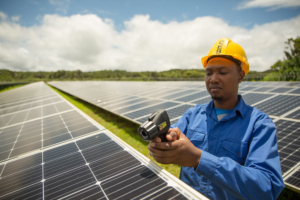
The renewable energy sector alone could offer significant job creation potential as the installation, operation and maintenance of solar power systems, wind turbines and hydroelectric systems require skilled workers in both urban and rural communities. These jobs could provide stable income and improve the lives of many by reducing dependency on costly alternatives such as imported fossil fuel-based energy and thus, increasing energy affordability on a larger scale. In the past decade, employment in renewable energy has nearly doubled, reaching a whopping 13.7 million in 2022, an increase from a total of 7.3 million in 2012.

Sustainable Agriculture

For many low-income economies, agriculture is the backbone of society. Smallholder farmers produce at least one-third of the world’s food, yet many of them continue to face poverty due to escalating issues such as outdated farming practices, environmental degradation and poor yields. In Rwanda, projects such as Land Husbandry, Water Harvesting and Hillside Irrigation (LWH) have positively contributed to a wider socioeconomic understanding of the need for agroforestry projects. The LWH has improved crop yields and land degradation, leading to an increase in incomes for smallholder farmers. This has also significantly alleviated poverty concerns as well as strengthened food security in local areas.

Thus, for the agriculture sector, green jobs can provide solutions to these issues by creating and encouraging sustainable farming methods that raise productivity and prevent environmental degradation. Investing time and effort into methods such as organic farming, agroforestry and soil conservation as well as into training smallholder farmers the value of these practices is a step towards improving long-term land fertility and crop yields.

Boosting Local Economies

Increasing interest in eco-friendly industries offers another opportunity to reduce poverty in low-income countries as these industries focus on sustainable manufacturing and construction. Activities such as these are labor-intensive and difficult to outsource, meaning they create local job opportunities.

With the right training, green industries require a diverse range of skills that workers—from technicians and engineers to managers and urban planners—can develop to adapt to the demand for environmentally responsible products. An example of this is the World Bank’s Energy Efficiency Improvement in Commercial and Industrial Sectors (VEEIE) project based in Vietnam. This project works towards helping local factories to adopt energy-efficient technologies to reduce costs and increase productivity. This project contributes to the creation of green jobs that have employed local workers to carry out installation and maintenance-related services in this industry.

Economic Growth in Low-Income Countries

Green jobs have already shown considerable success in addressing unemployment-driven poverty. In Kenya, for example, solar energy projects such as the Green Mini-Grid Program have successfully used incoming investments to create jobs in rural areas. By employing local workers who are in charge of installing, operating and carrying out maintenance for the solar energy products, this initiative provides affordable access to energy as well as employment opportunities for those in need.

Green jobs have the potential to significantly contribute to economic growth in low-income countries by providing a wider range of economic opportunities at the local level. Sectors such as renewable energy, sustainable agriculture and eco-friendly industries hold the potential to contribute to long-term economic growth, job creation and providing relief for those that live under poverty. With the appropriate policies, training programs and investment in the green economy, low-income countries can stimulate local economies and play a central role in economic well-being, environmental preservation and poverty reduction.

– Mashal Aman

Mashal is based in Kyoto, Japan and focuses on Business and Technology for The Borgen Project.

Photo: Flickr

November 27, 2024
https://borgenproject.org/wp-content/uploads/borgen-project-logo.svg 0 0 Naida Jahic https://borgenproject.org/wp-content/uploads/borgen-project-logo.svg Naida Jahic2024-11-27 01:30:312024-11-26 22:38:56Green Jobs and Economic Growth in Low-Income Countries
Education, Employment, Global Poverty

Vocational Education Training Centers in Bangladesh

Vocational Education Training Centers in BangladeshBangladesh, located in South Asia, is a vibrant and densely populated country, home to more than 170 million people, characterized by a rich cultural heritage and diverse traditions. Bangladesh is renowned for its colorful festivals, traditional music, dance and the warmth of its people. The country is home to monsoon seasons, humid summers and lush green landscapes. However, the country has faced challenges with poverty and the employment sector. Here is how vocational education training centers in Bangladesh could make a difference.

What is Vocational Educational Training?

Vocational education and training equips learners with specific skills that they can carry into the workplace. It teaches the knowledge behind specific trades or occupations. This usually occurs after secondary education. This training can come in many forms. It could occur during employment or apprenticeships or provided during formal education.  

The Importance of Vocational Education Training Centers

Vocational education training centers in Bangladesh provide opportunities and career advancement for the country’s youth. They act as a bridge between education and work life. These vocational education centers equip young people with the practical skills that are applicable in various industries such as tech, sciences, agriculture or construction. 

Not only does vocational education training centers support the youth of Bangladesh but they also support the economic growth of the country. As Bangladesh continues to industrialize, the demand for a skilled workforce grows. This is what the vocational education training centers aim to achieve a skilled workforce. 

With these centers producing a skilled workforce, some have argued that this is helping Bangladesh enhance its global competitiveness. With a number of Bangladesh’s workforce being employed overseas, particularly in the Middle East, there is a constant attempt reach these international standards. Therefore, the centers are constantly trying to better the training they are teaching.

TVET Initiatives

Over the years, there have been a number of vocational education training centers in order to provide people with vocational education in Bangladesh. In 2011, the National Skills Development Policy (NSDP) was put into action. This policy aimed to create a more cohesive development system, emphasizing in demand driven training.   

From 2009 to 2013, the Skills Development Project (SDP) occurred with funding from the Asian Development Bank and the Swiss Agency for Development and Cooperation. This project aimed to expand access to vocational education training centers, particularly for women and disadvantaged groups. It supported the establishment of new training institutions and provided scholarships to those who needed it. 

The Skills Training Enhancement Project (STEP) was rolled out based on the success of the SDP. From 2010 to 2014, STEP was more focused on improving the quality and relevance of these vocational education training centers. This enabled these centers to enhance their training programs and develop needed partnerships with industries. This made it easier for participants to walk into employment straightaway. 

After this, an additional funding phase was introduced to further expand vocational education training centers in Bangladesh up until 2019. Since then, plans for the Skills Development for Tomorrow (SDT) Program have been drawn up. This initiative aims to prepare the new workforce by focusing on emerging industries and technology.

Challenges Facing Vocational Education Centers in Bangladesh

Although the idea of vocational education sounds appealing in terms of helping the economic growth of the country it is facing several challenges. There is a lack of apprenticeships across the country. This means there is limited opportunity to receive not only the hands on training necessary for the workplace but apprenticeships also allow a taste for what the work place could be. 

Furthermore, there is a stigma around VET. While only 64% of children complete secondary schooling in Bangladesh only a 0.81% go on to use these centers for vocational training. This is due to social attitudes surrounding it. There is a preference for more ‘prestigious’ education. 

Conclusion

The development of these vocational education training centers is crucial for the country in addressing their socio-economic challenges and the need to align their workforce with the ever growing global economy. While the current TVET programs are showing improvements in terms of growth, they still face numerous challenges such as low public perception and insufficient infrastructure. 

– Ellisha Hicken

Ellisha is based in London, UK and focuses on Good News and Technology for The Borgen Project.

Photo: Flickr

September 11, 2024
https://borgenproject.org/wp-content/uploads/borgen-project-logo.svg 0 0 Jennifer Philipp https://borgenproject.org/wp-content/uploads/borgen-project-logo.svg Jennifer Philipp2024-09-11 07:30:302024-09-10 22:52:19Vocational Education Training Centers in Bangladesh
Africa, Employment, Global Poverty

Reducing Unemployment in Somalia

Unemployment in SomaliaSomalia struggles with one of the highest unemployment rates in the world. As of 2022, unemployment stands at 19.29%, with youth unemployment in Somalia being even higher at 34.66%. This means that more than a third of the Somalian youth are unemployed, neither in work nor education, threatening the livelihoods of many and endangering economic growth for the whole country. A significant aspect of unemployment is a lack of education- nearly half of children in Somalia do not attend school, which further limits their career prospects. Poverty remains a generational issue, with four in every five children living in some form of deprivation.

High rates of unemployment worsen already concerning rates of poverty; more than 60% of the population live on less than $2 a day. This means many struggle to feed their families or access education or healthcare. With low employment rates looming over the country, there seems to be no way out of these cycles of poverty.

The Nation of Poets

Somalia has a chance at a different future; known as “The Nation of Poets,” the country is investing more in the arts to help reduce unemployment, especially for younger people. President Sheikh Mohamud launched the National Youth Development Initiative to get more young people into work, with the help of U.S. investments, the World Bank reports.

The World Bank defines the Orange Economy as “a range of economic activities in cultural and creative industries where the main objective is the production or reproduction, promotion, distribution, or commercialisation of goods, services, and activities of content derived from cultural, artistic or heritage origins” and it generates around 30 million jobs every year. Harnessing this area of the economy could be Somalia’s answer to unemployment.

Unemployment in Somalia

Creative industries in Somalia thrived before the civil war but declined during it – now younger people are reviving them, according to the World Bank. The arts are a particularly effective way of reducing unemployment as they offer opportunities for both women and young people, the most affected by unemployment in Somalia.

The Solutions 4 Youth Employment report notes that four areas require changes to improve unemployment rates: training and mentorship; finance and grants; access to international markets; and local community networks for self-sufficiency.

The British Council’s East Africa Arts program is helping provide necessary financial aid to fund training and support people entering the workforce, according to the World Bank. The arts can provide prospects for so many to escape cycles of poverty, through providing opportunities for women and young people, and those whose careers and livelihoods have been impacted by extreme weather and natural disasters.

Other Initiatives

Alongside this investment in the creative industries, there have also been efforts to improve employment rates in numerous different sectors. The U.N. Joint Programme on Youth Employment worked to provide both long and short-term employment for young people by focusing on key areas like agriculture, resulting in 5,000 new jobs.

Organizations like UNFPA and SOLO have been offering training to young people in Somalia to improve their soft skills, a crucial aspect of being employable. This training means that young people are ready and equipped to take up jobs that other programs are helping to create.

Investing in the arts and creative industries could help reduce unemployment in Somalia and provide life-changing chances for so many living in poverty. This focus on harnessing the skills and gifts of Somalia’s young people is instrumental in securing Somalia’s future.

– Eryn Greenaway

Eryn is based in East Sussex, UK and focuses on Business and New Markets for The Borgen Project.

Photo: Flickr

September 2, 2024
https://borgenproject.org/wp-content/uploads/borgen-project-logo.svg 0 0 Naida Jahic https://borgenproject.org/wp-content/uploads/borgen-project-logo.svg Naida Jahic2024-09-02 07:30:232024-09-02 07:32:04Reducing Unemployment in Somalia
Page 8 of 9«‹6789›

Get Smarter

  • Global Poverty 101
  • Global Poverty… The Good News
  • Global Poverty & U.S. Jobs
  • Global Poverty and National Security
  • Innovative Solutions to Poverty
  • Global Poverty & Aid FAQ’s
Search Search

Take Action

  • Call Congress
  • Email Congress
  • Donate
  • 30 Ways to Help
  • Volunteer Ops
  • Internships
  • Courses & Certificates
  • The Podcast
Borgen Project

“The Borgen Project is an incredible nonprofit organization that is addressing poverty and hunger and working towards ending them.”

-The Huffington Post

Inside The Borgen Project

  • Contact
  • About
  • Financials
  • President
  • Board of Directors
  • Board of Advisors

International Links

  • UK Email Parliament
  • UK Donate
  • Canada Email Parliament

Get Smarter

  • Global Poverty 101
  • Global Poverty… The Good News
  • Global Poverty & U.S. Jobs
  • Global Poverty and National Security
  • Innovative Solutions to Poverty
  • Global Poverty & Aid FAQ’s

Ways to Help

  • Call Congress
  • Email Congress
  • Donate
  • 30 Ways to Help
  • Volunteer Ops
  • Internships
  • Courses & Certificates
  • The Podcast
Scroll to top Scroll to top Scroll to top