3 Facts About Higher Education in Tunisia
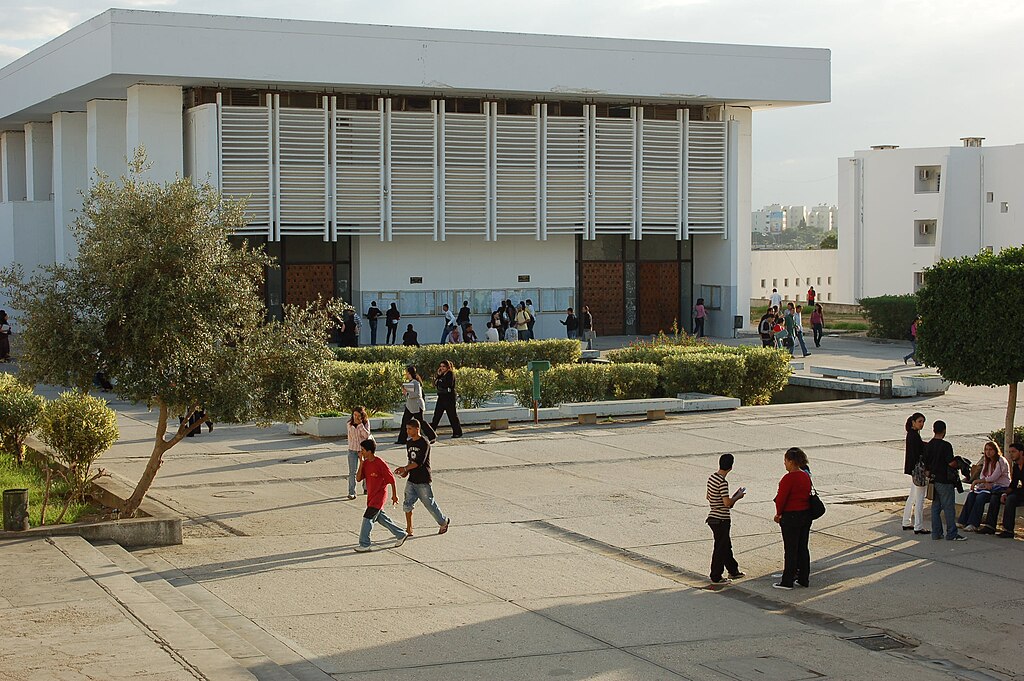 Tunisia is a small North African country with a population of approximately 12 million people. The nation achieved independence from France in 1965 and has suffered a revolution since. It is a developing nation and, therefore, subject to certain idiosyncratic issues, one of which is the cultivation of higher education in Tunisia. Compared to other polities in a similar predicament and geographic region, Tunisia has a robust system and continues to develop research and pedagogical institutions through a myriad of methods.
Public higher education is free in Tunisia, and this opportunity allows for the population to develop the necessary skills for economic growth. In 2023, 261,000 students were enrolled in public institutions, and 45,000 were matriculated in private ones. Specialized programs are offered for certain degrees, and the remainder of academic disciplines abide by the typical bachelor-masters-doctorate system. Further, these degrees are recognized nationally and are held with respect in other nations elsewhere. Historically, the education system was reminiscent of the colonial French one; however, in recent years, they have begun the process of Arabization to separate themselves from western dependence and establish themselves as fiscally independent with a unique cultural identity.
The Tunisian poverty rate is 17.1% and the unemployment rate, as of this most recent fiscal quarter, is 16.2%. Recent graduates constitute a significant portion of the unemployment rate, which is often thought to be the result of skill mismatches between universities and companies. Individuals who resign to enlist in informal sectors of employment are frequently subject to suboptimal wages and limited mobility. The issue for Tunisian higher education is not one of aggregate matriculation, but one of skill optimization that is rectifying errors in the current apparatus by aligning the demand of the market with the production of the education system, or introducing foreign competitors into the domestic market.
3 Facts About Higher Education in Tunisia
- Huawei’s Partnership With the Al-Khawarizmi Institute of Computer Science: Through a collaboration with the Chinese employee-owned technology company Huawei and the Tunisian Al-Khawarizmi Institute of Computer Science, 14 universities received the ability for AI and data computation. This partnership is prudential in the manner that it will allow for thousands of students to utilize advanced technology for research purposes. Under the auspices of the 2025 Digital Economy Development Plan, this partnership, amongst others, will seek to modernize the nation by establishing a digital platform to benefit both educators and students. With technological innovation, Tunisia can compete with Western markets and participate in the international service economy.
- Collaboration With Other Universities: Recently, Tunisian universities have been partnering with nations across the globe to facilitate cross-cultural communication and exchange of ideas. In the United States, for example, the University of Wyoming signed Memoranda of Understanding with four Tunisian universities. These universities can work together in favor of common interests, most exigently, since they both focus on agrarian studies, water management and animal husbandry. Further, the Italian University of Bologna and the Tunisian University of Carthage devised three strategic partnerships with the intent of generating new opportunities in the field of sustainable energy and innovation. Fostering scientific collaboration is a necessary condition for the development of cutting-edge technology and, therefore, the production of new capital. Yielding classes of well-traveled students may create new opportunities for domestic businesses by establishing prosperous relationships.
- The Tertiary Education for Employability Project: To ease the difficulty for graduates finding a job, the Tunisian government has endeavored to implement the Tertiary Education for Employability Project. It is an all-encompassing education reform that prepares students for employment by prioritizing attributes beneficial to the labor market. Matching market demands through cooperation with prominent industries and intensive internships offered throughout four-year programs, students find themselves with ample experience by the end of their tenure. More than 22,000 students have received help throughout the program’s history by participating in internships and receiving certificates. The World Bank funded the program and it served the interests of the nation for 8 years. The program was able to successfully expedite the process of job searching and cultivate a generation of students capable of aiding industries immediately.
Concluding Thoughts
The culmination of these programs helps create a promising future for higher education in Tunisia. Education is integral for the success of a country, and higher education allows for specialized acumen in potentially lucrative fields. Programs, such as the aforementioned ones, allow for developing nations to actualize their potency by creating a strong domestic market, which will, in turn, attract foreign investors. The process of creating a strong education system inevitably invites innovation and capital, allowing for the production of a service economy, one predicated on independent structures of wealth accumulation. Poverty is highest in rural areas, and a galvanization of the Tunisian higher education system will allow for a greater base of students to enroll, creating opportunity for those who were previously unable to infiltrate the developed sectors.
The rate of poverty is in tandem with the unemployment rate, and the rectification of the university system solves both issues by diminishing the unemployment rate, which therein reinstitutes the flow of capital. In the past, the nation has suffered from a mismatch between the skills that graduates acquired and the expertise necessary for the prosperity of the market, but slowly, these issues are being rectified. Tunisia is continuing to develop and finds itself with a bright, luminescent future.
– Jackson Hufman
Jackson is based in Glenwood, MD, USA and focuses on Business and Good News for The Borgen Project.
Photo: Wikipedia Commons
