India’s Economic Transformation Builds New Future
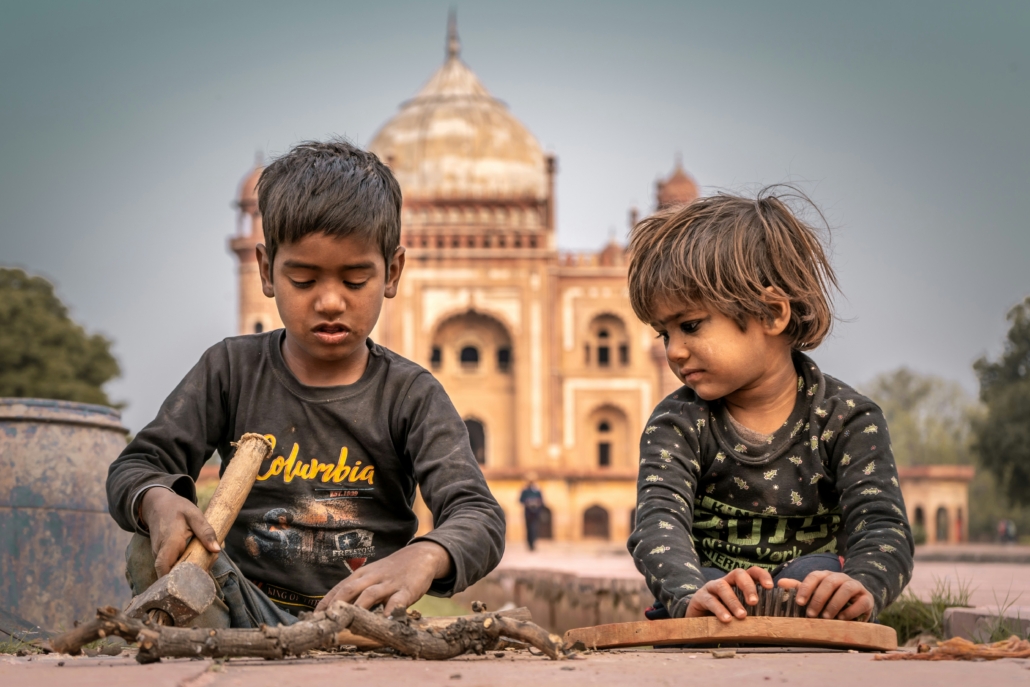 Several decades ago, India faced widespread poverty that created significant challenges for what would become the world’s most populous country. Unlike the Soviet Union or China, India chose a different development path in the mid-20th century.
Although all three began as agrarian societies, China and the Soviet Union chose to undertake rapid industrialization. Contrasting forced industrialization which would alienate the farming population, Indian Prime Minister Jawaharlal Nehru had other priorities. Nehru oversaw the construction of new political institutions and build democratic support among the population, before embarking on large-scale economic transformation. This resulted in India’s largely state driven and gradual approach to development and modernization.
The consequences of this path were evident by 1974, a decade after Nehru’s leadership ended, as poverty remained pervasive throughout the country. At that time, the government measured poverty through calorie consumption.
Using this metric, roughly 300 million Indians experienced abysmal poverty. This was compounded by the economy’s dependence on agriculture, low productivity, high inflation and the economic shock of the 1973 oil crisis. However, in the years since, a new India has taken shape and stepped onto the world stage. Here is information about India’s economic transformation.
India’s Economy
Despite the Indian economy ballooning into the ranks of China and Germany, agriculture still employs the largest amount of people. In 2024, nearly half of India’s population make their livelihood in agriculture.
Nevertheless, new sectors are quickly gaining steam. Recent gains in construction and manufacturing, particularly pharmaceutical production, have transformed the economy. Government estimates have concluded that roughly 60% of global vaccine production comes from India.
Technology sector growth, supported by both government and private initiatives, has accelerated urbanization rates nationwide. Bengaluru in southern India, often called “India’s Silicon Valley,” has become a focal point for domestic and international tech companies. This rapid development has made Bengaluru one of the fastest growing cities in the nation foreign IT conglomerates relocating there leading to an ongoing housing shortage.
Construction, now India’s second-largest industry by employee count, has expanded alongside urbanization and export growth. While construction contributes a small percentage to India’s total GDP, infrastructure projects have helped alleviate extreme poverty in many regions with particular success in rural areas. Here is more information about India’s economic transformation.
How India’s Economy Has Mitigated Poverty
Long before India adopted the MPI model in 2021, rural communities experienced poverty at disproportionate rates in terms of both frequency and intensity. Recognizing this stark disparity, in 2006, India enacted the Mahatma Ghandi National Rural Employment Guarantee Act (MGNREGA) in which the federal government allocated money for infrastructure projects. Low-skilled farm workers received 100 days of guaranteed wages to do manual work. Infrastructure projects built using government money varied, ranging from roads to irrigation systems. Women saw historic gains as millions attained independent employment from these projects. Its success would see later initiatives targeting homelessness and lack of health care.
In conjunction with overhauling domestic policy, the Indian government also ushered in sweeping economic changes as well. Although traditional economic theory suggested developing nations must rapidly transition agricultural workers to manufacturing, India has charted a different course. Industrializing while maintaining a large agricultural sector has been India’s state of affairs since Nehru.
These developments have not come without challenges. Construction projects and urbanization have sometimes displaced rural communities, and wages often fail to cover living expenses adequately. However, when viewed long-term, these initiatives contribute to reducing extreme poverty as India develops its economic capacity. According to the World Bank, “India remains the world’s fastest growing major economy, growing at a rapid clip of 8.2 percent in FY23/24.”
The Future of Indian Poverty
At the start of the century, India’s Planning Commission, which oversaw national development estimated national poverty rates using the Tendulkar methodology. This system calculated poverty based on consumption rates rather than income. In the year 2000, the national poverty rate hovered around 40% with the majority being living in rural areas. Fast forward to 2023 and reports using the MPI that the country experienced a reduction in overall poverty from 24.95% in FY 2015-16 to 11.28% FY 2021-22. In other words, more than 135 million Indians have moved out of poverty in between those two points. From the same report, India’s impoverished population are still overwhelmingly rural.
While some experts have questioned India’s poverty calculation methods, the country has made significant progress in reducing extreme poverty. According to a study from the Brookings Institution, India has effectively eliminated extreme poverty as defined by international metrics.
With this milestone achieved, researchers at Brookings suggest that India should consider adopting a higher poverty threshold more aligned with developed nations. “The transition to a higher poverty line provides an opportunity to redefine existing social protection programs particularly with the objective of better identification of intended beneficiaries and providing greater support to the genuine poor,” the Brookings report states.
Looking Ahead
The elimination of extreme poverty represents a significant achievement for India’s economic transformation as it works toward becoming a major global power by the middle of the 21st century. However, continued economic reforms and social programs may be essential to sustain this progress and address remaining inequalities.
– Max Marcello
Max is based in Pittsburgh, PA, USA and focuses on Business and Politics for The Borgen Project.
Photo: Unsplash
