• Link to X
  • Link to Facebook
  • Link to Instagram
  • Link to TikTok
  • Link to Youtube
  • About
    • About Us
      • President
      • Board of Directors
      • Board of Advisors
      • Financials
      • Our Methodology
      • Success Tracker
      • Contact
  • Act Now
    • 30 Ways to Help
      • Email Congress
      • Call Congress
      • Volunteer
      • Courses & Certificates
      • Be a Donor
    • Internships
      • In-Office Internships
      • Remote Internships
    • Legislation
      • Politics 101
  • The Blog
  • The Podcast
  • Magazine
  • Donate
  • Click to open the search input field Click to open the search input field Search
  • Menu Menu

Archive for category: Education

Information and stories on education.

Education, USAID, Women & Children

USAID Initiative to Educate Girls

educate_girls
Women from around the world are denied a proper education. The pressure to provide and help raise their families causes them to drop out of school early, leaving them uneducated. In developing countries, families often sell their daughters for child marriage or human trafficking. These decisions are made based on food insecurity and are a direct result of living in poverty.

Because of this continuous struggle for girls to finish school, “the Obama administration has embarked on a high-profile initiative to empower girls through education — saying the inability of girls to attend school worldwide should be a foreign policy priority,” according to Voice of America News. With education comes empowerment, and empowering girls to have a voice allows them more control of their lives.

USAID’s Let Girls Learn initiative works to educate girls. By letting girls learn, their lives and the lives around them are improved. When women are more educated they are more likely to live longer and take better care of their children. Educated girls often go on to pursue higher education and gain an income for themselves. This income is then invested in their communities and families, therefore creating more sustainable development.

USAID’s initiative page shares this information in a video featuring famous celebrities fighting for the cause. Bringing awareness to the affects of female empowerment across the world is the first step to helping girls gain an education. USAID has made tremendous progress in ensuring the success of their initiative. “Around $1 billion has been invested in education programs, provided 35 million textbooks, and helped train over 300,000 teachers world wide,” reports USAID.

The initiative focuses on an important aspect of ending world poverty. Empowering and educating women gives developing countries the opportunity to thrive and sustain their development.

– Kimberly Quitzon

Sources: Voice of America, USAID

Photo: FUTDteach

May 18, 2015
https://borgenproject.org/wp-content/uploads/borgen-project-logo.svg 0 0 Borgen Project https://borgenproject.org/wp-content/uploads/borgen-project-logo.svg Borgen Project2015-05-18 12:00:012024-05-27 09:09:32USAID Initiative to Educate Girls
Education

South Korea Sets Education Standards High

south-korea
With thousands of students vying for acceptance into top colleges, adolescent suicide rates in South Korea increasingly mirror rising scholastic pressure. These uncompromising education standards, as many suggest, continue to compromise happiness nationwide.

The bodies of two 16-year-old girls were found on a cement sidewalk in early March. A note reading, “We hate school,” was found following their jump from the multistory Daejeon hospital building.

Less recently, at the Korea Advanced Institute of Science and Technology (KAIST), students grappled with the loss of four peers and one professor to suicide. As the region’s most prestigious institution, test anxiety and copious amounts of schoolwork are part of the daily routine.

“Day after day we are cornered into an unrelenting competition that smothers and suffocates us. We couldn’t even spare 30 minutes for our troubled classmates because of all our homework,” the KAIST student council said. “We no longer have the ability to laugh freely.”

These grim narratives dominate headlines in South Korea – a country where the number of teen suicides has increased by 57 percent since 2001.

While secondary schools hold candlelight vigils and Seoul subway stations install barriers to prevent commuters from jumping, some are questioning the actual education system itself and its effects on adolescent suicide rates in South Korea.

For a typical high school student, class begins at eight in the morning and finishes at four in the afternoon. From there, however, military-style cram sessions at private institutions can last until 11 at night.

This pressure hits its peak in November, when students from around South Korea gather to take a single college entrance exam – the “suneung.” While mothers pray at churches or temples and the South Korean Air Force lands all planes, adolescents hunker over booklets and answer sheets for the nine hour test.

The “suneung” determines which university, if any, the student will attend. Most strive for the so-called SKY schools – Seoul National, Korea or Yonsei universities.

“To get admitted there decides what you can do in life and who you can marry. It determines your future,” Young Hwan Kim, a 17-year-old at Shinil High School said.

This race to success contrasts sharply with pre-World War II conditions. Though now an economic powerhouse, South Korea was once one of the poorest countries in the world, with only $64 per capita income.

Severely undereducated, only five percent of the population had attended secondary school or pursued advanced degrees.

Investment in infrastructure and human capital, in addition to foreign aid from both Japan and the U.S., pushed the country to its contemporary state. An unyielding focus was also placed on education, perhaps to make up for South Korea’s lack of tangible resources.

“We don’t have enough natural resources; the only resources we have [are] human resources,” said Kim Mee Suk, a researcher at the Korea Institute for Health and Social Affairs.

Now, in response to this mindset, roughly 75 percent of students attend a university – something many call the “Korean education miracle.”

This blessing, however, has also been a curse.

While overall suicide rates in developed countries are falling, adolescent suicide rates in South Korea continue to climb. A February survey released by the Korea Health Promotion Foundation even found that just over half of the country’s teens had suicidal thoughts this year.

Inchae Ryu, a 17-year-old student also at Shinil High School, spends 12 hours per day studying. Hunkered down in the library, clad in a navy uniform and green tie, he looks over notes for an extra English class he attends twice a week.

“I have no time to think about my future or my dreams,” Ryu said.

While attempting to stimulate the economy today, South Korean officials have blatantly disregarded what may happen in the future. In addition to overall drops in mental health, many parents are choosing not to have children because private tutors and lessons cost too much.

If this pattern continues, both in terms of diminished family size and augmented suicide rates, the country may face a deficit in that highly valued human capital. Numbers aside, South Korea may be facing an entire generation of unhappy citizens as well.

“It’s kind of alarming actually. If young students [are] not happy, we cannot guarantee their happiness when they grow up, so our future will be really dark,” Kim said.

– Lauren Stepp

Sources: Aljazeera, NPR, The New York Times, The Wall Street Journal
Photo: Flickr

May 1, 2015
https://borgenproject.org/wp-content/uploads/borgen-project-logo.svg 0 0 Borgen Project https://borgenproject.org/wp-content/uploads/borgen-project-logo.svg Borgen Project2015-05-01 12:00:062020-07-03 08:16:36South Korea Sets Education Standards High
Education, Global Poverty

Education Schools in Brunei

Education_in_Brunei
Education is an important part of a nation’s development and is a crucial key to unlocking an economy’s success. Quality education provides a bright future for a country and its citizens; a future above poverty lines, hunger and food insecurities. The education system in Brunei focuses on just that—ensuring quality education for all in hopes of achieving a better tomorrow for its citizens and the country as a whole.

What makes the education system different and possibly successful? It provides free education to children in not only primary levels, but secondary levels as well. As a result, more and more children are being educated. According to the World Bank Group, an estimated 94 percent of children are enrolled in school. There also seems to be a correlation between education and economy; Brunei also happens to be a high income country with one of the most developed economies in Asia.

Brunei is located in the southern region of Malaysia and has created a government that highly values education and places the responsibility of education upon its shoulders. The education system aims to develop its citizens’ knowledge, and by doing so, develop the country as a whole as well.

Schools in Brunei

Education in Brunei has previously been established to emulate Islamic forms of eduction. These Islamic schools, also known as Madrassas, serve as an important part of education in Brunei; however, in more recent years, the education system has slightly shifted to recognize western education as well. Although in recent years the education in Brunei has begun to encompass western learning, the education system remains closely rooted to the religious values of the region.

There are schools all over the country that provide free primary and secondary education to children. As more schools were being built, the country saw a substantial increase in not only the quantity of children attending, but the quality of education as well. Schools in Brunei provide comprehensive lessons in subjects involving history, language and geography, as well as the study of technology, mainly computers.

Brunei Ministry of Education

Brunei established a ministry of education that led the education sector with a key goal in mind: a proper development of the school system and of education. A five year plan was then implemented in 1954 in order to ensure this principal aim was reached. Additionally, the Brunei ministry of education formed and implemented several educational reforms such as the National Education Policy of 1962 and the National Education System (1985) that ensured quality education free of charge at every grade level. To do so successfully, the ministry governed the schools, funded the education programs and determined the curriculum. As a result, Brunei saw a substantial rise in literacy rates.

Following the establishment of Brunei’s ministry of education, the literacy rate improved from 69 percent to 92 percent. The implementation of the Brunei ministry of education has proven to be successful. As of 2012, 92 percent of children were enrolled in primary education, with an even higher 94 percent enrolled in secondary education.

Ultimately, education in Brunei has been established with a major purpose: to create quality education, free for all citizens, to be used by citizens as a means of achieving and living to their fullest potential. The education system in Brunei seeks to prepare citizens for the future and help them possess the skills and knowledge necessary to be able to excel in society and the changing demands society has on one’s livelihood.

There’s a known correlation between education and a nation’s success; more often than not, highly educated countries have a more stable economy and way of life than countries with limited education. Free education for all seems to also be a key component to Brunei’s successful and continual development.

– Nada Sewidan

Sources: APEC, Maps of World, World Bank
Photo: Flickr

April 30, 2015
https://borgenproject.org/wp-content/uploads/borgen-project-logo.svg 0 0 Borgen Project https://borgenproject.org/wp-content/uploads/borgen-project-logo.svg Borgen Project2015-04-30 04:00:452020-07-03 08:18:12Education Schools in Brunei
Development, Education, Global Poverty

Poverty in Sao Tome and Principe

Free Photo of People Walking Outdoors Stock PhotoTwo small islands off the coast of West Africa, Sao Tome and Principe, are known for their lush vegetation, Portuguese influences and warm island weather year-round. Guadalupe, a small town on the northern coast of Sao Tome and Principe, has become one of Africa’s premier vacation spots.

As one of Africa’s smallest countries, Sao Tome and Principe has experienced periods of dramatic growth and economic and political decline. However, about 45% of the country’s 223,561 residents face poverty, with those in rural areas with dense populations particularly affected.

Causes of Poverty in Sao Tome and Principe

The leading causes of poverty in Sao Tome and Principe are low income, lack of productive assets and means of production, lack of infrastructure and lack of social capital. Most of the country’s citizens depend on subsistence agriculture and farming; many work on cacao plantations, harvesting Sao Tome and Principe’s number one export. Approximately 80% of the country’s cacao production is sent abroad.

Since gaining independence from Portugal in 1975, the country has depended mainly on cacao production to generate national profit. However, due to poor agricultural practices and mismanagement, the quality of cacao coming from Sao Tome and Principe has decreased substantially, as has the quality of life for those who depend on its harvesting to survive.

Sao Tome and Principe also relies heavily on imports, possibly due to its lack of a skilled workforce and high national debt. This reliance on imports makes the country susceptible to fluctuations in global market prices. Similarly, it has a gross domestic product (GDP) of only $542.7 million and a vast amount goes to imported goods. Moreover, according to the African Development Bank (ADB), Sao Tome and Principe imports 50% of its goods and 100% of its oil. Hence, there is little room for emergency funding or poverty reduction spending.

According to the World Factbook, 55.5% (2017 estimate) of Sao Tome and Principe’s population lives below the poverty line. Furthermore, around 11.7% of its children aged less than 5 are suffering from stunting and 4.5% are suffering from being overweight.

Looking Ahead

Despite its lack of economic resources and small population, there are bright prospects for Sao Tome and Principe. In the last decade, the nation has made significant progress. In the education sector, nearly 100% of its children, including boys and girls, complete primary education. Overall, more than 90% of Sao Tome and Principe’s population is literate, leading to better job opportunities, higher productivity and economic growth. Though the country’s residents face poverty, illness and economic hardship, Sao Tome and Principe’s governing body places the utmost importance on education and finding better ways to sustain its integrity.

In the health care sector, Sao Tome and Principe has achieved a significant milestone against HIV/AIDS prevalence, reducing it to less than 1.5% from around 3% to 4% in 2005. The country is also on course to reduce stunting and wasting among its children. Like every other country, Sao Tome and Principe is facing its own challenges. However, it is working to improve the lives of its citizens.

– Candice Hughes

Photo: Pexels
Updated: May 27, 2024

April 27, 2015
https://borgenproject.org/wp-content/uploads/borgen-project-logo.svg 0 0 Borgen Project https://borgenproject.org/wp-content/uploads/borgen-project-logo.svg Borgen Project2015-04-27 12:00:392024-06-24 07:43:49Poverty in Sao Tome and Principe
Activism, Development, Education

Pencils of Promise

Pencils of Promise
Pencils of Promise’s programs have impacted more than 300,000 lives. Its schools have served more than 31,240 students and its scholarship recipients are two times more likely to progress to secondary school than the regional average.

Founder Adam Braun was a college student backpacking across the globe when he asked a small boy begging on the streets of India what he wanted most in the world—the answer? A pencil. Braun reached in his backpack and handed him his pencil as ‘a wave of possibility washed over him.’ Over the next five years, Braun backpacked through more than 50 countries handing out thousands of pens and pencils across six continents.

These pencils led to powerful conversations with local parents and children across numerous cultures and languages. In October 2008, PoP was founded. What began with a mere $25 deposit has now built more than 200 schools, breaking ground on a new school every 90 hours.

“We’ve learned that education is a living, breathing entity that with the right nurturing, evolves into something spectacular,” Braun writes on the website.

“We’ve learned that every piece of its growth is a challenge and that each pencil, each dollar, each supporter is essential. Pencils of Promise is now a global movement of passionate individuals, many of which are the most dynamic and impactful leaders we have ever seen. They are committed to supporting a world with greater educational opportunity for all. Thousands have joined us, making contributions through acts both large and small.”

There are three main things that set PoP apart from other organizations. PoP is 100 percent for-purpose, 100 percent direct giving and has a 100 percent success rate. It is a unique organization  because it blends the head of a for-profit business with the heart of a humanitarian nonprofit— by covering operational costs through private donors, events and companies, 100 percent of every dollar donated online goes directly into its programs to educate more children. Furthermore, it does not just “build a school and move on.” PoP monitors and evaluates every project it undertakes— ensuring that every school it opens is fully operational and educating students daily.

On its website, one can donate various amounts of money, each detailing exactly how much of an impact it would make— $100 to keep children healthy, $250 to educate a child, $500 to train a teacher and $25,000 to build a school.

Pencils of Promise is true to its word in terms of a functioning education system. PoP’s students score three times higher on language literacy tests than their peers and the teachers enrolled in PoP’s teacher training program attend school with 97 percent frequency. Additionally, 85 percent of PoP’s teachers report student literacy increases, 88 percent of the teachers report student numeracy increases and an astonishing 90 percent of the teachers report increases in student engagement due to its programs.

PoP can also be credited with being extraordinarily innovative. PoP works to provide schools with smartphones, e-readers, long-range radio and creative materials in order to reach the most under-served communities in the countries where PoP works. One e-reader provides a student with 50 books in both English and the local language. Smartphones deliver interactive audio lessons to provide expanded access to learning and a mobile learning kit contains books, phonic games and creative educational tools for teachers.

This  organization not only trains teachers, but also teaches and trains students about WASH (water, sanitation and hygiene). Students miss 272 million school days due to preventable illness and the international WASH program has allowed PoP to train more than 5,040 students since 2009. Pop does this via a three-step approach: building bathrooms and hand washing stations, teaching students and tracking behavior change.

The Huffington Post reported that the program has brought hope to children around the world in the form of 10 million hours of education as of March 2014.

As Braun writes in his book, “Take the first small step, and chase the footprints you aspire to leave behind.” To take this first small step, visit https://pencilsofpromise.org/.

– Eastin Shipman

Sources: Pencils of Promise 1, Pencils of Promise 2, Pencils of Promise 3, Pencils of Promise 4, Huffington Post,
Photo: Pac For Kids

April 1, 2015
https://borgenproject.org/wp-content/uploads/borgen-project-logo.svg 0 0 Borgen Project https://borgenproject.org/wp-content/uploads/borgen-project-logo.svg Borgen Project2015-04-01 08:00:382024-12-13 17:51:21Pencils of Promise
Education

Let Girls Learn: US Initiative for Global Education

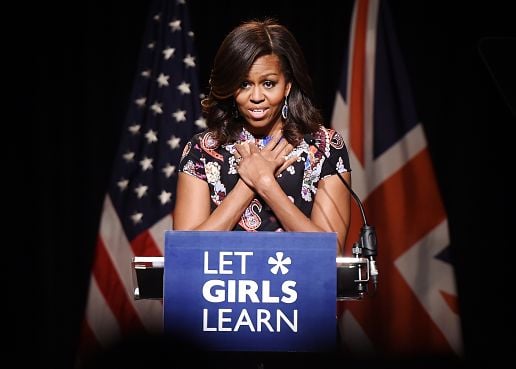
Let Girls Learn is a new U.S. government initiative aiming to help young girls across the globe receive an education. It recruits Peace Corps Volunteers—American volunteers who spend two years in developing countries addressing such issues as health care, infrastructure, agriculture and education—to work on community-centered projects around the world. These projects are designed to facilitate adolescent girls’ access to educational opportunities with direct help from federal funds. They consist of things like girls’ leadership camps and mentoring programs.

The Let Girls Learn initiative was inspired by a 2013 meeting with Malala Yousafzai, the Pakistani teenager whose powerful activism for girls’ education recently won her a Nobel Peace Prize. With approximately 62 million girls out of school around the world, and educational access growing scarcer for older girls, the government initiative is aiming to help adolescent girls receive the education they deserve.

An important way that Let Girls Learn is improving girls’ educational access is by combating early marriage and child pregnancy. In the developing world, one out of seven girls are married before the age of 15. Early marriage and childbirth too often signal the end of an adolescent girl’s education. However, girls who have received secondary school training are up to six times less likely to marry at a young age compared to girls who have not received such schooling.

In keeping with the Let Girls Learn initiative, USAID campaigns like the Advancing Youth Project and Best Schools for Girls are helping individual girls in countries like Bangladesh and Liberia overcome obstacles that would otherwise hinder their schooling. USAID encourages students, parents, educators and government officials in communities with high child marriage rates to encourage community-wide pledges against child marriage, and to discourage students from dropping out of school in order to marry. The organization has also developed a mobile tool that helps girls acquire English language skills as a means of improving their employment opportunities within the garment sector, which employs more than 4 million people in Bangladesh—90 percent of whom are women.

First Lady Michelle Obama recently embarked on a five-day journey in Asia, without the president or her daughters, to promote the global education initiative. In Japan, she joined Mrs. Akie Abe, the wife of Japanese Prime Minister Shinzo Abe, in order to formally announce the partnership between the United States and Japan in promoting girls’ education throughout the world. The partnership is between the U.S. Peace Corps and Japan’s International Cooperation Agency. In Tokyo, the first lady described the problem as “truly a crisis” and cited attitudes toward women as a heavily contributing factor to the worldwide failure to educate young girls. She also traveled to Cambodia, where she met with a number of Peace Corps volunteers who are currently working on projects meant to increase girls’ educational access, and visited a special school that is encouraging notable progress.

Mrs. Obama plans to ask leaders in other countries around the world to stand up for the Let Girls Learn initiative, fostering an international environment that will ultimately prove more support for girls’ educational and personal successes.

– Shenel Ozisik

Sources: Bloomberg, NBC News, USAID
Photo: JetMag

March 30, 2015
https://borgenproject.org/wp-content/uploads/borgen-project-logo.svg 0 0 Borgen Project https://borgenproject.org/wp-content/uploads/borgen-project-logo.svg Borgen Project2015-03-30 04:00:072024-05-27 09:23:29Let Girls Learn: US Initiative for Global Education
Children, Development, Education

Education in Tuvalu: Past & Present

education_in_tuvalu
Tuvalu is one of the smallest and most remote countries on Earth. The total land area of the country is approximately 26 square kilometers, or comparatively 0.1 times the size of Washington, DC. Located in Oceania, the country is an island group consisting of nine coral atolls in the South Pacific Ocean with a population of 10,782.

Education System Restructure: Late 1990s

Prior to the restructuring of the education system in 1998, communities operated early childhood education and  had no support from the government. Preschools were operated under a voluntary basis and teachers were poorly appointed and often untrained. Tuvalu also did not have the proper infrastructure to support schools.

When education in Tuvalu was restructured, the following five strategies were put in place: the government would provide financial assistance to all preschools; formal training would be offered to preschool teachers; new salaries would be granted to preschool teachers; funds for building preschool classrooms were secured by the government; and preschool education linked with the primary section would be provided for three year olds.

Tuvalu’s education system at the primary level was also restructured and revamped. Goals and targets contained in the Tuvalu National Education Policy Document included compulsory education for all Tuvaluan children between the ages of six and 15, redesigning and strengthening the administration of the education system, access to education and training for all, development of a national curriculum, as well as improvements to school buildings, teacher training and programs for students with special needs.

Many other improvements and goals were to be met following the restructuring of the system. Children were not the only focus of the reform—education for survival with reference to community life skills was also made available. The skills that adults were offered included secretarial skills (typing, computing, office skills, etc.), carpentry, pluming, engineering and home economics.

Additionally, strategies were put in place to improve the overall quality of life and standards of living. Basic housing, clothing, water, food and nutrition, access to health and education as well as the ability to participate in community life and cultural pursuits strengthened the communities of Tuvalu.

Tuvalu Today

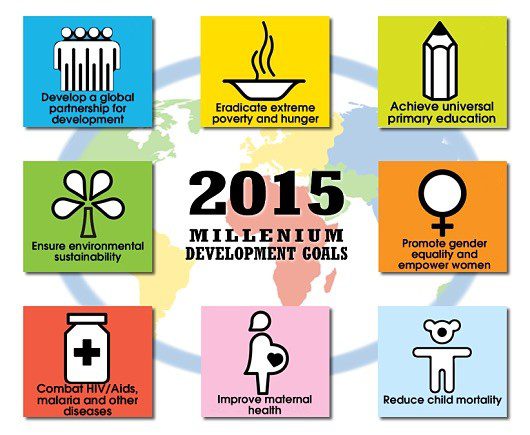
Many of the strategies and Millennium Development Goals have improved conditions in Tuvalu. For example, Tuvalu’s youth literacy rate (ages 15-24) rose from 95 percent in 1991 to 98.6 percent in 2007. The percentage of cohorts reaching grade five also rose dramatically from 72.7 percent in 2000 to 91.2 percent in 2004.

According to the IMF, although cases of extreme poverty are rare, poverty in Tuvalu has risen in the last few years despite improvements in education. Given Tuvalu’s limited land area, poor soil and geographic isolation, it is difficult to create large private-sector employment opportunities domestically. Therefore, citizens of Tuvalu will need to better utilize overseas job opportunities, including seafarer employment and the temporary labor migration scheme in New Zealand.

Vocational training will need to be strengthened in order to enhance the competitiveness of Tuvaluans for these important sources of foreign exchange earnings and to reduce poverty.

– Eastin Shipman

Sources: International Council for Open and Distance Education, UNESCO 1, UNESCO 2, UNESCO 3, CIA Factbook,
IMF

Photo: UNESCO

March 24, 2015
https://borgenproject.org/wp-content/uploads/borgen-project-logo.svg 0 0 Borgen Project https://borgenproject.org/wp-content/uploads/borgen-project-logo.svg Borgen Project2015-03-24 04:00:012024-06-04 03:53:00Education in Tuvalu: Past & Present
Education, Global Poverty

Education in the Solomon Islands

Solomon EducationWhat if you did not have to go to school? For some school-aged children in America, this might be a dream, but for the children of the Solomon Islands, it is a nightmare—and a reality. Due to their high poverty rate, the Solomon Islands do not make education a requirement. Only 2.2 percent of the government’s budget goes toward education, dropping drastically from its 9.7 percent in 1998. Only 60 percent of children even have access to any kind of primary education.

Of those 60 percent, only 72 percent of students complete their primary education. As for secondary school, the current numbers show 32 percent of boys attend, while 27 percent of girls do. Since there are so little resources, students have to take an exam to continue on to secondary school. Depending on their score, they can either be placed into secondary school or not score high enough to earn one of the few positions available.

These statistics all contribute to the 75 percent adult illiteracy rate. While education is not compulsory in the Solomon Islands, it is free for at least primary school. So, why are these numbers showing up?

The Solomon Islands had a civil war from 1998-2003, and once the country began to gain its footing again, a devastating tsunami hit in 2007. These events have only add to the hardships the people of the Solomon Islands face. Since adults have no educational background, the main source of income is through agriculture and farming. This can only get a family by for so long, and many children work alongside their families in lieu of going to school.

If a child does attend school, he or she has to deal with a shortage of teachers and classroom materials. Not only are half of all teachers unqualified, but they also struggle to receive payment for their services. In addition, less than half of the schools have access to adequate drinking water. Hopefully, the government will prioritize education in the coming years and break the cycle of poverty in the Solomon Islands.

– Melissa Binns

Sources: Classbase,  Education in Crisis,  ICDE

Photo: Flickr

March 10, 2015
https://borgenproject.org/wp-content/uploads/borgen-project-logo.svg 0 0 Borgen Project https://borgenproject.org/wp-content/uploads/borgen-project-logo.svg Borgen Project2015-03-10 04:00:582024-05-27 09:23:25Education in the Solomon Islands
Education

Education in Suriname

education_in_suriname
Suriname is the smallest independent country on the South American continent, slightly larger than the state of Georgia, and has a relatively small population. Suriname is mostly a tropical rain forest and the majority of the Surinamese population lives along the coast. Recently, UNICEF has made many efforts to reduce inequity in Suriname’s education system.

Although 97 percent of Surinamese children are enrolled in primary education, serious disparities exist between the coastal and rural schools and the interior. Suriname is nationally on track to meet Millennium Development Goal 2, but significant disparities in terms of gender and socio-economic status is significantly lacking progress and falling below the target.

There are various reasons why some children are more successful than others within the education system as well as why the disparities become increasingly evident as the pupil grows and progresses.

According to the United Nations Suriname, the “availability of schooling opportunities, accessibility of schools, quality and appropriateness of the education system affect the learners’ results in the highly varying education context in Suriname. Whereas the national gross primary school enrolment rates are high, enrolment and attendance rates in the interior are generally low in comparison to the national average.  Poor availability and quality of pre-schools and the sudden switch from local languages to Dutch, being the medium of instruction and texts books, could be identified as one of the main hurdles, resulting in high repetition rates in first grade and poor net completion rates in the interior.”

Furthermore, the situation regarding water and sanitation for school youth has posed a major challenge. Only 29.4 percent of schools in the rural coastal areas have piped water and 67.5 percent of the other schools in the rural coastal and rural interior do not have piped water— forcing them to collect rain or river water during school hours.

UNICEF has stepped in to reduce the inequities within the school system of Suriname. The UNADF Action Plan 2012-2016 will continue supporting the Ministry of Education and Community Development strengthening the capacity of kindergarten and primary school teachers in an effort to establish child friendly schools. Thirty percent of the teachers in the interior are not qualified to teach and in public primary schools, five percent have not even completed primary education themselves.

Plans have also been made to assist Suriname with the implementation of technology to provide a better education. UNICEF, in close cooperation with the Ministry of Education and Community Development, has implemented the Computer Aided Learning Project.

– Eastin Shipman

Sources: CIA World Factbook, Curacao Chronicle, United Nations Suriname, UNESCO
Photo: UN

March 9, 2015
https://borgenproject.org/wp-content/uploads/borgen-project-logo.svg 0 0 Borgen Project https://borgenproject.org/wp-content/uploads/borgen-project-logo.svg Borgen Project2015-03-09 08:00:282024-12-13 17:51:21Education in Suriname
Education, Global Poverty

How India’s Emerging Economy Will Impact Its Poverty

Indian PovertyThere are quite a few economies around the globe that aren’t doing very well, but one country’s economy is beginning to emerge as a potential powerhouse: India.

India is well acquainted with poverty and has been for many years now, with a large portion of the country’s population living in slums and other unsanitary conditions. Approximately 33 percent of the population lives in poverty, with only 62 percent of adults being literate, and only 49 percent of girls attending secondary school largely due to economic reasons.

The recent change in India’s economy could alter this. India’s stock market has reached new highs in recent months with a stable rupee.

Politics have had a large effect on India’s recent success, with the election of new Prime Minister Narendra Modi. Modi’s Bharatiya Janata Party, or BFP, experienced its first win in 30 years. The result is a more optimistic India that hopes to heal a broken bureaucracy.

Nicholas Smithie, Chief Investment Strategist at Emerging Global Advisors, says Modi is more likely to tackle major obstacles, such as a poor infrastructure, than previous prime ministers. Modi and the BJP work on a pro-growth platform, focusing on government approvals and advances in labor and education.

India might only be getting lucky. Certain aspects of the global economy — slowdown in China, money printing in Japan, Russia’s recession, stagnation in the European zones and falling oil prices — aren’t hitting India quite as hard. The deflation around the world is proving helpful to India, which has suffered high inflation. India has a rare opportunity to capitalize on new political officials and economic reform. International corporations are growing eager to invest in India, now assured that India’s policies will foster economic expansion.

As India’s economy emerges with a strong, stable foundation, the future of poverty reduction looks a little brighter. As the economy improves, families are better able to afford food, clean water and sanitary conditions. Educational opportunities are allowed to expand as the economy grows, creating a more secure future for Indian children, particularly girls. The path to recovery and to reducing poverty in India is long, but with a stronger economy and a hopeful leader, India seems to be on the right track.

– Alaina Grote

Sources: The Economist, UNICEF, U.S. News

Photo: Flickr

March 4, 2015
https://borgenproject.org/wp-content/uploads/borgen-project-logo.svg 0 0 Borgen Project https://borgenproject.org/wp-content/uploads/borgen-project-logo.svg Borgen Project2015-03-04 04:00:222024-05-26 23:10:12How India’s Emerging Economy Will Impact Its Poverty
Page 215 of 241«‹213214215216217›»

Get Smarter

  • Global Poverty 101
  • Global Poverty… The Good News
  • Global Poverty & U.S. Jobs
  • Global Poverty and National Security
  • Innovative Solutions to Poverty
  • Global Poverty & Aid FAQ’s
Search Search

Take Action

  • Call Congress
  • Email Congress
  • Donate
  • 30 Ways to Help
  • Volunteer Ops
  • Internships
  • Courses & Certificates
  • The Podcast
Borgen Project

“The Borgen Project is an incredible nonprofit organization that is addressing poverty and hunger and working towards ending them.”

-The Huffington Post

Inside The Borgen Project

  • Contact
  • About
  • Financials
  • President
  • Board of Directors
  • Board of Advisors

International Links

  • UK Email Parliament
  • UK Donate
  • Canada Email Parliament

Get Smarter

  • Global Poverty 101
  • Global Poverty… The Good News
  • Global Poverty & U.S. Jobs
  • Global Poverty and National Security
  • Innovative Solutions to Poverty
  • Global Poverty & Aid FAQ’s

Ways to Help

  • Call Congress
  • Email Congress
  • Donate
  • 30 Ways to Help
  • Volunteer Ops
  • Internships
  • Courses & Certificates
  • The Podcast
Scroll to top Scroll to top Scroll to top