 Oman is a country of about 4 million people at the southeastern end of the Arabian Peninsula. Its rich oil reserves have made it one of the richest countries in the Middle East. Yet, its relatively high GDP per capita—estimated at $39,800—belies the many socio-economic issues affecting large sectors of the Omani population. Two such issues are poverty and disability-induced hardship. Below are the main things to know about disability and poverty in Oman.
Oman’s Nexus of Poverty and Disability
Oman still has some (relative) poverty. Despite no one in Oman living below the international poverty line of $1.25/day anymore, a regionally tailored metric shows that 10.1% of Omani nationals can still be considered “poor” in some capacity. This is one of the highest relative poverty rates in the Persian Gulf region. Poverty is even more severe among foreign workers in Oman, who number 1.8 million of the country’s residents but have experienced exclusion from most poverty-related programs and statistics.
Some of Oman’s poorest citizens have disabilities as well. There are 44,513 total Omani citizens living with disabilities. This translates to nearly 1% of the total population. The most common types of disabilities in Oman are hearing disabilities (34%) and physical disabilities (23.7%). Such disabilities reduce the likelihood of having a stable income. In 2003, only 15.7% of disabled Omanis were economically active, and 65% were unable to work at all. Thus, disability has a high correlation with poverty in Oman.
Implications of Disability and Poverty for Oman
Poverty is more acute in rural areas in Oman. A dearth of state services in agricultural and remote communities likely renders poorer and disabled Omanis in those communities vulnerable to educational neglect and health issues.
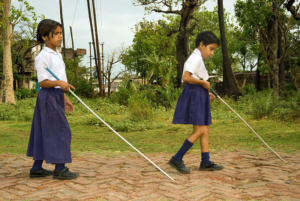
Another vulnerable group that disability and poverty disproportionately impact in Oman is children. Nearly one in 10 Omani children is stunted – a phenomenon often associated with poverty. Moreover, 16,000 Omani children are disabled.
Interventions
Despite the hardships that disability and poverty in Oman has triggered, the country has made significant strides in alleviating conditions for poor and disabled Omanis. Through its massive oil wealth, Oman has greatly solidified its current social safety net, known as the “Social Protection Fund.” The fund allows impoverished Omanis to receive unemployment benefits, monthly allowances and job recruitment opportunities when necessary. The Social Protection Fund partly explains how Oman was able to eliminate its absolute poverty rate (the proportion of people living below $1.25/day) in 2025.
For disabled citizens, the Social Protection Fund offers a tailored “disability benefit,” providing 130 rials ($338 USD) each month. This money allows Omanis with special needs to secure necessities like food, water and shelter, while reducing the likelihood of them falling into poverty.
Looking Forward
Overall, despite Oman’s international reputation for affluence, some of the country’s citizens still suffer from the interconnected issues of poverty and disability-induced hardship. These issues debilitate the lives of those who are already the most vulnerable in Omani society—foreign workers, rural residents and children. Yet, the Omani government has implemented a Social Protection Fund that has partially succeeded in alleviating the hardship induced by poverty and disability in Oman.
– Pranav Kanmadikar
Pranav is based in Louisville, KY, USA and focuses on Technology and Global Health for The Borgen Project.
Photo: Flickr