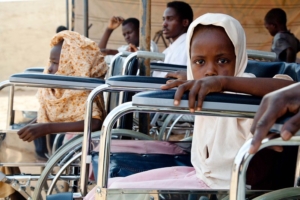
 In its long history, Libya has endured prolonged periods of turbulence and instability as it continues to rebuild its infrastructure. While most international headlines focus on Libya’s oil production and political transitions, the world often neglects a significant segment of the Libyan population. People with disabilities in Libya face a dual struggle: one born out of a fractured health care system, while they overcome the remnants of war in the form of landmines.
To rebuild Libya, Libyan leaders and the international community must prioritize the rights and inclusion of these citizens.
Disabilities in Libya
Libya, since the 2012 overthrow of dictator Muammar Gaddafi, has been embroiled in a constant state of warfare. The history of warfare negatively impacts those living with disabilities; even in the fleeting moments of calm, the lingering effects of war remain. The conflict has left a deadly, invisible legacy in the streets of Sirte, Tripoli and Benghazi: unexploded ordnance (UXO) continues to claim lives and trap families in a cycle of poverty years after guns fall silent.
Unlike traditional minefields found in Iraq or Syria, Libya’s contamination plagues densely populated cities. The HALO Trust reports that urban centers remain littered with “suicide” mines, booby traps and cluster munitions. Cities like Sirte, under occupation by ISIS until 2016, suffer from explosives hidden within the rubble of homes, schools and hospitals.
This contamination prevents displaced families from returning, effectively freezing the economic recovery of entire neighborhoods. Conflict-related injuries in Libya, in particular landmines, commonly result in permanent disabilities.
Survivors
A survivor of landmines, Omar Musa, a taxi driver from Tawergha, fled his home in 2011 to escape the violence. When he finally returned seven years later, he discovered a rocket-propelled grenade (RPG) wedged into one of his palm trees. Musa did not touch the device. Instead, he contacted the Free Fields Foundation (FFF), a local NGO supported by the European Union. Today, Musa works with the FFF, training other returnees to find unexploded devices.
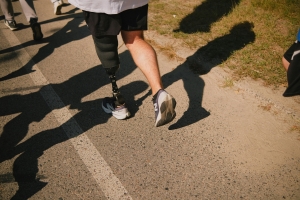
For others, the experience with mines is less fortunate. Mahmoud, a professional deminer, was blinded when a mine went off while working alongside his brother, Muhammed, for a professional demining team. Muhammed was killed instantly in the blast. Mahmoud was stripped of his sight and had to have his leg amputated.
While many would see this as an unavoidable tragedy of war, Mahmoud identifies it as a deliberate crime. He points directly to the Russian Wagner Group and the forces of Khalifa Hafter, who retreated from the area in 2020 but left behind a landscape of prohibited anti-personnel mines and “trick” explosives designed to maim civilians and first responders alike. Mahmoud refused to accept his disability, transforming his survival into a vocal campaign for legal reparations.
The Fight for Inclusion
In Libya, losing a limb often has devastating results. While landmines themselves physically harm, a fractured health care system ensures the injuries remain permanent. The “right to health” in Libya has become a luxury that few survivors can afford. Libya once boasted one of the highest Human Development Indices in Africa, providing free health care to its citizens; today, that system is in near collapse.
Only a handful of physical rehabilitation centers (PRCs) remain operational in cities such as Tripoli, Misrata and Benghazi. Survivors in rural or southern regions must travel hundreds of miles through dangerous territory to access basic fittings. In response, the United Nations Support Mission recently issued a National Charter that includes a bold 7% quota for persons with disabilities in the next government and across all sovereign councils.
Director Al-Awjali has called for a transition from traditional social care to true political empowerment, positioning women with disabilities as “decision-makers” rather than just service recipients. True inclusion requires more than medical aid; it requires a seat at the table. The Libyan Forum of Persons with Disabilities, in collaboration with international partners such as UNICEF, is also working to break the stigma by advocating for political representation, which serves as a bedrock for other rights.
These advocates keep the path open for people like Mahmoud to continue to stride forward in a nation plagued by war for more than a decade.
– Haydn Goodboy
Haydn is based in Massachusetts, USA and focuses on Business and Good News for The Borgen Project.
Photo: Flickr