• Link to X
  • Link to Facebook
  • Link to Instagram
  • Link to TikTok
  • Link to Youtube
  • About
    • About Us
      • President
      • Board of Directors
      • Board of Advisors
      • Financials
      • Our Methodology
      • Success Tracker
      • Contact
  • Act Now
    • 30 Ways to Help
      • Email Congress
      • Call Congress
      • Volunteer
      • Courses & Certificates
      • Be a Donor
    • Internships
      • In-Office Internships
      • Remote Internships
    • Legislation
      • Politics 101
  • The Blog
  • The Podcast
  • Magazine
  • Donate
  • Click to open the search input field Click to open the search input field Search
  • Menu Menu

Archive for category: Development

Information and stories on development news.

Development, Global Poverty, Women

10 Women Who Have Helped Fight Global Poverty


Female leaders play a critical role in helping to end global poverty. Emphasizing the need for equity, education and improved health care services, these women have used their minds and resources as means for bettering the conditions of the world. Here is a list of 10 women who have helped fight global poverty.

Michelle Obama
Recognizing the necessity of educating girls and women around the world, Michelle Obama has continually advocated on behalf of the world’s poor. Citing education as a leading contributor to fighting global poverty, Michelle Obama has suggested that, by giving girls and women access to schooling, global poverty can be ended. In 2016, she launched a Twitter campaign entitled #62milliongirls, seeking to raise awareness regarding the number of women who remain uneducated. That year, with funding from the Millennium Challenge Corporation, she announced plans to provide $100 million for education efforts. Her efforts to emphasize education have managed to hinder the perpetuity of poverty throughout the world.

Angela Merkel
The current chancellor of Germany, Angela Merkel provided Global Citizens with a straightforward message prior to the G20 Summit. She stated that the G20 group of major economies has “a shared responsibility to enable people worldwide to live in dignity.” Suggesting that the interconnectivity of the world established through the Internet and economy links people now more than ever, she emphasized sustainability and development. Merkel has established an ongoing desire to reduce poverty and conflict by teaming up with African nations to create stability. When she was declared Time Magazine’s Person of the Year in 2015, one of the main reasons cited was her tremendous generosity with refugees, having provided one million with refuge.

J. K. Rowling
Another of the most influential women who have helped fight global poverty is J. K. Rowling. She is a tremendous advocate on behalf of the world’s orphans, demanding that they receive more help than they were once provided. The author of the Harry Potter series established the Lumos Foundation, which works to help millions of children worldwide to regain their right to a family in the face of poverty, disability and minority status.

Oprah Winfrey
Oprah Winfrey does tremendous work for girls globally. Like Michelle Obama, Oprah values the role of education in improving women’s quality of life. As a result, she has funded a number of organizations that seek to grant women additional rights worldwide, including Women for Women International and Girl Effect. Women for Women International has assisted over 462,000 marginalized women in unstable, war-torn nations. Girl Effect prides itself on creating a new normal, where girls previously living in poverty are empowered through technology and safe spaces.

Melinda Gates
One of the two leaders of the Bill and Melinda Gates Foundation, Melinda Gates has made incredible strides toward ending global poverty. Emphasizing the need for quality healthcare and education in order to end poverty, Gates has used her organization to help provide children in poverty with exactly that. In particular, for many communities around the world, the Gates Foundation has provided financial tools to the poor, taught farmers how to increase production sustainability, helped women with family-planning, increased college completion rates and combatted infectious diseases such as malaria, HIV and polio.

Angelina Jolie
The recipient of the 2005 Global Humanitarian Action Award for her work with the U.N. Refugee Agency and refugees themselves, Angelina Jolie epitomizes global advocacy. Supporting 29 charities, including the Alliance for the Lost Boys of Sudan, the Clinton Global Initiative, Doctors Without Borders and the U.N. Millennium Project, Jolie has done unbelievable work in terms of ending global poverty. In 2016, Jolie worked to bring light to the ongoing need to help Syrian refugees.

Cindy Levin
Cindy Levin is another one of the most influential women who have helped fight global poverty. Seeking to engage children and stay-at-home parents in global child survival, she works to teach grassroots volunteers to fundraise through an organization known as RESULTS. In October of 2012, Levin traveled to Uganda with the U.N. Foundation’s Shot@Life Campaign, personally meeting mothers living in poverty. On that journey, she accompanied UNICEF to health programs days, which provided vaccines and AIDS testing to people living in the area.

Ellen Gustafson
Sustainable food system activist, author, innovator and social entrepreneur Ellen Gustafson has given TED talks about the necessity of using food as a means for ending global poverty. The creator of the ChangeDinner campaign, she seeks to change the food systems at dinner tables and in schools around the world. She is now a term member of the Council on Foreign Relations.

Ertharin Cousin
The former executive director of the World Food Programme, Ertharin Cousin has been fighting global hunger since 2012. Using innovative tactics, Cousin implemented a program called “forecast-based financing.” The program utilized weather models to identify droughts prior to their occurrence in order to emphasize proactivity. Ultimately, the goal of this program was to enable countries to grow enough food before disaster hit, saving both money and lives.

Jacqueline Novogratz
Jacqueline Novogratz is the founder and chief executive officer of an organization called Acumen. Acumen prioritizes the voices of the world’s poor, using them as a compass for eliminating poverty. By creating the organization, Novogratz helped make significant strides in emphasizing what the poor truly need.

Clearly, women who have helped fight global poverty play a large role in beginning to combat the issue. While male, female and gender non-binary leaders continue to contribute significantly, it is still incumbent upon governments to provide funds to help address the problem. Only by ensuring that each of these entities works in tandem can the world truly ensure that poverty comes to an end.

– Emily Chazen

Photo: Flickr

July 21, 2017
https://borgenproject.org/wp-content/uploads/borgen-project-logo.svg 0 0 Borgen Project https://borgenproject.org/wp-content/uploads/borgen-project-logo.svg Borgen Project2017-07-21 01:30:132024-05-28 00:03:1310 Women Who Have Helped Fight Global Poverty
Development, Global Poverty

News from Africa: The DRC Poverty Rate Continues to Stagnate

DRC Poverty RateThe Democratic Republic of the Congo is one of the largest countries in Central Africa and is a land rich with natural resources and raw materials, inevitably leading to an economic boom for its mining industry.

Despite a population of 77 million people, 80 million acres of land suitable for farming and an abundance of over 1,100 different rare metals and minerals, the DRC poverty rate remains among the highest in the world. While many consider it to be the poorest, the most recent United Nations Human Development Index of 2015 ranked the country at 176 out of 187 countries.

Between 1970 and 2012, the average annual growth rate of the DRC’s GDP per capita remained at -2.1 percent. From 1990-2012, annual inflation rates increased by 191 percent. As of 2011, an estimated 87.7 percent of the population, about 67.5 million people, remained under the international poverty line, which is currently $1.25 per day.

Currently, the average income for a Congolese citizen is about $400 per year. One example of the negative results of the DRC poverty rate is an extremely high infant mortality rate, with one in seven newborns dying before the age of 5.

Among other things, the poverty rate has caused a high usage of child labor, with about 25 percent of children ages 5-14 employed, an increasing prevalence of HIV/AIDS and a notable decline in school enrollment.

Additionally, the country has a 45 percent vaccination rate for some of the most commonly known diseases, a lack of access to clean drinking water and severe malnutrition nationwide.

Reasons for DRC Poverty

The reasons for the DRC poverty rate stem from a number of factors, however, can be summarized as the result of political instability and corruption, particularly in the mining industry.

In addition to this, there are large swaths of land in the country that are controlled by militia groups, the land where many mines are located, allowing for them to be the financial beneficiaries to some foreign investors.

This problem originates from government corruption and an intended overall lack of transparency in the mining contracts from all parties involved, specifically in regards to where the money will be directed. All of these factors have resulted in the DRC government losing more than $5 billion in revenue that could have been allotted to fund infrastructure, public health, education or foreign commerce.

Fortunately, two prominent activists have emerged to speak out against these injustices. American television star Robin Wright in “House of Cards,” in coordination with JD Stier, president of the social activist organization Stier Forward, has created the “Stand With Congo” campaign.

Stand With Congo

Founded in the spring of 2016, the campaign’s main focus geared toward influencing the Congolese mining industry to achieve full transparency, under the idea that doing so could inherently solve other problems for the country.

Another focus of the campaign is to demand that the current DRC President, Joseph Kabila, who is often associated with corruption, vacate office immediately. Kabila has been in power since 2006, and ignored the provisions of the DRC constitution, exceeding the two-term limit.

In 2016 alone, the Stand With Congo campaign hosted 88 events in 17 countries and has also joined the Congolese Youth Movement who is advocating for reelections and Kabila to be removed from office.

– Hunter McFerrin

Photo: Flickr

July 18, 2017
https://borgenproject.org/wp-content/uploads/borgen-project-logo.svg 0 0 Borgen Project https://borgenproject.org/wp-content/uploads/borgen-project-logo.svg Borgen Project2017-07-18 01:30:452024-05-28 00:03:03News from Africa: The DRC Poverty Rate Continues to Stagnate
Development, Global Poverty, Hunger

Kuwaiti Leaders and their Attempts to End Hunger in Kuwait

Mohammad Al-Jabri, Minister of Municipal Affairs, announced that Kuwait is in full support of the United Nations’ Food and Agriculture Organization (FAO) as it seeks the elimination of international hunger and poverty.

According to Kuwait Times, Jabri made this announcement in Rome during the 40th Session FAO Conference on July 3, 2017. Jabri solidified Kuwait’s efforts to cooperate with FAO by signing an agreement for the agricultural development, which will help enhance Kuwait’s food and nutrition security while developing human and natural resources to eliminate hunger in Kuwait.

Additionally, a representative of Kuwait announced Kuwait’s preliminary approval of two projects including the DNA project for agriculture and the project of agricultural waste recycling. The increasingly high temperatures of Kuwait’s regional waters and immense environmental pollution put the country, specifically fisheries, in danger of climate change, which has a notoriously negative impact on hunger in Kuwait.

Climate change imposes a number of threats on the people of Kuwait. Without proper modern technology to combat the rising temperatures, a large portion of the country’s food supply is being compromised. Additionally, potable water is diminishing at rapid rates due to the lack of proper technology necessary to clean local water.

The amount of potable water is diminishing as the water supply is getting smaller and smaller in a country that is getting hotter and hotter. With this destructive climate change comes the lack of water needed to cultivate crops. Thus, leaders of Kuwait are teaming with FAO in an attempt to save the scarce water supply via water harvesting, drip irrigation and wastewater treatment.

Rising temperatures make land that was once fertile incapable of producing the food that the people of Kuwait rely on. Only approximately 0.3 percent of the country is utilized for crop production. According to FAO, the land that is used for the cultivation of crops is frequently unreliable as it is very poor in the organic nutritional matter, so there are limited opportunities to alleviate hunger in Kuwait.

The Center of Kuwait is one of the few areas that possess rich, sandy soil that allows for the transfer of air and water, making crop production much more possible. However, this small area of the country is unable to produce enough food for the entire population of Kuwait. With the desert-like climate of Kuwait that is constantly increasing in temperature, this already limited farmable area is rapidly diminishing.

A country constantly battling poverty and hunger, Kuwait is pursuing joint Arab action to help people in Kuwait. By tackling economic, humanitarian, educational and media objectives, leaders of Kuwait are uniting to protect Arab societies and interests. And at the forefront of these is, as it long has been, hunger.

With massive economic issues, an outbreak of diseases, poverty and famine, Kuwait is struggling to fight the inevitable consequences of living in a world of immense poverty and hunger. Jabri and the rest of Kuwait are hopeful that by partnering with FAO, these issues can be stopped in their tracks and eventually hunger in Kuwait will be reversed entirely.

– Kassidy Tarala

Photo: Flickr

July 18, 2017
https://borgenproject.org/wp-content/uploads/borgen-project-logo.svg 0 0 Borgen Project https://borgenproject.org/wp-content/uploads/borgen-project-logo.svg Borgen Project2017-07-18 01:30:172020-06-04 09:37:52Kuwaiti Leaders and their Attempts to End Hunger in Kuwait
Development, Global Poverty

A Prominent Unbalance: The Fight to End Sexism in Poverty

Sexism in Poverty
Words associated with poverty tend to be hunger, disease or politics but rarely sexism. In 2015, over 80 prominent media figures, from Bono to Beyoncé, signed a letter petitioning to end sexism in poverty. The public letter received recognition from ONE, a campaigning and advocacy organization, and continues to accumulate attention in the media and raise awareness of how sexism is more abundant and destructive in impoverished regions.

ONE plans to decrease sexism in poverty by  improving education and healthcare systems. Over 130 million girls are not allowed to pursue education. In order for girls and women living in poverty to improve their standards of living, education is necessary.

According to ONE, educating women provides a more bountiful future because “every additional year of school that a girl completes increases her future earnings, which is good for her family, her community and her country.”

The current educational obstacles that influence sexism in poverty are poor infrastructure within the education system, cultural restraints that do not support female education and the need for women to remain in the household to ensure the survival of their children.

Another factor contributing to sexism in poverty is the lack of availability of healthcare for women. Impoverished women are especially susceptible to preventable diseases. According to Time, “women spend about twice as much time as men doing the unpaid work that makes life possible for everyone, like cooking, cleaning and caring. In developing countries, the gap is even bigger. As a result, women have no time to finish their education, learn new skills, open a business or even go to the doctor.”

Preventable diseases, such as tuberculosis, HIV and malaria, must be targeted by the governments of impoverished countries to counter the sexually unbalanced spread of disease.

If women succeed, the world succeeds. Neglecting the potential of half the world’s population due to societal and cultural limitations is irresponsible for the future.

Organizations like ONE are fighting to end sexism in poverty to guarantee a prosperous social, political and economic future for women who are not given the chance to thrive due to poverty.

– Kaitlin Hocker

Photo: Flickr

July 17, 2017
https://borgenproject.org/wp-content/uploads/borgen-project-logo.svg 0 0 Borgen Project https://borgenproject.org/wp-content/uploads/borgen-project-logo.svg Borgen Project2017-07-17 07:30:382024-05-28 00:03:00A Prominent Unbalance: The Fight to End Sexism in Poverty
Development, Global Poverty, Hunger

Fighting Starvation Since 2008: Poverty and Hunger in Latvia

Hunger in Latvia
Formerly a part of the USSR, Latvia is a member of the EU for the past 13 years. The country is home to over two million people, and it is slightly larger than West Virginia. The recession of 2008 deeply affected the Latvian economy, and as a result, the country has a massive income gap. Additionally, as of 2013, Latvia gave less aid to the poor than any other members of the EU. These conditions leave ample room for the number of those living in poverty to increase, which makes hunger in Latvia an important issue.

Historically, Latvia lacks an adequate food supply. Children suffer most from hunger in Latvia, and malnutrition steadily weakened the population since the end of World War I.

As of 2014, almost 20 percent of Latvians were living under the poverty line. It is the third-poorest country in the EU. Of those in poverty, the average family lives on an average of 215 euros or less, not enough to feed the whole family. In 2012, 100,000 citizens had a monthly income of less than 65 euros.

While hunger in Latvia is still an issue, the country greatly improved in the past decade. Since 2000, Latvia decreased their Global Health Index rating by 59 percent. The Global Health Index gives countries a score from zero to 100 based on undernourishment, child mortality and other factors. The lower the score, the healthier the country is.

Many organizations contributed to the decrease in poverty and hunger in Latvia. The American Relief Administration worked to feed the hungry, especially children. Carelinks Ministry, a religious outreach organization, worked in Riga, Latvia, serving food to the poor, especially in the colder months. With people partnering to reduce hunger in Latvia, the country will continue to decrease their GHI rating.

– Julia Mccartney

Photo: Flickr

July 17, 2017
https://borgenproject.org/wp-content/uploads/borgen-project-logo.svg 0 0 Borgen Project https://borgenproject.org/wp-content/uploads/borgen-project-logo.svg Borgen Project2017-07-17 07:30:342020-06-17 18:22:27Fighting Starvation Since 2008: Poverty and Hunger in Latvia
Development, Education, Global Poverty

A New Reality: The Progress of Education and Development in Ethiopia

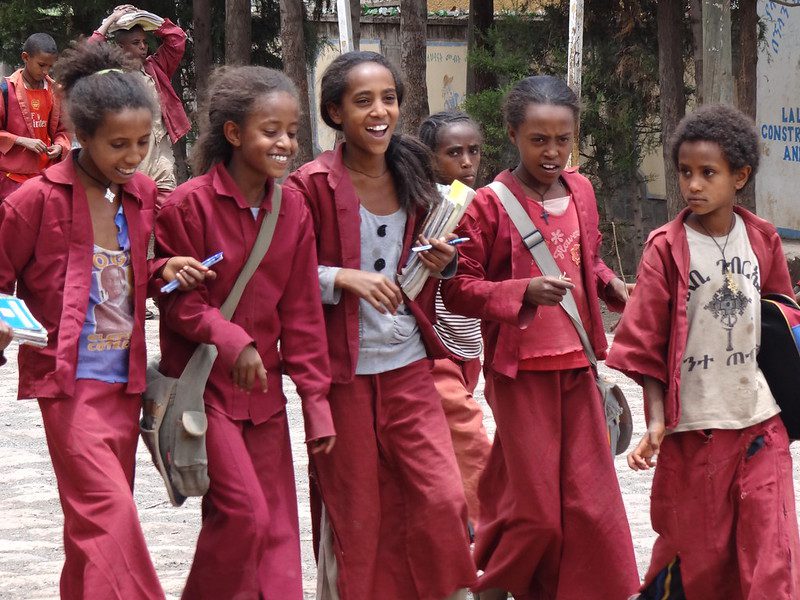
Ruled by kings until 1974, the Ethiopian Federal Democratic Republic now remains in the relatively early stages of development. With a total population of 99.4 million, Ethiopia has the second largest population in Sub-Saharan Africa.  However, it is one of the poorest countries in the world.

Fortunately, Ethiopia is also one of the world’s fastest-growing economies, and education and development in Ethiopia have become a legislative priority. Between 2005 and 2011, Ethiopian economic growth averaged to 11 percent, and although the country is still heavily reliant on agriculture, it has been working toward the lofty goal of becoming a lower-middle-income economy by 2025.

With an emphasis on education and development in Ethiopia, the country has seen impressive results.  As a result, universal education has become close to reality in the country. In 1990, Ethiopian university enrollment had peaked 10,000 students.  By 2015 enrollment skyrocketed to 360,000 students.

Training in technical and vocational careers has also significantly increased. From 1999 to 2014 the number of students in these fields rose from 5,264 to 271,389. The emphasis in these areas hopes that workers will be well suited for the growing construction and manufacturing sectors.

Despite skyrocketing employment, there remains a disconnect between schools and skills demanded in the market.  Even though the number of educational institutions has increased, the quality had decreased. Many students have since graduated with skills are unfit for the available jobs. This issue has led to some unemployment in the newly educated youth workforce.

Despite such economic pressures, overall unemployment has decreased. According to the World Bank Group, a major contributor of Ethiopia’s annual foreign aid, the country has been taking all the right steps forward. By decentralizing resources to regional governments, focusing on infrastructure and reorienting expenditures the country has seen enormous growth.

Today, Ethiopia requires continued aid to accelerate job creation and vastly decrease poverty in the country. This continued support will allow education and development in Ethiopia to continue to thrive.

– Shannon Golden

Photo: Flickr

July 17, 2017
https://borgenproject.org/wp-content/uploads/borgen-project-logo.svg 0 0 Borgen Project https://borgenproject.org/wp-content/uploads/borgen-project-logo.svg Borgen Project2017-07-17 01:30:072024-05-28 00:02:37A New Reality: The Progress of Education and Development in Ethiopia
Developing Countries, Development, Global Poverty

How Agsol Brings Power to Poor Farmers

Many companies use technology to make farmers’ work easier, especially in rural, underdeveloped places where millions of people depend on agriculture to survive. A new company named Agsol has joined this cause. Agsol brings power to poor farmers with its line of solar-powered agro-processing machines. Agsol aims to change the livelihoods and lives of some of the 1.1 billion people living off the power grid.

Agsol founders Matt Carr and Greg Denn created several small mills that can turn harvested crops, such maize and rice, into marketable products. Agsol’s solar-powered products include rice polishers and hullers, coconut scrapers and cassava scrapers.

Agsol currently works with Project Support Services, which provides Agsol’s products to customers in Papa New Guinea and the Pacific Islands. According to the supplier’s website, Agsol’s machines are “built strong for harsh environments…have zero fuel costs, require little maintenance, have a long life and are easy to use.” In this way, the products drive food production efficiency.

The machines save farm families from performing backbreaking, repetitive manual labor. In minutes they do what would have taken much longer before. The machines’ speed and efficiency mean farmers can prepare more products for the market, increasing their incomes and allowing them to rise out of poverty.

When rural farmers can grow and sell more, others also benefit. A 10 percent increase in farm yields contributes to a seven percent poverty reduction in Africa and a five percent reduction in Asia.

Agsol’s agro-processing machines also solve energy needs by producing electricity. “It could power a water purifier, a fridge, or even a community office server for computers,” Carr stated, as reported in Anthill, an Australian magazine that highlights innovation and entrepreneurship.

Providing energy to smallholder farmers and rural communities can further alleviate poverty. The energy created by Agsol’s machines could power a medical clinic, which would help decrease the rate and severity of illnesses. It could also power a school, enabling children to receive a quality education. Even something as simple as a smartphone charger could allow a farmer to communicate with other farmers about current local conditions and share tips for success.

Agsol was one of five companies that recently graduated from The Commonwealth Scientific and Industrial Research Organization’s “ON Connect@Lindfield,” an eight-week experience for small businesses to gain connections and knowledge to further develop their businesses.

The training Agsol received has set it on pace to sell around 800 machines in 2017. With each machine sold, Agsol brings power to poor farmers: the power to improve farm yields, incomes and communities.

– Kristen Reesor

Photo: Flickr

July 17, 2017
https://borgenproject.org/wp-content/uploads/borgen-project-logo.svg 0 0 Borgen Project https://borgenproject.org/wp-content/uploads/borgen-project-logo.svg Borgen Project2017-07-17 01:30:042024-05-28 00:02:57How Agsol Brings Power to Poor Farmers
Development, Global Poverty

Books for Africa: Ending the Book Famine in Sub-Saharan Africa

Most people know that education is the key to ending global poverty. If the next generation of leaders, entrepreneurs, teachers and parents are better educated, they will be more equipped to improve their conditions.

Books for Africa is an organization that is working to accomplish that goal today. Its message is clearly stated on its website: “education is the great equalizer in the world, and books are at the foundation of a strong educational system.”

This inspiring organization controls all aspects of giving books to children in Africa; it collects donated books, sorts them, ships them, and distributes them to the children.

Since Books for Africa’s founding in 1988, they have shipped more than 38 million books to 49 different African countries. These are huge numbers that are making great strides for children’s education in Africa.

The Board of Directors has a multitude of factors that must work for the operation to be successful: do they have enough donations to send, will they have enough money to send the shipment, did they pick an African community that will actually use the books?

According to Publishers Weekly, “It costs $10,300 on average to ship each container by sea to Africa from the U.S.” With this expense, it is imperative for people to continue donating their books, time and money. Books for Africa is sure that its cause is making a difference.

Studies done by the World Bank, various researchers and Books for Africa have concluded that providing even one textbook can increase literacy rates by five to 20 percent.

One program focused on promoting education, Learn NC, concluded that reading a book does so much more than merely pronouncing the written words. Reading can spark discussion, promote engagement with others, transform the reader’s mind and inspire the reader to act.

Books for Africa promotes that a “gift of books truly is a gift of hope.” Ending global poverty can happen one book at a time.

– Sydney Missigman

Photo: Flickr

July 16, 2017
https://borgenproject.org/wp-content/uploads/borgen-project-logo.svg 0 0 Borgen Project https://borgenproject.org/wp-content/uploads/borgen-project-logo.svg Borgen Project2017-07-16 01:30:212020-05-29 08:17:06Books for Africa: Ending the Book Famine in Sub-Saharan Africa
Development, Global Poverty, Water

Successful Improvement of Water Quality in Paraguay


As of March 2017, there have been vast improvements regarding the water quality in Paraguay. WaterAid named Paraguay a top-10 country in improving rural access to clean water. This came after the country implemented a multitude of successful policies and innovations. Government efforts, along with the volunteer work of citizens, helped Paraguay completely transform the way its people get water. It almost doubled the number of rural citizens with clean water access.

For its indigenous and rural populations, in particular, poor water quality in Paraguay used to be a large issue that affected the health and lives of its citizens. In 2000, over 50% of Paraguay’s population did not have access to clean water. Water could only be gathered through reservoirs that collected rainwater. These were extremely unreliable, unsanitary and likely to dry up during the hotter seasons. During times of drought, rural citizens often resorted to drinking from nearby rivers and other unsafe sources of water.

After addressing water quality as an issue of high importance, Paraguay achieved huge success to ameliorate this issue. Despite plentiful freshwater reserves, the country had difficulty providing all citizens with access to this resource. However, when access to clean water was named a priority Millennium Development Goal, the Paraguayan government began making ambitious changes. The original goal was for Latin American countries to halve the number of people that lacked access to safe drinking water. Paraguay vastly overachieved, and over 94% of its citizens now have access to clean water.

The majority of this progress began in 2007 when access to clean water was deemed a basic human right in the country. Law 3239, the Law on Water Resources, was a key piece of legislation in Paraguay, which states that “inhabitants [should] have access to drinking water…and every natural person has a right to access to a minimum quantity of drinking water per day that is sufficient for the satisfaction of their basic needs.”

Another important change was the re-arrangement of certain political institutions. For example, the National Service of Environmental Sanitation of Paraguay became part of the Department of Health. This made access to clean water an issue of public health services.

Additionally, citizen volunteer initiatives and community service agencies were imperative for this shift. Rural communities maintain water and sanitation boards. Families pay these boards a small fee, and in return, the boards set water tariffs to operate the water systems.

– Julia Morrison

Photo: Flickr

July 15, 2017
https://borgenproject.org/wp-content/uploads/borgen-project-logo.svg 0 0 Borgen Project https://borgenproject.org/wp-content/uploads/borgen-project-logo.svg Borgen Project2017-07-15 01:30:012020-06-02 12:34:06Successful Improvement of Water Quality in Paraguay
Development, Education, Global Poverty

What Can Be Learned from Finland’s Education System


The best way to educate students is something that most countries strive to discover. While most are still searching for answers, Finland has seen dramatic progress in its education system within the recent years. The first realization came in 2000 when Finland’s school system was revealed to have the best readers in the world.

Then again in 2009, Finnish students ranked second in science, third in reading, and sixth in math, among a sample of about 500,000 students worldwide. Ever since these rankings were released, countries around the world have been trying to understand what it is that Finland does so well. Here are some of the unique traits of the Finnish education system:

  1. Delayed start: children in Finland do not start their schooling until age seven. Before the start of their formal education, children spend their time in daycare where they learn through more engaging forms such as play, singing, and games.
  2. Frequent breaks: the education system in Finland continues to highlight the importance of playtime throughout schooling. Children are required to spend 15 minutes outdoors every hour, no matter the weather conditions.
  3. Students do not take standardized tests: contrary to many other countries, the Finnish emphasize their dislike of standardized testing. The Finnish education system discourages any standardized testing before the age of 16.
  4. Teaching is a well-respected profession: becoming a teacher is a rigorous and competitive program in Finland. All teachers must go through a five-year master’s program that is highly selective, only accepting a few hundred of the thousands of students that apply.
  5. Uniformity across the country: Finland’s education systems all have the same goals for their students. Additionally, since their educators come from rigorous programs, all schools have equally qualified teachers. The Organization for Economic Co-operation and Development conducted a survey that ranked the differences between the strongest and weakest students as the smallest in the world.

Finland’s education system is very different from those around the world, and yet it is arguably the most successful. The country stresses the importance of play and teaching students to learn not only for the sake of a test but to be more knowledgeable people. Additionally, the teachers themselves know how important their jobs are and therefore dedicate many years of their lives to learning how to be the best educators they can be. For these reasons and more, Finland’s education system is one of the best in the world.

– Olivia Hayes

Photo: Flickr

July 13, 2017
https://borgenproject.org/wp-content/uploads/borgen-project-logo.svg 0 0 Borgen Project https://borgenproject.org/wp-content/uploads/borgen-project-logo.svg Borgen Project2017-07-13 01:30:512020-06-04 10:57:17What Can Be Learned from Finland’s Education System
Page 99 of 163«‹979899100101›»

Get Smarter

  • Global Poverty 101
  • Global Poverty… The Good News
  • Global Poverty & U.S. Jobs
  • Global Poverty and National Security
  • Innovative Solutions to Poverty
  • Global Poverty & Aid FAQ’s
Search Search

Take Action

  • Call Congress
  • Email Congress
  • Donate
  • 30 Ways to Help
  • Volunteer Ops
  • Internships
  • Courses & Certificates
  • The Podcast
Borgen Project

“The Borgen Project is an incredible nonprofit organization that is addressing poverty and hunger and working towards ending them.”

-The Huffington Post

Inside The Borgen Project

  • Contact
  • About
  • Financials
  • President
  • Board of Directors
  • Board of Advisors

International Links

  • UK Email Parliament
  • UK Donate
  • Canada Email Parliament

Get Smarter

  • Global Poverty 101
  • Global Poverty… The Good News
  • Global Poverty & U.S. Jobs
  • Global Poverty and National Security
  • Innovative Solutions to Poverty
  • Global Poverty & Aid FAQ’s

Ways to Help

  • Call Congress
  • Email Congress
  • Donate
  • 30 Ways to Help
  • Volunteer Ops
  • Internships
  • Courses & Certificates
  • The Podcast
Scroll to top Scroll to top Scroll to top