• Link to X
  • Link to Facebook
  • Link to Instagram
  • Link to TikTok
  • Link to Youtube
  • About
    • About Us
      • President
      • Board of Directors
      • Board of Advisors
      • Financials
      • Our Methodology
      • Success Tracker
      • Contact
  • Act Now
    • 30 Ways to Help
      • Email Congress
      • Call Congress
      • Volunteer
      • Courses & Certificates
      • Be a Donor
    • Internships
      • In-Office Internships
      • Remote Internships
    • Legislation
      • Politics 101
  • The Blog
  • The Podcast
  • Magazine
  • Donate
  • Click to open the search input field Click to open the search input field Search
  • Menu Menu

Archive for category: Developing Countries

Information and stories about developing countries.

Developing Countries, Global Poverty, Health

How International Telehealth Collaborations Help

International Telehealth CollaborationsDuring and prior to the COVID-19 pandemic, physicians used telehealth technologies to share knowledge, experience and provide technical assistance. International telehealth collaborations have proved particularly beneficial to low-income countries where healthcare workers often lack the resources of their peers in higher-income nations. One recent example of a telehealth collaboration took place when British physicians offered up virtual services to assist India’s overworked healthcare staff. Elsewhere, international telehealth collaborations have increased the quality of care in low-income countries.

Collaboration During COVID-19

Presently, international telehealth collaboration is underway between British and Indian physicians. On May 6, 2021, India reported the highest daily average of COVID-19 cases in the world. As the country’s doctors work tirelessly to care for patients, the British Association of Physicians of Indian Origin (BAPIO) has sought to lend a helping hand. Yet, instead of traveling to the afflicted country, the BAPIO has reached out to Indian peers via the internet.

More than 250 physicians partnered with BAPIO are providing assistance to junior doctors in India by way of video calls. BAPIO’s physicians tackled a surge of cases earlier on in the pandemic and are using the experience to advise Indian doctors during this time of increased strain. Virtual conferencing tools provide a quick way to share information in the chaotic environment of India’s ongoing health crisis. Indian physicians have also been taking advantage of BAPIO’s resources by sending digital medical documents for medical professionals in Britain to review. In this case, telehealth is used to facilitate on-the-spot medical assistance during immediate health crises, but examples of international telehealth collaboration between high- and low-income nations can be found well before the COVID-19 pandemic started.

Collaboration Before the Pandemic

By creating links between medical professionals in high- and low-income nations, telehealth has proven an invaluable tool for strengthening healthcare institutions lacking access to adequate resources. One of the early successes in fully digitized cooperation between high- and low-income healthcare institutions is that of the Swinfen Charitable Trust. In 1998, the United Kingdom-based trust was established in order to fund a communications network that would link healthcare professionals across the globe.

The network, which is still in operation, allows medical professionals in resource-scarce healthcare systems to email questions to affiliated physicians in better-equipped healthcare systems. The physician best qualified to respond will then do so within 48 hours. Though not particularly high-tech, this rudimentary telehealth network has nevertheless been a valuable resource for medical professionals in low-income parts of the world. Since the establishment of the Swinfen Charitable Trust, the scope and quality of such international collaboration programs have only increased.

The University of Virginia (UVA) maintains numerous collaborative telehealth programs with healthcare systems in low-income countries across the globe. One program connects medical experts at UVA with teams at both the National University of Rwanda and Ethiopia’s Jimma University Hospital. As part of the program, participants discuss surgical and anesthesiological cases over the internet. The programs do far more than answer a few questions though. For underdeveloped healthcare systems, connections with resource-rich nations can improve the overall quality of care.

The Value of Collaboration

Healthcare quality suffers in low-income countries, such as those in sub-Saharan Africa, where per-person spending on healthcare is only a fraction of that in higher-income nations. Polling in the region shows that sub-Saharan Africa’s population has the lowest rate of satisfaction with healthcare out of any global region. Only 43% of those surveyed were satisfied with the healthcare in their area. Furthermore, the region suffers from numerous health crises including maternal mortality and the HIV/AIDS epidemic.

In areas where financial limitations clearly impact healthcare resources, international telehealth collaborations can provide a low-cost solution to some of the deficiencies of underfunded healthcare systems. In many cases, international telehealth collaborations have facilitated technical training for healthcare professionals, provided logistical support for the expansion of healthcare infrastructure and created research opportunities.

University Collaboration

International telehealth collaboration programs such as that undertaken by the UVA in Tanzania have successfully changed the way that healthcare is administered to low-income communities. The UVA connected a gyne-oncological expert with teams at Tanzania’s Kilimanjaro Christian Medical Center in an effort that educated local medical personnel on women’s health and led to the development of breast cancer testing infrastructure. The UVA is not the only university working on collaborative telehealth projects. A survey of four African universities identified a total of 129 inter-institutional healthcare programs in the universities alone. The sheer number of these programs suggests the value to both the participating medical professionals and the supported communities.

With the increased availability of advanced communication technologies, the ability to establish and maintain international telehealth collaboration is more possible now than ever before. Virtual spaces have provided medical professionals with platforms that can be used for immediate consultation or long-term development. No matter how the technology is used, it is undoubtedly creating connections that are beneficial to communities around the globe.

– Joseph Cavanagh
Photo: Flickr

June 4, 2021
https://borgenproject.org/wp-content/uploads/borgen-project-logo.svg 0 0 Kim Thelwell https://borgenproject.org/wp-content/uploads/borgen-project-logo.svg Kim Thelwell2021-06-04 01:30:192021-06-02 04:53:41How International Telehealth Collaborations Help
Developing Countries, Health

HIV/AIDS Prevention and Treatment in Botswana

HIV/AIDS Prevention and Treatment in Botswana
The AIDS crisis shook the world in the 1980s, but some countries, including Botswana, are still trying to find their footing in terms of HIV/AIDS prevention and treatment. HIV/AIDS prevention and treatment in Botswana has been a struggle, but the country is taking the right steps forward to fight the virus.

HIV/AIDS Prevention and Treatment in Botswana

Botswana has the fourth-highest rate of HIV in the world, with a rate of 20.3%. In 2000, the peak rate was 26.3% and rates have decreased every year since. The National AIDS Coordinating Agency created a treatment plan to offer universal free antiretroviral treatment (ART), making Botswana the first country in the Southern African region to do so. This effectively reduced the rates of HIV in Botswana.

This first strategy for treatment is simple. The test and treat strategy gives people who test positive for HIV access to immediate treatment. With enough treatment, HIV levels can become so low that they are undetectable on a test. However, this does not mean treatment should be stopped. Continued treatment is necessary in order to maintain an “undetectable viral load,” which means the chance of a person transmitting HIV is zero.

Women and HIV/AIDS

More than half (56%) of people who have HIV in Botswana are women. HIV disproportionately affects women in Botswana for reasons including sex work, forced marriage, domestic violence and more. Botswana’s HIV prevention strategy includes offering protective solutions as 85% of condoms available in the country are free. However, the country’s sex education is vague and does not cater to women or young people.

Many women contract HIV at a young age because of forced youth marriage, domestic violence and more. Botswana’s sex education program holds ideas such as faithfulness and cultural traditions as the basis of its programs. Without comprehensive and adequate sex education, Botswana’s HIV rates remain high even though treatment is easily accessible.

HIV’s disproportionate effect on women in Botswana triggered the creation of a second treatment plan called Option B+. Option B+ functions similarly to the test and treat strategy, but is specific to women. Since women can pass HIV on to children, after a woman tests positive for HIV once, she receives ART for the rest of her life under Option B+, regardless of whether the HIV becomes undetectable on a test. This lowers the chance of a woman passing HIV on to a baby, which reduces HIV rates among the general population.

Looking Ahead

Botswana’s treatment plans for HIV and AIDS using ART transformed the country from struggling with an epidemic to having a strong plan for it. As of 2017, out of 380,000 people who had HIV in Botswana, 320,000 of them had access to treatment. Botswana is on its way to ending AIDS as a public health threat through its treatment plans.

– Sana Mamtaney
Photo: Flickr

June 1, 2021
https://borgenproject.org/wp-content/uploads/borgen-project-logo.svg 0 0 Kim Thelwell https://borgenproject.org/wp-content/uploads/borgen-project-logo.svg Kim Thelwell2021-06-01 01:30:542021-07-30 00:10:53HIV/AIDS Prevention and Treatment in Botswana
Developing Countries, Global Poverty

TechnoServe Bolsters India’s Economy with Coffee

TechnoServe Bolsters India’s Economy with CoffeeThe coffee industry continues to flourish as the product dominates markets in most parts of the world. Due to its popularity, coffee holds its economic value well, providing sustainable income to those in the industry. India produces a portion of this commodity. However, some regions lack the infrastructure necessary for the industry to prosper. One nonprofit called TechnoServe bolsters India’s economy with coffee.

Andhra Pradesh

TechnoServe provides an avenue through which the farmers of Andhra Pradesh, a town in India, can grow coffee more efficiently. This region of India is a nontraditional growing region. Coffee production in India originated from a desire to prevent further felling of trees for cultivation. The coffee industry provided a means of employment for the locals who live in the region. While this region has viable production capabilities, small land sizes and poor agricultural practices limit the yield potential. TechnoServe works alongside these farmers to solve these problems and assist in expanding the market potential.

Coffee was introduced to Andhra Pradesh, India, in the ’60s by the Andhra Pradesh Forest Department (APFD) to end the slash and burn agriculture that dominated the region. Ideally, by introducing a new type of cultivation, fewer trees would be cut and burned. The APFD hopes this will protect the forest and encourage sustainable communities within the region. This area specializes in Araku Coffee — globally recognized for its high quality and popularity. The Specialty Coffee Association rated Araku Coffee as a world-renowned coffee with an 88-90 out of 100. Even with the coffee’s success in the global market, many farmers still struggle to experience individual economic stability.

Impact of TechnoServe

One aspect of coffee cultivation TechnoServe hopes to address is the picking of coffee cherries. Unlike a typical harvest, coffee cherries ripen at different rates, making it imperative for farmers to pick only the individual ripe fruit. This labor-intensive task requires focused knowledge of coffee ripening and the skills to recognize when the coffee is ready to be harvested. When farmers pick underripe fruit, it lessens the overall quality of the coffee produced. Because this is a nontraditional growing region, many farmers in Andhra Pradesh, India, do not have access to the knowledge necessary to improve these practices. TechnoServe’s assistance has provided these farmers with training and knowledge to bolster economic potential.

One result of TechnoServe’s influence is that farmers no longer need to rely on village middlemen for economic stability. Due to a lack of consistent income, some farmers ended up indebted to middlemen who were sought out to help families do things such as send their children to school. This debt trap limited the potential of many who found themselves incapable of digging themselves out.

Another aspect of TechnoServe’s training program is the involvement of the whole family. Palika, a farmer from Andhra Pradesh, India, explains how — when he wanted to expand his business and learn new coffee cultivation techniques — his wife also learned. Learning together built a partnership between the two with a common goal as they moved up the value chain.

Importance of TechnoServe

India’s coffee market, historically, remains export-oriented. However, with the increasing popularity and usage of small-scale farmers, facilitating these exports prevents farmers from maintaining a decent profit. Some farmers lose at least 10% of the production potential to local traders. TechnoServe hopes to end these losses by utilizing farmer producer organizations (FPOs) to take the product to market.

Utilizing the FPO market for coffee sales will improve the economic potential for farmers like Palika who hope to make their businesses profitable. Through the transformation of cultivation practices in Andhra Pradesh, India, Technoserve bolsters India’s economy and continues to instill hope for the future of Araku’s coffee industry.

– Kate Lucht
Photo: Flickr

May 30, 2021
https://borgenproject.org/wp-content/uploads/borgen-project-logo.svg 0 0 Kim Thelwell https://borgenproject.org/wp-content/uploads/borgen-project-logo.svg Kim Thelwell2021-05-30 01:31:322021-05-26 16:48:03TechnoServe Bolsters India’s Economy with Coffee
Developing Countries, Women's Empowerment

How the Sports Bra Project Decreases Poverty

The Sports Bra Project In many countries, sports bras are often overlooked as a basic necessity and are deemed a luxury. Sports bras are either hard to come by or oftentimes put at the end of the list when it comes to expenses. Due to the inaccessibility and high expense of sports bras, Sarah Dwyer-Shick created the Sports Bra Project. The Sports Bra Project recognizes that a lack of sports bras presents a barrier to female participation in sports, limiting opportunities for inclusion. With more women engaged in sports, more women are empowered and open to possible athletic careers that present a pathway out of poverty.

What is the Sports Bra Project?

Dwyer-Shick founded the Sports Bra Project in 2018 when she discovered the need for sports bras in Namibia, Africa. Originally, she brought a few sports bras to local women participating in youth soccer. She then discovered that even players on the Namibian National Women’s Soccer Team did not have access to sports bras. Dwyer-Shick realized the greater need for sports bras all around Africa, not just Namibia. From this revelation, the nonprofit was born.

The Sports Bra Project provides sports bras to people in 26 different countries. The organization collects sports bras and distributes them to partner organizations, many of which are located in Africa. Through these efforts, the project helps female athletes overcome one of the main barriers to participation in sports — proper attire. Without the needed clothing, many people are hesitant to join in sports. For those who do join, improper athletic clothing hinders their performance and can even lead to pain or injuries.

The Sports Bra Project has already collected more than 4,500 sports bras for athletes in need. Even ordinary individuals can contribute to the cause by donating sports bras and setting up collection campaigns. More than 50 soccer teams in the United States have held sports bra drives to collect sports bras for those in need all over the world. The nonprofit also allows handwritten notes to be attached to the bras to make donations more personal.

How Sports Bras Help Poverty

The Sports Bra Project was set up because something as simple as an article of clothing can provide countless opportunities to young girls and women around the world. Although sports bras seem like an added expense, sports bras can decrease poverty.

Sports bras address the gap between males and females in sports, which has a catalyst effect. Sports activities keep children off the streets, provide a possible career path and provide a healing outlet for those who have experienced trauma. Regardless of the reasoning behind participation, sports foster important traits that ensure a brighter future for participants. “Teamwork, leadership and confidence” are among these traits.

Sports bras decrease poverty by reducing the gender gap in sports while uplifting and empowering females with valuable skills that go beyond the sports arena. Proper clothing encourages women to participate in sports and empowers women to step into arenas typically dominated by males. By reducing the gender gap and supporting females to develop careers in sports, women are empowered to rise out of poverty.

– Maddie Rhodes
Photo: Flickr

May 30, 2021
https://borgenproject.org/wp-content/uploads/borgen-project-logo.svg 0 0 Kim Thelwell https://borgenproject.org/wp-content/uploads/borgen-project-logo.svg Kim Thelwell2021-05-30 01:30:312021-07-15 01:26:32How the Sports Bra Project Decreases Poverty
Developing Countries, Health

Female Genital Mutilation in Burkina Faso

Female Genital Mutilation in Burkina FasoBurkina Faso is a small country located in West Africa and is one of the most impoverished countries in the world. Accordingly, it also has one of the weakest healthcare systems in place for women and children. Approximately 10% of all children born in Burkina Faso die before the age of 5 and more than 300 women out of 100,000 live births die during pregnancy or labor. Burkina Faso is also among the top 10 countries in the world with the highest prevalence of female genital mutilation (FGM).
Female Genital Mutilation in Burkina Faso

According to UNICEF, in 2010 it was found that 76% of Burkinese women have undergone female genital mutilation. However, the prevalence of FGM in Burkina Faso has significantly declined during the past two decades. In 1999, 83.6% of women had undergone cutting. This rate dropped to 76.1% in 2010. The decline has much to do with the country’s ban on female genital mutilation, passed in 1996 and further criminalized in 2018 with additional prison sentences and fines.

Since the ban, a declining trend in the prevalence of FGM has taken place among women of lower age groups. Older generations are now less likely to pass down the practice. Additionally, a change in sentiment has coincided with the decrease in prevalence. Only 9% of people in Burkina Faso believe that female genital mutilation should be continued, with support for the practice coming mostly from rural communities.

Government Intervention

Burkina Faso’s government also recognizes that a law is not enough to completely eradicate female genital mutilation. Strong cultural and religious beliefs have kept female circumcision rituals active. The legislation does not have much sway over a firmly established tradition. To fully combat the problem, the Burkinabé Government established the National Committee for the Fight against Female Genital Mutilation(CNLPE) in 1990. Since then, the committee has successfully led a nationwide campaign against female genital mutilation. The CNLPE has fought to end the practice in several ways.

How the CNLPE Fights Female Genital Mutilation

  • A national hotline was created for Burkinese citizens to anonymously report instances of female genital mutilation.
  • Police and magistrates patrol villages to investigate potential cases of female genital mutilation and offer counsel.
  • Educational campaigns on FGM in Burkina Faso reached more than 300 remote villages.
  • Awareness of the issue has been publicized in nearly every form of media. Media is used to disseminate information on female genital mutilation in local languages across the country.
  • Information on the practice has become a part of the curriculum in primary and secondary schools.

Looking Ahead

Burkina Faso has become one of the most committed countries in the fight to eliminate female genital mutilation. Banning the practice in 1996, combined with various efforts from the CNLPE, resulted in a decrease in FGM nationally. Although the issue has gained support, some rural villages have started performing genital mutilation on girls at younger ages. This is done, “so that they are either less willing to talk about what has happened to them or to seek help.” Though there is more work to be done, Burkina Faso is moving in the right direction in ending FGM for good.

– Eliza Kirk
Photo: Flickr

May 26, 2021
https://borgenproject.org/wp-content/uploads/borgen-project-logo.svg 0 0 Kim Thelwell https://borgenproject.org/wp-content/uploads/borgen-project-logo.svg Kim Thelwell2021-05-26 07:30:112024-05-30 22:23:21Female Genital Mutilation in Burkina Faso
Developing Countries, Global Poverty, Health

The Aama Program: Maternal Health in Nepal

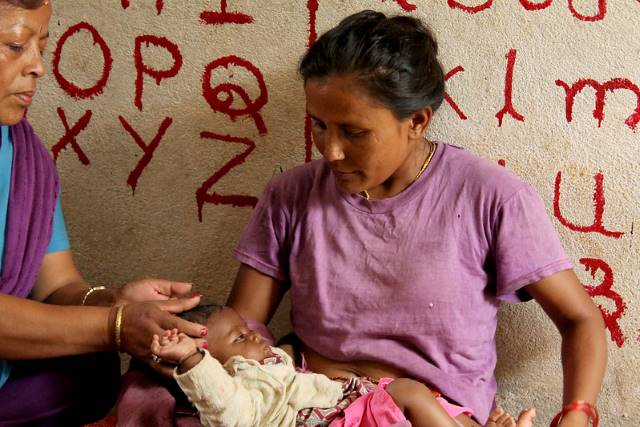
The Aama ProgramMaternal health is a pressing issue in developing countries as they often lack infrastructure and facilities to adequately care for pregnant women. Women often lack the incentive to use health service centers and choose to rather give birth at home, resulting in high maternal mortality rates. In Nepal, attempts to remedy this issue have led to a cash transfer scheme, which seeks to encourage pregnant women to use medical facilities to give birth by giving them a certain amount of cash to do so. Known as the Aama (or mother) program, the initiative aims to address Nepal’s poor maternal health by making sure that more births are overseen by health professionals.

Overview of Maternal Health in Nepal

Nepal’s healthcare system has long suffered from neglect due to civil strife and political instability. Despite this, it has seen an improvement in maternal health over the past few decades as more government attention has been spent toward this end. The country has received praise from the United Nations for its efforts in reducing its maternal mortality rate by almost three-quarters between the years 1990 and 2015, reflecting the government’s commitment to addressing the issue.

These developments can be attributed in part to improvements in infrastructure and education, as better infrastructure makes health facilities more accessible and higher levels of education raise awareness of medical issues. Additionally, government programs were implemented to assist Nepali women in receiving better healthcare and offset potential costs of doing so. These smaller programs, which were consolidated in the Aama program in 2009, have been an important aspect of Nepal’s attempt to improve maternal health.

The Aama Program

Predecessors to the Aama program were formed to address the issue of maternal health in Nepal. In 2005, the Safe Delivery Incentive Programme (SDIP) was introduced to pay pregnant women to use public health facilities to give birth. These payments vary based on region, reflecting the fact that women in remote parts of the country incur additional costs to access quality healthcare. As a result, women in the Himalayan regions of the country receive 1,500 rupees as these areas have a difficult terrain, and therefore, more costs are involved to reach medical facilities. Those in the middle hill regions receive 1,000 rupees because the terrain is still quite challenging. Those in the southern plains region receive 500 rupees as the land in this area is flat and easy to manage.

In 2009, the program was renamed the Aama program while a provision was added to provide reimbursement to health facilities and any costs associated with delivery services were removed. Finally, the program was further amended in 2012 to provide cash incentives for women to complete at least four antenatal care visits.

Since the inception of the program in 2005, there has been an increase in the usage of medical facilities to give birth. A study from 2005-2009 shows how this increase can be seen throughout every region of the country. Overall, births in medical facilities have almost doubled from 2006 to 2011 with an increase from 20% to 39%.

Room for Improvement

While Nepal has seen progress in increasing the usage of health facilities to give birth, there is still room for improvement. As of 2018, 58% of women still gave birth at home, even those with knowledge of the Aama program. This discrepancy can be explained by social and economic factors. For example, women who choose to give birth at home may do so because they are not comfortable with a hospital setting. Furthermore, women who are economically disadvantaged often receive substandard care. As a result, these women may still choose to give birth at home even after receiving a cash incentive to use a medical facility.

The Aama program is a promising initiative undertaken by the Nepalese government to improve maternal health in the country. It seeks to incentivize pregnant women to use health facilities to give birth rather than giving birth at home and risking complications. While Nepal has seen a decrease in maternal mortality over the past decade, the Aama program can be expanded even further by accounting for the various socio-economic issues women face.

– Nikhil Khanal
Photo: Flickr

May 15, 2021
https://borgenproject.org/wp-content/uploads/borgen-project-logo.svg 0 0 Kim Thelwell https://borgenproject.org/wp-content/uploads/borgen-project-logo.svg Kim Thelwell2021-05-15 07:31:462024-05-29 23:10:14The Aama Program: Maternal Health in Nepal
Developing Countries, Poverty Reduction

The Boom of Economic Growth in East Africa

economic growth in East AfricaIt is no surprise that the COVID-19 pandemic has dampened growth momentum worldwide. Nonetheless, it is expected for Africa to recover and experience continued economic growth. The launch of the 2021 African Continental Trade Area already shaped a very promising economic future for Africa that can amount to a $450 billion income gain by 2035. Contributions to this growth can be credited to the robust economic dynamics of East Africa. In terms of economic growth, Africa is expected to maintain a stable positive percentage. In 2019, East Africa remained the continent’s fastest-growing region with an average growth of 5%. Projected GDP growth in East Africa before COVID-19 was forecasted above 5%. The economic growth in East Africa is positively contributing to development in Africa overall.

East African Economies

Economic growth can be evidently demonstrated by looking at annual GDP in the last decade. Some of the main economic players of the region show steep upward directions. Notably, of the world’s top 10 fastest-growing economies in 2020, three are East African countries including Rwanda, Ethiopia and Tanzania. In the year 2019, Ethiopia and Rwanda placed second and third respectively. Ethiopia averaged a 10.3% growth as Africa’s fastest-growing economy from 2007 to 2017. For the same period, Rwanda followed closely with an average of 7.5%.

Increased Foreign Investments

In 2019, East African Foreign Direct Investment (FDI) inflow increased from $5.7 billion to $11.5 billion in just a year. Inflows to all East African countries except Tanzania increased during this time period. This 103% increase is largely due to China as East Africa’s largest investor. Chinese investment accounts for almost 60% of FDI inflow in East Africa. Investment is going into the technology, manufacturing and services sectors. FDI inflows created 89,877 jobs in 2018 and 211,084 in 2019. Employment increased in Uganda, Tanzania, Rwanda, Kenya, Burundi and South Sudan.

Economic Development Initiatives

Investment within the region has also increased from $152.7 million to $724.6 million. The number of projects supported by these investments increased by 23.3%. To take advantage of the high investment flow in the region, the East African Community (EAC) has placed incentives for development in related markets. The six-member countries of the EAC account for a sizable market of consumers for agricultural raw materials and other extracted goods. Additionally, the EAC provided necessary information and technology to increase opportunities for investment in the financial and banking sectors.

Looking Ahead

Income distribution, inflation and poverty conditions remain concerning for the region and were worsened by the COVID-19 pandemic. This means that to maintain growth and counter these chronic economic conditions, the region must implement policy that utilizes the available resources and supports economic growth.

The African Development Bank Group suggests accelerating structural transformation and strengthening the macroeconomic policy approach. This would address issues such as inflation and increase financing and trade. Another important policy recommendation is to invest in human capital. Developing a skilled workforce by starting with education for the youth and technology training will further promote innovative economic growth in East Africa and the African continent overall.

– Malala Raharisoa Lin
Photo: Flickr

May 14, 2021
https://borgenproject.org/wp-content/uploads/borgen-project-logo.svg 0 0 Kim Thelwell https://borgenproject.org/wp-content/uploads/borgen-project-logo.svg Kim Thelwell2021-05-14 01:31:082021-05-12 00:08:41The Boom of Economic Growth in East Africa
Developing Countries, Development, Global Poverty

4 Things to Know About Nigerian Infrastructure

Nigerian InfrastructureNigeria is located in West Africa and shares a border with Niger to the north and the Atlantic Ocean to the south. The hundreds of different languages spoken in the country characterize its diverse population. The country benefits from a relatively large population and economy but it still has a high poverty rate. Reducing the poverty rate will require better Nigerian infrastructure that will expand the economy to reach the countries rural population.

4 Facts About Nigerian Infrastructure

  1. A public-private partnership is the core strategy. The government has acknowledged the importance of private sector help to reduce the infrastructure deficit which has been a thorn in the side of an economy that shows immense potential. The Nigerian vice president, Yemi Osinbajo, clearly outlined what the government believes the role of the private sector should be as it pertains to improving Nigerian infrastructure. He pointed out that the private sector, which accounts for 92% of the country’s GDP compared to the public sector accounting for a mere 8% of the GDP, shows the limits of public expenditures and budgetary allocations. Osinbajo says it could require $3 trillion over 30 years in infrastructure investment to resolve the infrastructure deficit. Osinbajo included that the country would see a lot of benefit from large investments from the private sector whether it be from local or foreign resources.
  2. The president is promoting private investment in infrastructure. President Muhammadu Buhari of Nigeria recently approved the creation of a new development firm called Infra-Co, which will be backed by an infrastructure fund worth $2.63 billion. The hope is to improve the transportation and power networks that have held back the 40% of Nigerians living below the poverty line — a staggering number for a country that boasts the biggest economy and population in Africa. It has been reported that KPMG will serve as the transactional advisor to the fund which further legitimizes the government’s plan to boost Nigerian infrastructure through partnership with the private sector.
  3. Nigeria is investing heavily in railway construction. The construction of the Lagos-Ibadan rail created history in West Africa as being the first double-track standard gauge rail in the region. The Lagos-Calabar railway is another large project costing $11 billion and running 1,400 kilometers long, which connects the western and eastern parts of the country.
  4. Other key infrastructure projects. Other infrastructure projects in Nigeria include the World Trade Centre, the Lekki Free Trade Zone and the Abuja Gateway Airport. The World Trade Centre and Lekki Free Trade Zone will create more business opportunities for foreign and local investors and increase tourism and entertainment. It will also boost commercial and residential real estate development. The Abuja Gateway Airport will be an architecturally appealing addition to the Abuja Airport. Its design will include features that symbolize the countries diverse culture. The use of solar power, green roofs and locally made laterite clay will help contribute to an environmentally friendly and modern design. All three of these projects seem to be an attempt to bring about more economic opportunities by making Nigeria’s richest cities more welcoming and luxurious for foreign investors.

The increased business opportunities created by the heavy investments in Nigerian infrastructure will significantly help the economy. The railways will allow more Nigerians across the country to work better jobs in wealthier cities such as Lekki city. But, the infrastructure spending still needs to expand to the country’s rural parts so that every Nigerian can be involved in the rapidly growing economy. Nevertheless, Nigeria is making developmental strides and its rapid economic progress should be viewed as a success.

– Stephen Blake Illes
Photo: Flickr

May 14, 2021
https://borgenproject.org/wp-content/uploads/borgen-project-logo.svg 0 0 Lynsey Alexander https://borgenproject.org/wp-content/uploads/borgen-project-logo.svg Lynsey Alexander2021-05-14 01:30:012021-05-12 00:59:044 Things to Know About Nigerian Infrastructure
Children, Developing Countries, Global Poverty, Health

Vaccinating Zero-Dose Children

vaccinating Zero-dose childrenGavi, the Vaccine Alliance has partnered with Save the Children to expand the reach of vaccination efforts and health services for vaccinating zero-dose children. Millions of children around the world go without routine vaccinations every year, creating dangerous situations in developing nations plagued with diseases such as pneumonia and measles. The partnership intends to address this problem through a coordinated response of immunization programs to reach children in the most disadvantaged places on Earth.

The State of Global Child Vaccinations

There has been an undeniable trend of progress in global child vaccination rates over the past several decades. The rate of children fully vaccinated against diphtheria, pertussis and tetanus stands at 85% today compared with 20% in 1980. Likewise, the rate of vaccinations protecting against measles and polio rose from less than 20% in 1980 to 85% in 2019, while rates of vaccinations for rubella rose from less than 10% to more than 70% in the same period of time. However, despite the obvious progress in child vaccinations, there is still a sizable portion of children who are unvaccinated or under-vaccinated, leaving them susceptible to life-threatening diseases.

Approximately 20 million children are either under-vaccinated or completely unvaccinated across the globe, with more than 60% of this number coming from just 10 countries including Nigeria, Ethiopia and Pakistan. About half of the 20 million receive no routine vaccinations whatsoever, making them zero-dose children. These children overwhelmingly live in developing nations, many of which are high-intensity conflict zones. More peaceful areas in developing nations still lack adequate infrastructure and millions of children living in remote and marginalized communities have little or no access to healthcare.

The Risks for Zero-Dose Children

Zero-dose children are some of the most vulnerable people on the planet as they are easy targets for life-threatening diseases such as pneumonia, measles and HPV. Pneumonia kills more than 800,000 children every year, making it the leading infectious cause of preventable child deaths in the world. It is a treatable disease, and if diagnosed early, pneumonia treatment over a three-to-five day period can be successful using antibiotics costing just $0.40. However, in low-income countries lacking access to clean water, healthy diets and affordable healthcare, it is a life-threatening disease as almost all child pneumonia deaths occur in developing nations.

Other major diseases of concern to zero-dose children include measles and HPV. Global measles cases are on the rise again, reaching levels not seen in more than two decades. In 2019, the world reported about 863,000 cases of measles compared with only 360,000 the year before. This alarming escalation turned even worse with the arrival of COVID-19 as many countries had to suspend immunization services and programs leaving even more children unable to get vaccinated. Furthermore, while the rate of global HPV vaccinations has steadily increased for several years, fully-vaccinated girls only make up about 15% of the world with many developing nations lacking any vaccination programs. These low coverage levels around the world mean the likelihood a child born today will have all necessary vaccinations by age 5 is less than 20%.

The Partnership

Thankfully, Gavi, the Vaccine Alliance and Save the Children plan to make a global impact with a vaccination program intended to reach zero-dose children. Save the Children already works in developing nations by training and supporting frontline healthcare workers, delivering life-saving medicine and improving immunization coverage. Gavi will leverage this existing presence to expand immunization programs for vaccinating zero-dose children. The partnership between the two organizations will work by sharing key learnings and best practices to explore adding vaccinations to current treatments of pneumonia, malaria and malnutrition for children in low-income communities.

This program will build on the healthcare successes of Save the Children in developing nations and expand the reach of vaccinations to Gavi-supported countries such as Angola, the Republic of the Congo and Cameroon. Immunization efforts will prioritize fragile and high-conflict areas but other locations with major immunization gaps will also receive aid and vaccination increases. Additionally, the partnership will address vaccine hesitancy among parents by implementing community-based education programs and will continue the advancement of COVID-19 vaccination access in developing nations. These efforts stand to make an immense difference in developing nations and millions of children and their families stand to benefit, as do entire communities, as higher levels of immunizations lead to less infectious diseases.

The Road Ahead

Although health innovations in the past half-century have contributed to a major decrease in preventable child mortality rates, there are still far too many children who die from infectious diseases and many of these children are completely unvaccinated. In response to this situation, Gavi and Save the Children have teamed up with efforts in vaccinating zero-dose children in the world’s most impoverished nations. By building on the successes of current operations and introducing vaccinations into existing health programs, the partnership will strive to decrease the immunization gap and continue making headway toward the global goal of no zero-dose children.

– Calvin Nordhougen
Photo: Flickr

May 12, 2021
https://borgenproject.org/wp-content/uploads/borgen-project-logo.svg 0 0 Yuki https://borgenproject.org/wp-content/uploads/borgen-project-logo.svg Yuki2021-05-12 01:31:152024-05-30 22:23:23Vaccinating Zero-Dose Children
Developing Countries, Development, Education, Global Poverty, Health

Inequalities Among Migrant Workers in Lebanon

Migrant workers in Lebanon
For decades, the Lebanese economy has relied heavily on migrant workers to supplement the workforce. The economy provided necessary domestic services and filled up low-level positions in retail, salons and hospitality. The kafala system, a program that encourages employers to hire migrant workers in Lebanon, fueled a sense of dependence on migrant workers in various industries. This institution creates great racial and economic inequality. The employers abuse the migrant workers and offer them substandard pay and inhumane working conditions. This immense disparity worsened during the COVID-19 pandemic. The employers placed workers in unsafe situations, forcing them to endure terrible conditions with the imminent threat of job termination.

Refugees and the Kafala System

Currently, refugees and migrant workers make up a quarter of Lebanon’s population. This renders them an extremely valuable sector of society. Tensions between local-born Lebanese citizens and refugees developed during past years. Lebanese individuals and armed forces committed several acts of violence against refugees out of spite and anger. In addition, nearly 90% of Syrian refugees become unemployed and unable to meet housing costs in 2020. Employers fired domestic migrant workers at an alarming rate since the pandemic.

The Anti-Racism Movement found that Lebanese employers terminated their migrant workers, likely due to racial bias. Nevertheless, gaining Lebanese citizenship as a migrant worker is nearly impossible. Due to an antiquated nationality policy set up during the French mandate, only children born to a Lebanese father may obtain full legal status as a Lebanese national. Thus, no feasible pathway exists to permanent residence and legal protection for migrant workers in Lebanon. They end up at the mercy of their employers to keep them in the country.

Medical Inequality Among Migrant Workers

For many migrant workers, medical inequality has become especially prominent during the COVID-19 pandemic. Due to the cruel implements of the kafala system, migrant workers rely on their employers to provide them with legal residency status. Without Lebanese nationality, these workers do not have entitlement to these benefits that other people within Lebanon possess. Lack of health coverage discourages these migrant workers from seeking out medical help and accessing the treatments they need to ensure their personal wellbeing. As unemployment has continued to rise, thousands of migrant workers are left with no healthcare or legal status. They must return to their home countries, despite the potential endangerment that awaits them.

In an international relations briefing by Natasha Hall, the author notes that “ensuring that people are not prioritized for medical treatment by nationality, as medicine disappears from shelves and intensive care units fill up, is another serious concern.” Migrant workers in Lebanon end up not being able to access treatments due to a lack of insurance and inadequate financial means. This is similar to the United States and other countries that experience inequality. Lebanon faces economic complications, such as inflation rates rising and banks refusing to withdraw money for their customers. It has become nearly impossible for people to obtain the medications they need. Lebanon sustains its medication supply due to imported drugs. Due to the trade challenges facing the nation, Lebanese citizens cannot obtain medicine for their health conditions.

Hope for an End to Migrant Worker Inequality

The kafala system is extremely ruthless. It puts migrant workers at a socio-economic position far below the average Lebanese citizen. This caused a public outcry, sparking change and encouraging reform to the system. According to the Human Rights Watch, “Amendments to the system [in 2020] provide guarantees for workers including 48-hour work weeks, a rest day, overtime payment, as well as sick and annual leaves. Workers can now terminate their contracts without their employer’s consent.” Increased regulations have provided an added layer of protection to the rights of migrant workers in Lebanon.

– Luna Khalil
Photo: Flickr

May 10, 2021
https://borgenproject.org/wp-content/uploads/borgen-project-logo.svg 0 0 Kim Thelwell https://borgenproject.org/wp-content/uploads/borgen-project-logo.svg Kim Thelwell2021-05-10 07:30:142021-05-07 06:40:48Inequalities Among Migrant Workers in Lebanon
Page 52 of 157«‹5051525354›»

Get Smarter

  • Global Poverty 101
  • Global Poverty… The Good News
  • Global Poverty & U.S. Jobs
  • Global Poverty and National Security
  • Innovative Solutions to Poverty
  • Global Poverty & Aid FAQ’s
Search Search

Take Action

  • Call Congress
  • Email Congress
  • Donate
  • 30 Ways to Help
  • Volunteer Ops
  • Internships
  • Courses & Certificates
  • The Podcast
Borgen Project

“The Borgen Project is an incredible nonprofit organization that is addressing poverty and hunger and working towards ending them.”

-The Huffington Post

Inside The Borgen Project

  • Contact
  • About
  • Financials
  • President
  • Board of Directors
  • Board of Advisors

International Links

  • UK Email Parliament
  • UK Donate
  • Canada Email Parliament

Get Smarter

  • Global Poverty 101
  • Global Poverty… The Good News
  • Global Poverty & U.S. Jobs
  • Global Poverty and National Security
  • Innovative Solutions to Poverty
  • Global Poverty & Aid FAQ’s

Ways to Help

  • Call Congress
  • Email Congress
  • Donate
  • 30 Ways to Help
  • Volunteer Ops
  • Internships
  • Courses & Certificates
  • The Podcast
Scroll to top Scroll to top Scroll to top