• Link to X
  • Link to Facebook
  • Link to Instagram
  • Link to TikTok
  • Link to Youtube
  • About
    • About Us
      • President
      • Board of Directors
      • Board of Advisors
      • Financials
      • Our Methodology
      • Success Tracker
      • Contact
  • Act Now
    • 30 Ways to Help
      • Email Congress
      • Call Congress
      • Volunteer
      • Courses & Certificates
      • Be a Donor
    • Internships
      • In-Office Internships
      • Remote Internships
    • Legislation
      • Politics 101
  • The Blog
  • The Podcast
  • Magazine
  • Donate
  • Click to open the search input field Click to open the search input field Search
  • Menu Menu

Archive for category: Developing Countries

Information and stories about developing countries.

Children, Developing Countries, Development, Education, Global Poverty

How Hip-Hop Helps Improve Education in South Africa

Hip-Hop Helps Improve Education
In schools worldwide, mathematics is a leading subject that is necessary for people to progress and complete their education. Although educational systems differ across countries, many still see math as one of the most crucial skills for developing critical thinking building blocks that drive logic and decision-making. While mathematics is held to a high standard in countries within Africa, education in South Africa lags behind its counterparts in terms of performance on international standardized assessments. With a lack of trained math teachers in schools, large class sizes and “deficient and outdated infrastructure, instrumentation and teaching materials,” many students are unable to reach their full potential. As countries seek different methods like technology to better educational outcomes, one specific school in Cape Town has adopted a unique approach: Hip-Hop. Hip-hop helps improve education in South Africa by recognizing the various methodologies of learning.

Hip-Hop Helps Improve Education in South Africa

Kurt Minnaar, a former dancer and current eighth-grade teacher, decided to test a creative approach when he saw his students struggling to grasp concepts in school. Minnaar recognizes that while the current system of education in South Africa may have worked for the older generation, it is failing today’s kids. As a student who once struggled with math himself,  Minnaar believes in recognizing four different types of learning methodologies in education. Acknowledging these different learning styles, Minnaar uses music and dance in the classroom to engage students in their learning and improve math outcomes. With the rise of social media, especially music-focused platforms such as TikTok, engaging students with the activities that appeal to them can help improve their math outcomes.

The Rise of Social Media

Social media is growing in South Africa, with the rate of social media use increasing 19% since 2019. Of the current South African population, roughly 40% are active users on Facebook, Instagram and Twitter. Young people aged 18-24 account for 40.4% of these users.

Confirming the rise in social media use, a survey of 200 South African university students shows that 88% of students identified as users of social media. This illustrates the large role and the growing influence of social media on the lives of the current generation of students. Although some see the increase in the use of social media as unhealthy, young educators like Minnaar see it as an opportunity to use the current culture and trends to make learning enjoyable for all.

Creative Learning

Since Minnaar began teaching, he has created several rap beats that stimulate the minds of his students while increasing their ability to retain information. Some of his pieces include “Cre-eight,” “Trick-onometry” and “Van Guard,” all of which address multiplication tables through catchy hip-hop beats. To ensure that students are gaining the most out of his classes, Minnaar has students rap the songs to the beat of the music he plays off his laptop and encourages students to dance during class. He sees creative activities like singing and dancing as essential to helping students enter a headspace conducive to learning. Thus far, Minnaar has only created content for multiplication tables. However, the results have been so positive that he is currently working on new material and lesson plans to address different areas of education in South Africa.

While Minnaar enjoys creatively interacting with his students, he also recognizes the importance of scholastic performance and his role as an educator to ensure students’ progress. Thus far, he has seen success in helping his students in their academic achievements. He also recognizes, however, that some students respond best to traditional methods. Minnaar’s only hope is that people remain open-minded to the many approaches to education in South Africa. After all, the approaches of some of the greatest individuals of all time were once met with skepticism. Thus, perhaps mathematics and hip-hop are not the most unusual pair after all.

– Chloe D’Hers
Photo: Flickr

November 14, 2021
https://borgenproject.org/wp-content/uploads/borgen-project-logo.svg 0 0 Jennifer Philipp https://borgenproject.org/wp-content/uploads/borgen-project-logo.svg Jennifer Philipp2021-11-14 07:30:182024-05-30 22:25:23How Hip-Hop Helps Improve Education in South Africa
Children, Developing Countries, Development, Education, Global Poverty, Health, Malaria

Vaccine Aids in the Fight Against Malaria in Malawi

Malaria in Malawi
Malaria in Malawi remains a top concern for public health and the safety of the country. On a global scale, Malawi accounts for 2% of all malaria cases, placing it in the leading “20 countries with the highest malaria prevalence and mortality rates.” In 2019, Malawi’s population totaled more than 19 million. That same year, health facilities in the country reported almost 5.2 million cases of malaria. The sheer amount of malaria cases in Malawi is alarming in comparison to the total population number.

Malaria-endemic Regions

Looking at malaria objectively helps explain its high prevalence throughout Africa. As the World Health Organization (WHO) reported in 2019, Africa accounted for 94% of the 229 million malaria cases and 409,000 deaths worldwide. WHO notes that children younger than 5 made up 67% of these deaths. The transmission of the deadly parasite allows it to thrive in many countries throughout Africa, specifically after the spike in annual rains in November. The malaria parasite thrives in very humid, often hot and wet conditions, making Malawi a prime location for the spread of the parasite. While the country has worked to control rates of malaria in Malawi by offering health services, the country still struggles to control the sheer amount of cases present.

The Beginning of the Malaria Vaccine Pilot Program

In 2019, Malawi welcomed the world’s first malaria vaccine pilot program. The vaccine, referred to as RTS,S, targeted children ages two and younger. GlaxoSmithKline is the producer of RTS,S, which underwent clinical trials after 30 years of refining. The vaccine trials found that RTS,S was able to prevent about four out of every 10 cases of malaria. The pilot project in Malawi aimed to gather observations and evidence of actual vaccine implementation to guide WHO in its policy recommendations for the use of RTS,S on a broader scale. The criteria observed included child mortality, vaccine follow-up and vaccine safety. Although the intention of the vaccine is not to replace other preventative measures, WHO hopes to add it to its bundle of malaria prevention recommendations.

The World Health Organization Approves the Vaccine

On October 6, 2021, WHO officially endorsed the use of the RTS,S vaccine worldwide, now called the Mosquirix malaria vaccine. This approval comes after two years of trials in three African countries (including Malawi) where more than 800,000 children received the vaccine. The vaccine can prevent severe and fatal cases of malaria at a rate of 30%. Since the pilot program implementation in 2019, WHO has been able to justify the ability of countries to roll out the vaccine safely. Although the vaccine itself is not 100% effective, it works as a preventative measure, reducing the likelihood of contracting a deadly case of malaria in Malawi. The rollout of this vaccine comes after decades of unsuccessful attempts to find a form of protection against malaria.

Economic Benefits of a Preventative Measure

Access to the Mosquirix vaccine will not only protect public health and safety but will also relieve the stress on Malawi’s economy. For years, programs focused on treating malaria in Malawi reactively. Given that treatment options are more widely available than prevention methods, health system responses have centered on reactivity rather than proactivity. As a result, the first response to malaria cases is often drugs. Drugs are both expensive and difficult to obtain. Furthermore, the malaria parasite adapts over time, becoming resistant to medications and decreasing the efficacy of drugs. Access to a proactive vaccine addresses the issue beforehand, saving costs in both healthcare visits and treatments in the long run.

Moving Forward

Malaria is a unique illness in that it involves a parasite that can strike an individual several times. In many parts of sub-Saharan Africa, this reality is concerning. On a yearly basis, children average a total of six malaria infections. The continued attacks on their immune systems leave them susceptible to other diseases. However, with the new vaccine comes new hope in the fight against malaria in Malawi. While the approval of the vaccine is only the first step in widespread change, the next few years present a strong opportunity for progress in some of the most vulnerable communities.

– Chloe D’Hers
Photo: Flickr

November 14, 2021
https://borgenproject.org/wp-content/uploads/borgen-project-logo.svg 0 0 Jennifer Philipp https://borgenproject.org/wp-content/uploads/borgen-project-logo.svg Jennifer Philipp2021-11-14 01:30:072021-11-10 13:53:31Vaccine Aids in the Fight Against Malaria in Malawi
Children, Developing Countries, Development, Education, Global Poverty, Health

4 Poverty Reduction Programs to End Poverty in India

End Poverty in India
Between 2005 and 2006, there were 640 million people experiencing multidimensional poverty in India. Multidimensional poverty means the people are lacking more than just finances, they are also lacking clean water, electricity, access to healthcare and education. By 2017, that number had dropped to 365 million, a 271 million improvement. Massive strides have occurred in India to improve living conditions. In July 2019, 99.45% of the country had access to basic sanitation, compared to only 40% in previous years, this is all apart of the process to end poverty in India.

About End Poverty

End Poverty in India is a non-governmental organization (NGO) that began in 2009 with the goal of reducing poverty in India. End Poverty currently focuses on helping uneducated girls, struggling women, small farmers, agricultural farmers without land and traditional craftsmen, among others. Currently, its work occurs in the states of Rajasthan, Haryana, Karnataka, Madhya Pradesh, Jharkhand and Delhi. The organization develops and implements self-sustaining programs to act as a catalyst for social impact. Its four main areas of program intervention are sustainable livelihood creation, girls’ education, rural development and civil society development.

 4 Poverty Reduction Programs that End Poverty Implemented

  1. Sustainable Livelihood Creation: At End Poverty in India, sustainable livelihood creation provides equal opportunities to those who are less privileged. The organization helps individuals create sustainable, independent livelihoods with limited reliance on external resources. The interventions that End Poverty in India implemented include sustainable farming, dairy farming development, women’s economic empowerment and a skills training and vocational education program. Recent accomplishments include planting 5,759 saplings in India as part of the sustainable farming intervention between 2019 and 2020, bringing the total of planted saplings to 41,579 since the program began.
  2. Girls’ Education: Education is a constitutional right in India, but female literacy often lags behind that of men. For example, in Tijara, Rajasthan the literacy rate among females is only 38.88% in comparison to 75.01% among males. One of the most notable programs that End Poverty started is the Kishori Shiksha Program (KSP), which is a one-year, intensive “catch-up” education program for adolescent girls who are no longer in school. As part of the KSP Program, End Poverty in India helped 304 new students enroll in school and 126 girls were able to complete their literacy classes. KSP trains local women in course delivery, teaching methods and record keeping. The organization then supplies both teachers and students with learning materials.
  3. Rural Development: The 2011 census illustrated that 68.84% of India’s population lived in rural villages. Over the last few decades, various groups have worked to alleviate existing issues in rural communities, including End Poverty in India. Under its rural development program in Tijara, the organization created the Village Development Group (VDG). It will act as coordinators accessing government plans, supporting rural development and making requests based on the needs of their village and tracking the requests through the various levels of government until they reach completion. End Poverty participates in VDG’s meetings and provides help in the preparation and processing of documents and decisions. Accomplishments include opening 147 new bank accounts, installing 45 hand pumps and providing 160 families throughout 19 villages with solar-powered LED light panels.
  4. Civil Society Development Program: In Indian culture, the idea of civil society organization is deeply important and has been a major reason for the increase in NGOs. Civil society organizations have contributed to the well-being of many communities in India. However, End Poverty has found that many of them still struggle with basic issues such as a lack of funding, structured planning and recognition. These issues were the catalyst for End Poverty to create its N/Core program, which helps early-stage nonprofits that focus on poverty reduction. Mentors of the N/Core program work with the heads of the new nonprofits to speed up their progress and help them create adaptable models for economic development.

End Poverty in India’s work is important and has helped significantly to reduce poverty, but it has more work to do. The organization hopes that its four programs will make a significant difference and provide individuals with the opportunity to live better lives.

– Trystin Baker
Photo: Flickr

November 12, 2021
https://borgenproject.org/wp-content/uploads/borgen-project-logo.svg 0 0 Jennifer Philipp https://borgenproject.org/wp-content/uploads/borgen-project-logo.svg Jennifer Philipp2021-11-12 01:30:452024-05-30 22:25:214 Poverty Reduction Programs to End Poverty in India
Children, Developing Countries, Development, Education, Global Poverty, Health, Women and Children, Women and Female Empowerment, Women's Empowerment, Women's Rights

The Evolution of Women’s Rights in Liberia

Women’s Rights in Liberia
Although there have been steps toward equal rights for women, some countries are struggling more than others. In Liberia, gender disparities and imbalances are common. To put it another way, there is little appreciation or recognition for the contributions of women to the Liberian community. However, progress has occurred in regard to improving women’s rights in Liberia and gender equality.

The Root of Inequality

In Liberia, traditional and religious insight impacts gender inequality and the neglect of women. This leaves women underrepresented, uneducated and undermined. Gender inequality plays a major role in the rights of women. They have no one to advocate for their rights but themselves. This would not be as unfortunate if women had a right to equal education. While contributing all of their time to family and working, women have less time to focus on education and social life. Furthermore, the stringent roles and responsibilities of women have prevented them from being able to partake in society and benefit development.

The Roles of Women

Women account for more than 50% of the labor in agriculture, cash production and food crop production, along with marketing and trading in Liberia. Despite their heavy role in the workforce, private and public sectors do not even honor the law of allowing pregnant women to go on maternity leave. They are also responsible for taking care of the household and doing additional work on the side, such as gathering wood and water. Despite their roles in agriculture, women own less property and have no other option than to be dependent on male relatives. The discrimination in land ownership is due to biases in the formal legal framework and customary law. Men are also more likely than women to inherit the land, control decision-making, allocation, management and the use of land.

Besides a woman’s role economically, they also experience a high risk of violent behavior against them in Liberia. These acts of violent behavior can include female genital mutilation, wife burning, dowry-related violence, rape, incest, wife battering, female femicide, female infanticide, trafficking, early marriage, teenage pregnancy, execution and prostitution. Any violence against women is a human rights violation according to the Geneva Conventions. The Geneva Conventions and their protocols provide protection against discrimination against women, allowing women to be equal to men under the Humanitarian Law, subsequently improving women’s rights in Liberia.

Aid and Hope

Another aid established is the 2009 National Gender Policy, which fights to abolish all gender issues. The main goal is to form a fair society where girls and boys along with women and men enjoy their human rights equally on a basis of non-discrimination. In other words, where the full potentials of all, regardless of sex, are harassed toward achieving unprejudiced rapid economic growth which includes equal access to social, financial and technological resources.

Inconsistency in the national legislature has delayed the implementation of the National Gender Policy. After President Ellen Johnson-Sirleaf became Africa’s first female president, men began to recognize the possibility of a woman in power. As the President of Liberia from 2006 to 2018, she secured millions of dollars in foreign investment. She also formed a Truth and Reconciliation Committee to investigate corruption and heal ethnic tensions.

The history and roles of women in Liberia are what drive the ongoing evolution of women’s rights. The more women who have representation, the better the chances are for their rights. Changes start as small policies and fill bigger shoes such as presidencies. Although improvements are still necessary, any is better than none at all.

– Destiny Jackson
Photo: Flickr

November 12, 2021
https://borgenproject.org/wp-content/uploads/borgen-project-logo.svg 0 0 Kim Thelwell https://borgenproject.org/wp-content/uploads/borgen-project-logo.svg Kim Thelwell2021-11-12 01:30:412021-11-08 14:49:29The Evolution of Women’s Rights in Liberia
Developing Countries, Development, Education, Global Poverty, Health

ARMMAN Improves Maternal and Newborn Health in India 

Newborn Health in India 
Maternal and newborn health in India is a pressing issue. Women die every day before and during childbirth, yet 90% of these maternal deaths are entirely preventable with adequate healthcare. Poverty exacerbates maternal mortality, with about 94% of maternal deaths occurring in lower-income nations. In lower-income nations, the common obstacles in receiving proper healthcare include the inability to afford healthcare services and a “lack of information.” Distance also plays a factor, particularly in rural areas where clinics and hospitals are scant and many women cannot easily travel to these facilities. ARMMAN is an India-based organization that aims to improve maternal and newborn health in India.

Maternal Healthcare in India

Even if a woman makes it to the hospital for childbirth, the services she receives may be subpar, putting her health at risk. Without proper hygiene protocols in place and well-trained medical staff to assist them at health centers, women can die from infections, severe bleeding, “high blood pressure during pregnancy” and delivery complications. These factors account for almost two-thirds of maternal deaths and all of them are avoidable.

Maternal health poses an urgent problem in India. The latest available data indicates that India’s maternal mortality rate (MMR) stands at 113 deaths per 100,000 births in comparison to the world average MMR of 11 deaths per 100,000 births in higher-income countries. In fact, pregnancy complications are the leading “cause of death among girls between 15 and 19 years of age” in India. These statistics also reflect the broader issues with Indian healthcare — it is inaccessible, unaffordable and low quality. Although it will be difficult to reform the entire healthcare system in India, organizations have a commitment to improving maternal and newborn health in India.

ARMMAN

ARMMAN is one such organization working to improve maternal and newborn health in India. This Indian nonprofit dedicates efforts to improving the quality of life for mothers and their newborns. Dr. Aparna Hegde founded ARMMAN in 2008 after witnessing the death of a pregnant woman due to circumstances that were entirely preventable with appropriate guidance. ARMMAN leverages technology to help both women and healthcare workers. So far, the organization has helped more than 26 million women and has trained more than 212,000 health workers across 19 Indian states.

Apps and mobile technology play a central role in ARMMAN’s programs, providing education and monitoring the well-being of pregnant women. The organization’s Mobile Academy is a maternal and child healthcare course that aims to keep health workers up-to-date with “knowledge of life-saving preventative health behaviors and improve the quality of their engagement with new and expecting mothers and their families.” The audio-based training can be accessed via voice call and is available in five of the most common local languages. Another project, mMitra, allows pregnant women and mothers of infants to access “a free mobile voice call service,” which provides “timed and targeted preventive care information weekly/bi-weekly directly to the phones of the enrolled women.” mMitra has reached 2.5 million women so far.

Arogya Sakhi Program

AMMAN’s Arogya Sakhi program is a home-based child and maternal care program. Arogya Sakhi “trains women health entrepreneurs (Arogya Sakhis) from communities in resource-poor rural areas to provide home-based preventive care” and other necessary tests and screenings to “ensure early referral during antenatal and infancy period.” This service is essential because healthcare workers attend only 37.4% of births in rural areas, a gaping difference in comparison to a birth attendance rate of 73.4% in urban areas. Arogya Sakhi helps diminish this gap, giving women the skills to help their communities. Armed with medical kits and an app that guides them through proper procedures, the Arogya Sakhis assist people in their community with care, diagnosis and births. The Arogya Sakhis charge a minimal fee for their services, allowing them to gain financial stability and pull themselves out of poverty.

Maternal health remains a pressing issue in developing countries, but organizations like ARMMAN work to improve access to high-quality healthcare services for women and their children.

– Alison Ding
Photo: Flickr

November 11, 2021
https://borgenproject.org/wp-content/uploads/borgen-project-logo.svg 0 0 Lynsey Alexander https://borgenproject.org/wp-content/uploads/borgen-project-logo.svg Lynsey Alexander2021-11-11 01:30:192024-05-30 22:25:17ARMMAN Improves Maternal and Newborn Health in India 
Children, Developing Countries, Development, Education, Global Poverty, Health

Pope Francis’ View on Poverty

Pope Francis' view on Poverty
The Roman Catholic Church has a following of approximately 1.2 billion people around the globe. Pope Francis currently stands as the 266th pope. Pope Francis’ view on poverty emulates the values of his namesake, St. Francis of Assissi, putting poverty relief at the forefront of his mission. Pope Francis has the power to bring together people from all over the world in order to combat global poverty.

Leading by Example

As the figurehead of a major global entity, Pope Francis has a tremendous influence on a significant number of people. Even before his election as pope, as the first pope from Latin America, Pope Francis had been exposed to poverty as a youth in his homeland. Born Jorge Mario Bergoglio, Pope Francis was born in Buenos Aires to Italian immigrants. Growing up in his native land of Argentina, Pope Francis saw the gap between the wealthy and impoverished widening drastically. This issue, occurring in several areas of the world, is a topic of concern for Pope Francis.

Poverty Reduction Efforts

Speaking on poverty, Pope Francis says, “There is such a large number of people who are on the margins. And we don’t see them because poverty is bashful. They have become part of the landscape; they are things.” As far as religious figures go, Pope Francis is notably unconventional. He calls on world leaders to fight poverty and hunger by readjusting the budgeting of tax dollars and redistribution of immense wealth in order to provide for the most at risk.

He also preaches about remaining true to an ascetic lifestyle, which means possessing the discipline to reject modern luxuries in the name of equality. For example, the title of cardinal is a tremendous honor in the Roman Catholic Church and is often cause for celebration. Practicing what he preaches, Pope Francis requested that those wishing to travel to the Vatican to witness his appointment to the position of cardinal not do so. Rather, Pope Francis suggested donating these travel funds to people most in need.

In March 2021, the Pope donated $350,000 while in Iraq, $250,000 of which went directly to families living in poverty. The Pope has also made significant donations toward the fight against COVID-19, particularly with the purchase of ventilators sent to several countries in need. Additionally, the Pope contributed to funding for medical supplies through donations to Colombia in April 2021 and Brazil in August 2021.

Calls to Action

Regardless of one’s belief system, it is easy to recognize the Pope’s humanitarianism simply by considering Pope Francis’ view on poverty. It is inspiring to have a leader who so valiantly fights for those in poverty. The Pope typically follows the teachings professed in the Gospel of Matthew, verse six, which states, “Beware of practicing your righteousness before other people in order to be seen by them, for then you will have no reward…” This means that the Pope does not make public the nature of his charity. The known instances of his charity are only public knowledge because of public statements made out of gratitude by the recipients. The Pope’s empathy and authenticity are notable features that are changing the world for the better.

It is easy to recognize injustice in the world, however, it is not always easy to remain steadfast in ethics and intervene in global poverty with bravery. In his speeches, Pope Francis declares that even the most ordinary individual can play a role in global poverty reduction.

– Michelle Schwab
Photo: Unsplash

November 11, 2021
https://borgenproject.org/wp-content/uploads/borgen-project-logo.svg 0 0 Kim Thelwell https://borgenproject.org/wp-content/uploads/borgen-project-logo.svg Kim Thelwell2021-11-11 00:07:102021-11-16 07:17:35Pope Francis’ View on Poverty
Developing Countries, Development, Global Poverty, Health

Solar Wells Bring Clean Water to Tharparkar, Pakistan

nba-star-provides-clean-water-in-pakistan
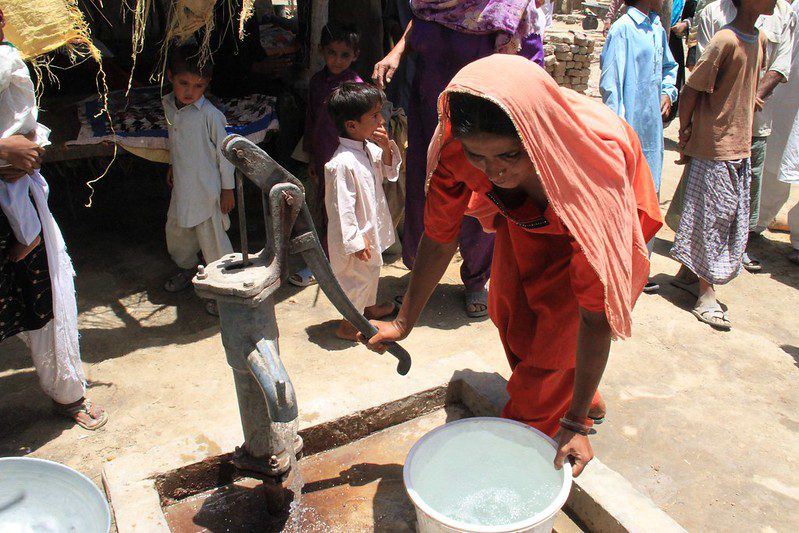
Kyrie Irving has gained much attention in the media for his basketball career, but his greatest accomplishment so far is off the court. In July 2021, the NBA All-Star funded and built a solar water well in Pakistan. The philanthropic effort by Irving intends to bring clean water to a town called Tharparkar in a lower socioeconomic area of Pakistan. Clean water and healthcare stand at the forefront of some of the issues in many areas with poverty. Many of the issues that plague small villages within Tharparkar are preventable and addressable. The poverty rate in Tharparkar stands at a staggering 87%. Not only is Irving providing clean water to Tharparkar but he is also bringing much-needed attention to other issues that afflict impoverished communities.

Bringing Clean Water to Tharparkar

The Brooklyn Nets Point Guard’s KAI Family Foundation funds the solar water project in Pakistan in partnership with the Paani Project. Irving built the solar water plant in the small village of Rohal in Tharpakar within the Sindh Province. Though the Sindh Province in Pakistan is experiencing an economic upturn in most urban areas, people often overlook the rural outskirts.

Tharparkar is one of the most impoverished areas of Pakistan, and thus, the people endure several issues of poverty. A lack of safe drinking water, high unemployment rates, food insecurity, poor health facilities, low educational attainment rates and malnutrition are among the issues plaguing Tharparkar. There are existing manual wells in Tharparkar, “but a lack of rainfall and inadequate maintenance” means existing wells “have either dried up or their contents are unsafe for human consumption.” Where a clean water supply does exist, villagers, mostly women, walk for more than an hour in conditions of extreme heat to access this water.

The Benefits of a Solar Well

Irving’s solar well will bring clean water to more than 1,000 villagers. Solar wells negate the need for ropes and pulleys commonly used in manual wells. Additionally, these solar wells can last up to 25 years. Current wells in Tharparkar almost exclusively necessitate the use of manual labor to pull the water up and livestock and agriculture pollute them. With only the turn of a lever, countless families will enjoy the benefits of clean drinking and bathing water.

Irving is not only bringing clean water to one of Pakistan’s most impoverished areas but is also bringing widespread attention to the other issues the area endures. Bringing attention to some of the issues sometimes forgotten in rural areas is important in order to improve overall living conditions in Tharparkar. These marginalized communities need aid to escape the cyclic effects of poverty. This philanthropic act by Irving is one that is garnering worldwide attention off the court rather than on it. Irving’s humanitarianism assists the many Pakistani families in poverty.

– Carter Haskel
Photo: Flickr
November 7, 2021
https://borgenproject.org/wp-content/uploads/borgen-project-logo.svg 0 0 Jennifer Philipp https://borgenproject.org/wp-content/uploads/borgen-project-logo.svg Jennifer Philipp2021-11-07 07:30:282021-11-05 07:09:43Solar Wells Bring Clean Water to Tharparkar, Pakistan
Developing Countries, Global Poverty, Health

A One-Stick Hospital Stay to Promote Safety

One-Stick Hospital Stay
Needles pose a serious risk for people in developing countries, but nearly every hospital stay requires the use of needles in some way, whether it be for IV lines, blood draws or simple injections. One of the top medical technology companies in the world has a new plan for a “One-Stick Hospital Stay” that could change the safety and experience of global health care for everyone.

What is the Danger of Needles?

Because of poor access to medical equipment, hospitals in developing countries must routinely reuse needles. This unsafe practice leads to the transmission of bloodborne pathogens such as Hepatitis B and C, HIV and other unrecognizable infections. In many countries dealing with poverty, more than 60% of injections are unsafe, meaning that the needles may undergo use multiple times on multiple patients before people throw them away or sanitize them. The probability of transmission from unsafe needle use varies within different locations, but Hepatitis B, Hepatitis C and HIV are the most common bloodborne pathogens that occur through needles.

Along with infections, needles can cause anxiety for patients. Estimates have determined that trypanophobia, the fear of needles, affects 20% to 30% of adults. It has many possibly detrimental consequences, such as fainting, nausea, difficulty breathing, hypersensitivity and avoidance of necessary hospital visits. However, new technology could soon be on the way to eliminating these risks and the anxiety that goes along with needles and injections.

Becton, Dickinson and Company’s New Innovation

Becton, Dickinson and Company’s (BD) goal is to create a “One-Stick Hospital Stay” to eliminate the need for multiple needle sticks in a single hospital visit. As a result, it will reduce discomfort and anxiety and increase safety for patients. BD has been working towards this vision for the past 70 years. The company provides doctors with the tools they need to utilize needles correctly on each individual. This assistance helps to ensure success on the first needle stick as well as success with IV insertion and care. Recently, BD has entered into a partnership with Velano Vascular to continue approaching this one-stick goal.

Velano Vascular allows clinicians to go virtually needle-free by drawing blood through peripheral intravenous catheter lines (PIVC lines). This technology brings BD one step closer to achieving a “One-Stick Hospital Stay.” Velano Vascular is currently one of the most rapidly expanding medical device companies. In hospitals, 90% of patients receive IV therapy. About 95% of that therapy uses PIVC lines. Inserting these lines and performing venipuncture are some of the most common operations in hospitals. Reducing the number of needlesticks in these procedures can reduce the risk of stress, fear and possible infection and pain, creating an overall safer and more comfortable healthcare experience for everyone.

Future Repercussions

BD is present in nearly every country striving to enhance healthcare experiences for everyone. It is working to expand access to this new technology, and as it becomes available around the world, the impact will be significant. A “One-Stick Hospital Stay” can reduce the risk of unsafe injections, decrease bloodborne pathogens, provide more comfort and less stress to patients and assist countries in poverty that do not have access to large quantities of sterilized needles for each patient.

– Delaney Gilmore
Photo: Flickr

November 5, 2021
https://borgenproject.org/wp-content/uploads/borgen-project-logo.svg 0 0 Kim Thelwell https://borgenproject.org/wp-content/uploads/borgen-project-logo.svg Kim Thelwell2021-11-05 07:30:462024-05-30 22:25:23A One-Stick Hospital Stay to Promote Safety
Developing Countries, Development, Global Poverty, Health

Horn of Africa Development Initiative in Kenya


In a part of the African region known as the Horn of Africa, Kenya has made significant reforms in the past 10 years to ignite economic growth in the nation. However, like the rest of the world, economic progress in Kenya came to a halt during the COVID-19 pandemic. With a vulnerable economy, poverty and inequality remain daunting issues. Infestations of locusts began in January 2020, which further weakened the economic infrastructure, particularly in the Northeast part of Kenya. The Horn of Africa Development Initiative aims to uplift and empower Kenyans living in poverty.

The Impact of COVID-19 on Poverty in Kenya

For many Kenyans, food security is a serious problem. According to the Kenya COVID-19 Poverty Monitor by the Chronic Poverty Advisory Network, by January 2020, some families could not afford more expensive foods such as vegetables while others only ate one or two meals per day. In addition, “lower agricultural yields” create further stress on households as does job loss due to the COVID-19 pandemic.

COVID-19 has impacted the Kenyan economy through “supply and demand shocks.” In 2020, real gross domestic product in Kenya dropped by 0.3%. Service sectors such as tourism and education faced disruption and manufacturing took a hit as well.

Help for Kenyans in Need

An inventive non-governmental organization is working to help families in need and reduce global poverty by building resilient communities. Fatuma A. Adan founded the Horn of Africa Development Initiative (HODI) in 2003, in Marsabit, Northern Kenya. Through “advocacy, education, peacebuilding and sustainable livelihoods,” the NGO works with communities and women who struggle to meet their basic needs.

Due to unemployment, locust infestation and frequent droughts that wither crops, many households are barely able to put food on the table every month. Because economic shocks disproportionately impact women-headed households, HODI runs a program with disadvantaged Kenyan women in mind.

Building Resilient Communities Program

HODI’s Building Resilient Communities Program aims to empower women and help communities increase their economic power. The program encourages village women to organize into groups of 10 to 50 women to save money together. Each member must save “at least 10 shillings every day: three shillings for education, three shillings for hospital bills and four shillings for small business.” After 30 days, this amounts to 300 shillings per member, which goes into a bank account that the women operate. From this pooled money, “women take out small loans repayable in small monthly installments” to fund their children’s education, pay medical bills and even start their own businesses.

With the revenue from their small businesses, women can”repay their loans” and also provide for their families and achieve financial independence. Within the program, HODI helps participants with record-keeping and teaches them financial literacy.

With the donations HODI receives for this program, HODI “inject[s] grants into the groups to increase the amount of money that is available for loans” and provides households with “water tanks to increase the water-saving capacity” of families.

Bringing Women Together for a Shared Purpose

Another benefit of the Building Resilient Communities Program is that although the women belong to different ethnic groups, they come together for a common purpose. Because HODI founder “Fatuma Adan was born to parents from two warring tribes in Marsabit, Northern Kenya,” she made it her goal to help unite people from different factions.

For her work in building resilient communities in Kenya, Adan received the Stuttgart Peace Prize in 2011, among other awards. In 2012, Adan received a nomination for the Nobel Peace Prize. With support and funding from donors, the Horn of Africa Development Initiative can continue to empower and uplift Kenyans living in poverty.

– Sarah Betuel
Photo: Flickr

October 30, 2021
https://borgenproject.org/wp-content/uploads/borgen-project-logo.svg 0 0 Kim Thelwell https://borgenproject.org/wp-content/uploads/borgen-project-logo.svg Kim Thelwell2021-10-30 07:30:462021-10-27 16:13:50Horn of Africa Development Initiative in Kenya
Developing Countries, Development, Education, Global Poverty, Health

4 Mobile Applications Elevating Farmers in Kenya

Elevating Farmers in KenyaAfrican agricultural technology (agri-tech) services bring in $2.6 billion every year. Kenyan agri-tech is a large piece of Africa’s agri-tech industry, accounting for 25% of all startups. Agri-tech companies in Kenya create websites and mobile applications with the hope of elevating farmers in Kenya from poverty by allowing them to showcase their products and access information databases. Mobile applications and virtual marketplace platforms also boost market accessibility for farmers in Kenya.

Agriculture in Kenya

More than 25% of the global workforce works in the agriculture sector. In Kenya, agricultural employment accounts for more than 40% of the population. Additionally, agriculture comprises 33% of Kenya’s GDP. Although agriculture is a major economic sector, in Kenya the industry traditionally consists of older and smallholder farmers. Socially, Kenyans see farming as lackluster and dirty. Many young people prefer to turn to education rather than farming but digitalization in the agriculture industry is drawing in younger people.

It is important for younger Kenyans to enter the agricultural industry because their experience with technology will advance the market. What Kenyans saw as an industry for the older generation is transforming into a technologically advanced industry with the help of young adults. Engaging young people through social media and other mobile applications will rejuvenate and modernize agriculture in Kenya. Additionally, because many farmers in Kenya are smallholders, people who own small-scale farming operations, the creation of mobile applications allows farmers to feasibly access new markets via smartphone or computer without relying on brokerages or a middle-man, elevating farmers in Kenya from poverty.

4 Agri-Tech Applications Transforming Agriculture in Kenya

  1. Mkulima Young: Created by Joseph Macharia, a Kenyan farmer, Mkulima Young’s website connects farmers and potential buyers throughout East Africa. The platform is enhancing trade throughout the region. Using the application, Kenyans can feasibly buy and sell agricultural products. On the platform’s website’s homepage, Mkulima Young features young farmers’ selfies with their products, the latest products its members uploaded to the site and requests from buyers. Another page on the site includes a virtual market that allows farmers in Kenya to showcase and sell their cash crops, flowers, livestock and other agriculture products. Mkulima Young’s virtual marketplace gives users access to data to help understand trend projections and market insights.
  2. Twiga Foods Ltd: Beginning in 2014, Twiga sources products from Kenyan farmers and food manufacturers for registered vendors to sell, in turn providing adequate market security for farmers and vendors. After sourcing fresh fruits and vegetables from Kenyan farmers, Twiga Foods brings produce to Kenya’s urban centers. Currently, more than 4,000 suppliers and more than 35,000 vendors utilize Twiga’s marketplace platform. Twiga prides itself on transparency and efficient delivery of quality products. The platform offers smallholder farmers reassurance that their products will be profitable. Twiga Foods makes selling and buying Kenyan produce easier for average Kenyan farmers and vendors through its transparency and a guaranteed market.
  3. DigiCow: Founded by tech start-up Farmingtech Solutions, which specializes in agricultural data management, DigiCow provides smallholder farmers with farming management services. With DigiCow’s services, farmers in Kenya can reach data-based conclusions rather than guessing and estimating results, which was common practice before applications like DigiCow. The application enables its users to make data-driven decisions. Specific tools the application offers are, but are not limited to, virtual training, message boards for farmers to connect with each other, digital tracking of feeding, insemination and milking, notifications for vital dates and analyzed reports. April 2019 marked a notable milestone for DigiCow. The World Bank recognized the Farmingtech Solutions team as Kenya’s most inventive Agri-tech by awarding DigiCow the winner of the Disruptive Agricultural Technologies challenge. With the DigiCow application, farmers can now keep data sets and make educated decisions.
  4. DigiFarm: Founded by Safaricom, a telecommunication firm in Kenya, DigiFarm allows farmers to connect directly with bulk produce buyers, credit providers and cheaper agronomic materials. DigiFarm arranges deals with buyers for small farmers. These deals are more beneficial than the deals farmers use to make with traditional brokers. More than 40,000 farmers utilize the application. The app allows smallholder farmers to analyze the market of their produce. Additional services DigiFarm provides its users are insurance for weather-related incidents, loss management and recommendations on how to increase yields. Projections estimate that if success continues, DigiFarm will represent 10% of annual ag-business affairs in Kenya. Before DigiFarm’s assistance many farmers could not afford supplies but with DigiFarm’s help, many small farmers can now run successful operations.

How Agri-Tech Alleviates Poverty in Kenya

The World Bank states that an increase in agriculture technology will assist Kenya in meeting its rising food demand, whilst elevating farmers in Kenya from poverty. As smaller farmers utilize more agri-tech, their production will increase leading to a rise in income for themselves and also a rise in food production for the country. Increasing agriculture productivity through agricultural technology will not only increase food supply but will also increase the number of jobs available in both the agriculture and technology sectors.

These agricultural technology applications are a game-changer for smallholder Kenyan farmers. They have the potential to create economic growth in the agriculture and technology industry. The creation of virtual marketplaces and agri-tech platforms will ultimately lead to prosperity in Kenya.

– Bailey Lamb
Photo: Flickr

October 26, 2021
https://borgenproject.org/wp-content/uploads/borgen-project-logo.svg 0 0 Lynsey Alexander https://borgenproject.org/wp-content/uploads/borgen-project-logo.svg Lynsey Alexander2021-10-26 07:30:082024-05-30 22:25:174 Mobile Applications Elevating Farmers in Kenya
Page 46 of 157«‹4445464748›»

Get Smarter

  • Global Poverty 101
  • Global Poverty… The Good News
  • Global Poverty & U.S. Jobs
  • Global Poverty and National Security
  • Innovative Solutions to Poverty
  • Global Poverty & Aid FAQ’s
Search Search

Take Action

  • Call Congress
  • Email Congress
  • Donate
  • 30 Ways to Help
  • Volunteer Ops
  • Internships
  • Courses & Certificates
  • The Podcast
Borgen Project

“The Borgen Project is an incredible nonprofit organization that is addressing poverty and hunger and working towards ending them.”

-The Huffington Post

Inside The Borgen Project

  • Contact
  • About
  • Financials
  • President
  • Board of Directors
  • Board of Advisors

International Links

  • UK Email Parliament
  • UK Donate
  • Canada Email Parliament

Get Smarter

  • Global Poverty 101
  • Global Poverty… The Good News
  • Global Poverty & U.S. Jobs
  • Global Poverty and National Security
  • Innovative Solutions to Poverty
  • Global Poverty & Aid FAQ’s

Ways to Help

  • Call Congress
  • Email Congress
  • Donate
  • 30 Ways to Help
  • Volunteer Ops
  • Internships
  • Courses & Certificates
  • The Podcast
Scroll to top Scroll to top Scroll to top