• Link to X
  • Link to Facebook
  • Link to Instagram
  • Link to TikTok
  • Link to Youtube
  • About
    • About Us
      • President
      • Board of Directors
      • Board of Advisors
      • Financials
      • Our Methodology
      • Success Tracker
      • Contact
  • Act Now
    • 30 Ways to Help
      • Email Congress
      • Call Congress
      • Volunteer
      • Courses & Certificates
      • Be a Donor
    • Internships
      • In-Office Internships
      • Remote Internships
    • Legislation
      • Politics 101
  • The Blog
  • The Podcast
  • Magazine
  • Donate
  • Click to open the search input field Click to open the search input field Search
  • Menu Menu

Archive for category: Child Poverty

Child Poverty, Children, Global Poverty

Foundation Fighting Child Poverty in Iraq

Child poverty in Iraq
Although the statistics regarding child poverty in Iraq are exceedingly high, specific foundations aimed at finding solutions for this ever-growing issue (particularly, in a post-2020 world) are fairly difficult to come by. The COVID-19 pandemic created even more barriers to education, success and safety for children in Iraq, but the groups that do exist are working to shrink these numbers.

COVID-19’s Effect on Child Poverty in Iraq

 The COVID-19 pandemic dramatically complicated the lives of Iraq’s youngest population in poverty, subjecting parents to make difficult decisions about the education and safety of their children.

About 4.5 million Iraqi citizens fell into poverty after the start of the COVID-19 pandemic. This extreme increase in numbers has led to “[l]osses to jobs and rising prices[,]” and the national poverty rate is now sitting at 31.7%. Because of this increase, the amount of children that live below the poverty line has almost doubled.

The combination of “low computer ownership, limited access to internet and poor connectivity” had left millions of children without education during the earliest wave of the COVID-19 pandemic. Those who could access their classwork, however, were also not receiving adequate education because their educators struggled with similar issues and failed to connect with their students. Following the economic impact of the pandemic, many families in Iraq are sending their children to work or, in more extreme cases, marrying them off in order to gain any form of protection or currency for themselves or their children.

Child Poverty in Iraq and its Connection with Sex Trafficking

Hardships, whether stemming from lack of resources, money, or education, left many children circulating in the ring of sex trafficked victims.

Due to Iraq’s large population, its staggering number of children (47%) are consistently at a greater risk of sexual exploitation. Some children resort to “survival sex” in an attempt to break free from the cycle of abuse that they experience. Examples of “survival sex” include superiors forcing young boys to grant them sexual favors to earn their work wages. Families that find themselves below the poverty line can, in an attempt to “protect” their daughters, marry them off in order to receive a “bride price,” or “an amount of money, property or other form of wealth ‘paid’ to the parents of a woman for the right to marry their daughter.”

The Iraqi Children Foundation

The Iraqi Children Foundation (ICF) is an organization that aims to eradicate these issues. Its mission “to intervene with love and hope in the lives of children who are vulnerable to abuse, neglect, and exploitation by [criminals], traffickers, and extremists,” is possible by providing accessible resources to struggling families. The ICF aims to give every Iraqi child a voice and to restore their sense of worth.

A pair of Americans who worked to provide basic necessities for disadvantaged Iraqi children founded the Iraqi Children Foundation in 2007. Since its creation, the ICF continues to hold an abundance of annual events in order to raise funds and awareness towards the issues facing the population of children in Iraq. In 2022, the Foundation celebrated 10 years of its In Their Shoes 5K, where hundreds of participants walked in Washington, DC to support the benefit project. The ICF’s Annual Report relays that 2021 was its most successful year thus far, nourishing more than 500 children and protecting thousands from abuse and child labor.

– Aspen Oblewski
Photo: Flickr
November 2, 2022
https://borgenproject.org/wp-content/uploads/borgen-project-logo.svg 0 0 Jennifer Philipp https://borgenproject.org/wp-content/uploads/borgen-project-logo.svg Jennifer Philipp2022-11-02 07:30:532024-05-30 22:30:24Foundation Fighting Child Poverty in Iraq
Child Poverty, Children, Global Poverty

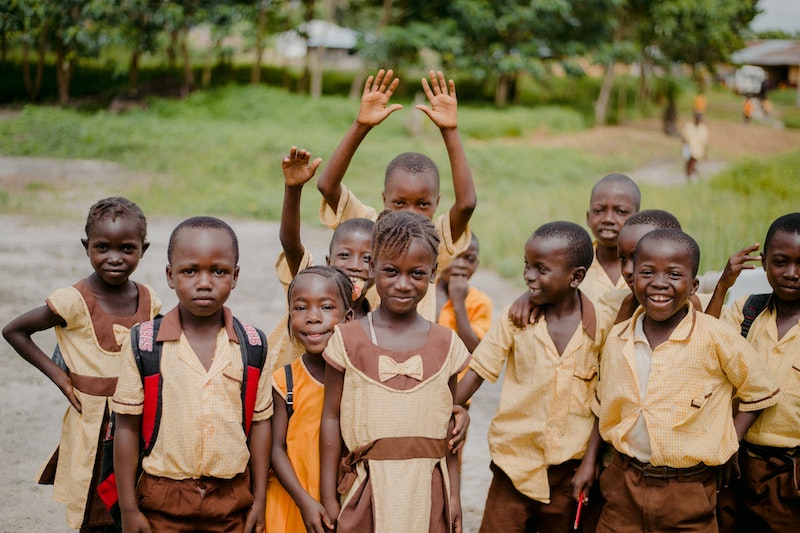
How All As One is Helping the Children of Sierra Leone

Children of Sierra Leone
In Freetown, Sierra Leone, the morning that Gbessey’s mother died, Gbessey was only two days old. Gbessey has All As One (AAO) to thank, the organization which has helped over 35,000 women, children and families with medical care and other services. Gbessey has been at the All As One Children’s Center ever since and turns 13 years old this year. Like so many other poor children of Sierra Leone, Gbessey has AAO to thank for their tenacious pursuit of access to health, education and social security networks.

Sierra Leone Civil War

John Bellows and Edward Miguel, scholars at the Dept. of Economics at the University of California, Berkeley, in their article on war and collective action, said that the effects of the Sierra Leone civil war on institutions, politics and social norms have been more devastating than the economic effects.

During the height of the war in 1992, people looted and destroyed medical facilities in the country. Although pregnant women have the legal right to free health care, the country has been unable to provide it. There are only about 22 physicians for every million people and about 60% of the rural population without adequate access to clean drinking water.

Filling the Gaps in the Social Safety Net

AAO, as an organization, works toward filling the gaps in the social safety net in Freetown, Sierra Leone. AAO focuses its efforts on the many orphaned and abandoned poor children of Freetown. In the AAO Children’s Center, employees provide exceptional care beyond shelter and nutrition.

The organization also vows to offer supplementary medical treatment and education for those children that are under their care. Registered nurses are available when necessary, as well as local doctors who are called when further medical treatment is needed. It also seeks to hire local teachers to enhance the learning of students as well as with implementing subject matter relevant to their lives.

Further, not only does All As One provide medical attention and education for the children under their care, but they also work to attend to those in need in the surrounding community of Freetown. On top of the 200 children of Sierra Leone it aids around the clock, the organization receives between 200 to 300 requests for assistance each month from families who are not already in the programming.

All As One’s Origins

Deanna Wallace and Steven Amara started All As One in 2000 to provide care to the abandoned and neglected poor children of Sierra Leone. What makes AAO a community-based organization isn’t just their efforts to maintain social welfare but also their collaboration with community businesses like JA Resorts & Hotels. Amara has thanked JA Resorts & Hotels for “their support and the generous gifts they have made at the times when we most need it. [JA Resorts & Hotels] have helped to keep our doors open,” Discovery Magazine reported.

Although on paper, the poor children of Sierra Leone may seem to be completely helpless. However, the people of All As One have given them a different story to tell. That story is one of resilience, community engagement and emergent response to the crisis at hand, all around the clock.

– Joy Maina
Photo: Unsplash

June 20, 2022
https://borgenproject.org/wp-content/uploads/borgen-project-logo.svg 0 0 Jennifer Philipp https://borgenproject.org/wp-content/uploads/borgen-project-logo.svg Jennifer Philipp2022-06-20 01:30:272022-06-17 11:31:46How All As One is Helping the Children of Sierra Leone
Child Poverty, Child Poverty, Children, Development, Global Poverty, Health

How Poland is Alleviating Child Poverty in Ukraine 

Child Poverty in Ukraine
The impact of war is increasing child poverty in Ukraine at an unprecedented pace and redefining what it means to be a Ukrainian child in need. As the Russian invasion of Ukraine forces nearly two-thirds of Ukrainian children to flee their homes, refugee crisis milestones not seen since WWII are being reached. UNICEF estimates that the war has resulted in 4.3 million displaced Ukrainian children, with nearly 2 million of those children now refugees.

Poland Responds as Child Poverty in Ukraine Reaches Its Borders

Response by European countries has been swift and impactful. Many have opened their borders to those fleeing Ukraine, including Romania, Germany, Moldova, Slovakia, Hungary, Italy, the Czech Republic and more. The largest influx of refugees by far has been in Poland, with nearly around 3 million Ukrainian nationals crossing its border, 1.1 million of whom are children.

Poland’s response has been remarkable. In addition to opening its borders to millions of Ukrainian refugees, the neighboring country has enacted new governmental protections as a way to support those fleeing Russian aggression and curb further social and economic trauma. In March 2022, the Polish parliament passed an act offering legislative and financial support for Ukrainian nationals entering Poland.

Social and Financial Benefits

  • A Home Away From Home – As a result of the new law, all Ukrainian nationals who enter Poland due to the Ukrainian invasion, have a right of residency to remain in Poland for 18 months. There is also an option to extend residency benefits an additional 18 months, should it be necessary.
  • Financial and Social Benefits – Families receive monthly stipends per child as well as financial assistance to pay for school supplies and nursery school. Ukrainians receive cash allowances for subsistence and businesses that assist in supporting displaced Ukrainians will also receive financial assistance for 60 days. Additionally, all Ukrainian refugees have access to the Polish health care system.
  • Education for All Children – Under the new act, Ukrainian children receive the same educational opportunities as Polish nationals. Language accommodations for children who do not speak Polish are provided, while college-age Ukrainian nationals are able to continue their higher education at Polish universities.
  • Work Opportunities – Ukrainian refugees can legally work in Poland, without having to apply for work permits, thus enabling them to provide financial support for their families by having access to the Polish labor market.
  • Open Hearts and Homes – In addition to the new law that parliament passed, many Polish families are hosting Ukrainian refugees in their own homes. By providing food and shelter, Polish citizens are trying to right many wrongs they fear could threaten their own families in the future.

Looking Ahead

As the war in Ukraine continues, measures like these will help Ukrainian children counter the long-term effects of war. More work is necessary, however, as the U.N. fears that the Russian invasion will undo 18 years of economic growth, with most Ukrainian families now at risk for extreme poverty and vulnerability within the next year. While Poland has offered generous subsistence, concerns about the sustainability of such efforts are many.

With many European countries opening their borders to refugees and taking on similar measures, progress in alleviating child poverty in Ukraine is transforming into a global response.

– Michelle Collingridge
Photo: Flickr

May 31, 2022
https://borgenproject.org/wp-content/uploads/borgen-project-logo.svg 0 0 Jennifer Philipp https://borgenproject.org/wp-content/uploads/borgen-project-logo.svg Jennifer Philipp2022-05-31 01:30:082024-06-04 01:08:52How Poland is Alleviating Child Poverty in Ukraine 
Child Poverty, Global Poverty

Child Poverty in Sri Lanka

Child Poverty in Sri Lanka Child poverty occurs when children from low-income families lack the resources necessary for their overall development and well-being. In 2019, 9.2% of Sri Lanka’s population lived below the poverty line of $3.20 per day. Child poverty in Sri Lanka is one of the major issues the nation is trying to tackle. Based on data from 2019, Sri Lanka’s Child Multidimensional Poverty Index (MPI) indicates that more than four in every 10 children younger than 5 endure multidimensional poverty. Furthermore, about 33% of children aged 4 and younger suffer multidimensional poverty and are “either underweight or stunted.”

Effects of Child Poverty

According to the American Psychological Association, child poverty can lead to hunger, illness, insecurity, depression and several behavioral problems. Living in poverty creates constant, toxic stress that can impair the development of the brain and impact mental and emotional cognition.

The effects of child poverty in Sri Lanka are long-lasting as these consequences later affect different aspects of adulthood, such as emotional and behavioral self-control and the development of skills necessary to obtain jobs.

The Sri Lanka Journal for Child Health conducted research and found that individuals suffering from child poverty in Sri Lanka experience different implications. The Journal stated that “they can experience deficiencies in nutritious food, housing, safe environment and access to health care and are at higher risk of being exposed to trauma and stressful life events.”

In addition, the study points out that children living in poverty are more likely to experience neglect and separation from their families. Their needs are overlooked due to the unresponsiveness of their parents and the stress arising from chronic poverty. As a result, child poverty can lead to difficulties in building bonds and relationships with others and children can experience language deficiencies as they grow up. Child poverty affects a child physically, mentally and emotionally. Here are several solutions to reduce child poverty in Sri Lanka.

Solutions to Child Poverty in Sri Lanka

  1. Resource Use: There is unequal accessibility of social services for children in Sri Lanka. For example, most schools and health care centers are located in large cities rather than in the suburbs. Local child support programs and social protection systems such as Sevana Sarana Foster Parent Scheme ensure children have equal access to education and other services regardless of financial situations. The SOS Children’s Villages Sri Lanka provides vulnerable children and their siblings with family-like care and a place to call home. The organization also sets up schools and medical centers in each SOS Children’s Village.
  2. Daycare Centers: According to the World Bank, many childcare centers are understaffed and lack infrastructure. In 2015, the World Bank introduced the Early Childhood Development Project to establish more child care centers, provide training for childcare givers and make improvements to existing facilities. Now, the World Bank is moving toward a more holistic approach by making daycare centers more affordable and having them operate longer hours to accommodate children whose parents work night shifts.
  3. The World Food Programme (WFP): Based on a report from the WFP, “the country faces the impact of a nutritional ‘triple burden’ spanning undernutrition, high levels of overweight and obesity and vitamin and mineral deficiencies.” In 2019, the WFP introduced the Scaling Up Nutrition Business Network to engage in solutions related to nutrition while establishing school feeding programs. The organization has been closely working with the Sri Lankan government to establish a social behavior change communication strategy to improve dietary practices in Sri Lanka.

Looking Ahead

The issue of child poverty in Sri Lanka requires sustained work and attention from the government and global organizations. Children who live in poverty suffer long-term effects physically, mentally and emotionally. The efforts of child support programs, well-equipped daycare centers and humanitarian organizations, such as the World Food Programme, ensure the well-being and development of Sri Lankan children.

– Jiaying Guo
Photo: Pixabay

May 26, 2022
https://borgenproject.org/wp-content/uploads/borgen-project-logo.svg 0 0 Jennifer Philipp https://borgenproject.org/wp-content/uploads/borgen-project-logo.svg Jennifer Philipp2022-05-26 01:30:232024-06-11 03:08:25Child Poverty in Sri Lanka
Child Poverty, COVID-19, Global Poverty

Facts About Poverty in the Canary Islands

Poverty in the Canary Islands
In the Canary Islands, a Spanish archipelago off the coast of Northwest Africa, the beautiful landscapes often distract from the harsher reality of the community: high levels of poverty in the Canary Islands.

Poverty Statistics in the Canary Islands

The Canary Islands has one of the highest poverty rates out of all of Spain’s regions. In 2012, the Canary Islands ranked “fifth out of 17 regions” for the highest levels of relative poverty. In 2013, unemployment levels reached 34%, higher than any other region of Spain, and 38% of residents were facing poverty. Child poverty in the Canary Islands is also high with almost 30% of children living in poverty in 2013, according to UNICEF. Poverty continues to persist in the region with the COVID-19 pandemic only exacerbating the situation further. According to a survey that occurred in the last quarter of 2020, “3.3 million people in Spain” overall faced “a severe lack of necessary items.” However, 15.6% of respondents from the Canary Islands faced the greatest challenges in securing their basic needs until month-end, a percentage higher than that of any other region.

Social Exclusion and Migration

Poverty manifests itself through social exclusion, a lack of access to crucial opportunities and services, such as infrastructure, health care, education and social welfare. In 2018, almost 30% of the Canarian population endured social exclusion, with 334,000 people facing “severe social exclusion.” In addition, foreigners to the Islands face a greater risk of experiencing social exclusion.

The Canary Islands community has seen an uptick in migrants since the start of the COVID-19 pandemic. Previously, migrants usually traveled from sub-Saharan Africa to Mediterranean countries, but due to COVID-19 restrictions in these countries, their paths diverged, leading them to the Canary Islands instead. In 2020, approximately 23,000 migrants from Africa arrived on the Canary Islands’ shores. The pandemic-induced increase in both poverty levels and the migrant population places strain on the archipelago, where a lacking job market only becomes more competitive and health officials struggle to detect COVID-19 as migrants arrive. These migrants experience greater rates of social exclusion as more barriers stand in the way to the resources they need to survive.

A Solution to Spain’s Poverty Overall

In May 2020, the Spanish government gave its approval for “a minimum income scheme” to aid about 850,000 of the most impoverished households across the country, bringing positive impacts to around 2.3 million people overall. The Spanish government commits to providing eligible households with an income of between €462 ($514) and €1,015 ($1,130) per month. Government officials expect the program to decrease extreme poverty by 80% and lower high poverty rates by 60%. This initiative aids the Canary Islands as it is a region of Spain, but the program does not target poverty specifically in this area.

Looking ahead, more initiatives that directly impact the Canary Islands would best help improve the region’s circumstances of poverty. More targeted programs by national and local governments, as well as non-governmental organizations, can help reduce poverty in the Canary Islands.

– Aimée Eicher
Photo: Flickr
February 23, 2022
https://borgenproject.org/wp-content/uploads/borgen-project-logo.svg 0 0 Jennifer Philipp https://borgenproject.org/wp-content/uploads/borgen-project-logo.svg Jennifer Philipp2022-02-23 01:30:412024-06-04 01:08:52Facts About Poverty in the Canary Islands
Child Poverty, Global Poverty

Reducing Child Poverty in Lebanon

Child Poverty in Lebanon
Children living in Lebanon have been experiencing the full impact of the weakened economy in the country. Due to the Beirut explosion and the collapse of the Lebanese pound, child poverty has been on the rise in Lebanon. Child’s education, health and protection have become difficult to acquire.

The Deterioration of the Economy

Lebanon has struggled with its economy for a while due to its reliance on foreign imports and the limited exports coming from its country. As of 2021, Lebanon has failed to see economic growth, but the government is continuing to borrow money from other countries.

In addition, Lebanon’s government consists of 18 politicians of different religious denominations, such as Christian and Muslim. Because of this, Lebanon is susceptible to interference from other countries. As a result, Lebanon has become “one of the world’s largest debt burdens as a result of years of inefficiency, waste and corruption,” according to Reuters.

Moreover, in October 2019, the Lebanese pound began to lose its value due to the shortage of foreign currency in their commercial banks. This caused high-interest rates, leading to the emergence of a black market. Because there is an absence of taxes on the transactions and the government is not aware of the activity happening in the black market, this harms the economy.

While Lebanon was struggling economically, an explosion in Beirut worsened its situation. For instance, on August 4, 2020, a large amount of ammonium nitrate, a chemical used in agricultural fertilizers and bombs, exploded throughout the city of Beirut. Due to this, the air filled with dust, causing concern about the toxins people were consuming in the air.

Unfortunately, the explosion killed 140, wounded 5,000 and displaced 300,000. Of those 300,000, 100,000 of them were children, as UNICEF reported.

About Child Poverty in Lebanon

Due to the deterioration of the economy, Lebanon’s poverty rate has doubled from 42% to 82% between 2019 to 2021. As a result, many families cannot afford basic necessities for their children because of inflation, thus increasing child poverty in Lebanon. These families face shortages of food, water and electricity in their homes. Under these circumstances, many children have no choice but to skip meals, according to the OWP.

In addition, “34% of children were not able to receive necessary primary health care,” the OWP reported. In fact, many families need to access water through private providers at a cost because water from public works is insufficient to drink.

Child poverty in Lebanon leads to children living in conditions where they cannot grow and thrive. As economic inequality increases, children become susceptible to child marriage, trafficking and sexual exploitation.

Education in Lebanon

Additionally, many children do not have the option to attend school anymore because of the Beirut explosion. Unfortunately, the explosion damaged 163 schools, leaving children struggling to obtain an education through other means.

Due to the lack of technology and internet connectivity, many children cannot participate in remote learning activities. As families endure the hardships brought upon by the explosion, families are resorting to  “sending their children to work in often dangerous and hazardous conditions, marrying off their daughters or selling their belongings,” said UNICEF’s representative in Lebanon, Yukie Mokuo.

To avoid child marriages and selling their belongings, children need to work. Many of them work in agriculture, metalworking or factories under inhumane conditions. Addressing child poverty in Lebanon, the government signed the ILO’s Convention on Child Labor, but it failed to become a law.

Save the Children

Lebanese children are receiving help from various organizations, such as Save the Children. Save the Children believes that children are the most vulnerable when disaster strikes, so it created an organization that focused on protecting them and giving them a chance at a new beginning.

Specifically, it is asking for donations to achieve its goals to improve the lives of Lebanese children. Some of the organization’s goals for child poverty in Lebanon are to increase the quality of education, restore schools and install water, sanitation and hygiene resources for the children to access.

Lastly, it hopes to protect Lebanese children from “psychological stress, neglect, violence, and abuse.” By doing this, Save the Children hopes to show the Lebanese children that they have the right to obtain these basic needs for a better future.

UNICEF

UNICEF has also been aiding children in Lebanon by providing Lebanese families with children with cash grants in the form of U.S. dollars, aiming to help 70,000 children in need. This is an effort to remove children from working and avoid skipping meals.

To add, UNICEF “is also providing mental health support and psychological first aid to children who are engaged in child labor, those who have experienced or are at risk of violence,” as stated on its website.

As a result, the children will have the ability to think for themselves and gain confidence and self-esteem. Similar to Save the Children, UNICEF has spent $6.9 million to help repair Lebanon’s water systems, aiding children’s health. The organization is continuing to reach more vulnerable children and their families, offering them support in any way it can.

With the increasing poverty rate in Lebanon, living conditions are becoming unbearable for many Lebanese children. Fortunately, Save the Children and UNICEF are assisting Lebanon, providing education measures, health services and protection for Lebanese children.

– Kayla De Alba
Photo: Flickr

January 25, 2022
https://borgenproject.org/wp-content/uploads/borgen-project-logo.svg 0 0 Jennifer Philipp https://borgenproject.org/wp-content/uploads/borgen-project-logo.svg Jennifer Philipp2022-01-25 01:30:512022-01-16 12:30:24Reducing Child Poverty in Lebanon
Child Poverty, Global Poverty

The Arab Spring: Addressing Poverty in Sudan

Arab Spring
The term “Arab Spring” characterized a series of upheavals across the Middle East and North African regions (MENA) in which a surge of citizens defied their authoritarian governments. It all started in Tunisia in 2010 when a man set himself on fire in a demonstration against police corruption. Sudan joined the anti-oppression movement in an effort to eradicate oppression and poverty in Sudan soon after. Now, a decade and a new government later, the country finds itself in an ideal position to begin seriously addressing poverty in Sudan.

A Tragic History

For many years, the Sudanese have suffered the brutal dictatorship of an authoritarian regime. In 2003, Sudan People’s Liberation Army (SPLA) and the Justice and Equality Movement (JEM) took up arms against their government in Darfur. These groups launched attacks against government facilities and army facilities in an attempt to obtain more financial and democratic power for the citizens. The subsequent conflict became known as the Darfur Genocide.

Both Sudan’s government, headed by President Omar al-Bashir, and the movements that opposed it were non-Arab. This conflict led to the deaths of around 15,000 people and the uprooting of millions of citizens. Bashir created a country dichotomized into Arabs and Africans, as opposed to a country that acted as a home for all Sudanese people. These conditions laid the foundation for the Bashir administration’s oppression of the Sudanese people. In 2011, the stage was set for the Arab Spring in Sudan. As a result of these protests, violence erupted. Throughout, Bashir retained his presidency.

Economic Challenges

Poverty in Sudan and socioeconomic woes increased following July 2011, when South Sudan gained independence from Sudan after Africa’s longest-running civil war. Considering most oil fields prospered in the south of the country, the most significant price Sudan paid was the loss of oil profits. As a result, Sudan’s inflation went rampant, provoking major upset among the Sudanese. The younger generations found it exceptionally challenging to find a job. Instead of addressing these issues, Sudan used most of its resources for military purposes. Additionally, a drought worsened Sudan’s already restrictive agricultural policies.

The failure of the industrial labor market caused unemployment and poverty to spread. The absence of economic opportunity prompted Bashir to eradicate nearly all civil society organizations. As a result, human rights and labor units shut down. Conjointly, due to Bashir’s Islamic leadership, women experienced extreme restraints. Indeed, Sudanese people experienced their basic rights stripped from them and those they loved, leaving them with exceptionally limited freedom.

Poverty in Sudan prevailed when bread, a basic food, became unaffordable. Violence and economic struggles contributed greatly to the oppression of the Sudanese people. However, the loss of affordable access to the most basic aspect of life, food, triggered the people to rise up and demand change.

New National Solidarity

One catalyst driving the protests was the desegregation of the different factions of Sudan. New national solidarity arose in recent years with the hope of ending Bashir’s rule. It was no longer Arabs verse the Africans. One example illustrating this was the chants throughout the northern and southern parts of Sudan beginning in late 2018. Multi-ethnic protestors chanted “we are all Darfur” while Darfur’s protestors chanted “we are all Khartoum,” demonstrating solidarity across the different religions and ethnicities of Sudan.

As the protests gained momentum, many more joined in hopes of replacing the regime with a government that could recover some of the economic loss. Public opposition groups played a key role in even the poorest communities. This ensured that everyone’s voices were on display despite their economic status. Women also took to the streets to protest the mistreatment they had experienced over the years, proving that all segments of Sudanese society engaged and committed themselves to the revolution.

A Successful Revolution

Sudanese citizens again requested Bashir to resign, but he refused. The government reacted violently, murdering a number of protestors. This only served to further outrage and inspire demonstrators around the country. Finally, the opposition assembled peacefully outside Sudan’s military headquarters in Khartoum, the capital, demanding Bashir’s resignation.

Critically, the revolution attained military assistance despite the military being a fundamental pillar of Bashir’s rule. In the face of the massive scale of the uprisings, the military began wavering in its support of Bashir. Leaders eventually determined that self-preservation was the only choice, and the military deposed the dictator.

Sudan Today

Despite the success in overthrowing Bashir, poverty in Sudan remains a major issue. Some 36% of the population lives below the poverty line. Poverty in Sudan exacerbates other issues, resulting in approximately 1 million children experiencing global acute malnutrition.

Due to its perseverance, Sudan is experiencing rebuilding. Many organizations are addressing poverty in Sudan. The United Nations Children’s Fund (UNICEF) is assisting in the establishment of early childcare programs in Darfur, Sudan. Additionally, the organization is going through an appeal process to raise $211 million to assist in humanitarian efforts. Some of the targeted recipients include 7.4 million children and 2.5 million internally displaced persons. Another organization committed to aiding the next generation of Sudan is Save the Children. In 2020, it helped 374,000 children by addressing poverty in Sudan through nourishment, education, protection and crisis aid. Doctors Without Borders also aims to improve the severely-lacking health care in Sudan.

A Brighter Future

The Sudanese have always fought for human rights and against tyranny. They triumphed due to their tenacity, finally ending a dictatorship that lasted for 30 years. Now, with support from its international allies, Sudan is undeniably on its road to alleviating the effects of poverty.

– Tiffany Lewallyn
Photo: Flickr

January 4, 2022
https://borgenproject.org/wp-content/uploads/borgen-project-logo.svg 0 0 Jennifer Philipp https://borgenproject.org/wp-content/uploads/borgen-project-logo.svg Jennifer Philipp2022-01-04 01:30:332024-12-13 17:51:29The Arab Spring: Addressing Poverty in Sudan
Child Poverty, Child Poverty, Child Soldiers, Children, Global Poverty, War, War and Violence

Sam Smith Supports War Child

War Child
Two filmmakers founded War Child in 1993 after observing the violence that children endured during periods of war. The organization describes itself as “the only specialist charity for children affected by conflict.” With the slogan, “A world where no child’s life is torn apart by war,” War Child works to address the realities children face during war and provide them with prompt support, safety and coping mechanisms. The organization shows children from Iraq, Yemen, Afghanistan, the Democratic Republic of Congo and the Central African Republic that there is more to life than the destructive nature of war.

War Child’s Work

Since the traumatic impacts of conflict and violence on children, War Child takes an approach to help children through four key areas: protection, education, livelihoods and advocacy. Armed groups tear children from their families through false promises of education or money while abducting others. This can leave these children with severe and lifelong psychological problems. The organization’s support includes “setting up children’s helplines,” strengthening child justice systems, “rehabilitating and reintegrating former child soldiers” as well as reuniting children with parents.

More than 75 million children ages 3 to 18 are not in school in 35 countries experiencing war. War Child aims to address this problem in multiple ways, including providing children with early childhood education programs and initiating Education in Emergencies initiatives. The organization also provides teachers with training to best support learners in conflict-ridden environments. By incorporating play into learning programs, the organization attempts to remedy trauma. These initiatives give children a sense of normalcy during a period of time in their lives where chaos surrounds them.

The organization also recognizes the need to provide children with humanitarian aid to address their basic human needs. The organization provides cash assistance to communities for people to use according to “their own priorities and preferences.” To strengthen economic resilience, the organization assists people in securing employment or establishing businesses “by providing them with technical, business and life skills, establishing group-based saving schemes and providing small grants making the best out of existing market opportunities. ”

In many crisis-prone countries, agriculture plays an important role. As such, War Child created Peace Gardens. Peace Gardens allow children to develop agricultural skills while increasing food security as crop produce can provide nutritious school meals for children.

Sam Smith’s Role in War Child

Sam Smith’s global impact extends far beyond his role as a singer-songwriter. Smith became War Child’s Global Ambassador in 2017 after conversing with a child in Jordan who, as Smith put it, “said something that will stay with me forever.”

Smith subsequently took to his social media pages, urging his fans to support War Child. For his 26th birthday, in 2018, Smith asked that his friends, family and fans make donations to War Child instead of buying him birthday gifts. After releasing his hit single “Too Good at Goodbyes,” in 2020, he launched a four-city mini-concert tour, with all profits from the ticket sales going toward supporting War Child.

War ravages land and people, however, children face disproportionate impacts of war. Through the efforts of War Child, children living in conflict-riddled lands can look toward a brighter tomorrow.

– Nia Hinson
Photo: PxHere

November 18, 2021
https://borgenproject.org/wp-content/uploads/borgen-project-logo.svg 0 0 Jennifer Philipp https://borgenproject.org/wp-content/uploads/borgen-project-logo.svg Jennifer Philipp2021-11-18 01:28:152024-06-04 01:03:21Sam Smith Supports War Child
Child Poverty, Children, Global Poverty

Child Poverty in The Bahamas

the-bahamas-challenges-the-children-face
Of the several nations and the many diverse peoples of Central America and the Caribbean, The Bahamas is one of the most beautiful and iconic. Well known for its thriving tourist industry, many U.S. citizens visit this collection of islands on vacation. The Bahamas has continued to rise in GDP and other metrics of quality of life for its citizens due to its successful tourism industry and offshore financing industry. Despite the growth that The Bahamas continues to present, there have been some concerning trends that have threatened this. Specifically, there have been problems and uncontrollable circumstances that the children have had to face. These problems affect the country and its future. Amongst these struggles, external catastrophes hit many of the most vulnerable children hardest, exacerbating child poverty in The Bahamas. This includes Hurricane Dorian in 2018 and more recently, the COVID-19 pandemic.

Child Poverty Rates

The Bahamas’ poverty rate is comparable to some of its Caribbean neighbors. Studies found that 12.5% of the population is living under the poverty line with under $5,000 a year. Many of these households support children. Additionally, children under the age of 14 represent the group with the highest poverty rate in the country.

Without access to resources and basic needs, these children are likely to have trouble maturing. The lack of food, sleep and time for a developing child who poverty affects will directly affect their performance in academics, recreation, social interactions and other aspects of their life.

Blocks in Education

As The Bahamas has grown its economy and infrastructure its education systems have also grown to match. However, there has been an alarming disparity in the quality and access to education. The literacy rate in people over the age of 15 decreased from 98% in 1995 to 93% in 2020. Many have largely attributed this trend to the difference in the quality of education between private and public schools.

Public state-run schools have a graduation rate of 44% for boys and 51% for girls while the graduation rate is 87.6% for those in private institutions. The reason for this variance is the lack of funding and resources for teaching materials, school supplies, and internet access for those in public schools.

Home Situations

The Bahamas has a very low dual household dynamic. More than 50% of all children in The Bahamas are born out of wedlock and a single parent often raises them. This is a holdover from times when large families lived together, so children did not feel the absence of a parent so harshly. However, the commonality of this has faded.

Children that single parents raise, especially those suffering from poverty, have more developmental and material disadvantages in life. The education challenges and dropout rates among the youth of The Bahamas reflect this issue.

Children are the Future of The Bahamas

Help from NGOs and other countries has been stagnant because of the  COVID-19 pandemic and lack of awareness. Project Hope is an organization that has a consistent presence in The Bahamas, although there are no large organizations. However, Project Hope’s work should receive commendation and undergo replication because they have been instrumental in shedding light on the challenges that people in The Bahamas face.

Project Hope is an NGO that focuses primarily on health care needs and services. They have been bringing aid, resources and expertise to The Bahamas. Beginning after Hurricane Dorian, Project Hope has focused on providing health care services for children, including those who experience child poverty in The Bahamas. This helps the children to further their education.

The Bahamas has been in a vicious cycle of struggling children becoming struggling adults. Rather than beautiful beaches or offshore tax evasion, children are at once the most vulnerable and most valuable resource that The Bahamas has.

– John J. Lee
Photo: Flickr

October 30, 2021
https://borgenproject.org/wp-content/uploads/borgen-project-logo.svg 0 0 Jennifer Philipp https://borgenproject.org/wp-content/uploads/borgen-project-logo.svg Jennifer Philipp2021-10-30 19:27:142024-05-30 22:25:26Child Poverty in The Bahamas
Child Poverty, COVID-19, Global Poverty

Aiding Impoverished Children in New Zealand

Impoverished Children in New Zealand
In New Zealand, the COVID-19 pandemic pushed 18,000 children into poverty, on top of the already large amount of children struggling with unmet basic needs. However, one organization, Share My Super, is working hard to change these statistics and reduce the number of impoverished children in New Zealand.

Impoverished Children in New Zealand

Against the backdrop of New Zealand’s 4.8 million population, more than 235,000 children lived in poverty before the pandemic’s effects. While reducing child poverty is one of Prime Minister Jacinda Ardern’s signature goals, the country has only seen rising numbers of struggling children in recent years.

A recent study shows a 10% increase in child poverty due to the country’s pandemic policies, mostly impacting minority groups such as the Māori and Pasifika. The report lists several main reasons for child poverty in New Zealand including lack of government support, “unemployment and education disruptions” due to the COVID-19 pandemic and “inadequate income support for children.”

Share My Super

One organization, Share My Super, recognizes the detrimental effects of this issue and is working toward alleviating child poverty in New Zealand. Founded by Liz Greive, the organization functions by uniting citizens older than the retirement age of 65 and allowing them to share their leftover pensions with charities that are helping eliminate child poverty.

“I came to the conclusion that the most needy people in New Zealand, where real progress could be achieved, would be with children who were having a hard start,” Greive told The Spinoff, a New Zealand-based magazine. “I was well aware of the poverty that many people experience and how hard it is to raise a family when there is quite simply not enough money coming in.”

Share My Super hand-selects charities that it believes in and trusts for donors to donate to. The organization fosters relationships with these organizations and ensures that there is a variety of organizations, so people can choose to put their money toward immediate needs like shelter or food, or alternatively, they can put their money toward long-term solutions like mentorship or education.

Additionally, the organization receives 100% private funding. Therefore, the full donations go directly to the organization that the person chooses. Users also do not have to be at the retirement age to set up a donation — anyone can donate through Share My Super.

Impact

According to Share My Super’s 2020 Annual Report, the organization raised $294,296 in donations for charities through Superannuants, which refers to retirement-aged people donating their surplus pension through the organization. Share My Super also has benefits both ways: New Zealand’s children benefit and the country’s older population is also able to make a difference for the next generation. The organization also runs a blog detailing the tangible impacts of the charities on the country’s children so that the Superannuants can see the direct impact of their donations.

Although child poverty rates have been climbing in New Zealand, especially in the wake of the COVID-19 pandemic, organizations like Share My Super are working to help impoverished children in New Zealand through donations, uniting the older generations with the younger generations.

– Laya Neelakandan
Photo: Flickr

October 8, 2021
https://borgenproject.org/wp-content/uploads/borgen-project-logo.svg 0 0 Yuki https://borgenproject.org/wp-content/uploads/borgen-project-logo.svg Yuki2021-10-08 07:30:512021-10-06 11:28:43Aiding Impoverished Children in New Zealand
Page 6 of 15«‹45678›»

Get Smarter

  • Global Poverty 101
  • Global Poverty… The Good News
  • Global Poverty & U.S. Jobs
  • Global Poverty and National Security
  • Innovative Solutions to Poverty
  • Global Poverty & Aid FAQ’s
Search Search

Take Action

  • Call Congress
  • Email Congress
  • Donate
  • 30 Ways to Help
  • Volunteer Ops
  • Internships
  • Courses & Certificates
  • The Podcast
Borgen Project

“The Borgen Project is an incredible nonprofit organization that is addressing poverty and hunger and working towards ending them.”

-The Huffington Post

Inside The Borgen Project

  • Contact
  • About
  • Financials
  • President
  • Board of Directors
  • Board of Advisors

International Links

  • UK Email Parliament
  • UK Donate
  • Canada Email Parliament

Get Smarter

  • Global Poverty 101
  • Global Poverty… The Good News
  • Global Poverty & U.S. Jobs
  • Global Poverty and National Security
  • Innovative Solutions to Poverty
  • Global Poverty & Aid FAQ’s

Ways to Help

  • Call Congress
  • Email Congress
  • Donate
  • 30 Ways to Help
  • Volunteer Ops
  • Internships
  • Courses & Certificates
  • The Podcast
Scroll to top Scroll to top Scroll to top