• Link to X
  • Link to Facebook
  • Link to Instagram
  • Link to TikTok
  • Link to Youtube
  • About
    • About Us
      • President
      • Board of Directors
      • Board of Advisors
      • Financials
      • Our Methodology
      • Success Tracker
      • Contact
  • Act Now
    • 30 Ways to Help
      • Email Congress
      • Call Congress
      • Volunteer
      • Courses & Certificates
      • Be a Donor
    • Internships
      • In-Office Internships
      • Remote Internships
    • Legislation
      • Politics 101
  • The Blog
  • The Podcast
  • Magazine
  • Donate
  • Click to open the search input field Click to open the search input field Search
  • Menu Menu

Archive for category: Child Poverty

Child Poverty, Children, COVID-19, Global Poverty

Ukraine and the Pandemic: The Impact on Child Poverty

Child Poverty in Ukraine
COVID-19 has severely impacted Ukraine, and poverty rates will likely increase dramatically. The Cabinet of Ministers of Ukraine released an official prediction on the absolute poverty implications of the pandemic. The analysis indicates that the impacts on child poverty in Ukraine will be the most severe.

Ukraine is Europe’s second-largest and one of the poorest countries in Europe. The country has more than 46,000 confirmed cases of COVID-19 as of July 2020. The country has lifted many restrictions as it  enters its adaptive quarantine stage, though social distancing and mask-wearing requirements remain in place.

Ominous Predictions

According to the World Bank, the negative economic impact of the pandemic will show through several courses. These include a decrease in disposable incomes and consumption, lower remittances caused by decreased economic activity throughout the EU and lower commodity prices that impact Ukrainian exports.

United Nations Children’s Fund (UNICEF) is particularly concerned that the economic collapse will have the most adverse impacts on vulnerable groups such as single parents, multiple-children households, households with children younger than three years and people over the age of 65. UNICEF also predicts that the absolute poverty rate in Ukraine will rise from 27% to 44%, and the child poverty rate will rise from 33% to 51%.

UNICEF has two predictions for Ukrainian poverty changes as a result of COVID. Under the less severe prediction,  6.3 million more people will be living in poverty. Of those, 1.4 million will be children. The more severe prediction shows that nine million more people will be living in poverty, 1.8 million of them children. To put this in perspective, in 2019 50% of the population was financially unprotected. That will likely increase as poverty levels go up.

Government Action

To mitigate these stark numbers, the Ukrainian government has taken action on the impacts of the COVID-19 crisis. These actions include one-time payments for low-income pensioners and child disability payment beneficiaries. UNICEF advocates for targeted as well as categorial approaches.

Social Policy Programme

A solution to combat the inevitable increase in child poverty in Ukraine due to this crisis is UNICEF’s Social Policy Programme.  Through advocacy and technical support to the government of Ukraine, this program promotes equity for children and improved social welfare. It covers four main foci.

  1. Poverty Reduction and Macro Policies for Children: This focuses on improving the ways to measure child poverty and its multidimensional aspects. It also works to place issues of child poverty in a leading position of the National Poverty Reduction Strategy.  Finally, it promotes child-centered family policies.

  2. Social Protection with a Focus on Integrated Modalities: This effort attempts to improve cash transfer performance to reduce poverty for vulnerable children and/or displaced children and their families. In addition to cash transfers, the focus is also on local social service provision.

  3. Public Finance for Children: For maximum impact of public expenditure on children, UNICEF works with line ministries and the Ministry of Finance to use results-based budgeting.

  4. Local Governance and Accountability with focus on Child-Friendly Cities: UNICEF Ukraine works with local partners to implement the global initiative, Child and Youth Friendly Municipality to strengthen social inclusion and promote child participation. It incentivizes local governments to focus on supporting children.  Over 160 Ukraine municipalities joined the initiative in 2018.

While the full impacts of the COVID-19 crisis are still unknown, and with the devastating impact it has on poverty, continuing to combat child poverty in Ukraine is vital. Social welfare programs like UNICEF’s Social Policy Programme are essential to mitigate the effects of poverty, strengthen child care and enhance access to basic services. Investing in children will have a substantial impact on the future, and it is a necessary measure to combat poverty in Ukraine and around the world.

– Rochelle Gluzma
Photo: Flickr

August 21, 2020
https://borgenproject.org/wp-content/uploads/borgen-project-logo.svg 0 0 Jennifer Philipp https://borgenproject.org/wp-content/uploads/borgen-project-logo.svg Jennifer Philipp2020-08-21 08:00:422024-06-07 05:08:05Ukraine and the Pandemic: The Impact on Child Poverty
Child Poverty, Global Poverty, Homelessness

Homeless Children in Uganda

Homeless Children in UgandaThe population of children in Uganda is one of the largest in the world. Out of 37 million people, 56% of Ugandans are under 18 and more than 52% are under 15. Unfortunately, a recent report by the Human Rights Watch revealed that the majority of the children in Uganda lack human rights. Advocacy groups, including the Human Rights Watch, find Ugandan children are facing homelessness and violence.
As of 2019, there were an estimated 15,000 orphaned and homeless children aged between 7 and 17 in Kampala, the capital of Uganda. Homelessness in Uganda is largely caused by the conflict in northern Uganda from 1987 to 2006. Other factors, such as domestic abuse and neglect are also responsible for the high numbers of homeless children in Uganda.

Mistreatment

Some Ugandans help the street children; they provide places to sleep and take care of the sick. Unfortunately, others harm homeless children because of the widespread belief that all street children are thieves. Homeless children are commonly verbally abused, kicked, slapped and spat on; however, the violence does not end there.

Interviews with street children reveal that the police are highly abusive. The police beat the children who resist arrest and extortion attempts. Tear gassing, threatening, beating with batons are just a few examples of the violent behaviors of the police.

Interviews

In December of 2013, Human Rights Watch conducted interviews of homeless and previously homeless children in Uganda.

“[The policemen] take money from us. If you do not have money they beat you so much…. Last week on Saturday, the police came in the night and beat me when I was sleeping with three other children. The policeman beat me on the thighs with a rubber whip. He then hit my knees with a baton. He beat me until I gave him 1,000 shillings ($0.40) and left me.”

—Roger P., 13-year-old, living two years on the streets in Lira

“Government should look for a better solution for street children instead of beating and arresting us. The more you beat us the more we get hardened with life and it does not solve the problem. They want us to go back home but some of us do not even have homes. Others do not know where our parents are. So when they beat us to go home, where do you want us to go?”

— Sam L., 15-year-old, lived four years on the streets in Masaka

Progress

Fortunately, there have been many efforts to decrease homelessness in Uganda. This includes a national program that targets orphans and vulnerable children. Motivated individuals and non-governmental groups are also working to end homelessness in Uganda. For example, Child Restoration Outreach (C.R.O.) focuses on bringing street children into families and helping them become self-reliant citizens. C.R.O. provides children food, medical care, clothes, education and counseling. Additionally, C.R.O. works to reconnect homeless children with their family members. In 2019, C.R.O. sponsored 28 students’ schooling and bought ten children laptops.

Street Resource is another organization dedicated to helping homeless Ugandans. Street Resource has been providing shelter for homeless Ugandans since 2017. Merry Ntungyire, the founder of Street Resource, used her own savings to recruit members to the organization. Today, Street Resource provides shelter for 17 people. 17 isn’t a big number, and the shelter only provides a small room with basic amenities; however, the work of Ntungyire and others like her is highly valued by many. Hopefully, more groups like Street Resource and the Child Restoration Outreach will join the fight against homelessness in Uganda.

– Alison Choi
Photo: Unsplash

August 6, 2020
https://borgenproject.org/wp-content/uploads/borgen-project-logo.svg 0 0 Jennifer Philipp https://borgenproject.org/wp-content/uploads/borgen-project-logo.svg Jennifer Philipp2020-08-06 13:58:512020-08-07 04:35:27Homeless Children in Uganda
Child Poverty, Global Poverty

Addressing the Issues Surrounding Ireland’s Impoverished Children

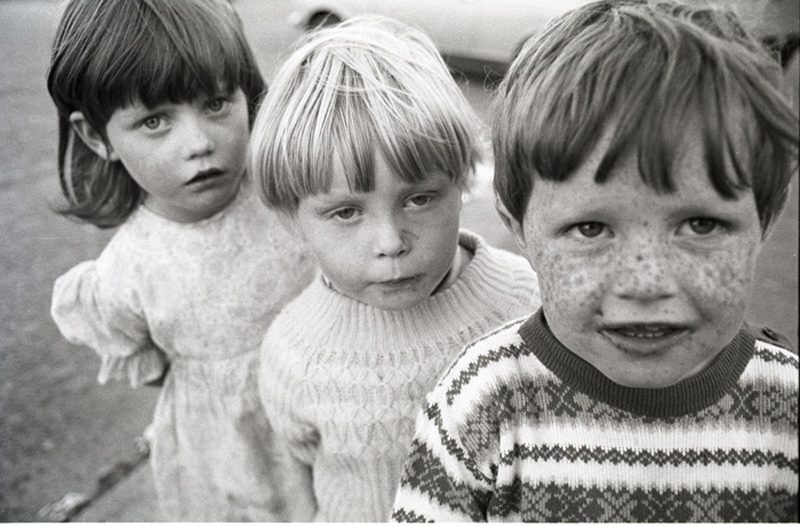
Addressing the Issues Surrounding Ireland’s Impoverished ChildrenEconomic hardship is an all too real and frequent issue across the world. It has been known to create harmful factors such as corrupt governments, homelessness, hunger, limited to non-existent access to healthcare and an overall lower standard of living. However, as negative as these factors can be for those affected by poverty in general, it is especially detrimental toward children. The plight of Ireland’s impoverished children serves as one such case in which rampant economic penury has served as a severe detriment to their overall quality of life.

Ireland and the 2008 Recession

Irish children are one of the most vulnerable and disadvantaged groups within the region. Granted, Ireland suffered and continues to be burdened from persistent economic difficulties since the 2008 recession. Since then, more than 689,000 Irish people are reported to be in the poverty range, according to the 2019 Survey on Income and Living Conditions (SILC). Additionally, of these people living in poverty, 202,000 are shown to be children.

The gradual process of economic recovery since the 2008 recession has shown to be beneficial to the more general population, rather than vulnerable groups such as children. In fact, one report from the 2011 annual census found that 9.3% of children were living in perpetual poverty, with an additional 22% listed as going to school hungry. Conditions have unfortunately worsened since this census.

Moreover, whereas infrastructure has been invested in other important aspects of economic stability, such as industrial and technological growth, the same cannot be said for all aspects of economic stability. Specifically, the areas of health, housing and education were cut substantially in the aftermath of the 2008 recession, and there have not been suitable efforts to restore them to their previous levels.

These government cutbacks, unfortunately, do not even refer to some of the most disadvantaged subsections of children. For instance, the Council of Europe’s commissioner for human rights Nils Muiznieks reports that the Travelers experienced disproportionate drawbacks in housing (up to 85%) and in education (up to 86%). These drawbacks are especially harmful to the children in this group.

These unfortunate circumstances may not be in place forever. New initiatives and actions have been taken to mitigate and heal the issues affecting Ireland’s impoverished children.

No Child 2020: Addressing Child Poverty in Ireland

One of the more prominent examples of this includes the initiative, No Child 2020. This initiative’s goal was to bring public attention and government action to child poverty in Ireland. Headed by The Irish Times, the following five issues were addressed through the initiative: child hunger, homelessness, accessible healthcare, education and access to culture and sport.

No Child 2020 made substantial success in terms of garnering attention toward the issues of child poverty in Ireland. A key example of this can be seen in the passing of the journal Social Justice Ireland, which published its very own list of issues that require government involvement to rectify the issues of child poverty. It should be further noted that of the 12 issues the journal listed, the need to “provide adequate payments for children to end child poverty” was highlighted.

As a result of these endeavors, the Irish government added an extra one million euros toward creating a pilot system providing free books to more than 50 primary schools. There has also been the provision of free dental care for Irish children below 6 years of old and free general practitioner coverage for Irish children below 8 years of age.

Looking Ahead

There is still far more to be accomplished to assist Ireland’s impoverished children. The Irish government still has not bestowed more medical coverage to low-income families altogether, nor The Irish Times’ request 20 million pounds per year for free school books to all of Ireland’s primary schools. Moreover, no official government action has been taken to better address the aforementioned dilemmas concerning child hunger, homelessness and sporting/cultural involvement.

If progress is to be truly advanced to address these issues, more financial investment and government action are required. According to Muiznieks’s 2016 report, significant “budgetary and economic redress” is critical to aid vulnerable groups such as Ireland’s impoverished children.

Still, the presence of the No Child 2020 and the Social Justice Ireland have shown development in the country. These initiatives have already contributed economically, educationally and politically toward resolving the obstacles of Ireland’s impoverished children. Who knows how many more initiatives or reformative actions these imperatives could inspire? Progress takes time but now that the issues of Ireland’s impoverished children are being acknowledged, there is hope that the reality of such progress continues.

– Jacob Hurwitz
Photo: Flickr

March 2, 2020
https://borgenproject.org/wp-content/uploads/borgen-project-logo.svg 0 0 Lynsey Alexander https://borgenproject.org/wp-content/uploads/borgen-project-logo.svg Lynsey Alexander2020-03-02 08:30:232021-04-02 16:56:03Addressing the Issues Surrounding Ireland’s Impoverished Children
Page 15 of 15«‹131415

Get Smarter

  • Global Poverty 101
  • Global Poverty… The Good News
  • Global Poverty & U.S. Jobs
  • Global Poverty and National Security
  • Innovative Solutions to Poverty
  • Global Poverty & Aid FAQ’s
Search Search

Take Action

  • Call Congress
  • Email Congress
  • Donate
  • 30 Ways to Help
  • Volunteer Ops
  • Internships
  • Courses & Certificates
  • The Podcast
Borgen Project

“The Borgen Project is an incredible nonprofit organization that is addressing poverty and hunger and working towards ending them.”

-The Huffington Post

Inside The Borgen Project

  • Contact
  • About
  • Financials
  • President
  • Board of Directors
  • Board of Advisors

International Links

  • UK Email Parliament
  • UK Donate
  • Canada Email Parliament

Get Smarter

  • Global Poverty 101
  • Global Poverty… The Good News
  • Global Poverty & U.S. Jobs
  • Global Poverty and National Security
  • Innovative Solutions to Poverty
  • Global Poverty & Aid FAQ’s

Ways to Help

  • Call Congress
  • Email Congress
  • Donate
  • 30 Ways to Help
  • Volunteer Ops
  • Internships
  • Courses & Certificates
  • The Podcast
Scroll to top Scroll to top Scroll to top