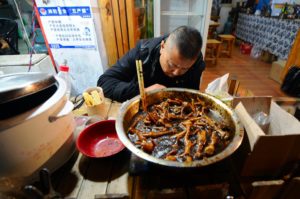
Poverty in China remains a pressing concern for the global community, as 252 million people—or 18% of China’s population—live on less than $2 per day. Another 22% of China’s population lives on less than $5.50 per day, especially in rural areas with struggling farming and fishing industries. Yet, many people do not realize the extent of poverty in China.
Poverty in China
China remains the second-largest economy in the world since the 2008 recession. There were still 5.5 million individuals living in extreme rural poverty in China by the end of 2019. This was even after an average of 13 million people ended up out of poverty each year for the first five years of President Xi Jinping’s first term.
China’s mountainous terrain and varying natural conditions have caused issues like air pollution, water and soil problems and biodiversity loss. China’s natural landscape along with a lack of transport infrastructure makes poverty alleviation rather difficult.
However, many regions of China are trying to stimulate their economies by embracing regional cuisine. In Gansu and Qinghai Provinces, traditional noodles have stimulated the economy. In Guangdong, local chefs have run workshops to teach the poor how to cook and market their goods. Embracing traditional cuisine could help reduce poverty in China.
Noodle Initiative in Gansu Province
Gansu Province, located in North-Central China, created a noodle initiative in 2019. The aim was to alleviate poverty through the region’s specialty dish, Lanzhou noodles, prepared in a beef broth. Gansu authorities trained more than 15,000 people from impoverished areas to make Lanzhou noodles from scratch, which would typically cost them $1.50. The participants then hopefully have a better chance to find employment at or open their own noodle shops. Similar initiatives in Gansu’s capital, Lanzhou and Beijing in 2018 led 90% of participants to find noodle-related jobs afterward, which helps fight poverty in China. These jobs typically earned the workers more than $590 a month.
The centuries-old noodle recipe calls for very precise noodle pulling. It can even take up to three years to fully master the skill. The Vocational and Technical College of Resources and Environment in Lanzhou helps many Lanzhou residents perfect their noodle-pulling craft. These new chefs also receive aid in fulfilling the necessary education requirements to spread their skills overseas.
The result is an estimated 4,000 Lanzhou noodle shops are currently open in Gansu province, which had the lowest GDP per capita of any Chinese province in 2017.
Hand-pulled Noodles in Qinghai Province
Qinghai Province, located in China’s northwest on the high-altitude Tibetan Plateau, has seen drastic poverty reduction over the past decade. Previously plagued by poor infrastructure and lack of skilled labor, Qinghai has seen success with its “noodle” sector. The disposable income for farmers and herdsmen in the region nearly doubled from 2015 to 2018. Their poverty rates decreased from 24.6% to just 2.5% within that same time period.
Haidong, in northeast Qinghai, generated 15.4 billion yuan in business revenue. The source was from the city’s 578 noodle businesses, which employed 9,786 employees. One-third of the urban population and half of the families in rural areas work in the city’s operating noodle businesses. The province has encouraged the noodle sector to continue hiring poorer residents. The city employs poverty reduction methods such as workshops, specific guidelines for growth and even a planned noodle business hub.
Benkanggou Village in Qinghai also helped eradicate poverty through the noodle industry. More than 110,000 of the villages’ 300,000 residents have employment in the noodle industry. These numbers are thanks to the village’s 350 sessions of hand-pulled noodle training for more than 13,000 families. Local authorities visited many poor households encouraging them to participate in the workshops. Thousands of more workers have entered the thriving industry since then.
River Snail Rice Noodles in Liuzhou
Many know the city of Liuzhou, located in Guangxi Zhuang Autonomous Region, for its river snail rice noodles, or luosifen. Luosifen is a fusion of traditional ingredients from Han, Miao and Dong ethnic groups. It consists of rice noodles boiled with pickled bamboo shoots, dried turnip, fresh vegetables and peanuts in a spicy river snail soup. The dish received a designation as part of Guangxi’s intangible cultural heritage in 2008. Since that time, the Liuzhou government has been boosting industries related to luosifen’s production. The region now brings in around 6 billion yuan annually.
Guangxi was on a list as the province with the fourth lowest GDP per capita in 2018. Then in 2019, Guangxi lifted 1.25 million people out of poverty as well as de-listed 1,268 poor villages. This was a direct result of 337 workshops and 33 new poverty alleviation industrial parks. The luosifen industry played a major role in these poverty eradication efforts, as new factories have emerged that specialize in instant luosifen, bamboo shoot processing, river snail collection and creative luosifen packaging.
Guangdong Cooking Initiatives
In Guangzhou in South China, an initiative called the Cantonese Cuisine Master program has tried to cultivate talent, promote cultural exchange and alleviate poverty in China through Cantonese cuisine training. The program has trained more than 30,000 people so far and has mobilized more than 96,000 people to secure employment and start their own businesses, lifting many out of poverty.
A Cantonese Cuisine Master Skills Competition in 2019 brought together many graduates of the program from 23 cities. Chefs prepared dishes like Chaoshan marinated goose, roasted crispy suckling pig, Portuguese-style chicken and flavored fish balls. Various Cantonese Cuisine Master programs and workshops have taken place in Hong Kong, Macao and other regions in southern China with the help of universities and enterprises. The program prepares chefs, many of whom come from rural and poverty-stricken areas, for the workforce. It also teaches the chefs about the concepts and ideas behind their cooking, which fosters cultural exchange and cooperation.
Since 2018, Guangdong has signed cooperation agreements with Tibet, Guangxi Zhuang, Xinjiang Uygur autonomous regions and Guizhou and Yunnan provinces to train more Cantonese chefs and help many escape poverty.
In Sichuan Province, 103 trainees from poverty-stricken counties—Meigu, Leibo and Jinyang—came to the Shunde District in Guangdong’s city of Foshan to receive free cooking lessons for two months at the Shunde Culinary Institute. They learned to cook traditional Cantonese dishes like stir-fried milk and stuffed mud carp as well as Sichuan-inspired dishes. After completing the program, trainees will have access to restaurant internships and full-time opportunities both in Shunde and in their hometowns. These sessions that Guangdong implemented should increase monthly salaries by 1,000 to 2,000 yuan. Additionally, 56,000 students currently attend Cantonese cuisine courses at vocational schools across the province.
– Noah Sheidlower
Photo: Flickr

Hajj Continued Despite COVID-19 Limitations
Umrah Suspended
Umrah is a voluntary pilgrimage that Muslims can take at any point and often lasts only two hours. Millions perform it annually due to its short duration and low cost. It is different from the Hajj, which is longer and compulsory for all Muslims but often limited by physical ability and finances.
In March, Saudi Arabia reported its first confirmed coronavirus infection in the kingdom. A man who traveled to Iran, which at the time was the viral epicenter in the region, returned to Saudi Arabia and was quarantined immediately after diagnosis. The kingdom responded to the increasing rate of infection by suspending Umrah until further notice. As of August, COVID-19 has delayed visits to the holy sites of Medina and Mecca for Umrah regardless of residency, visa or nationality. Furthermore, travelers who possess an Umrah visa will not be allowed entry into Saudi Arabia.
The Hajj Continued Despite COVID-19
As of August 14, Saudi Arabia has had nearly 296,000 COVID-19 cases with an excess of 3,338 victims. As a result, Hajj, the main event of the Islamic faith, will see a dramatic downturn in 2020 — the first in decades. Saudi Arabia has 29 million residents, yet only 1,000 Muslims were initially allowed to attend this year’s pilgrimage due to the pandemic.
Muhammad Saleh bin Taher Benten, Minister of Hajj and Umrah, stated that the 2020 pilgrimage will be exceptional due to the pandemic. However, he assured that the area would implement strict precautionary measures to ensure that pilgrims remained healthy during Hajj. The country also went through an intense selection process with a period of quarantine required upon entering the holy cities. The quarantine was mandatory upon entry and exit. The Hajj continued despite COVID-19, but officials wanted to make it as safe as possible.
The Turnout
The annual pilgrimage officially ended on Sunday, August 2, with a larger turnout than expected. Therefore, Hajj continued despite COVID-19. Authorities allowed 10,000 pilgrims to enforce social distancing among local Saudis and foreigners that attended. Authorities ensured safety by requiring pilgrims to don a face mask and an electronic wristband to track their movements. Following the pilgrimage, health officials administered coronavirus tests, and they required all attendees to quarantine. Additionally, Saudi authorities ordered thorough sanitation of the site to reduce any risk of contagion.
– Michael Santiago
Photo: Needpix
Tanzanian Government Re-Elects President Magufuli
Such laws have translated into multiple arrests and penalizations for journalists and bloggers who publish information deemed “biased” by the Ministry of Information. Headlines were made last year when two independent journalists, Erick Kabendera and Joseph Gandye, were arrested after opening reports into corruption in the government.
Tanzanian Government’s Coronavirus Response
The repression of free speech has become even more alarming during the pandemic. “Access to information is an essential part of the fight against COVID-19, yet the Tanzanian government is choosing to censor journalists and media outlets who report on the disease,” said Deprose Muchena, Amnesty International’s Director for East and Southern Africa.
According to the World Health Organization, the Tanzanian Government has not reported a single case of Coronavirus since April. North Korea is the only other country that has not provided data. Back in June, the President spoke of the power of prayer in eliminating the virus at a Church Service. “Corona in our country has been removed by the powers of God,” said Magufuli. Since the beginning of the virus, the President has fired health officials who issued warnings, suggested against the use of masks. Furthermore, he has supported an unproven herbal drink from Madagascar as a cure. The International community was quick to criticize the Tanzanian Government for denying the spread of the virus.
In July, journalist Ruud Elmendorp reported from inside the city of Dar es Salaam, Tanzania. Elmendorp spoke with multiple locals who believed that there was no virus in Tanzania. He even visited graveyards, surprised to see there was no surge of activity for new gravesites. According to Elmendorp, the city was conducting business as usual. “The shops are open, there are street markets and there are men seated on the street having their conversations. There are the people with sewing machines, the street food kiosks, all connected by the hooting of passing cars and tuk-tuks,” Elmendorp reported.
Magufuli Re-Elected
A week after Senator Mendez issued S.Res. 756, President Magulifi was re-elected with a landslide vote of 84% in his favor. His opponent, Tundu Lissu, said his party’s agents were prevented from entering polling stations. The United States will now look at the question of election fraud. The Senate bill will task lawmakers with considering a review of the U.S. assistance to Tanzania “for the purposes of reprioritizing such assistance should neutral observers determine that the October 2020 polls do not meet internationally accepted standards for credible elections.” Among considerations, would be targeted sanctions and visa restrictions on actors involved in humans rights abuses.
The situation in Tanzania faces disputes over handling the virus, the role of the media and the vitality of electoral systems. The Tanzanian Government will be under further scrutiny if S.Res. 756 passes.
– Miska Salemann
Photo: Flickr
Misguided Priorities: Healthcare in Equatorial Guinea
Things to Know About Healthcare in Equatorial Guinea
Despite the dire state of healthcare in Equatorial Guinea, research does not indicate that the country is receiving much help from aid organizations or other countries to improve the situation. This conclusion indicates a desperate need for aid to better the country’s healthcare system. With help, healthcare in Equatorial Guinea can be drastically improved.
– Mathilde Venet
Photo: Flickr
The Impact of Locust Plagues in Africa
The Impact of Locust Plagues
One of the most troubling effects of the locust swarms is their consumption of green vegetation, in particular, crops within agricultural regions and pastoral communities. In a single day, a swarm of locusts that covers one square kilometer can consume more food than 35,000 people would in the same time frame. In a region already affected by food insecurity, the locust outbreak only exacerbates the problem and could potentially lead to five million people in Africa facing starvation.
In order to fight locusts, governments often resort to aerial or on-the-ground pesticide spraying. While The Desert Locust Control Organization for Eastern Africa exists specifically to take these actions, there are many obstacles in the way.
How the United States Can Help
Given the lack of resources of many East African countries and the additional impact of COVID-19 on these countries, it is necessary for developed countries like the United States to provide aid. Fortunately, a bipartisan bill aimed at doing just that is currently moving through the House of Representatives.
On June 18, 2020, Rep. Christopher Smith and Rep. Karen Bass introduced H.R. 7276, the East Africa Locust Eradication Act. This bill seeks to create an interagency working group that would form a thorough plan to eradicate current locust plagues as well as create an infrastructure to prevent future outbreaks. Should the bill pass, the interagency group would consist of members from the Department of Agriculture, the Agency for International Development (USAID), the U.N. Food and Agriculture Organization (FAO) and more. Additionally, the interagency group would work with regional governments and international organizations in order to develop a comprehensive eradication and prevention plan for the entire affected region.
Action in Progress
Currently, regional governments and international nongovernmental organizations have taken a disjointed response to the outbreaks. For example, the International Rescue Committee (IRC) is working on the ground in the East African region to provide direct support to farmers and help some of the most vulnerable people survive. However, without a comprehensive, multilateral and international plan to address the locust outbreak, the IRC’s measures to support communities will be insufficient.
For this reason, it is essential that Congress pass the East Africa Locust Eradication Act. United States aid as well as aid from other developed countries is required in order to save millions of people from the effects of the worst locust plague the region has seen in decades.
– Alanna Jaffee
Photo: Flickr
Harnessing the Duality of Art and Medicine
History reflects the intersection of medicine and the arts. The world’s medical community has always been at the forefront of creatively viewing and solving maladies while weaving altruism and expertise. The works of classically trained professionals like Alberto Burri, Charles Bell and Constantin Brancusi are some of the finest examples of the outreach potential for art and medicine. In the present, artists and doctors are still merging medicine and the creative arts, spreading their healing practice through mediums as unexpected as their duality. This article highlights four individuals who gracefully balance this duality.
Emtithal ‘Emi’ Mahmoud
Sudanese UNHCR Goodwill Ambassador Emtithal Mahmoud is the embodiment of a multi-disciplinarian, balancing her dual degrees in Anthropology and Biology with a win at The Slam Poetry World Championship in 2015 with her poem “Mama.”
Mahmoud and her parents fled Darfur, arriving in the United States in 1998. The blending of poetry, biology, anthropology and activism may seem unlikely. The poet described her thoughts on the synergy in an interview with NPR, “I study people from the inside and people from the outside.”
Through her charitable outreach and activism, Mahmoud brings awareness to the plight of refugees and, more recently, to those the pandemic impacted. Mahmoud performs and hosts poetry workshops, while also visiting field camps. Additionally, Mahmoud is pursuing a career in medicine. However, she plans on continuing her advocacy for awareness about diseases like sickle cell anemia and for refugees.
Dr. Gbadamosi “FolaDavid” Adefemi
Dr. Gbadamosi Adefemi is a speed painter and visual artist, as well as a medical doctor based in Nigeria. Dr. Adefemi fuses the studies of art and medicine to change social beauty standards. Dr. Adefemi has a fascination with the conditions he treats, particularly those visible on the skin of his patients. His eye for the unique leads him to create artistic representations of wrinkles, freckles, stretch marks and other skin features. Dr. Adefemi hopes to make everyone feel good about themselves and their bodies.
The Lagos native began drawing in medical school and eventually became the foremost speed-painter in Nigeria. Dr. Adefemi continues to practice medicine during the COVID-19 pandemic and hopes to continue influencing his patients and people everywhere to love themselves through this globally difficult time. In February 2020, he explained the melding of art and medicine to Face 2 Face Africa, “I mainly use my hand to take care of people, to heal them, treat them and make life a lot easier for them. And the same thing I do with my art.”
Dr. Venis Wilder “V. Tiarra”
Dr. Venis Wilder, medical director and performance artist, embodies the concept of bold fusion. Her medical career culminated into a passion for social justice in her South Florida community, and eventually, into her unique sound as V. Tiarra. She creates a blend of hip-hop, pop and R&B elevated with quick social commentary about politics, feminism and relationships. Her career as a medical director allows her to see the social problems in her community firsthand. Dr. Wilder discussed her choice to pursue music, stating, “I feel that sharing through music is a way to affect a larger number of people than I could see day-to-day in my office.”
V. Tiarra describes music as “healing,” and she continues to draw on music’s healing qualities during the pandemic. Most recently, she was a featured performer at the 2020 Blue Gala in Florida and released an album titled “Digital Love” in August 2020.
Dr. Sharanbir Kaur
Dr. Sharanbir Kaur or Sharan, to her friends and family, brings optimism to her patients and to her thousands of fans. The dentist from Delhi describes herself as introverted by nature. Dr. Kaur found that art was a way to connect and motivate people. She feels spreading positivity and a feeling of connectivity is especially important during the pandemic.
Thus, positivity is the force behind Dr. Kaur’s pieces, even those highlighting stressful subjects. “I went through several bad patches. It was during one such bad phase that I found art,” said Dr. Kaur in an interview with eShe. Dr. Kaur is currently splitting her time between clinical hours and illustration. One can view some of her illustrations from her Instagram account titled, the_blue_frenchhorn.
These doctors and artists are paving the way to a brighter future for the global community. Hopefully, more people will aspire to spread positive messages of their own and to pursue interdisciplinary careers.
– Katrina Hall
Photo: Flickr
The WFP: 2020 Nobel Peace Prize Laureate
The UN World Food Programme
The World Food Programme is a leading humanitarian organization that has been fighting world hunger and poverty for more than 50 years. The organization works with communities and local authorities to deliver food assistance and improve nutrition. In 2019, the WFP provided meals to more than 17.3 million pupils, of which 50% were girls. The WFP’s actions are crucial on a global scale to meet the 2030 zero hunger goal set up by the international community in 2015 as part of the U.N. Sustainable Development Goals. The zero hunger goal aims to completely end world hunger, improve global nutrition and achieve food security and agricultural sustainability. Since the establishment of the goal, the WFP has made zero hunger its priority.
WFP Programs
To achieve this goal, the WFP uses educational and nutritional programs. Not only does the 2020 Nobel Peace Prize laureate bring food to countries in need but it also develops programs to educate local populations and authorities. In 2016, the WFP partnered with the government of Cameroon for a prevention-oriented program to address the rising numbers of malnutrition cases in children and pregnant or lactating women. The prevention-based program was a success. By 2017, the number of children reached had doubled in comparison to a treatment program in 2015. Additionally, the cases of acute malnutrition drastically fell. The proportion of children having a mid-upper arm circumference of fewer than 125 millimeters went from 17% in May 2014 to 2% in November 2017.
The WFP’s largest operation started in 2015 in Yemen and is still in progress. In 2021, after more than five years of conflict, more than 20 million people are still food insecure and facing hunger in Yemen. To address the food emergency and prevent a humanitarian catastrophe, the WFP continues to provide food assistance in Yemen. However, the ongoing conflict and growing tensions, amplified by hunger and food insecurity, make it challenging for the WFP to assist Yemeni people. In fact, one of the main issues the WFP faced was that rebels in the area were diverting food from people in need. The WFP engaged in negotiations with rebels in order to ensure food assistance would go where it is needed.
Hunger and Peace Interlinked
As said by the Norwegian Nobel Committee, “the link between hunger and armed conflict is a vicious circle.” To fight world hunger and conflicts, the international community needs to address these two issues conjointly. Treating hunger and food insecurity can prevent the rise of tensions leading to violence. Furthermore, addressing violent conflicts can also improve local food security. The 2020 Nobel Peace Prize acknowledges the WFP’s efforts of combining humanitarian aid endeavors with peacekeeping efforts.
However, to define food security as the main instrument of world peace, international cooperation remains essential. The 2020 Nobel Peace Prize reminds the world that food insecurity and peace are interlinked while recognizing the substantial contributions of the World Food Programme in combating hunger and achieving peace.
– Soizic Lecocq
Photo: Flickr
Solving Poverty in China with Traditional Cuisine
Poverty in China remains a pressing concern for the global community, as 252 million people—or 18% of China’s population—live on less than $2 per day. Another 22% of China’s population lives on less than $5.50 per day, especially in rural areas with struggling farming and fishing industries. Yet, many people do not realize the extent of poverty in China.
Poverty in China
China remains the second-largest economy in the world since the 2008 recession. There were still 5.5 million individuals living in extreme rural poverty in China by the end of 2019. This was even after an average of 13 million people ended up out of poverty each year for the first five years of President Xi Jinping’s first term.
China’s mountainous terrain and varying natural conditions have caused issues like air pollution, water and soil problems and biodiversity loss. China’s natural landscape along with a lack of transport infrastructure makes poverty alleviation rather difficult.
However, many regions of China are trying to stimulate their economies by embracing regional cuisine. In Gansu and Qinghai Provinces, traditional noodles have stimulated the economy. In Guangdong, local chefs have run workshops to teach the poor how to cook and market their goods. Embracing traditional cuisine could help reduce poverty in China.
Noodle Initiative in Gansu Province
Gansu Province, located in North-Central China, created a noodle initiative in 2019. The aim was to alleviate poverty through the region’s specialty dish, Lanzhou noodles, prepared in a beef broth. Gansu authorities trained more than 15,000 people from impoverished areas to make Lanzhou noodles from scratch, which would typically cost them $1.50. The participants then hopefully have a better chance to find employment at or open their own noodle shops. Similar initiatives in Gansu’s capital, Lanzhou and Beijing in 2018 led 90% of participants to find noodle-related jobs afterward, which helps fight poverty in China. These jobs typically earned the workers more than $590 a month.
The centuries-old noodle recipe calls for very precise noodle pulling. It can even take up to three years to fully master the skill. The Vocational and Technical College of Resources and Environment in Lanzhou helps many Lanzhou residents perfect their noodle-pulling craft. These new chefs also receive aid in fulfilling the necessary education requirements to spread their skills overseas.
The result is an estimated 4,000 Lanzhou noodle shops are currently open in Gansu province, which had the lowest GDP per capita of any Chinese province in 2017.
Hand-pulled Noodles in Qinghai Province
Qinghai Province, located in China’s northwest on the high-altitude Tibetan Plateau, has seen drastic poverty reduction over the past decade. Previously plagued by poor infrastructure and lack of skilled labor, Qinghai has seen success with its “noodle” sector. The disposable income for farmers and herdsmen in the region nearly doubled from 2015 to 2018. Their poverty rates decreased from 24.6% to just 2.5% within that same time period.
Haidong, in northeast Qinghai, generated 15.4 billion yuan in business revenue. The source was from the city’s 578 noodle businesses, which employed 9,786 employees. One-third of the urban population and half of the families in rural areas work in the city’s operating noodle businesses. The province has encouraged the noodle sector to continue hiring poorer residents. The city employs poverty reduction methods such as workshops, specific guidelines for growth and even a planned noodle business hub.
Benkanggou Village in Qinghai also helped eradicate poverty through the noodle industry. More than 110,000 of the villages’ 300,000 residents have employment in the noodle industry. These numbers are thanks to the village’s 350 sessions of hand-pulled noodle training for more than 13,000 families. Local authorities visited many poor households encouraging them to participate in the workshops. Thousands of more workers have entered the thriving industry since then.
River Snail Rice Noodles in Liuzhou
Many know the city of Liuzhou, located in Guangxi Zhuang Autonomous Region, for its river snail rice noodles, or luosifen. Luosifen is a fusion of traditional ingredients from Han, Miao and Dong ethnic groups. It consists of rice noodles boiled with pickled bamboo shoots, dried turnip, fresh vegetables and peanuts in a spicy river snail soup. The dish received a designation as part of Guangxi’s intangible cultural heritage in 2008. Since that time, the Liuzhou government has been boosting industries related to luosifen’s production. The region now brings in around 6 billion yuan annually.
Guangxi was on a list as the province with the fourth lowest GDP per capita in 2018. Then in 2019, Guangxi lifted 1.25 million people out of poverty as well as de-listed 1,268 poor villages. This was a direct result of 337 workshops and 33 new poverty alleviation industrial parks. The luosifen industry played a major role in these poverty eradication efforts, as new factories have emerged that specialize in instant luosifen, bamboo shoot processing, river snail collection and creative luosifen packaging.
Guangdong Cooking Initiatives
In Guangzhou in South China, an initiative called the Cantonese Cuisine Master program has tried to cultivate talent, promote cultural exchange and alleviate poverty in China through Cantonese cuisine training. The program has trained more than 30,000 people so far and has mobilized more than 96,000 people to secure employment and start their own businesses, lifting many out of poverty.
A Cantonese Cuisine Master Skills Competition in 2019 brought together many graduates of the program from 23 cities. Chefs prepared dishes like Chaoshan marinated goose, roasted crispy suckling pig, Portuguese-style chicken and flavored fish balls. Various Cantonese Cuisine Master programs and workshops have taken place in Hong Kong, Macao and other regions in southern China with the help of universities and enterprises. The program prepares chefs, many of whom come from rural and poverty-stricken areas, for the workforce. It also teaches the chefs about the concepts and ideas behind their cooking, which fosters cultural exchange and cooperation.
Since 2018, Guangdong has signed cooperation agreements with Tibet, Guangxi Zhuang, Xinjiang Uygur autonomous regions and Guizhou and Yunnan provinces to train more Cantonese chefs and help many escape poverty.
In Sichuan Province, 103 trainees from poverty-stricken counties—Meigu, Leibo and Jinyang—came to the Shunde District in Guangdong’s city of Foshan to receive free cooking lessons for two months at the Shunde Culinary Institute. They learned to cook traditional Cantonese dishes like stir-fried milk and stuffed mud carp as well as Sichuan-inspired dishes. After completing the program, trainees will have access to restaurant internships and full-time opportunities both in Shunde and in their hometowns. These sessions that Guangdong implemented should increase monthly salaries by 1,000 to 2,000 yuan. Additionally, 56,000 students currently attend Cantonese cuisine courses at vocational schools across the province.
– Noah Sheidlower
Photo: Flickr
Women Fight COVID-19 in Rohingya Refugee Camps
The Issue
Currently in Bangladesh, there are over 860,000 Rohingya refugees living in camps. The Rohingya people, a minority ethnic group from Myanmar, are fleeing from genocidal violence, persecution, discrimination and human rights violations. The Rohingya face violence because they mainly practice Islam while the majority of Myanmar is Buddhist. The large mass of people fleeing into Bangladesh has caused the refugee camps to become immensely populated. The result is overcrowding, only temporary shelter, communal bathrooms and water facilities and limited food space.
Overcrowding and limited space in refugee camps result in the Rohingya having an especially high risk of contracting COVID-19. Currently, the best way to prevent the spread of this disease is to social distance, wear masks and increase testing. However, the Rohingya refugees do not have the space or resources to do this. As of June 2020, there were four deaths and 45 confirmed cases within the Rohingya refugee population. However, because there is a huge lack of testing, these numbers are most likely not accurate. The hospitals in city centers no longer have resources themselves to treat any more people. As such, many infected Rohingya aren’t being accepted.
How Women are Fighting Back
Oxfam, an NGO fighting poverty, traveled to the Rohingya refugee camps to help build better water, sanitation and hygiene stations. This includes systems like water taps and hand washing stations, which could be potential risk areas for disease spreading. When designing the new water and sanitation facilities, Oxfam interviewed many girls and women to hear their thoughts. The women and girls contributed to design aspects like how the stations should stand, where hooks should go, and even suggested a mirror. All of the expertise given by those Rohingya women and girls has spread to other camps. Now 300 hand-washing and water stations are implemented in three different refugee camps.
Women also have taken on the important role of spreading information and discounting myths surrounding COVID-19 in the refugee camps. One woman, Ashmida Begum, walks around the camp dispelling myths. Begum explained that she uses the Quran to help explain the virus and disease prevention. She mainly helps other women and children who are a large majority of Rohingya refugee camps. Misinformation has led Bangladesh to lift internet restrictions on the Rohingya refugees. The barriers were originally in place to quell panic and stop rumors. Instead, rumors and myths spread and local women like Begum worked to stop them.
Why Women
Women have been so effective in helping the refugee camps because the local people trust them. They have special access in reaching other women, who normally do not leave their homes often and do not have internet.
Women are traditionally the primary caregiver of the family, so they especially need to be healthy and informed to keep the rest of the family safe. This is also why women’s input is needed in the sanitation and water stations; women will be using them the most.
Impacts of this Work
The work that the women and girls of Rohingya refugee camps have impacts beyond fighting COVID-19. Oxfam reports that the design process helped girls take a more active role in their own lives. They were able to think and speak for themselves.
The rise in panic and social tensions in the camps resulted in a rise in domestic violence and violence against women. Rohingya women stepped into leadership roles and formed networks to help combat that panic around the virus to counter the gender-based attacks.
The work done by the women in Rohingya refugee camps to fight COVID-19 is helping to increase cleanliness and knowledge about the virus. They are slowing the spread of the virus and giving women and girls a way to be leaders in their communities.
– Claire Brady
Photo: Flickr
The Promising Path Towards Women’s Rights in Ghana
People have explored the topic of gender rights for many decades as women’s conventional role in modern society drastically changed. This evolution changed how genders interacted with one another and challenged the conventional norms of patriarchy that went unchecked for centuries. Women’s rights in Ghana is important socially and economically. Although ahead of its neighboring counterparts economically, politically and developmentally, there is still a wide gender gap that needs bridging.
Beginning of Women’s Independence
Ghana is a West African country located on the Gulf of Guinea and enjoys a tropical climate. Ghana gained independence from British colonial rule in 1957. There is no denying the role of Ghanaian women’s benefaction to the outcome of this freedom, as it segued into the establishment of the National Council of Ghana Women in 1960. The council’s intent was to empower and benefit women’s rights in Ghana by developing vocational training centers and daycare facilities.
Efforts to propel women to the forefront of the country’s progression were lacking. The numbers show how far behind women were in comparison to their male counterparts. Ghana is “in the bottom 25% worldwide for women in parliament, healthy life expectancy, enrolment in tertiary education, literacy rate, and women in the professional and technical workforce.”
Enrollment in Tertiary Education
Tertiary education illustrated the gender gap in Ghana best. Looking at the reasons separating women from pursuing higher learning exposes the patriarchal ideology woven into society. In general, keeping girls in education raises a country’s GDP. According to a report by Water.org, increasing accessibility for children in Ghana “on a global scale, for every year a girl stays in school, her income can increase by 15-25%.”
Impact of Literacy Rates
The impact of literacy is as severe as reducing a country’s GDP. However, with such devastating numbers related to the gender gap in Ghana, the sinking literacy rates had to be addressed. Women in Ghana do not necessarily obtain the ability to read and write from receiving a formal education due to the consequences of the quick development of schools in low-income countries such as Ghana. There is a current disruption in educating students due to the exponential growth within education systems, which impacts the school’s full potential. However, the literacy rate for women in Ghana has made significant progress over the years. According to the World Bank’s data report in 2018, the literacy rate for females aged 15 or older is 74.47%. While the literacy rate for females aged 15 to 24 years old is 92.2%, increasing young girls’ independence.
Women’s Employment and Labor Force
Currently, 46.5% of the labor force in Ghana is female. However, these women participate in domestic labor, such as in the agricultural field, without any pay, which limits their independence. Despite the rights Ghanaian women have gained since the 1960s, the country has recognized that economic growth does not necessarily reduce gender-based employment and wage gaps.
Contrary to the women who receive no pay, women who earn a subsistence wage through agriculture are at risk of significant health issues due to the physically demanding nature. Ghana is a traditional-based society explaining gender-based roles. However, one nongovernmental organization defending women’s rights in Ghana is Womankind. The organization emerged in 1991 with the goal of ending violence against all women in Ghana. This can help increase their social rights and political power within the government. Over 600 women in Ghana received recognition for their professional training experience to construct their own political decisions within the last five years. The secondary school leadership roles consist of 30 young girls who studied management within the organization. As a result, this increases the chances of independence and rights for women in Ghana.
Developing Women’s Rights in Ghana
Women and men are legally equal in Ghana, and women’s rights in Ghana have made significant progress. However, multiple aspects of traditional society affect gender equality, impacting their rights as women. With educational empowerment and recognizing that economic growth does not necessarily mean women are receiving the same job opportunities as men, gender equality will be more promising in Ghana.
– Montana Moore
Photo: Flickr
Innovations in Eradicating Poverty in Micronesia
Poverty in The Federated States of Micronesia (FSM) is a complex issue that requires dynamic solutions. The lack of jobs, vocational training, education, agricultural land and an aging population are all contributing factors to the high poverty rate on the island chain. The median household income of the nations’ 112,000 people was roughly $7,336 as of 2019, primarily earned in the agriculture, fishing and tourism industries. Poverty figures can vary wildly in rural islands and atolls. Luckily, there are several innovations working toward eradicating poverty in Micronesia.
The FSM has been gathering data and implementing programs to meet the Millennium Development Goals (MDG), the early results of which reports determined in 2011: “… the FSM is on track to achieving MDGs for universal primary education, ensuring environmental sustainability and strengthened global partnership for development by 2015. While progress [should occur] regarding gender equality and empowerment of women, child mortality and combating HIV/AIDS, the FSM is unlikely to eradicate poverty and improve maternal health.”
The following list of partnerships is working with the citizens and local governments to make eradicating poverty in Micronesia a reality.
Yap Renewable Energy Development Project
The Yap Renewable Energy Development Project (YREDP) is a program in FSM with the aim of building and maintaining renewable energy sources. Solar and wind power projects will provide jobs and training to local workers, reducing several factors indicative of poverty. The YREDP continually emphasizes the employment and training of local unskilled or under-employed workers, providing long-term job opportunities further improving the local economy. Stable incomes and increased cash flow to workers’ families provide the economic foundation for future infrastructure that will utilize the renewable energy the YREDP aims to provide.
A stable supply of renewable energy allows people to accurately budget for utilities, limiting interruptions to food storage, education and health care. The environmental impact of renewable energy is also a factor in eradicating poverty in Micronesia. Environmental challenges are particularly challenging for Micronesia with 3,798 miles of coastline vulnerable to rising sea levels.
The Establishment Agreement
The Establishment Agreement is a plan to increase the partnership between FSM and The World Bank, with the aim of helping the country meet its development goals in finances, energy, education and healthcare through technology and financial cooperation.
Proposed technological infrastructure improvements such as The Digital States of Micronesia will increase access to the internet. This will increase economic opportunities by decreasing the effects of geological isolation of FSM. The plan proposes methods to increase access to the internet by laying down terrestrial fiber infrastructure throughout FSM, enabling efficient operation to both private and public sectors.
The increasing financial involvement of The World Bank outlined in The Establishment Agreement will help government offices by incorporating logistical solutions into previously slow processes like the granting of licenses and access to vital records. As the country invests in its infrastructure, connectivity improvements will provide the technological backing necessary to modernize education, vocational training and small businesses.
The Green Climate Fund (GCF) Country Program
The Green Climate Fund Country Program focuses on sponsoring and planning environmentally-friendly infrastructure and sustainable development projects. The GCF Country Program covers 13 projects and programs amounting to $1.4 billion in resources. This money goes towards aiding environmental conservation, public transportation infrastructure, sustainable agriculture, health, education and water supply management.
FSM faces environmental risks such as variable climate shifts from drought to extreme rainfall (El Nino and La Nina, respectively). The country is also geographically vulnerable to high swells, storm surges and typhoons. The impacts of environmental challenges in FSM are far-reaching, necessitating investments into innovative solutions as the country develops.
The Micronesian Conservation Trust is one program that works with the GCF to create and manage climate adaptation measures and resource management. Its work provides long-term outcomes that preserve the environment while fostering sustainability. The focus on this type of infrastructure development aids in decreasing factors that contribute to poverty in Micronesia such as natural disasters, resource depletion and interruption of government resources by supporting measures that create jobs, provide clean water and outline plans for sustainable agriculture.
– Katrina Hall
Photo: Flickr