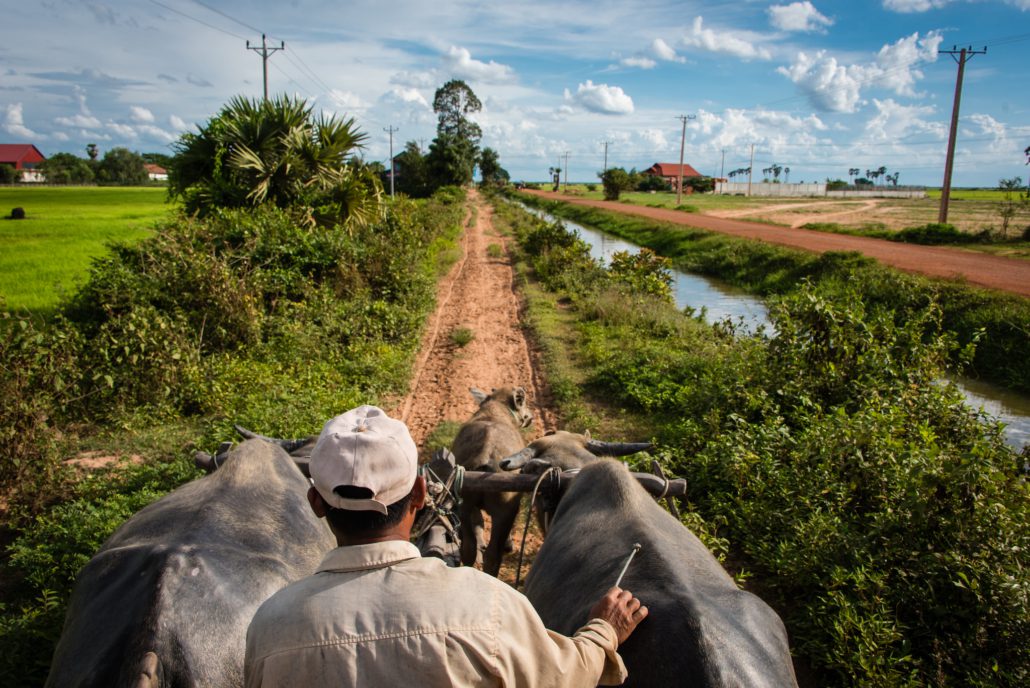
 At the World Food Summit in 1996, La Via Campesina changed the face of agriculture forever by creating and advocating for the idea of food sovereignty. La Via Campesina, which translates to “The Peasants’ Way,” is an international, grassroots social movement — arguably the biggest one around the world. It works to educate and empower small-scale farmers, fisherfolk, land workers, rural women and indigenous people everywhere so that they can reclaim their power in the global food system.
The Origins of La Via Campesina
In Belgium in 1993, farmers – both men and women – from four different continents came together to found La Via Campesina. During this period of globalization, small farmers needed to unite to protect their voices. An estimated 200 million people are now part of this movement.
The International Peasant’s Movement
La Via Campesina, also known as the International Peasant’s Movement, has three main goals:
-
Defending food sovereignty and agrarian reform
-
Promoting agroecology and defending local seeds
-
Promoting peasant rights and defending against the criminalization of peasants
Defending Food Sovereignty
When people speak about global food equity, they often refer to food security. Food sovereignty takes this concept of equal distribution of food one step further, and advocates for control of the food system by those who actually produce, distribute and consume.
According to the Declaration of Nyéléni at the first global forum on food sovereignty in 2007, “Food sovereignty is the right of peoples to healthy and culturally-appropriate food produced through ecologically sound and sustainable methods and their right to define their own food and agriculture systems. It puts the aspirations and needs of those who produce, distribute and consume food at the heart of food systems and policies rather than the demands of markets and corporations.”
World agricultural systems are the most productive they’ve ever been. The issue today isn’t a lack of food, but rather power imbalances in the control of the food, preventing those who need nourishment most from getting it. Food sovereignty supports that everyone – producers, harvesters, consumers – has the right to take back power from the markets and corporations.
Another factor is the struggle for land and agrarian reform. The organization seeks to ensure that those who produce have the rights to use and manage lands, water, livestock, etc., rather than the corporate sector.
Promoting Agroecology
This movement is deeply connected to sustainability and believes that agroecology is a way to combat the economic system that places more importance on profit than people around the world. Small farmers comprise almost half of the world’s population and have shown already that they can produce food in an eco-friendly, sustainable way.
Agroecology is a comprehensive view of farming which states that processes and practices should be adapted to fit local conditions. By creating agricultural systems based on the independence of peasants, without the use of oil or other fossil fuels, agrochemicals, or genetic modification, both the environment and global food systems will make strides towards a safer future. It relies on the decentralization of agricultural power. While this may sound counterintuitive in an increasingly globalized world, decentralization gives power back to the people who need it most.
An integral part of agroecology is the recognition of the importance of traditional knowledge. Passed on from generation to generation and deeply embedded in the culture of a community, traditional knowledge provides useful information about the local landscape and agricultural needs. La Via Campesina fosters farmer-to-farmer transmission of information and innovation through observation.
Promoting Peasant Rights
Peasants are increasingly being displaced and discriminated against in every part of the world. Corporations continue to violate their basic rights while peasants struggle to protect them, sometimes dying in the process. In 2017, 207 men and women were killed for defending their land, forests and water; a quarter of them were Indigenous.
It must also be noted that the term “peasant” does not carry negative connotations; as defined by La Via Campesina, “A peasant is a man or woman of the land, who has a direct and special relationship with the land and nature through the production of food and/or other agricultural products.” Many think peasant is a pejorative word, indicative of a low status. In a modern context, there is no association between the word “peasant” and “low class.”
La Via Campesina promotes a Universal Declaration on the rights of peasants and other rural workers. This Universal Declaration includes the right to an adequate standard of living, seeds, land, information, justice and gender equality.
The Accomplishments
La Via Campesina has made substantial, lasting accomplishments. Multiple countries have made food sovereignty a part of their national policies and constitutions. After heavy lobbying, the United Nations Declaration on the Rights of Peasants was adopted in 2018.
Djigal, a small-scale fish producer from Senegal, shares her thoughts on the matter. “…A movement like this allows us to globalize the struggle…For a long time, peasants didn’t know what was at stake in these negotiations. But through this movement, we’ve become more educated. Now we can speak for ourselves.”
The impacts of this movement cannot be overstated. It is a daunting task to shift the balance of power of the global food system towards small-scale farmers, indigenous people and rural women. Advocates of industrial capitalism believed peasants would disappear, but here they are, fighting around the world for their rights.
– Fiona Price
Photo: Flickr

Improving Mental Health in India
The COVID-19 pandemic has brought the crisis regarding mental health in India to the forefront. COVID-19 has led to various versions of isolation and insecurities for many Indian citizens.
Amid this crisis, the Indian Psychiatric Society’s survey has noted a significant increase in reported mental illness since the lockdown. This is an opportunity for the country to rework its mental healthcare system for its diverse population. The pandemic has affected the poor the most. The World Health Organization (WHO) has stated that mental health illness and poverty have a cyclical relationship in that extreme poverty triggers mental illness, which leads to further financial crises.
Government Initiatives
The government of India launched the National Mental Health Programme (NMHP) in 1982 and the Mental Health Care Act in 2017. The National Mental Health Programme focused mainly on increasing the reach of minimum mental health services for the poor. This encourages social development in general healthcare. After a gap of more than 20 years, the Mental Health Care Act mandated affordable mental health care, the right to make decisions and informed consent, the right to live in a community and the right to confidentiality. This Act more importantly decriminalized suicide.
The Mental Health Care Act is a step in the right direction with the aim of bringing mental healthcare to those who cannot afford it. Yet, almost 14% of the population still suffers from mental health disorders. While stigma and social stereotypes play a major role in the aggravation of these numbers, the nation’s budget invests very little into mental health. India as a developing country, spends only 0.05% of its subtotal health care budget on mental health.
De-stigmatizing Awareness
A study from 2017 suggested that 87% of the population was aware of mental illness and that 71% inculcated terms that propagate stigma. In 2015, Bollywood and Hollywood actress Deepika Padukone talked about her battle with depression on Indian television. By speaking about her struggles, she started a conversation about mental health in the nation. She also founded the Live Love Laugh Foundation which facilitates research and outreach on various levels. The Live Love Laugh Foundation provides free mental health care to the rural poor, educates caregivers and creates a community of awareness in rural Karnataka and Orissa. As of now, close to 3,000 direct beneficiaries have received treatment through the Foundation.
Organizations like The MINDS Foundation, Manas Foundation, The Banyan and Aasra along with many others are key in de-stigmatizing mental health in India. They often work as gap-fillers in a system that is out of reach for many. The World Health Organization (WHO) noted in a report in 2017 that there are less than two mental health professionals for every 100,000 people in the country. The Banyan, with its branches in Kerala, Tami Nadu and Maharashtra is an NGO that focuses on holistic mental health solutions for those who live in poverty in these states. It has over 16 centers and has reached a population of over 100,000.
Tele-health Initiatives
Universities, nonprofits and several hospitals have facilitated workshops, online counseling sessions and helplines. Tele-health calls have helped to bridge the gap between those who would normally shy away from in-person visits. However, it has been detrimental to those who lack access to these online facilities. The rural poor in India do not own the technology to be able to access facilities like e-prescriptions or telehealth calls. The transition of online healthcare into rural areas in India is a promising developmental venture.
Community-based Approaches
India’s allocated mental healthcare budget and prevalent social stigma surrounding it have emerged as the two major problem areas. Encouraging studies have paved the way for a community-oriented approach to practicing psychosocial therapy in the country. This will entail training community-based healthcare workers to serve as supervised non-specialist mental healthcare workers by following standard protocols. Sangath, an NGO based in Goa, New Delhi and Bhopal, is implementing this model through its programs. Sangath provides affordable mental healthcare by strengthening state and private sector services by training the community. Sangath is also working with policymakers to further develop as well as implement this model of care.
Resources During COVID-19
The India Research Center of the Harvard T.H. Chan School of Public Health has recounted a few tips for mental well-being during the pandemic. Mindfulness, breathing exercises, meditation, limiting news consumption, generosity and empathy are practices that are effective along with other useful resources that the school emphasizes. Here is a list of numbers one can contact during a mental health emergency in India.
In a country as plural as India, innovative approaches are essential factors of growth. The nation has a long way to go in order to climb up on the mental health and well-being ladder. However, NGOs and foundations are paving the way toward improved mental health in India.
– Anuja Mukherjee
Photo: Flickr
Empowering Women Improves Maternal Health
Empowering Women Improves Maternal Health
Although the role of women’s empowerment as a social determinant of maternal and child health outcomes has not been as widely acknowledged as other social determinants such as education, it is a leading opportunity to improve the well-being of women and children around the world. Women’s empowerment is positively associated with an array of positive maternal and child health outcomes, such as improved antenatal care, contraceptive use, child mortality and nutrition levels.
Improved Maternal Health in Guinea and India
Another facet of maternal health that is linked with women’s empowerment is increased access to quality maternity care. The Republic of Guinea has committed to alleviating maternal and child health disparities by increasing women’s liberty. According to the 2018 Guinea Demographic Health Surveys, mothers who received higher quality antenatal care (ANC) also exhibited several aspects of women’s empowerment, such as having a proactive role in healthcare decisions and being employed.
In Varanasi, India, women’s autonomy and empowerment were also found to positively influence maternal health. A study of 300 women found that women with greater autonomy were more likely to deliver their baby in a clinic and employ higher levels of antenatal care.
Improved Maternal Health in Africa
Uniformly, a regional analysis of Africa revealed that dimensions of women’s empowerment impacted maternal health and utilization of health services. Researchers found that having greater control over money or household decisions correlated with higher Body Mass Index (BMI) in the Democratic Republic of Congo, Ghana, Uganda and Zambia. This is important because low maternal weight is a risk factor for low birth weight babies and adverse infant outcomes. Additionally, facility delivery was significantly associated with positive attitudes toward gender roles in Nigeria. Delivering in a clinic plays a large role in reducing maternal mortality as the majority of fatal pregnancy complications can be prevented if intervened by a skilled clinician.
Empowering Women Improves Child Health
In addition to improving maternal health, empowering women improves and enriches the health of their children. Studies have found a nexus between women’s empowerment and good child health outcomes, including higher utilization of health care services and immunizations, improved nutritional status and lower child mortality.
Women in Nepal who own land are significantly more likely to have authority over household decisions,and similarly, children of mothers who own land are significantly more likely to be a healthy weight. The connection between land ownership and feelings of empowerment mean women are more likely to use income to contribute to the well-being of the children and the family overall.
Organizations for Women’s Empowerment
Mending educational and economic inequalities and disadvantages that women and girls face are fundamental in empowering women and marking long-term and sustained improvements in women’s health. Offering scholarships, making schools a safe environment for girls and transforming beliefs and gender-biased social norms that perpetuate discrimination and inequality are avenues to create equal education opportunities. Additionally, governments and policymakers are pertinent to allocate resources necessary for gender equity and improving female health.
Self Help Groups (SHGs) are a great example of a simple yet effective solution to empower women who live in lower-income communities. Find Your Feet is an organization based in the U.K. that is working in Malawi and rural India to end rural poverty. The organization works with families in remote areas of Asia and Africa by helping them earn incomes and expand access to vital services. A key facet of its work is geared toward women’s empowerment and it has created SHGs throughout the poorest districts in India.
The Way Forward
Empowering women is a catalyst for not only better maternal and child health outcomes, but investing in a woman’s health and empowerment has a ripple effect, helping families, communities and countries to rise out of poverty.
– Samantha Johnson
Photo: Flickr
Human Trafficking in the Dominican Republic
Human trafficking is a crime that involves unfair labor practices and sexual misuse of adults and children. Human trafficking in the Dominican Republic is a big problem because of the popularity of the country as a tourist attraction. Some locals and foreign visitors look for the service of young women and children working in the area. A good number of women engaging in the activities are underage.
Female Victims of Human Trafficking
According to the 2019 Trafficking in Persons Report, the Dominican Republic is a Tier 2 country which means that the country does not fully comply with the requirements to end trafficking. For the Dominican Republic to go above and meet the standards that the U.S. Department of State has set, the country must be more aggressive in its efforts to convict more traffickers. Police need more training regarding how to deal with trafficking and work with children on the street.
In the illegal trafficking business, women make up more than half of the slave population globally. Human trafficking in the Dominican Republic involves women who are the victims of abuse and neglect while engaging in sexual exploitation. Women and young girls are the victims of corrupt traffickers and corrupt authority figures in the Dominican Republic who side with the illegal trade and business.
Human Trafficking in the Dominican Republic
Victims of trafficking frequently look for opportunities to become financially independent and make money for themselves or to support their families. Depending on the situation, some victims do not come from the best living environments and want to escape their families.
To combat this, the Dominican Republic has implemented a national anti-trafficking plan. The first one emerged in 2003 followed by a nationwide plan in 2006. The country has seen some success in its efforts to bring justice ever since. For example, the Dominican Republic’s first maximum sentence sent a trafficker to prison for 25 years.
The International Justice Mission
The International Justice Mission (IJM) is an organization that focuses on human rights and law. The mission of the organization is to eradicate forced labor. IJM has worked successfully with the Dominican authorities by bringing justice to the country. A sense of normalcy and stability has returned by removing the criminals in the communities where they were working. IJM provides lawyers to build a case against traffickers that uses testimonies from survivors.
IJM saves victims of trafficking by cracking down on crimes and reporting them to the Dominican police. Additionally, it offers to help survivors find safe living spaces. The victims of these crimes suffer physically and psychologically. The psychological effects of such harm manifest in the long term in the form of mental health issues. IJM has treatment plans in place for government agencies and local organizations that address health, counseling and personal development measures.
Looking Forward
The Dominican Republic has implemented solutions to combat human trafficking in the Dominican Republic. Organizations like IJM are necessary to improve life for survivors of trafficking while making the communities that the crime of trafficking most affects better. Victories are emerging and the good news is that some progress is better than none at all.
Photo: Flickr
How La Via Campesina is Improving Food Sovereignty Around the World
The Origins of La Via Campesina
In Belgium in 1993, farmers – both men and women – from four different continents came together to found La Via Campesina. During this period of globalization, small farmers needed to unite to protect their voices. An estimated 200 million people are now part of this movement.
The International Peasant’s Movement
La Via Campesina, also known as the International Peasant’s Movement, has three main goals:
Defending food sovereignty and agrarian reform
Promoting agroecology and defending local seeds
Promoting peasant rights and defending against the criminalization of peasants
Defending Food Sovereignty
When people speak about global food equity, they often refer to food security. Food sovereignty takes this concept of equal distribution of food one step further, and advocates for control of the food system by those who actually produce, distribute and consume.
According to the Declaration of Nyéléni at the first global forum on food sovereignty in 2007, “Food sovereignty is the right of peoples to healthy and culturally-appropriate food produced through ecologically sound and sustainable methods and their right to define their own food and agriculture systems. It puts the aspirations and needs of those who produce, distribute and consume food at the heart of food systems and policies rather than the demands of markets and corporations.”
World agricultural systems are the most productive they’ve ever been. The issue today isn’t a lack of food, but rather power imbalances in the control of the food, preventing those who need nourishment most from getting it. Food sovereignty supports that everyone – producers, harvesters, consumers – has the right to take back power from the markets and corporations.
Another factor is the struggle for land and agrarian reform. The organization seeks to ensure that those who produce have the rights to use and manage lands, water, livestock, etc., rather than the corporate sector.
Promoting Agroecology
This movement is deeply connected to sustainability and believes that agroecology is a way to combat the economic system that places more importance on profit than people around the world. Small farmers comprise almost half of the world’s population and have shown already that they can produce food in an eco-friendly, sustainable way.
Agroecology is a comprehensive view of farming which states that processes and practices should be adapted to fit local conditions. By creating agricultural systems based on the independence of peasants, without the use of oil or other fossil fuels, agrochemicals, or genetic modification, both the environment and global food systems will make strides towards a safer future. It relies on the decentralization of agricultural power. While this may sound counterintuitive in an increasingly globalized world, decentralization gives power back to the people who need it most.
An integral part of agroecology is the recognition of the importance of traditional knowledge. Passed on from generation to generation and deeply embedded in the culture of a community, traditional knowledge provides useful information about the local landscape and agricultural needs. La Via Campesina fosters farmer-to-farmer transmission of information and innovation through observation.
Promoting Peasant Rights
Peasants are increasingly being displaced and discriminated against in every part of the world. Corporations continue to violate their basic rights while peasants struggle to protect them, sometimes dying in the process. In 2017, 207 men and women were killed for defending their land, forests and water; a quarter of them were Indigenous.
It must also be noted that the term “peasant” does not carry negative connotations; as defined by La Via Campesina, “A peasant is a man or woman of the land, who has a direct and special relationship with the land and nature through the production of food and/or other agricultural products.” Many think peasant is a pejorative word, indicative of a low status. In a modern context, there is no association between the word “peasant” and “low class.”
La Via Campesina promotes a Universal Declaration on the rights of peasants and other rural workers. This Universal Declaration includes the right to an adequate standard of living, seeds, land, information, justice and gender equality.
The Accomplishments
La Via Campesina has made substantial, lasting accomplishments. Multiple countries have made food sovereignty a part of their national policies and constitutions. After heavy lobbying, the United Nations Declaration on the Rights of Peasants was adopted in 2018.
Djigal, a small-scale fish producer from Senegal, shares her thoughts on the matter. “…A movement like this allows us to globalize the struggle…For a long time, peasants didn’t know what was at stake in these negotiations. But through this movement, we’ve become more educated. Now we can speak for ourselves.”
The impacts of this movement cannot be overstated. It is a daunting task to shift the balance of power of the global food system towards small-scale farmers, indigenous people and rural women. Advocates of industrial capitalism believed peasants would disappear, but here they are, fighting around the world for their rights.
– Fiona Price
Photo: Flickr
Save the Children’s Work in Yemen
The Yemen Crisis Amid COVID-19
With the COVID-19 pandemic, Yemen has plunged deeper into poverty. The health care system is crumbling, with 50% of health facilities not operating and a lack of basic equipment, such as masks and gloves as well as medical equipment to treat COVID-19 like oxygen and ventilators. Health care workers are working without an income. Yemenis children under the age of 5 now experience the highest rates of acute malnutrition ever recorded, the number reaching half a million children in southern Yemen.
Even before the pandemic, a child died every 10 minutes due to preventable diseases, such as diarrhea and malnutrition, as there are no doctors in 20% of Yemeni districts. Amid the Yemen crisis, children are killed and injured, their schools are shut down and health care facilities are closed. With the situation leaving children more vulnerable than ever, the danger driven by war and poverty is now even further amplified by the pandemic.
Yemen’s unstable health care system is nowhere near equipped to handle the surge of COVID-19 cases amid the pandemic. In the entire country, there are only 500 ventilators and four labs for COVID-19 testing for a population of nearly 30 million. Despite the lack of preparation and available resources, there have been more than 2,000 COVID-19 cases in the country as of October 2020. The number of malnourished children under the age of 5 could rise to 2.4 million by the end of the year.
Save the Children Leading Child Aid in Yemen
Save the Children is the largest aid organization in Yemen that aims to provide basic needs and assistance to vulnerable children in the country. Since the organization started assisting Yemenis children in May of 2015, it has reached more than three million kids. Save the Children has protected 55,608 children from harm, supported 1,784,041 children during the crisis and helped 98,127 parents provide their children with basic needs.
With the support of donations, Save the Children has kept 75 of its health care facilities operating. Especially for displaced or refugee children, it is almost impossible to practice social distancing and sanitary precautions, thus increasing the risk of spreading the virus. To combat this, Save the Children is distributing sanitary supplies and providing health care to protect vulnerable children in Yemen.
– Mizuki Kai
Photo: Flickr
5 Changes Regarding Elderly Poverty in Taiwan
In recent decades, Taiwan has made rapid improvements in the quality of life of its people, resulting in less than 1% of the population being poor or low income. Although these facts are definitely something to celebrate, Taiwan’s demographic has changed drastically during this time. People are living longer and having fewer children, causing the rate of aging in Taiwan to accelerate. In fact, Taiwan’s accelerated rate of aging is so high that it more than doubles that of European countries and the United States.
The World Health Organization (WHO) classifies an “aging society” as when 7% of the population is 65 and older. Taiwan became an aging society in 1993 and estimates have determined that it will become a “super-aged society” by 2025 as about 20% of the population could be over the age of 65.
As the size of the ever-growing elderly population expands, their quality of life dissipates. Many rural counties in Taiwan have a dependency rate (the number of people 65 and older to every 100 people of traditional working ages) in excess of 10%. These rural townships lack even more services and resources, having limited access to essentials like medical and transportation services— and most notably, caregivers who leave and move to metro areas for jobs and education. This leaves the island with a dilemma on how to promote systematic endeavors— both in policies and research, as well as encouraging more involvement in non-government organizations to help with this aging issue. Here are five positive changes regarding elderly poverty in Taiwan.
5 Positive Changes Regarding Elderly Poverty in Taiwan
Adapting to a New Demographic
As Taiwan’s economic prosperity continues to evolve at a continuing rate, it is important to pay attention to those who may be falling behind. Taking affirmative action on positive changes to end elderly poverty in Taiwan is the greatest way for the Taiwanese to stay true to their rooted cultural values of respecting one’s elders and to ensure that citizens in need are experiencing an optimal quality of life.
– Alyssa McGrail
Photo: Flickr
UNICEF Aids in Recovery After the Beirut Explosion
UNICEF Aids in Recovery After the Beirut Explosion
These are just some of the ways that UNICEF has helped Beirut recover after the explosion.
WASH Program
One of the first actions taken by UNICEF for recovery after the Beirut explosion was to restore water service to damaged homes and facilities. In the past, the organization has provided Lebanese families with clean and accessible water through the WASH (Water, Sanitation and Hygiene) program. After the explosion, this program was reoriented to focus on restoring and repairing water supplies in Beirut. Working with partner NGOs LebRelief and DPNA, UNICEF conducted house-to-house surveys and technical assessments of the damage and required assistance. In buildings such as schools and hospitals that sustained heavy damage, UNICEF and DPNA installed 1,000-liter water tanks. They repaired damaged or leaking pipes quickly so that these facilities could continue serving the community. Many of these installations and repairs are also being performed by Lebanese youth through a UNICEF program. It trains them on how to re-establish water connections for future career skills. Additionally, UNICEF and LebRelief restored water service to homes with vulnerable families affected by the explosion. They operated quickly to have water connections reestablished within days.
Hygiene and Baby Care Kits
Safe Parks
Emergency Cash Grant for Recovery After the Beirut Explosion
The explosion in Beirut was a terrible tragedy that left many families struggling to get back on their feet. UNICEF’s numerous assistance programs are an invaluable aid to this city’s recovery efforts.
– Allie Beutel
Photo: Flickr
Combating COVID-19 in Peru: Integrating Traditional Medicine
In Peru, the number of COVID-19 cases among Indigenous people has exceeded 21,000. Across many measures, Indigenous Peruvians are disproportionately affected by the pandemic. Conventional medical services are rare and often ill-equipped. The national census reported that only about one-third of communities have access to clinics. Furthermore, over 90% of medical services that exist in the region lack any medical workers and the majority also do not have electricity and running water. The disparities in medical attention are a catalyst for the extraordinarily high positive rate in the Amazon region, which has reached 15.75%.
Decades of under-investment in public healthcare, combined with the skepticism of modern medicine, mean many are not receiving standard treatments like oxygen therapy to treat severe virus cases. Traditional medicine has become the first line of defense against the pandemic in these communities and has compelled many Indigenous groups to utilize ancestral remedies to fight COVID-19 in Peru.
Traditional Medicine to Fight COVID-19 in Peru
Throughout history, traditional medicine has been a source of medical treatment for a plethora of diseases. In Peru, local people rely primarily on traditional medicine, while Western medicine is ancillary. Consequently, inclusive mobilization of traditional medicine resources is important for more effective control of COVID-19. Western medicine is generally fixated on an individual patient’s illness, while Indigenous healers have a more holistic approach to medicine that focuses on the individual’s personal relationships and the natural world.
Traditional medicine offers a key opportunity to fight against COVID-19 in Peru’s rural communities. The contribution of traditional medicine and healers in the management of COVID-19 in Peru has the scope to enhance health initiatives and medical care services. Local plants, such as buddleja globosa, or locally known as “matico,” are being used by the Shipibo people, who are one of the largest ethnic groups in Peru’s Amazon region, to treat symptoms of COVID-19. This plant is believed to have anti-inflammatory properties. A combination of Indigenous medicine and Western medications, such as paracetamol, are acting as substitutes for typical treatments for the virus as Indigenous communities fight to lessen the burden of the pandemic with limited resources.
Providing Solutions
Several organizations are working to combat COVID-19 in Peru. WiRED International has joined forces with Project Amazonas (PA) to train community health workers and create a sustainable health database for the region. Based on World Health Organization standards, they implemented a comprehensive program in Iquitos. The curriculum consists of a myriad of training modules to better equip community health workers to fight and contain infectious diseases. PA and WiRED also collaborated to create an online patient-record database that can be accessed without the internet. The information collected can then be uploaded to the national health database to bring the needs of the Indigenous communities to the government’s and health leader’s attention.
Sinergias, a Colombian nonprofit organization, created an intercultural, multi-pronged approach to fight COVID-19 in the Amazon. The organization is collaborating with local communities and governments to create and implement health guidelines for rural areas that fuse traditional and Western medicine approaches. Additionally, Sinergias has joined the effort to create an Amazonian Health Observatory. This observatory provides reliable information about COVID-19 and has the potential to expand to monitor and document the region’s overall health.
Strengthening local health systems and improving Indigenous populations’ access to resources is pertinent to easing the burden of the COVID-19 in Peru. Some populations are experiencing relief from COVID-19 symptoms with a combination of traditional and Western medicine. Combating COVID-19 in a medically plural society has its challenges, yet implementing effective solutions is possible with diligence and collaboration.
– Samantha Johnson
Photo: Flickr
3 Innovations in Poverty Eradication in Angola
Angola has struggled to recover from decades of civil war and economic turmoil, with over 40% of the population, mostly in rural areas, living in extreme poverty. However, recent innovations in poverty eradication in Angola have begun to help the once virulent nation gain stability. New technologies and funding from private companies, financial institutions and organizations have allowed Angola to modernize and combat extreme poverty. Here are three innovations in poverty eradication in Angola.
Open Data Platforms
Open data platforms are a way to gather large amounts of data, statistics and information from diverse and large groups to analyze potential problem areas. Governments and large organizations use this analysis to tackle identifiable issues head-on. For example, an investment group may notice a glaring need for communications upgrades in rural areas, which leads to the creation of jobs and infrastructure.
Open data is a recent innovation in poverty eradication in Angola and examines anything from economic growth to healthcare strategy. Through the International Monetary Fund’s Enhanced General Data Dissemination System, Angola set up its own National Summary Data Page at opendataforafrica.org in 2018. The African Development Bank and the International Monetary Fund (IMF) offer the NSDP to Angola for free. Using key indicators through the NSDP, the IMF and other organizations utilize this information for transparency, economic investment opportunities and identifying necessary aid in Angola, which are ways the NSDP’s data collection can reduce poverty.
South Atlantic Cable System
Angola lacks a strong telecommunications network. Rural communities suffer the most due to decreased technological abilities in farming and irrigation and emergency medical services. But a revolutionary project may help. One of the most impressive innovations in poverty eradication in Angola is the South Atlantic Cable System. Developed by the telecommunications operator, Angola Cables, this submarine communications cable provides interconnectivity between Luanda, Angola and Angonap Fortaleza, Brazil. The SACS improves the telecommunications and information technology infrastructure in Angola while connecting fast communication services throughout Africa and South America.
Although Angola is still developing its ICT sector and job growth has remained stagnant, the SACS potential is exponential. Angola could use this project to establish the country as a leader in tech in sub-Saharan Africa. This would reduce Angola’s reliance on oil exports and drive IT education to encourage entrepreneurship and competition, leading to increased IT and communications jobs and eventual ICT expansion in rural Angola to reduce poverty and improve healthcare access.
Neighboring nations that lack IT infrastructure can reach out to Angola Cables and the Angolan government, launching international funds to Angola. The SACS also makes Angola a centralized location for data in the entire southern hemisphere. The premium digital connection is unrivaled, leading to even more considerable international interest in Angola as a tech hub.
Commercial Agriculture Development Project (PDAC)
Due to the Angolan Civil War, farming in Angola suffered from a lack of development and slow regrowth due to landmines. Agriculture also suffers due to persistent and unpredictable droughts in Angola. The Commercial Agriculture Development Project received funding from the World Bank in 2018 to improve the economic condition and technology in Angola’s rural areas, providing much-needed support to the most vulnerable people in Angola to improve domestic food security. Primarily directed at improving irrigation systems and infrastructure related to the electric grid, the PDAC receives funding through 2024 and supports developers’ creative solutions to these problems.
So far, the project has granted contracts and requests in 2020 for the following:
All of these contracts and requests have happened in 2020 during the COVID-19 pandemic. Even with the pace slowing to handle the pandemic, the PDAC has led to several innovations in poverty eradication in Angola. Developers have maintained a healthy advancement rate since the beginning of the project, and they will continue through 2024.
Angola’s Future
With all the new technology and projects, Angola will continue to reduce extreme poverty for large portions of its population. As the nation continues to establish a commercial agriculture program and the telecommunications sector, there is a reduced reliance on oil exports. Angola can continue to diversify its economic strategy allocating its vast resources for a bright future and eliminate extreme poverty.
– Zachary Kunze
Photo: Pixnio
Asante Africa Foundation: Education for Young Girls
Asante Africa Foundation, which Erna Grasz co-founded in 2007, is a Foundation to alleviate poverty and encourage the development of youth through quality learning in the classroom, gender equity and work-life skills. Its motto is to “Educate and empower the next generation of change agents, whose dreams and actions transform the future for Africa and the world.” Here is some information about how Asante Africa Foundation is working to promote health knowledge and education for young girls.
About Asante Africa Foundation
The Foundation comprises a global team that connects youth from Kenya, Tanzania, California and Uganda through three effective interconnected programs that work to promote education through low-cost resources and train teachers how to educate youth. These programs, called Accelerated Learning in the Classroom Program, Leadership and Entrepreneurship Incubator (LEI) Program and Wezesha Vijana Program, are active in East Africa in Narok, Kenya; Arusha, Tanzania; Livermore, California and Kassanda, Uganda.
The LEI Program, founded in 2010, is a three-year program that provides students with job readiness skills, entrepreneurship skills and personal development skills that will allow students to enter the job market and start their own businesses in the future. The Accelerated Learning in the Classroom Program is a program that works to provide intensive teacher training and utilization of technology in the classroom to better prepare students. In this way, both students and teachers gain the necessary skills to thrive and excel in modern academic fields.
The Wezesha Vijana Program, also known as the Girls’ Advancement Program, is a school-based program that works to provide a safe space for young girls to discuss their challenges and to create solutions to those problems. This program allows community support, parental engagement and peer mentoring. Young girls become armed with the knowledge and recognition of their rights and their collective power. The Foundation has changed over 600,000 youth lives by encouraging the development of cognitive skills, decision-making capacity and leadership qualities for the next generation.
Providing Education for Girls
In a virtual event that took place on October 17, 2020, called Creating Opportunity from Chaos, people received opportunities to create changes in their communities and voice their understanding of the struggles that young girls face. Participants had to describe what implementations they were making in the community to foster change and growth. The theme of the panel was to create solutions for the predicament of a young girl facing issues such as gender-based violence and limited educational and economic opportunities. Simon Kinyanjul, the representative from Asante Africa Foundation, answered that he was promoting change in the community through providing education for girls about their sexual rights, hygienic practices and financial/business knowledge.
Kinyabjul emphasized how the start of after-school clubs and activities play an important role in functioning as a safe place for girls to learn how to obtain skills such as financial education, skills training and community support. Some afterschool activities that Asante Africa Foundation has created involved building peer support networks through the administration of girl-led school clubs that educated girls in sexual maturation, reproductive health, financial knowledge, social skills and personal rights. These afterschool clubs allowed greater communication among the girls and also taught the boys to act as a support system and ally to the girls. The implementation of after-school activities and clubs has led to fewer early unintended pregnancies, reduced early marriages, increased school attendance/completion and increased financial earnings/savings for girls.
The Wezesha Vijana Program
Simon Kinyanjui took the time to explain the Wezesha Vijana Program, a program to give young girls knowledge about hygiene, finances and business, along with social skills to help them in their communities and their lives. The help gained from the local government, local chiefs and schools serve as important constituents that will aid as a support structure for young girls to pave their way into the world. This program has impacted over 125,000 youth lives and the number continues to grow. The average attendance rate in schools in Africa has increased by 7%, academic performance in schools has increased by 38% and pregnancy dropouts have decreased by 75% in 2019 alone.
During the COVID-19 Pandemic
As the COVID-19 pandemic progresses, young girls and children do not have the opportunity to gather and learn these important lifelong skills. Therefore, Asante Africa Foundation has been reaching out to communities and distributing Youth Essential Kits which contain feminine hygiene products and learning products that allow these girls to become healthy women in their business and their lives.
The prolongation of the COVID-19 pandemic has denied youth the ability to attend sessions in the community that served as a place for the girls to meet regularly and discuss and share issues. It is also impeding the process that allowed girls to discuss their knowledge of financial stability, hygiene and personal health. However, through the creation and distribution of the hygiene kits, adolescent girls have the feminine hygiene products that will allow them to stay clean and that they may not have been able to afford. The pandemic has resulted in reduced earnings and increased unemployment in the African economy which, in turn, has increased poverty. As a result, these Youth Essential Kits are providing adolescent girls with the feminine products that they cannot afford due to the economic decline.
To help ease the trouble that the pandemic caused, Asante Africa Foundation has also been working with students and alumni to identify what is necessary within different communities. The effort of Asante Africa Foundation to provide a source of outreach and connection among the students through the pandemic has allowed students to remain active in their endeavors and have a positive outlook for their futures.
– Isha Bedi
Photo: Flickr