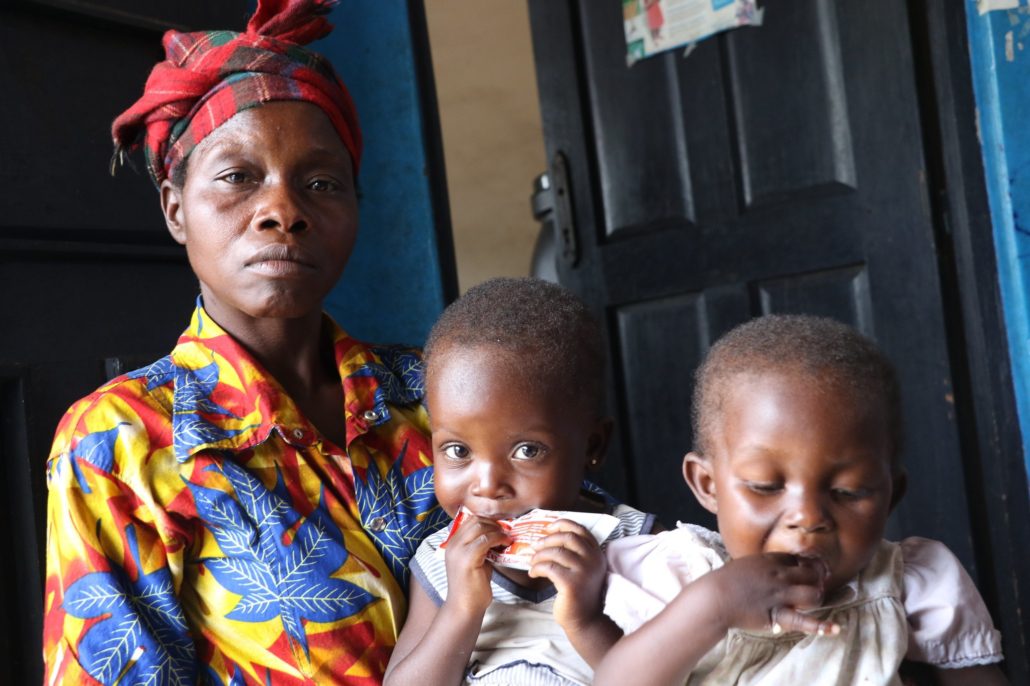
Global poverty has a detrimental effect on health, specifically the health of children. Statistically, malnutrition impacts children the most as 3.1 million children die annually from a lack of nutrition, according to the World Hunger 2018 report. In Angola, the leading cause of children’s death is malnutrition. In the World Vision report on countries struggling with malnutrition, Angola ranks as number one among countries that have the weakest commitment to fighting malnutrition in children. This goes to show that malnutrition is a critical issue among Angolan children.
The Effects of Malnutrition
Although malnutrition includes both undernutrition and overnutrition, the majority of the focus is on undernutrition as it is a significant effect of global poverty. The leader of the Intersectional Nutrition Working Group and nutrition advisor for Médecins Sans Frontières, Dr. Kirrily de Polnay, told The Borgen Project, “The reason why we often focus more on undernutrition is that less than 20% of undernutrition children receive care.”
Undernutrition in children tends to come with other direct health issues such as vitamin deficiency, wasting, growth stunting and fetal growth issues. Undernutrition can also worsen the effects of underlying health problems and diseases. This includes children with recurrent illnesses like measles, malaria, diarrhea and other chronic diseases. As a result, malnutrition creates a higher risk for already vulnerable children.
Undernourished children in Angola have a higher risk of infection, delayed development and death. These children also tend to develop non-communicable diseases in their adult lives, creating a cycle of poor health that can also result in severe malnutrition. These effects can lead to harsher consequences later in their lives. This includes a lack of productivity, which leads to little to no economic growth and causes low incomes and generational poverty.
Malnutrition and Poverty
Poverty links to the majority of malnutrition cases in children. About 40% of Angolans live below the poverty line. This, in turn, creates a high rate of malnutrition, specifically among children who are more susceptible to the consequences of extreme poverty. Malnutrition is the main cause of child death, which Angola’s high infant mortality rate of 48 per 1,000 births reflects.
One can further break the causes of malnutrition down into food insecurity, unhealthy household conditions and inadequate health care. All of these factors lead back to the overarching problem of poverty. Moreover, the potential causes of malnutrition in children are a result of both socio-economic and political factors in Angola.
Current Plans
The number of malnourished children is currently increasing, with severe or moderate acute malnutrition in Angola affecting 85,000 children in 2019. However, even though Angola struggles with child malnutrition, the country is on track with health targets linked to malnutrition. According to the Global Nutrition Report, some of the current successes include:
- An increase in the number of infants reaching the birth weight target by 15.3%.
- Mothers exclusively breastfeeding about 37.4% of infants (0 to 5 months), which helps provide infants with adequate nutrients.
- An average of 4.9% of children under 5 experience wasting in comparison to the Southern African region overall.
Médecins Sans Frontières (MSF)
Organizations are helping countries like Angola with child malnutrition by directly providing care, especially during the COVID-19 pandemic. Dr. de Polnay’s work with MSF provides a great example of this direct help. MSF has 101 projects that include all continents except Australia where it treats malnourished children and also implements preventative programs. As a medical emergency organization, MSF mostly focuses on Africa because the region struggles the most with health. Dr. de Polnay says, “We run outpatient centers treating children with malnutrition and we also run inpatients in hospitals treating children with both malnutrition and other medical complications.” Direct aid is crucial in health care and can reduce the number of malnourished people globally.
UNICEF
UNICEF is one of the few organizations helping to decrease the effects of malnutrition among Angolan children. Some of UNICEF’s activities during the COVID-19 pandemic include:
- Providing training to 445 frontline health care workers in various Angolan provinces.
- Teaching health care workers in Angola effective ways to treat severe acute malnutrition and implementing vitamin supplementation protocols.
- Implementing mother-led mid-upper arm circumference (MUAC) measurement protocols in Angola. MUAC measurements help improve screening and early identification of malnutrition in children and can reduce serious complications.
- Continuously advocating for a secure energy response in Luanda within the Provisional Health Office.
- Producing infant and young feeding pamphlets and counseling cards for both malnutrition and COVID-19 awareness to distribute among 49 health facilities across Luanda.
- Helping more than 14,000 caregivers of young children (0-23 months) receive nutrition counseling and giving nutrition services to more than 57,000 children.
Prevention
Through help from organizations, Angola is able to increase the care necessary to circumvent the problem of malnutrition in children. However, more work is necessary to make a significant impact on the children facing malnutrition.
Dr. de Polnay recognizes the need for more action, specifically from decision-makers who should be more receptive and open to listening to organizations and people in areas of concern. Dr. de Polnay also extends this call to action to regular people, stating, “Writing about it, talking about it, making sure you are really informed about all the very different multifactorial causes of malnutrition is really important.”
When it comes to not only malnutrition among Angolan children but also all the other issues that stem from global poverty, it is important that people collectively help at all levels. whether that be through building awareness or giving direct aid.
– Zahlea Martin
Photo: Flickr

Ben & Jerry’s Supports Cocoa Farmers in Africa
As the fourth largest export in the world, cocoa has made significant contributions to the global market ever since its introduction to Nigeria in 1984. Many big brand chocolate and ice cream companies such as Mars, Hershey’s and Snickers are dependent on this market, though much of the revenue does not go to cocoa farmers or workers. In 2014, chocolate sales reached up to $100 billion, yet cocoa farmers were living off a wage of $1.25 per day. However, there is hope as Ben & Jerry’s provides support to cocoa farmers in Africa.
Child Labor in Cocoa Farming
With rising demands for cocoa production and insufficient compensation, cocoa farmers in Africa are reluctant to discontinue the use of child labor. A study from the University of Chicago reported that about 1.6 million children work on cocoa farms, mostly found in Ghana and Ivory Coast (Côte d’Ivoire) — the two largest cocoa production sites. Ghana and Ivory Coast account for two-thirds of the world’s cocoa bean production and exploit impoverished children as young as 5 years old who need to support their families.
Despite the slowed rates of child labor in Africa’s cocoa production, farmers and working children struggle to maintain a sufficient income to support themselves. Cocoa trees take years to cultivate and harvest, which is too time-consuming for a volatile and unreliable market price. Nongovernmental organizations that strive to end child labor in Africa speculate that cocoa farmers’ insufficient incomes stem from supply chains. Although programs are in place to reduce child labor and help farmers in the supply chain achieve self-sufficiency, cocoa production does not yield enough to combat poverty among the farmers and workers in the industry.
Ben & Jerry’s and Fairtrade
On Nov. 17, 2020, the Ben & Jerry’s ice cream brand released a statement announcing its commitment to paying a livable wage to the cocoa farmers in Africa. In partnership with Fairtrade, Ben & Jerry’s plans to allocate funds toward Fairtrade’s premiums, which are supplemental bonuses that farmers receive for quality work. With extra funding, cocoa farmers have been able to build health facilities and install essential amenities, such as water pumps or solar panels.
Fairtrade also released its new mission statement to provide a livable income for its workers in the cocoa sector. By focusing on multidimensional poverty alleviation for cocoa workers, Fairtrade plans to allocate funds to implement assistant programs, make partnerships to push for sustainability and push for policies to protect small stakeholders in poverty. By collaborating with Ben & Jerry’s, both brands guarantee financial support to the 168,000 cocoa farmers abiding by environmentally friendly structures and producing quality ingredients.
Looking Forward
Ben & Jerry’s continues to promote Fairtrade and push for liveable wages in Ivory Coast and Ghana’s cocoa bean plantations. In its recent statement, it announced, “As part of our new price commitment for the cocoa we will work with Fairtrade to evaluate and [ensure] we are making a positive difference for farmers.” By marking its Fairtrade partnership on cocoa-based ice creams, Ben & Jerry’s chocolate fudge brownie flavored ice cream will now be a reminder that consumers are supporting businesses in Africa.
– Linda Chong
Photo: Flickr
Malnutrition Among Angolan Children
Global poverty has a detrimental effect on health, specifically the health of children. Statistically, malnutrition impacts children the most as 3.1 million children die annually from a lack of nutrition, according to the World Hunger 2018 report. In Angola, the leading cause of children’s death is malnutrition. In the World Vision report on countries struggling with malnutrition, Angola ranks as number one among countries that have the weakest commitment to fighting malnutrition in children. This goes to show that malnutrition is a critical issue among Angolan children.
The Effects of Malnutrition
Although malnutrition includes both undernutrition and overnutrition, the majority of the focus is on undernutrition as it is a significant effect of global poverty. The leader of the Intersectional Nutrition Working Group and nutrition advisor for Médecins Sans Frontières, Dr. Kirrily de Polnay, told The Borgen Project, “The reason why we often focus more on undernutrition is that less than 20% of undernutrition children receive care.”
Undernutrition in children tends to come with other direct health issues such as vitamin deficiency, wasting, growth stunting and fetal growth issues. Undernutrition can also worsen the effects of underlying health problems and diseases. This includes children with recurrent illnesses like measles, malaria, diarrhea and other chronic diseases. As a result, malnutrition creates a higher risk for already vulnerable children.
Undernourished children in Angola have a higher risk of infection, delayed development and death. These children also tend to develop non-communicable diseases in their adult lives, creating a cycle of poor health that can also result in severe malnutrition. These effects can lead to harsher consequences later in their lives. This includes a lack of productivity, which leads to little to no economic growth and causes low incomes and generational poverty.
Malnutrition and Poverty
Poverty links to the majority of malnutrition cases in children. About 40% of Angolans live below the poverty line. This, in turn, creates a high rate of malnutrition, specifically among children who are more susceptible to the consequences of extreme poverty. Malnutrition is the main cause of child death, which Angola’s high infant mortality rate of 48 per 1,000 births reflects.
One can further break the causes of malnutrition down into food insecurity, unhealthy household conditions and inadequate health care. All of these factors lead back to the overarching problem of poverty. Moreover, the potential causes of malnutrition in children are a result of both socio-economic and political factors in Angola.
Current Plans
The number of malnourished children is currently increasing, with severe or moderate acute malnutrition in Angola affecting 85,000 children in 2019. However, even though Angola struggles with child malnutrition, the country is on track with health targets linked to malnutrition. According to the Global Nutrition Report, some of the current successes include:
Médecins Sans Frontières (MSF)
Organizations are helping countries like Angola with child malnutrition by directly providing care, especially during the COVID-19 pandemic. Dr. de Polnay’s work with MSF provides a great example of this direct help. MSF has 101 projects that include all continents except Australia where it treats malnourished children and also implements preventative programs. As a medical emergency organization, MSF mostly focuses on Africa because the region struggles the most with health. Dr. de Polnay says, “We run outpatient centers treating children with malnutrition and we also run inpatients in hospitals treating children with both malnutrition and other medical complications.” Direct aid is crucial in health care and can reduce the number of malnourished people globally.
UNICEF
UNICEF is one of the few organizations helping to decrease the effects of malnutrition among Angolan children. Some of UNICEF’s activities during the COVID-19 pandemic include:
Prevention
Through help from organizations, Angola is able to increase the care necessary to circumvent the problem of malnutrition in children. However, more work is necessary to make a significant impact on the children facing malnutrition.
Dr. de Polnay recognizes the need for more action, specifically from decision-makers who should be more receptive and open to listening to organizations and people in areas of concern. Dr. de Polnay also extends this call to action to regular people, stating, “Writing about it, talking about it, making sure you are really informed about all the very different multifactorial causes of malnutrition is really important.”
When it comes to not only malnutrition among Angolan children but also all the other issues that stem from global poverty, it is important that people collectively help at all levels. whether that be through building awareness or giving direct aid.
– Zahlea Martin
Photo: Flickr
6 Facts About Healthcare In Bulgaria
6 Facts About Healthcare In Bulgaria
Although Bulgaria is far behind the rest of the European Union in many different ways, Bulgaria is a progressive nation with universal healthcare and low hospital bills. With more investments in general practitioners and healthcare facilities as well as better living conditions and incentives to keep citizens in the country, Bulgaria can progress toward health and prosperity.
– Breanna Bonner
Photo: Flickr
How Israel’s Foreign Aid is One of the Most Effective
Natural Disaster Response
Among the most impactful of Israel’s foreign aid is the work with refugees, natural disasters and terrorism response. For example, in 1995, the Israeli Foreign Ministry, in collaboration with the Israeli Defense Force, created a humanitarian aid unit that executes operations worldwide. Israel has sent 24 delegations of Israel’s foreign aid team to 22 countries between 1985 and 2015.
Israel’s aid to Haiti following the 2010 earthquake is among the most respected of Israel’s foreign aid efforts. Israel, one of the first countries to send support to Haiti, set up makeshift hospitals and disaster relief tents. Israel’s teams sent more than 200 doctors and volunteers to treat those affected by the disaster directly at the scene. In less than two weeks, Israel’s foreign aid teams treated more than 1,000 Haitians, performed more than 300 successful surgeries, delivered 16 babies and rescued four lost individuals.
Start-Up Nation
Israel’s foreign aid capacity can be primarily attributed to its advanced technology. In 2019, Israel received the third-largest amount of funding from venture capitalist firms for various Israeli startups. The U.S. and China are the only countries that received more funding. In the last six years, annual investments have increased from $112 million to $650 million, with more than 250 active startups.
Among Israel’s startups are various medical companies working on COVID-19 innovations. For example, the Israel Innovation Authority is working to create a robotics partnership. This partnership will connect Israeli companies to South Korean companies to collaborate on coronavirus solutions. Additionally, with more than 600 investors and 100 companies working on COVID-19 technological solutions, the Israeli private sector is far more efficient than other companies and governments.
Most recently, Israel developed a sticker called the Maya to cover medical doctors’ masks to decrease their exposure to the virus. Made of a nanofiber material, the masks contain nanoscale pores that prevent the virus from attaching to the mask’s base. The virus itself is 130 nanometers, which is small enough to attach to standard masks. However, the Maya prevents such attachment. The U.S. and Europe are expected to approve the mask. In addition, there are currently plans to export the masks to Canada, Japan and Spain.
Israel’s foreign aid efforts span from natural disaster relief to cutting edge technological advances. The country’s global impact in comparison to it’s size is proving Israel to be a trailblazer in global aid and innovation.
– Maya Sulkin
Photo: Pixabay
USAID in Venezuela, Strengthening Local Economies
United States’ Response to the Crisis
According to the Department of State, the United States is the largest donor responding to the Venezuelan crisis, with over $856 million in total assistance. However, helping does not only mean providing aid for Venezuelans living in their country. The United States also offers support for those who fled to nearby countries. The aid covers 16 Latin American nations, such as Colombia, Ecuador, Peru, Argentina and Chile.
What USAID Covers in Venezuela
Due to the COVID-19 pandemic, USAID began to prioritize life-saving humanitarian assistance in Venezuela. This includes basic healthcare, providing access to medicine and supplies, training healthcare workers and combating other infectious diseases like Malaria.
USAID in Venezuela, Strengthening National Security and Economy
In Maduro’s regime, U.S. efforts to sustain the Venezuelan people externalize a political decision to disapprove Maduro’s resolutions as a leader.
“We do this because our National Security Strategy prioritizes the reduction of human suffering and doing our part to respond to crisis situations make Americans safer at home,” argues the U.S. Department of State. Moreover, foreign aid triggers a better political understanding between nations.
On the other hand, a lack of governance and extreme poverty create economic conflict between countries. In January 2021, Maduro announced that the country had received 98.6% less income than 2013, the year that he took office. As unemployment and hunger grew, other nations imposed sanctions on Maduro’s government. The latter has had a domino effect on Americans as the Venezuelan government was unable to pay their debts to Americans who invested in foreign debt.
Foreign aid is not merely an external investment but a strategic and mutually beneficial deal. Nations all over the world depend on each other to safeguard their people’s basic needs. When a nation suffers, the global community is affected. By strengthening local economies, USAID in Venezuela steadily continues to alleviate poverty and protect vulnerable groups.
– Paola Arriaza Avilés
Photo: Flickr
Locusts in Somalia Predicted to Worsen in 2021
A Destabilized Country and Poverty
Since 1993, Somalia has made many attempts to create a functioning national government, but for years, progress stalled. The Islamic extremist group Al-Shabab gained momentum in the mid-2000s, causing violence and destruction in the region. The group attacked national infrastructure, and at various points, forced agencies providing aid to withdraw. These tactics caused thousands to die, displaced thousands more and hindered access to health care and education for many.
Human Rights Watch estimated in 2018 that more than 2.5 million people faced internal displacement and agencies providing relief faced continued attacks and struggled to reach Somalians in need of help. According to the World Bank, the poverty rate in Somalia today is roughly 70%, and “almost nine of 10 Somali households are deprived of at least one fundamental dimension: access to income, electricity, education or water and sanitation.” Life expectancy is low as well, figured to be roughly 53 years for men and 57 for women. The constant violence both cause and compound these issues; the civil war deprives many of access to necessities like food and housing and it continues to be a daily concern even with other equally pressing needs.
Locusts and Food Security
It is against this backdrop that Somalia is currently dealing with a plague of epic proportions. Every year, there is an outbreak of locusts in Somalia and neighboring countries and locals are accustomed to this on some level. However, 2020 is entirely different: Warming temperatures and increased flooding over the last several years created ideal conditions for locusts to breed and reproduce, leading to two separate waves of locusts this year alone. By all accounts, this invasion is the worst in 25 years, decimating a country that was already ill-equipped to deal with a disaster.
The first infestation of locusts in Somalia numbered in the hundreds of billions, blotting out the sky and destroying crops, farmland and any other vegetation in sight. The second was even more devastating — trillions of locusts descended on East Africa and wiped out any chance of a successful harvest. The LA Times reports, “In a single day, a swarm can travel nearly 100 miles and eat its own weight in leaves, seeds, fruits and vegetables — as much as 35,000 people would consume. A typical swarm can stretch over 30 square miles.” It is nearly impossible to deal with locusts individually and a lack of centralized response leaves farmers to fend for themselves in an attempt to mitigate economic loss and save the last remnants of the most recent crop yield.
These waves of locusts ruined economic prospects for many Somali citizens, leaving many in debt and unable to sell their harvests or participate in the local economy. The U.N. Food and Agriculture division estimates that the infestation affected or harmed 100% of sorghum and maize — both vital to the Somali economy. Experts also worry that plagues of locusts will return in the spring of 2021 if allowed to continue breeding and growing to maturity unchecked. The unprecedented quantities of locusts this year make the plague difficult to contain and there is now only a short window in which to act. Avoiding another round of crop damage will require a timely and focused response.
Moving Forward
The good news is that there are tangible solutions, and possibilities remain for Somalia to revitalize its economy and recover from this devastation. Pesticides can contain the insects, but the challenge now is to deploy pesticides in high enough quantities to produce a tangible effect. Currently, Somalia lacks the political will and infrastructure to supply enough planes to be useful, but the U.N. FAO has been meeting with both West African and European countries in an attempt to gather the resources necessary to fight the locusts.
Scientists have been working to develop a worthy biopesticide over the past decade and there is now a working product that is “cheaper, more effective, longer-lasting in the desert and easier to store,” according to Science Magazine. Somali politicians and leading experts in the field from around the world are working to provide relief, and although this plague of locusts in Somalia marks the most severe infestation in decades, there are reasons to be hopeful, given the scenario. If aerial spraying becomes financially viable and available, it could provide significant relief and a renewed opportunity for affected Somalis.
One FAO official commented, “We’re already partnering with NASA, with NOAA, with the European Space Agency, with Cambridge University… all of these different entities have their own expertise.” Ultimately, a solution to locusts in Somalia is within reach and it requires a combination of pesticides, more accurate predictors of future outbreaks and cheaper methods of delivery for needed chemicals. If this is achievable, the multi-faceted solution would be critical in the fight for food and job security in the country, allowing the economy to flourish and crops to grow.
– Leo Posel
Photo: Flickr
Addressing Child Poverty in Honduras
Honduras, a country home to 9 million people, is crippled by poverty, gang violence and a lack of education. Roughly 60% of the population of Honduras lives below the poverty line. The country is also known for one of the highest crime and violence rates of all time. In terms of child poverty in Honduras, poverty impacts children in multiple ways, including health, safety and education. Nearly 75% of children use outdoor bathroom systems or open fields for defecation and 69% of children aged 9-10 are infected with parasites because of this. Furthermore, 23% of Honduran children suffer from malnutrition and stunting. This article will explore the consequences of child poverty as well as efforts to address it.
Children and Gang Violence
Children face many dangers from exposure to gangs and gang violence in Honduras. Many children are too afraid to go to school because of the prevalence of gang members on the streets. A report from the Norweigan Refugee Council highlights the risks that Honduran children face, including pressure, sexual harassment and abuse.
Gang members have also successfully infiltrated Honduran schools and now promote the distribution of drugs to minors and attempt to recruit children into gangs. Families also face pressure from gangs, often in the form of war taxes, which prohibits their ability to buy school supplies and uniforms.
Children and Education
The Honduran government provides free schooling until the sixth grade. However, when children in Honduras graduate from the sixth grade, many of them stop their education to support their families. After receiving a partial education, boys will often go to work in the fields while girls will stay at home to care for their families until marrying around the ages of 12-14 years old.
The lack of education in Honduras increases children’s involvement in gangs, drug use and other dangerous behaviors in order for them to survive and support their families. One organization working to alleviate this problem is the Honduras Good Works Secondary Education Scholarship Fund. This fund provides school supplies, transportation and school uniforms to children in Honduras to promote a full education for impoverished Honduran children.
Changing the Future for the Children
Children International, an NGO aimed at protecting and aiding children, works to address many of the issues Honduran children face. Among its current projects is the distribution of annual parasite treatments and workshops about hygiene, the Sports Development and Youth Leadership Training program to alleviate pressures of gang violence and the Youth Health Corps that ensures equal rights for girls and boys. Children International has five centers on the ground in Honduras and focuses on combating child poverty in Honduras.
Save the Children is another organization working to better the futures of children in Honduras. With the support of generous donations, this organization was able to aid 141,000 children in Honduras just last year, and more specifically, has lifted 36,000 children from poverty. Save the Children is currently working to promote food security for families in coffee-producing areas, addressing causes of migration and training government officials on the prevention of human trafficking.
Moving Forward
Child poverty in Honduras continues to impact millions of children across the country. Fortunately, organizations like Children International and Save the Children are stepping in to help. Moving forward, it is essential that these efforts and others continue to prioritize alleviating child poverty and ensuring better futures for children in Honduras.
– Caroline Pierce
Photo: Flickr
How Cell Phones are Combating AIDS in South Africa
South Africa has the world’s largest HIV/AIDS epidemic with 7.5 million people currently living with the virus. One of the main reasons why it has not been contained is a lack of testing. Less than 25% of the population has been tested in South Africa, where it is estimated that around 13% of people have AIDS. The lack of testing is caused by the negative stigma which still surrounds the virus, as well as the lack of access to reasonable testing and treatment methods. Now, cell phones are providing a new way for people with AIDS in South Africa to get tested and seek treatment. This is a massive step that may save millions of lives in the future.
Project Masiluleke
Project Masiluleke is an NGO providing these essential services in South Africa. It has developed multiple different steps to reduce the number of those affected by HIV/AIDS in South Africa. One of the main services is a program called SocialTxt which encourages people to get tested as well as refers them to medical guidance via text message. Texting is a valuable mode of communication because it is able to reach approximately 90% of the South African population. Since the implementation of this project, the number of daily calls to the National AIDS Helpline has tripled. Being able to easily access HIV/AIDS support services via cell phone has encouraged more and more people to seek help.
However, many South Africans still refuse to get tested because there is such a negative stigma around HIV/AIDS. This is a large part of why cases have continued to spread in South Africa. To help overcome this barrier, Project Masiluleke also provides users with self-testing kits. This way, people sign up for a kit via text message and then are able to take the test in total privacy. This method lets people feel more secure during the entire process and has encouraged many more people to get tested and seek treatment.
Cell-Life
Cell-Life is an NGO based in Cape Town, South Africa that seeks to help those affected by HIV by developing new technologies. They have developed several different texting services that send daily medication reminders. This organization also focuses on treatment literacy, which seeks to make people more aware of the resources they have to combat the virus. One of the most important things in the fight against AIDS is making sure people know they have support structures and can communicate with providers as well as other members of their community.
Moving Forward
Project Masiluleke and Cell-Life are great examples of new technologies bringing solutions to ongoing issues. NGOs taking advantage of widespread cell phone use to tackle the AIDS epidemic in South Africa are setting an example for other organizations and countries. Moving forward, these organizations and others must continue to use new technologies to increase access to resources and testing. Hopefully, with the help of cell phones, the spread of AIDS in South Africa will slow.
– Jackson Bramhall
Photo: Flickr
5 Ways France is Helping to Protect the Amazon
One of the organizations making a significant difference in protecting the Amazon is the Agence Française de Développement (AFD). This agency is a public financial institution that operates based on policy given by the French government. Its main objective is to fight poverty and promote sustainable development. Here are five ways France is helping to protect the Amazon.
5 Ways France is Helping to Protect the Amazon
Although the COVID-19 pandemic has temporarily paused some of the work that the AFD funds, it is nonetheless a major step for a big European power to support the Amazon. France and the AFD have set an example for the rest of the world through their work to protect the Amazon. Hopefully, other countries will also make saving the Amazon rainforest a priority of their efforts.
– Claire Brady
Photo: Flickr
Water Purification Technology In India Is Saving Lives
India has one of the highest poverty rates in the world, with more than two-thirds of its population living in extreme rural poverty. Although India has one of the fastest-growing economies, millions remain confined to impoverished villages and slums. To exacerbate the issue, 163 million Indian residents have long been plagued with an inability to access safe drinking water. Recently, new technologies and regulations have been put into place to improve water standards in the region and prevent the transmission of several waterborne diseases. Here are three ways that water purification technology in India is saving lives.
3 Ways Water Purification Technology in India is Saving Lives
Water purification technology in India is just beginning to bloom into a concerted effort to increase standards of living and elevate rural life to a higher level. Moving forward, the work of NGOs like WaterAid India must continue; however, the government must also make water safety a priority of its efforts. This will help ensure that India is able to provide more equitable livelihoods for all its citizens in the future.
– Mihir Gokhale
Photo: Flickr