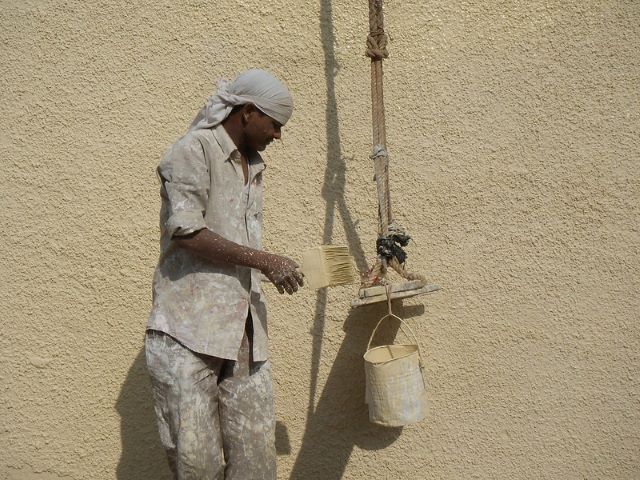
 On October 6, 2020, the Lead Exposure Elimination Project (LEEP) publicly announced its launch online. The startup, which was incubated through Charity Entrepreneurship and identifies as an effective altruist organization, aims to address the absence of potentially high-impact lead paint regulations in countries of low and moderate wealth.
Lead Poisoning
Lead poisoning poses a serious public health hazard to a number of populations around the world, disproportionately impacting children raised in low and middle-income countries. As a toxicant that accumulates over time, the World Health Organization (WHO) reports, human bodies distribute lead to the brain, liver, kidney and bones. Because lead is toxic in any quantity, its ingestion can simultaneously damage multiple systems in a person’s body.
“Lead attacks the brain and central nervous system to cause coma, convulsions and even death,” according to the WHO. “Children who survive severe lead poisoning may be left with mental retardation and behavioral disorders… Lead exposure also causes anemia, hypertension, renal impairment, immunotoxicity and toxicity to the reproductive organs.” All effects of lead poisoning are considered irreversible.
Lead Exposure Elimination Project (LEEP)
As an organization affiliated with the utilitarian “effective altruism” movement, which seeks to maximize the direct impact of modern philanthropy, LEEP describes lead paint regulation as a high-priority issue that addresses “substantial health and economic costs.” Around one in three children globally, almost 800 million, have blood lead levels high enough to cause permanent neurodevelopmental damage, according to a report that UNICEF published on July 30, 2020. Lead poisoning is responsible for one million deaths and 22 million years of healthy life lost each year.
Lead Poisoning and Poverty
LEEP and other sources also link lead poisoning to cyclical poverty. By increasing the rates of mental disability, lead exposure reduces lifetime earning capacity and heightens the prevalence of violent crime, primarily among individuals living in low-income areas. Because mental illness can exacerbate poverty, the Institute for Health Metrics and Evaluation’s (IHME) 2017 Global Burden of Disease Study credits lead poisoning with reducing global GDP by $1.2 trillion each year.
Lead poisoning is considered a neglected issue in effective altruism circles. The only method of avoidance is prevention, yet common sources of lead poisoning like consuming water contaminated by lead pipes and inhaling lead particles generated by burning leaded materials or stripping leaded paint, have still not been regulated against in many areas of the world.
Advocating for Lead Paint Regulation in Developing Countries
To address these risks, LEEP’s primary mission is to advocate for lead paint regulations in countries where lead poisoning imposes large and growing public health burdens. Among the variety of common lead sources, it focuses on lead paint because it “may be the most tractable source of exposure to address and the easiest to regulate.” Among other considerations, eliminating lead paint is a non-partisan issue that is economically feasible for manufacturers and lacks a significant opposition lobby in almost all countries.
Beginning in Malawi, LEEP plans to launch advocacy initiatives in countries where lead paint regulations have the highest potential for impact. Immediate work will consist of testing lead levels in new paints on the market and building political connections in Malawi, with the hope of encouraging anti-lead legislation in the future. LEEP’s broader plan considers similar initiatives in Madagascar, Sierra Leone, Burkina Faso and Guatemala.
As of May 2020, the WHO reports that 39% of countries have regulations in place controlling the production, import, sale and use of lead paints. Africa, South Asia, South America and the Middle East are all regions where a significant proportion of countries do not have such regulations.
The Future of LEEP
LEEP was co-launched by duo Jack Rafferty, founder and director of the Refugee and Policy Institute, and Lucia Coulter, a medical doctor from the University of Cambridge with clinical and research experience. Charity Entrepreneurship provided LEEP with a $60,000 seed grant to jump-start the organization’s work. LEEP is currently seeking donors, in-country staff members and advisors with connections in target countries to reduce the effects of lead poisoning globally.
– Skye Jacobs
Photo: Flickr

Modern-day Maya Artisanal Weaving
At the turn of the 11th century, war disrupted the mighty rule of the Mayas. Unfortunately, after centuries of dominance, the Maya culture fell into disrepair. Furthermore, what was left of the civilization was decimated through conflict and epidemics brought by Spanish colonizers a few centuries later. In 1960, the Guatemalan Civil War began, during which the Guatemalan government attempted to exterminate the Maya culture through savage village bombings and genocidal executions. Of the 200,000 people who died amidst the war, 95% were Maya. This article discusses the modern-day history of the Maya and highlights a group of women practicing their culture and making a living with Maya artisanal weaving.
Modern Day Marginalization of the Maya
Thankfully, the Maya people have survived their tragic near-extinction. However, the Maya continue to face marginalization. Most of the poorest families in Guatemala are Maya families; the average Maya family has eight children, making necessities costly. Generally, these indigenous families remain in isolated, rural areas and receive very little government aid for medical care and quality education. Throughout Guatemala, there is a 60% drop off between the attendance rates of primary and upper secondary school. This statistic is even more drastic for Maya students. While teachers speak Spanish, most ethnic Maya children speak one of the twenty Mayan dialects. This additional obstacle contributes to these early dropouts. Unfortunately, many Maya children also drop out before the end of primary school.
Connecting Maya Artisanal Weaving with Global Markets
The Ancient Maya created a complex weaving machine. Modern-day indigenous crafts-women and men still employ this machine, working to combat endemic poverty in the region of Panajachel, Guatemala. Today, the backstrap loom, foot pedal loom and needlepoint hand-embroidery create the bold cloth which tourists and global shoppers adore. Hiptipico is a company that connects these works of art with the global market. Founded in 2012, Hiptipico, a certified B-Corps company, aims to preserve and develop Maya communities through sharing and protecting their cultural practices. The company’s namesake “tipico” comes from the Spanish word for the traditional clothing of the Maya.
Artisans Earn Fair Wages and a Global Platform
The artisan weavers that work with Hiptipico are small business owners, as well as the Quiejel and Chontala Weaving Cooperatives. Maintaining close relationships with these individuals and small cooperatives of women weavers allows Hiptipico to maintain fair wages when pricing products for the global market.
Socially-conscious shoppers can purchase a wide variety of products from Hiptipico’s fashion line including woven greeting cards, camera straps, bags, totes, and face masks; all available in brightly colored, hand-woven patterns. Production of each Hiptipico product is incredibly time-intensive. A camera strap can take anywhere from 3 days to 3 weeks to complete. Nevertheless, purchases provide a stable income for the artisans. The high-quality merchandise of Guatemala’s indigenous artisans has brought Hiptipico attention from all over the fashion industry. For instance, Hiptipico has organized collaborations with large brands such as Free People. By earning fair, stable wages and establishing a global platform, artisans of Hiptipico are empowering themselves and celebrating their culture.
– Tricia Lim Castro
Photo: Flickr
Supporting Smallholder Coffee Farmers in Developing Countries
Farmers Below the Poverty Line
Even in the best conditions, one-third of farmers earn less than $100 per year from growing coffee and 60% of the world’s coffee is produced by farmers with less than 12.35 acres of land. Challenges arising from inefficient production methods and profiteering coffee roasting companies make it difficult to earn a living. Of the 12.5 million smallholder coffee farmers worldwide, an estimated 5.5 million exist below the international poverty line.
Coffee farmers face many obstacles, including the low international price of coffee. According to Oxfam, some farmers have little to no power to negotiate with traders and must accept the low prices offered. If farmers process their coffee by removing its outer layer, they can demonstrate their beans’ quality and negotiate a higher price. But, if their coffee is sold in its original form, they must settle for a lower price. In Peru, even with semi-processed beans, farmers are still short-changed. And while traders make extra profits for themselves, coffee roaster companies in the United States and Europe make even larger margins.
Smallholder Coffee Farmers Need Support
In the Andean region and across Central America, approximately 750,000 smallholder farmers produce coffee and cacao. Often these farmers depend on limited water resources, which are barely enough to grow subsistence crops. Low incomes result in malnutrition, minimal educational opportunities and disease. Quechua-speaking communities as well as Amazonian Indigenous communities receive little support from the government, and therefore, lack agricultural technology. This dearth of opportunity perpetuates poverty.
Maximizing Opportunities in Coffee and Cacao in the Americas (MOCCA) is working to help smallholder coffee farmers efficiently produce more coffee and cacao. Funded by the United States Department of Agriculture’s Food for Progress Program, MOCCA is carried out by a consortium led by TechnoServe, a nonprofit organization operating in 29 countries. MOCCA also partners with World Coffee Research and Lutheran World Relief.
MOCCA’s Initiatives to Aid Smallholder Coffee Farmers
MOCCA works to improve the lives of more than 120,000 coffee farmers in Guatemala, El Salvador, Honduras, Nicaragua, Ecuador and Peru. It enables farmers to make much-needed improvements while addressing the underlying problems that prevent their farms from becoming profitable.
MOCCA’s goals include:
In addition, MOCCA works to integrate young people and women into coffee and cacao market systems, so that these systems are more inclusive.
In February 2020, the National Coffee Association, the leading trade organization for the coffee industry in the United States, named TechnoServe the “Origin Charity of the Year.” This award recognizes the company’s work in supporting smallholder coffee farmers around the world.
– Sarah Betuel
Photo: Flickr
Cash for Cows: Livestock Wealth in South Africa
Apartheid and Poverty
Under the apartheid regime, the minority-white government passed policies aimed at keeping black South Africans, who made up a majority of the population, from having any meaningful participation in the economy. This left millions trapped in cycles of poverty and the residual effects of such discriminatory policies are still being contended with, in the effort to reduce poverty today.
Apartheid laws confined poor South Africans to rural regions and made the migration to urban areas difficult. The lack of opportunities and social mobility in rural areas made overcoming poverty a challenging task. The legacy of this limited mobility is still present today. South African provinces in rural areas have more households in chronic poverty compared to urban provinces. As of 2015, 25.2% of the population of urban areas lived below the upper-bound poverty line (UPBL), whereas 65.4% fell below the UBPL in rural areas. In order to reduce poverty, it is most important that rural communities receive support and investment.
Livestock Wealth
Livestock Wealth is a startup founded in 2015 by Ntuthuko Shezi which aims to provide investment for farmers in South Africa’s rural areas. Livestock Wealth allows investors from anywhere in the world to effectively purchase from South African farmers four different livestock and crop options: a free-range ox, a pregnant cow, a connected garden or a macadamia-nut tree. When the cows or the crops are sold, both the farmer and the investor receive a share of the profit.
Livestock Wealth currently has 58 partner farmers all across the country and all cows are hormone-free and grass-fed. In recent years, its business has expanded to also provide meat for investors who join the “Farmers Club.” There are currently more than 2,800 investors with Livestock Wealth and more than $4 million has been invested.
Alleviating Poverty in South Africa
Livestock Wealth is a representation of an initiative that has great potential to alleviate poverty in South Africa. South Africa’s rural populations have a long history of exclusion from the economy and have struggled to reduce poverty for decades. Livestock Wealth provides cash investments for farmers and creates a market in which they can reliably trade. By doing so, the firm exemplifies an innovation within the South African economy, one which is helping to alleviate poverty and can inspire others to do the same.
– Haroun Siddiqui
Photo: Flickr
Public Development Banks Unite to Reach SDGs
Public Development Banks
Public Development Banks are essential to the global economy and play a key role in fighting extreme poverty and hunger by bridging finance and public policy. PDBs are supported or controlled by governments but are legally and financially independent. Investments by PDBs made up 10% of yearly public and private investments in 2018, though all PDB investments are public, allowing the banks to openly and actively direct finances toward the evolution of international economic order and inclusion of declining countries with fewer limitations. This makes PDBs especially effective at supporting change for institutions, economies and infrastructure that reflects their public mandate to work in favor of entrepreneurs and vulnerable groups, such as women and children. None of the financing done by PDBs is related to consumers, individual accounts or credit.
A Cause for Cooperation
Conditions in areas suffering from extreme poverty are declining due to climate change and COVID-19. Developing countries have limited capacity to adapt their unstable agricultural methods and systems to changing climates. The capacity that does exist, including aid received, has been strained by the COVID-19 pandemic and the economic and social issues that accompany it. Common hardships have shed light on the need for united relief efforts that reach all regions and societies, and Public Development Banks have taken action by joining in unprecedented discussion and collective decisionmaking. The desired outcome was a diverse and collaborative movement to achieve the SDGs and respond to the challenges arising from COVID-19 and climate change.
The Future of PDB Financing
The developments made at the Finance in Common summit are clearly communicated in a joint declaration made by all 450 PDBs. The Public Development Banks came to a consensus for aligned strategies and investments that will support sustainable growth in societies and the global economy, all while prioritizing eco-friendliness. Future activity of PDBs will be targeted at attaining the SDGs and responding to a changing climate. Another outcome of the summit was a group of PDBs that will focus investments on rural sectors and agriculture around the world to help eradicate poverty and hunger.
Steps that PDBs have committed to taking together include transitioning investments to support low-carbon and climate-resilient solutions, renewable and clean energy and ecosystem restoration. Also on the global PDB agenda is improving the accessibility of education, housing, hygiene and sanitation as well as advancing social and financial inclusion. These measures were developed with the world’s most vulnerable in mind: young people and the elderly, members of rural communities, refugees and small-scale producers, among others. The alliance of PDBs is dedicated to achieving these goals while upholding best practices in finance and global inclusion.
PDBs Fighting Global Poverty
Public Development Banks have displayed a capacity to serve as leaders in the fight against extreme poverty and hunger. Their landmark summit can be a model for future progress toward equality in all parts of the world. In the middle of widespread crisis and instability, such international cooperation is needed more than ever.
– Payton Unger
Photo: Flickr
BACE API: Identity Verification Helps Poverty in Africa
BACE API Facial Recognition Software
BACE API verifies identities remotely and instantaneously using artificial intelligence (AI) and facial recognition by matching the live photo of the user to the image on their official documents. This use of live images and video rather than still images is unique to BACE API and improves the success rate in matching faces and verifying that the images are of real people rather than preexisting photos. Judges for the Africa Prize stated that facial recognition software in Africa is becoming increasingly important and BACE API is just the beginning.
Issues in Identity Verification for Africans
Most facial recognition tools on the market use white faces in their dataset, which leads to higher rates of misidentification of black faces. BACE API, however, was designed with the express intention of improving the design of facial recognition software in Africa. The algorithm of BACE API is designed to draw from a more diverse data set to address racial bias and bolster its accuracy.
Moreover, N’Guessan stated that she created the BACE API tool to address high rates of identity fraud and cybercrime in Ghanian banks. Financial institutions in Ghana spend approximately $400 million per year identifying their users. Not only is BACE API more functionally accurate but it is also convenient as no special hardware is needed and the software can be combined with existing identification apps. So far, the software is being used in two financial institutions for identity verification and one event platform to manage attendee registration.
Identity Verification and Poverty
Facial recognition software in Africa has recently become an important tool to address poverty. There are approximately 1.1 billion people worldwide who lack an official ID, 500 million of whom live in sub-Saharan Africa and 40% of whom are under the age of 18. Women are disproportionately more likely to lack identity documents compared to men. The population of people without an official ID are unable to access basic socio-economic and legal rights, including healthcare, education, voting and legal protection in court. Moreover, people without identity documents are barred from entering the formal economy, for example, starting a business or gaining official employment. The widespread lack of official identification is largely due to the difficulties, inconveniences and expense of registering for an ID, including the common requirement for multiple forms of ID for different functions.
Digital technology, however, is leading the charge to address unequal access to ID’s and basic services, and BACE API is a unique solution to this issue by serving as a one-stop-shop for remote identification. After verifying their identity through the program, users gain access to necessary financial services, education and voting rights.
BACE API’s Benefits During COVID-19
During COVID-19, BACE API is a viable alternative to the in-person verification processes used by most such as fingerprints or personal appearances. Companies and organizations can now remotely authenticate and onboard people without ever meeting them.
Moreover, the demand for healthcare and welfare programs has skyrocketed in the wake of the widespread economic downturn. With BACE API, governments are relieved of the burden of identity verification and can operate more efficiently to provide essential services to people struggling during COVID-19.
– Neval Mulaomerovic
Photo: Flickr
LEEP Advocates for Lead Paint Regulations
Lead Poisoning
Lead poisoning poses a serious public health hazard to a number of populations around the world, disproportionately impacting children raised in low and middle-income countries. As a toxicant that accumulates over time, the World Health Organization (WHO) reports, human bodies distribute lead to the brain, liver, kidney and bones. Because lead is toxic in any quantity, its ingestion can simultaneously damage multiple systems in a person’s body.
“Lead attacks the brain and central nervous system to cause coma, convulsions and even death,” according to the WHO. “Children who survive severe lead poisoning may be left with mental retardation and behavioral disorders… Lead exposure also causes anemia, hypertension, renal impairment, immunotoxicity and toxicity to the reproductive organs.” All effects of lead poisoning are considered irreversible.
Lead Exposure Elimination Project (LEEP)
As an organization affiliated with the utilitarian “effective altruism” movement, which seeks to maximize the direct impact of modern philanthropy, LEEP describes lead paint regulation as a high-priority issue that addresses “substantial health and economic costs.” Around one in three children globally, almost 800 million, have blood lead levels high enough to cause permanent neurodevelopmental damage, according to a report that UNICEF published on July 30, 2020. Lead poisoning is responsible for one million deaths and 22 million years of healthy life lost each year.
Lead Poisoning and Poverty
LEEP and other sources also link lead poisoning to cyclical poverty. By increasing the rates of mental disability, lead exposure reduces lifetime earning capacity and heightens the prevalence of violent crime, primarily among individuals living in low-income areas. Because mental illness can exacerbate poverty, the Institute for Health Metrics and Evaluation’s (IHME) 2017 Global Burden of Disease Study credits lead poisoning with reducing global GDP by $1.2 trillion each year.
Lead poisoning is considered a neglected issue in effective altruism circles. The only method of avoidance is prevention, yet common sources of lead poisoning like consuming water contaminated by lead pipes and inhaling lead particles generated by burning leaded materials or stripping leaded paint, have still not been regulated against in many areas of the world.
Advocating for Lead Paint Regulation in Developing Countries
To address these risks, LEEP’s primary mission is to advocate for lead paint regulations in countries where lead poisoning imposes large and growing public health burdens. Among the variety of common lead sources, it focuses on lead paint because it “may be the most tractable source of exposure to address and the easiest to regulate.” Among other considerations, eliminating lead paint is a non-partisan issue that is economically feasible for manufacturers and lacks a significant opposition lobby in almost all countries.
Beginning in Malawi, LEEP plans to launch advocacy initiatives in countries where lead paint regulations have the highest potential for impact. Immediate work will consist of testing lead levels in new paints on the market and building political connections in Malawi, with the hope of encouraging anti-lead legislation in the future. LEEP’s broader plan considers similar initiatives in Madagascar, Sierra Leone, Burkina Faso and Guatemala.
As of May 2020, the WHO reports that 39% of countries have regulations in place controlling the production, import, sale and use of lead paints. Africa, South Asia, South America and the Middle East are all regions where a significant proportion of countries do not have such regulations.
The Future of LEEP
LEEP was co-launched by duo Jack Rafferty, founder and director of the Refugee and Policy Institute, and Lucia Coulter, a medical doctor from the University of Cambridge with clinical and research experience. Charity Entrepreneurship provided LEEP with a $60,000 seed grant to jump-start the organization’s work. LEEP is currently seeking donors, in-country staff members and advisors with connections in target countries to reduce the effects of lead poisoning globally.
– Skye Jacobs
Photo: Flickr
Deforestation Threatens the Amazon’s River People
Who Are the Ribereños?
The ribereños, also known as the river people or riverine peasants, live along the riverbanks of the Amazon. Their communities live apart from the rest of civilization in the forests of Peru and Brazil. The Amazon’s river people are self-dependent; they operate their own education, health, food supply and water supply systems. The ribereños are rather adaptable to the behaviors of the Amazon river and forest. Over the years, they have learned how to use their resources sustainably.
The Effects of Deforestation on Ribereños
Unfortunately, deforestation has increased hunger among the Amazon’s river people. These riverine communities rely primarily on fishing during lower tides and hunting during high-water seasons. Both of these resources have decreased over the last decade due to the deforestation of the Amazon rainforest. The removal of the trees decreases natural resources, so hunting and food gathering have become less and less effective in supporting these populations. Furthermore, there is a link between deforestation and more frequent runoffs, baseflow reductions, erosion and pesticide-contaminated water.
Additionally, developers use forest fires for deforestation in Brazil. As a result, the air quality has worsened, putting the Amazon’s river people at higher risk of respiratory disease. In the time of COVID-19, this could be detrimental to the ribereños. Their only way to receive medical treatment is to travel by boat, for hours or even days. Therefore, any new disease or increase in illness has the potential to end in mass deaths.
Fighting Deforestation in Amazonia
The effects of deforestation of the Amazon have changed drastically in recent years. According to Professor Bratman, the author of Governing the Rainforest: Sustainable Development in the Brazilian Amazon, the ribereño population has been rather vocal about their struggles. “Deforestation went hand in hand with threats to their land and livelihood. Ranchers and loggers were moving onto the land on which the ribereños have lived on for generations, claiming that they actually have the right to take it,” explains Bratman. She saw how the Amazon’s river people united against deforestation and caused a spike in media attention. They are not helpless, but they do need the help of others. Bratman stated it is important to help the ribereños “keep the issue in the news. Support the organizations on the ground doing the work. It is important to be environmentally aware because it’s all of our future at stake.”
Thankfully, several organizations are working to help the riverside communities of Amazonia. The main actors are the WWF (World Wide Fund For Nature), Environmental Defense Fund and Green Peace. These organizations focus on generally fighting deforestation and on helping the ribereños survive their changing environment.
The Amazon’s river people are staying vocal and so are the organizations helping them. Brazilian deforestation has headlined numerous international newspapers, putting pressure on the Brazilian government. The main way to help the riverside communities of Amazonia is to continue the discussion.
– Anna Synakh
Photo: flicker
Community-Based Organizations in Agua Prieta
5 Charitable Organizations in Agua Prieta
It is evident the community of Agua Prieta works together to support each other as well as the migrants passing through. These organizations are working to make their community a better place for all.
– Naomi Schmeck
Photo: Flickr
Rappi: The Colombian Unicorn that Has Given Venezuelans a Chance
Rappi is an innovative App that works as a large shopping center in which the customer gets all kinds of products. The product quickly arrives at the customer’s location. This business model requires thousands of office employees as well as shoppers and distributors. While many of the Venezuelans that enter neighboring countries only have a high school diploma, Rappi has opportunities for them. The Venezuelans can provide for their families with only a bike and a smartphone.
The Presence of Venezuelans in Rappi
With only five years in the market, Rappi has seen a constant 20% growth every month. This reaches thousands across 9 countries in Latin America. This rapid increase has been directly correlated to the massive emigration of people. Today, 57% of Rappi’s distributors, or better known as rappitenderos, are Venezuelans. This is because Rappi only requires the special permit acquired with the traditional migratory process and no previous working reference.
Many studies have shown that Venezuelans in Rappi work considerably more hours and days by choice in comparison to Colombians. Rappi provides a flexible model in which distributors accommodate the hours they work according to their necessities and availability. The Venezuelan rappitenderos work around 10 to 12 hours a day, while Colombian rappitenderos work approximately 8 hours. Moreover, 97% of Venezuelans work up to 7 days a week while only 5% of Colombians work 6 days.
Rappi has helped Venezuelans find a job in which they can provide for their families. It also has looked for other ways to help their families. Rappi has partnered with Valiu, a Colombo-Venezuelan startup. This collaboration helps the rappitenderos send money to their relatives that live in Venezuela and struggle with poverty. This partnership has created better alternatives for distributors to manage their income and help their families.
The Impact
Rappi is the first fully Colombian, and one of the most important, tech firms in Latin America. It is the perfect innovation that has eased people’s lives, changed consumption habits and helped small businesses thrive. More than anything, it has allowed thousands of Venezuelans that have been looking for a better quality of life. It has become a means to reduce poverty and close the gaps of inequality.
The startup was born with the mission to make people’s lives easier. It extended its main goal to a community that today calls for help and needs to generate extra income for their personal and professional goals. Additionally, Venezuelan migrants contribute to the national economy of Colombia. Despite challenges and migratory processes, they have found their way and Rappi has been the dominant employer for this strong workforce.
– Isabella León Graticola
Photo: Pixabay
Mental Health in China
COVID-19’s Impact
During the COVID-19 outbreak, China’s National Health Commission mobilized mental health workers and increased the volume of services. The Commission produced guidelines on mental health care protocols to curb psychosocial effects arising from the pandemic. The interventions included outreach programs by psychiatrists and other professionals. Additionally, hotline services offer psychological support to patients and survivors as well as affected families and health care workers alike. The most commonly reported psychiatric conditions associated with the outbreak are depression, PTSD and anxiety disorders.
A nationwide survey of people during the COVID-19 lockdown found that 16.5% had depressive symptoms, 28.8% had anxiety symptoms and 8.1% had stress symptoms. Nevertheless, 71.5% of respondents reported satisfaction with the health information provided during the outbreak. The highest psychological impact was felt by women, students and those facing physical symptoms. During the lockdowns, psychiatric patients experienced more intense symptoms such as anger outbursts, insomnia and suicidal ideation.
Alcohol and Tobacco Use Disorders
In China, people traditionally consume alcohol during social functions and holidays. Over time, however, the WHO noted a rise in regular alcohol consumption and a subsequent impact on mental health, including alcohol dependence and alcohol use disorders (AUDs). A Beijing study showed that 2.4% of people with alcohol dependence were treated overall with only 1.4% receiving treatment from mental health professionals. Further research in China pointed to the need for early intervention in treating alcohol disorders. The WHO recommended educating both the public and health care workers on the importance of seeking mental health treatment for such issues.
Tobacco smoking also negatively impacts mental health in China. With more than 300 million cigarette smokers, China has the highest number of tobacco users in the world. The WHO partnered with the Chinese Government to control tobacco consumption and thereby reduce diseases and premature deaths arising from exposure to the harmful chemicals in cigarettes. The WHO also launched an initiative to curb tobacco dependence by training health care workers and providing informational guidelines to tobacco users.
Promoting Mental Health in China
China needs reforms in its health care delivery system. The 2016 Policy on Building High-Quality and Value-Based Service Delivery details such reforms, aiming to move from a hospital-centered approach to a people-centered one that canvases both rural and urban areas. These changes call for a multi-tiered health care delivery system that strengthens primary care. China’s new delivery system aims to better monitor such quality of care, specifically by improving integrative management practices, building a strong health care workforce and investing in community health. Additionally, the nation has made progress in attaining universal health coverage according to the U.N. 2030 Agenda for Sustainable Development.
At the Global Conference on Health in 2016 in Shanghai, China, stakeholders emphasized the need for the global community to improve mental health in China and across the world. Because the majority of Chinese people live in urban areas, many would benefit from interventions such as people-centered urban design, “greening” and recreational spaces. To further promote mental health, China also aims to treat 30% of people with depression by 2022 and 80% by 2030.
To prevent AUDs, the WHO recommends that China strengthen policies that regulate alcohol commerce and increase education about safe alcohol consumption. In line with the WHO’s Framework Convention on Tobacco Control, China enacted a law that banned tobacco smoking in indoor public spaces and the mass media advertising of cigarettes. In a social media campaign dubbed #RUFREE, China supported smoke-free spaces while altogether decreasing tobacco use and curbing associated disorders. Hopefully, China will continue to take steps to improve the mental and physical health of its citizens.
– Beth Warūgūrū Hinga
Photo: Flickr