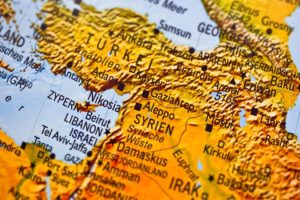
 Proxy wars are one of the major categories of conflict that contribute to humanitarian crises around the world. The war can take place between multiple countries, or a country and a nonstate actor like a politically violent group. Proxy wars are often ideological and hold ties to a country’s religious systems. Multiple proxy wars can occur simultaneously around the world. In addition, multiple states can back proxies within other states, which can be seen in both Syria and Yemen.
What is the Appeal of Proxy Wars?
Using proxies has tactical advantages. According to a 2018 article by Philip Bump in the Washington Post, there were “around 5,000 American service member deaths” in the Iraq war. This leads to why countries use the proxy strategy and avoid direct warfare with an adversary. A country sponsors the military operation of a different country to do the fighting. Countries like the U.S. can avoid sending U.S. troops into war, and consequently, avoid loss of life and increased civilian risks.
What are the Down Sides to a Country Involved in a Proxy War?
One of the primary examples of why proxy wars are not beneficial is the risk of prolonged conflict. Being involved in a proxy war can include aiding a country by giving them weapons, money, or planning and assessment help. In the short term, proxy wars are seen as a way to avoid direct conflict for a country. However, proxy wars can actually increase spending and political costs as well.
Another example of why proxy wars can create more problems is the issue of accountability. After the transfer of weapons, funding or assessment help, the country or nonstate actor has those resources. Additionally, it makes the final call as to how those resources are used and allocated. This creates a problem with corruption where the original intent a country has in giving aid may not be fulfilled by the receiver of this aid. The weapons could be used to attack civilians or given to other parties in the war that they were not intended for.
What are the Human Costs in Proxy Wars?
Two of the current and most devastating proxy wars are happening in the Middle East, specifically in Yemen and Syria. The two countries are prime examples of how state sponsored militant groups and coalitions interact in warfare. It also shows how the larger regional powers fight their ideological battles for power and domination. Saudi Arabia in the Gulf and Iran in the North do this by intervening in civil wars in smaller countries that are vulnerable to collapse. Both wars also exemplify major issues like extreme poverty and famine, internal displacement and mass humanitarian need. All of these factors impact civilians and their security.
What is the Status of Yemeni Civilians and the Proxy War?
In Yemen, a number of different actors joined together to form two adversarial groups who fight primarily in the West. The Northern region of Yemen is controlled primarily by the ‘Houthis,’ a militant group backed by Iran who observe the Shiite faction of Islam. The Southern portion of Yemen is primarily controlled by the coalition forces which include Saudi Arabia and its ally, the UAE. The U.S. also supports this faction as well, this is the Sunni faction of Islam’s side.
The war in Yemen has grown into one of the largest humanitarian crises globally. Around 24 million people are in immediate need of humanitarian assistance, as well as four million displaced people. Due to the location of the fighting, many people have fled out of the Western region. They fled away from ports where much of the contested land is and where the primary armed conflict takes place. The civilian casualties have been severe, with around 100,000 killed in the last five years of war.
What is the Status of Syrian Civilians and the Civil War?
The proxy war in Syria is the other major proxy conflict in the Middle East. The peak of international interest and coverage occurred in 2013 when chemical weapons were first reported to have been used against Syria. This led to a very contentious situation regarding whether or not international human rights would be upheld. The conflict and its effects are still very much present in the country. There are estimated to be 6.2 million internally displaced people in Syria, as well as 5.6 million registered refugees who have fled the country. The Syria Observatory for Human rights reports that the civilian casualties and other human rights violations have recorded “560,000 deaths over 7 years” from 2011-2018.
Ultimately, the end of many of these wars is still out of sight. Understanding these conflicts and how their detrimental effects impact civilians will hopefully change the narrative around proxy wars at the national level. These conflicts are responsible for some of the largest humanitarian crises on the planet. Hopefully, with continued reporting, the devastation proxy wars cause will be better illuminated.
– Kiahna Stephens
Photo: Pixabay

Investing in Africa’s Music Industry
Warner Music Group Elevates Africa
Spotify has been available in Africa since 2018 in countries like Algeria, Egypt, Morocco, South Africa and Tunisia. While the company has hinted at future expansion in more African countries, its current licensing deal with Warner Music Group is working to elevate its global initiatives for Warner Group artists to grow the music industry worldwide.
Warner Music Group’s investment in Africori will make this possible by promoting existing African artists abroad, being able to sign global licensing deals with new artists and tap into a market that can provide opportunities for rising African stars. The main reason for investment will be to make African artists global by marketing their music to a global audience and giving newly signed artists the resources they need to grow their brand over time.
What is Africori?
Africori is an African digital music platform that is involved in almost every method of artist promotion. Its services include marketing, publishing, artist development, video distribution and booking artists around the globe. It was launched in 2009 “in response to the lack of opportunities available for African artists,” who now aim to make Africa a global source of inspiration. Africori already distributes to more than 200 domestic and international platforms because of their unique understanding of the African market.
This investment will transform Africa’s music industry by filling hundreds of job opportunities that are needed to manage global artists.
Investing in Africa’s creative minds has the potential for a big return for Warner Music Group as Africa’s music and entertainment sector is on course to reach 177.2 billion African rands of revenue in 2022, which equals $11.5 billion.
5 Reasons to Invest in Africa’s Creative Minds
With the investment deal being highly publicized, this move can inspire other U.S. or international entertainment groups to invest more in Africa’s music industry and entertainment sector.
Music is a driving factor to economic success. Besides the artists themselves bringing in a high amount of revenue, a booming entertainment sector can create a multitude of jobs from publicists, directors, dancers, managers, set designers and more. Africa’s music sector is currently on the rise compared to many countries that already have established major entertainment deals.
Artist success leads to other business ventures. This could mean brand deals and sponsoring artists with products. Artists can partner up with African product companies, clothing companies, social media and more, to simultaneously promote themselves and other businesses.
African artists are cultural magnets and trendsetters. Brian Nadra, an African musician labeled “an artist to watch in 2020” was called “an ambassador of East-African pop culture” in a region where there have not been many successful male singers. African artists are already being noticed globally which opens the door for new artists to achieve that same title.
Africa’s music streaming platforms are on the rise. Currently, smartphone usage in Africa is estimated to grow exponentially in the next few years. Widespread smartphone usage will increase revenue per stream, platform subscriptions and music video views.
Alleviating poverty in Africa. Growing the music scene in underdeveloped African countries can give people hope and an opportunity to pull them out of poverty. Many artists do not reach their goals because they lack the proper team or funding to continue to do so. Receiving funding to improve development gives communities a chance to prosper.
Africa’s creative minds have proven to be an untapped source of talent and inspiration. Africa’s music industry has the potential to grow itself and many other areas of the business to support artists for years to come. Warner Music Group’s decision to invest in Africori is just the beginning of supporting Africa’s ability to prosper.
– Julia Ditmar
Photo: Flickr
Child Poverty in Argentina: A Crisis that Needs Action
The Current Situation
There has never been a more critical time for action than now. UNICEF estimates that 63% of Argentinian children will be living in poverty by the end of 2020 due to COVID-19. In August 2019, child poverty reached more than 50%, with 13% of children in a state of hunger. As compared to the year prior, this is an 11% increase. UNICEF estimates that, at the end of 2020, there will be an increase of 18.7% in extreme poverty among children and teenagers.
Child Poverty Statistics
The above figures depict that one in every two Argentinian children lives in poverty, which amounts to 5 million children. One million of these children are homeless. Those who do have homes often deal with difficult household circumstances. Many children are subject to child labor, which includes work as domestics or “house slaves.” These children end up working in illegal textile workshops, mining, construction or agriculture. The exploitation of child labor is commonly related to sexual exploitation. In response, Argentina has passed laws and social programs to end child labor and sexual exploitation. However, the fight to end these practices must continue.
As of 2017, nearly 20% of Argentinian children do not attend school. After the collapse of the economy nearly 20 years ago, funding for education was heavily reduced. Children living in poverty were the first to be affected as they had to work in order to provide for their families. There are also issues with violence occurring in schools. Corporal punishment still takes place when young school children misbehave, which can cause further behavioral problems while instilling the belief that violence is the norm.
As compared to the rest of the population, native children are at high risk for poverty, illiteracy and unemployment. For example, in the province of Tucumán, the Indigenous children and families live well below the poverty line and also endure illegal evictions from their ancestral lands. Additionally, these children are exposed to violence, malnutrition, disease and a lack of proper education.
Child Poverty Aid
Child poverty in Argentina seems rather defeating considering these statistics. However, there are multiple organizations that are on the ground fighting for the human rights, safety, health and happiness of Argentinian children.
One is Mensajeros de la Paz, a temporary home for vulnerable girls. Another is the Sumando Manos Foundation, which extends pediatric visits out to more than 7,000 at-risk children and their communities. The foundation also supplies food, provides critical medical and dental attention and teaches fundamental health care. There is also Fundacion Oportunidad. This organization increases opportunities for economic and social integration of young Argentinian women in situations of social vulnerability. Involvement in these organizations, as well as donation opportunities, are endless.
There are five dimensions of well-being that are vital to the success of childhood development: adequate nutrition, education, safe areas to live and play, access to health services and financial stability. The fight cannot stop until there is an end to child poverty in Argentina and until each child has access to the resources necessary for a healthy and prosperous life.
– Naomi Schmeck
Photo: Flickr
Proxy Wars and Their Impacts
What is the Appeal of Proxy Wars?
Using proxies has tactical advantages. According to a 2018 article by Philip Bump in the Washington Post, there were “around 5,000 American service member deaths” in the Iraq war. This leads to why countries use the proxy strategy and avoid direct warfare with an adversary. A country sponsors the military operation of a different country to do the fighting. Countries like the U.S. can avoid sending U.S. troops into war, and consequently, avoid loss of life and increased civilian risks.
What are the Down Sides to a Country Involved in a Proxy War?
One of the primary examples of why proxy wars are not beneficial is the risk of prolonged conflict. Being involved in a proxy war can include aiding a country by giving them weapons, money, or planning and assessment help. In the short term, proxy wars are seen as a way to avoid direct conflict for a country. However, proxy wars can actually increase spending and political costs as well.
Another example of why proxy wars can create more problems is the issue of accountability. After the transfer of weapons, funding or assessment help, the country or nonstate actor has those resources. Additionally, it makes the final call as to how those resources are used and allocated. This creates a problem with corruption where the original intent a country has in giving aid may not be fulfilled by the receiver of this aid. The weapons could be used to attack civilians or given to other parties in the war that they were not intended for.
What are the Human Costs in Proxy Wars?
Two of the current and most devastating proxy wars are happening in the Middle East, specifically in Yemen and Syria. The two countries are prime examples of how state sponsored militant groups and coalitions interact in warfare. It also shows how the larger regional powers fight their ideological battles for power and domination. Saudi Arabia in the Gulf and Iran in the North do this by intervening in civil wars in smaller countries that are vulnerable to collapse. Both wars also exemplify major issues like extreme poverty and famine, internal displacement and mass humanitarian need. All of these factors impact civilians and their security.
What is the Status of Yemeni Civilians and the Proxy War?
In Yemen, a number of different actors joined together to form two adversarial groups who fight primarily in the West. The Northern region of Yemen is controlled primarily by the ‘Houthis,’ a militant group backed by Iran who observe the Shiite faction of Islam. The Southern portion of Yemen is primarily controlled by the coalition forces which include Saudi Arabia and its ally, the UAE. The U.S. also supports this faction as well, this is the Sunni faction of Islam’s side.
The war in Yemen has grown into one of the largest humanitarian crises globally. Around 24 million people are in immediate need of humanitarian assistance, as well as four million displaced people. Due to the location of the fighting, many people have fled out of the Western region. They fled away from ports where much of the contested land is and where the primary armed conflict takes place. The civilian casualties have been severe, with around 100,000 killed in the last five years of war.
What is the Status of Syrian Civilians and the Civil War?
The proxy war in Syria is the other major proxy conflict in the Middle East. The peak of international interest and coverage occurred in 2013 when chemical weapons were first reported to have been used against Syria. This led to a very contentious situation regarding whether or not international human rights would be upheld. The conflict and its effects are still very much present in the country. There are estimated to be 6.2 million internally displaced people in Syria, as well as 5.6 million registered refugees who have fled the country. The Syria Observatory for Human rights reports that the civilian casualties and other human rights violations have recorded “560,000 deaths over 7 years” from 2011-2018.
Ultimately, the end of many of these wars is still out of sight. Understanding these conflicts and how their detrimental effects impact civilians will hopefully change the narrative around proxy wars at the national level. These conflicts are responsible for some of the largest humanitarian crises on the planet. Hopefully, with continued reporting, the devastation proxy wars cause will be better illuminated.
– Kiahna Stephens
Photo: Pixabay
Renewable Energy in Costa Rica
Renewable Energy in Costa Rica
Renewable energy has helped small business owners and farmers. This would explain why so many of them are supportive of renewable energy. Since deforestation has largely come to a standstill because of renewable energy, the biodiversity in Costa Rica is able to remain. Costa Rica’s mass only makes up 0.03% of the Earth. Nonetheless, 6% of the Earth’s natural wealth and biodiversity is located within Costa Rica.
It is this biodiversity that has become so useful to the farmers of Costa Rica. Biodiversity reduces the need for fertilizers and pesticides that the farmers would normally use. Other natural resources can be used for farming as well. Cacao shells, for example, can be used for mulch and farmers can use logs to make the soil richer.
Renewable Energy Helps Tourism
Tourism also benefits from renewable energy in Costa Rica and plays an extremely important role in Costa Rica’s economy. Tourism alone brings in about $1 billion to the country and employs around 155,000 people. This is a substantial amount of people in a country home to about 4 million people. Renewable energy indirectly helps protect tourism in Costa Rica, in particular, ecotourism. By protecting these natural resources, Costa Rica ensures that people will continue to visit the country to see the beauty of its natural and conserved environments.
The Los Santos Wind Power Project
Renewable energy has also helped small and local communities in many ways. Los Santos is one such area seeing these positive impacts. Los Santos particularly benefits from the use of wind energy as the area is one of the windiest regions within Costa Rica. Currently, the Lost Santos Wind Power Project is installing wind turbines in the region.
The project has built enough windmills in the area that the region is able to generate 12.75 MW of wind energy, provide 50,000 inhabitants with electricity and prevent around 15,000 tonnes of carbon from releasing into the atmosphere each year. The project can then sell the energy produced by the wind turbines to the government. The money that is earned can go toward helping the local community. For example, the profit from selling energy that is produced can go toward the construction of new schools. Additionally, the installation of wind turbines will also create new jobs for people. To keep turbines functioning and ensure they receive repairs when needed, technicians must be available to work on them.
Renewable Energy, Renewable Hope
Renewable energy in Costa Rica is beneficial for a multitude of reasons, as set out above. The money from the generation of renewable energy can go toward helping small communities. The tourism industry in Costa Rica will continue to thrive, and because the environment will remain undamaged, so will the amount of biodiversity that helps farmers.
– Jacob E. Lee
Photo: Flickr
Efforts to Reduce Pollution in the Ganges River
The World Bank Assists
In 2011, the World Bank targeted the Ganges River pollution issues by launching the National Ganga River Basin Project (or NGRBP). A $1 billion initiative, the NGRBP looked to create bank investments in the water sanitation department and develop better waste management control in India. While this did prove to be a step in the right direction, the Ganges still saw a rise in pollution. India’s inability to properly dispose of waste outpaced the World Bank’s project. After nine years, the World Bank looked to bolster its contribution to the fight to save the Ganges as more and more Indians were becoming sick. In June 2020, the Second Ganga River Basin Project received approval from World Bank directors despite the bank focusing on COVID-19, proving how dire the situation at the basin truly is. An 18-year commitment, this second NGRBP adds another $380 million to clean up the Ganges until 2038.
Ganga Action Parivar’s Impact
Along with international help from the World Bank, India also made pollution control a national issue. An array of agencies have come about in India centered around the purification of the Ganges. For over a decade, the Ganga Action Parivar (GAP) has taken a diplomatic approach to fight water pollution. Through communication with government officials, media outlets and fundraising, the GAP looks to bring awareness to the issue and demand action from within India. In 2016, the GAP launched the National Ganga Rights Act and began asking for support for it. The act detailed how there are both natural environmental and human rights on the line with the continued pollution of the Ganges River. More than just a body of water, the Ganges is an epicenter of religion, prosperity and life. Creating a natural rights act helps to ensure that action will mobilize to protect the water resource and that is exactly what the GAP has set out to do.
The Year 2020 and Beyond
The year 2020 has been a promising year for pollution reduction in the Ganges River. The World Bank launched and financed its second project centered around cleaning the water back in June 2020. New research suggests that there has also been a natural cleansing that has taken place over the past few months. Since COVID-19 forced India to shut down, the Ganges’ usage has dropped. In a video released by BBC News, just a mere 10% drop in usage throughout the pandemic has led to significant improvement in the sanitation of the Ganges. For years now, India’s government has been trying to find ways to heal the Ganges. While India and the world fight the COVID-19 virus, the Ganges River is healing. Once the lockdown ends, the work of the World Bank and GAP will be vital to keep the momentum going. If pollution rates continue to climb, India will have a water crisis on its hands. Sanitizing and protecting the Ganges is instrumental in helping India reduce its poverty rates and preserving a crucial water resource.
– Zachary Hardenstine
Photo: Flickr
Progress: The 2020 Global Hunger Index Results
2020 Global Hunger Index Results
In the 2020 Global Hunger Index, 11 nations are rated as alarming, 40 are serious, 26 are moderate and 48 are low. This means that the index considers no country as extremely alarming when it pertains to hunger. While there is still much work to do to feed the world, the 2020 GHI results are hopeful. Both the Central African Republic (CAR) and the Democratic Republic of the Congo (DRC) had previous ratings of extremely alarming but have experienced drastic improvements over the last year. Action Against Hunger works tirelessly in both the CAR and DRC and deserves recognition for the status improvements.
Hunger in the Central African Republic (CAR)
Fighting hunger in the Central African Republic became a priority of Action Against Hunger in 2006. Currently, more than 450 team members are present in the CAR helping to secure food and water for the most vulnerable communities. In just 2019 alone, Action Against Hunger provided these vital resources for 342,516 CAR citizens. The work has allowed the CAR to move out of the hunger category of extremely alarming. A majority of people living in the CAR are almost entirely dependent on humanitarian aid for survival. If the 2020 Global Health Index category change is to remain a permanent one, Action Against Hunger is part of the reason why.
Hunger in the Democratic Republic of Congo (DRC)
The Democratic Republic of the Congo (DRC) is another African nation to see improvement in its 2020 Global Hunger Index status. Similar to the CAR, Action Against Hunger has become an integral part of ensuring food accessibility for the DRC’s impoverished communities. The global nonprofit has worked in the DRC for almost 25 years and now deploys 472 team members to carry out humanitarian relief. Food, medical supplies and water sanitization are necessary for the Congolese to survive. Within the past year of 2020, 1.2 million people in the DRC received help from Action Against Hunger. That means that more than 10% of the DRC’s population depends on Action Against Hunger to live. The GHI improvement for the DRC stands as a testament to more than two decades of Action Against Hunger’s work.
Zero Hunger
The 2020 Global Hunger Index results are only a snapshot of where the world is in the fight against hunger. There are still hundreds of millions of people suffering from food insecurity. However, the GHI results show hope that food shortages may someday be a thing of the past. With Action Against Hunger and similar organizations helping to fight hunger, the world is making strides in the area of global hunger.
– Zachary Hardenstine
Photo: Flickr
Taiwan Provides Aid to Pacific Nations
Taiwan provides aid to Pacific nations amid Taiwan and China’s strife over diplomatic ties with nations like Tuvalu, Vanuatu and Fiji. These Pacific nations either align with the Taiwanese-backed Western coalition or the Chinese coalition.
Background
Nations in the Pacific Ocean typically have low GDPs, limited resources and populations below 1 million. As a result, these Pacific nations receive substantial foreign aid every year. Most of this aid comes from Australia. Australia donates to these nations to preserve trade routes and ensure stability and good geopolitics in the region. Taiwan, however, is coming to these developing countries for a different reason. It is battling China for diplomatic ties with these nations.
Taiwan’s foreign aid to this region, while helping the local populace, attempts to gain diplomatic ties from these small Pacific nations that have equal voting power as large forces like China in international organizations like the U.N. The Pacific nations can then vote in favor of resolutions that benefit Taiwan.
China’s Involvement
However, China threatens to upend this mutually beneficial relationship. China has begun its courting process with the Pacific nations to weaken Taiwan diplomatically. China’s Belt and Road Initiative and its infamous debt trap diplomacy are attempting to make a foray into these Pacific nations.
China’s ability to provide much more funding than Taiwan and its strategic scheme to trap developing nations that cannot repay China into debt has caused some of these Pacific nations to flip allegiances. Samoa, Papua New Guinea, Fiji and Tonga are just some of the countries that renounced Taiwanese recognition in favor of the CCP. This partly occurred by China pouring money into significant investments. Even though China clearly has spent much more than Taiwan in philanthropic efforts to Pacific nations, these Chinese funds aim to be more flashy than useful.
Taiwan’s Involvement
Taiwan, on the other hand, provides small but practical aid. Taiwan can still levy ties with these Pacific nations despite the influx of money from the CCP. Taiwanese donations in the region opt for more personable diplomacy. Despite not matching the wealth of China, Taiwan’s local funding that directly impacts citizens is favorable with the people of these Pacific nations.
The Taiwanese plan to directly provide aid to the local people on local projects seems to be working. Palau, the Marshall Islands, Kiribati, Tuvalu, the Solomon Islands and Nauru officially recognize Taiwan rather than China. The U.S., a Taiwanese ally, has recently built a military base in Palau. With the effectiveness of Taiwanese philanthropic aid to fund local projects in Pacific nations, China’s geopolitical goals in the region are in jeopardy.
However, independent non-governmental organizations have not forgotten about the inhabitants of these Pacific nations when the focus has been chiefly on geopolitics. The Pacific Island Association for Non-governmental Organizations (PIANGO) focuses on 22 Pacific nations. It has provided services such as protecting the environment, helping to support trade, supporting democracy and developing society and young people in Pacific nations. Projects like EDF9 Non-State Actors Project in Tuvalu provided funding for education, water and environmental projects. Non-governmental organizations can offer the same aid to Pacific nations as foreign governments do. Weaning off of foreign government aid and supporting non-governmental organizations can help maintain the sovereignty of the people of these Pacific nations. The positive impacts of non-governmental organizations can conclusively support the people of these Pacific nations, consequently protecting these Pacific nations from the unstable geopolitical situation in the region.
– Justin Chan
Photo: Flickr
Entrepreneurship: Initiatives Help Yemeni Women
The Small and Micro Enterprises Promotion Service Agency (SMEPS)
SMEPS came to Yemen in 2005 and works to enhance the lives of Yemeni citizens through the creation of jobs and skills training. SMEPS has taught Yemeni women the best growing, harvesting and post-harvesting techniques for coffee beans. Yemeni women helped create a coffee that entered the gourmet market at a premium price. SMEPS also helped coffee farmers in Yemen. The aim was to create business resilience by expanding the production of farmers through improving the value chain by using modern technologies and better farming methods.
In 2010, SMEPS partnered with The International Labour Organization (ILO) to provide business training for women entrepreneurs. ILO came to Yemen in 1965 and has created opportunities for citizens to rise out of poverty. In one year, the workshops targeted around 500 Yemeni women who had taken out a loan to either start a small business or expand their existing businesses. The second phase of the program aims to reach 2,000 more women. Results indicate that after the training courses, the women had a higher level of business knowledge and competence to start or improve their own businesses. Overall, the women improved their quality of life with the income they earned.
SPARK’s Agri-Business Creation Programme (ABC)
SPARK came to Yemen around 2012 to assist citizens in agriculture, helping them earn an income from their crops. SPARK created a program called Agri-Business Creation (ABC) to help agri-entrepreneurs through training, mentoring and business plans. The program has notably assisted Yemeni women in developing agricultural businesses. Four female-run businesses were awarded microloans to expand their business after the training they received in business skills from SPARK’s ABC program. The loans help Yemeni women to generate more products and expand their businesses. Besides seeing an increase in income, the success of their work contributed to a boost in confidence and a sense of independence in the women.
The Deutsche Gesellschaft für Internationale Zusammenarbeit (GIZ) GmbH
GIZ came to Yemen in 1965 and assisted citizens with basic necessities and the provision of educational opportunities. First, GIZ helped Yemeni women develop businesses. Nearly 200 women attended training on how to develop a successful business idea and how to establish a business. Many women found prosperity in their new businesses and employed other women to assist them in their work. Secondly, around 300 women with existing businesses received additional business training via coaching. After the training, many women tripled their income and hired more women to work for them. Lastly, GIZ created opportunities for homemakers to sell handmade goods overseas. GIZ took handmade baskets made by Yemeni women to Germany and showed off their goods in exhibitions. This strategy helped 300 women in rural areas earn a steady income.
Although the raging war in Yemen has resulted in high unemployment, organizations like SMEPS, SPARK and GIZ offer programs and strategies to help Yemeni women earn an income by developing entrepreneurial businesses.
– Samantha Rodriguez-Silva
Photo: Flickr
Saldo.mx: Blockchain Startup in Mexico
Blockchain Startup in Mexico
A blockchain startup in Mexico has utilized the security of blockchain technology to meet the needs of Mexicans living in poverty. Saldo.mx offers Mexicans a secure and easy-to-use platform on which they can pay their bills using remittance money from abroad.
This is a significant development in the Mexican fintech market as Mexico receives billions of dollars in remittances from the United States each year, with $10.6 billion reaching Mexico in the third quarter of 2020 alone.
Especially during a time of economic crisis caused by the COVID-19 pandemic, the ability to securely receive timely remittances is crucial for the financial security of Mexicans who rely on remittance payments for their survival.
Saldo’s services have the capacity to reach millions of Mexican customers, as it has been estimated that by the end of 2020, upwards of 81 million Mexicans will have internet access and thus the ability to quickly receive and utilize much-needed cash without having to wait for physical cash to arrive from abroad.
Consuelo: Access to Affordable Insurance Plans
One of Saldo’s newer services is Consuelo, which allows users to find fixed health and life insurance policies. Consuelo uses blockchain technology to connect its users to an insurance plan with a “smart contract,” which eliminates the need for a claim adjuster and gives the users direct access to affordable plans.
By removing a costly middleman and lessening the financial bureaucratic burden on customers, Consuelo gives its users a chance at obtaining health and life insurance and decreases long-term financial insecurity concerns.
Consuelo also helps uninsured Mexicans bypass the bureaucratic messiness of the national public healthcare system, which is supported by numerous uncoordinated social security institutes. This allows for better continuity of care by allowing Mexicans to remain with the same doctor by staying on their plan provided by Consuelo rather than facing the possibility of having to switch to another doctor through the national system after losing their jobs.
The Diverse Applications of Blockchain Technology
Innovation is not confined to affluent areas of developed countries. Especially in the age of the internet, new solutions can be developed and rapidly disseminated from any part of the world and can impact the lives of millions. In Mexico, receiving international transfers of money and gaining access to affordable health and life insurance plans can be difficult for the unbanked and those without stable employment. Startups like Saldo exemplify the potential of internet entrepreneurship and blockchain technology in helping lift the global poor out of poverty.
– John Andrikos
Photo: Flickr
6 Facts About WASH Advancements in India
6 Facts About WASH Advancements in India
Recent years have seen several WASH advancements in India. The Indian government, large and small businesses as well as nonprofit organizations, are all playing an important part in ensuring access to safe water and sanitation. Education and creative solutions are made possible thanks to hard work and global cooperation.
– Kelli Hughes
Photo: Flickr