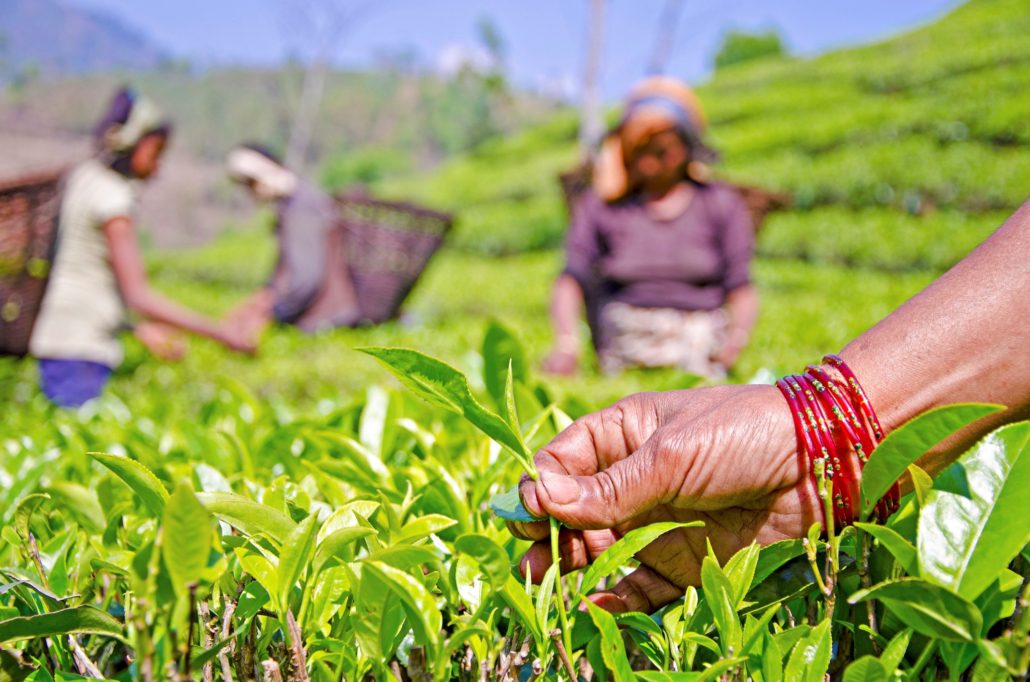
Since 1951, USAID has been implementing various development programs in Nepal. With a poverty rate of 25% as of 2010, Nepal is a developing country and has benefited greatly from these programs which cover areas such as agriculture, education and environmental issues. Here are some examples of USAID programs in Nepal.
USAID’s Agriculture Programs in Nepal
An important aspect of USAID’s work in Nepal has been to improve the livelihoods of those who work in agriculture. As a rural country, agriculture accounts for about 34% of Nepal’s GDP, yet malnutrition has been a persistent issue due to low productivity and limited access to markets. As a result, 36% of children in the country suffer from stunting, which further results in a multitude of lifetime ailments.
To combat these issues, USAID has worked under the U.S. government’s Feed the Future Initiative to improve crop yields and subsequently increase profits and access to quality foods for farmers. As Nepal’s terrain is mostly mountainous, the average farm is very small, with over 50% of farms being less than 0.5 hectares. Furthermore, factors such as low-quality seeds, poor soil management and substandard infrastructure further contribute to low productivity. As a result, 83% of farmers rely on agriculture for their income, yet for 60% of them, agriculture does not meet their dietary and monetary needs.
USAID programs in Nepal have the intention of addressing these issues by engaging with various governmental entities as well as the private sector. Its Feed the Future Initiative emphasizes the production of specific crops that can produce high yields and are resistant to environmental events such as drought and waterlogging. As a result, Nepal has seen increases in rice, maize, lentil and vegetable production.
USAID’s Education Programs in Nepal
USAID has also worked to improve education standards in Nepal by providing a better quality of education for younger students. It has also worked to increase access to schools for communities that the 2015 earthquake affected.
USAID has been concerned about literacy amongst Nepali children. According to a study from 2014, 19% of third graders could not read the Nepali language, while less than 13% of them were able to read Nepali “with fluency and comprehension.” To combat this, several USAID programs in Nepal regarding education have emerged to improve reading standards. The Early Grade Reading Program has a design to increase the number of students in grades one to three who can read and write Nepali. Stretching over five years, this $53.8 million program seeks to design instructional material and standardize reading standards across the country.
After the 2015 earthquake, USAID has also been diligent in rebuilding schools that experienced destruction. Along with the Government of Nepal, USAID was instrumental in building over 1,000 schools which serviced about 93,000 students. USAID equipped these schools with learning materials, sanitation facilities and training for teachers.
Additionally, USAID Nepal has prioritized gender parity in education. Along with UNICEF, it has launched the Zero Tolerance, Gender-Based Violence Free Schools project, which aims to eliminate gender-based violence in schools and create equal education outcomes for boys and girls. The segregation of girls during their menstrual cycle and child marriage also occur in Nepal and they have a negative impact on educational outcomes.
The Zero Tolerance project is a three-year, $5 million project which reaches at least 100,000 students across 200 schools in areas of the country with high levels of gender-based violence. It seeks to promote awareness of gender-based issues in order to create safe learning environments for all students.
USAID’s Environmental Programs in Nepal
As a country with an extremely high level of biodiversity, Nepal has received attention from the U.S. government due to its vulnerability to environmental issues. In addition to this, the fact that a large portion of Nepal’s population has employment in sectors that are heavily dependent on the environment further underscores the need for biodiversity conservation.
USAID has implemented several projects with the goal of biodiversity conservation. The Program for Aquatic Natural Resources Improvement, known locally as the Paani Program, aims to protect Nepal’s many river systems. While Nepal’s waterways are crucial for the livelihoods of many people as they are the main habitat for many fish species, and provide irrigation and power dams, they also suffer from stress due to overpopulation and overuse. The Paani Program aims to instruct locals on how to efficiently manage their waterways. It has identified certain indicators of river health, such as soil fertility and water quality, and instructs locals on how to analyze the data and provide data for authorities to use.
In all, USAID programs in Nepal cover a wide range of areas regarding the country’s development. By focusing on things like agriculture, education and the environment, USAID has a commitment to improving the lives of ordinary Nepali citizens.
– Nikhil Khanal
Photo: Flickr

A Mirage of Women’s Rights in Kosovo
Since its independence, Kosovo has made efforts to progress gender equality. Its written laws and Constitution declare women as equal to men and one can see such equality at the highest levels with the recent promotion of a woman as acting president and the multiple females operating in high-level cabinet positions, including deputy prime minister. Kosovo law obliges all public institutions to ensure equal gender representation, including in leadership positions, as well. From the outside looking in, the laws in place and the fact that women are in leadership roles in government appear to showcase the promotion of women’s rights in Kosovo. However, the country requires more work to ensure full equality between men and women.
The Reality
Despite what looks like outstanding progress towards gender equality and the strengthening of women’s rights in Kosovo, the reality is that women face insurmountable struggles compared to their male counterparts in everyday life. Women experience discrimination regarding access to property and social resources, and problems of personal security and cultural equality. What many see from the outside is not representative of the traditional patriarchal society that exists in Kosovo, in which men have primary access to economic and social resources. It seems that not even law can uproot cultural traditions, which continue to dominate people’s perceptions of female rights and roles in society.
Property Rights
The situation regarding property rights illustrates the mirage of gender equality and the deeply ingrained cultural traditions that limit women’s rights in Kosovo. Despite inheritance law, which grants equal inheritance rights to men and women, women own only 17% of property in Kosovo; far below other Balkan states. Much of the reason for this roots in the power of traditional societal norms and roles that originated from the Albanian code of ethics, the Kanun. This ancient code subverts women to second-class citizenship. It suggests that a woman must move into her husband’s ancestral home. Meanwhile, it dictates that if her husband dies, the property rights should go to her brother or a male cousin.
What does this mean for poverty? The idea that women cannot own property can trickle into other areas that dictate women’s rights in Kosovo and female access to opportunities and resources. The norms perpetuate the stereotyping of gendered roles, with female associated roles as domestic and males as the breadwinners. Such stereotyping reduces the ability of women to be an equal member of the family and society in terms of economics. It also results in significant dependency on male family members as well as the government for women to financially survive.
Even where women want to pursue their dreams and break the glass ceiling, property rights disrupt their progress. Without property, women cannot gain access to loans, and without loans, many women have no means of becoming entrepreneurs or training in new occupations. This is evident in the business sector where females own only 6% of businesses. Clearly, cultural norms are significant and greatly limit female chances of economic and social progression.
Looking Forward
Despite deeply embedded cultural and social norms, women’s rights in Kosovo are improving. In January 2014, UN Women in Kosovo financed the production of a report to look into property rights and the legal structures that govern them. Other organizations and human rights NGOs have followed suit and undertaken and supported campaigns aimed at researching, spreading awareness and pressuring the domestic government to enforce equal property rights.
Aside from advocacy and government pressure to act to better implement policies to protect women’s rights regarding owning property, the Kosovo Cadastre Agency (KCA), which the World Bank co-created with the Agency for Gender Equality, has created a program to register joint ownership of marital property between spouses. Such schemes are helping women gain the rights they deserve and that Kosovo’s Constitution gives them. The creation of new programs and the pressuring of the Kosovar government are going towards ensuring equal access to property rights, and as a result, equal access to financial and social resources and opportunities to allow women to flourish.
– Elizabeth Alexander
Photo: Flickr
COVID-19 Vaccinations in Hong Kong
At the moment, hundreds of thousands of people around the world are receiving vaccinations against COVID-19. However, there are still many who have not received doses. Governments are working to supply enough vaccines in order to return the world to the previous level of production. However, many roadblocks exist that places must overcome before that can happen, and such difficulties are not always easy to solve. A problem that has arisen in Hong Kong is that many individuals are reluctant to take the vaccinations offered to them.
Distrust in Hong Kong
As of March 2021, a month after the beginning of the distribution of vaccines, only 6.01% of Hong Kong’s population had been vaccinated. However, Hong Kong does not have a shortage of vaccines. Although the country received the batches of doses it ordered, the vaccination centers have run low on personnel, and many people have not been signing up to receive the vaccines. There is distrust between the government and the citizens of Hong Kong, which makes it difficult for many individuals to come to terms with the idea of utilizing government-issued medicine. While there are both Western and Eastern produced vaccines available to the public, many people are wary of receiving them. Media coverage reports of fatalities due to vaccines have deterred many individuals despite government medical consultants claiming the deaths were from causes unrelated to the vaccine.
Vaccine Recall
For a period of time, Hong Kong put the vaccinations on hold due to the discovery of some faulty packaging. There were concerns that someone had tampered with the product, and distributions underwent recall for inspection. After a 12-day suspension, BioNTech determined the vaccine was usable, and the vaccination processes resumed. However, Hong Kong received an additional 300,000 doses on the chance that any vaccines required replacing. There is hope that with the arrival of new supplies, people may be more willing to trust that the vaccines will have no fatal effects.
Incentives
Due to the public reluctance toward vaccinations in Hong Kong, the government has reached the conclusion that incentives may be necessary. For example, exemptions from travel bans or issued vaccination certificates that could grant entry to special locations may entice more people to obtain vaccinations. With the potential to relax social distancing restrictions, the government hopes to have the number of vaccinations reach at least 70% of the population. Especially for individuals who are not natives of Hong Kong, such as students and those on work visas, higher vaccination rates may allow people to return home once countries loosen travel restrictions.
The government is also pushing to have businesses vaccinate employees in a bid to show that employee health improves with the vaccine. This process has mostly occurred in air flight companies, which will allow aircrew employees to avoid the mandated quarantine whenever they land within the country. The offer would then extend to other citizens as well.
– Seren Dere
Photo: Flickr
Strides to Improve Mental Health in Rwanda
In 1994, Rwanda experienced a genocide that resulted in the death of approximately 1 million people and the displacement of millions more. Many are still feeling the results of this genocide to this day, just 27 years later. Studies have shown that 94% of the population witnessed at least one traumatic event during the genocide, including the death of a loved one, the destruction of their home or a threat to their lives. As a result, approximately 25% of the population meets the criteria for Post-Traumatic Stress Disorder (PTSD). Every April, during the annual commemoration of the events, there is a spike in people experiencing symptoms of PTSD and anxiety. The burden of mental health in Rwanda is a pressing concern for the country and it has made great strides to tackle this challenge.
The State of Mental Health Care Globally
Mental health services are often the last health service that undergoes establishment or receives funding. Globally, mental health professionals account for just 1% of the workforce worldwide. Meanwhile, 45% of the world’s population has access to just one psychiatrist per 100,000 people, even though over 10% of the global population has a mental health disorder. These numbers are even higher in sub-Saharan Africa, where the average rate of mental illness is about 12%. There are only 0.06 psychiatrists per 100,000 people in Rwanda.
What the Rwandan Government is Doing
Despite these grim statistics, the Rwandan government recognized the need for large-scale mental health services in the wake of the genocide. In 1995, it established a national mental health service with the goal of providing services within the context of the community.
Since then, mental healthcare has featured in many of Rwanda’s health goals, including Rwanda’s Fourth Sector Strategic Plan, which the country passed in 2018. This plan set goals and strategies for the nation’s health care for six years since its implementation (until 2024). It sets up several strategies for the future of care for mental health in Rwanda. These include having mental health intervention in all health centers and community units, defining the mental health package for each level, scaling up the surveillance and reporting system for following up with patients and expanding services for the prevention and treatment of drug and alcohol abuse and addiction.
Another strategy is the construction of a National Mental Health Care Center. The plan considers mental health alongside physical health issues such as malaria. It even includes a section ensuring people with disabilities, who are often cannot access mental health plans, have access to care.
The Rwanda Ministry of Health also teamed up with Johnson & Johnson in 2018 to establish a five-year three-pronged approach to understand the burden of mental disorders, decentralize care and increase access to affordable, quality medicine. These two plans, if implemented successfully, will provide access to mental health services for much of the country and ensure a healthier, happier population.
The Future of Mental Health Care
These plans are especially vital right now, as, due to the inherent trauma of living through a global pandemic, the burden of mental health in Rwanda and throughout the world is sure to rise. Governments need to be willing and able to commit to ensuring the continued mental health of their people. Rwanda has become an example in sub-Saharan Africa and much of the world for how to integrate mental healthcare into a national health plan. Hopefully, these plans will continue to improve the state of mental health care in the country through the COVID-19 pandemic and beyond.
– Harriet Sinclair
Photo: Pixabay
The Success of Hungary’s Improving Economy
Increasing Consumer Spending
Part of the reason Hungary has struggled to develop a productive economy dates back to the 1990s after the fall of the Soviet Union. Hungary implemented many reforms such as the privatization of businesses that were once state-owned. Hungary began to cut funding to social programs as well. Despite living conditions deteriorating, Hungary was able to improve these conditions with its policy implementations and growing exports. Since then, Hungary has adopted a multitude of policies to help improve its economy.
Before the 2018 election, the country tried to increase its amount of consumer spending by implementing an increase in the minimum wage. Hungary’s government also reduced income tax by 1%. The Hungarian government implemented these strategies to encourage Hungarian citizens to put money back into the economy and keep Hungarian businesses operating.
European Commission Support
When COVID-19 swept the globe, many nations had to implement lockdown measures to protect their citizens and stop the spread of the virus. Because of Hungary’s struggling economy, the nation required financial assistance from the European Commission. In 2020, support came in the form of €1 billion. The monetary assistance aimed to provide Hungarian companies the help they needed to survive during COVID-19. The assistance applied to all companies — micro, small, medium and large. Certain businesses have a cap on how much of this aid they can access. Monetary support of up to €100,000 is available to businesses working in the agricultural production sector whereas up to €120,000 is available to businesses working in the fishery and aquaculture sector. The assistance excludes companies that were already in economic hardship on December 31, 2019. The monetary assistance ensures that Hungary’s improving economy does not lose progress due to COVID-19.
The Future
Due to policies that were implemented by Hungary’s government and support from the European Commission, Hungary’s improving economy has not been as harshly damaged. However, despite this assistance, the GDP of Hungary has still suffered just as other global GDPs have suffered. But, the future of Hungary’s economy is not as bleak as it may seem. It is expected that the GDP of the nation will grow by 3.5% in 2021, and by 2022, the economy is expected to return to the level it was at prior to COVID-19. While Hungary’s economy is far from perfect, it has no doubt made substantial improvements in recent years.
– Jacob E. Lee
Photo: Flickr
Tackling Human Trafficking in Turkey
Human trafficking is “the recruitment, transportation, transfer, harboring, or receipt of persons by improper means (such as force, abduction, fraud, or coercion) for an improper purpose including forced labor or sexual exploitation” according to the United Nations. People from all different backgrounds and children of all ages can become victims of human trafficking and this crime exists in every region of the world. The Trafficking in Person Report (TIP Report) determined Turkey was a Tier 2 country in 2020. In the last years, the country’s government has demonstrated overall positive efforts toward eliminating human trafficking in Turkey but its tier ranking has remained the same since 2013. The government did not meet requirements in several areas as prosecutors and judges frequently lack experience, cases often undergo dismissal and victims and witnesses often do not participate in court.
Victims of Human Trafficking in Turkey
Victims of human trafficking in Turkey are mainly from Central and South Asia, Eastern Europe, Azerbaijan, Indonesia, Morocco and Syria. In recent years, the government of Turkey has faced problems regarding displaced Syrians ending up as trafficking victims due to vulnerability. Syrian refugees, including children, participate in the labor market which involves street begging.
Turkey’s Measures to Fight Human Trafficking
In 2002, the Turkish government established The National Task Force on Fight against Human Trafficking to effectively and strategically combat the issue. From 2002 on, The National Task Force prepared two National Action Plans in the fight against human trafficking in Turkey. The National Action Plans aimed to achieve appropriate international standards in the fight against human trafficking, erase human trafficking in Turkey and strengthen the relationship between government authorities and the local community.
On the other hand, Turkey signed the Convention against Transnational Organized Crime and its Supplementary Protocol to Prevent, Suppress and Punish Trafficking in Persons, Especially Women and Children in March 2003. The Convention against Transnational Organized Crime is the central international instrument in the action against organized crime. The purpose of this convention is to develop cooperation between countries and combat organized crime effectively. The objective of the Protocol to Prevent, Suppress and Punish Trafficking in Persons, Especially Women and Children is:
Additionally, Turkey, being a transit and a destination country, became a signatory to the Council of Europe Convention on Action against Trafficking in Human Beings in March 2009. The primary purpose of this convection is to fight against human trafficking while guaranteeing gender equality and the protection of human rights. Turkey adopted its efforts to international standards and performs actions against human trafficking in four main areas: prevention, protection, prosecution and cooperation.
Prevention
To prevent human trafficking in Turkey, the Turkish government created the Prevention of Human Trafficking Act 2014 and established cooperation between the public sector and private sectors. In 2019, 3,001 selected staff participated in training focusing on the issue. Also, a documentary about the victims of human trafficking broadcasted on national channels in 2018. The authorities have declared that Turkey has a high level of cooperation with NGOs and public institutions regarding this matter.
Protection
Identifying and defining a human trafficking victim is the first step in the field of protection. In Turkey, specially trained individuals execute identification procedures. Turkish authorities interviewed 4,500 potential victims of human trafficking; it identified 134 as victims in 2019. Based on the regulations, foreign citizens who suffered from human trafficking in Turkey must stay in special shelters. However, Turkish citizens and child victims must be under the protection of the Ministry of Family, Labor and Social Services.
Another important factor of protection is the voluntary and safe return program. The country can only return the victim to his/her country of origin in the scope of the voluntary and return program. Turkey is carrying out the program in cooperation with the International Organization for Migration (IOM).
Prosecution and Cooperation
The prosecution is one of the most decisive procedures regarding fighting against human trafficking. Article 80 of the Turkish Penal Code criminalizes the trafficking of human beings and envisages a criminal penalty from eight to 12 years of imprisonment and up to 10,000 days of judicial fines.
On the other hand, Turkey signed bilateral agreements with Belarus, Georgia, Kyrgyzstan, Moldova and Ukraine to tackle human trafficking on the regional and international level. Also, Turkey has established security cooperation agreements with more than 100 countries. All of these agreements include articles about the development of cooperation against illegal migration and human trafficking.
Conclusion
Due to the geographical location and regional conflicts, human trafficking in Turkey remains a problem. However, it is important to mention that Turkey is taking the necessary measures to fight against it. Moreover, because of the scope of the crime, it is hard to see instant results. Turkey is trying to follow regulations and is prioritizing the Convention that it ratified in 2003.
– Tofig Ismayilzada
Photo: Pixabay
Examining USAID Programs in Nepal
Since 1951, USAID has been implementing various development programs in Nepal. With a poverty rate of 25% as of 2010, Nepal is a developing country and has benefited greatly from these programs which cover areas such as agriculture, education and environmental issues. Here are some examples of USAID programs in Nepal.
USAID’s Agriculture Programs in Nepal
An important aspect of USAID’s work in Nepal has been to improve the livelihoods of those who work in agriculture. As a rural country, agriculture accounts for about 34% of Nepal’s GDP, yet malnutrition has been a persistent issue due to low productivity and limited access to markets. As a result, 36% of children in the country suffer from stunting, which further results in a multitude of lifetime ailments.
To combat these issues, USAID has worked under the U.S. government’s Feed the Future Initiative to improve crop yields and subsequently increase profits and access to quality foods for farmers. As Nepal’s terrain is mostly mountainous, the average farm is very small, with over 50% of farms being less than 0.5 hectares. Furthermore, factors such as low-quality seeds, poor soil management and substandard infrastructure further contribute to low productivity. As a result, 83% of farmers rely on agriculture for their income, yet for 60% of them, agriculture does not meet their dietary and monetary needs.
USAID programs in Nepal have the intention of addressing these issues by engaging with various governmental entities as well as the private sector. Its Feed the Future Initiative emphasizes the production of specific crops that can produce high yields and are resistant to environmental events such as drought and waterlogging. As a result, Nepal has seen increases in rice, maize, lentil and vegetable production.
USAID’s Education Programs in Nepal
USAID has also worked to improve education standards in Nepal by providing a better quality of education for younger students. It has also worked to increase access to schools for communities that the 2015 earthquake affected.
USAID has been concerned about literacy amongst Nepali children. According to a study from 2014, 19% of third graders could not read the Nepali language, while less than 13% of them were able to read Nepali “with fluency and comprehension.” To combat this, several USAID programs in Nepal regarding education have emerged to improve reading standards. The Early Grade Reading Program has a design to increase the number of students in grades one to three who can read and write Nepali. Stretching over five years, this $53.8 million program seeks to design instructional material and standardize reading standards across the country.
After the 2015 earthquake, USAID has also been diligent in rebuilding schools that experienced destruction. Along with the Government of Nepal, USAID was instrumental in building over 1,000 schools which serviced about 93,000 students. USAID equipped these schools with learning materials, sanitation facilities and training for teachers.
Additionally, USAID Nepal has prioritized gender parity in education. Along with UNICEF, it has launched the Zero Tolerance, Gender-Based Violence Free Schools project, which aims to eliminate gender-based violence in schools and create equal education outcomes for boys and girls. The segregation of girls during their menstrual cycle and child marriage also occur in Nepal and they have a negative impact on educational outcomes.
The Zero Tolerance project is a three-year, $5 million project which reaches at least 100,000 students across 200 schools in areas of the country with high levels of gender-based violence. It seeks to promote awareness of gender-based issues in order to create safe learning environments for all students.
USAID’s Environmental Programs in Nepal
As a country with an extremely high level of biodiversity, Nepal has received attention from the U.S. government due to its vulnerability to environmental issues. In addition to this, the fact that a large portion of Nepal’s population has employment in sectors that are heavily dependent on the environment further underscores the need for biodiversity conservation.
USAID has implemented several projects with the goal of biodiversity conservation. The Program for Aquatic Natural Resources Improvement, known locally as the Paani Program, aims to protect Nepal’s many river systems. While Nepal’s waterways are crucial for the livelihoods of many people as they are the main habitat for many fish species, and provide irrigation and power dams, they also suffer from stress due to overpopulation and overuse. The Paani Program aims to instruct locals on how to efficiently manage their waterways. It has identified certain indicators of river health, such as soil fertility and water quality, and instructs locals on how to analyze the data and provide data for authorities to use.
In all, USAID programs in Nepal cover a wide range of areas regarding the country’s development. By focusing on things like agriculture, education and the environment, USAID has a commitment to improving the lives of ordinary Nepali citizens.
– Nikhil Khanal
Photo: Flickr
3 Countries Investing in Rights-Based Drug Policy
Rights-based drug policy has been increasing in popularity in recent years. In 2019, the U.N. Development Programme and the International Centre on Human Rights and Drug Policies collaborated with legal and scientific experts on a three-year project to develop guidelines for a rights-based drug policy approach. The International Guidelines on Human Rights and Drug Policy laid out recommendations that nations should follow regarding criminal justice, addiction treatment and pain relief accessibility in order to be in accordance with international humanitarian law. These recommendations include:
Worldwide, the most common approach to addressing drug use and trafficking relies on punishment. This is often in lieu of providing care to those affected by addiction and violence relating to the drug trade. According to the International Guidelines on Human Rights and Drug Policy, punishing drug users and withholding addiction treatment and harm reduction services are violations of human rights.
Some nations have been reforming their drug policy to address community needs and uphold humanitarian practices. Here are a few success stories.
Britain: Controlled Treatment for Opioid Dependence
In 2009, the British government undertook a four-year trial where doctors used injections of the opioid diamorphine, in addition to counseling, to stabilize addiction patients who had not responded to conventional treatments. After just six months of diamorphine injections, three-quarters of the trial participants stopped using street heroin. Crimes that the group committed dropped dramatically.
Today, many British citizens suffering from extreme opioid addiction are qualified to receive diamorphine through the National Health Service. From 2017-2018, 280 patients received this treatment to recover from addiction. However, conservative attitudes about the treatment threaten to cut services. Experts warn that patients who are no longer able to receive diamorphine may return to street heroin.
Scotland: Saving Lives with Naloxone
Naloxone, also known as Narcan, is a nasal spray that reverses the effects of an opioid overdose. Scotland began providing communities with take-home Naloxone kits in 2011 and issued 37,609 kits between 2011 and 2017.
The Scottish Ambulance Service recently rolled out a program to send Naloxone kits home with the friends and family of users after an overdose and train them how to administer the medication before an ambulance arrives to reduce the risk of death. Some Scotland police officers are beginning to carry Naloxone, though many are resistant to the practice.
Portugal: Humane Treatment for Users
In 2001, Portugal decriminalized drug use. Instead of jail time, drug users receive fines or have to complete service hours and/or addiction treatment. Drug trafficking remains a criminal offense.
To replace incarceration, Portugal increased treatment programs. As of 2008, three-quarters of those suffering from opioid addictions were on medication-assisted treatment. Since the policy shift, opioid deaths have fallen dramatically, as well as HIV and Hepatitis C infections. In addition, U.S. research studies indicate that spending money on treatment returns more than investing in traditional crime reduction methods. Portugal also implemented a needle exchange program to provide intravenous drug users with clean needles, which experts say returns at least six times its expenses in reducing costs associated with HIV.
Decriminalization did not lead to a rise in addiction and Portugal’s prison population is lower now than before decriminalization. Rights-based drug policy has flipped the script on addiction in Portugal. Criminalization exacerbates issues related to addiction, such as poverty. Rights-based drug policies are better at breaking the cycle of addiction and thus, alleviating poverty.
Rights-based drug policy means treating users with respect and providing communities with the resources they need to address the devastation drugs can cause. Adopting legislation in line with The International Guidelines on Human Rights and Drug Policy is a crucial step towards a scientific and rights-based approach to combating the worldwide drug crisis.
– Elise Brehob
Photo: Flickr
Children with Disabilities in Kyrgyzstan
Kyrgyzstan is a small nation in Central Asia. It is west of China and south of Kazakhstan. In 2019, this former Soviet country ratified the United Nations Convention on the Rights of Persons With Disabilities (CRPD). Kyrgyzstan is now part of it along with 180 other countries. The approval of the CRPD showcases the progress that various organizations have made in recent years toward creating a more inclusive Kyrgyzstan. This is of vital importance to more than 31,000 registered children with disabilities in Kyrgyzstan who often lack basic civil rights.
Barriers to Inclusion
Since Soviet rule, the prevailing mindset in Kyrgyzstan is that people with disabilities require fixing. This has led to the development of stigmas against people with disabilities, and in turn, their exclusion from daily life. This can take the form of the children not receiving an education, and having limited access to health and rehabilitation services and institutional placement. According to UNICEF, in 2012, more than 3,200 children and teenagers with disabilities were living in institutions. Here, they often face inhumane treatment. For example, Human Rights Watch documented that staff use “psychotropic drugs or forced psychiatric hospitalization to control children’s behavior and punish them.” This kind of treatment is harmful and can result in an overdose.
Learning Better Together
In 2018, the Kyrgyzstan government launched several initiatives with the intention of fostering inclusion. One of these initiatives is the Learning Better Together Initiative. This is a partnership between USAID, the Ministry of Education and Science of Kyrgyzstan and UNICEF. UNICEF is responsible for placing children with disabilities or special needs in local schools. Teachers received training on how to work with children with disabilities and how to identify areas in which students need extra help.
There were 20 schools that participated in the pilot program. Each one received grants to use as they best saw fit. For example, the school in Kok-Sai used the grant to build a dance room and purchase exercise equipment to help children with disabilities improve their physical health.
While the main focus of the Learning Better Together Initiative is children with disabilities, it also implemented multilingual education. At least 20 school settings practiced this concept during the pilot program. These programs are important for a multiethnic nation like Kyrgyzstan.
Open the Door to the Child!
“Open the door to the child!” is a UNICEF public campaign. It is in partnership with the Osh and Bishkek Mayor’s office that informed the public about children with disabilities in Kyrgyzstan. Billboards displayed advertisements that talked about accepting those with disabilities. Similar posters and banners hung on bus stops and city lights. The stories of children with disabilities in Kyrgyzstan, including their trials and victories, aired on local television throughout the Osh Oblast (region).
Additionally, kindergartens handed out bilingual pamphlets to parents, outlining how to connect with children with disabilities. Psychology and sociology students came to kindergartens to teach how to make friends with others, including those who have disabilities.
UNICEF’s Early Identification and Early Intervention Programme for Children with Disabilities is a program that sends health care workers to homes with newborns and children to screen for health issues and disabilities. Currently, UNICEF is striving for early detection in children 8-years-old and under to ensure they get adequate health services. UNICEF is also aiming to prevent a child’s health from worsening.
Buchur
Buchur is a daycare center in Osh, Kyrgyzstan, which specializes in working with children with disabilities. Founded by UNICEF, the city now runs and finances the daycare center itself. Here, children with disabilities between the ages of 2 and 16 can learn skills and interact with one another instead of facing isolation at home. Furthermore, it facilitates a smooth integration into kindergarten or school. Buchur also tutors children from mainstream schools who need help with homework. Similar facilities are uncommon in Kyrgyzstan.
Basketball for All
Inspired by a similar Ukrainian program, Basketball for All teaches kids with down syndrome or autism the skills and teamwork needed to play basketball. Administered by World Link and FLEX alumni, this is the first project of its kind in Kyrgyzstan. Organizers integrate parent and student feedback into the program to ensure it has the desired effect on students. Though the COVID-19 pandemic cut the initial run of the program short, the organizers have expressed interest in continuing the program after the pandemic.
Kelechek Plus
Kelechek Plus is an organization that focuses on issues surrounding children with disabilities in Kyrgyzstan. One of its programs focuses on building inclusive playgrounds for children. These playgrounds help expose non-disabled children to children with disabilities and vice versa. This is important to the mental and emotional needs of the children. Kelechek Plus has built playgrounds in various cities around Kyrgyzstan, such as Osh and Karakol. A wheelchair-accessible merry-go-round is an example of the type of structures that parents could find at one of Kelechek Plus’ playgrounds.
The progress that Kyrgyzstan has made over the last few years has been valuable in regard to the inclusion of children with disabilities in Kyrgyzstan. However, most NPO and government initiatives affect mainly the cities, leaving the rural areas in need of social and academic services. Government assistance in rural areas needs to occur. However, the success of current inclusive programs could serve as a roadmap throughout Kyrgyzstan.
– Riley Behlke
Photo: Flickr
How Insects Can Combat Extreme Hunger in Kenya
A Promising Solution
The massive inundation of locusts in regions where food is scarce also served as a concrete reminder of the relative abundance of biomass from insects in Africa. This abundance of biomass from insects presents a promising solution for Kenya — use insects to combat hunger by converting them into food products.
Eating insects has a long history in tropical and subtropical climates due to the large populations of insects. Kenya is no exception. Though locusts were long considered a valuable food source, they should not be eaten now due to the widespread usage of insecticides to curb locust outbreaks. However, other related insects like grasshoppers can be eaten. Countries like Kenya can potentially use insects to combat extreme hunger.
Nutrition
Among the millions of undernourished people in Kenya, lack of protein is the main cause and one of the most important areas to focus on to reduce malnutrition.
According to the Global Hunger Index, 24.2% of people in Kenya were undernourished in 2018. In the same year, roughly 26% of children under the age of 5 had experienced stunted growth due to malnourishment.
Insects are an extremely good source of proteins and essential amino acids. Insects like grasshoppers and locusts contain more protein per ounce than traditional forms of protein like beef, chicken or sheep.
Stable and Efficient Production
The production and harvest of insects for consumption provides a stable and efficient method of food production. It takes only three months for crickets to grow to their fully matured state.
Studies have also shown that insects are as efficient as poultry in converting feed into biomass. In addition, insects can feed on waste byproducts such as manure. Both of these facts mean that insect farmers in Kenya will not need to spend much time or money on providing feed to their insects.
Environmentally Sustainable
The cultivation of insects consumes less water and results in lower greenhouse gas emissions than the cultivation of other sources of protein like livestock. Furthermore, contrary to popular belief, insect cultivation is believed to be less likely to result in zoonotic infections.
In Kenya, where insects such as termites are already commonly foraged for consumption by humans, the mass production of insects could combat extreme hunger. Insect cultivation has the potential to provide a cheaper, more efficient and stable solution.
More research and development must occur before entrepreneurs and activists in Kenya can roll out products like insect protein powders, cricket-based flour or just plain fried insects to Kenya’s hungry. Nonetheless, the value of insects presents a possible solution that can be considered to combat extreme hunger in Kenya.
– Willy Carlsen
Photo: Flickr
The Equal Rights and Access for the Women of South Sudan Act
H.R. 116
Congresswoman Sheila Jackson Lee introduced H.R. 116, also known as the Equal Rights and Access for the Women of South Sudan Act, to the House of Representatives on January 4, 2021. It is currently under review by the House Committee on Foreign Affairs. The bill requires “that activities carried out by the United States in South Sudan relating to governance, reconstruction and development and refugee relief and assistance support the basic human rights of women and women’s participation and leadership in these areas.”
Women consist of 60% of the population in South Sudan but still face the most hardships. Furthermore, more than 80% of Sudanese women are illiterate and 50% of girls under the age of 18 are married, contributing to a higher rate of maternal mortality. Gender-based violence is prevalent for women in South Sudan and abortion is still illegal even in circumstances of rape. The law of the country does not protect women due to the prevalent use of customary law, which often discriminates against women and minorities.
Current Challenges in South Sudan
South Sudanese women still face a violation of their human rights but continued support from the U.S. can ensure that women’s progression, since July 2011 when the Republic of South Sudan gained independence, will continue. The U.S. has already made considerable contributions to emergency relief and humanitarian efforts in South Sudan. Still, to ensure the protection and advancement of women as well as overall stability in the country, there needs to be a long-term investment in the development and reconstruction of South Sudan. A significant concern is that inadequate healthcare in the country means a high maternal and infant mortality rate. The maternal mortality rate is 1,054 deaths per 100,000 live births, one of the highest rates globally.
South Sudan faces issues with its infrastructure, which hampers human development and marginalizes women. Due to high illiteracy rates in the country, it is essential to secure and inform women of their rights. International aid can support local women’s organizations and can include equality in efforts for the country’s development. Humanitarian and development programs that the U.S. sponsors can help girls and women exercise their human rights. The U.S. can also help South Sudan include more women in politics.
Proposals of the South Sudan Act
South Sudanese women should be integral to policy-making efforts relating to the governance of South Sudan. This equates to the involvement of more women in all legislative bodies and ensuring that women’s rights form part of the constitution and other legislative policies. Furthermore, regarding post-conflict reconstruction and development, the U.S. should guarantee that a significant portion of U.S. developmental assistance and relief aid goes to women’s organizations in South Sudan.
The U.S. should also promote female-centered economic development programs, including programs that support widows, female heads of household, rural women and women with disabilities. Furthermore, it is important to “increase women’s access to ownership of assets such as land, water, agricultural inputs, credit and property. ”
These are just some of the directives of the Equal Rights and Access for the Women of South Sudan Act. Overall, the Act calls on the U.S. as a global leader to take action to prioritize women in South Sudan so that women can advance and progress. Women form an integral part of poverty reduction, which is why gender equality is so important. Uplifting women in South Sudan means reducing poverty in the country. For truly lasting global change, women’s empowerment is essential.
– Nyelah Mitchell
Photo: Flickr