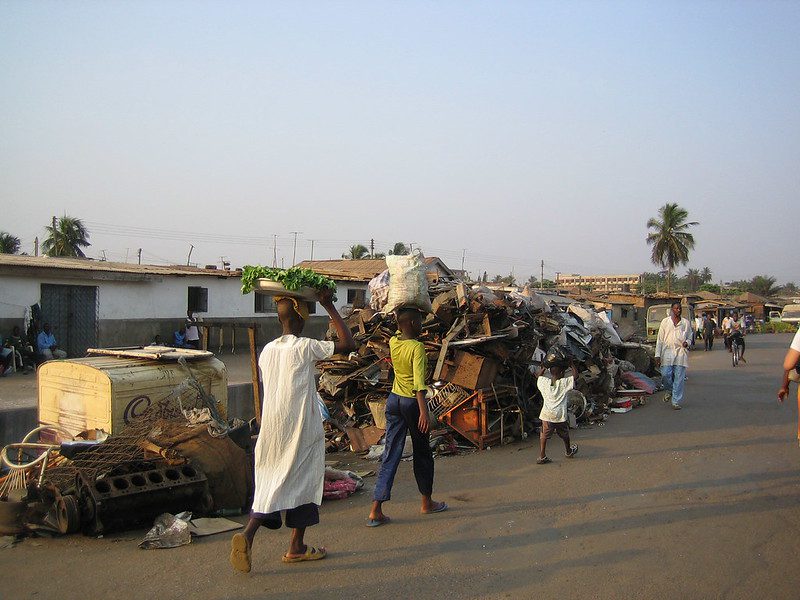
According to the World Bank in 2016, Ghana’s labor force participation rate stood at 76.7%. However, of the 76.7.% of people employed in Ghana, only 26.8% made up wage or salary workers in the same year. In 2021, Ghana’s population stood at approximately 31 million people, but only 13,701 people participated in the labor force. According to the World Economic Forum (WEF), in 2021, Ghana produced 1.1 million tons of plastic and just 5% is gathered for recycling. This sparks questions regarding where the remaining amount of trash ends up. For many impoverished people in Ghana, collecting trash is a means of survival. It can create a sustainable income to provide for Ghanaian families. Two organizations are working toward reducing trash in Ghana while providing support or employment.
The Urgency of Employment Opportunities
According to Trading Economics, Ghana noted an unemployment rate of 4.1% in 2019, rising by 0.4% by December 2020.
In 2019, the Ghana Living Standards Survey 7 reported that approximately 2.4 million people, 15 years and older, which represents 21.4% of the employed population, face underemployment. Furthermore, in 2019, the average monthly income of employed Ghanaians stood at GH₵972, which equated to about $128.41 as of May 2022.
For people living in poverty in Ghana, employment is crucial. Collecting trash in Ghana serves as a job opportunity that can allow families to become more financially stable. Two organizations in Ghana offer either income or support to those interested in helping to create a more sustainable version of Ghana, giving them opportunities to rise out of poverty.
Global Alliance of Waste Pickers
In 2005, in the City of São Leopoldo, Brazil, Lucía Fernández, the global wastepicker program coordinator at Women in Informal Employment: Globalizing and Organizing (WIEGO), “had the opportunity to help gather a few leaders of waste pickers’ organizations from four Latin American countries.” This led to the eventual establishment of a network, the Global Alliance of Wastepickers, in 2009. After many years, the organization has spread globally and now serves more than 31 countries, including Ghana.
Its mission includes:
- Fighting for “the social and economic inclusion of the waste picker population.”
- Supporting more sustainable methods of reducing waste, such as reusing, recycling and composting.
- “Sharing knowledge, experience and technology” and advocating for improved laws or policies that affect the global waste picker population.
Currently, three waste picker groups in Ghana are part of the Global Alliance of Waste Pickers. For many Ghanaians, collecting trash is a source of income, which provides them with stable jobs and the ability to provide for their families.
Trashy Bags Africa
In 2007, Stuart Gold, a British entrepreneur visited Accra, Ghana. He witnessed the streets overflowing with plastic sachet bags. These sachet bags allow Ghanaians to drink clean water but leave the roads littered with plastic. Gold saw an opportunity to clean up the trash in Ghana while providing jobs. This gave birth to Trashy Bags Africa.
The Trashy Bags Africa website explains that “Each month nearly 200,000 plastic sachets are collected by a network of commercial enterprises, each obtaining an income from their efforts, now giving value to waste.” The sachet bags are then recycled and turned into various items such as reusable bags, pencil pouches and laptop covers.
Since Trashy Bags Africa began in 2007, it has gathered 15 million plastic sachet bags. Without the help of many Ghanaians, this would have been an impossible feat. Trashy Bags Africa has several goals, such as creating employment through sachet collections, washing of sachets and stitching the sachets into new items.
Trashy Bags Africa even offers to pay Ghanaians to turn in used sachet bags for recycling. A CNN article says that, in 2010, Ghanaians could receive 20 cents for each kilogram of water sachets. As of 2010, Trashy Bags Africa had 60 employees and 100 sachet collectors. “For lots of people collecting sachets is their whole livelihood,” said Gold to CNN.
Thanks to the work of several organizations, impoverished Ghanaian waste pickers are able to make a living, gain recognition and receive support in conducting their activities.
– Kaley Anderson
Photo: Flickr

Using Trash in Ghana to Reduce Poverty
According to the World Bank in 2016, Ghana’s labor force participation rate stood at 76.7%. However, of the 76.7.% of people employed in Ghana, only 26.8% made up wage or salary workers in the same year. In 2021, Ghana’s population stood at approximately 31 million people, but only 13,701 people participated in the labor force. According to the World Economic Forum (WEF), in 2021, Ghana produced 1.1 million tons of plastic and just 5% is gathered for recycling. This sparks questions regarding where the remaining amount of trash ends up. For many impoverished people in Ghana, collecting trash is a means of survival. It can create a sustainable income to provide for Ghanaian families. Two organizations are working toward reducing trash in Ghana while providing support or employment.
The Urgency of Employment Opportunities
According to Trading Economics, Ghana noted an unemployment rate of 4.1% in 2019, rising by 0.4% by December 2020.
In 2019, the Ghana Living Standards Survey 7 reported that approximately 2.4 million people, 15 years and older, which represents 21.4% of the employed population, face underemployment. Furthermore, in 2019, the average monthly income of employed Ghanaians stood at GH₵972, which equated to about $128.41 as of May 2022.
For people living in poverty in Ghana, employment is crucial. Collecting trash in Ghana serves as a job opportunity that can allow families to become more financially stable. Two organizations in Ghana offer either income or support to those interested in helping to create a more sustainable version of Ghana, giving them opportunities to rise out of poverty.
Global Alliance of Waste Pickers
In 2005, in the City of São Leopoldo, Brazil, Lucía Fernández, the global wastepicker program coordinator at Women in Informal Employment: Globalizing and Organizing (WIEGO), “had the opportunity to help gather a few leaders of waste pickers’ organizations from four Latin American countries.” This led to the eventual establishment of a network, the Global Alliance of Wastepickers, in 2009. After many years, the organization has spread globally and now serves more than 31 countries, including Ghana.
Its mission includes:
Currently, three waste picker groups in Ghana are part of the Global Alliance of Waste Pickers. For many Ghanaians, collecting trash is a source of income, which provides them with stable jobs and the ability to provide for their families.
Trashy Bags Africa
In 2007, Stuart Gold, a British entrepreneur visited Accra, Ghana. He witnessed the streets overflowing with plastic sachet bags. These sachet bags allow Ghanaians to drink clean water but leave the roads littered with plastic. Gold saw an opportunity to clean up the trash in Ghana while providing jobs. This gave birth to Trashy Bags Africa.
The Trashy Bags Africa website explains that “Each month nearly 200,000 plastic sachets are collected by a network of commercial enterprises, each obtaining an income from their efforts, now giving value to waste.” The sachet bags are then recycled and turned into various items such as reusable bags, pencil pouches and laptop covers.
Since Trashy Bags Africa began in 2007, it has gathered 15 million plastic sachet bags. Without the help of many Ghanaians, this would have been an impossible feat. Trashy Bags Africa has several goals, such as creating employment through sachet collections, washing of sachets and stitching the sachets into new items.
Trashy Bags Africa even offers to pay Ghanaians to turn in used sachet bags for recycling. A CNN article says that, in 2010, Ghanaians could receive 20 cents for each kilogram of water sachets. As of 2010, Trashy Bags Africa had 60 employees and 100 sachet collectors. “For lots of people collecting sachets is their whole livelihood,” said Gold to CNN.
Thanks to the work of several organizations, impoverished Ghanaian waste pickers are able to make a living, gain recognition and receive support in conducting their activities.
– Kaley Anderson
Photo: Flickr
Human Trafficking in Kosovo
Human trafficking in Kosovo has been a focal point of the fight against human trafficking. The main victims within the nation are young girls who traffickers force to work in the sex trade. While this problem still persists, the government is making active efforts to lessen the prevalence of the issue.
The Causes of Kosovo’s Trafficking Epidemic
Ethnic tensions between Serbians and Albanians residing in Kosovo have worked to increase human trafficking in the nation. Speculations determined that peace-keeping forces placed in Kosovo to prevent the two groups from clashing led to a large demand for sex workers. Trafficking rose to meet the demand. Before Kosovo’s official declaration of independence in 2008, young girls, who were trafficking victims, came from neighboring countries. However, independence meant more secure borders. As a result, the traffickers looked inward, targeting young Kosovan girls.
Human trafficking in Kosovo is undoubtedly a profitable business. It is estimated that a female forced into sexual exploitation in Western Europe can create around $67,200 in profit for her captors. Such a profitable industry is not one that many criminals or corrupt officials can ignore. GlobalPost found that Kosovan government officials were profiting from or taking part in the sexual aspect of trafficking in the past, but they never faced any charges.
Fight Against Human Trafficking
According to the U.S. Department of State, Kosovo qualifies as a Tier 2 country, meaning that while it does not meet every standard set for eliminating human trafficking, it is making a solid effort. These efforts include implementing new standard operating procedures, meant to increase prosecution efficiency. The government of Kosovo also dedicated more funds and resources to helping victims of human trafficking. A big part of this was the opening of state-run shelters for these victims.
These new measures are a massive improvement from a government that GlobalPost said is profiting off of the human trafficking industry in the nation. However, the problem is far from disappearing. Despite the high rates of human trafficking in Kosovo, very few traffickers face convictions. Kosovo’s Criminal Code sentences convicted traffickers to five to 12 years in prison. Of those convicted, most only serve between seven and 18 months, according to ONETrack International.
Next Steps
A report that the Council of Europe’s anti-trafficking group, GRETA, published, outlined improvements that Kosovo could make to lessen the prevalence of human trafficking in the nation. GRETA stresses the importance of ensuring the prioritization of trafficking cases in Kosovo’s judicial system. As well as this, GRETA emphasizes identifying victims of human trafficking, specifically child trafficking. A large portion of the trafficking victims in Kosovo are actually from Albania. Partly because of ethnic tensions, the country often deports these children back to their home country before making proper identification, greatly lessening the chance of catching the perpetrator of the crime.
The U.S. Department of State has also outlined recommendations to reduce human trafficking in Kosovo. It again emphasized prosecution and sentencing, with higher conviction rates and longer sentences as key points of discussion. Another measure Kosovo should take into account is the training of judiciary officials in each region so they can properly manage cases of human trafficking. It is unclear if Kosovo plans to implement any of these recommendations, but given the recent successes of the victim shelters and regionally assigned officials, some optimism remains.
– Thomas Schneider
Photo: Flickr
Diseases in Puerto Rico
Chronic diseases in Puerto Rico have been on the rise in recent years. According to the Puerto Rico Report, more than half of the deaths reported on the island are due to chronic diseases. In 2010, 57% of deaths were due to heart disease, diabetes, cancer and strokes. The Puerto Rican Report also said more than one-third of Puerto Ricans have diabetes, more than 18% have arthritis and 17% have reported asthma throughout their adulthood.
Poverty and Chronic Diseases
Puerto Rico Report stated in an article that poverty has a connection with the increase of chronic diseases as households with an income of around $15,000 per year or less have higher chances of developing a chronic disease. Chronic diseases result in disabilities that can deteriorate the workforce and exacerbate the health care system. The CDC stated that 21% of Puerto Ricans have reported having serious mobility restrictions.
A study that the International Journal of Environmental Research and Public Health published stated that, compared to the general mainland population in the United States, chronic disease occurrence levels and mortality rates are higher for the people living in Puerto Rico. Around 44.3% of individuals who reported food insecurity in the study also reported that they perceived their health to be average or poor. The study also found that as of 2020, 5,000 doctors had left the island to work in the United States for economic reasons leaving the island, marking a 36% decline in medical staff on the island. Health care services in Puerto Rico currently face the risk of funding reduction in the Medicaid program that could lead to 1.5 million people losing health care coverage.
Financial Burdens
The Puerto Rico Report stated that citizens of the island are currently not eligible for Supplemental Security Income due to its status as a colony. The rising cost of pharmaceutical medicines and treatments has left the high levels of chronic disease to increase the financial burdens on the island. More than half of Puerto Rican residents are eligible for Medicaid. However, they do not receive enough funding to cover the cost of their disease’s treatment.
Solutions
In 2014, the Puerto Rican government released the “Puerto Rico Chronic Disease Action Plan” that focuses on collecting data, chronic disease self-management education, intervention plans within communities and increasing access to nutritious food and physical activity. The plan could strengthen the health care system on the island while increasing the economic position of Puerto Rico as the government looks to build medical manufacturing on the island to increase profit and medications. The plan is also looking to increase a clinical trial network within the island and develop local primary health.
The Puerto Rican government developed the model from the chronic model that the Pan American Health Organization/World Health Organization (PAHO/WHO) created and implemented in countries such as Brazil, Argentina, Colombia and the Dominican Republic. This model has reduced hospitalization rates due to diabetes, hypertension and other chronic conditions. It has also decreased the economic strain of the health care system in the different countries. “The model has six components: organization of care, community engagement, support for self-management, clinical information systems, design of service delivery systems, and support for clinical decisions,” PAHO stated.
The government has yet to release any update on the progress of the model due to the pandemic drawing attention away from the increasing risk of chronic diseases on the island. Chronic illnesses still present a big risk factor on the island from both the economic and health care perspective. However, many of the education sections of the model have increased health awareness on the island. As the island begins to move away from the COVID-19 pandemic hope increases for an increase in resources for chronic illness treatment.
– Nuria Diaz
Photo: Flickr
5 Facts about the World’s Unbanked Population
In 2017, the World Bank reported 1.7 billion “unbanked” adults, meaning these individuals did not have “an account at a financial institution or through a mobile money provider.” Although there remain unbanked individuals in developed countries, most of the unbanked population lives in developing countries. Furthermore, there is a strong link between lacking financial inclusion and living in poverty.
In 2020, the Inclusion Foundation discovered that in the United Kingdom, being unbanked leads to costs of up to £500 annually as these individuals “miss out on discounts reserved for those who pay bills by direct debit.” Additionally, the financial services that institutions offer, such as tools for saving, insurance and credit, are important instruments that help people rise out of poverty and advance financially.
5 Facts About the World’s Unbanked Population
Looking Ahead
While for many, banking services seem readily accessible and almost a fact of life, for others, the inability to access such services stunts their growth opportunities. By increasing financial inclusion, institutions can help people help themselves.
– Rachael So
Photo: Unsplash
COVID-19’s Impact on Romania
Romania is one of the most impoverished countries in the European Union. As of 2018, the country had the highest poverty rate in the union, with more than a quarter of the population living on less than $5.50 per day. Poverty has a high concentration in Romania’s rural areas, which contain most of the poverty-stricken population. The COVID-19 pandemic reached Romania relatively late compared to the rest of the European Union. The country identified its first case on February 26, 2020. COVID-19’s impact on Romania was mostly negative, lowering life expectancy and highlighting health care and medical supply disparities. A COVID-19 vaccine campaign began swiftly in Romania, yet momentum was not consistent. Lack of infrastructure for proper vaccine distribution and widespread vaccine misinformation have slowed vaccination rates. As of May 2022, around 43% of the country is fully vaccinated, the second-lowest amount among EU countries.
Government Response
At the pandemic’s start, the Romanian government promptly took measures to combat the COVID-19 pandemic. On March 16, 2020, Romanian president Klaus Iohannis declared a state of emergency and on March 25, the government announced a lockdown. Nearly a month later, on April 14, Romanian authorities extended a 30-day lockdown that lasted until May 14. These actions did not come without backlash – a Romanian citizen even presented a case in protest of the 30-day lockdown to the European Court of Human Rights.
The Romanian government quickly put in motion Romania’s COVID-19 vaccination strategy. According to OECD, the campaign showed priority toward medical workers, putting high-risk members of the population second. The military and certain intelligence services, including the Special Transmission Service, stepped in to help distribute the vaccine.
Vaccination rates started strong. According to Euronews, Romania was among the top three European countries with the highest rates at the beginning of 2021 but fell from grace as numbers began to decline in March of the same year. Vaccine misinformation ran rampant and discouraged citizens from receiving any doses, Euronews reports. The rural areas of Romania lack infrastructure; social services, employment opportunities and health care are hard to find. Due to this, the majority of Romania’s poor are unvaccinated. In response, the European Commission joined Romania in the communication of the vaccination campaign: 40-second videos and 20-second radio ads promoting the vaccine were played on television and radio stations, respectively.
Impact on Health Care System
Battling the COVID-19 pandemic has exposed flaws in the Romanian health care system and led to innovation. The Ministry of Health and the National Health Insurance Fund entirely pay unconditional coverage for COVID-19, according to OECD. Still, not every Romanian citizen has equal access to COVID-19 care. Rural areas are lacking not only health but also general infrastructure and have difficulty benefitting from Ministry of Health actions.
A positive side of COVID-19’s impact on Romania is the creation of multiple online systems to manage health information, which gives more people access to their health data, OECD reported. Additionally, the Romanian government used the European Union’s digital COVID certificate, which is used nationwide to certify whether an individual has been vaccinated, tested negative or recovered from COVID-19.
Again, these benefits of COVID-19’s impact are more present in urban areas of Romania, as around 73% of Romania’s rural areas have access to the internet, while the rate is 87% in urban areas.
Businesses and Workers
Similar to the Ministry of Health, the Romanian government was proactive in enacting policies to support small businesses and workers during the pandemic. It ensured that the financial status of the employer does not affect the employees’ wages, including multiple workplace health and safety measures. The government also released €1 billion in EU grants to benefit Romanian businesses that the pandemic impacted and extended the technical unemployment period from 30 days to a 90-day minimum.
Regardless of the measures that the government enacted, the pandemic caused an increase in unemployment. Business and working families in rural areas of Romania suffered significantly. In Galați County, registered unemployment rose from 10,414 in 2020 to 11,856 in 2021.
Although COVID-19’s impact on Romania took a significant toll on the country, especially its poor, it led to several instances of innovation and swift, beneficial government response.
– Sophie Buibas
Photo: Wikimedia Commons
Domestic Violence and Poverty: A Nuanced Relationship
There are many costs associated with inaction regarding the issue of domestic violence. One must highlight the intersection of domestic violence and poverty to begin successfully addressing these issues. Furthermore, one must note that poverty does not cause domestic violence. However, domestic violence can contribute to higher rates of poverty among survivors due to the fact that it exacerbates the economic instability of those experiencing abuse by reducing rates of employment and personal and national economic prosperity.
In addition, poverty can restrict the individual’s ability to leave their abuser due to a lack of available resources and financial independence. This intersection thus perpetuates a cycle of poverty for those experiencing violence. In Ghana, domestic violence led to a 4.5% reduction in the female workforce in 2019. Similarly, the gross domestic product (GDP) of Vietnam saw a 3% drop attributed to the “costs of accessing services, missed work and lowered productivity” of those experiencing abuse.
Economic Impact
Globally, about 27% of women aged 15-49, or more than one in four, experience domestic violence. Because of this, the impacts of domestic abuse on national economies are significant. These include:
Therefore, intervention methods that attempt to reduce the rates of global poverty must account for domestic violence as a significant contributor to the issue. As the United Nations stated, “This evidence enables an understanding of how domestic violence undermines households’ economic security and quality of life while limiting the effectiveness of programs to improve the well-being and capabilities of communities across low and middle-income countries.”
Solutions
It is important to consider the nuances of poverty when addressing domestic violence. Legislation or policies that support survivors in their transition from abusive situations can aid in reducing the economic instability of these individuals, and thus, reduce levels of poverty among survivors. This includes housing and employment assistance.
The root causes of the issue must stand at the forefront of policies in order to provide more resources for individuals to leave their abusers.
Passing legislation that “holds assailants accountable” through policies and services that empower survivors to report abuse, along with improved “criminal justice and law enforcement training,” can decrease rates of global domestic violence, and thus, poverty.
Organizations Addressing Domestic Violence and Poverty
There are many organizations that are working to reduce the rates of global domestic violence and poverty. Alliance for HOPE International provides resources, training and trauma support to survivors of “domestic violence, sexual assault, child abuse, elder abuse and human trafficking” to dismantle the cycle of abuse across the world.
The organization is active in 25 countries, establishing family justice and multi-agency centers that aggregate survivor resources in one place for easy access. The organization does advocacy work and provides mental health resources as well as medical and legal services.
The Global Network of Women’s Shelters (GNWS) is also working to reduce global domestic violence by acting as a voice for women and children of abuse on the international stage. This organization supports the establishment and accessibility of women’s shelters across the world while also promoting social change and policies that aim to reduce violence.
A significant aspect of its mission is networking. GNWS connects various shelters with one another to strengthen and improve their response to survivors, sharing new techniques and anticipating behaviors of abuse. The organization’s purpose is “to unite the women’s shelter movement globally to end violence against women and their children.”
Looking Ahead
Reducing rates of global domestic violence can help to reduce global poverty by empowering survivors in their ability to transition out of abusive situations. The intersection of domestic violence and poverty works as a barrier that entraps individuals in abuse and contributes to less positive outcomes for survivors when leaving their abusers. Therefore, by supporting policies and legislation that provides resources and direct support to survivors and holds assailants accountable, the world can address the cycle of poverty that survivors often experience.
– Kimberly Calugaru
Photo: Flickr
India’s Water Crisis and a Clean Yamuna River
India’s water crisis is a struggle that millions of people are facing. As summer approaches, bringing heat waves and dry spells with it, the necessity for clean and accessible water is extreme. In May 2022, the city government of New Delhi proposed an action plan to provide sewage connections to more than 25,000 houses in East Delhi. The proposed plan also emphasizes taking steps to clean the Yamuna River, which snakes through India’s north-central region. Delhi’s vision of a clean Yamuna River offers an optimistic gaze into India’s future.
Water Crisis That Millions Feel
India’s water crisis is an ongoing struggle. Underdeveloped infrastructure and an unstable agricultural sector due to land infertility and increasingly severe droughts have brought the crisis on. Groundwater depletion occurs at alarming rates due to over-usage of water, and extreme pollution causes water contamination. A prevalence of arsenic, sulfur and fluoride is in the water people are consuming. In 2017, researchers from the WHO/UNICEF Joint Monitoring Program (JMP) reported that more than half of India’s population does not have access to potable water. India’s water situation fuels health concerns and hinders agricultural production and employment, trapping an increasing number of people into poverty.
A glance at India’s longest tributary, the Yamuna River, offers a dire look at the nation’s struggle for clean water. The Yamuna flows south through Delhi, where an estimated 80% of the pollution comes from. Beyond the floating piles of trash that collect along the shores, evidence of polluted water comes in the form of froth. Detergents and other chemicals in the untreated water that goes into the river produce these buildups of foam. The pollution entering the river from Delhi flows south into the states of Haryana and Uttar Pradesh, India, putting more people at risk.
Despite the water crisis, Delhi’s population has had immense growth in recent years. Researchers with the U.N. Department of Economic and Social Affairs (DESA) have estimated that New Delhi, India’s capital, will be the most populous city in the world by 2028. With over 30 million already living in New Delhi, the Indian government recognizes the necessity of providing clean water to its people. An uphaul of India’s water infrastructure could drastically improve these conditions and provide more Indians with this essential human need.
Improving Sewage Connections
Representatives from the Delhi Jal Board (DJB), New Delhi’s official water agency, have offered considerable methods of combatting the excess of unpotable water. In May 2022, officials devised a plan that would provide around 25,000 free sewage connections to households in East Delhi constituencies like Mustafabad and Karawal Nagar, located near the banks of the Yamuna River. This is a beneficial move for DJB during a time when water meter scams have become extremely prevalent in India. Providing additional sewage connections, especially in Delhi’s many low-income colonies, would also diminish the amount of untreated water escaping into the Yamuna.
Free sewage connections are not the only benefit to come from this plan. If implemented, DJB will construct approximately 30 reverse osmosis (RO) plants around Delhi. These manufacturing plants desalinate and purify water by separating and collecting the contaminants within it. DJB officials plan to implement many of the RO plants throughout Delhi’s numerous Jhuggi-Jhopri (JJ) clusters. These clusters illegally house some of the capital city’s most impoverished under mud roofs along the streets and passageways of slum colonies. Each RO plant can serve up to 65,000 liters of clean water daily. Officials have set a goal to place around 1,000 RO plants across Delhi in the future.
The Yamuna River gives a sweeping view of India’s water crisis. It offers unmistakable evidence of chemical contamination with froth buildup and trash. Most importantly, though, is how the Yamuna cries out on behalf of the multitude of people in Delhi who lack the basic amenity of clean water.
India’s Six-Point Plan to Clean the Yamuna
DJB’s actions to improve water quality in New Delhi fall under a six-point action plan devised to clean the Yamuna River by 2025. Delhi chief minister Arvind Kejriwal announced the plan in November 2020, referring to the Yamuna as “the lifeline of Delhi.” These are the six points of action:
Years of neglect toward the Yamuna River has had damaging effects on Delhi’s people and landscape. Thankfully, the government is making resilient efforts to rehabilitate the Yamuna and quell India’s water crisis.
– Evan Lemole
Photo: Wikipedia Commons
Southern California Organization Aids Tijuana’s Poor
Casas de Luz is an organization based in Solana Beach, California. It builds homes and community centers primarily in Tijuana, Mexico through the help of volunteers and donations. Volunteers stay overnight in the Mexican city during their two-day build period helping Tijuana’s poor. Building teams drive around in caravans to ensure they are safe.
Poverty in Tijuana
Tijuana is a city in the state of Baja California, Mexico. As of 2020, it had a population of around 2 million. There are an estimated 100,000 homeless people in Tijuana. Around 22% of the population live in moderate poverty and 1.84% live in extreme poverty. Around 3.3% of the population lacks access to water. These statistics give way to organizations like Casas de Luz to lend a helping hand to Tijuana’s poorer residents.
Although crime rates in Tijuana have decreased over the past five years, the city remains somewhat dangerous. It scores 72.22 on the crime index and 27.78 on the safety index. Ensuring that Tijuana’s poor have a home to sleep in at night leaves fewer people susceptible to criminals.
Casas de Luz’s Process
The only things volunteers need to do to be part of a building trip are signing a liability form, paying a builder fee and packing for the weekend. All the necessary building tools will be available on sight. The organization encourages volunteers to bring donations of furniture and any other household items for the family whose house they will be constructing.
Every week, volunteers cross the Mexican border and head to Tijuana, driving in a caravan. Drivers have to purchase Mexican liability insurance for the weekend. They first meet at the building site, where the foundation of the house already exists. Master carpenters guide and lead volunteers throughout the entire process. The family who will live in the house typically helps in construction. Children typically work on painting the walls before the builders put them up. The goal for the first day of construction is to have the roof attached in case of rain. As a personal touch, builders write well wishes hidden inside of a house’s walls.
When the building team finishes work for the day, they all drive to either Casa Hogar de los Niños, an orphanage that is empty during the weekends, or Faro de Luz, Casas de Luz’s community center. Casa Hogar has a security system and always has a security guard on duty. At Faro de Luz, a security guard will watch the cars the whole night.
People interested in building for Casas de Luz can sign up at their website. A $50 builder fee is necessary and covers any vital essentials throughout the weekend (including two lunches, a dinner and a breakfast).
Casas de Luz Achievements
Since Kathy Faller, Gersom Ayala and Amada Ayala founded Casas de Luz in 2005, the social justice action program has built more than 150 homes throughout San Diego County and Tijuana. They have also aided in constructing two community centers in Mexico, Faro de Luz (Lighthouse) and Peña de Horeb (Horeb’s Rock). Additionally, Casas de Luz has transferred and administers more than 900 truckloads of donations.
Faro de Luz serves as a church in addition to being a community center. During the COVID-19 pandemic, children have gone to Faro de Luz and attended classes through the community center’s TV. Casas de Luz’s Feed the Future program takes $5 donations that provide one week’s worth of lunches for one child.
At Peña de Horeb, another community center and church, children are eligible to receive breakfast five days a week, work on their homework after school and access food and water before their classes start. In 2013, builders added a kitchen and dining area to the center. In 2016, construction began on a two-story building containing four classrooms and a church with the help of Lazarian world homes.
Thanks to the number of donations Casas de Luz receives, Gerson and Amada Ayala no longer fund it solely. Communities have grown able to sustain themselves and Tijuana’s poor have significantly benefited from the program.
– Sophie Buibas
Photo: Flickr
Community Health and Planning Services (CHPS) in Ghana
Ghana’s capital city, Accra, is pretty urbanized and health services are readily available. However, the surrounding areas are rural and those services are not accessible. CHPS (Community Health and Planning Services) is a national strategy in Ghana geared towards the delivery of crucial community-based health services to these populations, involving service delivery and health planning with communities. CHPS in Ghana is a step forward to achieving the goal of providing universal primary health care.
How Did CHPS in Ghana Start?
CHPS started in 1994 by deploying nurses to their assigned “CHPS zones,” which are geographical areas of rural Ghana, to provide door-to-door services. Due to its early successes, the project started to grow and scale. The Ghana health services took advantage of the incremental rollout to research which parts of the CHPS model proved most effective; community engagement and participation were the most essential for ensuring primary health care and where these two components did not exist, CHPS did not perform as well.
“The primary focus of CHPS is to bring health services close to communities. CHPS’ aim is to move health services to community locations, develop sustainable volunteerism and community health action, empower women and vulnerable groups and improve health provider, household and community interaction,” according to a research article published in PLOS ONE. On a larger scale, CHPS strives toward the ultimate goal of Universal Health Coverage, providing basic health services to every community.
Challenges
Undoubtedly, throughout the years, CHPS went through challenges and failures. Since CHPS started in research, people have continually monitored the progress and challenges the program runs into. These include transportation, road conditions, poor clinical attendance, cultural beliefs and more.
To go into it, one tool CHPS uses is its compounds, which are buildings that act as service delivery points. Transportation to these depends on various factors, such as access to a motorbike, weather conditions and route options. Many mothers do not have such access and the ones who do often experience challenges with rain or lack of roads in remote settlements.
Cultural beliefs and practices also act as a major challenge. Beliefs around pregnancy and childbirth keep many women from seeking care from CHPS. According to an article published in BMC Health Services Research, one mother reported, “I made two visits to the CHPS compound but when it was time for delivery, I delivered at home. Oh! I used medicines from the health center alongside herbs from my mother-in-law.” One reason for such avoidance is to ensure women do not receive tabooed food. People tend to prefer traditional practitioners for such care.
The CHPS program faces many more challenges and as it continues to scale they aim to solve each of these.
According to the World Health Organization (WHO), “UHC [Universal Health Coverage] means that all individuals and communities receive the health services they need without suffering financial hardship. It includes the full spectrum of essential, quality health services, from health promotion to prevention, treatment, rehabilitation and palliative care across the life course.” The first step to achieving such a goal is providing primary care to all. This is also the first step of CHPS.
CHPS aims to scale its program across Ghana, thereby closing its health coverage gap. Its efforts to achieve Universal Health Coverage face challenges, but are largely successful and continue to grow.
– Rachael So
Photo: Flickr
Bangladesh’s Enhanced Investments
In May 2022, the Prime Minister of Bangladesh, Sheikh Hasina, stated that Bangladesh is in need of enhanced investments from countries friendly with it and especially from the U.S. The country requests investments in an attempt to become a prosperous and developed country by its goal year, 2041. If the U.S. chooses to participate in Bangladesh’s enhanced investments, Bangladesh is choosing to diversify what it’s spending the investments on. At the pace they are currently going, Bangladesh will have graduated from being on the list of least developed countries (LDC) in the year 2026.
Usage of Investments
Hasina believes that Bangladesh’s enhanced investments are promising amongst investors due to its infrastructure. In addition to that, the government has eased the rules and regulations for businesses and investments that existed prior. The country recently implemented many development programs that help improve its livability. One major highlight is that recently, the entire country went under full electricity coverage, according to Dhaka Tribune.
Areas of Focus
More major areas of focus are water communication systems, roadways and railways. The government is also working on Bangladesh’s enhanced investments by creating zones for domestic and foreign investors throughout the country, with 100 unique economic zones set in the plan. According to Hasina, the government’s focus on advancing skilled manpower and the demographic dividend assures investors that Bangladesh’s enhanced investments will garner skilled human resources at vying wages.
Diversify the Investments
Foreign Minister of Bangladesh, AK Abdul Momen is requesting that U.S. businesses make more diverse investments that go further than just the energy sectors, such as the agriculture sector. Around 90% of current investments from the U.S. to Bangladesh fund the energy sector, which the country will continue to use and request more investment in it. The country is also ambitiously suggesting that the U.S. produces goods out of it as well. Entrepreneurs from the U.S. have also shown interest in Bangladeshi Information and Communication Technologies (ICT) sector as it has more than 650,000 freelancers in the country.
US – Bangladesh Relations
Jay R. Pryor, the Vice President of Chevron was staying in Bangladesh from May 7 to May 11, 2022 to explore U.S. – Bangladesh economic opportunities. During this visit, discussions occurred regarding many plans for Bangladesh’s enhanced investments. The U.S. delegation expressed its interest in investing in “Smart Bangladesh” after already successfully implementing “Digital Bangladesh” in the country. In addition, Salman F. Raman, the Prime Minister’s private sector industry and investment advisor expressed that Bangladesh’s agriculture industry can bring lots of success and is suggesting investors bring modern technology to the sector.
The Positive Outcome
The investments that the leaders of Bangladesh are urgently seeking can drastically improve the livability of the country. Bangladesh is now incorporating solar water pumps in its water industry in order to improve the water supply. As Bangladesh moves forward, it is steadily improving all sectors in its country making its goal of becoming a developed and prosperous country by the year 2041 a foreseeable reality.
– Christina Papas
Photo: Flickr