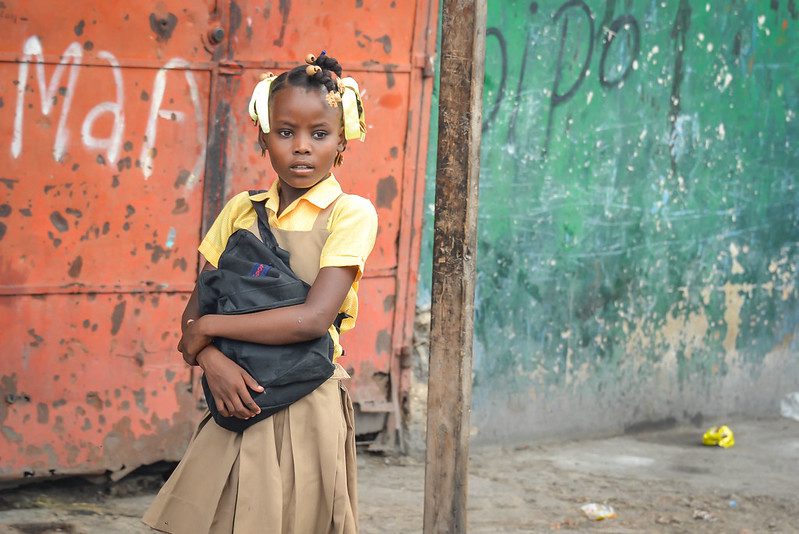
Child trafficking in Haiti is prevalent. As of 2021, the U.S. Department of State ranks Haiti as a Tier 2 Watch List country in terms of the minimum standards to eradicate human trafficking as laid out in the Trafficking Victims Protection Act (TVPA) of 2000. Since the onset of the COVID-19 pandemic, the Haitian government has struggled to combat the exploitation of children in domestic servitude, also known as restavek. However, several organizations are advocating and taking action to prevent child trafficking.
The Haitian-Dominican Border
The Haitian-Dominican border has a high prevalence of child trafficking. Within Haiti, about 60% of people lived in conditions of poverty in 2020, according to the World Bank. Because of Haiti’s high poverty rate along with high unemployment rates, parents resort to sending their children across the Haitian-Dominican border in an attempt for them to secure a chance at a better life.
Parents entrust their children to strangers to get them across the border safely. However, these strangers exploit the children’s vulnerabilities and traffick them.
In August 2020, officials arrested a man on suspicion of trafficking five children across the Haitian-Dominican border. Likewise, a few years prior, in September 2017, Haiti officials rescued a 15-year-old girl named Prospélanda from being trafficked across the Haitian-Dominican border by a woman luring her with the promise of work and a better life.
Impact of the COVID-19 Pandemic
The Haitian-Dominican border has always been a hotspot for the exploitation of children. However, trafficking rings are now using the COVID-19 pandemic to their advantage. Haiti already ranks as the most impoverished country in the Western Hemisphere and the COVID-19 pandemic exacerbates existing conditions of poverty even further. With rising poverty comes rising vulnerabilities for people enduring dire economic circumstances.
In particular, traffickers target children because of their vulnerabilities, often promising them a better life in the Dominican Republic. In the hopes of a better life, according to InSight Crime, about 50,000 children cross the Haitian-Dominican border annually with a high likelihood of finding themselves in a child trafficking ring.
Anti-Trafficking Laws in Haiti
In 2014, the government implemented the Anti-Trafficking Law (TIP), which criminalizes human trafficking. A trafficker can serve a sentence of between seven to 15 years in prison and pay a fine up to an equivalent of almost $21,000. For child trafficking cases, punishment can include life imprisonment.
Although the U.S. Department of State has ranked Haiti as s Tier 2 Watch List nation, meaning it “does not fully meet the minimum standards for the elimination of trafficking,” the Haitian government is making efforts to combat child trafficking in Haiti.
In 2020, the Haitian government began investigating three trafficking cases in hopes of prosecuting traffickers, a significant decrease from nine cases in 2018 as well as 2019. However, “[t]here were 21 total human trafficking cases pending in Haitian courts at the end of the reporting period” for the 2021 Trafficking in Persons Report.
Advocating Against Child Trafficking
Many organizations advocate against child trafficking in Haiti. Restavek Freedom is a nonprofit organization founded in 2007 to fight against child trafficking.
The organization’s strategy is to fight for restavek children and raise awareness of child trafficking in Haiti. Restavek Freedom also educates Haitian families on the dangers of child trafficking and teaches them how to protect their children.
Lovely lived as a restavek for years. Her host family made her work hard with no pay. Her host family also did not allow her to go to school, but with Restavek Freedom’s help, Lovely is now free from that situation. Now, Lovely is reunited with her family and goes to school. She wants to be a doctor when she grows up so she can help others as Restavek Freedom helped her.
Although child trafficking in Haiti is prevalent, organizations like Restavek Freedom are working to reduce child trafficking. Children like Prospélanda and Lovely can avoid the horrors of child trafficking through the commitment of authorities and organizations.
– Chris Karenbauer
Photo: Flickr

How Drones in sub-Saharan are Delivering Supplies
On May 19, 2022, German delivery drone company Wingcopter and Ghana-based drone company Continental Drones announced a partnership plan to deploy 12,000 supply drones across 49 sub-Saharan African countries. to establish a delivery network. According to Wingcopter’s website, “these networks will dramatically improve the reliability and efficiency of existing supply chains but also help create completely new ones.” The drones will also be deployed to improve the lives of African people “through the on-demand delivery of medicines, vaccines, or laboratory samples but also essential goods for daily use.” Drones in sub-Saharan Africa offer the opportunity to reduce the current poverty rate in sub-Saharan Africa, which stood at roughly 41% as of 2018.
The Impact of the Russia-Ukraine War
Russia’s invasion of Ukraine exacerbates hunger and food insecurity in Africa because several nations rely on Ukraine and Russia for wheat, oil and fertilizer, however, “the war disrupts global commodity markets and trade flows to Africa, increasing already high food prices in the region.”
The Food and Agriculture Organization (FAO) indicates that its Food Price Index, “a measure of the monthly change in international prices of a basket of food commodities,” rose by 12.6% from February 2022 to March 2022 as a consequence of the war. This percentage is the highest since the creation of the index in the 1990s.
Africa Renewal stated that, in 2020, about 282 million people in Africa endured hunger, a figure which the Russia-Ukraine war will only heighten.
Necessary Supplies and Economic Impact
Drones offer faster access to “vaccines, medicines, lab samples and other key medical supplies” along with food sources. Wingcopter has already established partnerships with hospitals in Malawi to ensure more efficient delivery of resources.
Along with providing life-saving supplies using drones in sub-Saharan Africa, this partnership will boost economic growth in sub-Saharan Africa through the creation of new job opportunities necessary to operate the drone network.
Wingcopter 198 Drone Capabilities
The partnership between Wingcopter and Continental drones will involve the use of the Wingcopter 198, “the world’s most advanced delivery drone.” Unlike a typical drone, Wingcopter 198 drones can fly in strong winds and rain to deliver supplies. A single Wingcopter 198 drone can carry around six kilograms of cargo during flight and has a range of up to 110 kilometers at full capacity.
Speed is most important when it comes to life-saving supplies. These drones have a default cruise speed of 100 kilometers per hour, which means the droners are able to deliver in a timely manner and emit lower emissions than other forms of delivery.
Apart from the ability to deliver supplies quickly, the Wingcopter 198 is cost-effective due to its innovative features such as “a triple-drop system, unique control station software for efficient mission planning and advanced maintenance technology.”
The Use of Drones in Malawi
Malawi is home to the African Drone and Data Academy (ADDA). UNICEF founded ADDA in January 2020, with the aim of providing locals with the skills and knowledge necessary to utilize drone technology and advance drone systems “for more effective humanitarian and development response.”
UNICEF and partners have utilized drones in Malawi for several purposes. For example, in 2016, UNICEF began using drones to minimize “waiting times for HIV testing of infants” by sending dried blood spot samples from isolated areas in Malawi to laboratories via drone.
In 2017, UNICEF created the world’s “first humanitarian drone corridor” with the aim of supplying an ideal environment for organizations and entities to discover and experiment with drones for humanitarian purposes in developing countries like Malawi.
With the support of international aid and the Malawi government, Wingcopter and Continental Drones provide a solution to the rising food insecurity and health decline caused by Africa’s extreme weather patterns and the Russian invasion.
– Sara Sweitzer
Photo: Wikimedia Commons
COVID-19’s Impact on Tunisia
In March 2020, Tunisia, a country located in the Maghreb region of Northern Africa, went into lockdown like the rest of the world because of the spread of the Coronavirus. The lockdown impacted Tunisia’s economy, jobs, households and agriculture. The government has implemented policies to mitigate COVID-19’s impact on the economy and society in Tunisia, but it did not soften the negative effects.
Economy
COVID-19’s impact on Tunisia’s economy has negatively affected its important sources of income. This negative impact on the economy also affected the livelihood of Tunisians, who lost their jobs and fell into poverty. Although the COVID-19 pandemic impacted the whole of Tunisia’s economy, the following examines only the critical aspects of Tunisia’s economy that experienced a decline during the pandemic.
Impact of Unemployment on Poverty
Similar to what happened in many countries during the pandemic, COVID-19 has caused many Tunisian businesses to lay off their workers. This increased the overall unemployment rate to 15% during the first quarter of 2020, and then up to 17.8% during the first quarter of 2021, according to Carnegie Endowment for International Peace. Rural regions, specifically the northwestern and southern parts of Tunisia experienced the highest increase in poverty and unemployment compared to the urban areas.
The northwest region has a 26% of unemployment and the southern region has a 21% of unemployment. College graduates make up 56% of the unemployed and in poverty. On the other hand, large cities and coastal areas in Tunisia have lower rates of poverty and unemployment. For example, Tunis has a 4.6% poverty rate and Ben Arous has a 5.6%, Carnegie Endowment for International Peace reports.
Households
Government Policies
In response to these national challenges, the Tunisian government has promised to implement several policies that aim to address these issues. In March 2021, the government announced that they will relax the bank loan-to-deposit ratios by providing 500 million Tunisian Dinars at a 2% interest rate to struggling hotels. By the end of June, the government has given grants to 460,000 workers who are most likely to lose their jobs. Also by the end of June, the government distributed 300,000 support packages to vulnerable groups.
However, COVID-19’s impact on Tunisia highlighted the bureaucratic issues of its government. In fact, some of the policies that the government proposed to alleviate the impact of COVID-19 did not undergo implementation because of administrative impediments. Therefore, COVID-19’s impact on Tunisia will likely continue for years as long as implementation issues persist.
– Abdullah Dowaihy
Photo: Flickr
Reducing Food Insecurity in Africa during Drought
East Africa faces a drought this growing season after two consecutive failed growing seasons. Growing food insecurity in Africa poses a threat to the younger residents of the area. Disease, child marriages and malnutrition spread as the drought continues. Organizations such as UNICEF and USAID work daily to provide resources to the Horn of Africa to prevent deaths.
Drought in the Horn of Africa
The Horn of Africa contains residents of Sudan, Ethiopia, Somalia, Kenya, Eritrea and other countries on the East African Peninsula. UNICEF reported that 2022 marks the third failed rain and farming season in the Horn of Africa. As the drought ravages this section of Africa, a lack of water and crops spreads diseases and worsens malnutrition in children. UNICEF estimates that 1.7 million children need treatment for severe acute malnutrition and could reach 2 million in a matter of weeks without rain in their region.
Rising Food Prices in International Market
Russia invaded Ukraine in mid-February and offset the foreign food market. The invasion of Ukraine concurrently arose at the start of various countries’ growing seasons. Food prices on the international market have soared in this time to prices that exacerbated food insecurity in Africa. During a typical year, other countries would rely on their own crops during this economic fall, but the drought has decimated the essential crops needed to feed families.
Ukraine is the breadbasket of Europe and provides wheat supplies to the international market. According to The New Humanitarian, farmers did not plant as many fields due to the invasion. The economy struggles as ports close and they can no longer export to developing nations such as those located in the Horn of Africa.
Solutions to Food Insecurity
It is now up to governments to intervene as food insecurity in Africa worsens. Help with imports, agricultural techniques during droughts and food for families are all necessary to combat the effects of the international market and drought on food insecurity. UNICEF provides Ready-to-Use Therapeutic Food (RUTF) to treat children suffering from malnutrition. These supplies prevent wasting in children. Wasting has a high risk of death since the children are low weight compared to their height. RUTF helps children gain weight quickly with high nutritional value and is consumable directly from a packet. “Between 2017 and 2021, UNICEF procured some 2 million cartons for South Sudan,” UNICEF stated. As the drought continues, parents in the Horn of Africa debate how to save their children from malnutrition.
UNICEF partners with local governments as the drought takes students out of school and into child marriages. Parents exchange their kids in hopes their children receive food through the union, Forbes reported. They believe that in their married state the children will avoid wasting. UNICEF’s programs assist mothers to measure their children’s Mid-Upper Arm Circumference to gauge their level of malnutrition. Prevention of child marriages and assisting mothers with malnourished children are crucial to UNICEF. They advocate for funding and policies on a national level to provide help with food insecurity in Africa as the drought continues and the international market’s prices rise.
The U.S. Agency for International Development (USAID) provides aid during the drought. It donated $161 million to the Horn of Africa in 2022 and called for new donors to assist as the drought and rising food prices impede the lives of families and children. This money supports agriculture and livestock, clean drinking water, medical supplies and nutrition assistance for malnourished children.
The conflict between Ukraine and Russia increases food prices and strains Africa’s imports. Preventing food insecurity in Africa requires additional funding and policies. Children face the threat of starvation the hardest and need life-saving RUTFs and aid.
– Sara Sweitzer
Photo: Flickr
Maternal Mortality in Haiti Leaves Babies Vulnerable
Because of its status of being the poorest country in the Western Hemisphere, Haiti’s maternal mortality rate is estimated to be about 521 out of 100,000 births. Many babies do not have mothers to feed them and caretakers have to watch babies slowly starve from malnutrition. Here is some information about maternal mortality in Haiti as well as what some are doing about it.
Haiti’s Lack of Maternal Health Care
Approximately 70% of women give birth at home in Haiti. For the women who do have access to a midwife or a trained doctor, the necessary medical equipment and a sterile environment are lacking.
The World Health Organization (WHO) estimates that there are as few as 23 trained health care workers for every 1,000 people. There is approximately one midwife for every 1,000 pregnant women.
Reasons for Maternal Mortality in Haiti
Mothers face a higher risk of complications during birth beyond a lack of maternal care. Oftentimes, maternal mortality can occur due to mothers not having the necessary baby delivery equipment, especially if the mother experiences labor complications.
Approximately 26% of the maternal mortality rate in Haiti has been related to hypertension during childbirth which results in death. Meanwhile, 23% of mothers die from postpartum hemorrhaging and another 10% of the maternal mortality rate is a result of infection and obstructions in labor in Haiti.
Result for the Babies
In Haiti, breastfeeding is one of the few ways to feed babies. The formula is extremely expensive and rare to obtain. After a mother dies, the babies have very few options. In 2019, 11-month-old Jezil died from malnourishment after her mother died. Jezil’s grandmother could not afford formula and fed Jezil with rice water. Jezil’s grandmother watched her granddaughter perish from an easily remedied situation if she had access to formula. Another option for families is to send babies to orphanages in hopes that the baby has better access to health care and education. Approximately 25,000 children live in orphanages that have at least one parent or a caretaker alive.
Solutions in the Case of Maternal Mortality
The Potter’s Family is a nonprofit organization based in Saint Louis du Nord in the Northwest region of Haiti. Tore Dobbie founded the nonprofit in November 2019. Over time, Tore has witnessed many babies die from malnutrition or go to orphanages because their families could not take care of them after their mothers died. In response, the founder began a formula program that aims to keep families together by providing aid to caretakers who have experienced maternal mortality.
In early 2019, David’s caretaker came to Tore in hopes of finding a solution to feed him. David was discovered in a pile of garbage before being taken to a church to see if anyone was willing to take care of him. A woman with a baby volunteered and soon realized she could not feed two babies. Tore provided the formula for David and he stayed with his new family.
Programs similar to the Potter’s Family give another option for families who have been through maternal mortality in Haiti. The programs help provide a means to feed babies while keeping the babies out of orphanages and growing up with their families.
– Chris Karenbauer
Photo: Flickr
The Role of Oil in Algeria’s Economic Future
Algeria’s economic future looks bright as its role as a supplier of liquid crude oil has expanded amidst the shifts in European sourcing due to the Russian invasion of Ukraine. Algeria typically provides only 8% of natural gas for the European Union. However, the country is already taking steps to provide more oil as nations look to lessen their dependence on Russian oil. Such a change in supply could mean an economic boost, enabling Algeria to build future long-term renewable energy and labor markets.
Historical Context
Algeria is a country with a deep history of relying on its own resources and people to power its economy. Having internationally-recognized independence since 1962, Algeria has had to resort to its oil exports, internal agricultural labor and deals with neighbors such as Morocco and Spain in order to stay afloat. After former president Abdelaziz Bouteflika resigned in 2019, the old guard of Algerian leadership faced a new era in which the country’s non-oil industry required expanding and strengthening in order for its economy to have a bright future.
How Algeria’s Role is Currently Changing
Countries such as Spain, Italy, Greece and France are weaning off of Russian oil, while capital cities such as Madrid, Athens and Rome are currently setting up new energy provisions with Algeria. In its most recent report, the World Bank noted that Algeria’s economy grew 3.9% bigger due to the extra demand for European oil alongside new construction and industrial activity. To maintain this continued growth Algeria’s leaders need to pay close attention to the possible obstacles.
In order for Algeria’s economy to find the funds to diversify its future economy, it must be able to provide more oil to European countries in the first place, an increase estimated at 12% to 38% of its current rate by the fall and winter of this year. However, the state-run oil company Sonatrach is facing bureaucratic slowdowns, hacking to the refinery operations, and complications maintaining its already existing contracts.
In addition, there is a geopolitical complication in Algeria’s current status as a primary buyer of Russian weapons and arms, according to Modern Diplomacy. If Russia can mitigate some of its lost oil revenue by increasing weapons sales to a growing Algerian economy, then European nations may turn away from contracting more oil supplies from Algeria. These are complications that make Algeria’s economic future a tricky path of policy and economic landmines.
Possible Solutions
The primary solution for longer-term economic growth is to focus on building non-hydrocarbon industries with the profits from oil exports that could take place in the coming months. One major way to do this is for the World Bank to support further private sector projects related to agriculture, construction and development. In addition, Algeria could create stability in its current leadership by funding social programs, human rights protection and anti-corruption legislation. These measures could help prevent the widespread political uprising from citizens and extremist groups while keeping the leadership needed to maintain the centralized economy going.
According to Council on Foreign Relations, the U.S. role in Algeria’s economic future should be kept to a minimum of interference. Algeria is a nation that is very insistent on being self-sufficient and sovereign. In order for political and economic stability to succeed, U.S. measures need to include not sending more troops or intelligence to Algeria and instead diplomatic peers in order to better understand the needs and wants of the nation, CFR stated.
Algeria’s economic future looks bright when taking into account the post-COVID-19 recovery and the opening avenues for revenue to which Algeria can build a stronger, more diversified economy. This serves two primary purposes: keeping intact its sovereignty and forging a new path forward to end its long-tenured instability.
– Albert Vargas
Photo: Flickr
How Poland is Alleviating Child Poverty in Ukraine
The impact of war is increasing child poverty in Ukraine at an unprecedented pace and redefining what it means to be a Ukrainian child in need. As the Russian invasion of Ukraine forces nearly two-thirds of Ukrainian children to flee their homes, refugee crisis milestones not seen since WWII are being reached. UNICEF estimates that the war has resulted in 4.3 million displaced Ukrainian children, with nearly 2 million of those children now refugees.
Poland Responds as Child Poverty in Ukraine Reaches Its Borders
Response by European countries has been swift and impactful. Many have opened their borders to those fleeing Ukraine, including Romania, Germany, Moldova, Slovakia, Hungary, Italy, the Czech Republic and more. The largest influx of refugees by far has been in Poland, with nearly around 3 million Ukrainian nationals crossing its border, 1.1 million of whom are children.
Social and Financial Benefits
Looking Ahead
As the war in Ukraine continues, measures like these will help Ukrainian children counter the long-term effects of war. More work is necessary, however, as the U.N. fears that the Russian invasion will undo 18 years of economic growth, with most Ukrainian families now at risk for extreme poverty and vulnerability within the next year. While Poland has offered generous subsistence, concerns about the sustainability of such efforts are many.
With many European countries opening their borders to refugees and taking on similar measures, progress in alleviating child poverty in Ukraine is transforming into a global response.
– Michelle Collingridge
Photo: Flickr
7 US charities operating in Palestine (the Occupied Palestinian Territories)
Government aid initiatives can take years to create, revise and implement, but through supporting charities, everyone and anyone can help those who need it most. While waiting for new foreign aid dollars to materialize, local and international charities can provide direct impact to support goals to reduce hunger, disease and poverty. International charities have the wherewithal to improve overall living conditions in developing areas throughout the world. With ongoing humanitarian issues in the occupied Palestinian territories and recent violence in Gaza, United States citizens can support the seven large U.S.-based charities operating in Palestine. These seven organizations strive to help reduce poverty, provide emergency medical care, improve education and health care and secure access to clean water. Each of the seven established charities operating in Palestine has an incredible impact on those it serves and can further the goal of eliminating global poverty.
1. Islamic Relief USA (IRUSA)
Islamic Relief USA is an independent non-governmental organization (NGO) that has been operating in the United States since 1993. It provides support to those in need in Palestine and elsewhere. IRUSA has many successful programs that provide food aid and address family sustainability as well as safe water and sanitation support. For example, IRUSA recently provided food assistance to 4,160 families in Gaza so they could purchase food for Ramadan. Its clean water and sanitation initiatives have prevented flooding and contamination in long-term programs. As a U.S.-recognized charity, IRUSA maintains active relationships with the federal government. It ensures all donations are in compliance with U.S. regulations. IRUSA has a clear role in decreasing poverty and addressing health concerns in Palestine.
2. Anera
Anera is a U.S.-registered NGO that targets charitable donations toward emergency relief and sustainable programs for Palestinian refugees and vulnerable communities. It receives funding from the United States Agency for International Development (USAID) and the State Department to continue bringing medical aid, safe water, education, long-term security and better hygiene to poor Palestinian communities. In 2021, Anera provided 120 awareness classes for waterborne illnesses and 117,175 hot meals for struggling families. That year, it also installed six water purification systems in Gaza and connected 1,152 homes with safe water.
3. Palestine Children’s Relief Fund
The Palestine Children’s Relief Fund (PCRF) is a U.S. humanitarian aid group based in Ohio. PCRF focuses on providing sick and injured Palestinians with care. PCRF volunteers from around the world staff its medical missions. Importantly, it has created two Palestinian cancer centers. It has also provided 2,000 sick and injured children free medical care. PCRF touts a four-star rating with Charity Navigator, the largest U.S. charity evaluator.
4. United Palestinian Appeal
United Palestinian Appeal (UPA) is a non-political, U.S.-based organization that aims to eliminate suffering and promote long-term socio-economic and cultural development in Palestine. UPA has reached a four-star rating with Charity Navigator. Its donations support programs in health and wellness. They also boost Palestine’s community and economic development, education quality and cultural outreach. During the last decade, UPA has installed solar energy systems in schools in Gaza, and built a craniofacial surgery center in the West Bank. It has also constructed three harbors. Finally, UPA also provides emergency aid to help marginalized victims during crises.
5. Middle East Children’s Alliance
Middle East Children’s Alliance (MECA for Peace) strives to “protect the rights and improve the lives of children in the Middle East.” It does this through direct aid including medical aid, food, hygiene kits and clothes to people in need in Palestine, Iraq and Lebanon. In addition, MECA for Peace provides financial support to clinics, schools, counseling centers, parks and libraries. Recent diverse projects include building water purification systems in underdeveloped schools and providing university scholarships to allow students to continue their education and help their communities prosper.
6. Muslim Aid USA
Muslim Aid USA (MAUSA) provides assistance through emergency response, health care support and providing clean water and food aid. It also focuses on boosting economic development and improving education. Finally, MAUSA has orphan sponsorship and winterization programs. One current project is a plan to install 51 desalination units so 85,000 people in Gaza can gain clean water access. A second current initiative will train 200 health care staff in neonatal life support in order to reduce infant mortality. MAUSA has also provided food aid for 500 families in the Alnussirat Refugee Camp during Ramadan. Finally, it has helped needy families in Gaza winterize.
7. United Hands Relief and Development
United Hands Relief and Development (UHRD) is an international NGO with headquarters in Texas. Its goals include alleviating poverty, eliminating hunger, protecting human rights and supporting orphans. UHRD is currently appealing for the support of those in need in the Palestinian territories. Its emergency medical kits include milk and diapers for infants as well as hygiene and medical supplies and food. It has earned high marks from charity evaluators including Guidestar and Charity Navigator.
A Look Ahead
These non-political, recognized, transparent and award-winning charities operating in Palestine are fighting to decrease hunger, disease and water contamination. As a result, the quality of life is improving for the Palestinian territories’ most vulnerable, marginalized and poor. In fact, these organizations and ones like them allow ordinary citizens in the United States and around the world to effectively fight global poverty.
– Karen Krosky
Photo: Flickr
Kenya Connect Aims to Improve Education in Kenya
Volunteers in the U.S. state of Maryland and people in Kenya, both from the nonprofit called Kenya Connect, are creating change in rural education systems in Kenya. Kenya Connect works to provide enriching, sustainable education in Kenya to promote economic advancement and systemic improvement.
Poverty and Education in Kenya
About 35% of the population of Kenya lives under the international poverty line of $1.90 a day, according to World Bank data from 2019. Conditions have worsened for many during the COVID-19 pandemic.
Although Kenya notes progress in lessening poverty in the nation, droughts, foreign conflict and overpopulation hinder the lives and livelihoods of many, with disproportionate impacts on women and children. These issues have caused the displacement of an increasing number of families, pushing them to move to informal settlements where quality health care and education are often scarce.
About 45% of children face deprivation in “more than three basic rights,” according to a 2017 report. Furthermore, according to an Out-of-School Children Initiative study that occurred in Kenya in 2020, more than 1 million primary school-age Kenyan children do not attend school. In 2015, girls made up about 55% of the more than 1.2 million Kenyan children out of school.
Kenya Connect
Kenya Connect began as a Pen Pal program that Tim Gregory, from Maryland, and James Musyoka, from Kenya, started. Since its founding in 2002, the organization has expanded to include multiple programs and structures with a mission to help create an independent, sustainable education system in rural Kenya.
Kenya Connect focuses on working with local Kenyan leaders and community members to break down barriers to education in Kenya and reinforce systemic improvements. The goal is to help rural communities become economically independent and able to expand their own change. This includes limiting the purchases of program services and goods to local businesses.
Health and Education Programs
Kenya Connect provides multiple different programs and resources for “17,000 students and 500 teachers at 44 primary and 11 secondary schools in the Mwala subcounty of Machakos.”
In 2012, the organization built a Learning Resource Center (LRC) that runs on solar power and includes an internet connection and a lending library. Community members built the LRC using locally sourced supplies.
In terms of improving health, Kenya Connect has installed water tanks and handwashing stations while conducting workshops to improve the health and hygiene knowledge of locals. The organization also implemented a deworming initiative and a “reusable sanitary pad pilot program” to combat period poverty in Kenya and keep menstruating girls in school. Kenya Connect believes that good health is essential to quality education. The healthier children are, the more likely they are to consistently attend school and continue to stay in school.
In 2017, Kenya Connect purchased its “Magic School Bus,” which the program uses as a bookmobile and a way for children in more remote areas to travel to school. The program’s resources provide children in rural areas with education programs that they otherwise cannot access.
Kenya Connect’s Other Actions and Initiatives
Kenya Connect has made significant advancements in education for people in rural Kenya. The organization plans to continue its efforts to improve the quality of education and connect rural Kenyans with their surrounding communities and the world.
– Melissa Hood
Photo: Wikipedia Commons
Quelling Child Trafficking in Haiti
Child trafficking in Haiti is prevalent. As of 2021, the U.S. Department of State ranks Haiti as a Tier 2 Watch List country in terms of the minimum standards to eradicate human trafficking as laid out in the Trafficking Victims Protection Act (TVPA) of 2000. Since the onset of the COVID-19 pandemic, the Haitian government has struggled to combat the exploitation of children in domestic servitude, also known as restavek. However, several organizations are advocating and taking action to prevent child trafficking.
The Haitian-Dominican Border
The Haitian-Dominican border has a high prevalence of child trafficking. Within Haiti, about 60% of people lived in conditions of poverty in 2020, according to the World Bank. Because of Haiti’s high poverty rate along with high unemployment rates, parents resort to sending their children across the Haitian-Dominican border in an attempt for them to secure a chance at a better life.
Parents entrust their children to strangers to get them across the border safely. However, these strangers exploit the children’s vulnerabilities and traffick them.
In August 2020, officials arrested a man on suspicion of trafficking five children across the Haitian-Dominican border. Likewise, a few years prior, in September 2017, Haiti officials rescued a 15-year-old girl named Prospélanda from being trafficked across the Haitian-Dominican border by a woman luring her with the promise of work and a better life.
Impact of the COVID-19 Pandemic
The Haitian-Dominican border has always been a hotspot for the exploitation of children. However, trafficking rings are now using the COVID-19 pandemic to their advantage. Haiti already ranks as the most impoverished country in the Western Hemisphere and the COVID-19 pandemic exacerbates existing conditions of poverty even further. With rising poverty comes rising vulnerabilities for people enduring dire economic circumstances.
In particular, traffickers target children because of their vulnerabilities, often promising them a better life in the Dominican Republic. In the hopes of a better life, according to InSight Crime, about 50,000 children cross the Haitian-Dominican border annually with a high likelihood of finding themselves in a child trafficking ring.
Anti-Trafficking Laws in Haiti
In 2014, the government implemented the Anti-Trafficking Law (TIP), which criminalizes human trafficking. A trafficker can serve a sentence of between seven to 15 years in prison and pay a fine up to an equivalent of almost $21,000. For child trafficking cases, punishment can include life imprisonment.
Although the U.S. Department of State has ranked Haiti as s Tier 2 Watch List nation, meaning it “does not fully meet the minimum standards for the elimination of trafficking,” the Haitian government is making efforts to combat child trafficking in Haiti.
In 2020, the Haitian government began investigating three trafficking cases in hopes of prosecuting traffickers, a significant decrease from nine cases in 2018 as well as 2019. However, “[t]here were 21 total human trafficking cases pending in Haitian courts at the end of the reporting period” for the 2021 Trafficking in Persons Report.
Advocating Against Child Trafficking
Many organizations advocate against child trafficking in Haiti. Restavek Freedom is a nonprofit organization founded in 2007 to fight against child trafficking.
The organization’s strategy is to fight for restavek children and raise awareness of child trafficking in Haiti. Restavek Freedom also educates Haitian families on the dangers of child trafficking and teaches them how to protect their children.
Lovely lived as a restavek for years. Her host family made her work hard with no pay. Her host family also did not allow her to go to school, but with Restavek Freedom’s help, Lovely is now free from that situation. Now, Lovely is reunited with her family and goes to school. She wants to be a doctor when she grows up so she can help others as Restavek Freedom helped her.
Although child trafficking in Haiti is prevalent, organizations like Restavek Freedom are working to reduce child trafficking. Children like Prospélanda and Lovely can avoid the horrors of child trafficking through the commitment of authorities and organizations.
– Chris Karenbauer
Photo: Flickr
India’s Boom in Wheat Exports
The beginning of the war between Russia and Ukraine put the world’s wheat supply in danger. Together these two countries provide nearly a quarter of the world’s wheat supply, forcing many nations all around the world to search for alternative suppliers to avoid any potential wheat crisis. India, already an important wheat producer, will be among the countries that will benefit from this situation by increasing its wheat exports and at the same time benefiting from the rise in the price of wheat. With India’s boom in wheat exports, Indian farms will have an opportunity to increase their profits and decrease poverty among Indian farmers.
Poverty Among Indian Farmers
In 2021, farmers from all over India organized protests publicizing the poor quality of life of farmers and their struggle to make ends meet. In fact, farmers represent more than 50% of the jobs in the Indian job market but only contribute minimally to the nation’s GDP due to decreases in productivity and revenues reducing over the last two decades. This is mainly due to a “lack of mechanization” and the state progressively reducing farm subsidies. Between 2000 and 2017, the losses in revenue of Indian farmers stood at an estimated $600 billion. The situation is so dire that more than 10,000 Indian farmers and farm laborers committed suicide in 2019 as a consequence of financial and work-related concerns.
A New Opportunity
Given that Ukraine and Russia are the world’s main exporters of wheat, many countries depending on wheat imports from the two nations must now find a substitute. India is among the top wheat-producing countries globally, with the capacity to ship 12 million tons in 2022-23, making the nation an essential actor in this crisis.
Many countries in Asia, Africa and the Middle East show interest in Indian wheat, especially with its competitive price compared to other big exporters in the market. The sudden halt of exports from one of the world’s highest wheat-producing regions has led to strong demand for Indian wheat. These circumstances not only increase Indian wheat exports but also allow Indian farmers to sell their harvests at a higher price.
For the first time, prices on the international market are higher than the price at which the Food Corporation of India usually buys the crops to subsidize farmers. This will enable the state to reduce its budget for farm support. The large stock of wheat in India also allows for cheaper prices than wheat producers in other countries, making India even more competitive; its wheat exports in FY 2021-22 were 275% higher than in FY 2020-21.
Due to India’s boom in wheat exports, farmers who were struggling a few months ago will be able to sell more crops at a higher price and prepare the ground for better trade in the future.
The Threat of the Heat Wave
With this unprecedented chance for Indian farmers to increase their exports and draw their way out of poverty, came a strong heat wave that threatened their harvests. March 2022 stood as India’s “hottest March in 122 years,” a condition that limited the crops by about 20%, forcing a reestimate of the season’s production.
The Russian-Ukrainian conflict led to a global wheat crisis allowing big producers such as India to play a larger role in the market. Other factors also contributed to India’s ability to increase its wheat exports, from the vast reserve of the wheat present in the country to the rising quality of its wheat.
Despite setbacks arising as a consequence of the heat wave, India’s boom in wheat exports has the potential to lift millions out of poverty.
– Youssef Yazbek
Photo: Flickr