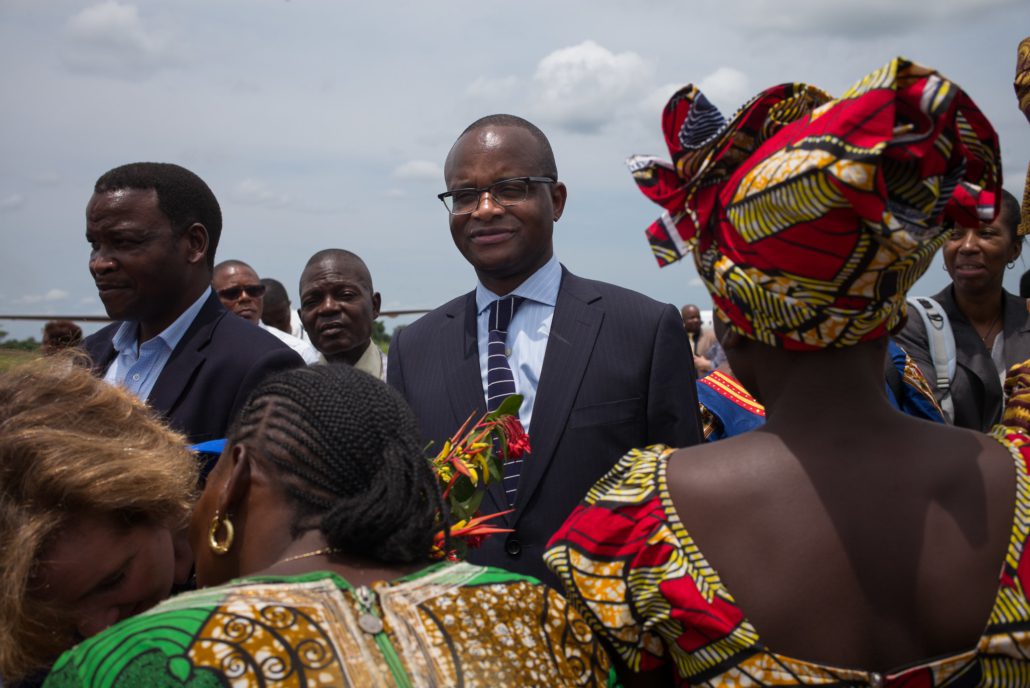
While the Democratic Republic of the Congo has a history of extreme poverty and political instability, a recent International Monetary Fund (IMF) report stated that growth in the Democratic Republic of the Congo rebounded astoundingly from 1.7% in 2020 to a projected 6.2% in 2021. The projected growth includes impressive metrics considering that the most recent IMF projections for Sub-Saharan Africa predicted 4.5% growth. While the DRC still has improvements to make to infrastructure, public health, literacy, child mortality and access to utilities, recent reforms have proven effective in stabilizing the Congolese economy.
Background
The DRC has a history of political corruption dating back to the nation’s independence in the 1960s, “combined with countrywide instability and intermittent conflict that began in the early-90s.” This has consequently led to “reduced national output and government revenue, and increased external debt.” However, since implementing a transitional government after peace negotiations in 2003, economic development in the DRC has continued to improve, as the country reopened relations with international financial institutions and donors.
While the DRC’s economy contracted by 2.2% in 2021, inflation remained contained at 2% in 2021, despite sharp food price increases that rose by about 3.4%. The decline in oil prices in 2021 originally damaged economic development in the DRC. However, while the war in Ukraine could potentially increase inflation, “high oil prices could potentially boost the economic recovery.” This reality, while devastating to the nation’s poor, could contribute to growth and development in the DRC as the oil sector represents nearly half of the country’s gross domestic product (GDP) and 80% of its exports, making the nation the third largest oil producer in the Sub-Saharan African region.
Differences in Sub-Saharan Governments and Economies
The primary difference between the DRC and other Sub-Saharan African nations in regard to the economic metrics is government stability. For instance, the United States’ African Growth and Opportunity Act (AGOA), a duty-free trade group, has cut Ethiopia, Mali, Guinea and Burkina Faso “over alleged human rights violations and recent coups.” This exclusion from the AGOA excludes Burkina Faso, Ethiopia, Mali and Guinea from accessing more than 1,800 products, as well as more than 5,000 products suitable for duty-free market access, or non-taxable market access, under the Generalized System of Preferences program.
The state of democracy in the DRC is questionable at best, with the U.S. State Department reporting incidents such as “forced disappearances and abductions by government and armed groups; torture by government; arbitrary detention by the government; [and] harsh and life-threatening prison conditions.” However, the relative stability of the DRC’s centralized constitutional republic has come with privileges. While other Sub-Saharan nations have faced exclusion, the DRC “regained AGOA beneficiary status as of” January 1, 2021.
Economic Reforms
While the DRC has been in recovery mode from the economic contraction of 2021, the nation has still exceeded projections for economic growth and development due to a number of key strategies. Namely, the country includes the use of “a Fund-supported program” through which, DRC authorities adopted policies to regulate and stabilize inflation and the exchange rate. Also, debt restructuring agreements, increased oil prices and improvements in debt management have decreased public debt, which fell from 113% of GDP at the end of 2020 to 102% by the end of 2021. Ukraine-related inflation has also led to high commodity prices which have supported increased exports, revenues and international reserves.
A Need for Humanitarian Aid
While the IMF projections exceed original GDP-growth projections by the World Bank, which predicted “1.9% in 2022 and 4.1% on average over the period 2023-2024,” the conditions allowing for the DRC’s growth in economic development can be simultaneously harmful to the most vulnerable communities. For instance, the War in Ukraine, while improving commodity prices, has simultaneously led to increases in food prices which has intensified food insecurity. The DRC is also host to a number of social problems.
Infant mortality stands at a rate of 33 deaths per 1,000 live births, and access to electricity stands at 66% of the population in urban areas and only 15% in rural areas. The DRC’s access to clean water is also below the country’s “hydrological potential.” Luckily, groups like USAID offer assistance in such areas as “Agriculture and Food Insecurity, Democracy, Human Rights and Governance, Education and Global Health.”
USAID has partnered with the government and people to improve citizens’ quality of life and the efficacy of national institutions while fighting for lasting peace. While many other African nations have suffered from the effects of coups, inflation and American sanctions, the DRC’s semblance of state stability and the intervention of humanitarian aid organizations have seemed to elevate the nation past expected metrics. One will be able to more clearly see how stable the DRC’s economy will be soon as economic projections are descriptive and not prescriptive. However, the DRC is currently exceeding predictions of GDP growth and facing less market insecurity than Sub-Saharan African nations that have faced punitive sanctions from Western nations for recent coups.
– Braden Hampton
Photo: Flickr

The Fight For Mental Health in Moldova
With a poverty rate of 26.8% in 2020, Moldova ranks as the fourth poorest country in Europe. Corresponding issues including the difficulty of obtaining employment, harsh living conditions and limited access to already low-quality public services devastate the nation’s quality of life. Compounded by the hardship of socioeconomic stressors and governmental destitution, mental health in Moldova has suffered as a result.
Overview of Mental Health in Moldova
Mental disorders related to systemic issues in Moldova have caused 17.34% of the population to be diagnosed with mental illnesses, according to the Health Policy article. Tragically, these issues go hand-in-hand with Moldova’s comparatively high suicide rate of 14.7 people per 100,000 — 3.4 people more than the EU average of 2019. Another major component of mental illness in Moldova is alcoholism, with one in four deaths in Moldova being attributed to alcohol. In comparison, the world average is one in 20.
Systemic Issues with Moldovan Health Care
Socioeconomic issues within the populace and the government’s mismanagement of resources have exacerbated the mental health situation in Moldova. Mandatory health insurance finances the public health care system. According to a study published in The Lancet “out-of-pocket payments account for 45% of total health expenditure in Moldova,” causing Moldova’s health expenditure to fall behind the European average by 77%.
Management of health care spending is a direct product of corruption within the Moldovan government. “Many things depend on the government and parliament, but we have such a quick turnover, there is no stability,” explains Valeriu Crudu of the Phthisiopneumology Institute Chişinău.
Recent Reforms
The Moldovan government has shown a willingness to implement reforms to the situation of mental health within the nation, such as by adopting the Mental Health Declaration for Europe and the Mental Health Action Plan for Europe, and developing a national mental health program in 2005. However, actual “community-based mental health services” have been difficult to implement.
According to an International Journal for Mental Health Services article, for one, a lack of access to resources, largely based in district centers and cities in the north, continues to prevent rural and impoverished Moldovans from obtaining help due to distance and travel costs. There has also been a notable lack of collaboration between medical and social services, producing confusion among service providers concerning psychiatric, neurologic and addicted patient treatment. Professionals in the health workforce argue that the knowledge gap between medical and social workers should be filled with specialized education regarding mental illness, especially in rural regions.
Looking Forward
Despite persistent obstacles, the National Mental Health Programme of 2014 — renewed in 2017 — continues to work towards reform through the development of a new legal framework for care and support for educational programs for professionals, according to the Health Policy article. Though policy change ultimately lies in the hands of the government, several organizations are also working simultaneously to ameliorate the mental health situation in Moldova.
For instance, the Open Society Mental Health Initiative is working towards improving the quality of living for Moldovans with mental illness or intellectual disabilities by relocating them to family-style living spaces where they can obtain comprehensive and stable care.
The organization also ensures that community efforts toward mental health improvement are sustainable and financially provided for. While organizations and government reforms have paved the way for gradual improvements in the mental health of Moldovan citizens, the fight toward a system of mental health care for all continues.
– Alisa Gulyansky
Photo: Flickr
Mental Health Treatment For Syrian Children Refugees
Since the Syrian civil war began in 2011, there have been mass casualties, millions of displaced citizens and uncertainty about the country’s future. According to the UNHCR, the war has forced nearly 5.7 million Syrians to find refuge in Lebanon, Egypt, Iraq, Turkey and Jordan, more than half of whom are children. In total, the UNHCR estimates that more than 13 million Syrians have been displaced or forced to leave the country.
Psychosocial Problems
A 2015 UNHCR review suggests that Syrian refugee children have heightened psychosocial problems such as fear, grieving, withdrawal, hyperactivity, warlike play and behavioral problems. According to a UNICEF report in 2019, there were 8 million Syrian children in need of resources and 10,000 unaccompanied or separated children.
Providing mental health treatment for Syrian children refugees is no easy feat. With refugees spread out among several countries such as Lebanon, Jordan, Germany and Turkey and with some still residing in Syria, it is difficult to know just how many children need help.
However, providing mental health treatment for Syrian children refugees is a necessary and time-sensitive issue. The disruptions of the war have created barriers to physical and mental health and could affect generations to come.
Current Treatments and Organizations
As of now, countries around the world offer mental health support for Syrian children. For example, the UNHCR uses a community-based approach to provide the most helpful mental health treatment for Syrian children refugees in different areas. Its child protection programming assists Syrian children in counseling, recreational activities and life skills.
Syrian non-governmental organizations (NGOs) also provide care, although they mostly operate outside the country. Syrian American Medical Society (SAMS) provides mental health and psychosocial support in Syria and in host countries, such as Jordan and Turkey. It manages eight safe spaces for women and girls in northwest Syria, where counselors provide support for those gender-based violence affects.
However, despite efforts at the local, national and international levels, many Syrian children refugees lack mental health resources. There are many overlapping reasons for the lack of resources, ranging from burnout among mental health officials to financial barriers, medication or supplies.
What Experts Recommend
Experts in medicine, psychosocial support and individuals working closely with the Syrian mental health crisis have proposed several new avenues for helping Syrian children. Isra Hussain, a research assistant and program coordinator with the Global Health Policy Center, pushes for a “multilayered system of response.” Instead of only providing basic mental-health resources, Hussein suggests a coordinated approach involving local officials, public and private organizations and humanitarian agencies.
The American Psychological Association proposes a three-step intervention for Syrian refugee children: culturally and linguistically appropriate mental health services, providing services at the client’s preferred location and having trained professionals who can detect mental health difficulties in refugee children.
Apart from direct mental health counseling, Michelle L. Burbage and Deborah Klein Walker with the National Academy of Medicine urge more social and community support for Syrian refugee children. In addition to adjusting support according to different cultural backgrounds and social influences, Burbage and Walker emphasize community outreach and health education to engage Syrian children refugees in mental health programs.
Looking Forward
As the Syrian war continues, more children will undergo life-changing events and potentially traumatizing experiences. It could eventually fall upon the children now to sustain the country’s economy and infrastructure. As many health experts have suggested, it is imperative to address the humanitarian and mental health crisis at hand and look for possible solutions.
– Anna Lee
Photo: Flickr
Addressing Cervical Cancer in Botswana
In November 2022, Penn Medicine, the clinical and research entity of the University of Pennsylvania, received a $3.5 million grant from the National Cancer Institute (NCI) to better address cervical cancer in Botswana.
Poverty Among Women in Botswana
In Botswana, the percentage of employed women living under the international poverty line is 10.1% in comparison to 8.7% among employed men. The World Bank has explained that “vulnerable employees” are employees who are “the least likely to have formal work arrangements, social protection and safety nets to guard against economic shock.” In 2019, Botswanan women had a 23% vulnerable employment rate. In comparison, men had a 19% rate, meaning women were more susceptible to losing their sources of income and falling into poverty.
Women-headed households are more likely to suffer from poverty than male-headed households in Botswana. This is especially the case for women-headed households in rural areas as economic opportunities are scarce. Impoverished female households cannot afford health care for themselves or their families. The Botswana government has attempted to decrease poverty and increase access to medical treatments in Botswana.
The government released its Vision 2036 plan in 2016, which outlines transformation goals for Botswana to reach by 2036 in the realms of “Sustainable Economic Development; Human and Social Development; Sustainable Environment and Governance, Peace and Security.” In this plan, Botswana recognizes “good health and wellness” as a human right and a key to development. Botswana aims to significantly reduce HIV prevalence through greater emphasis on “prevention, treatment, care and support.”
Women’s Health in Botswana
Botswana’s HIV prevalence rate stood at about 20% in 2020, according to UNAIDS, with women accounting for most of these cases. UNAIDS explains that a woman living with HIV is as many as five times more likely to develop cervical cancer than a woman without HIV. The immunosuppression that HIV causes can exacerbate pre-cancerous lesions in the cervix.
As of 2021, 220,000 women in Botswana aged 15 or older are living with HIV. Cervical cancer stands as the main form of cancer mortality among Botswana’s female population. The death rate is “10 times higher” among Botswanan women than among the U.S. female population as women’s cancer treatment is lacking in Botswana.
Over the years, Botswana has made improvements with regard to cancer screening and treatment. However, several factors lead to delays in screening and diagnosis, which contributes to the high prevalence of cervical cancer cases in Botswana. Since 2001, the University of Pennsylvania has helped to improve health in Botswana through the Botswana-UPenn Partnership (BUP). BUP works with Botswana’s Ministry of Health, the University of Botswana and partners to “care for patients and develop initiatives advancing cancer education, research and capacity.”
Penn Medicine has noted that a lack of coordination and communication between labs, patients and healthcare centers leads to diagnosis and treatment delays.
Reduced Waiting Periods
The $3.5 million grant to Penn Medicine will go toward testing strategies that shorten women’s wait between screening, results and treatments. After the initial biopsy, months or even years can pass before a healthcare facility becomes aware that the diagnosis is cancer. A shorter waiting period and better communication between labs, clinics and patients can significantly improve a woman’s chance of surviving cervical cancer.
Penn Medicine’s research will play a significant role in reducing cases of cervical cancer in Botswana.
– Clara Mulvihill
Photo: Flickr
Economic Development in The DRC
While the Democratic Republic of the Congo has a history of extreme poverty and political instability, a recent International Monetary Fund (IMF) report stated that growth in the Democratic Republic of the Congo rebounded astoundingly from 1.7% in 2020 to a projected 6.2% in 2021. The projected growth includes impressive metrics considering that the most recent IMF projections for Sub-Saharan Africa predicted 4.5% growth. While the DRC still has improvements to make to infrastructure, public health, literacy, child mortality and access to utilities, recent reforms have proven effective in stabilizing the Congolese economy.
Background
The DRC has a history of political corruption dating back to the nation’s independence in the 1960s, “combined with countrywide instability and intermittent conflict that began in the early-90s.” This has consequently led to “reduced national output and government revenue, and increased external debt.” However, since implementing a transitional government after peace negotiations in 2003, economic development in the DRC has continued to improve, as the country reopened relations with international financial institutions and donors.
While the DRC’s economy contracted by 2.2% in 2021, inflation remained contained at 2% in 2021, despite sharp food price increases that rose by about 3.4%. The decline in oil prices in 2021 originally damaged economic development in the DRC. However, while the war in Ukraine could potentially increase inflation, “high oil prices could potentially boost the economic recovery.” This reality, while devastating to the nation’s poor, could contribute to growth and development in the DRC as the oil sector represents nearly half of the country’s gross domestic product (GDP) and 80% of its exports, making the nation the third largest oil producer in the Sub-Saharan African region.
Differences in Sub-Saharan Governments and Economies
The primary difference between the DRC and other Sub-Saharan African nations in regard to the economic metrics is government stability. For instance, the United States’ African Growth and Opportunity Act (AGOA), a duty-free trade group, has cut Ethiopia, Mali, Guinea and Burkina Faso “over alleged human rights violations and recent coups.” This exclusion from the AGOA excludes Burkina Faso, Ethiopia, Mali and Guinea from accessing more than 1,800 products, as well as more than 5,000 products suitable for duty-free market access, or non-taxable market access, under the Generalized System of Preferences program.
The state of democracy in the DRC is questionable at best, with the U.S. State Department reporting incidents such as “forced disappearances and abductions by government and armed groups; torture by government; arbitrary detention by the government; [and] harsh and life-threatening prison conditions.” However, the relative stability of the DRC’s centralized constitutional republic has come with privileges. While other Sub-Saharan nations have faced exclusion, the DRC “regained AGOA beneficiary status as of” January 1, 2021.
Economic Reforms
While the DRC has been in recovery mode from the economic contraction of 2021, the nation has still exceeded projections for economic growth and development due to a number of key strategies. Namely, the country includes the use of “a Fund-supported program” through which, DRC authorities adopted policies to regulate and stabilize inflation and the exchange rate. Also, debt restructuring agreements, increased oil prices and improvements in debt management have decreased public debt, which fell from 113% of GDP at the end of 2020 to 102% by the end of 2021. Ukraine-related inflation has also led to high commodity prices which have supported increased exports, revenues and international reserves.
A Need for Humanitarian Aid
While the IMF projections exceed original GDP-growth projections by the World Bank, which predicted “1.9% in 2022 and 4.1% on average over the period 2023-2024,” the conditions allowing for the DRC’s growth in economic development can be simultaneously harmful to the most vulnerable communities. For instance, the War in Ukraine, while improving commodity prices, has simultaneously led to increases in food prices which has intensified food insecurity. The DRC is also host to a number of social problems.
Infant mortality stands at a rate of 33 deaths per 1,000 live births, and access to electricity stands at 66% of the population in urban areas and only 15% in rural areas. The DRC’s access to clean water is also below the country’s “hydrological potential.” Luckily, groups like USAID offer assistance in such areas as “Agriculture and Food Insecurity, Democracy, Human Rights and Governance, Education and Global Health.”
USAID has partnered with the government and people to improve citizens’ quality of life and the efficacy of national institutions while fighting for lasting peace. While many other African nations have suffered from the effects of coups, inflation and American sanctions, the DRC’s semblance of state stability and the intervention of humanitarian aid organizations have seemed to elevate the nation past expected metrics. One will be able to more clearly see how stable the DRC’s economy will be soon as economic projections are descriptive and not prescriptive. However, the DRC is currently exceeding predictions of GDP growth and facing less market insecurity than Sub-Saharan African nations that have faced punitive sanctions from Western nations for recent coups.
– Braden Hampton
Photo: Flickr
The Link Between Poverty and Women’s Health
In February 2022, U.N. Women reported that an estimated 388 million women and girls will experience “extreme poverty” globally in 2022 — roughly 16,000 more compared to men and boys. Women make up the majority of the world’s impoverished and also face several health risks that men are less vulnerable to. Understanding the link between poverty and women’s health is important in eradicating the life-threatening conditions that many women in developing countries face over the course of their lifetimes.
3 Health Risks Associated with Poverty
Gender-based Health Risks
Women also have unique health risks linked to their anatomy. Cervical cancer, for example, is “the most common type of cancer in developing countries.” Although it is preventable with testing, these countries typically lack the resources to adequately conduct testing. WHO reported that in 2020, 90% of global cervical cancer deaths occurred in low- and middle-income countries because of underfunding for testing and treatment services. Maternal mortality is also a persistent problem in developing nations, where access to emergency care is limited and skilled attendants are often not present during childbirth. Preventable maternal deaths are common, with approximately 295,000 women dying “during and following pregnancy and childbirth in 2017” alone.
Working Toward Solutions
The link between poverty and women’s health is strong, but social and financial changes could be significant in solving the problem. Empowering women can go a long way toward improving health outcomes. U.N. Women’s Gender Action Learning System (GALS) training in Kyrgyzstan seeks to do this by changing restrictive social norms.
The methodology encourages households to consider the power dynamics between family members and to recognize the burden of domestic tasks placed upon working women in an effort to create a more equal playing field between women and men.
This, coupled with media training for journalists that encourages them to be more sensitive to gender differences and issues, will pave the way for women to be better able to advocate for themselves in other areas through broad societal change.
Every Mother Counts
Considering the link between poverty and women’s health, funding for essential services could be instrumental in improving health outcomes for women. For example, Every Mother Counts is a non-governmental organization (NGO) that aims to improve health outcomes for women in developing nations. In Tanzania, the organization “support[s] the training of health workers, provision of lifesaving resources and community outreach and health education for women in rural settings.” Every Mother Counts has partnered with the Maasai Women Development Organization since 2017 to fulfill the specific needs of marginalized groups, such as Maasai women, in Tanzania. Every Mother Counts has improved the lives of more than 185,000 people in Tanzania.
Empowering women to make their own choices and funding essential services is crucial in reducing the impacts of poverty on women’s health. Because poverty and illness disproportionately impact women due to gender inequities, efforts to alleviate poverty and strengthen equality are vital.
– Abbi Powell
Photo: Flickr
The Fight Against Period Poverty in Ukraine
An Overview of Period Poverty
Period poverty threatens a woman’s physical health by increasing her risk of severe infection. Without access to hygienic care, women often resort to using leaves or dirty rags, increasing their susceptibility to urinary tract infections and bacterial vaginosis. Moreover, the effects of period poverty on women’s mental health are calamitous: women without sustained access to menstrual care are more likely to report moderate to severe depression. Not only do Ukrainian women lack the financial resources to afford period care, but the availability of period products has decreased since the start of the war.
To alleviate women from period poverty in Ukraine and the existing physical and mental trauma of the war, several organizations have launched initiatives to help internally displaced Ukrainians.
Zero Waste Lviv’s Efforts Against Period Poverty
Zero Waste Lviv, a Ukrainian organization, has partnered with organizations to promote reusable menstrual products’ use and access. Superior to their single-use alternatives, Zero Waste Lviv believes providing reusable products will help ameliorate the issue of period poverty in Ukraine by reducing the overall cost and effort associated with distributing single-use products.
The city of Lviv has housed 200,000 displaced Ukrainians since the start of the war and remains a region with many individuals in need of aid. Partnering with foreign organizations including Hungary’s Zoldovezet Torsulos and Zero Waste Croatia, Zero Waste Lviv has distributed reusable menstrual products such as menstrual cups, reusable cups, reusable pads, and menstrual underwear to women of Lviv.
Moreover, through its partnership with Hungarian Greenzone Association, Zero Waste Lviv organized a series of online and in-person information sessions in which gynecologists and other experts provide a thorough education about the use and benefits of reusable menstrual products.
A U.S.-Based Approach
Outside of Ukraine, organizations based in the U.S. are also partaking in the fight against period poverty in Ukraine. One example is the organization, I Support the Girls (ISTG). Founder Dana Marlowe was compelled to launch the organization after observing, “some disaster relief agencies still do not see menstrual products as a necessity, despite us knowing the opposite to be true.” Today, ISTG is “sending thousands of period products, new bras, and underwear to Ukraine, Poland, and Slovakia for Ukrainian refugees.”
Marlowe is also focused on raising awareness for period poverty and hopes that awareness generated during the Russo-Ukrainian conflict can promote broader efforts in the fight against period poverty. Marlowe says, “often we see when folks are talking about periods in reference to a crisis, like this Ukraine war, they will open their mind to other local and global issues around menstrual equity.”
– Alisa Gulyansky
Photo: Flickr
Promoting Virtual Education in Peru
“It feels new, well, very new, but we are adapting to the situation,” said the Peruvian child when the CGTN America reporter asked him about his experience with Peru’s I Learn at Home virtual education program. For a country in which only 24% of households have consistent internet access, virtual education is certainly a new experience. Peru launched the Aprendo en Casa (I Learn at Home) program shortly after the Peruvian government closed down schools in 2020 in reaction to the COVID-19 pandemic.
Ever since the program has consolidated various low and high-tech solutions to broadcast an interactive learning environment on multiple media. Here is the story of Peru’s Ministry of Education’s promotion of virtual education in Peru.
Pandemic Challenges
The COVID-19 pandemic hits hard around the globe and Peru is one of the worst-impacted countries in the world. In response to the pandemic, the Peruvian government imposed the strictest shutdown in South America since March 2020. However, the shutdown, compounded with Peru’s low connectivity, imposed a particularly harsh challenge.
Among the many challenges is the challenge in education. Under the shutdown, switching to virtual learning was not as simple as moving classes online. In response to Peru’s particular challenges, Peru’s Ministry of Education launched the I Learn at Home virtual learning program shortly after the lockdown, according to OECD.
In response to the sudden COVID-19 shutdown, the Ministry of Education launched the program with equal rapidity only 12 days after the shutdown, OECD reported. To ensure the constant improvement of the program, Peru’s Ministry of Education collaborated with Innovation for Poverty Action which uses machine learning to survey the needs of hard-to-reach students. The Ministry then used this data to develop the program to ensure maximum outreach and maximum classroom engagement, in the shortest possible timeline.
About I Learn at Home
To ensure the maximum outreach of the program in low connectivity regions, Peru’s Ministry of Education strives to diversify the channel of access to learning materials. According to OECD, the Peruvian government teams up with major private telecommunications companies to produce and broadcast the learning materials on TV and radio, in addition to the internet.
To maximize internet travel to the I Learn at Home webpage, Microsoft and Amazon help design the web page with “web-light” and “mobile-responsive” technologies so that people can access the webpage through smartphones and from areas with slower internet. For parts of the country that lack household electricity access, loudspeakers at community centers broadcast learning materials so kids can hear their teacher giving lectures in their homes.
Through the multi-media platform, the virtual classroom brought children back to an interactive learning environment. Teachers and actors go back and forth on the learning materials with actors asking questions during classes and doing learning activities making it look like a classroom. According to OECD, WhatsApp helps organize teachers and parents into classroom groupings. Teachers distribute homework materials either online or through mailing in print materials. Teachers and families then communicate feedback through those channels.
The Impact of Virtual Education in Peru
The result of Peru’s Ministry of Education’s promotion of virtual education in Peru is significant. OECD has indicated that after a month of the debut of the I Learn at Home initiative, 95% of children reconnected to their education through one channel or another and that another month after that, 82% of the kids expressed happiness about the learning program. According to UNICEF, the innovative joint initiative reached 145,628 children living in hard-to-reach areas. As Peru reopened its schools in March 2022, its precious experience in virtual education showcases how innovation and technology can help education to reach those who are at a material disadvantage.
– Peiyi Yu
Photo: Flickr
Malian Military Junta Bans NGOs Supported by France
Mali recently decided to ban all non-governmental organizations operating with funds or support from France. The decision came in response to France’s announcement to “suspend[]its official development assistance to Mali.” France cited the Malian junta’s alleged use of “the Russian paramilitary group Wagner” to combat jihadism as the reason for this disassociation. Wagner has a reputation for brutality, standing accused of such crimes as rape, abuse of human rights and massacres. The Malian military junta has denied accusations of using Wagner, with Colonel Maiga condemning the allegations as “fanciful allegations” and “subterfuge,” Africa News reported.
Despite the denial of these allegations, tensions have ratcheted and the Malian military junta has chosen to ban all NGOs related to France including organizations focused on providing humanitarian aid. France, similarly, has not accepted Mali’s denial and views the alleged participation of the Russian Wagner group as a “collaboration between the two countries.”
Effects of Aid Loss in Mali
The removal of aid could prove devastating for Mali, which has faced a variety of crises including extreme poverty, the spread of jihadism and massive civilian displacement. For instance, Action Against Hunger reported that, in Mali, almost 70% of the population lives in poverty. Worsening conditions related to conflict and recent droughts have led to many children suffering from severe malnutrition.
Many French NGOs are working in Mali on issues related to food security, health and access to education and French military aid withdrew in August 2022. Germany also made the decision to pull out of Mali and while the Malian military junta has appeared unconcerned, Souleymane Camara, president of the Malian human rights organization LNDH, has claimed, “The withdrawal of the forces of countries that came to help contain the advance of the Jihadists is very worrying because Mali does not have the means to deal with the situation.”
The Malian military junta’s vice president, Fousseynou Ouattara remarked that Mali is against “permanently expanding a foreign military presence on our territory.” However, Mali’s relationship with Germany has been much less tumultuous, with Germany electing to leave some troops in place in anticipation of the February elections and Mali and parliamentary secretary of Mali’s transitional government, Amadou Maiga, has expressed gratitude to Germany and voiced an interest in resuming their alliance in the future, stating, “I think that the cooperation will continue on other levels, like development and security. We thank them and we will face our destiny,” DW reported.
History of Tensions
Tensions with France are not a new conflict in Mali, which has a history that French interventionism has broadly defined. France colonized Mali in 1890, making it French Sudan. The conflict between France and Mali has continued to define the region, as France colonized various regions of West Africa, often with a complete lack of concern for the “local ethnic, religious and cultural dynamics” and “the political and cultural ecologies of the regions…” While this has led to internal conflict, France has also been guilty of more modern atrocities, such as supporting the Algerian government’s “repression of the democratic transition that began in 1988.”
This decision ultimately resulted in the formation of the Islamic Salvation Front which then took power as an oppressive and authoritarian regime with western backing. France also voiced support for Tunisian dictator Zine El Abidine Ben Ali in 2012, which lead to fallout and increased violence that endangered West Africa, according to Al Jazeera.
Potential Solutions
This history has made it difficult for Mali to conceptualize France’s presence as anything other than antagonistic, as it has seen the nation interfere with democracy in the past. One could broadly describe Mali’s military junta’s unease with French aid as a result of France’s own making in relation to this history of recent failures. This situation makes it particularly difficult to remedy, as Mali’s military junta is resistant to western aid. However, many France-dependent NGOs are advocating for their ability to work in Mali. CCFD Terre-Solidaire, Handicap International, Médecins du Monde and Oxfam have penned a letter to French President, Emmanuel Macron, claiming that ending aid in Mali would lead to “the cessation of essential, even vital activities (…) for the benefit of populations in situations of great fragility or poverty,” Africa News reported.
Despite fears of rising jihadism, Mali also remains hopeful, as Amadou Maiga claims military withdrawal from the west will “require a reorganization of our troops and maybe a little more logistics”, adding, “But we’ll deal with it. We’ve been expecting this,” according to DW. Hopefully, Mali can reroute its aid relations to nations with whom they have less tumultuous histories and defend against jihadist attacks in the meantime. Also, stabilization could possibly be restored after the German-supervised February 2024 elections.
– Braden Hampton
Photo: Flickr
Zan Times: A Platform for Afghan Women’s Voices
The foundation of the journalistic outlet Zan Times stands on a specific objective: Giving Afghan women their voices back through a new media platform. This recently released platform covers the human rights situation in Afghanistan through “a women’s-led newsroom” as one of its main focuses is women’s rights. On October 20, 2022, Zahra Nader introduced herself as the editor-in-chief of Zan Times and spoke at the U.N. to discuss the struggle Afghan women and girls face every day under the new Taliban rule. She also highlighted “why women’s representation—in peacebuilding, in journalism and everywhere else—matters,” U.N. Women reported.
Since the occupation of Afghanistan by the Taliban in 2021, the situation for women and girls in the country has deteriorated, leading to more inequality and poverty. In a May 2022 statement, Sima Bahous, the U.N. Women executive director, said, “Current restrictions on women’s employment have been estimated to result in an immediate economic loss of up to $1[billion] – or up to 5% of Afghanistan’s GDP.”
The Background
Kabul, Afghanistan’s capital city, fell to the reign of the Taliban on August 15, 2021. The new regime has led to a regression in “[women’s] rights, their condition and their social and political status” due to restrictions on women’s mobility, access to education, employment and other economic resources and rights, according to a press briefing by Alison Davidian, country representative a.i. for U.N. Women in Afghanistan.
“Before 15 August 2021, 17% of women participated in the labor force nationwide; this decreased by 16% by the end of October 2021,” U.N. Women reported.
The exclusion of women from areas of life such as education and employment harms a country’s economic development. Over the past five decades, rising levels of educational attainment have stood as a driving factor behind the economic expansion of OECD countries. Furthermore, “women’s economic empowerment boosts productivity [and] increases economic diversification [as well as] income equality,” according to U.N. Women.
Zahra Nader
Zahra Nader is an Afghan-Canadian journalist and editor-in-chief of the Zan Times. After starting her journalistic career in 2011 in Kabul, she moved to Canada six years later to pursue higher education and is now studying toward a doctoral degree in feminist studies.
“Today, an estimated 20 million women and girls who grew up in Afghanistan going to school, to work, who grew up being able to go where they liked and to speak their minds, are, under the Taliban, deprived of these fundamental human rights because of their gender. Women have been ordered to stay home. Girls have been banned from attending school above sixth grade,” said Nader in October 2022 at the United Nations Security Council Open Debate on Women, Peace and Security.
A New Hope
Zan Times is a media platform that aims to provide a different view on human rights violations by focusing on the perspective of those resisting rather than those committing the violations and collecting the work of journalists, writers and activists. Apart from Afghan women, the Zan Times also focuses on other marginalized groups, such as sexual minorities and particular ethnic groups. By documenting the experiences of these individuals, Zan Times ensures the world hears the voices of the marginalized.
For instance, the platform’s reporters write about the experience and commentary of female activists resisting the Taliban regime. In August 2022, the reporters had the opportunity to interview Robaba (the pseudonym that the interviewee uses), who, before the return of the Taliban, worked as the “editor-in-chief of a newspaper and owned an art gallery in Balkh province.” She shared her experience opposing the new restrictive government.
This approach allows readers from everywhere in the world to identify and understand the struggle while also giving voice to those who the Taliban silenced. Zan Times also allows activists to share their initiatives to raise awareness of current events in Afghanistan. For example, Zan Times interviewed British-Iranian producer Ramita Navai who recently released Afghanistan Undercover, a documentary showing an undercover investigation into the Taliban’s repression of women in Afghanistan.
Looking Ahead
Giving Afghan women a platform to voice their experiences is a powerful initiative. Girls and women in Afghanistan are currently facing a difficult reality. Even though the future of Afghanistan is uncertain, the work of Nader and other reporters dedicated to raising awareness and offering opportunities for women to speak their truth provides hope to Afghan women.
– Caterina Rossi
Photo: Flickr
How AI Technology is Helping Developing Nations
AI technology is all around and many use it without even knowing it. However, many people in developing countries cannot access this technology without help. WorldData has reported that there are 152 developing countries worldwide, with a population of 6.69 billion. The entirety of Central and South America and Africa are developing nations, along with the majority of Asia and other island states. About 9% of the global population is living in extreme poverty, earning less than $1.90 per day, and living below the higher poverty line. More than 20% earn less than $3.20 per day and more than 40% earn less than $5.50.
What is Artificial Intelligence?
Artificial intelligence (AI) is basically coding and software that help people in daily life. While people know it best for its role in science and medicine, it also has a role in the productive robots in factories, the voice recognition in smartphones, the software that detects online viruses and the drones that deliver packages and help farmers. While there is no official definition for AI, it is typically a man-made machine that does things humans cannot do in a timely manner or at all. The term “artificial intelligence” or “AI” was created in 1956 at a conference in New Hampshire, the United States, but AI machines existed before that.
How is AI Technology Helping Developing Nations?
Agriculture. AI technology supports many different aspects of agriculture, particularly in Africa. It helps farmers take care of their crops by detecting when is the best time to plant and harvest. It can also help detect when crops are sick. For example, mCrops is a form of AI that helps diagnose crop diseases in Uganda. Additionally, another AI that is helpful in agriculture is drones that spray pesticides on sick plants. However, they can also spray water and help plant new crops in the healthiest parts of the ground. An example of this is Aerobotics, which works in Malawi, Zimbabwe and Mozambique.
Education. AI technology can help developing nations, especially in rural areas, with education because it is effective for illiteracy, coursework and general school subjects, and can alleviate the short supply of teachers and supplies using tutoring technology. Sites like Dapito, Eneza Education and Tutorful help people connect around the world. For example, they teach English to non-English speakers, customizing content and lessons for a specific student. Students in developing nations are intelligent, but they lack qualified teachers and are sometimes unable to travel to school. For example, travel might not be available when there are floods and when they are sick, especially when many schools are far away.
Recognition. This method of AI includes location and supports many fields, such as health care, natural disasters, deliveries and shipments, and more, generally by the use of drones. An earthquake hit Nepal in 2015 where the United Nations Office for the Coordination of Humanitarian Affairs (UNOCHA) used AI in relief to locate damage from social media posts, mobile devices, satellites and multiple other devices. Currently, the World Wildlife Fund uses drones in Kenya to arrest wildlife poachers, and UNICEF is building a machine to detect malnutrition using facial recognition.
AI Technology and Health Care
AI technology is helping globally, especially in rural countries in Africa. It is constantly undergoing development for health care but relies on the government, NGOs and medical professionals to authorize machines for medical use and support. AI can diagnose patients, recommend treatments and discover global viruses. For those living in rural and developing nations, AI is lifesaving as it can locate injured people which a normal navigation or GPS system cannot do, and send medicine and medical supplies via drones. It also provides qualified doctors to countries with a lack of medical professionals and to those who need a second opinion on diagnoses, treatment and surgery. This reduces costs, manual labor and mortality rates and develops education in health care and literacy.
In 2022, the University of West Scotland developed new AI technology that enables lung diseases to be identified faster with an accuracy of 98%, meaning diseases are less likely to spread and more people will be correctly diagnosed before a disease progresses and can receive treatment. Further research has found that it can detect COVID-19 cases. This technology is especially useful in developing nations during winter periods especially and globally in general. This will not replace human labor but will support hospitals. This AI technology cuts short the long wait and use of CT scans, blood tests, x-rays and ultrasounds, cutting down further costs and time taken to identify disease and illness.
– Deanna Barratt
Photo: Wikimedia Commons