Mental Health Treatment For Syrian Children Refugees
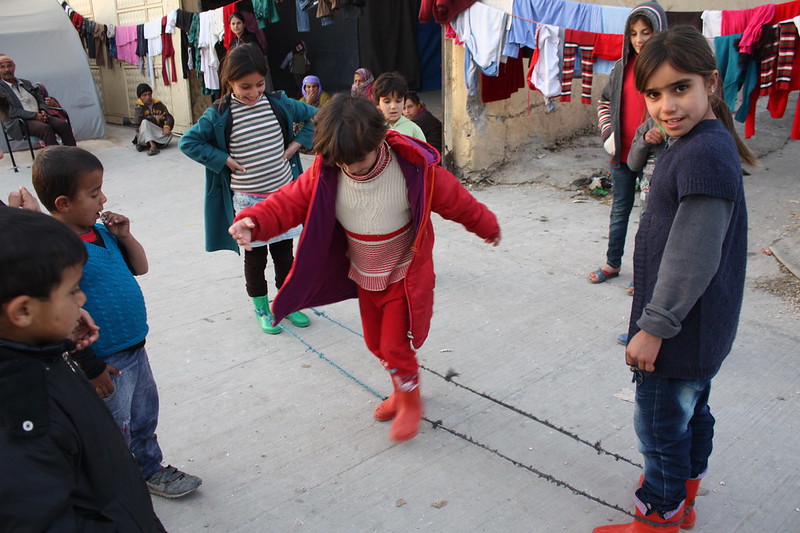
Since the Syrian civil war began in 2011, there have been mass casualties, millions of displaced citizens and uncertainty about the country’s future. According to the UNHCR, the war has forced nearly 5.7 million Syrians to find refuge in Lebanon, Egypt, Iraq, Turkey and Jordan, more than half of whom are children. In total, the UNHCR estimates that more than 13 million Syrians have been displaced or forced to leave the country.
Psychosocial Problems
A 2015 UNHCR review suggests that Syrian refugee children have heightened psychosocial problems such as fear, grieving, withdrawal, hyperactivity, warlike play and behavioral problems. According to a UNICEF report in 2019, there were 8 million Syrian children in need of resources and 10,000 unaccompanied or separated children.
Providing mental health treatment for Syrian children refugees is no easy feat. With refugees spread out among several countries such as Lebanon, Jordan, Germany and Turkey and with some still residing in Syria, it is difficult to know just how many children need help.
However, providing mental health treatment for Syrian children refugees is a necessary and time-sensitive issue. The disruptions of the war have created barriers to physical and mental health and could affect generations to come.
Current Treatments and Organizations
As of now, countries around the world offer mental health support for Syrian children. For example, the UNHCR uses a community-based approach to provide the most helpful mental health treatment for Syrian children refugees in different areas. Its child protection programming assists Syrian children in counseling, recreational activities and life skills.
Syrian non-governmental organizations (NGOs) also provide care, although they mostly operate outside the country. Syrian American Medical Society (SAMS) provides mental health and psychosocial support in Syria and in host countries, such as Jordan and Turkey. It manages eight safe spaces for women and girls in northwest Syria, where counselors provide support for those gender-based violence affects.
However, despite efforts at the local, national and international levels, many Syrian children refugees lack mental health resources. There are many overlapping reasons for the lack of resources, ranging from burnout among mental health officials to financial barriers, medication or supplies.
What Experts Recommend
Experts in medicine, psychosocial support and individuals working closely with the Syrian mental health crisis have proposed several new avenues for helping Syrian children. Isra Hussain, a research assistant and program coordinator with the Global Health Policy Center, pushes for a “multilayered system of response.” Instead of only providing basic mental-health resources, Hussein suggests a coordinated approach involving local officials, public and private organizations and humanitarian agencies.
The American Psychological Association proposes a three-step intervention for Syrian refugee children: culturally and linguistically appropriate mental health services, providing services at the client’s preferred location and having trained professionals who can detect mental health difficulties in refugee children.
Apart from direct mental health counseling, Michelle L. Burbage and Deborah Klein Walker with the National Academy of Medicine urge more social and community support for Syrian refugee children. In addition to adjusting support according to different cultural backgrounds and social influences, Burbage and Walker emphasize community outreach and health education to engage Syrian children refugees in mental health programs.
Looking Forward
As the Syrian war continues, more children will undergo life-changing events and potentially traumatizing experiences. It could eventually fall upon the children now to sustain the country’s economy and infrastructure. As many health experts have suggested, it is imperative to address the humanitarian and mental health crisis at hand and look for possible solutions.
– Anna Lee
Photo: Flickr
