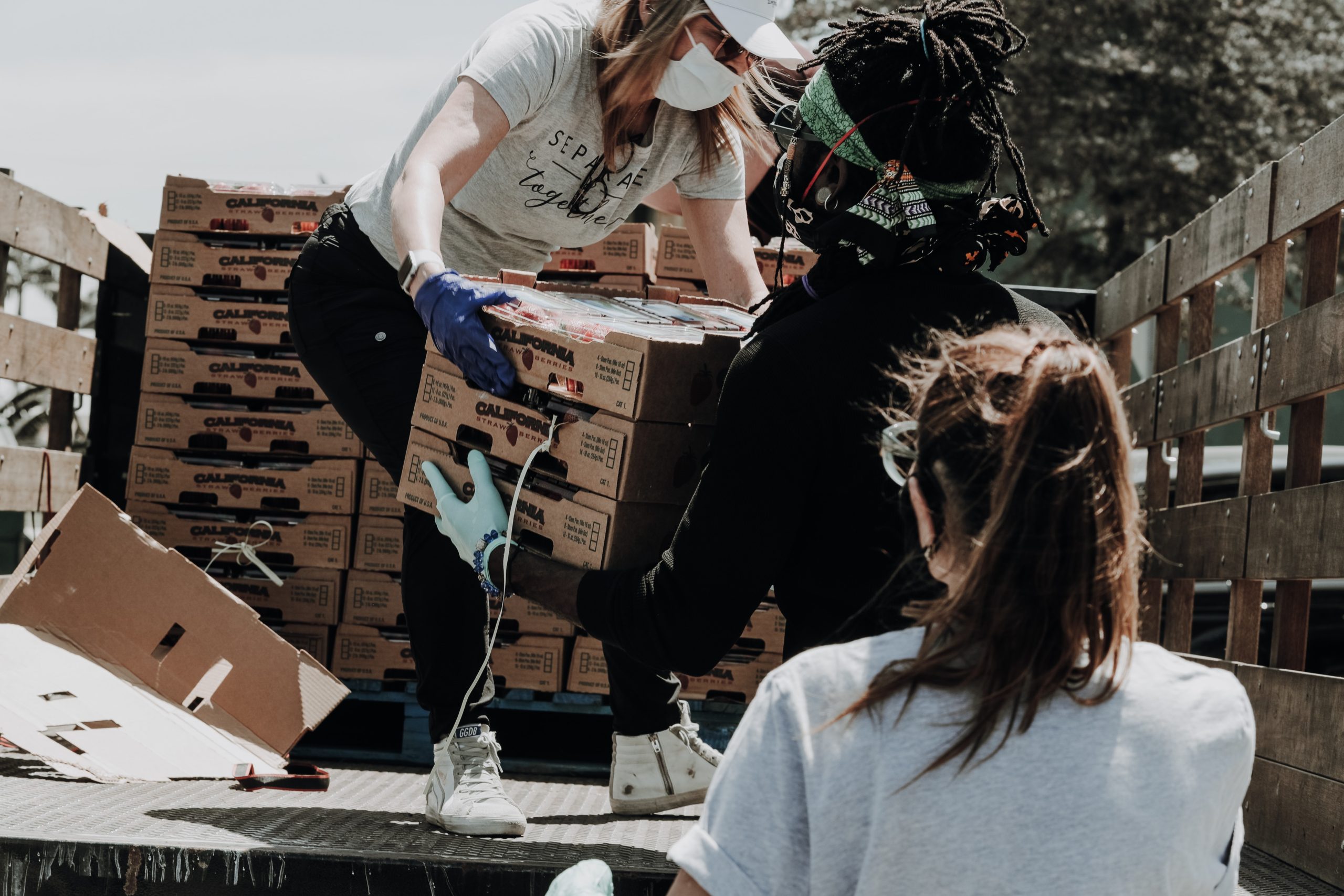
 For more than 75 years, Christian Aid has provided an immense amount of support for poor communities on a worldwide scale, while highlighting the injustices those living in poverty are subjected to. Through working with local partners, Christian Aid ensures that it supports the fight against poverty by responding to humanitarian emergencies, campaigning for global change and enabling people to gain access to vital services.
Christian Aid’s Mission for a Fairer World for All
Christian Aid as a charity believes that unequal distribution of power and inequalities amongst genders are the root cause of poverty and therefore, most of the charity’s work centers around fighting against this.
Through pressing local, national and international governments worldwide, Christian Aid ensures that policies and laws are implemented that support the eradication of poverty. Furthermore, the charity also works with churches and religious institutions to challenge intolerance and promote equal treatment for all.
Esther’s Story
An example of the work that Christian Aid does to fight poverty is displayed through a lady named Esther, who at one stage struggled to support her own family due to not being able to secure a fair price for her crop.
For 10 years Esther grew pigeon peas on a small farm, struggling to make a living and to make ends meet, the situation only worsened when, in 2021, a cyclone destroyed all the crops on the farm.
On the brink of losing all hope of being able to support her daughter’s future, Esther decided to join a Pigeon Pea program, run by a local partner, the Nandolo Farmers Association. The program helped by supporting Esther to run the Pigeon Pea business as she was then able to start selling the crops as part of a co-operative, which enabled Esther to provide a good income to support her family.
Esther herself states, “I was able to sell the pigeon peas at a better price with a better market” she explains. It provided financial stability.”
By growing the pigeon peas, alongside the support of the Nandolo Farmers Association and through the work Christian Aid does to fight poverty, Esther was able to feed her family and support her daughters, as well as buy tools for her son, Zinowe’s carpentry business.
Esther also acquired a herd of 13 goats that provide manure for the crops which saves a huge expense on fertilizer, as well as a sewing machine and a warehouse that prevents the pigeon peas from being damaged by floods and storms.
Supporting the Youth Affected by Conflict in Syria
Further to supporting developing countries, Christian Aid also addresses areas that are affected by the turmoil and aftermath of war. Through funding provided by the European Union, alongside local partners in Syria, Christian Aid implemented a 4.5-year “education and resilience project” to address the challenges faced in war-torn Syria.
This program ensured that young people who were impacted greatly by war could access a safe education, which meant that there would be less chance of young people becoming vulnerable to joining armed groups.
Between October 2017 and March 2022, the work Christian Aid did to fight poverty meant that 26,804 young people between the ages of 12 and 35 years in Northwest Syria were provided with education, psychological support, vocational training, including specialized nursing courses, first response training and opportunities to get involved in community projects.
Furthermore, Patrick Watt, currently the chief executive of Christian Aid, spoke to the “Church Times” for an interview about why he is so passionate about the role. He states, “I was attracted by the ethos and grounding in the gospel message of love and hope at Christian aid” and furthers this by talking about the “depth of engagement from our supporters.” “People who give to us take campaign actions, pray for our work, and feel a genuine ownership of what we do, often spanning multiple generations.”
During 2023’s Christian Aid week, the area of focus was Malawi, where “the costs of everyday essentials such as food and fuel are going up and up” with farmers being “exploited by big companies.” In order to gather support across the world, Christian Aid encouraged schools, organizations and churches to take part in the “Big Pea Challenge,” which took place between May 14 to 20.
Part of the challenge included growing and selling plants, hosting a pea supper and fundraising, this is due to Christian Aid’s work in the region, whereby “farmers and communities are working with Christian Aid to form cooperatives to secure a fairer price, boost the quality of the seeds they use, adding value by baking and selling bread made from pea flour, and building warehouses to keep peas safe from weather events.” In total, the challenge raised $101,155 and had a total of 6,532 supporters across the world, thus demonstrating the power of collective efforts.
Final Thoughts
Therefore, the work carried out by Christian aid to fight for the eradication of poverty, is invaluable, as the Charity provides the utmost amount of support for those that suffer from consequences of conflict and tension, humanitarian disasters and grave inequalities. Christian Aid arguably serves as an example of what governments and charities can do across the world to support those in need.
– Megan Rose Miley
Photo: Unsplash

3 Humanitarian Organizations Addressing Global Poverty
Oxfam International
Founded in 1942 in the U.K. and true to its name, Oxfam International works worldwide with 4,100 partner organizations to provide specific assistance to 90 countries. Oxfam International has a more individual approach to fighting poverty, focusing more on the local communities and mobilizing the people in these communities to fight poverty. Because of this strategy and its extensive reach, Oxfam International helped 25 million people in 2022.
Whether it’s creating a water distribution system to bring drinking water to 50,000 displaced people in the Central African Republic or integrating women and young people into the labor market in Benin to help them better understand the role they can have in their country’s economic and cultural life, Oxfam International works all over the world to improve the lives and livelihoods of those that need it. Through beekeeping programs in Ethiopia, Oxfam is creating livelihood opportunities for disadvantaged women, allowing them to earn an income and break cycles of poverty.
The Organization for Poverty Alleviation and Development
OPAD, founded in 2005 in Sweden, operates in many different ways to better the lives of those in need. OPAD benefits people in ways that go beyond food and water and include cultural and psychological support. The organization educates men and women on alcohol abuse and parenting in Kenya, integrates pathways for new refugees and migrant workers in Lithuania and addresses psychological issues among unemployed youth in Latvia, including educating them on intervention and prevention techniques. Overall, OPAD works to combat types of suffering that go beyond hunger and thirst.
OPAD works in numerous nations and creates programs designed to help address country-specific issues. For instance, Lusaka, Zambia suffers from issues related to extreme weather patterns, with random rainy seasons followed by intense periods of drought. About 90% of Zambia’s food is produced by farmers. OPAD helped Zambia improve its agriculture sector and provided food relief, which benefitted 70,000 people between 2019 and 2020. OPAD does not see communities in need as victims but as powerful agents of change.
Concern Worldwide
Though it only operates in 25 countries, that does not mean that Concern Worldwide has not accomplished much. Founded in Ireland in 1968, Concern Worldwide aims to address and tackle the causes of poverty and uses six focus areas. These areas include Livelihoods, Health and Nutrition, Education, Emergencies, Gender Equality and Climate and Environment.
Through the above focus areas, Concern Worldwide narrows its goals for poverty reduction in a specific country and implements programs to help people achieve self-sufficiency and economic independence. For instance, the organization runs livelihood programs to help people establish strong livelihoods and income-generating activities so that communities can break cycles of poverty. “We do this through a wide variety of activities that range from climate-smart agriculture techniques in rural settings to technical skills training and small-business support in rural and urban settings,” the organization’s website explains.
Concern Worldwide’s livelihood programs reached more than 5.4 million people in 2022. The organization invested €33.1 million in these livelihood programs in 2022. In Malawi, a country with 5.4 million people suffering from food insecurity, Concern Worldwide reached 288,000 people with its food and nutritional security initiative.
Final Thoughts
The remarkable work carried out by these three influential humanitarian organizations plays a pivotal role in the relentless battle against the scourge of global poverty. Their tireless efforts and unwavering dedication have been instrumental in making a substantial impact on the lives of countless individuals affected by poverty worldwide.
– Dylan Hubbard
Photo: Flickr
Addressing the Risk of Heart Disease in Pakistan
Hypertension
Hypertension is the leading cause of heart disease in Pakistan. Hypertension is a term to describe high blood pressure and occurs when the pressure in your blood vessels is too high. Hypertension can be deadly, as symptoms are not immediately felt, and the only way to find out whether you have hypertension is to check your blood pressure. Hypertension is very common in Pakistan and the last National Health Survey of Pakistan (NHSP) found that 18.9% of the population was at risk of hypertension.
Smoking
Smoking is already unhealthy, but nicotine has the side effects of releasing hormones that increase blood pressure. Tobacco has been a prevalent issue in Pakistan for years. There are 18 million tobacco users in Pakistan, making it the 11th largest consumer in the world. There has been a lack of awareness of how dangerous the practice can be. But with how common and cheap the substance is, it remains hard to stop the widespread use of it.
Obesity
Sometimes, hypertension can occur from an activity that does not seem initially harmful. Obesity is a widespread cause of hypertension, and Pakistan’s obesity rate is alarming. Pakistan ranks 10th in obesity, with nearly one-fourth of the population being classified as such. Pakistan is a developing country, and they have not always been ahead of other countries, so when Western fast-food franchises came to Pakistan, it was a huge deal. Some of the poorest families now had the chance to buy cheap food that seemed out of their league. Since the introduction of fast food, it has popped up everywhere, becoming the second-largest industry in Pakistan. As convenient as fast food is, it is extremely unhealthy, and just eating fast food can cause high obesity. And with high obesity comes a high risk of heart failure.
Depression
The final major problem causing hypertension is the poor mental health of Pakistani citizens. Pakistan is not an easy place to live in, with problems plaguing the entire country. There are always factors hindering the lives of multiple people. Whether it be social, educational, or economic burdens, depression continues to be a problem. One factor that prevents these concerns from being addressed is Pakistan’s lack of mental health professionals. Pakistan’s health care is already underdeveloped, so hoping to find professional physiocrats is a rarity. With no one to consult, many citizens succumb to depression and increase the risk of hypertension in the process. A study from the Journal of Psychosomatic Research found that 66% of Pakistanis at risk of heart disease suffered from depression.
Actions Taken
Pakistan has realized the risk of heart diseases, but has always had trouble surveying heart diseases. However, they have taken action to handle the root of heart diseases. Pakistan has started by taking a stance on smoking, which they have increased public awareness of. Various advertisements and educational institutes have discussed the risks of smoking and why it should not be done. Additionally, the sales of cigarettes have been affected by multiple bans and price increases across the country. Obesity has been one of the primary targets for Pakistan, with various programs dedicated to stopping it. The Pakistan National Heart Association taught 200 journalists about the issue of obesity, which led to 1,000 articles spreading awareness on the issue. They also advocated for increasing the sweetened and sugar tax, making it harder to obtain unhealthy options for normal citizens. Finally, in 2019, the government in Pakistan announced that they would be promoting mental health care across schools. Over the years, they have taught teachers all about this issue and how they can help children through it. This program has continued for multiple years, expanding over time. These programs help to reduce these issues, and in turn, lower the risk of heart disease in Pakistan.
Conclusion
It is unfortunate how high the risk of heart disease in Pakistan is, especially because of how the issues bolstering it happen among everyday citizens. There is not enough awareness of the commonality of these issues, and there is not enough being done to save thousands of lives. Pakistan may still be developing, but the general public can make a difference by spreading awareness on this issue.
– Uzair Khan
Photo: Flickr
A Close Look at Amigos Worldwide
Amigos Worldwide places an important emphasis on providing Ugandans with practical and holistic life skills that enable communities to thrive and become self-sufficient. The charity estimates that their high-achieving, low-cost programs cost as little as £35 per family, per year, and that within three years, the vast majority of farmers that Amigos works with will be able to not only feed their households but still have a surplus to sell, providing their children and families with access to key educational and health resources.
The Situation in Uganda
With a population of over 45 million, 41.7% of Ugandans continue to live below the global poverty line in 2023, at less than $2.15 a day. The majority of Ugandan families are dependent on agriculture for their livelihoods, yet many do not possess sufficient skills in agriculture to be earning and providing for their families all year round.
Almost half of Uganda’s population is under the age of 15, which represents one of the youngest populations in the world. Moreover, Uganda is also host to the largest population of refugees in Africa, with over one million people from neighboring countries, such as the Democratic Republic of the Congo, seeking asylum in Uganda. The country’s high youth and refugee population has put substantial pressure on educational provision for young people, as well as job opportunities. Almost half of all Ugandan children do not complete primary education, while the unemployment rate stands at 9.9% in rural areas, and 9.1% in urban areas.
Many of the families Amigos Worldwide works with have been severely affected by the over 21-year-long civil conflict in Northern Uganda between the Lord Resistance Army and the Ugandan government, which caused immense levels of suffering and displacement for the people of Northern Uganda. Many have also been directly affected by the continuing HIV pandemic and its continuing associated stigma in Uganda, with around 1.6 million Ugandans living with HIV, 11% of which are children below the age of 15.
Kira Farm Development Centre
One of the biggest successes that has come from the work of Amigos Worldwide in Uganda is the establishment of the Kira Farm Development Centre, located just outside Uganda’s capital, Kampala. Kira Farm was established in 2010, and each year around 40 vulnerable young Ugandans are invited to spend a year on the farm learning key vocational skills such as carpentry, tailoring, construction and hairdressing. They also learn innovative conservation farming techniques, as well as holistic life skills such as conflict resolution, health and hygiene.
As Southgate Estates estimates, one of Kira Farm’s key sponsors, for every student trained at the development center, at least 12 people in their community will benefit from their new skills and knowledge. This is equivalent to almost 500 lives being impacted by the program each year.
Other Successes
In rural areas of Uganda where Amigos Worldwide has implemented their programs:
The work that Amigos Worldwide is doing in Uganda has thus clearly had an important impact on those Ugandans living in poverty who have received it. With the World Bank estimating that the poverty rate in Uganda is only set to decrease by 1% to 40.7% by 2025, the work of charities such as Amigos Worldwide will prove particularly important for poverty-stricken Ugandans in the coming years.
– Eleanor Lomas
Photo: Unsplash
The Work Christian Aid Does To Fight Poverty
Christian Aid’s Mission for a Fairer World for All
Christian Aid as a charity believes that unequal distribution of power and inequalities amongst genders are the root cause of poverty and therefore, most of the charity’s work centers around fighting against this.
Through pressing local, national and international governments worldwide, Christian Aid ensures that policies and laws are implemented that support the eradication of poverty. Furthermore, the charity also works with churches and religious institutions to challenge intolerance and promote equal treatment for all.
Esther’s Story
An example of the work that Christian Aid does to fight poverty is displayed through a lady named Esther, who at one stage struggled to support her own family due to not being able to secure a fair price for her crop.
For 10 years Esther grew pigeon peas on a small farm, struggling to make a living and to make ends meet, the situation only worsened when, in 2021, a cyclone destroyed all the crops on the farm.
On the brink of losing all hope of being able to support her daughter’s future, Esther decided to join a Pigeon Pea program, run by a local partner, the Nandolo Farmers Association. The program helped by supporting Esther to run the Pigeon Pea business as she was then able to start selling the crops as part of a co-operative, which enabled Esther to provide a good income to support her family.
Esther herself states, “I was able to sell the pigeon peas at a better price with a better market” she explains. It provided financial stability.”
By growing the pigeon peas, alongside the support of the Nandolo Farmers Association and through the work Christian Aid does to fight poverty, Esther was able to feed her family and support her daughters, as well as buy tools for her son, Zinowe’s carpentry business.
Esther also acquired a herd of 13 goats that provide manure for the crops which saves a huge expense on fertilizer, as well as a sewing machine and a warehouse that prevents the pigeon peas from being damaged by floods and storms.
Supporting the Youth Affected by Conflict in Syria
Further to supporting developing countries, Christian Aid also addresses areas that are affected by the turmoil and aftermath of war. Through funding provided by the European Union, alongside local partners in Syria, Christian Aid implemented a 4.5-year “education and resilience project” to address the challenges faced in war-torn Syria.
This program ensured that young people who were impacted greatly by war could access a safe education, which meant that there would be less chance of young people becoming vulnerable to joining armed groups.
Between October 2017 and March 2022, the work Christian Aid did to fight poverty meant that 26,804 young people between the ages of 12 and 35 years in Northwest Syria were provided with education, psychological support, vocational training, including specialized nursing courses, first response training and opportunities to get involved in community projects.
Furthermore, Patrick Watt, currently the chief executive of Christian Aid, spoke to the “Church Times” for an interview about why he is so passionate about the role. He states, “I was attracted by the ethos and grounding in the gospel message of love and hope at Christian aid” and furthers this by talking about the “depth of engagement from our supporters.” “People who give to us take campaign actions, pray for our work, and feel a genuine ownership of what we do, often spanning multiple generations.”
During 2023’s Christian Aid week, the area of focus was Malawi, where “the costs of everyday essentials such as food and fuel are going up and up” with farmers being “exploited by big companies.” In order to gather support across the world, Christian Aid encouraged schools, organizations and churches to take part in the “Big Pea Challenge,” which took place between May 14 to 20.
Part of the challenge included growing and selling plants, hosting a pea supper and fundraising, this is due to Christian Aid’s work in the region, whereby “farmers and communities are working with Christian Aid to form cooperatives to secure a fairer price, boost the quality of the seeds they use, adding value by baking and selling bread made from pea flour, and building warehouses to keep peas safe from weather events.” In total, the challenge raised $101,155 and had a total of 6,532 supporters across the world, thus demonstrating the power of collective efforts.
Final Thoughts
Therefore, the work carried out by Christian aid to fight for the eradication of poverty, is invaluable, as the Charity provides the utmost amount of support for those that suffer from consequences of conflict and tension, humanitarian disasters and grave inequalities. Christian Aid arguably serves as an example of what governments and charities can do across the world to support those in need.
– Megan Rose Miley
Photo: Unsplash
Remedial Health: Increasing Health Care in Nigeria
In a survey aimed at evaluating Primary Health Centre (PHC) facilities encompassing 2,480 health care facilities across all six geopolitical zones of Nigeria, Oyekale discovered that the availability of essential drugs ranged as low as 10.48% to 25.2%. The problem of counterfeit and fake drugs has evolved into a global predicament, with particular prevalence in the drug supply networks of India, Nigeria and Pakistan.
These three nations account for roughly 13% to 35% of worldwide sales of such illicit drugs.
The disordered drug distribution system in Nigeria encourages the proliferation of expired drugs within pharmaceutical supply chains. The WHO estimates 100,000 deaths a year in Africa are linked to the counterfeit drug trade and over 30% of medicines sold in Africa are counterfeit. According to the United Nations Office of Drugs and Crimes, fake medicines kill over 500,000 sub-Saharan Africans per year. In an effort to combat these challenges, Samuel Okwuada and Victor Benjamin established Remedial Health, a startup company that introduced digitalization to the Nigerian pharmaceutical supply chain.
The Creation of Remedial Heath
Samuel Okwuada, one of the co-founders of Remedial Health, possesses dual expertise as a certified pharmacist and a skilled software developer. His journey into the tech realm commenced at the young age of 14, and he has been actively crafting digital solutions ever since. In contrast, Victor Benjamin’s true calling lay in the art of sales, with a passion that was evident in his over a decade-long track record in pharmaceutical sales. The fusion of Victor’s extensive sales experience, coupled with Samuel’s technological and pharmacy knowledge, has significantly elevated revenue streams and increased health care in Nigeria.
Remedial Health was launched amidst the COVID-19 pandemic. The market faced shortages because of lockdowns, exacerbated by the inefficiencies in its medicine distribution methods. Initially, Remedial Health operated by providing supplies to distributors who, in turn, served pharmacies and hospitals. However, a significant shift occurred when these intermediary entities expressed their desire to receive direct supplies. This alteration in the company’s operations led Remedial Health to reevaluate and adapt its mission and objectives.
Its Mission and Goals
As of September 2023, Remedial Health primarily operates across 34 out of 36 states in Nigeria but has aspirations for expansion into other African nations. The company’s core mission is to assist its business partners in three key areas:
Remedial Health collaborates with a network of over 5,000 pharmacies and partners with more than 200 manufacturers, spanning regions such as India and China. Beyond making affordable medicines more accessible across Africa, this startup is actively engaged in curbing the proliferation of counterfeit products in the market. By gathering and analyzing data on manufacturers and product sales, Remedial Health tracks the entire supply chain, monitors product distribution, determines product destinations and quantifies sales volumes.
The products originate directly from manufacturers who have undergone stringent regulatory processes, ensuring their authenticity is guaranteed. This meticulous approach allows for a dependable supply of these medicines to pharmacies and hospitals, thus eliminating the need for the risky and uncertain traditional method of product distribution. By doing so, Remedial Health plays a critical role in elevating health care in Nigeria and safeguarding lives that might otherwise be at risk due to the presence of counterfeit medicines in the market.
Progress and Achievements
Remedial Health has made significant progress in expanding its operations, securing a substantial $12 million in Series A equity-debt funding to facilitate the expansion of its activities within the West African nation. Their focus on rural areas, which are often challenging to access and distant from major pharmaceutical markets in Nigeria, has resulted in noticeable growth.
By October 2021, Remedial Health had successfully deployed inventories valued at over $800,000. As of January 2022, the company has been consistently onboarding new pharmacies, health maintenance organizations (HMOs), insurance providers and manufacturers.
Remedial Health’s dedicated team is increasing health care in Nigeria by actively tackling various industry challenges, including price transparency issues and inadequate drug quality control. They achieve this through a technology-driven, pharmacy-centered health care network, resulting in cost reductions of over 25% at the point of care.
– Susanna Andryan
Photo: Flickr
USAID Programs in Serbia and EU Accession
Since Serbia received official EU candidacy status in 2012, USAID programs in Serbia have been geared specifically towards EU integration. To realize this candidacy, Serbia must meet transnational criteria in line with European aims and values before further membership negotiations can occur. The criteria are split into six clusters totaling 35 policy chapters, of which 22 have been opened. The clusters are in order of importance, with the first being the rule of law.
About USAID Programs in Serbia
Currently, two of the three USAID programs in Serbia intend to strengthen democracy through deliberation projects between citizens, civic society and the Serbian government. The first project, Inspire2action, and the second, Civil Society Resilience Strengthening, are both five-year plans set towards strengthening the rule of law in the country. According to the U.S. Department of State, Serbia is at a strategic juncture between Eastern and Western Europe, and promoting economic growth may help to promote peace in the Balkans.
The Inspire2action Project
The Inspire2action project works acutely to increase civic engagement in governmental processes. In its efforts, a number of grants will work to improve local communities by creating opportunities for civic involvement in the democratic process. The process should increase citizen awareness of their participatory importance while also emphasizing the importance of women and youth involvement. These efforts intend to encourage value-added tax adjustments for the public good while ensuring the consideration of popular public opinion during the legislative processes.
The Civil Society Resilience Strengthening Program
The Civil Society Resilience Strengthening program works in a similar manner as the Inspire2action program. They both intend to increase democratic involvement in the legislative process; however, this program is for actors that work between citizens and the state, specifically five actors in each region, totaling 25 actors. These actors are CSOs, or chief service officers, who operate from nongovernmental positions. In short, this program aims to persuade CSOs to be inclusive in professional consideration while pursuing litigation with regard to EU law.
Despite both projects aiming to increase democracy and nudge Serbia toward EU assimilation, the promise of membership has not been solidified. Despite Serbian President Aleksandar Vučić’s 2022 promise at his inauguration, he stated earlier this year that Serbia is less than enthusiastic about joining the EU after 13 years of tribulation. William Eggerton of Modern Diplomacy sees Serbia’s EU vision as a façade for democratic backsliding. This backsliding takes the form of diminished media freedoms and less than effective anti-corruption pursuits. In addition, Serbia maintains strong ties with Russia. Serbia’s reliance on Russian fuel and weapons and its appreciation for the non-recognition of Kosovo keep Serbia from imposing official sanctions on its eastern ally.
Looking Ahead
Regardless of whether Serbia gains admittance to the EU, USAID continues to foster economic growth and opportunity. Despite democracy measures diminishing in the state, USAID aims for a brighter future. The story is reminiscent of “The Father and His Sons,” a fable about a dying farmer. The farmer explains to his sons that there is a treasure in the field and that his sons should dig for it rather than sell the estate. After the farmer’s death, they dig and dig but find nothing. However, the sons were able to reap a bountiful harvest from the soil they overturned.
– Anthony Coletta
Photo: Unsplash
Child Migration in Latin America and the Caribbean
In the last three years, children moving through migration routes in Latin America and the Caribbean have reached a record-breaking number. Not only has the number increased, but the age range of these children has gotten even younger. The child migration journeys in Latin America and the Caribbean pose various challenges.
Comparing the Numbers
The proportion of children in the migrant population for this region in 2019 was 19%; in 2023, the number stands at 25%. Around the world, children currently account for 13% of the migrant population, showing that child migration in Latin America and the Caribbean is higher than the global proportion. In addition, the age group of these child migrants is becoming increasingly younger, with around 69-91% of all the child migrants below the age of 11 years old. Many of these children need to leave their homes due to gang violence, poverty and climate change/natural disaster events, but the journey through Latin America and the Caribbean is only putting their lives at greater risk.
Impacts of These Migration Journeys
There are three major routes that the children are taking: the Darién jungle between Colombia and Panama, the Chile-Peru border point and at points in northern Central America and Mexico. The Darién jungle is an extremely popular route yet one of the most dangerous walks on earth; not only do the children walk through the whole forest, but the area is also roadless and includes many mountains. Similarly, migrating through the Chile-Peru border, northern Central America and Mexico involves crossing rivers, highways and railway lines.
Children traveling these routes face significant risks. These dangers include injuries, diseases, human trafficking, abuse and separation from their families. In 2022, the number of children who died or went missing while migrating through this area reached an eight-year high, with at least 92 documented deaths. Many migrants are originating from distant regions, such as Asia and Africa, further increasing the likelihood of family separation, injuries and fatalities.
Other consequences the children face are not receiving education, protection and health care when they reach their destination. According to UNICEF, an assessment completed in 2022 revealed that “24% of Venezuelan children in Colombia aged 6 to 11 — and nearly 40% aged 12 to 17 — did not attend school.” It has also become evident that there are a lot of Haitian migrant families who cannot receive legal identification, limiting their opportunities for social benefits, health care and efficient housing.
Ongoing Action
There are two organizations that are actively addressing the child migration crisis: UNICEF and Save the Children. UNICEF has been operating in these regions to provide critical support and protection to affected people. Despite its ongoing efforts for the past several months, UNICEF currently faces a funding shortfall of approximately $32.5 million since August 2023. Meeting these funding requirements is crucial as it would enable UNICEF to provide additional support for safe migration, establish organized migration pathways, protect children from violence during their journeys and ensure access to essential aid.
Save the Children operates in various countries, including Colombia, Peru, Venezuela, Mexico, Guatemala, El Salvador and Honduras, to improve living conditions. The organization directly assists children and women, addressing some of the factors that lead people to leave their homes. Recognizing the importance of education for child migrants, Save the Children is actively working to enhance the educational systems in these nations. In Mexico, Honduras and Guatemala, the organization has implemented peacebuilding initiatives in schools and provided training to students and teachers to create safe, violence-free learning environments.
Additionally, in South American countries, the organization supplies school kits and educational programs, ensuring that children can access education while on the move or during their stay in host communities.
Looking to the Future
As cases of child migration increase in Latin America and the Caribbean, so does the need to protect them. Many children are fleeing violence, natural disasters, poverty and instability, but their journey through Latin America and the Caribbean is perilous. Even upon reaching their destinations, these children and families often face harsh living conditions. While organizations such as UNICEF and Save the Children are actively supporting these children on the ground, there are still thousands of children struggling for survival along these migration routes.
– Jessica Wang
Photo: Flickr
Gender Wage Gap in Kuwait
The State of Kuwait showed significant progress towards closing the gender wage gap in Kuwait. It increased its ranking by ten places, one of the highest achievements in the past year. That said, the country’s movement still placed it 120 out of 146 countries overall.
Women in the Workplace
A leading cause of gender inequality in Kuwait is due to economic activity. Women are paid significantly less than men in the workforce. In 2021, All-Shall Consulting Company found that in the government sector, male employees received an average salary of KD 1,874, whereas female employees received KD 1,312. This represents a 42.9% higher income for men in comparison to women or a $2,000 disparity.
In the private sector, the situation was even more pronounced. Men earned an average of KD 1,529, while women earned KD 974. This marked a substantial 56.9% increase in income for men compared to women in the private sector. Thus, men consistently earn more than women in both the government and private sectors.
Societal Factors
Cultural practices also plays a key role in this gap. The United Nations Women classifies Kuwait to be a high-income country with educational attainment for women at 100%. Health care access is at 97%. However, the divergence appears in issue areas. Kuwait also has an abysmal score of 2% for political empowerment and 54% for economic activity and opportunity.
The only legitimate way for women to engage in public activity is through women’s groups. Unfortunately, like all voluntary associations in Kuwait, women’s groups are controlled and funded by the state. Thus, they largely conform to official state policies that emphasize women’s traditional roles, rather than promulgating social change.
Looking Ahead
As of 2023, the Kuwaiti government has been taking steps to increase women’s economic opportunities. The most recent was approved in August 2021, the World Bank Kuwait Country Engagement Framework (CEF). The CEF includes a mandate that all advisory services provided by the World Bank in Kuwait will be viewed through a gender lens in order to promote women’s employment and leadership.
Kuwait has a national development strategy called ‘Vision 2035’ or ‘New Kuwait’ with the goal of transforming the country from oil-dependent to a diverse economy and becoming an institutional leader in the region. An essential part of this strategy is to boost women’s participation in the labor market.
Closing the gender wage gap in Kuwait offers a powerful solution to poverty alleviation and inequality. Providing working women with wages on par with their male counterparts would increase individual earnings and family incomes, leading to a substantial reduction in poverty. Indeed, the government is making it imperative to enforce state and national equal pay and employment opportunities.
Raising minimum wages, promoting stronger collective bargaining, and implementing family-friendly policies, such as paid family leave and subsidized child care, would play a significant role in ensuring that working women receive fair compensation and are better equipped to support their families. Thus, Kuwait is indeed on its way to succeeding as a leader in the region.
– Naima Shahzad
Photo: Flickr
CARE Brazil Fights Poverty and Inequality in Brazil
Brazil’s History
The colonization of Brazil began as early as the 1500s. Before European contact, Brazil had around two million to six million indigenous inhabitants living there. Portugal’s efforts to spread its colonies to the Asian and African continents led Portugal to discover South America during its journey to a water route reaching the Indies and an archipelago in Indonesia. The indigenous inhabitants of Brazil faced harsh rule from the Portuguese, and they subjected them to European diseases, ultimately killing a majority of the native population.
Brazil’s economy originates in mining and agriculture, with its primary products of gold and sugar. From the 16th to 18th century in Brazil, the sugar industry contributed to most of the country’s wealth, while landholders with small amounts of land produced wealth through coffee and cotton. In the 18th century, coffee and cotton would become the country’s major exports.
As a product of the Napoleonic Wars, Brazil gained independence in 1822 after centuries of Portuguese rule. In an attempt to seek refuge from the war, the Portuguese king fled Napoleonic rule in Europe to arrive in Brazil. This marked the moment Brazil started on its journey to gain independence from Portuguese rule. King Pedro I was responsible for the subsequent independence of Brazil from European forces.
Poverty in Brazil
In recent years, Brazil has experienced extreme poverty, with more and more of the country’s poor experiencing food insecurity and inequality. In 2021 alone, almost 30% of Brazil’s population lived in poverty. Some factors contributing to Brazil’s poor living below the poverty line can be attributed to preexisting economic and social challenges due to the country’s systemic issues. Brazil has high levels of inequality, high public debt, low education rates, low total factor productivity and deforestation, all contributing to the country’s challenges and hurdles. Although these issues are significant and burden Brazil.The country is an important player in the global economy with its goods and policies.
Due to COVID-19, Brazil experienced an exacerbation of existing issues. The country faced a deep economic recession, further amplifying Brazil’s unemployment and economic issues. The repercussions of the pandemic are still visible today, with Brazil’s unemployment rate reaching 8.4% in January 2023. In addition, the country faces many ongoing challenges, with inflation and deforestation ranking among the top.
Therefore, while Brazil has seen many conflicts and challenges, organizations such as CARE are committed to providing the resources and strategies necessary to garner long-lasting, meaningful change.
CARE International
CARE is an international organization striving to fight global poverty and inequality. CARE focuses on women and young girls, aiming their fight against poverty and global, rampant inequality.
CARE tackles issues of economic justice, gender equality, inequality, crisis response, nutrition and health. By focusing on these issues, the organization strives to promote gender equality and eliminate poverty. According to CARE’s guiding philosophy, “At its root, poverty is caused by unequal power relations that result in inequitable distribution of resources and opportunities between women and men, between power-holders and marginalized communities and between countries. Poverty cannot be overcome without addressing these underlying power imbalances.”
To achieve CARE’s vision on a global scale, the organization spreads its impact through humanitarian and development aid initiatives in over 100 countries. CARE utilizes its advocacy skills and innovations with programs that hone in on eradicating global poverty, specifically by targeting gender equality, the guiding beacon of CARE International.
CARE Brazil
CARE’s help reached Brazil from 2001 through 2016. By partnering with Brazil’s government and local Brazilian organizations, CARE developed an approach to address structural challenges while prompting the country to respond to the needs of the impoverished. The organization develops programs implemented across multiple states within Brazil, working within various sectors to implement vocational training and offering help to those living in extreme poverty in Brazil by promoting local communities to form sustainable businesses and access to microfinancing.
According to CARE, due to the large amount of forests in Brazil, the millions of inhabitants who live below the poverty line are more prone to the adverse effects of deforestation. Therefore, it is significant that the organization collaborates with Brazil’s state governments to tackle the issue of reducing the country’s overall poverty rate. CARE has helped Brazilian communities develop sustainable and responsible forest management and reforestation systems. The organization has also aided in policy reform by promoting state governments to form a metric identifying the effects and qualities of programs dedicated to decreasing deforestation in Brazil.
Although CARE’s reach extended to Brazil in 2001, in 2021 alone, the organization helped around 2,200 participants, 98% female. The magnitude of CARE Brazil is evident, underscoring their genuine efforts to bring about gender equality in the country.
In 1953, Latin American countries, including Brazil, participated in war recovery efforts following World War II by sending CARE Packages to Europe. CARE packages, formed by the CARE International organization, help those living in poverty through emergencies and disasters. Since the 1940s, CARE has developed strategies to provide programs and solutions to needy people. The first CARE Package was delivered at the end of World War II and included meals and kits to be sent to people living in hunger in the aftermath of the war. Around 100 million Care Packages were sent to families across the globe. Today, CARE Packages include financial assistance and messages of hope to those working in health care, specifically addressing COVID-19.
Today, CARE International works to develop solutions to the issue of poverty in Brazil by working closely with national partners to bring their vision to fruition.
– Bianca Roh
Photo: Flickr
Health care Technology in Developing Countries
Health Tech: Breaking Distance Barriers
Telemedicine and other health care technology have emerged as game-changers in health care accessibility. Low-income communities often lack nearby health care facilities, forcing residents to travel long distances for medical consultations. Telemedicine platforms enable virtual consultations with health care professionals. Through a simple smartphone or computer, individuals can connect with doctors, nurses or specialists, receiving expert advice without the financial burden of travel expenses. These platforms are particularly beneficial for managing chronic conditions, allowing patients to receive ongoing care remotely.
M-TIBA
Created by a financial tech company in Kenya, M-TIBA is a digital wallet that allows patients to make mobile payments for health care services. The name of the product is special; the “m” stands for mobile, while the word “tiba” means “treatment” in Swahili. The original concept behind M-TIBA was to ensure that patients received health care donations and to encourage its users to save for health care costs. To date, M-TIBA has over 4 million registered users, and its creators boast that claims filed with it are processed in a third of the time of traditional health care claims.
SORMAS
The COVID-19 epidemic proved that being able to monitor the transmission of communicable diseases was an essential part of health care. The Surveillance and Outbreak Response Management and Analysis System (SORMAS) was created via a partnership between the Nigeria Centre for Disease Control and the Helmholtz Centre for Infection Research in Germany. It was invented to survey disease outbreaks and epidemics, enabling epidemiologists to use real-time health data to track diseases. SORMAS is used in countries throughout Africa, Asia and Europe.
MomConnect
The South African National Department of Health started MomConnect to help address disparities in maternal health. The service is free, and it can be downloaded via an app to a cell phone. It helps connect expectant mothers with health resources in their communities. The app helps people register their pregnancies in the public health system and access information about how to maintain their health during pregnancy and after birth. MomConnect was launched in 2014, and by 2017, more than 900,000 had received MomConnect messages. )
Improving access to health care technology in low-income communities helps empower those communities and helps them lead healthier lives. Enhancing access to medical services through telemedicine, mobile apps and other technology helps level the health care playing field. The combination of digital innovation and health care is creating a future where everyone can enjoy the benefits of quality health care.
– Joy Loving
Photo: Unsplash