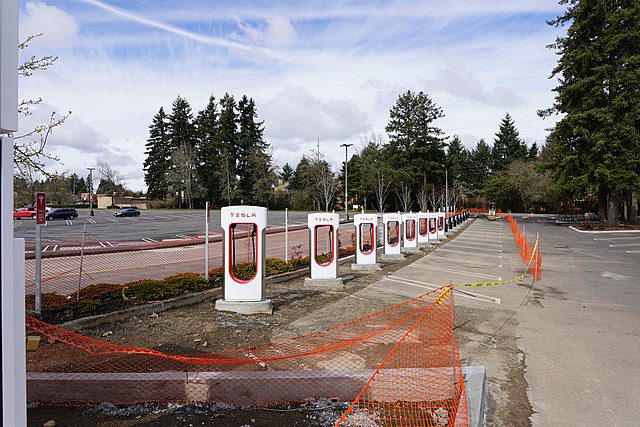
Electric vehicles (EVs) are the latest trend in the automotive industry and are helping diminish global poverty. Originating in the 1880s, the recent resurgence of the electric car has helped reduce air pollution associated with internal combustion engines (ICEs).
Although they can have a high upfront cost and require charging infrastructure, electric vehicles are driving solutions to global poverty by lowering operating costs, reducing air pollution and creating energy independence. Here are three ways EVs are reducing global poverty.
1. Lowered Operation Cost
Although the high cost of using electricity as fuel may at first seem daunting, lower maintenance costs mean EVs manage to break even over ICE cars. Proponents of EVs have cited the fact that these cars are cheaper to drive per mile, and this is due to the cars’ superior fuel efficiency. Compared to cars that run on ICEs, EVs require far fewer units of fuel.
For example, a study from the World Bank predicts a large increase in the cost advantage of EVs. The study, focusing on 20 countries around the world, observed scenarios like the 30 x 30, green grid, and scarce minerals scenarios to simulate the return on investment of EVs by 2030. These scenarios all had different concentrations of EVs and varied circumstances. For instance, the green grid scenario assumes the achievement of certain renewable energy goals.
The statistics strongly support the idea that increasing efforts to promote EVs would create a significant financial cost advantage. Even in the scarce minerals scenario, a case where critical minerals are depleted and the cost of batteries decreases slower than expected, the study predicts a positive financial cost advantage for all of the 20 countries observed.
These statistics, therefore, support the idea that EVs’ lowered operation cost can save important money for developing countries. Their strong long-term prospects for fuel economy make EVs a good tool for reducing global poverty.
2. Reduced Air Pollution and Associated Savings
EVs also allow for substantial savings thanks to their reduced air pollution. The environmental benefits of EVs translate into economic advantages for both individuals and societies at large.
ICE cars release emissions like carbon dioxide, nitrogen oxides and particulate matter, which contribute to pollution, increasing populations’ susceptibility to airborne disease.
EVs, which do not burn gas but instead use electricity as fuel, do not release these harmful emissions. Although generators, which charge these cars with electricity, do release emissions, these are at a far lower level than those released by ICE engines. Replacing ICE cars with EVs would thus tremendously lower poverty associated with pollution-caused disease.
In addition to lowering disease-related poverty, reducing pollution would cut the need for expensive cleanup efforts. Funds that would otherwise be used for these projects could go toward projects that improve employment and education.
3. Improvements to Energy Independence
Electricity generated domestically, mostly from renewable resources like solar, wind and hydropower, can help charge EVs. By depending more on locally produced, renewable energy, the need to import fossil fuels decreases, improving energy security.
For many developing countries, oil is a key source of energy. Increasing oil costs might be bad for these economies. By switching to EVs, nations can lessen their dependence on imported oil, reducing the political and economic risks related to the oil market.
Therefore, a crucial part of the answer to reducing global poverty is energy independence, an issue which is considerably improved by EVs.
Conclusion
As these vehicles become ever more affordable for the public, there is no doubt that EVs will become the go-to method of transportation, alleviating both economic and environmental issues.
EVs lower operating costs, reduce air pollution and contribute to energy independence making them key in building a more equitable and sustainable world. By continuing to invest in this integral technology, we can work toward a future where EVs play a central role in alleviating poverty and promoting prosperity for all.
– Advait K. Mishra
Photo: Wikipedia Commons

Education Cannot Wait: Providing Education in All Conditions
The United Nations is continuously working to meet the educational needs of the millions of children who do not currently receive the benefits of education. Most of these children cannot attend school due to a lack of qualified teachers, inadequate teaching materials and poor sanitation. These obstacles are magnified when a nation faces further turmoil. The Education Cannot Wait (ECW) program provides education to children in the most uncertain times of emergencies and protracted crises. Here are three examples of how the ECW provides education despite conflict, climate disasters and epidemics.
#AfghanGirlVoices
The Taliban authorities regained power in Afghanistan in 2021. Since then, Afghanistan has been internationally isolated, sinking the country further into poverty and reversing previous social and economic development. Recently, a fundamental right has been stripped from women: education. The Taliban has banned all women above the age of 12 from attending school, stripping females of their aspirations and potential.
The Education Cannot Wait program implemented #AfghanGirlVoices as an outlet for Afghan women to share their resilient opinions about their position in the education system. The campaign is amplifying women’s voices to condemn the violation of their education and to advocate for the institution of female education in Afghanistan.
COVID-19’s Effect on Kenyan Education
It is estimated that nine in ten Kenyan children from low-income families never attend school. Inadequate facilities and teaching materials contribute to this lack of education. It is exacerbated by limited health and medical materials, making it difficult for those struggling with diseases like HIV or even girls on their period to attend school. COVID-19 disrupted education by completely shutting down schools with no measures to enforce the necessary sanitation. Additionally, those in low-income areas had no means to participate in a remote education.
To combat the effect of COVID-19 on education in Kenya, Education Cannot Wait launched the First Emergency Response (FER) program. The program provided remote learning resources, as well as new water, sanitation and hygiene (WASH) facilities to make education more accessible despite epidemics. FER helped train 1,733 teachers on new subjects and curriculum knowledge. Additionally, they provided 11,050 adolescent girls with female hygiene kits, allowing them to attend school all weeks of the school year.
Natural Disasters
Natural disasters, such as floods, hurricanes and typhoons, constantly threaten education. In 2011, 11,000 schools were destroyed in Pakistan due to extreme flooding. Lower educational attainment is seen among many communities that have faced natural disasters. Aside from the destruction of schools, malnutrition, injury, economic challenges and human displacement reduce school attendance after a natural catastrophe.
Education Cannot Wait invests heavily in communities facing natural disasters. The program constructs temporary learning spaces, provides learning materials, rebuilds damaged schools and offers both mental and physical health support facilities. The ECW goes beyond investments to prepare nations for catastrophes and mobilizes the community to respond to crises.
The ECW designs educational systems that integrate disaster risk reduction and green economy knowledge while empowering youth to advocate for their community and their necessary resources.
– Aliya French
Photo: Flickr
5 Charities Operating in Indonesia
5 Charities Operating in Indonesia
Innovation for the Future
These five charities operating in Indonesia are beacons of hope and inspiration, exemplifying the positive impact that can be achieved through compassion, innovation, and determination. As they continue their noble missions in Indonesia, they invite individuals and corporations alike to join hands in creating a more equitable and prosperous future for all.
– Kent Anderson
Photo: Unsplash
The Poverty Rate in Mexico Has Declined
The Past Few Years
Andrés Manuel López Obrador has been the president of Mexico since 2018 and has doubled the country’s minimum wage. In 2018, the minimum wage was equal to about $4.50 per day. It has since increased to $12 per day.
However, the amount of money sent back to Mexico by Mexicans working overseas, also known as remittances, has nearly doubled during the same time frame. In 2018, remittances amounted to approximately $33.5 billion; as of the first half of 2023, they are projected to reach an annual rate of around $60 billion.
Not All Good News
Extreme poverty, defined as not having enough money to buy adequate food, increased from 7% of the population in 2018 to 7.1% in 2022, according to the agency. The number of individuals living in extreme poverty increased from 8.7 million in 2018 to 9.1 million in 2022 due to population growth.
Additionally, López Obrador established youth apprenticeship and scholarship programs and supplemental pension payments for seniors. It is unclear, however, if these programs have specifically benefited the poorest Mexicans because they are not means-tested; instead, they are offered to everyone who qualifies, regardless of income level.
There was also a remarkable rise in the proportion of persons reporting financial difficulties related to medical treatment. The percentage increased from 16.2% of the population in 2018 to 39.1% in 2022. In a previous assessment of the rise in that number in 2020, the agency cited the sweeping reforms made to the health care system under López Obrador and the consequences of the coronavirus outbreak.
Casa Hogar de Cabo San Lucas
Founded in 2008, Casa Hogar de Cabo San Lucas is a Mexican enrolled nonprofit, charitable organization. It could be a Social Help Center. Casa Hogar may be a comfortable, secure and upbeat home for kids and teenagers set in an alluring, camp-like environment giving physical and enthusiastic care.
In addition to caring for the inhabitants, the organization gets them ready for selection or to be rejoined with their families. With a fluctuating populace of around 30 inhabitants, between 5 and 17 years old, the children and teenagers who make up this expansive family arrive beneath the security of Civil or State level Child Security Offices. Most have living guardians, but for reasons beyond their control, inhabitants cannot live with their guardians.
One of its projects, called “Blue Miracle,” is a movie featured on Netflix based on a Casa Hogar story from 2014. Blue Miracle has spread awareness and sensitivity to private social assistance centers in Mexico, which operate as charities without government funding.
This organization wants to help as many children as possible in Mexico by interacting with the problem to expand assistance to every vulnerable child. Its continuous efforts should only reduce the poverty rate in Mexico.
– Hailey Spencer
Photo: Unsplash
The Effects of Favela Developments on Poverty in Brazil
In only a year and a half, the impoverished Brazilian favela of Boca do Sapo was successfully transformed into Favela dos Sonhos, or “Favela of Dreams.” As a result of the collaboration of various businesses and NGOs, this Brazilian community has seen significant improvements such as better living conditions and high-speed internet. The transformation of Boca do Sapo illustrates the potential of impoverished favelas in Brazil. If these favela developments in Brazil continue to improve the state of living in these areas, the country could see an unprecedented drop in poverty over the next decade.
What Are Favelas?
The impoverished neighborhoods, or slums, of Brazil are referred to as favelas. Favela developments in Brazil are often located on the outskirts of major Brazilian cities such as Rio de Janeiro and São Paulo. Around 6% of Brazil’s population currently live in favelas. Between 2010 and 2019, the number of families living in these Brazilian slums doubled, and racial discrimination in these areas has only worsened over time.
In recent years, the COVID-19 pandemic has hit Brazilians living in favelas hard. The pandemic’s impact, compounded by the lack of education, job opportunities, sustainable income, clean water and shelter, forced many Brazilians into extreme poverty.
Many often see favelas as a symbol of Brazil’s governmental failures, as their racial disparity illustrates the socioeconomic hierarchy present in the country. However, groups such as Gerando Falcões (“Raising Falcons”) are lifting favelas out of poverty in significant ways.
Gerando Falcões
Edu Lyra, a Brazilian who returned to his favela as an adult after escaping poverty, founded Gerando Falcões, a social justice organization with the mission to fight poverty in Brazil.
The group targets favelas, as Lyra believes that the slums and the people living in them have immense untapped potential that can only be fully realized by lifting them out of poverty. To that end, the group has managed to benefit more than 200,000 individuals living in 1,700 favelas since its founding. In 2021, Gerando Falcões helped to fight against COVID-19’s exacerbating effects by raising roughly $10 million.
Boca do Sapo’s Transformation
The transformation of Boca do Sapo into Favela dos Sonhos is the most recent achievement of Gerando Falcões. Projections determined that this plan would only take two years and 6.5 million reais, which is equivalent to $1.3 million USD.
However, with the strong coordination of Gerando Falcões, Boca do Sapo has already completely transformed in 18 months. This large-scale transformation through the installation of micro water-treatment plants and power grids, the renovation of buildings with stronger materials, the educating of residents on how to start small businesses and the convincing of employers to hire capable individuals from the favela. The results have allowed the roughly 200 families of Favela dos Sonhos to live a life that seemed impossible after experiencing extreme poverty for years.
The Implications for Poverty in Brazil
Boca do Sapo’s transition into Favela dos Sonhos serves as an example of how the untapped potential of favela developments in Brazil can be fully realized with the right coordination from groups such as Gerando Falcões. As many as 16 million people living across all 11,403 favelas in Brazil could see substantial improvements in their lives, which is a necessary change after so many have suffered during the COVID-19 pandemic. Due to how heavily these favelas correlate with poverty in Brazil as a whole, the successful transformation of favelas like Boca do Sapo directly combat poverty and has the potential to improve the lives of millions of Brazilians.
– Liam Kahan
Photo: Flickr
Addressing Elderly Poverty in the Dominican Republic
As the elderly population grows, the financial strain on existing government and family support systems also increases. Here is some information about elderly poverty in the Dominican Republic and what some are doing to combat it.
Familial Care
The growing number of people aged 60 and over is a matter of concern when considering the steady decline in the Dominican Republic’s birth rate over the past decade (from 21.8 in 2011 to 18.4 in 2021).
In the Dominican Republic, the culture places significant value on the care of the elderly, with much of the social welfare coming from families. However, the decreasing birth rate and the increasing number of elderly individuals create a significant imbalance that could strain the financial security of the elderly in the future. With families having more elderly members to care for and fewer working-age members to support them, there may be an increased financial burden on both families and the elderly, which could lead to higher poverty rates for both groups.
The Systems in Place
The growing elderly population in the Dominican Republic highlights the need for the country’s pension and elderly care systems to undergo significant changes and receive increased funding.
Of the population aged 80 and over in the Dominican Republic, only 9.3% receive income from their pensions, while 46% rely on financial support from their families. Overall, only 18% of those who are economically active benefit from pension plans. This leaves a significant portion of the elderly population without access to documented financial support. These undocumented elderly individuals often lack the legal status required to receive pensions due to issues like unofficial residency or involvement in the informal economy, which is not part of the government-monitored social welfare system for the elderly.
The shortage of trained caregivers and a lack of affordable care homes are contributing to the poverty issue among the elderly. Families that cannot afford professional elderly care often assume the responsibility themselves, which can place a financial burden on them. With around 40% of Dominicans living in precarious situations, vulnerable to climate-related issues and economic instability, these additional financial strains can exacerbate poverty rates among the elderly and the broader population. Addressing these challenges is crucial to ensuring the well-being of the elderly in the Dominican Republic.
Looking Ahead
The Dominican Republic has seen a significant increase in its elderly population, which reflects improved health care and economic conditions over the past eight decades. However, this demographic shift presents new challenges in terms of providing support and ensuring social welfare for the elderly. Taking proactive measures to address these challenges before the elderly population grows even larger can help prevent elderly poverty in the Dominican Republic. Additionally, providing relief to the country to assist those experiencing extreme poverty, often intertwined with the elderly population, can make a significant impact.
– Chinua Ebereonwu
Photo: Flickr
How Foreign Aid Has Reduced Poverty in 3 Countries
In the past, foreign aid was the supplication of military men at war times, but the contemporary concept was first put into action in the 18th century, during colonization. It was the time when colonies were being provided large sums of money by their mother countries to build better infrastructure in hopes of better economic outputs.
This foreign aid culture flourished and has led this article to discuss three countries namely India, Egypt and Nigeria which have shown significant growth from contributions of foreign aid. Here is how foreign aid has reduced poverty in the three countries.
How Foreign Aid is Important
In the 21st century, foreign aid has become a common phrase. It is a transfer of capital goods or services from a country or international body to another country with the aim to aid in the economic, military or humanitarian sector.
According to research by UNU-WIDER, if a country consistently receives aid equivalent to approximately 10% of its national income annually for more than a generation, it can expect its average growth rate to increase by approximately one percentage point compared to what it would have been without such aid. This highlights the significant positive impact that sustained foreign aid can have on economic progress in recipient nations.
Furthermore, this evidence strongly supports the idea that foreign aid has the potential to foster economic development in developing countries over the long term.
India, Egypt and Nigeria are three of many countries receiving foreign aid that have seen growth over time. The statistics from these countries have demonstrated that foreign aid has reduced poverty and stimulated progress in the economy.
India
India is a global partner of USAID. By forging partnerships with private and public stakeholders, it has helped in the expansion of financial and human resources in India. As these investments grow, the opportunities for entrepreneurship and innovation pave the way in Indian industries and business sectors.
Consequently, in the year 2022, India achieved the distinction of being one of the world’s fastest-growing economies, even in the face of substantial challenges within the global economic landscape. In the fiscal year 2022-2023, India’s real GDP experienced robust growth, estimated at approximately 6.9%.
Egypt
Egypt has built a fair economy with substantial growth over the years. It has received foreign aid from USAID for four decades, accounting for up to $30 billion. The results have been fairly significant.
It has helped bring clean water and wastewater services to 25 million Egyptians. In the health sector, aid has eliminated polio and reduced child mortality by 80% and maternal mortality by 78%. Education prospects for the future generation were also recognized, which led to the setting up of 2,000 schools with a special focus on gender equality. Electricity and telecom services increased across the country, helping to create hundreds of thousands of jobs.
Nigeria
Nigeria is receiving $1.3 billion as of 2023. It is the largest country in the subcontinent of Africa and it houses 96 million people who live on less than $1.90 per day. The humanitarian need of the Nigerian people is vital. Even though macroeconomic rigidities have limited growth with important sectors like agriculture receiving less share of foreign aid, the health sector has prospered under foreign aid.
Health is regarded as a vital conduit for enhancing the human capital foundation of an economy, acting as a cornerstone for bolstering productivity and fostering prosperity. Foreign health aid from developed nations such as the U.S., U.K. and France has contributed to Nigeria’s public health which helped address its economic woes as well.
Looking Ahead
Foreign aid has reduced poverty in India, Egypt and Nigeria successfully. Similar efforts could make a difference in other parts of the world as well.
– Asra Mairaj
Photo: Flickr
Cybertech Africa 2023: How Technology Can Impact Poverty
Cybertech Africa 2023, hosted at the Kigali Convention Center in Kigali, Rwanda on the first two days of August, was the first-ever Cybertech Global gathering in Africa. The convention demonstrated the rapid development of technology and innovation in Africa and illustrated the impact technology is having on the economic status of many African countries.
For example, certain countries such as Seychelles have seen a recent tech boom that, despite the country’s small size, has been dramatically impactful. Cybertech Africa 2023 is one of many recent signs that point towards technological innovation as a method of helping African countries out of poverty.
What is Cybertech Global?
Cybertech Global is one of the technology industry’s leading business-to-business networking platforms. The goal of Cybertech is to showcase and facilitate global discussion around the most recent innovations in the technology sphere. In particular, the convention’s primary topic is cyber technology, which is a subsection of the industry that focuses on networks, data and cybersecurity.
Cybertech exhibitions cover recent challenges and potential solutions that exist in the form of technology. Company executives, government officials, and even world leaders often attend these conferences, as technology is one of the most profitable and innovative industries in the world. Cybertech conferences have been held in Tel Aviv, Singapore, Rome, Panama, Tokyo, and, most recently, in Rwanda.
Seychelles at Cybertech Africa 2023
Cybertech Africa 2023 hosted many officials and executives, including H.E. Ahmed Afif, Vice President of the small isolated nation of Seychelles. Afif spoke at the convention, emphasizing the unique position of Seychelles and how technology has impacted the country.
“In a small country like Seychelles, with 100,000 people, skills in the health specialist area are very limited,” explained Afif. “But what you find is that when a surgeon has to carry out an operation, now with digital technology you can have specialists around the world following the surgery. This is revolutionary.”
Afif also stressed the importance of the Data Protection Act of 2023, which the government of Seychelles passed on June 22, 2023. The bill brings Seychelles closer to a modern cybersecurity infrastructure akin to that of the United States. This further demonstrates the rapid technological growth seen in Seychelles and, much like Cybertech Africa, is representative of Africa’s technological progress as a whole.
What Does Cybertech Africa Mean for Poverty?
Cybertech Africa 2023 showcases the rapid technological development of African nations. Advanced technological infrastructure has become a necessity in the modern world. Likewise, technology is a massive industry; the more development and focus put into technology, the more a country will see considerable economic returns. This is compounded by technological demand.
Countries like the Seychelles are now major consumers in the technology sphere. This leads to a feedback loop in which both industrial giants and burgeoning African countries can benefit. Cybertech Africa 2023 already demonstrates progress in this regard, and further emphasis on technology and the digital age will result in a higher quality of life for all those living in African countries.
– Liam Kahan
Photo: Flickr
Key Facts to Know about HIV/AIDS in Eritrea
These successes are likely due to Eritrea’s efforts to uphold public awareness campaigns, sites that encourage early testing, greater education surrounding the virus, peer counseling and the establishment of condom distribution programs. According to the Ministry of Health’s reports, Eritrea’s infection rate is currently below 1%—the lowest in the region. Here are some key facts about HIV/AIDS in Eritrea demonstrating this progress and groups spearheading successful initiatives.
Recent Progress
Eritrea has focused on eliminating mother-to-child HIV transmission. Currently, more than 95% of pregnant women in Eritrea undergo testing for HIV. Since the introduction of this program, there has been a zero vertical transmission rate of HIV (per 100,000 live births) and a zero transmission rate due to breastfeeding. The number of HIV-exposed infants testing positive at 18 months (the final period for an infant diagnosis) has consistently decreased and recently reached zero as well.
Eritrea established the National Validation Committee (NVC) to oversee programs involved in mother-to-child transmission. The group has been very successful at working with the U.N. and the Ministry of Health to identify potential points of transmission and address them immediately. Establishing groups aimed at specific types of transmission has been important in Eritrean efforts to battle the virus.
Organizations Helping with Condom Promotion and Education
An important organization in the fight against HIV/AIDS in Eritrea is the Eritrean Social Marketing Group (ESMG). This group provides condoms to people in need. Approximately six million condoms have been distributed through ESMG in just a few years. UNICEF has extended its support to ESMG, and it continues to play a pivotal role in this simple yet effective method of curbing HIV/AIDS.
UNICEF has also worked with the National Union of Eritrean Students (NUEYS) to establish peer education programs across the country. Peer education has played an instrumental role in educating younger generations on how to keep themselves safe. The Eritrean military has also initiated programs to improve access to condoms along with distributing information related to their proper use. It has spread information throughout the nation and targeted demographics deemed high-risk. Distributing resources and information together sets an important precedent for HIV/AIDS policy.
Access to Treatment and Testing Sites
The Ministry of Health increased access to care and counseling for those with a positive diagnosis at the beginning of Eritrea’s fight against HIV. It works with health care centers to improve staff training on the virus and outside organizations to ensure consistent access to necessary medications. Eritrea’s Ministry of Health currently operates 135 voluntary counseling centers and 93 facilities offering antenatal care and PMTCT (Prevention of Mother to Child Transmission) treatments. Additionally, blood screening is readily available across the country. Antiretroviral drugs are also provided in health facilities nationwide. Providing these centers across the country and not just concentrated in urban centers has helped eliminate obstacles to treatment. Additionally, ministry-appointed counselors help individuals identify proper treatments.
Public Awareness Campaigns
USAID/Eritrea has supported the development of a public awareness campaign titled Winning Through Caring. This campaign focuses on increasing sensitivity and information surrounding HIV/AIDS. It has utilized the radio, posters, leaflets, stickers and billboards to get the message across. According to the Eritrean government, an estimated 30,000 people are exposed to this campaign or the peer education discussion groups it has organized.
As negative news surrounding HIV/AIDS continues to flood in, particularly in this region, we ought to highlight the success stories as well. Moving beyond HIV/AIDS in Eritrea is possible. Eritrea’s commendable efforts to limit the spread of the virus show how the right combination of public health campaigns and improved health care resources can transform communities. The U.S. Embassy declared on World AIDS Day, 2022: “We commend Eritrea’s fight against HIV/AIDS!” Although the work against HIV/AIDS worldwide is far from over, the success stories bring in a little bit of good news.
– Nikki Bayat
Photo: Flickr
5 Ways Foreign Policy Has Helped Tackle the Famine in Ethiopia
Ethiopia is currently experiencing its sixth consecutively failed rainy season, prolonging a drought that is already affecting more than 30 million people. In 2023, Ethiopia still ranks number two on the world watch list, with 2023 global warming worsening the need for humanitarian aid. However, while Ethiopia is facing numerous challenges with famine, the world rallies together to try and relieve some of the suffering they are currently experiencing. With foreign aid in Ethiopia, significant progress has occurred in addressing this crisis. Here are five ways in which foreign policy and aid have played a crucial role in combating famine in Ethiopia.
1. Food Assistance
Foreign aid is instrumental in providing essential food assistance to those whom famine in Ethiopia has affected. Through partnerships with international organizations and donor countries, vulnerable communities have received food supplies, helping to alleviate hunger and malnutrition. A main example of this in regard to the Ethiopian famine includes the UN World Food Program (WFP). This program currently serves as a primary form of relief and food assistance for famine sufferers in Ethiopia, with new and enhanced controls being introduced to provide food security in more complex areas, such as Tigray, a zone that war has damaged. These measures have emerged to prevent food from falling into the wrong hands and being stolen from those who need it most and include tracking and digital registration of recipients and locations to ensure those in need of food security receive it.
2. Agricultural Development
Agriculture is at the heart of Ethiopia’s economy, with 80% of its population residing in rural areas, where agriculture is their main source of income. With six consecutively failed harvest seasons, Ethiopia has been unable to feed its population that depends on the land to grow and sell its food. That is why a large focus of foreign aid in Ethiopia is directed at stimulating agricultural development by fertilizing land, teaching new skills and how to farm in differing conditions and investing in agricultural measures and equipment. This empowers local farmers to improve their practices, learn new ways of farming, enhance food production capabilities and create sustainable solutions to combat famine. While investing aid into agricultural development may not provide immediate relief, it has been proven to have long-lasting effects, providing Ethiopia with a more stable food security journey for the years to come.
3. Health Care Support
Foreign aid also contributes to improving health care services in famine-affected areas. The United States is the main provider of humanitarian assistance in Ethiopia, providing the country with $331 million in foreign aid. This investment equips Ethiopia with life-saving support such as sanitation, hygiene, shelter and safe drinking water. By investing in medical infrastructure, training health care professionals and providing essential medical supplies, foreign policy initiatives have helped to address health challenges and reduce the impact of diseases, improving the overall well-being of the population.
4. Education Promotion
Foreign aid also extends to investments in education for Ethiopia, a crucial factor in breaking the cycle of poverty and famine. Foreign aid in terms of education paves the way for the building of schools, providing of educational resources, teacher training programs and equal quality educational access for all children in Ethiopia. This empowers individuals with the knowledge and skills needed to break the cycle of poverty and create sustainable solutions.
By promoting education, Ethiopians become more equipped to improve their agricultural practices, make informed decisions about their health and well-being and move their dependence upon agricultural systems to other focuses in their economy. Moreover, organizations such as Menschen fur Menschen target keeping women in education, providing statistics that show that educated women have fewer children and therefore have more opportunities in the working world to lift themselves out of poverty. Education fosters resilience and empowers communities to adapt to changing circumstances, such as drought, ultimately reducing vulnerability to famine.
5. Infrastructure Investment
Investment in infrastructure plays a vital role in addressing famine in Ethiopia, as most of the population lives in rural areas. Infrastructure consists of physical systems and structures put in place that underpin society, such as roads, and without them, a developed modern life would not be possible. Infrastructure helps improve transportation, allows access to markets and enhances food security. Projects, such as building roads and irrigation systems, enable efficient distribution of food and resources to famine-affected areas. Additionally, developing infrastructure lessens vulnerability as it creates economic opportunities, improves agricultural productivity and enhances the overall resilience of communities in the face of food shortages.
Looking Ahead
Foreign policy and aid have been instrumental in addressing famine in Ethiopia. Through food assistance, agricultural development, health care support, education promotion and infrastructure investment, foreign aid has a positive impact in combating famine and improving the lives of people in Ethiopia. Continued international cooperation and support are essential to sustain efforts and contribute to a hunger-free future in Ethiopia.
– Ellis Nicoll
Photo: Flickr
3 Ways EVs Are Reducing Global Poverty
Electric vehicles (EVs) are the latest trend in the automotive industry and are helping diminish global poverty. Originating in the 1880s, the recent resurgence of the electric car has helped reduce air pollution associated with internal combustion engines (ICEs).
Although they can have a high upfront cost and require charging infrastructure, electric vehicles are driving solutions to global poverty by lowering operating costs, reducing air pollution and creating energy independence. Here are three ways EVs are reducing global poverty.
1. Lowered Operation Cost
Although the high cost of using electricity as fuel may at first seem daunting, lower maintenance costs mean EVs manage to break even over ICE cars. Proponents of EVs have cited the fact that these cars are cheaper to drive per mile, and this is due to the cars’ superior fuel efficiency. Compared to cars that run on ICEs, EVs require far fewer units of fuel.
For example, a study from the World Bank predicts a large increase in the cost advantage of EVs. The study, focusing on 20 countries around the world, observed scenarios like the 30 x 30, green grid, and scarce minerals scenarios to simulate the return on investment of EVs by 2030. These scenarios all had different concentrations of EVs and varied circumstances. For instance, the green grid scenario assumes the achievement of certain renewable energy goals.
The statistics strongly support the idea that increasing efforts to promote EVs would create a significant financial cost advantage. Even in the scarce minerals scenario, a case where critical minerals are depleted and the cost of batteries decreases slower than expected, the study predicts a positive financial cost advantage for all of the 20 countries observed.
These statistics, therefore, support the idea that EVs’ lowered operation cost can save important money for developing countries. Their strong long-term prospects for fuel economy make EVs a good tool for reducing global poverty.
2. Reduced Air Pollution and Associated Savings
EVs also allow for substantial savings thanks to their reduced air pollution. The environmental benefits of EVs translate into economic advantages for both individuals and societies at large.
ICE cars release emissions like carbon dioxide, nitrogen oxides and particulate matter, which contribute to pollution, increasing populations’ susceptibility to airborne disease.
EVs, which do not burn gas but instead use electricity as fuel, do not release these harmful emissions. Although generators, which charge these cars with electricity, do release emissions, these are at a far lower level than those released by ICE engines. Replacing ICE cars with EVs would thus tremendously lower poverty associated with pollution-caused disease.
In addition to lowering disease-related poverty, reducing pollution would cut the need for expensive cleanup efforts. Funds that would otherwise be used for these projects could go toward projects that improve employment and education.
3. Improvements to Energy Independence
Electricity generated domestically, mostly from renewable resources like solar, wind and hydropower, can help charge EVs. By depending more on locally produced, renewable energy, the need to import fossil fuels decreases, improving energy security.
For many developing countries, oil is a key source of energy. Increasing oil costs might be bad for these economies. By switching to EVs, nations can lessen their dependence on imported oil, reducing the political and economic risks related to the oil market.
Therefore, a crucial part of the answer to reducing global poverty is energy independence, an issue which is considerably improved by EVs.
Conclusion
As these vehicles become ever more affordable for the public, there is no doubt that EVs will become the go-to method of transportation, alleviating both economic and environmental issues.
EVs lower operating costs, reduce air pollution and contribute to energy independence making them key in building a more equitable and sustainable world. By continuing to invest in this integral technology, we can work toward a future where EVs play a central role in alleviating poverty and promoting prosperity for all.
– Advait K. Mishra
Photo: Wikipedia Commons