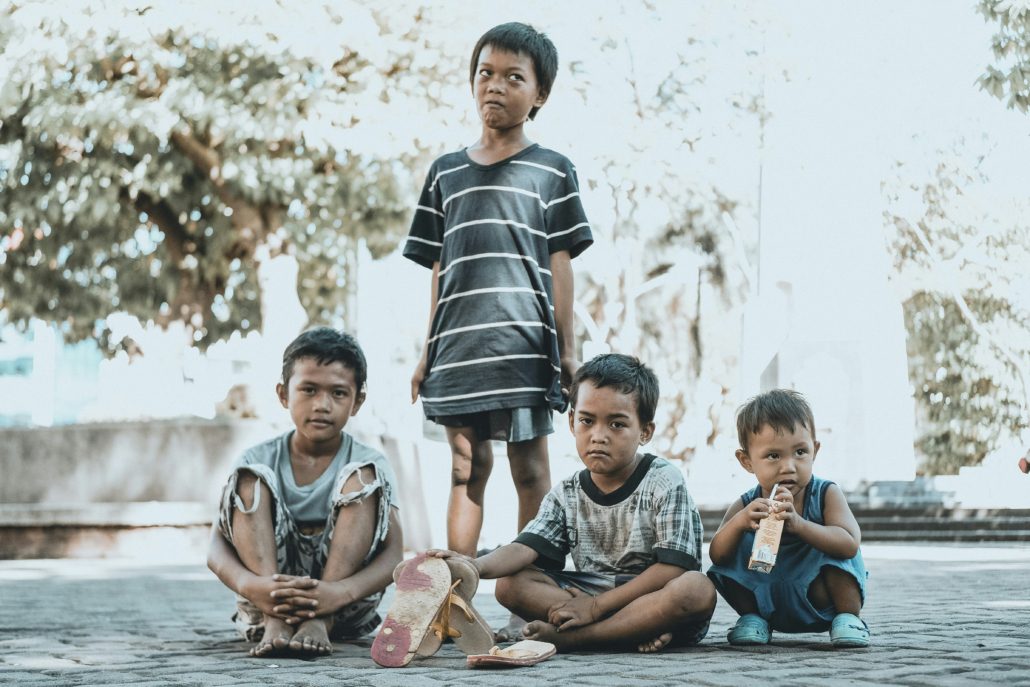
Whether it is a health crisis, lack of social support, inequality or conflict, these socio-economic factors contribute to today’s poverty data. The barriers to a life without poverty can seem impossible, especially for a developing nation within which these pervasive challenges strike a greater impact — a lower-middle-income country such as the Philippines.
Indeed, poverty continues to be a vicious cycle and a battle for survival for many Filipinos, 40% of whom are grappling to escape the cyclical problem. According to Inquirer, 46% of Filipino households categorize themselves under the “poor” classification as of 2024, while 33% identify themselves as being “food-poor.” Poverty predisposes vulnerable populations to various risks that often bear negative outcomes, and the numbers listed herein account for approximately 12.9 million poor Filipinos in the country. Here is some information about what being poor in the Philippines is like.
“Pagpag”
Today’s increasing living costs coupled with the lack of education and unemployment can make it difficult for Filipinos to put food on the table. Additionally, in times like this, individuals who face adversities tend to find solutions to these challenges by manifesting their skills and available resources. Creativity, in this context, could be the process of developing ideas, while innovation, or its byproduct, could be the process of concretizing these ideas to reach solutions, whereby in such a way, poverty creates an artist.
As a way to meet their basic food demands, Filipinos who are poor in the Philippines innovated the concept of “pagpag.” In English, this term translates to organic waste derived from that nearby fast food chains throw away or frozen edibles that local supermarkets dispose of, which impoverished communities would, later on, recycle and re-fry for consumption.
The usual method is foraging for edible garbage in dump sites, “killing” bacteria by washing and boiling chewed leftovers, coating it in their concocted marination, refrying it in high heat and finally serving it with their preferred garnish. Typically sighted in slum areas, street vendors sell repurposed leftovers as a means to earn a living. It includes the option of adding rice, a staple food in the country, to keep the appetite of their customers full, EFE reports.
While this practice has been helpful for those who are poor in the Philippines, eating pagpag can increase the likelihood of contracting diseases such as diarrhea and Hepatitis A. The concept of pagpag represents the Filipinos’ resilience and can be viewed as a cultural symbol of hard work in the Philippines.
Recycling Water
In October 2022, the inflation in the Philippines reached 7.7%. With the recent water hike in 2024, access to water for impoverished communities further tightens. Food-poor households opened up about their struggle to access basic needs such as water. To adapt to these changes, Marie Acuin, a fellow Filipino, told ABS-CBN News about her approach to saving water. She recycles used laundry water and bath water to either sanitize or flush her toilet, which she sees as a cost-efficient way of coping with price spikes.
Statistically, death from acute diarrhea brought about by the lack of access to safe water took the lives of more than 139,000 Filipinos in 2016. In addition, increased temperatures due to changing weather patterns are desiccating the country’s main sources of water, and obtaining permanent water supply from rivers and lakes is not an alternative solution as it does not prove to be feasible with the long-term realities of changing weather. Therefore, Engineer Bonifacio Magtibay, an environmental health officer working for the World Health Organization (WHO) in the Philippines, recommends “conserving and recycling water,” as well as adopting safe consumption practices, to address this scarcity.
Sleeping with the Dead
As a country demonstrating rapid population growth, along with poverty incidence, not enough roofs are being provided to place overheads. Slums become congested and poor communities cannot afford lodging, which urges them to seek shelter in other areas for cohabitation. Graveyards were free and vast and were thus viewed as an opportunity for refuge. Filipinos improvised habitation by using tarpaulins, wood and plastic covers to create a “house.” They have turned the cemetery into their own local district, using available spaces to install their “karinderya” stores and sell water or candies for a living. These informal settlers generally live day-to-day beside and amongst the dead.
Hunger and Poverty
Indeed, these are just a few of the many consequences of being poor in the Philippines. It helps to paint a picture of what living in poverty can look like for countless Filipinos. While these facts remain true, there is good news: Poverty rates have declined to 15.5% as of July 2024.
Poverty-reduction efforts have significantly reduced the number of food-poor families from 1.04 million in 2021 to 740,000 in 2023. That gap marks a 300,000 difference between food-poor and non-food-poor families within two years. In order to maintain this momentum, the government is implementing policies to improve agriculture and increase high-quality jobs designed to achieve their poverty-reduction mission.
As for eliminating hunger, the government is building inclusive school feeding programs to forge ahead to a nutrition-secure country. The “Walang Gutom 2027: Food Stamp Program” implemented in 2023, for example, is offering monetary support to eligible food-poor families and granting them access to affordable provisions from government-partnered food stores.
Malnutrition and Health Care
As of November 2023, the Department of Health (DOH) has signed a formal agreement with UNICEF and the U.N. to increase efforts in combating malnutrition in the Philippines, achieved through the distribution of health supplies and basic health care needs to targeted communities.
The Ambisyon Natin 2040 outlines the country’s vision of a “middle-class society free of poverty” and serves as a guide for government initiatives. While progress is still being made, promoting the continuity of relevant policies and initiatives that work toward poverty alleviation may soon create the transition they need and personify a picture of Filipinos living vibrant lives.
– Edwynne Lou Miano
Edwynne is based in Florida, USA and focuses on Global Health for The Borgen Project.
Photo: Unsplash

The ABCs for Poverty Reduction in Ghana
Agriculture
Agriculture remains one of Ghana’s oldest and most vital professions, employing 33% of the population and encompassing crops, livestock and fisheries. The sector accounts for an impressive 54% of the country’s total gross domestic product (GDP). Currently, only 5% of agricultural jobs are held by youth. Hence, the government is implementing targeted policies and providing sustainable funding to boost youth participation.
The 8th annual Agricultural Innovation for Africa (AIA) Conference was held in Accra in August 2024. It aims to produce a policy paper on attracting and supporting youth in the agriculture sector. The conference focused on the future of agricultural innovation, youth employment and food security in Africa — all crucial factors in reducing poverty in Ghana.
Count on Crops Hub Limited is an African-led, youth-based organization dedicated to improving agricultural production and driving inclusive agrarian transformation in Ghana. In addition, it runs the Agric4Girls initiative, which addresses the urgent need for economic opportunities and contributions that women and girls can make to the agricultural sector.
Business
Post COVID-19, the Ghana government has created the COVID-19 Alleviation and Revitalisation of Enterprises Support (CARES) specifically to engage youth. CARES aims to:
The Enterprise and Youth Support Fund (EYSF) was started in conjunction with Ghana CARES in 2021. It offers an online investment platform and “youth bank” that will specifically target start-ups for young Ghanaians. They are encouraged to use innovation and fresh perspectives to create a sustainable economy that reinvests in its people.
One business that has flourished under these government initiatives is Gold Coast Tokota, a footwear brand founded by Kwaku Kumi. The Ghana-based company prides itself on using eco-friendly materials that minimize environmental impact. Supporting this brand promotes traditional craftsmanship, strengthens the local economy and advances sustainable fashion — all contributing to poverty reduction in Ghana.
Communicate Knowledge
Ghanaian President Akufo-Addo is urging all citizens who study abroad to return and share what they have learned with their communities. Access to correct information is integral in ending the cycle of poverty. Students and recent graduates can bring new knowledge and ideas back to the country. This knowledge can teach people across many sectors how to grow in their endeavors.
The Oxford and Cambridge Society of Ghana is a significant society for the Ghanaian people. Alums from the two universities work toward spreading and explaining how this knowledge contributes to the transformation of Ghana.
Summary
Ghana is modernizing its agricultural sector by applying the skills of young Ghanaians to create food security. Furthermore, the agriculture sector is providing employment opportunities in one of the country’s oldest professions. Supporting young entrepreneurs is another key focus. Investing in the youth today will help grow businesses that strengthen the economy and create jobs for the community. Additionally, making critical information accessible to all Ghanaians fosters growth across various sectors, ensuring that education and knowledge-sharing drive innovation and progress.
– Alysha Miller
Photo: Flickr
USAID Programs in Botswana Alleviating HIV
However, the country still relies on the help of the United States Agency for International Development’s (USAID) programs. Despite Botswana’s economic prosperity, the health of the nation’s people is largely vulnerable due to the prevalence of HIV. The epidemic has become a burden on the economy, as well as Botswana social services. Almost 21% of adults in Botswana have HIV, which is one of the highest HIV infection rates in the world. Improvements to the health care sector have been implemented, such as increased access to clean water. Yet, the nation’s health remains unstable due to the HIV epidemic.
USAID’s Work in Botswana
USAID is a key implementer of the U.S. President’s Emergency Plan for AIDS Relief (PEPFAR), which combats the HIV epidemic. PEPFAR works to address HIV in more than 50 countries globally. “We have the opportunity to see an AIDS-free generation by 2030,” said Congresswoman Barbara Lee, a PEPFAR advocate. PEPFAR’s goal is to eradicate AIDS and, by extension, HIV in the near future and it is working with USAID to achieve this.
In the past two decades, PEPFAR has received about $120 billion in funding, enabling USAID to fight the HIV epidemic and improve global health, with a significant focus on Botswana. Since 2003, PEPFAR has invested $750 million to combat HIV in Botswana. This funding supports USAID programs, enhancing its effectiveness in the Southern African nation.
Reducing Stigma
HIV has been heavily stigmatized in parts of Botswana and USAID is working to reduce negative perceptions of people with the infection. USAID is engaging with traditional, faith and community leaders to help eradicate the epidemic by addressing the social stigma surrounding HIV.
Support and Counseling
Individuals with HIV aren’t the only ones affected by the virus. In 2022, an estimated 54,000 children in Botswana were orphaned due to HIV/AIDS. USAID supports orphans and other vulnerable groups, including women and children, whom HIV has impacted.
Furthermore, USAID provides counseling services to people living with HIV in Botswana. Infected individuals are supplied with support and guidance, encouraging them to get medical treatment. Counselors can track individuals’ progress as they start or maintain their medical schedules, helping to prevent the transmission of the virus.
Final Thoughts
USAID has been helping Botswana since the ’80s, working to alleviate HIV by improving health services, prevention efforts, public opinion and support for those affected by the disease. The $750 million PEPFAR has provided to Botswana since 2003 has allowed USAID programs to help reduce AIDS-related deaths among adults and children by about 14,100. Additionally, USAID programs have contributed to lowering the estimated number of children living with HIV by 16,900 in the past 20 years. USAID programs continue to combat the HIV epidemic, both in Botswana and globally, working toward eradicating the disease.
– Megan Hall
Photo: Flickr
Women’s Rights in Cabo Verde
Women’s Rights in Cabo Verde
Cabo Verde has made notable developments regarding women’s rights, with the government recognizing gender equality as a critical issue that must be addressed. In 2011 a law protecting women and girls against gender based violence was introduced as well as a legal framework. Since then, continued work has been put in place to uphold the rights of women in the court of law. Despite these efforts, the deep rooted nature of misogyny presents itself as a barrier to achieving gender equality in Cabo Verde.
Gender Equality and Cabo Verde’s Tourism Sector
Cabo Verde depends on its tourism sector for approximately 25% of its GDP, driving the country rapidly forward in terms of its economic state and quality of life for citizens. As a result of Cabo Verde’s flourishing tourist engagement, there is an abundance of job opportunities available. However, the sector faces limitations regarding female participation. This poses a threat to tourism reaching its full potential as well as a threat to female empowerment and women’s rights in Cabo Verde.
Women in Cabo Verde struggle to exercise their rights due to the systemic, deep-rooted nature of misogyny. This ensures that women are presented with less accessible educational opportunities, lower-paying and unstable jobs, expectations to uphold traditional values within the household and the threat of gender-based violence. As a result of these challenges, poverty disproportionately affects the women of Cabo Verde, representing, “53% of the poor population as well as 54% of the population in extreme poverty.” This hinders their ability to effectively participate in the tourism sector and hinders their personal economic potential.
Gender Mainstreaming
Recognizing the gender inequality within the tourism sector, U.N. Women and ICIEG came together to develop an action plan to address this through gender mainstreaming, making Cabo Verde one of the earliest tourist countries to do so. Gender mainstreaming involves creating policies that consider the interests and concerns of both men and women, with this action plan focusing on institutional strengthening, training and capacity building and women’s quality and empowerment. However, upon enacting the action plan, it faced complexities. Gender norms and societal expectations of women affect their career choices, often opting for gender-stereotyped, less entrepreneurial positions. The U.N. Women’s office additionally closed down in Cabo Verde which put the action plan on hold from 2017.
In order to combat these challenges, in 2021 ITCV and ICIEG combined efforts to resume the action plan, also moving forward with new recommendations from the World Bank Group Gender strategy to guarantee that it is as gender responsive as possible, ensuring women ‘better, safe, and more jobs.’ Cabo Verde’s persistence through setbacks highlights their genuine commitment to protecting and improving women’s rights, paving the way for a positive future.
– Imogen Prince
Photo: Flickr
Migration to Bosnia and Herzegovina
Western Balkan Migration Route
Bosnia and Herzegovina falls within the Western Balkan route, popular among migrants who look to enter EU countries. From January to September 2023, the International Organization for Migration (IOM) recorded 128,871 migrant, refugee and asylum seeker arrivals through the corridor. The large number and potential for an unexpected increase of migrants strain Bosnia and Herzegovina’s resources.
However, the IOM, UNHCR and EU provide financial support for the country to ease the pressure of this corridor on countries like Bosnia and Herzegovina and to protect migrants. The “Individual Measure to Strengthen the Response Capacity to Manage Migration Flows in Bosnia and Herzegovina” project aims to transfer the migration response to Bosnian authorities.
This project continues to receive considerable funding. In August 2024, The IOM confirmed 100% of the financing for protection management for the arrival of migrants into Bosnia and Herzegovina.
Accommodation for Migrants
The increased number of migrants in 2018 strained infrastructure in Bosnia and Herzegovina. Collaboration between the country’s Ministry of Security (MoS) and the IOM facilitated the creation of seven temporary reception centers (TRCs) to house more than 8,000 migrants.
In 2018, the IOM revealed that the national infrastructure was not adequate to house the sudden influx of migrants in Bosnia and Herzegovina. The closure of TRC Lipa and Bira in 2020 reduced overall accommodation capacity from 8,282 to 3,540 beds.
Despite the challenges of accommodating migrants, international cooperation has helped resolve these problems. In 2021, a newly built TRC Lipa increased its accommodation capacity to 1,500 migrants compared to its prior 1,400 migrant capacity. Johann Sattler, Head of the EU Delegation, commented on the opening of TRC Lipa: “This is a good reminder for all of us that those crises can be solved, and the only way to resolve crises is through dialogue and a willingness to compromise.”
War and Poverty
In July 2024, the UNHCR reported that the top three countries of origin of migrants in Bosnia and Herzegovina were the Syrian Arab Republic (35%), Afghanistan (29%) and Morocco (8%). The high number of Syrians and Afghans in Bosnia and Herzegovina correlates to the high levels of poverty in these countries due to war. In 2022, poverty affected 69% of Syrians and 90% of Afghans.
Mental Health
Migrants often face traumatic journeys that have psychological impacts. Adil, a Moroccan migrant who resides in TRC Lipa expressed how migration impacted his mental wellbeing to the IOM: “This journey is hard and dangerous. I have seen and experienced things that I do not want to remember.”
There are ongoing efforts by the IOM and Bosnian authorities to provide mental health support for migrants. The IOM continues to provide mental health screening for migrants inside and outside TRCs and aims to increase mental health support access for migrants in Bosnia and Herzegovina.
Between April 2024 and July 2024, the UNHCR assisted 585 migrants with psychosocial support.
Cultural Programs for Migrants
Alongside the efforts of international organizations and the Bosnian government to integrate migrants into the workplace and provide psychological aid for migrants, cultural programs also help improve their well-being.
In 2024, IOM ran creative programs in multiple TRCs. TRC Blažuj held a canvas painting workshop which allowed migrants to express their creativity. TRC Lipa has a creative zone where handcrafting workshops were held for migrants and refugees from Afghanistan, Gambia, Iran and Syria.
Cultural programs extend beyond reception centers in Bosnia and Herzegovina into mainstream society. Migrants from reception centers contributed to a fashion collection for The No Nation Fashion brand showcased at the 30th Sarajevo Film Festival.
Cooperation for Solutions
The impact of global poverty meant the influx of migrants to Bosnia and Herzegovina from 2018 onwards presented challenges to the country’s infrastructure and the safety of migrants. However, cooperation between the former Yugoslav country, international governments and organizations shows the capacity to overcome the potential challenges of migration to improve the quality of life of migrants.
– Sofia Brooke
Photo: Flickr
Moeloco: Ethical Fashion Fighting Poverty
Impoverished communities suffer disproportionately from the environmental damage caused by unsustainable manufacturing practices. They are the least equipped to manage the fallout from pollution, water scarcity and the changing climate. Despite these challenges, the fashion industry is increasingly striving to mitigate its impact and promote ethical fashion to fight poverty. Initiatives like the United Nations (U.N.) Alliance for Sustainable Fashion and social enterprise Moeloco, lead sustainability programs worldwide.
Moeloco
Moeloco, founded by Kathy Wong, is an ethical footwear brand. They produce flip-flops with inspirational messages engraved on the soles, such as ‘Love’ and ‘Be Happy.’ While these messages help spread positivity, the impact of each purchase is even more far-reaching. For every pair of flip-flops sold, the organization donates a pair of locally crafted, closed-toe canvas shoes to impoverished children in India. In many regions across India, many children remain shoeless – this puts them at significant risk of contracting diseases from the ground below them, which may lead to amputation or death and prevent them from going to school due to health regulations enforced at schools. Without education, these children are more likely to remain trapped in the cycle of poverty.
Moeloco alleviates poverty by donating 400 shoes to impoverished children in India, collaborating with the Hope Foundation. This partnership supports local manufacturers who make the shoes, thereby creating local jobs and distributing the footwear. It aims to provide these children access to education and raise awareness about the impact of consumer spending. This initiative represents ethical fashion by directly linking purchases with tangible benefits for impoverished children, demonstrating how consumer choices can significantly alter lives.
Ethnotek
Another impactful brand tackling poverty in the fashion industry is Ethnotek. Founded by Jake Orak, Ethnotek collaborates with artisan communities in Guatemala, Ghana, Vietnam, Indonesia and India to produce beautifully crafted bags that preserve cultural heritage. These artisans use traditional techniques to create colorful, handcrafted textiles which are incorporated into their products. Ethnotek is unique in that it is dedicated to sustainability and fair trade. Rather than providing direct aid, the company guarantees that artisans receive fair wages and work in safe conditions by forming direct partnerships with them.
Since many of these craftspeople reside in rural areas with few job opportunities, selling their handmade goods on international marketplaces enables them to become financially independent. Since Ethnotek’s conception in 2007, the business has now partnered with more than 500 artisans across five countries to generate more than $10 million in revenue in 2024. This economic empowerment aligns with core principles of ethical fashion in fighting poverty as it uplifts impoverished communities through fair wages and employment opportunities.
Fashion Impact Fund
The Fashion Impact Fund, an innovative program, leverages the fashion industry’s broad influence to foster social change. This nonprofit organization offers grants, training and employment opportunities to female-led projects emphasizing environmental sustainability, poverty alleviation and education. It supports female designers, artists and entrepreneurs to cultivate a more diverse and socially conscious fashion industry. The fund’s core objective is to equip women from underprivileged backgrounds with the resources and opportunities they need to succeed in the fashion sector.
Through mentorship, skill development and financial support, this nonprofit helps women establish sustainable careers, lifting them and their families out of poverty. The organization also provides funding for initiatives tackling climate change and environmental degradation – issues disproportionately impacting underprivileged areas. The work of the Fashion Impact Fund contributes to the broader movement of ethical fashion fighting poverty, with a focus on addressing discrimination and lessening the gender-based wealth gap via economic inclusion.
Looking Ahead
These initiatives demonstrate the fashion industry’s potential to drive significant social change. By promoting fair wages, education and economic empowerment, these organizations prove that fashion can potentially serve as a powerful tool for long-term poverty reduction. As consumers increasingly recognize the influence of their purchases, the potential for ethical fashion to fight poverty could grow.
– Viola Cuthbertson
Photo: Flickr
Aid in Gaza and Yemen: UK Government’s Partnership with Kuwait
The U.K.’s Minister for the Middle East, Hamish Falconer, highlighted the U.K. and Kuwait’s “shared commitment” to dealing with international humanitarian crises. Falconer also acknowledged the role that conflict has had to play in the crises in both Gaza and Yemen, declaring that the U.K. is “pushing for more lifesaving aid to reach those in desperate need,” the U.K. Government reports.
Conditions in Gaza
As an organization centered around children in need, Gaza is a priority for UNICEF. Approximately nine in 10 of Gaza’s population are internally displaced, and half of those 1.9 million people are children.
Children in Gaza are facing countless challenges. From lack of water and food, to fuel and medicine. They are left with injuries and struggle with displacement due to the destruction of their homes and have more than likely lost loved ones. The latest figure by the Palestinian Ministry of Health estimates that more than 14,000 children have been killed in Gaza, UNICEF reports. The conditions for those left are abysmal, meaning UNICEF’s aid in Gaza is essential now more than ever.
Obstacles to delivering aid have made UNICEF’s work in Gaza more difficult. Israel restricted the shipments of food and medicine into the region and this has created famine and starvation as land routes for aid are under strict inspection.
Despite this, UNICEF has been able to dispatch emergency supplies to those in Gaza – this includes water, medicine, and medical equipment. The organization’s programs are also facilitating basic mental health facilities to support children through the unimaginable horror of growing up amidst conflict and destruction, according to its website.
The Need for Aid in Yemen
The humanitarian crisis in Yemen is significant, with around 9.8 million children requiring at least one form of humanitarian assistance. Since April 2022, Yemen has witnessed a reduction in active conflict, meaning civilian casualties specifically have become less of a pressing concern. However, the country naturally continues to suffer as a result of living through nine years of conflict.
Issues in Yemen are numerous, with socioeconomic instability at the core of the country. During the ongoing struggle, children are particularly vulnerable to exploitation, abuse and child labor, according to UNICEF. Families struggle with displacement and exposure to the outbreak of disease. Millions, including children, face daily life with a lack of safe water and adequate sanitation and hygiene. Food is also scarce, causing a nutrition crisis, according to UNICEF.
UNICEF is on the ground to provide aid in Yemen, providing invaluable food and medical supplies that are treating severe acute malnutrition in children. The organization has managed to provide more than 2.5 million children with Vitamin A supplements every six months to combat malnutrition and has vaccinated more than 815,000 children against measles, according to its website.
What the Money Means for UNICEF
The combined £4.5 million will provide vital aid in Gaza and Yemen. The press release specified that this funding will contribute to efforts by UNICEF to restore water and sanitation systems in Gaza and support primary health care services in Yemen, according to the U.K. Government.
With the support of this funding, UNICEF’s work could aid 1 million people in need in Gaza, and a further 1.45 million in Yemen. The organization has publicly expressed its gratitude to the U.K. and Kuwait following the announcement. UNICEF Representative to the Gulf Area, Eltayeb Adam, described the funding as a “beacon of hope” that will “have a transformative impact on the lives of children and families in Gaza and Yemen,” the U.K. Government reports.
– Maeve Relihan
Photo: Unsplash
Educate! Alleviating Poverty Through Skill-Based Teaching in Africa
Educate!
Educate!, founded in 2009, aims to develop young leaders and entrepreneurs in Africa by designing impactful solutions for youth across the continent each year. The organization enhances vocational training in secondary schools across several countries, responding to research from the International Labour Organisation (ILO), which projects that about 90% of African youth will enter the informal economy as they age. This focus is critical given that 60% of Africa’s population is under 25, underscoring the need to fully develop this young talent to foster continental growth.
Educate! implements a standardized, core learning experience in secondary schools which encompasses the most essential skills youth need to transition to the working world. This involves combining tangible skills, training, expert mentorship and practical experience to teach hard skills, such as budgeting, planning, saving and market research. The program also ensures the inclusion of soft skills, such as communication, collaboration, critical thinking and creativity to ensure these budding secondary students can succeed going forward. In addition, it works outside of schools, by delivering live boot camps for youth who do not have access to an education, to ensure they get the same opportunity for future career expansion. This also has a segment focused particularly on young girls and marginalized communities.
Educate! Successes
Educate! reinforces its commitment to affecting genuine change by subjecting itself and its operations to randomized controlled trials and rigorous periodic performance evaluations. These evaluations have yielded the following results: Four years after participating in the program, participants can expect a 25% increase in university enrollment for women, 21% less likelihood of having a child (thus deriving more opportunities to focus on self-growth) and an 18% decrease in inter-partner violence for women. Toward the end of the four-year Educate! program, graduates can earn up to twice the income of their peers who have not participated in Educate! This is the first program in Africa that causally links soft skills to life improvements related to gender and living standards, making it one of the most effective firms for poverty alleviation.
Looking Ahead
Educate! has significantly impacted youth in Rwanda, Kenya and Uganda by providing essential vocational training and skills development. The program’s participants have experienced measurable improvements, including increased university enrollment rates and higher income levels compared to nonparticipants. Educate! also addresses gender-related issues, contributing to a decrease in inter-partner violence and reduced early pregnancies. These outcomes highlight the program’s role in enhancing educational and economic opportunities for young people in these countries.
– Disheta Anand
Photo: Pixabay
What Does Being Poor in the Philippines Look Like?
Whether it is a health crisis, lack of social support, inequality or conflict, these socio-economic factors contribute to today’s poverty data. The barriers to a life without poverty can seem impossible, especially for a developing nation within which these pervasive challenges strike a greater impact — a lower-middle-income country such as the Philippines.
Indeed, poverty continues to be a vicious cycle and a battle for survival for many Filipinos, 40% of whom are grappling to escape the cyclical problem. According to Inquirer, 46% of Filipino households categorize themselves under the “poor” classification as of 2024, while 33% identify themselves as being “food-poor.” Poverty predisposes vulnerable populations to various risks that often bear negative outcomes, and the numbers listed herein account for approximately 12.9 million poor Filipinos in the country. Here is some information about what being poor in the Philippines is like.
“Pagpag”
Today’s increasing living costs coupled with the lack of education and unemployment can make it difficult for Filipinos to put food on the table. Additionally, in times like this, individuals who face adversities tend to find solutions to these challenges by manifesting their skills and available resources. Creativity, in this context, could be the process of developing ideas, while innovation, or its byproduct, could be the process of concretizing these ideas to reach solutions, whereby in such a way, poverty creates an artist.
As a way to meet their basic food demands, Filipinos who are poor in the Philippines innovated the concept of “pagpag.” In English, this term translates to organic waste derived from that nearby fast food chains throw away or frozen edibles that local supermarkets dispose of, which impoverished communities would, later on, recycle and re-fry for consumption.
The usual method is foraging for edible garbage in dump sites, “killing” bacteria by washing and boiling chewed leftovers, coating it in their concocted marination, refrying it in high heat and finally serving it with their preferred garnish. Typically sighted in slum areas, street vendors sell repurposed leftovers as a means to earn a living. It includes the option of adding rice, a staple food in the country, to keep the appetite of their customers full, EFE reports.
While this practice has been helpful for those who are poor in the Philippines, eating pagpag can increase the likelihood of contracting diseases such as diarrhea and Hepatitis A. The concept of pagpag represents the Filipinos’ resilience and can be viewed as a cultural symbol of hard work in the Philippines.
Recycling Water
In October 2022, the inflation in the Philippines reached 7.7%. With the recent water hike in 2024, access to water for impoverished communities further tightens. Food-poor households opened up about their struggle to access basic needs such as water. To adapt to these changes, Marie Acuin, a fellow Filipino, told ABS-CBN News about her approach to saving water. She recycles used laundry water and bath water to either sanitize or flush her toilet, which she sees as a cost-efficient way of coping with price spikes.
Statistically, death from acute diarrhea brought about by the lack of access to safe water took the lives of more than 139,000 Filipinos in 2016. In addition, increased temperatures due to changing weather patterns are desiccating the country’s main sources of water, and obtaining permanent water supply from rivers and lakes is not an alternative solution as it does not prove to be feasible with the long-term realities of changing weather. Therefore, Engineer Bonifacio Magtibay, an environmental health officer working for the World Health Organization (WHO) in the Philippines, recommends “conserving and recycling water,” as well as adopting safe consumption practices, to address this scarcity.
Sleeping with the Dead
As a country demonstrating rapid population growth, along with poverty incidence, not enough roofs are being provided to place overheads. Slums become congested and poor communities cannot afford lodging, which urges them to seek shelter in other areas for cohabitation. Graveyards were free and vast and were thus viewed as an opportunity for refuge. Filipinos improvised habitation by using tarpaulins, wood and plastic covers to create a “house.” They have turned the cemetery into their own local district, using available spaces to install their “karinderya” stores and sell water or candies for a living. These informal settlers generally live day-to-day beside and amongst the dead.
Hunger and Poverty
Indeed, these are just a few of the many consequences of being poor in the Philippines. It helps to paint a picture of what living in poverty can look like for countless Filipinos. While these facts remain true, there is good news: Poverty rates have declined to 15.5% as of July 2024.
Poverty-reduction efforts have significantly reduced the number of food-poor families from 1.04 million in 2021 to 740,000 in 2023. That gap marks a 300,000 difference between food-poor and non-food-poor families within two years. In order to maintain this momentum, the government is implementing policies to improve agriculture and increase high-quality jobs designed to achieve their poverty-reduction mission.
As for eliminating hunger, the government is building inclusive school feeding programs to forge ahead to a nutrition-secure country. The “Walang Gutom 2027: Food Stamp Program” implemented in 2023, for example, is offering monetary support to eligible food-poor families and granting them access to affordable provisions from government-partnered food stores.
Malnutrition and Health Care
As of November 2023, the Department of Health (DOH) has signed a formal agreement with UNICEF and the U.N. to increase efforts in combating malnutrition in the Philippines, achieved through the distribution of health supplies and basic health care needs to targeted communities.
The Ambisyon Natin 2040 outlines the country’s vision of a “middle-class society free of poverty” and serves as a guide for government initiatives. While progress is still being made, promoting the continuity of relevant policies and initiatives that work toward poverty alleviation may soon create the transition they need and personify a picture of Filipinos living vibrant lives.
– Edwynne Lou Miano
Photo: Unsplash
5 Charities Operating in Kashmir
Kashmir often dubbed as ‘heaven on earth’ is a region that is equally beautiful as it is troubled. It has suffered a long history of geopolitical strife, changing weather patterns and natural disasters and the yet unsolvable question of its autonomy still lingers on most lips. The breathtaking landscape is split into areas that India administers on one side of the border and Pakistan on the other, with China also holding stake. Life in Kashmir is not without daily challenges and human rights violations in the region are frequent. The average person struggles to feed his family and children, unemployment rate is high and curfews and martial law is common.
For a region witnessing many upheavals, it is the work of charitable organizations that bring relief and aid in times of great hardship. There are many charities operating in Kashmir that are doing tremendous work to combat the daily struggles faced by the Kashmiri people and to help alleviate some of the difficulties that are widespread in the land. Here are five charities operating in Kashmir.
Unite 4 Humanity
This charity operates on both sides of the border working hard to bring relief to as many parts of the divided region. It recognizes that 27% of the Kashmiri population is living under the poverty line and the rural areas are the ones most affected with the figure rising to 54%. Unite 4 Humanity has implemented many initiatives since 2012. The Borgen Project reached out to the organization which elaborated on its work citing that it has helped many communities in Kashmir. It mentioned that it has sent food packages to 1,454 families, and provided hot meals to 23,700 people and winter packages for 230 children. It is making sure donations reach the most disadvantaged of the population (orphans, widows and disabled).
Helping Hand for Relief and Development
Helping Hand for Relief and Development (HHRD) is another organization operating on either side of the line of control (LOC). It works in tandem with humanitarian teams on the ground in Jammu Kashmir and Azad Kashmir to ensure that the lives of the most vulnerable have protection. It has many different programs such as its seasonal Winter Relief which has been delivered to 336 beneficiaries and Global Qurbani with 29,890 beneficiaries. This charity operating in Kashmir also serves projects such as Skills Development and Medical In-Kind Gifts programmes that aim to reach the most affected, especially children and the elderly. In 2014, when the disastrous floods wrecked the region, HHRD provided instant relief assistance and aid to ensure as many people as possible received support. It continues to work for the displaced people on the ground.
Muslim Hands
Muslim Hands is a notable charity that has been carrying out tremendous work in Kashmir since 1994. Its efforts in the area have spanned more than 25 years. In just 2022 alone, the organization was able to ensure that emergency relief, food parcels and water provisions reached more than 169,000 people. Additionally, the charity has been able to provide medical supplies and treatment to 400,000 people, education to 50,000 children and necessary assistance and support to nearly 3,700 orphans.
CHINAR Kashmir
CHINAR Kashmir is a nonprofit organization that is working to improve the lives of the marginalized Kashmiri people through its advanced projects focusing on health care, education, empowerment and various kinds of relief work. The organization’s work concentrates on gender inequality, quality of education, youth and women empowerment. This also mirrors the objectives of the United Nations’ SDGs which focus on combating such global challenges. CHINAR Kashmir has been able to support 2,500 students and more than 1,000 women and families through its various programs such as the Remote Child Sponsorship Programme (RCSP) and Skills Enhancement and Entrepreneurship Development (SEED).
Orphans in Need
Orphans in Need has been operating in Kashmir for more than a decade. It emphasizes the lasting and devastating effect the many catastrophes have had on the children of Kashmir due to which approximately 215,000 children have lost a parent. The work of this organization is integral as it aims to support and provide relief to orphans in need of necessities and focuses on creating an avenue in which vulnerable children can live a normal life. The organization supplies deprived orphanages with resources and sponsorships to ensure children have the provisions they need. Just last year in 2023, the organization’s Qurbani donations fed thousands of orphans, widows and families.
Looking Ahead
While the issues prevailing in Kashmir are vast, the noteworthy and incredible work that many charities are doing is no small feat. These charities operating in Kashmir and others alike are committed to making a difference to the region.
– Aleena Shahid
Photo: Flickr
New President Prepares to Combat Poverty in Mexico
Pending Pension Promises
Many of the initial items Shinebaum plans to address are continuations of projects AMLO has laid out. One of the biggest overhauls is the changes to Mexico’s pension program that started in 2020. A whole sweet of changes have been proposed and are in the process of implementation to make a pension available to more people and expand just how much goes into the fund.
The American Bar Association lays out the points of change, such as a decrease in the number of weekly contributions needed from 1,250 to 1,000 and an increase in the employers’ contribution by 8% with an increase in the government contribution. Additionally, these changes were laid out as gradual changes to be implemented by 2031; thus, it is expected that Shinebaum will oversee a majority of these rollouts during her term.
Investing in Education
Education reform has been an enduring issue in Mexico, with multiple proposed solutions with varying levels of efficacy. ALMO began his term by scraping his predecessors’ reforms, making way for his programs. He opened publicly funded universities to make higher education accessible to low-income students. Furthermore, this came alongside cuts to funding for higher education stemming from the policies of his predecessor.
He also lowered standardized testing requirements in an attempt to increase graduation rates. Reactions to these reforms have been mixed. Indeed, critics say that a strong focus on higher education has meant less focus on primary and secondary education. The Benito Juarez Welfare Scholarship seeks to provide aid to the families of students 15 and younger. The International Monetary Fund credits it as an important step toward addressing the plight of the 43.5% of Mexican citizens living in poverty. With this, citizens can expect Mexico’s new president to continue and expand on these social services throughout her term.
Final Note
According to the United States Agency for International Development (USAID), the U.S. has contributed $495 million to developmental projects in Mexico. However, this is just 0.03% of its gross domestic product (GDP). Given the close cultural, economic and geographic ties between the two nations, the U.S. may see it in its advantage to do more to help combat poverty in Mexico.
– Thane Zerbe
Photo: Unsplash