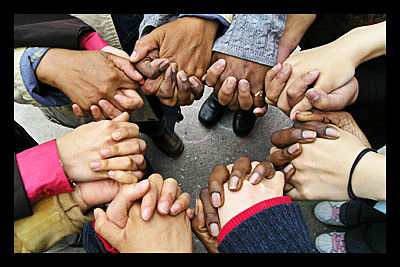
Many political campaigns, government agencies, and non-profit organizations categorize a series of topics as “women’s issues.” These issues generally address subjects such as birth control, reproductive rights, and women’s access to education and equal pay. Yet, these issues affect more than just women—they affect everyone. Women’s issues are actually human issues.
In many parts of the world, women are viewed as inferior to men. While boys are encouraged to receive an education, girls are often removed from school to take care of the home, losing out on an education that could increase a woman’s pay and her household’s earning potential in the future. At a microscopic level, a reduced household income increases the chance of a single-family living in poverty. However, when entire cultures neglect the role of women as productive members of society, not only do individual households suffer, but entire economies lag, negatively affecting everyone.
Even in societies where women are allowed to work, women are undervalued for their skills and labor. They are concentrated in “insecure jobs in the informal sector with low income and few rights.” According to the Global Poverty Project, “women work two-thirds of the world’s working hours, produce half of the world’s food, but earn only 10% of the world’s income and own less than one percent of the world’s property. On average, women earn half of what men earn.” This pay reduction, while better than a complete ban on allowing women to work, also contributes to poverty. When women earn less, their family earns less, increasing a household’s chance of living in poverty.
Because many areas of the world limit a woman’s access to education and job opportunities, women are often viewed as inferior to men and are left powerless in their societies. Throughout the globe, “three million women die each year because of gender-based violence, and four million girls and women a year are sold into prostitution. One in five women is a victim of rape or attempted rape in her lifetime.”
Societies are better off economically and socially when women are valued, are allowed to receive an education, are presented with equal work opportunities, and are protected from abuse. In areas where women are educated, fertility rates are lower, helping to reduce overpopulation and contributing to a higher GDP per capita. Children are also better cared for and healthier when their mothers are educated. And as stated before, women with access to education and equal work opportunities are able to earn higher wages, reducing the chance of their family living in poverty and improving overall economic production.
“Women’s issues” are truly human issues because they affect everyone. The role that women play in society not only affects sisters, mothers, and daughters, but also their brothers, fathers, sons, and husbands. By enabling women with the tools they need to be safe, healthy, and productive members of society, the entire world will be a better place.
– Jordan Kline
Sources: Global Poverty Project, UN Women
Photo: Current Gender Issues

Malnutrition in India
Naturally, these figures vary greatly between states, with the state lagging most behind, Bihar, reporting 82% of children being undernourished, including 26% severely. Intriguingly though, the richest states do not necessarily correlate to the most successful in combating child malnutrition. Even in Delhi, nearly half of children are reported as undernourished. This is a reflection of other factors besides income and high growth rates that play a significant role in child nourishment, including public provisions of healthcare, water, and food security.
Despite programs and policies designed to alleviate this issue, a lack of proper governmental supervision and implementation has led to India recording the highest rates globally of stunted growth, malnourishment, and anemia in children. Equally devastating though is that malnourishment not only weakens those who suffer it physically but mentally as well.
A recent global study of children in developing regions showed significant differences in learning ability based on nutrition levels. And where learning is secondary to surviving, malnutrition places youth at a severe disadvantage across the board. And, like physical stunting, there comes a point in a child’s development where it is too late to reverse the effects.
For India as a nation, tackling malnutrition is the first step in improving the outlook of society as a whole.
– David Wilson
Sources: Indian Express, The Hindu, Silicon India
Photo: Flickr
Presbyterian Disaster Assistance and Hunger Program
Whenever and wherever there is a tragedy, the Presbyterian Disaster Assistance (PDA) and Hunger Program (PHP) are there to help. These groups are part of the Compassion, Peace and Justice Ministry of the Presbyterian Church and serve all people, regardless of ethnicity, religion or political belief.
The Presbyterian Church remains neutral with its financial backing. The organization does not support its programs with federal funding. Rather, the Disaster Assistance and Hunger Program are funded mainly by a yearly congregation offering the “One Great Hour of Sharing.” Although the PDA and PHP are run by the same organization, they each serve different functions for those in need.
The Presbyterian Disaster Assistance program focuses on bringing emergency and refugee services to communities impacted by catastrophe. If resettlement is deemed necessary, the PDA ensures that these people find homes in the United States. Staff members and volunteers work with the Action by Churches Together (ACT Alliance) and these communities to implement training and preparation strategies for future disasters and assist in-home repairs and other forms of sustainable development.
The other half of this important organization, the Presbyterian Hunger Program, works to distribute healthy and “culturally appropriate” foods to people all over the world who are food insecure. PHP raises awareness about how our everyday actions can have a global impact. According to the Hunger Program, once Americans feel connected with impoverished communities, they will begin to comprehend the causes of hunger and malnutrition.
Although the Presbyterian Disaster Assistance and Hunger Program are part of a religious organization, the group maintains that it will help all types of people. By working with other organizations like United Nations, National Voluntary Agencies Active in Disaster, World Food Program, Red Cross and the Federal Emergency Management Agency to ensure that those affected by catastrophe or hunger are reached.
– Mary Penn
Sources: InterAction, Presbyterian Mission Agency
Photo: Wired
5 Steps to Increased Economic Development in Africa
Recently, Nigeria’s Finance Minister Ngozi Okonjo-Iweala gave a speech at the International Institute for Strategic Studies outlining the steps that need to be taken to improve economic development in Africa by creating jobs and reducing unemployment. Here are the five steps Okonjo-Iweala outlined for creating economic growth in Africa and developing jobs for young people across the continent.
– Jordan Kline
Sources: Visualizing, The Guardian, Achieve in Africa
Photo: UN
5 Facts About World Hunger
When most people think of world hunger, they picture the emaciated children shown on television commercials or news footage of refugees lining up for food rations. The media portrays hunger as a dire emergency directly resulting from natural disasters, war, or some other kind of unrest. These graphic examples of acute hunger do portray actual people and circumstances, but they fail to account for 92 percent of the world’s hungry who suffer from chronic undernourishment rather than food emergencies. Though the number of people living with chronic hunger has decreased by 130 million people over the past two decades, one in eight people in the world still goes to bed hungry each night. Listed below are five facts about world hunger.
5 Facts About World Hunger
– Katie Bandera
Sources: WFP, World Hunger
How is NASA Related to Development?
A recent event held by the Society for International Development in Washington, DC highlighted the SEVIR program, a joint venture of NASA and USAID. Started in 2004 the program provides essential geospatial and earth-based observations to developing countries in Central America, Africa and the Himalayas. This information is used to monitor environmental impacts and natural disaster damages.
Science experts help convert the raw data into a usable form that governments and non-governmental organizations can use. USAID provides the developmental expertise to assist in directing this information to useful topics and applicable to issues confronting developing nations. SERVIR provides information in the following areas of interest for developing nations: water, weather, biodiversity, climate, disasters, ecosystems, and air and health quality.
USAID also assists the host governments to build technological capacity. The program’s goal is for host governments to assume responsibility for the scientific data and application. In order to support this self-sustaining aspect, the program implementers work closely with the host nations.
NASA and USAID signed a Memorandum of Understanding (MOU) in 2011 that expanded SERVIR’s programs to include food security, climate change, and environmental and energy management.
NASA and USAID also partner with the State Department and Nike on LAUNCH, a program encouraging technology innovation in the private and public sectors to help create a better world. In April the LAUNCH partners held a conference focusing on sustainable material development. Under this call for technological innovation, individuals or teams may submit project ideas. Those selected will participate in a creative immersion project with funding opportunities.
Previous recipients of LAUNCH support include projects for clean water, renewable energy, and biodegradable vaccination needles, and future projects supported by NASA and USAID feature the promotion of education in the sciences.
The SID Washington event focused on SERVIR’s projects in the Hindu-Kush Himalayan region. The Himalayan regional node, launched in 2010, provides satellite imagery of rural, mountain areas previously unavailable. Countries served by the Himalayan regional node include Afghanistan, Bangladesh, Bhutan, China, India, Nepal, and Pakistan.
– Callie D. Coleman
Sources: NASA, SIDW, Nike Inc.
Photo: Engadget
Can GM Crops Save the World?
The question of whether the food we eat should be engineered by scientists, and sold to farmers by tremendously wealthy corporations is a controversial topic. Owen Paterson, an MP and Secretary of State for Environment, Food and Rural Affairs from the United Kingdom has recently pleaded his case for supporting GM crops: “The farmer benefits. The consumer benefits. The environment benefits.”
The top chemical industries and their vocal supporters are proposing that the use of GM crops could produce more food for the world, thus ending world hunger. Can genetically modified crops revolutionize farming worldwide and end global hunger?
In the short term, revamping farms to produce high yielding GM crops could result in more food. However, GM crops require long term reliance on pesticides and machinery, which might be too expensive for an african farmer living on less than a dollar a day. Not only that, but the seed itself can be very expensive, since GM companies have made it illegal to save seeds to plant next season. That means that farmers in Africa, 80% of whom currently save their seeds, would need to start paying for them. Esther Bett, a Kenyan farmer, also points out that “farmers in America can only make a living from GM crops if they have big farms, covering hundreds of hectares.” She also informs us that in Kenya “we can feed hundreds of families off the same area of land using our own seed and techniques, and many different crops.”
When addressing the needs of the world’s poor, it is important to listen to what they have to say. Africans already have traditional methods of farming that have been developed over generations. Over the course of thousands of years, a variety of seeds has been bred to thrive in diverse environments, and to resist the regional blights that are unique to Africa. The genetically modified crops that have been developed so far are actually quite limited in the kinds of pests that they are resistant to. There are different farming practices to suit different environments, and crops that thrive in certain regions may not fare so well in others. According to a long term study, farmers in Ethiopia who conserved their soil and water by farming on compost-treated land were more food secure than their neighbors who relied on imported seeds, fertilizers, and pesticides. It was not genetic engineering, but ingenious breeding techniques that have resulted in new strains of hardy plants like drought tolerant corn, which is used by thousands of African farmers who enjoy 30% higher yields.
What if entire continents were to replace their heirloom seed stock with a single strain of GM crop? Such heavy reliance on one type of crop could be a disaster waiting to happen, if that crop were to fail due to blight or climate change. A new study from Food and Water Watch, an NGO focused on food and water safety and sustainability, has recently discovered that over time the widespread use of herbicides on GM crops has caused weeds to develop tolerance. The last thing that impoverished farmers need are superweeds! As of now, the only thing that can be done about herbicide resistant weeds is to use more herbicide.
– Jennifer Bills
Sources: Express, The Borgen Project, The Guardian, Co Exist, Third World Network, The Guardian
More than a Ball: Alive and Kicking
Sports play an essential role in the development of children. They provide structure and help teach hard work and discipline. For underprivileged kids, it may be one of the only healthy releases from the difficult lives they have. For kids in Africa, the sport that supplies this release is football, known as soccer to Americans. Yet many African children live in environments where sports equipment – such as soccer balls – is not affordable or accessible.
Thanks to Alive and Kicking, these kids have not had to worry about how they can play soccer. The only legitimate manufacturer of sports balls in Africa, Alive and Kicking has provided over 500,000 balls to impoverished children. Their impact goes far beyond simply producing sporting equipment. Below are the positive impacts Alive and Kicking has on the people of Africa.
Alive and Kicking continues to make a profound impact in Ghana, Kenya, and Zambia. But they need help. Donations are instrumental in funding the production of sports balls. A generous donation of 100 dollars would provide eight soccer balls for school systems and communities, impacting the lives of many children. A much more modest donation of 15 dollars provides a child with a ball. These gifts may be small but will play an important role in a child’s life. For more information, visit Alive and Kicking’s website.
– William Norris
Sources: Alive and Kicking, CNN
Sources: Globo
How African Artists Broke Through the Global Art World
African art sells for modest amounts in comparison to other contemporary works of art, so why are international collectors and enthusiasts racing to secure as much of it as they can? If worldwide critical acclaim and prestigious awards are any indications, African art could become a profitable investment.
With the South African country of Angola taking the Golden Lion award for best national participation at the Venice Biennale art exhibit, African art has generated extraordinary buzz amongst curators and collectors. The Bonham auction house in London holds the only annual sale dedicated to African art, and the house’s website notes that there has been “an explosion of interest” in recent years for the artwork.
“Created by artists from a multitude of cultures,” the site explains, “African contemporary art reflects the complex heritage of this dynamic continent and demonstrates tremendous potential for investment.”
El Anatsui, a Ghanaian sculptor and teacher at the University of Nigeria, is among the acclaimed African artists whose work has generated such enthusiasm. Channeling his Ghana heritage, many of his works incorporate either clay or wood in conjunction with local goods from his culture, such as Igbo palm mortars and Ghanaian trays. Some of his famous works blend common items together to form monumental and fluid sculptures. For example, his 2007 sculpture “Dusasa II” is a 361.6 lb melding of plastic disks, aluminum, and copper wire. One of his most recent works, “TISA-TISA—Searching for Connection,” was entirely constructed using recycled materials.
El Anatsui’s work is currently featured in museums such as the Brooklyn Museum in New York and the British Museum in London. He has also created a wall-hanging sculpture for the Royal Academy in London after receiving an invitation to the establishment. In an interview with Gulf News, El Anatsui explained how art has always existed as expression of cultures such as his, and it’s thanks to advances in modern communications that awareness of other cultures has increased.
Angolan photographer Edson Chagas has also garnered international attention after his showpiece Found Not Taken allowed his home country to take the Golden Lion award. A documentary and commentary on consumerism and capitalism, Found Not Taken compiles years of photos taken in Luanda: the city Chagas was born. Although he studied photography in London, he always intended to continue his projects from his home country. Chagas hopes the award will spark more interest in both his work and the art of other Angolan artists.
This increased exposure has allowed Cameroonian curator Koyo Kouoh to secure funding in London for a contemporary African art fair. She notes that African artists are using their art to “promote their country,” and the international focus on countries such as Angola is “not just on war anymore.” Modern art plays an important role in the common perception of cultures and societies, so Africa’s rising popularity will increase awareness of the continent’s triumphs and struggles on a global scale. With economies on the rise in many of Africa’s countries, citizens such as Chagas hopes their governments will take this opportunity to provide stronger education in the arts to train a new generation of artists.
– Timothy Monbleau
Sources: BBC, BBC Economy on the Rise,
Bonhams, Poetics of Line, Golden Lion Award, Metropolitan Museum of Art The British Museum, Gulf News, Tree Hugger, Contemporary And
Photo: skunkandraven
Why “Women’s Issues” Are Actually Human Issues
Many political campaigns, government agencies, and non-profit organizations categorize a series of topics as “women’s issues.” These issues generally address subjects such as birth control, reproductive rights, and women’s access to education and equal pay. Yet, these issues affect more than just women—they affect everyone. Women’s issues are actually human issues.
In many parts of the world, women are viewed as inferior to men. While boys are encouraged to receive an education, girls are often removed from school to take care of the home, losing out on an education that could increase a woman’s pay and her household’s earning potential in the future. At a microscopic level, a reduced household income increases the chance of a single-family living in poverty. However, when entire cultures neglect the role of women as productive members of society, not only do individual households suffer, but entire economies lag, negatively affecting everyone.
Even in societies where women are allowed to work, women are undervalued for their skills and labor. They are concentrated in “insecure jobs in the informal sector with low income and few rights.” According to the Global Poverty Project, “women work two-thirds of the world’s working hours, produce half of the world’s food, but earn only 10% of the world’s income and own less than one percent of the world’s property. On average, women earn half of what men earn.” This pay reduction, while better than a complete ban on allowing women to work, also contributes to poverty. When women earn less, their family earns less, increasing a household’s chance of living in poverty.
Because many areas of the world limit a woman’s access to education and job opportunities, women are often viewed as inferior to men and are left powerless in their societies. Throughout the globe, “three million women die each year because of gender-based violence, and four million girls and women a year are sold into prostitution. One in five women is a victim of rape or attempted rape in her lifetime.”
Societies are better off economically and socially when women are valued, are allowed to receive an education, are presented with equal work opportunities, and are protected from abuse. In areas where women are educated, fertility rates are lower, helping to reduce overpopulation and contributing to a higher GDP per capita. Children are also better cared for and healthier when their mothers are educated. And as stated before, women with access to education and equal work opportunities are able to earn higher wages, reducing the chance of their family living in poverty and improving overall economic production.
“Women’s issues” are truly human issues because they affect everyone. The role that women play in society not only affects sisters, mothers, and daughters, but also their brothers, fathers, sons, and husbands. By enabling women with the tools they need to be safe, healthy, and productive members of society, the entire world will be a better place.
– Jordan Kline
Sources: Global Poverty Project, UN Women
Photo: Current Gender Issues
World Bank Plan for Energy Sector Investments
The World Bank Group’s report “Toward a Sustainable Energy Future for All: Directions for the World Bank Group’s Energy Sector” was released on July 16, and lays out principles-based plans for the World Bank’s work in the energy sector. The report puts a special focus on expanding energy access and sustainable energy.
The report, also known as the Energy Sector Directions Paper, focuses on the poor in terms of their energy access, stating that “supporting universal access to reliable modern energy is a priority.” The report points out the connection between poverty and lack of energy access asserting that “economic growth, which is essential for poverty reduction, is not possible without adequate energy.”
The Energy Sector Directions Paper also emphasizes supporting renewable energy. Declining costs of renewable energies like wind and solar power are increasing their usefulness, and hydropower in particular is one of the largest untapped sources of renewable energy in the developing world. The energy sector directions paper underscored the importance of these renewable energies for sustainability and also in order to increase energy access while trying to reduce climate change. The World Bank Group asserted that they would support and invest in coal power development “only in rare circumstances.”
1.3 billion people are without access to electricity and 2.6 billion people rely on the traditional use of biomass for cooking, which causes harmful indoor air pollution. These people are mainly in either developing Asia or sub-Saharan Africa, and in rural areas. In order to foster sustainable development in these countries, plans like the World Bank Group’s Energy Sector Directions Paper need to be enacted to give the poor access to renewable energy sources.
– Martin Drake
Sources: World Bank, International Energy Agency
Photo: Value Walk