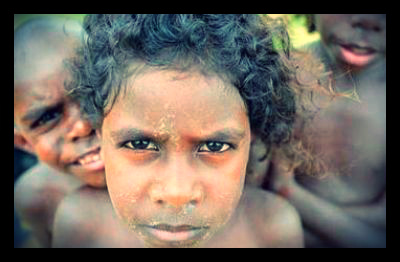
The Aboriginals are classified as an indigenous group native to Australia and already face many issues in the country. A Counterpunch article argues welfare officials have been stealing children from Aboriginal families since the 1970s.
According to the author, John Pilger, the stolen children “were given to institutions as cheap or slave labour.” Though officially banned by the Australian constitution, the act of separating children from their mothers is an assimilation policy similar to the eugenics movement in Nazi Germany.
“Today, the theft of Aboriginal children – including babies taken form the birth table – is now more widespread than at any time during the last century,” Pilger said. “As of June last year, almost 14,000 Aboriginal children had been ‘removed’.”
Pilger said the “secretive” Children’s Court often exploits the indigenous mothers for not being aware of their own constitutional rights.
Moreover, Olga Havnen, once the Co-ordinator-General of Remote Services for the Northern Territory, told Pilger that she was fired when she disclosed that the cost for removing Aborigninal children for political reasons in 2012 exceeded the cost of helping the community fight poverty ($80 million versus $500,000.)
“The primary reasons for removing children are welfare issues directly related to poverty and inequality,” she told Pilger. “If South Africa was doing this, there’d be an international outcry.”
Having their children taken from the state is not the only issue affecting the Aboriginal population. Today, indigenous Australians fall victim to health problems and other human rights abuses as well.
“While some health and socioeconomic indicators are improving for indigenous Australians, they still on average live [10 years to 12 years] less than non-indigenous Australians, have an infant mortality rate almost two times higher, and continue to die at alarmingly high rates from treatable and preventable conditions such as diabetes and respiratory illnesses,” said Human Rights Watch (HRW) in its 2014 World Report.
This is strange for the organization, considering Australia is among the world’s richest nations yet still fails to provide many indigenous people with access to food, water, and healthcare.
Just recently, the Australian parliament passed legislation that recognizes indigenous Australians as the nation’s “first inhabitants of Australia,” said HRW. But as Pilger describes in the Counterpunch article, these constitutional rights mean nothing since the Australian officials systematically abuse the indigenous population.
Support networks in Australia proclaim that the aid given to the indigenous people living in poverty is a “smoke screen” for the bureaucracy’s true intention: to divide and control the natives of the land.
The world community might investigate whether the policies regarding the indigenous population in Australia are indeed discriminatory.
– Juan Campos
Sources: Counterpunch, Human Rights Watch
Photo: The Stringer

Divorce with Democracy in Turkey
Since becoming Prime Minister in 2003, Recep Tayyip Erdogan has contributed to calming Turkey’s military, strengthening its political parties, and increasing the personal freedoms of its citizens. United States Presidents George W. Bush and Barack Obama both held Turkey on a pedestal as an example of the ability for Islam and democracy to coexist.
Yet the Justice and Development Party (AKP) has faced little to no opposition strong enough to challenge Erdogan’s position, for which he has won three successive elections. At over 11 years in office, Erdogan is now the second longest reigning Prime Minister in Turkey’s 94-year history. The nation is falling from its democratic grace.
When thousands of Turkish citizens protested the one-party state in the spring of 2013, Erdogan’s authoritarian power was evident. Tear gas, water cannons and mass arrests asserted the Prime Minister’s authority over those who wished to speak out. The in December parliament, led mostly by the AKP, presented a proposal to make protests against public services illegal.
Such actions, in addition to Erdogan’s attempts to limit and control social media, emphasize worrisome threats to basic human rights and democracy in Turkey. But the next set of elections is coming soon, and the simple fact that people continue to look towards it brings hope. Despite unfortunate actions resulting from Erdogan’s hoarding of power, Turkey formally remains a functioning democracy. If all goes as planned, the upcoming elections will take place in as free and fair an environment as ever.
Movement away from democracy in Turkey poses risks to the nation’s future political and economic security. With such tumultuous circumstances taking place in the nations bordering Turkey and in the Middle East in general, Erdogan arguably cannot afford to throw away its alliance with the United States and the Western world. Likewise, undemocratic actions take away from any chances Turkey has of being admitted in the European Union, whose membership requirements include a free market and democratic freedoms.
So while many may claim that Turkey, as a result, could not possibly move far enough from democracy as to put these alliances in true jeopardy, recent events have not sparked much confidence. Elections, however, will likely outline what the world can expect from Turkey in the near future.
– Jaclyn Stutz
Sources: Carnegie Endowment 1, Carnegie Endowment 2, Al Jazeera, Politico
Photo: Business Insider
Poverty in Bali
Despite welcoming more than 3 million visitors per year and the total from revenue from tourism that is expected to reach US $5.5 billion annually, many of Bali’s inhabitants are living in extreme poverty. But with so much income—$5.5 billion for its 3.8 million Balinese—why is there poverty in Bali?
In Bali, there are as many as 162,051 people living in poverty and this figure has been on the increase. In the villages, the rate at which the number of poor is rising is twice as much as that of Bali’s urban areas. In the Balinese countryside, it is estimated that more than 77,400 people are living in poverty. Currently, in 82 villages out of Bali’s 706 villages, the poverty rate hovers above 35 percent. To make matters worse, on this tourism-focused island where the number of tourists almost matches that of the locals, the incomes of farmers are dwindling and the prices of essential goods are becoming more and more unaffordable to many Balinese.
In remote villages—and “remote” in Bali means an hour or two away from the glittering 5-star hotels—the residents are very poor and most villages lack education, access to clean water and even electricity. Many children must walk for kilometers to go to school. Furthermore, as the more fertile south is overdeveloped, many Balinese are only left with the infertile dry soil of the north and the east to farm on. Due to the lack of jobs and opportunities, men from the villages must also leave to find jobs in the tourism sector, leaving their wives and children. Thus, oftentimes women must work disproportionately, covering both their absent husbands’ tasks as well as their own tasks. In the resort towns, rural migrant workers still earn very little in comparison to what the business establishments whom they work for are earning from tourism. The minimum salary in Bali is only 1,542,600.00 Indonesian Rupiah, or around US $125.
I Made Mangku Pastika, Bali’s governor had made a statement calling the island’s thriving tourism a “disaster” for the poor. He expressed his concern that as prices of basic necessities skyrocket, farmers in need of cash would be forced to sell their land—the only real property they own—in order to make ends meet. The governor had previously fought to stave off further tourism-accommodation developments into the Balinese inland, however due to the political administrative structure, many local authorities ignored his initiative. Trapped in the dilemma of tourism being both the island’s lifeblood as well as—in the words of the governor—a disaster for the poor.
Nevertheless, the governor—now in his second term—is diligently working on solving his island’s economic discrepancy, with many poverty-alleviation plans such as the integrated farming scheme, the installation of solar panels, housing aid and the free healthcare plan. The governor—realizing the injustice of this developmental disparity—also plans to bring down the rate of extreme poverty (people living on less than $2 per day) down from the current figure.
– Peewara Sapsuwan
Sources: The Bali Times, WageIndicator.org, The Bali Times, The Jakarta Post, Australia Network News, The Jakarta Post, Asia News Network,
Photo: Tripping
Drought Crisis in Kenya
Poised to become the next humanitarian crisis, Kenya is suffering the consequences of a year-long drought. The BBC reports more than one million in need of food and other aid to survive this persistent dry spell. Women and children bear the burden of this drought, as 30,000 young men migrate with cattle to neighboring Uganda. Consequently, those remaining in the Turkana region must rely on roots, berries, and stray dogs.
The Famine Early Warning Systems Network reports more than 34% of children under the age of 5 are at risk of malnutrition. This indicates a 7% increase from the five-year average. Reports predict a rise in malnutrition rates if the drought continues.
With a forecast predicting “subnormal” rains, Sam Owilly of Practical Action cautions the need for action before a full crisis arises. The Government succeeded in slowing the progression of food insecurity, yet severe malnutrition endures. The next four to eight weeks stand at a critical point; the Turkana region demands immediate water and food, in addition to “supplementary feeding and medical care of livestock.”
Though Owilly credits the government for its current efforts, Oxfam and Save the Children attribute the crisis to inaction. The joint report remarks:
“A culture of risk aversion caused a six-month delay in the large-scale aid effort because humanitarian agencies and national governments were too slow to scale up their response to the crisis, and many doctors wanted proof of a humanitarian catastrophe before acting to prevent one.”
The drought in Kenya highlights the prevailing pattern of desertification in East Africa. A number of warning signs, as early as 2011, indicated a dramatic decline in rainfall in Ethiopia, Kenya, Somalia, and Djibouti. That year, a drought in east Africa claimed nearly 100,000 lives. More than half of those affected died before the age of 5, reports the United Kingdom Department for International Development.
To increase resiliency in these trying times, aid must focus on development of sustainable technology. Oxfam and Save the Children subsequently aim to “break down the divisions between humanitarian and development work.” In this crisis, these agencies advocate for lasting reform to lower present and future risks.
The International Fund for Agricultural Development supports this objective, investing in technology to support dryland agriculture. This specialized agency of the United Nations harnesses information and technology to help rural farmers survive water scarcity. The UN Convention to Combat Desertification (UNCCD) promotes investment in technology. Satellite imaging, for instance, provides data on the rainfall and other weather conditions. This tactic better predicts the crop yields, and subsequently allows for “timely assistance.”
A billion people live on these dry lands and face the risks of climate change. Rising temperatures exacerbate food insecurity in this region, so, in response, relief agencies should invest in technology to identify the driest seasons. This early detection promises immediate relief in the form of food and water to the most at-risk nations.
– Ellery Spahr
Sources: The Guardian, BBC, IFAD
Photo: Oxfam
Rwanda’s Lost Generation
The history of disparate rights between the Rwandan Hutu and Tutsi tribes exploded in April of 1994, followed by 100 days of genocide in which the Hutu extremists killed an estimated 500,000-1 million Tutsi people. Rape was encouraged to destabilize the community’s infrastructure and traumatize its people, resulting in the vicious, serial rape of 250,000 to 500,000 women.
Since the reinstatement of Rwanda’s government, all citizens have been allotted equal rights and the long road toward reconciliation has begun. Since the number of accused hugely outweighs the law officers, the Gacaca court system was set up allowing small communities to hold courts and trials where suspects may confess their crimes and promote reconciliation by disclosing the fates of lost community members.
The government’s newly instated laws of racial equality throughout the country extend to social stigmas as well, bolstering the marginalized. But one group was overlooked: children produced by the Rwandan genocide’s relentless rapes.
Chantal Mukeshimana, now 46, lost her husband and three of their children in the genocide during which she was repeatedly gang-raped. One of these attacks implanted her now-19 year old daughter, Angélique, who has always felt distanced by her mother and blames herself for the pain her existence recalls.
Angélique is one of 20,000 young adults who are products of the Rwandan genocide rapes. Kananga from the Unity and Reconciliation Commission has stated, “When we offered support to widows and children we thought we were supporting everyone.” These children of rape are suspended between their parents; they feel shunned by their Tutsi mothers for the horrific means of their conception, and have no means or wish to find their ‘genocidaire’ Hutu fathers.
Chantal is currently responsible for Angélique, two surviving children from her late husband, and her brother who was paralyzed in the genocide. With no government aid she relies on her community of women for support, most of whom have pasts similar to her own. None have had access to rehabilitation therapy, and they’ve banded together in an attempt to plug the holes of their shattered families.
Today, as they enter adulthood, children of the Rwandan genocide rapes are struggling to come to terms with their history. They are a constant reminder to their communities of the violence that killed their loved ones and stole their bodies. Without serious reconciliation many will remain emotionally crippled forever, extending the horror of the genocide beyond the lives of those who experienced it.
– Lydia Caswell
Sources: About, UN
Photo: Flickr
From Being Homeless to Feeding the Homeless
Although Walton can’t really afford to close his restaurant one night a week, he continues to do so to make sure anyone who needs food can get it – for free.
On April 2, 2014, Walton was invited on the Ellen Degeneres Show and she gave him $10,000 for his cause. Ellen has been partnering with Bank of America to highlight people who give back to their communities. When she heard of Walton, she was touched by his story and wanted to help him get the word out about his restaurant.
Walton grew up in Detroit in a household of eight kids and he learned to cook from his mother. After going to culinary school, Walton said he made some bad choices that landed him homeless.
“It put me in a position where I needed help from others, but the doors were always closed,” he recalls. “I made a promise that if I ever got in a position where I could help somebody, I would give something back.”
After saving up money from a dish washing job and later a line cook, Walton was able to open Chef D’s Pizza. And now, the $10,000 check from Ellen will help him continue to be able to keep his doors open for the homeless on Monday nights.
Iowa is home to almost 3,000 homeless people. The state has a poverty rate of 12.7%. With poverty often comes food insecurity and Walton is doing a small part to alleviate hunger in the homeless population of Des Moines.
– Haley Sklut
Sources: Ellen, The Huffington Post, Yahoo, Spotlight on Poverty
Photo: LiftBump
United Nations Spotlights U.S. Human Rights Violations
In a report released by the UN Human Rights Committee (UNHRC), the United States was found to be in violation of previously established human rights law. The International Covenant on Civil and Political Rights was placed into effect in the mid-1970s as international law and the U.S. has failed to uphold it with practices including torture in Guantanamo Bay, drone strikes and massive surveillance practices.
The U.S. has already broken United Nations charters multiple times with military interventions in the Middle East.
Bulk data collection however, has become one of the major domestic human rights violations following Edward Snowden’s whistleblowing of the NSA program. The UNHRC urged the U.S. to remove their surveillance program, as it is a major violation of the right to privacy.
Moreover, the surveillance spotlight in the U.S. is not limited to the NSA. The UN Congressional Intelligence Committees have addressed surveillance by executive agencies in the past, but have failed to produce any action—until just recently.
The Senate Intelligence Committee, tasked with overseeing intelligence agencies in the executive branch such as the National Security Agency and the Central Intelligence Agency, have made allegations that the CIA spied on computers that the committee had used. The allegations have thus sparked ongoing conflict between the two branches of government and human rights advocates are stepping into the ring.
A 6,300 page long Senate Intelligence Committee report on the CIA “enhanced interrogation” program is waiting to be voted on for release. The report covers highly controversial interrogation tactics and is expected to be sent to President Barack Obama’s desk for approval to be publicly released. The Senate Intelligence Committee’s Chairwoman, Dianne Feinstein (D-Calif.) has also said there is currently enough support for the vote to pass; however, the official vote is set to occur later in the week.
Concerning the release of the controversial report, President Barack Obama stated, “I would urge them to go ahead and complete the report and send it to us, and we will declassify those findings so that the American people can understand what happened in the past.”
– Jugal Patel
Sources: Politico, The Huffington Post, Foreign Policy, The Guardian, The Washington Post
Photo: Popular Resistance
Michelle Bachelet Gives Inaugural Address
Chilean President-elect Michelle Bachelet was inaugurated on March 11 at the presidential palace in Santiago, Chile. This will be the second time Bachelet is sworn in as president after holding the office from 2006 to 2010. Bachelet, a moderate socialist, will be taking the reins from the current president, billionaire businessman Sebastian Piñera.
In a very symbolic ceremony, the head of the Chilean Senate, Isabel Allende, swore in Bachelet. The two female politicians share a past linked to the 1973 coup of the democratically elected Salvador Allende that carried dictator Augusto Pinochet to power. Bachelet is the daughter of an air force officer who was tortured by the Pinochet regime before dying in custody while Allende is the daughter of former Chilean President Salvador Allende, who committed suicide on the day of the coup.
During her inaugural address, Bachelet made inequality the focus of her speech. She said that although the policies of the Piñera administration had generated economic growth and jobs, Chile could and should be a fairer society.
Other solutions to fight inequality include changing the country’s education system by making it entirely state-funded within the next six years, a response to the student protests of 2011 to 2013 that occurred throughout Chile. Currently, the state funds a paltry percentage, leaving poor households to attend underfunded state universities. Bachelet plans to provide full state funding by increasing the corporate tax rate.
Despite promises to reduce inequality, Bachelet will face difficulty in implementing these proposals. Chile’s economy is slowing down from 5.6 percent growth per year in 2012 to just over 4 percent this past year. Moreover, prices of Chile’s primary product, copper, have fallen, which would dip the country’s economic growth even further.
Piñera leaves with a 50 percent approval rating, while at the end of her first term, Bachelet enjoyed an 84 percent approval rating.
Bachelet will not have any issue pushing her policies through the chambers of Congress, as her New Majority coalition enjoys a healthy majority in both the Senate and Chamber of Deputies. Chileans will also be able to monitor her promises closely since the publishing of a list of 50 proposals she intends to complete within her first 100 days in office spread out across 14 different policy areas.
The widely popular Bachelet has promised to create a more egalitarian society through the promise of free education. Though she has come under fire from critics who say the Chilean economy is losing steam, she remains hopeful that her country can construct a more inclusive environment for its people.
– Jeff Meyer
Sources: ABC News, Miami Herald, Slate, Economist
Photo: Khaleej Times
Australia Steals Aboriginal Children From Mothers
The Aboriginals are classified as an indigenous group native to Australia and already face many issues in the country. A Counterpunch article argues welfare officials have been stealing children from Aboriginal families since the 1970s.
According to the author, John Pilger, the stolen children “were given to institutions as cheap or slave labour.” Though officially banned by the Australian constitution, the act of separating children from their mothers is an assimilation policy similar to the eugenics movement in Nazi Germany.
“Today, the theft of Aboriginal children – including babies taken form the birth table – is now more widespread than at any time during the last century,” Pilger said. “As of June last year, almost 14,000 Aboriginal children had been ‘removed’.”
Pilger said the “secretive” Children’s Court often exploits the indigenous mothers for not being aware of their own constitutional rights.
Moreover, Olga Havnen, once the Co-ordinator-General of Remote Services for the Northern Territory, told Pilger that she was fired when she disclosed that the cost for removing Aborigninal children for political reasons in 2012 exceeded the cost of helping the community fight poverty ($80 million versus $500,000.)
“The primary reasons for removing children are welfare issues directly related to poverty and inequality,” she told Pilger. “If South Africa was doing this, there’d be an international outcry.”
Having their children taken from the state is not the only issue affecting the Aboriginal population. Today, indigenous Australians fall victim to health problems and other human rights abuses as well.
“While some health and socioeconomic indicators are improving for indigenous Australians, they still on average live [10 years to 12 years] less than non-indigenous Australians, have an infant mortality rate almost two times higher, and continue to die at alarmingly high rates from treatable and preventable conditions such as diabetes and respiratory illnesses,” said Human Rights Watch (HRW) in its 2014 World Report.
This is strange for the organization, considering Australia is among the world’s richest nations yet still fails to provide many indigenous people with access to food, water, and healthcare.
Just recently, the Australian parliament passed legislation that recognizes indigenous Australians as the nation’s “first inhabitants of Australia,” said HRW. But as Pilger describes in the Counterpunch article, these constitutional rights mean nothing since the Australian officials systematically abuse the indigenous population.
Support networks in Australia proclaim that the aid given to the indigenous people living in poverty is a “smoke screen” for the bureaucracy’s true intention: to divide and control the natives of the land.
The world community might investigate whether the policies regarding the indigenous population in Australia are indeed discriminatory.
– Juan Campos
Sources: Counterpunch, Human Rights Watch
Photo: The Stringer
Racism in Israel
Since the mass migration of Ethiopian Jews, or Beta Israel, to the nation of Israel in the 1980s, racism in Israel has been a pervasive part of life for many of these refugees. Israel was founded upon the old racist practices of European nations against the Jewish peoples. Spain expelled the Jews in the 15th century, Russia issued Pogroms that killed countless Jewish citizens, and Nazi Germany exterminated over six million Jews throughout Europe. The founding of the nation in the 1950s finally gave the Jewish people a homeland where they could escape the persecution that dotted their troubled history.
Ethiopian Jews have not received the same experience as their European Jewish counterparts. The idea is not alien to the Israeli people. The Jerusalem Post released a report where over 95 % of the populace believe at least one population group in Israel is subject to some form of racism. The Ethiopian populace has been the most drastically affected, with over 79% of those surveyed replying “that Ethiopians suffered from racist attitudes.” What exactly is happening to Ethiopian-Israelis?
Jobs discrimination has become a pervasive problem. Unemployment amongst “Ethiopian men in Israel ranges from 27% to 66%.” Jobs are typically not given to Ethiopians, as many employers refuse to give them jobs. This has created a dire situation for the community as whole, with over 72% of the 100,000 Ethiopian residents living “under the poverty line.” The communities where Ethiopians live are also noted for their poor schooling, with illiteracy remaining high amongst the populace.
The Brookdale Institute of the Joint Distribution Committee released damning information about the education system that has failed many Ethiopian youths, detailing that the “school dropout rate among Ethiopian immigrants is double what it is among the general Israeli population.” This lack of educational opportunity has allowed inequalities between Ethiopians and their European Israeli counterparts to continue, and has created an economic gap that may not be easily combated. This is a sad reality, as many of these Ethiopians came to Israel to escape the hardships that plagued Ethiopia in the late 1980s, particularly poverty, famine and a politically unstable society.
Racism in itself has grown out of general unsupported fears about Africans. The Health Ministry in Israel has directives that prevent them from receiving Ethiopian blood donations out of “fear of spreading HIV.” The directive does not just prevent the common Ethiopian populace from donating blood; Knesset, or the Israeli Parliament, Member Pnina Tamano-Shata was barred from donating blood as well. The reason she was given was that she has the “special kind of Jewish-Ethiopian blood.” It was a stark reminder that Israel does not readily accept Ethiopians, and many of their beliefs about Ethiopians are based on racist ideologies about Africans.
– Joseph Abay
Sources: Jerusalem Post, YNET News
Photo: SodaHead
Iraqi Women’s Rights under Fire with Jaafari Law
Women’s rights in Iraq are in danger of being further limited. A new law up for vote in the government would allow girls as young as nine to be married. The law, called the Jaafari Personal Status Law, would also require women to submit to sex with their husbands at any time. Activists throughout the world voiced their objection to the proposed law calling it a major setback for the country.
Many are concerned that this is a beginning sign of a rollback of women’s rights in Iraq. Currently, the minimum age for marriage without parental consent is 18. Girls as young as 15 are currently allowed to get married as long as they have parental consent. This law is put forth by people who base the ideology behind the legislation on the principles of a Shiite school of religious law. Basing the law on one religious affiliation may cause tension between other sects in the country.
The law does not specify a minimum age for girls to get married. Instead it is passively mentioned in the section of the law dealing with divorce. The law outlines rules for divorce for girls as young as nine years old. The law also says that nine years old is the age that girls reach puberty. Many critics of the view claim that the specified age in the divorce section mean that they intend to allow girls that are that young get married.
Sunni female lawmaker Likaa Wardi criticized the law for violating the rights of women and children, “The Jaafari law will pave the way to the establishments of courts for Shiites only, and this will force others sects to form their own courts. This move will widen the rift among the Iraqi people.” Opposition to the law has been mounting over the past couple of weeks in hopes that enough pressure can be put on the government to scrap the law.
– Colleen Eckvahl
Photo: Deccan Chronicle
Sources: The Huffington Post, The Guardian