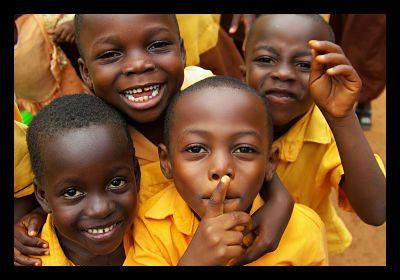
When it comes to what makes an aid organization truly successful, we usually think first about the numbers and the flashy website. How many children in rural areas get an education thanks to this organization? How many mosquito nets are being handed out to curb malaria? And how fancy is that all-important website?
All this is important, at least to a degree. But we often neglect to consider what is behind the scenes. We forget about the fundamental structure that makes global poverty NGOs effective or not. In order to be successful, NGOs must…
1. Work together
Collaboration is key. No organization can be entirely efficient on its own. While working together sometimes proves difficult because so many voices spout so many different opinions, cooperation allows for greater expansion of ideas and more creative solutions.
Additionally, organizations gain more influence and issues are given more weight when there is a large rallying force of NGOs and aid organizations behind the cause. This increased importance can get the public more involved, as well as proving to governments and policy makers that these topics need to be discussed. For example, the United Kingdom Food Group is the largest network in the U.K. that helps organizations working on food issues to share ideas and expertise by working together, thus creating maximum change.
2. Be narrow enough to do good work
In order to put the most into a cause, organizations must be narrowly focused. This allows them to put the maximum resources into one issue and thus enables them to make a difference that is more than a drop in the bucket. For instance, the Fistula Foundation focuses specifically on healing women who suffer unnecessarily from an injury sustained in childbirth. True, the organization could tackle prostitution and sexual health in other capacities, but because it focuses on fistula treatment, it is able to make a substantial difference for the cause.
3. But not too narrow as to only solve one narrow slice of the problem
All things related to global poverty are interconnected. Food security goes hand in hand with the local economy. Water sanitation plays a huge role in global health. Organizations need to understand that no matter what topic they choose to address, it is attached to all other aspects of global poverty. ONE combines its efforts to address reducing global poverty on top of reducing the incidence of preventable disease. In doing so, ONE accepts that disease perpetuates poverty, and remedying one helps alleviate the other.
4. Be easy to get involved with
The harsh reality is that while most of our society sympathizes with the plague of global poverty, it has no time to go out of their way all the time to do something about it. Organizations must realize that if they are to be successful, they must be easy to reach, easy to get involved with and easy to share. NGOs must have key small ways to get involved like buying a T-shirt, sharing a video or donating a few dollars. But on top of this, they must have larger scale methods that are just as easy.
Many organizations like Charity: Water and Nothing But Nets, ask people to donate their birthdays by essentially asking for donations to the cause rather than gifts. It is a simple, brag worthy and effective way to get people involved and raise money for the organization.
5. Be transparent
People want to know where their hard earned money goes when they donate, and they are more likely to be resistant when the paths their cash takes within an organization are unclear. Therefore, organizations must work twice as hard to show that the donations they receive go directly to the projects they advertise. Charity: Water has found a way to be utterly transparent.
The organization relies on private donors and sponsors to support its offices’ operations, thus allowing it to ensure with absolute certainty that the donations it receives from the general public go straight to water projects building pumps in rural villages. Charity: Water even shows you exactly what well was built by your donations and their annual reports are easily found on their website. Basically, it is key that people know directly where their money goes when they donate to encourage confidence in the NGO.
6. Work with the local population
The only way to create stable, lasting change is for NGOs to work directly with the local population in the target region. Without it, practices put in place and infrastructure built can fall victim to tradition and cultural practice, and thus become ineffective. However, by working with the local population, organizations can change the local perspective and approach to the problem. They can employ local workers to run the operations, thus helping the economy in more ways than one.
Rape prevention organizations tend to be particularly effective when they go straight to the local people. For example, Apne Aap is an organization in India that aims to change the perspective of rape in the culture and protect women through sustainable development of a new, empowered mindset. By going to local women, organizations like this are able to find the root of the problem and work toward a solution that will cause lasting change.
7. Be memorable
Finally, an organization must be memorable in order to be successful. People need to feel that itch to share the video, to tell their friends, to spread the story in order to ensure that the organization gets the publicity it needs to do effective work and the cause gets the vocalization it deserves. For all the flaws the Kony 2012 and Invisible Children campaigns had internally, they were undeniably memorable. Everyone who went to high school in 2012 had the group’s logo as their profile pictures and now knows a bit more about child soldiers in the LRA. This is knowledge that can be spread in order to get more and more people involved.
Overall, no matter what process NGOs take, their work is beneficial. However, there are certain criteria that will make their efforts more effective and provide for longer-lasting, sustainable change. Simple changes to the structure of the organization can increase the general interest in the topic as well as improving the overall success of the organization.
– Caitlin Thompson
Sources: Overseas Development Institute, The Guardian, UK Food Group, ONE, Charity Water, Apne Aap, Edna Hospital, Fistula Foundation, Nothing But Nets
Photo: Flickr

1,000 Days Campaign in Rwanda
Since conflict started in the Democratic Republic of Congo, children have been fleeing the violence to Rwanda and into the hands of another challenge: malnutrition. The state of food security and proper nourishment in Rwandan refugee camps is becoming dire as nearly 44 percent of children under 5 face serious chronic malnutrition.
However, the Rwandan government is making strides to welcome its new residents with open arms and humanitarian aid. Under the command of Prime Minister Pierre Damien Habumuremyi, the Rwandan government launched the “1,000 Days in the Thousand Hills” campaign back in September of 2013 to combat malnutrition in both its refugee camps and its local population. With the help of the Ministry of Disaster Management and Refugee Affairs (MIDIMAR), the 1,000 days campaign was implemented first in the Kiziba camp in Western Rwanda, then in all five refugee camps in the country.
The mission of the campaign: combat malnutrition using programs that make populations more self-reliant and educated on proper health. The approach: provide children with the proper nutrients for the first 1,000 days from birth until the child’s second birthday and establish local community efforts to produce more nutritious food.
The 1,000 Days campaign in Rwanda is not unique. In fact, similar programs have been implemented in a variety of other locations including Ethiopia, Indonesia and Guatemala. But what makes Rwanda’s campaign special is its focus on integration. Like all of MIDIMAR’s programs, the 1,000 Days in the Thousand Hills campaign aims to connect the refugee and local populations by using their combined forces to solve mutual problems. All practices used in the local population are being used in refugee camps and vice versa.
What are these practices? As established, the campaign seeks to make populations at risk more self-sufficient while still receiving help to reduce malnutrition. Programs include setting up kitchen gardens and animal breeding programs. At the start of the campaign, 315 kitchen gardens were set up and 151 families received rabbits to breed, eat and sell. The hope is to make refugees and local populations independent with livestock and farming techniques that provide them with greater nutrients.
On top of this, the 1,000 days campaign aims to provide children with the necessary sustenance for healthy development and nutrition from day one until age 2. This allows children to escape malnutrition and stunting of growth and to have better immune systems and brighter futures. The program achieves this goal both by putting more food into the community and educating parents on what counts as fortified and healthy foods, such as vegetables, fruits and milk. In addition, the campaign seeks to spread awareness on the warning signs of malnutrition and the diseases associated with the condition.
All of this culminates in two results: first, it brings children out of risk of malnutrition by providing them with necessary protein from the start. Second, it pulls populations into a state of food security by providing sustainable ways of harvesting good food.
The program is set to end in October of 2016, but many strides towards success can be taken by then. With any luck and lots of hard work, malnutrition will cease to be an insurmountable problem facing refugees in Rwanda.
– Caitlin Thompson
Sources: All Africa, Doctors Without Borders, Ministry of Disaster Management, Relief Web, Republic of Rwanda, Republic of Rwanda Ministry of Health, World Vision International, 1000 Days
Photo: Republic of Rwanda Ministry of Health
Hunger in Niger: 5 Things to Know
Niger may not be the first country to spring to mind when you think about hunger in Africa, but the food security situation there is actually among the worst on the continent. Conditions there were especially dire in 2012, when the hunger crisis that stretched across West Africa’s Sahel region made news headlines across the world.
Although the situation has improved within the last several years, there are still approximately 2.5 million people in Niger that lack secure access to food. Here are five facts you should know about hunger in Niger:
1. A Problem of Geography
Niger is land-locked, and land-locked into the middle of the Sahara Desert at that. Over 80 percent of the country consists of arid land that is nearly impossible to farm. What arable land that exists is often plagued by extended periods of flooding during Niger’s short rainy season and drought throughout the rest of the year. Farmers are already facing an enormous challenge of climate in simply trying to grow food. However, with few outlets for access to seeds and tools, farmers in Niger fail to make enough food to support even a fraction of Niger’s population.
Fortunately, international organizations are stepping in to increase the resources available to these farmers. Though simply increasing agricultural output is not enough to solve the problem of hunger in Niger, it is certainly a step in the right direction.
2. Poverty, Fertility and Their Consequences
Niger is no stranger to poverty; according to the World Bank, “Niger’s per capita income and development indicators are among the worst in the world.” Whether hunger is a cause or an effect of poverty is a complicated question, but there is no doubt that the two are intimately related.
Niger is also home to the highest fertility rate in the world, with each woman on average giving birth to 7.6 children. With so many mouths to feed and limited money to do so, it’s no wonder that so many in Niger go hungry.
3. A Struggling Economy
About 80 percent of Niger’s economy is based on agriculture and livestock. How can an economy thrive when it depends on an industry that is suffering? With little capital to work with, hunger in Niger is a problem that is proving difficult to solve from the inside. Niger’s economy is also dependent on the world market for uranium, a natural resource it has in abundance. When uranium prices fall, so does the economy.
4. Taking Care of Refugees
The population of Niger is already high, at around 17 million people. Yet with refugees from countries like Mali and Nigeria, which have recently experienced conflict, flooding into the country for the past few years, the population of Niger continues to swell.
With the existing population already struggling to eat enough, how can refugees possibly afford food? Refugees receive a food voucher upon entering Niger, which allows them to purchase U.S. $14 worth of food. Though the voucher may not seem worth very much, refugees prefer it to a standard grain handout because it allows them to customize their diet and keep their families fed while they adjust to life in Niger. The cereal handout traditionally given to refugees in Niger failed to meet human nutritional requirements, so the voucher is a step toward making sure that refugees and their children are properly nourished.
5. Why There is Still Hope
The people of Niger have banded together with the help of aid from international organizations to lessen the effects of recent droughts. By removing dead vegetation from lakes, Nigeriens are creating jobs for themselves while at the same time preventing the lakes from flooding land that could be used for farming. The dedication of the people of Niger to preventing the next hunger crisis has captured international attention and drawn donations from around the world. Hunger in Niger is certainly no quick fix, but that has not stopped the Nigeriens from getting started.
– Elise Riley
Sources: WFP1, WFP2, The World Bank, Washington Post, The Guardian, Sahara Conservation, Action Against Hunger
Photo: OneWorld South Asia
WaterAid Shows Africa’s Growing Access to Water
The nonprofit organization WaterAid released a new interactive map revealing that 14 nations in Africa are scheduled to have clean drinking water by the year 2030. This map was released as part of Africa Water Week, which took place from May 26 to May 31, to promote the idea that the accessibility of clean water in developing countries should have a central role in the U.N.’s post-2015 Sustainable Development Goals.
Since its establishment on July 21, 1981, WaterAid has worked to address the serious health, sanitation and hygiene issues that currently exist in a number of countries. This organization also realizes that education and a change in both policies and practices are needed so that an increase in hygiene and sanitation practices can help reduce global poverty. For more than 30 years, WaterAid has provided more than 19 million people with both clean and safe water in multiple countries, and it was even honored with a Top-Rated Nonprofit Award in 2013.
WaterAid hopes that the release of this map will encourage the U.N. to include global access to clean water, sanitation and hygiene by 2030 in their list of Sustainable Development Goals. This new set of goals is expected to expand on the Millennium Development Goals, which will reach their deadline Dec. 31, 2015. Before this deadline, the General Assembly is scheduled to confirm the Sustainable Development Goals in September. According to Water.org, water-related diseases are the cause of approximately 3.4 million deaths each year, confirming that this is a major global issue that needs to be addressed.
This map produced by WaterAid serves two very important purposes because it offers evidence that this is not only a worthy cause, but that it is also realistic and attainable. According to the map, 65.2 percent of people in Sub-Saharan Africa had access to water as of 2013, meaning that approximately 45 million people need to gain access to water per year to reach the 2030 goal. Although this is certainly a large amount of people, only 1.4 percent of the 2030 population needs to gain access to water every year in order to reach this goal.
– Meghan Orner
Sources: UN, WaterAid, WaterAid 2, Water
Photo: SAB Miller
Teens Participate in 30-Hour Famine To Fight Global Poverty
Contrary to popular belief, congressional leaders are only part of the key influence in making poverty a focus of U.S. foreign policy. Even though the 535 members of Congress in Washington D.C. representing voters are directly responsible for supporting or rejecting an issue or bill based on the voters’ opinions, all citizens are just as important in this process. Not only can they make their opinions known to the three members of Congress who represent them, but everyone, regardless of age, can make a difference by raising awareness in their community of a specific issue in order to bring about change.
This is exactly what a group of seven teenagers proved when they fasted for 30 hours to raise money that would benefit the fight against world poverty. These members of the Allin Church Youth Group in Dedham, Mass. participated in the World Vision’s 30 Hour Famine from 12 p.m. on April 26 to 6 p.m. on April 27. It was during those 30 hours that these teenagers not only fasted, but also learned more about world hunger as they felt the hunger that millions experience every day.
Participating members of the Dedham community donated at least $1 to this youth group for every hour that they fasted, and all contributions were used to benefit the lives of children in the Philippines in association with World Vision. World Vision is a Christian organization working in nearly 100 countries to address the issues of poverty and injustice. According to 30 Hour Famine, hundreds of thousands of people participate in this event every year in the U.S. alone, and thousands more across the globe do the same to help feed poor children and their families in developing countries.
World Vision’s 30 Hour Famine provides people with the opportunity to understand the hunger that millions experience every day of their lives. According to World Vision, 870 million people are hungry worldwide, revealing that this injustice needs to be resolved. But the 30 Hour Famine is not the only thing World Vision does to address this issue. This organization also provides individuals the opportunity to sponsor a child to not only fight poverty, but to create a better world for that child.
This experience for the Allin Church Youth Group did not end after the 30 hours were up. These seven teenagers, along with the entire Allin Congregational Church, will have the opportunity to travel to the Philippines and personally assist the children there who benefited from their 30-hour fast. This inspirational group of teenagers proves that anyone, regardless of age or political standing, can join in the fight against poverty and hunger.
— Meghan Orner
Sources: 30 Hour Famine, World Vision, The Dedham Transcript
Photo: Delphi United Church
12 Quotes about Humanity
War. Poverty. Crime. Hunger. With all of the injustices that exist in today’s world, it can be easy to lose faith in humanity. We may ask ourselves, “Why should we care if no one else does? Nothing ever seems to change or get any better, so we might as well accept the world as it is.”
Although it is important to acknowledge the existing injustices and view them as serious issues that need to be resolved, it is equally important for us to realize our own part in seeing those solutions become part of reality. The following quotes about humanity may explain and hopefully inspire us:
As these quotes about humanity reveal, it can be difficult to explain human nature, but that does not mean we should lose faith or hope in ourselves or others. The Borgen Project promotes the idea that we each have the power within ourselves to change the world, which is one of the most beautiful abilities of humanity.
– Meghan Orner
Sources: Brainy Quote, Good Reads
Photo: Flickr
Sam Kutesa, Anti-Gay Minister, Receives High UN Position
Sam Kutesa, the Ugandan Foreign Minister under President Musevini, has been chosen to head the U.N. as President of its General Assembly next month despite his consistent homophobic attitude and history of corruption. The position, which will not be voted on, has been chosen by “elect of acclamation,” after being chosen by the African Union. In a mostly “figurative” position, Kutesa will chair meetings for the assembly, including its annual event attended by all 193 nations in New York this September, which President Obama will preside over.
Kutesa’s election has been met with widespread criticism from both rights groups as well as political leaders, including New York State senator, Kirsten Gillibrand. “It would be disturbing to see the foreign minister of a country that passed an unjust, harsh and discriminatory law based on sexual orientation preside over the U.N. general assembly,” she says.
This past February, President Museveni signed into law a bill which will toughen penalties against gay citizens in Uganda, which could enforce some “homosexual crimes” as punishable by death. Years of imprisonment would act as a minimum punishment for acts of homosexuality or for providing counsel, therapy or education regarding homosexuality to children. Kutesa stood by this legislation, claiming that most Africans “abhorred” homosexuality. Now, as he gets ready to fill a prominent position in the U.N., many are wondering of the repercussions.
Rights campaigner Peter Tatchell called on the government to intervene. “David Cameron [Prime Minister of the UK] and William Hague [First Secretary of State of the UK] should be lobbying the U.N. to block Kutesa’s appointment on the grounds that his political record is inconsistent with UK principles,” he says. Yet if government officials have yet to fight, the general population has already made its own aggressive stance.
A petition, made by Ugandan-born Milton Allimadi, has already received more than 7,000 signatures asking for Sam Kutesa’s future appointment in the U.N. to be revoked. Yet despite the criticism, Kutesa has rejected any plausible notion regarding his unfitness for the role. “I don’t believe that anybody should be blocking my presidency on those lines,” he says. “The issues they are raising have no basis.”
You can sign the petition here.
– Nick Magnanti
Sources: The Guardian, Pink News 2, Change.org, CNN
Photo: In2EastAfrica
Education and Menstruation in Uganda
Menstruation is a major reason for young girls in Uganda to miss school. Reasons for their absence stems from the stigma associated with “that time of the month,” a lack of sanitary napkins and the limited facilities available to students. Attending school while on their period forces girls to put their health at risk and chance being the subject of humiliation.
In an interview with a Guardian reporter, 16-year-old Lydia from Kampala, Uganda expressed why going to school during her period is difficult. She explained that some of the toilets did not have doors, so that if someone walked in, they would see her. Her school also has only four toilets for 2,000 students. The toilets’ inability to flush or have water complicates the issue further, making menstruation in Uganda a problem in multiple ways.
In a recent study by SNV, officials report that girls miss between 8 to 24 days of school per year while menstruating.
Some girls attempt to prevent their clothing from being ruined by trying to absorb the blood with old cloth or old t-shirts, but these methods are not particularly successful. In another interview, Auma Milly commented that disposable pads are very expensive and are often not available in the more rural regions. Consequently, she felt embarrassed when she went to school and would soil her clothes so often that she chose not to attend.
In an attempt to address the problem regarding women’s sanitary needs, organizations including Save the Children, WaterAid, the Institute of Reproductive Health and local NGO Caritas Lira have begun to raise awareness and assist the cause. Representatives from WaterAid commented on the importance of deconstructing the taboo regarding women’s health. The founder of 50 Cents. Period. described the battle as giving girls the basic right to hygiene. SNV and Caritas Lira have gone to schools in order to teach girls how to make reusable, affordable pads. Additionally, female Ugandan government officials have begun advocating for reduced taxes on sanitary napkins and improved facilities so that menstruation does not interfere with education.
– Jordyn Horowitz
Sources: The Guardian, The Guardian 2, UWASNET, 50 Cents Period, UWASNET, , SNV
Photo: A Global Village
7 Things That Make Global Poverty NGOs Successful
When it comes to what makes an aid organization truly successful, we usually think first about the numbers and the flashy website. How many children in rural areas get an education thanks to this organization? How many mosquito nets are being handed out to curb malaria? And how fancy is that all-important website?
All this is important, at least to a degree. But we often neglect to consider what is behind the scenes. We forget about the fundamental structure that makes global poverty NGOs effective or not. In order to be successful, NGOs must…
1. Work together
Collaboration is key. No organization can be entirely efficient on its own. While working together sometimes proves difficult because so many voices spout so many different opinions, cooperation allows for greater expansion of ideas and more creative solutions.
Additionally, organizations gain more influence and issues are given more weight when there is a large rallying force of NGOs and aid organizations behind the cause. This increased importance can get the public more involved, as well as proving to governments and policy makers that these topics need to be discussed. For example, the United Kingdom Food Group is the largest network in the U.K. that helps organizations working on food issues to share ideas and expertise by working together, thus creating maximum change.
2. Be narrow enough to do good work
In order to put the most into a cause, organizations must be narrowly focused. This allows them to put the maximum resources into one issue and thus enables them to make a difference that is more than a drop in the bucket. For instance, the Fistula Foundation focuses specifically on healing women who suffer unnecessarily from an injury sustained in childbirth. True, the organization could tackle prostitution and sexual health in other capacities, but because it focuses on fistula treatment, it is able to make a substantial difference for the cause.
3. But not too narrow as to only solve one narrow slice of the problem
All things related to global poverty are interconnected. Food security goes hand in hand with the local economy. Water sanitation plays a huge role in global health. Organizations need to understand that no matter what topic they choose to address, it is attached to all other aspects of global poverty. ONE combines its efforts to address reducing global poverty on top of reducing the incidence of preventable disease. In doing so, ONE accepts that disease perpetuates poverty, and remedying one helps alleviate the other.
4. Be easy to get involved with
The harsh reality is that while most of our society sympathizes with the plague of global poverty, it has no time to go out of their way all the time to do something about it. Organizations must realize that if they are to be successful, they must be easy to reach, easy to get involved with and easy to share. NGOs must have key small ways to get involved like buying a T-shirt, sharing a video or donating a few dollars. But on top of this, they must have larger scale methods that are just as easy.
Many organizations like Charity: Water and Nothing But Nets, ask people to donate their birthdays by essentially asking for donations to the cause rather than gifts. It is a simple, brag worthy and effective way to get people involved and raise money for the organization.
5. Be transparent
People want to know where their hard earned money goes when they donate, and they are more likely to be resistant when the paths their cash takes within an organization are unclear. Therefore, organizations must work twice as hard to show that the donations they receive go directly to the projects they advertise. Charity: Water has found a way to be utterly transparent.
The organization relies on private donors and sponsors to support its offices’ operations, thus allowing it to ensure with absolute certainty that the donations it receives from the general public go straight to water projects building pumps in rural villages. Charity: Water even shows you exactly what well was built by your donations and their annual reports are easily found on their website. Basically, it is key that people know directly where their money goes when they donate to encourage confidence in the NGO.
6. Work with the local population
The only way to create stable, lasting change is for NGOs to work directly with the local population in the target region. Without it, practices put in place and infrastructure built can fall victim to tradition and cultural practice, and thus become ineffective. However, by working with the local population, organizations can change the local perspective and approach to the problem. They can employ local workers to run the operations, thus helping the economy in more ways than one.
Rape prevention organizations tend to be particularly effective when they go straight to the local people. For example, Apne Aap is an organization in India that aims to change the perspective of rape in the culture and protect women through sustainable development of a new, empowered mindset. By going to local women, organizations like this are able to find the root of the problem and work toward a solution that will cause lasting change.
7. Be memorable
Finally, an organization must be memorable in order to be successful. People need to feel that itch to share the video, to tell their friends, to spread the story in order to ensure that the organization gets the publicity it needs to do effective work and the cause gets the vocalization it deserves. For all the flaws the Kony 2012 and Invisible Children campaigns had internally, they were undeniably memorable. Everyone who went to high school in 2012 had the group’s logo as their profile pictures and now knows a bit more about child soldiers in the LRA. This is knowledge that can be spread in order to get more and more people involved.
Overall, no matter what process NGOs take, their work is beneficial. However, there are certain criteria that will make their efforts more effective and provide for longer-lasting, sustainable change. Simple changes to the structure of the organization can increase the general interest in the topic as well as improving the overall success of the organization.
– Caitlin Thompson
Sources: Overseas Development Institute, The Guardian, UK Food Group, ONE, Charity Water, Apne Aap, Edna Hospital, Fistula Foundation, Nothing But Nets
Photo: Flickr
Spotlight: Refugees International
Fleeing political, racial and religious persecution, more than 15 million people worldwide have left their homes and sought safety across international borders. They are refugees; often as unwelcome in their host countries as they were in their own.
For many, it is out of the frying pan and into the fire.
International law forbids the deportation of peoples with refugee status. Still, deeply rooted ethnic and national divides can make neighboring countries reluctant to accept them.
It is estimated that half of refugees today settle in major cities. Hundreds of thousands of Somali citizens, for example, have gone not to internationally established camps, but to Nairobi, Kenya. These urban refugees, with neither shelter, funds nor connections, find themselves in situations nearly as desperate as the ones they left.
Hindered by language and social stigma, they are limited to the poorest paying jobs. Their ambiguous political standing, meanwhile, affords them none of the safeguards given to citizens of their new homes. The British organization, Hidden Lives, quotes one man, “I don’t have legal documentation. I don’t have a job. I don’t leave my house.”
Access to health care, though needed by many, is often restricted.
So why not just head for a refugee camp? Conditions there are no better. Camps are notoriously overcrowded and vulnerable to the spread of communicable disease. Violence and sexual assault goes largely unchecked. For basic needs such as food and water, refugees are reliant on international aid. Refugees also must rely on international aid for health care, education and development. Who do they rely on for security forces? International aid. International aid, unfortunately, must come in waves.
Consequently, any group that raises awareness or funds to sustain displaced peoples, in and out of country, becomes integral to their survival. None is more widely known, perhaps, than Refugees International (RI).
RI focuses on advocacy and policy reform. In addition to meeting with world leaders, it organizes 15 yearly field missions to determine the living conditions of refugees and internally displaced people across South America, Africa, the Middle East and Asia. These missions are essential to the organization: because of the information gathered, it is an influential authority. RI is consulted on not only the need for aid, but also the amount required and its distribution.
It was RI that alerted the United Nations to the lack of post-rape kits available in the Central African Republic earlier this year. It was RI that encouraged the United States to support the Nansen initiative, which protects displaced victims of climate-related disasters. The U.S. set aside more than $150 million for the deployment of peacekeepers to the CAR at the request of the organization. In response to their report of violence against women in Syria, the United Kingdom provided more than $14 million dollars in funding.
The U.N. Refugee Agency calls 10.8 million people ‘refugees of concern.’ Almost three times as many live as IDPs. While they wait for resettlement, or war and persecution to end, they have to entrust their lives to the international community at large. But the nations most capable of giving aid are often the furthest removed. It is left to Refugees International, and organizations like it, to bridge the gap.
– Olivia Kostreva
Sources: UNHCR, Health Poverty Action, Refugees International, Hidden Lives
Photo: The Global Herald
25 Years after Tiananmen Square
The spring of 1989 saw one of the most sensitive moments of Chinese history unfold. Students began leading demonstrations in Beijing’s Tiananmen Square and experienced widespread support from surrounding residents. On June 4, Chinese troops armed with assault rifles attacked student demonstrators, killing anywhere from hundreds to thousands in a bloody crackdown. But in recent years, new stories of the events of Tiananmen Square have come to the surface, and they draw a more complex picture.
By June, student demonstrations in Tiananmen Square had entered month two. Chinese leaders were unsettled, and army commanders were called to pledge loyalty and commitment to the possibility of military force to crush student protest. Maj. Gen. Xu Qinxian refused to do so, and declined to lead troops into Beijing.
The protesters, Xu believed, were a political issue that required negotiation, not military force.
Xu’s defiance is just one example of a complicated and resistant military reaction to Tiananmen Square. One soldier of the 39th Group Army held genuine fears of having to fight Xu’s 38th Group Army as rumors of the general’s actions spread. But the commander of the 39th Group Army never even made his troops enter the square, faking communication problems. Another soldier, seventeen years old at the time of the crackdown, shared experiences of bonding between his unit, stationed in Tiananmen Square for days, and the students who had brought them there. Tears were shed upon the unit’s departure prior to the events of June 4, names and addresses exchanged.
Military documents prior to the crackdown speak just as loudly. A former Communist Party researcher reported that a petition existed at the time that was aimed at withdrawing troops from Tiananmen Square. It was signed by seven senior Chinese military officers, and sported language of service to the people: “The people’s military belongs to the people and cannot oppose the people.”
These stories tell a tale of Chinese soldiers largely unwilling to fire on a Chinese civilian population. They tell a story of Chinese government pressure met with Chinese military hesitance. But they are stories only rising to common knowledge outside of China.
A lot has changed for China in the 25 years since the crackdown: diplomatic isolation ended, China hosted the Olympics and the country made great strides in its space program. 1990 saw China’s first entrance into the stock market. Where products were hard to find for Chinese consumers before, they are now in abundance, and Chinese college graduates now compete for jobs they want instead of leaving college to be assigned a workplace.
The sensitive commemoration of Tiananmen Square, though, remains largely static. This year, celebrations included playing cards, show tunes and confetti.
The events are a representation of political activism buried. Activist groups make attempts each year to pay respect to those killed in the crackdown and call attention to the real events of the Tiananmen Square protests, like the stories of Maj. Gen. Xu that find life outside, but not inside, China. These attempts have yet to succeed.
This is not stopping anyone from trying to get the voices of the past heard. One activist group created a website this year called backtotiananmen.com. It asked simply for people to come to the square, gather and sing or hum a well-known song from the musical Les Miserables: “Do You Hear the People Sing?”
Wen Yunchao, one of the organizers of backtotiananmen.com, pointed out that simply coming to join the group, even without singing, would be a powerful way to commemorate those killed 25 years earlier.
Wen organized the group from New York City, spreading publicity by editing a leaked pornographic video to spread the message to gather and sing. While censored immediately, the video, Wen reported, was still downloaded thousands of times.
Another suggestion for activism was tossing white paper from the skyscrapers of Beijing in the hope that, perhaps, these small, raining scraps would remind China of the lives lost at Tiananmen Square many years ago now. Whatever the method, attempts at remembrance and knowledge are alive and well.
– Rachel Davis
Sources: The Economist, LA Times, New York Times, Reuters
Photo: CNN World