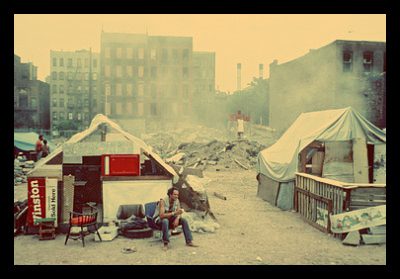
On any given night in the U.S., there are 610,042 people experiencing homelessness. What is even more shocking is that recent studies have shown that providing housing to hundreds of thousands of these homeless people could save taxpayers millions of dollars while simultaneously extending a helping hand to others. The millions of dollars saved could easily go toward reducing homelessness and poverty in other nations around the globe.
Two recent studies support the proposition that giving the homeless a place to call home is cheaper in the long run.
Results released from the Creative Housing Solution’s study of the Central Florida region found that each homeless person comes with a yearly price tag of $31,065. What could possibly drive the cost so high? Emergency room visits, hospital admissions and homeless-related crime arrests such as trespassing, public intoxication, public urination and begging are largely responsible.
According to Andrae Bailey, the CEO of the Central Florida Commission on Homelessness, most of the chronically homeless have a disability, such as veterans suffering from post-traumatic stress disorder or those with a mental illness or physical disability.
“These are not people who are just going to pull themselves up by their bootstraps and get a job,” Bailey said. “They’re never going to get off the streets on their own.”
They need help.
The University of North Carolina Charlotte’s social work department, led by assistant professor Lori Thomas, conducted a study over the past year of a nearby homeless apartment complex called Moore Place. In its first year, by decreasing the time tenants spent in emergency rooms by 447 fewer visits and admitted to the hospital by 372 fewer days, Moore Place saved a whopping $1.8 million.
Furthermore, the study revealed decreases of 78 percent in arrests and 84 percent in days spent in jail.
It costs $14,000 a year per person to house Moore Place tenants, but one of the requirements for residence is that 30 percent of the tenants income must go toward rent.
Combatting the cost are incentives from the city of Charlotte, Mecklenburg County and the Charlotte Housing Authority to encourage the development of other homeless housing projects.
For example, Charlotte’s Neighborhood & Business Services department has pledged up to $1 million for future housing developments and the county’s Community Support Services department has agreed to give up to $800,000 in supportive services. Also, a vote by the Charlotte City Council was passed to fund $1 million to go toward expansion of Moore Place.
If homeless housing projects like Moore Place are implemented nationwide, the amount of lives changed and money saved will be astounding and well worth the effort and time.
So, those struggling on American soil are being helped, but what about those in undeveloped and poverty-stricken countries? What is being done to help them?
U.N.-Habitat For a Better Urban Future is a United Nations program whose mission, according to their website, is to “promote socially and environmentally sustainable human settlements development and the achievement of adequate shelter for all.”
Due to the expectation that six out of every 10 people in the world will live in an urban area by 2030, the need for permanent and stable housing is dire. Slums are on the rise.
The characteristics of a slum, as outlined by the U.N., are inadequate access to safe water, inadequate access to sanitation and infrastructure, poor structural quality of housing, overcrowding and insecure residential status, all of which are issues associated with global poverty.
One of the initiatives of U.N.-Habitat is housing and slum upgrading, but the statistics in support of the initiative are disheartening. The following totals represent the slum population of various countries: Sub-Saharan Africa 199.5 million, South Asia 190.7 million, East Asia 189.6 million, Latin America and the Caribbean 110.7 million, Southeast Asia 88.9 million, West Asia 35 million and North Africa 11.8 million.
It is obvious from the numbers above that homelessness and poor housing conditions are problems everywhere. Now that homelessness in the U.S. is on the decline, more monies should be put toward foreign aid that addresses the housing issues.
For more information on what U.N.-Habitat is doing and how to get involved, visit their website.
Homelessness doesn’t only cost money – it also costs lives.
– Jennifer Brown
Sources: Huffington Post,Orlando Sentinel, ,End Homelessness, Charlotte Observer, UNhabitat
Photo: UN News & Media Photo

Housing the Homeless Saves Taxpayers’ Money
On any given night in the U.S., there are 610,042 people experiencing homelessness. What is even more shocking is that recent studies have shown that providing housing to hundreds of thousands of these homeless people could save taxpayers millions of dollars while simultaneously extending a helping hand to others. The millions of dollars saved could easily go toward reducing homelessness and poverty in other nations around the globe.
Two recent studies support the proposition that giving the homeless a place to call home is cheaper in the long run.
Results released from the Creative Housing Solution’s study of the Central Florida region found that each homeless person comes with a yearly price tag of $31,065. What could possibly drive the cost so high? Emergency room visits, hospital admissions and homeless-related crime arrests such as trespassing, public intoxication, public urination and begging are largely responsible.
According to Andrae Bailey, the CEO of the Central Florida Commission on Homelessness, most of the chronically homeless have a disability, such as veterans suffering from post-traumatic stress disorder or those with a mental illness or physical disability.
“These are not people who are just going to pull themselves up by their bootstraps and get a job,” Bailey said. “They’re never going to get off the streets on their own.”
They need help.
The University of North Carolina Charlotte’s social work department, led by assistant professor Lori Thomas, conducted a study over the past year of a nearby homeless apartment complex called Moore Place. In its first year, by decreasing the time tenants spent in emergency rooms by 447 fewer visits and admitted to the hospital by 372 fewer days, Moore Place saved a whopping $1.8 million.
Furthermore, the study revealed decreases of 78 percent in arrests and 84 percent in days spent in jail.
It costs $14,000 a year per person to house Moore Place tenants, but one of the requirements for residence is that 30 percent of the tenants income must go toward rent.
Combatting the cost are incentives from the city of Charlotte, Mecklenburg County and the Charlotte Housing Authority to encourage the development of other homeless housing projects.
For example, Charlotte’s Neighborhood & Business Services department has pledged up to $1 million for future housing developments and the county’s Community Support Services department has agreed to give up to $800,000 in supportive services. Also, a vote by the Charlotte City Council was passed to fund $1 million to go toward expansion of Moore Place.
If homeless housing projects like Moore Place are implemented nationwide, the amount of lives changed and money saved will be astounding and well worth the effort and time.
So, those struggling on American soil are being helped, but what about those in undeveloped and poverty-stricken countries? What is being done to help them?
U.N.-Habitat For a Better Urban Future is a United Nations program whose mission, according to their website, is to “promote socially and environmentally sustainable human settlements development and the achievement of adequate shelter for all.”
Due to the expectation that six out of every 10 people in the world will live in an urban area by 2030, the need for permanent and stable housing is dire. Slums are on the rise.
The characteristics of a slum, as outlined by the U.N., are inadequate access to safe water, inadequate access to sanitation and infrastructure, poor structural quality of housing, overcrowding and insecure residential status, all of which are issues associated with global poverty.
One of the initiatives of U.N.-Habitat is housing and slum upgrading, but the statistics in support of the initiative are disheartening. The following totals represent the slum population of various countries: Sub-Saharan Africa 199.5 million, South Asia 190.7 million, East Asia 189.6 million, Latin America and the Caribbean 110.7 million, Southeast Asia 88.9 million, West Asia 35 million and North Africa 11.8 million.
It is obvious from the numbers above that homelessness and poor housing conditions are problems everywhere. Now that homelessness in the U.S. is on the decline, more monies should be put toward foreign aid that addresses the housing issues.
For more information on what U.N.-Habitat is doing and how to get involved, visit their website.
Homelessness doesn’t only cost money – it also costs lives.
– Jennifer Brown
Sources: Huffington Post,Orlando Sentinel, ,End Homelessness, Charlotte Observer, UNhabitat
Photo: UN News & Media Photo
New Initiatives to Combat Global Obesity
Olivier De Schutter, the U.N. Special Rapporteur on the Right to Food, recently stated that obesity has become a bigger threat to global health than tobacco use.
Believing that there should be stricter regulations on consuming unhealthy foods, De Schutter gave a speech during the World Health Organization’s (WHO) annual summit and expressed concern that the world has not been actively tackling the issue of obesity. The WHO established the Global Strategy on Diet, Physical Activity and Health 10 years ago, but the global obesity epidemic is still expanding. Diabetes, heart disease and other obesity-induced health complications have become more prevalent as a result. To counter the growing issue of global obesity, De Schutter declared, “a bold framework convention on adequate diets must now be agreed.”
Many international groups agree with De Schutter’s comments. Though the Food and Drink Federation has stated that the food industry is making clear efforts to provide healthier meal options, organizations like Consumer International and the World Obesity Federation are demanding the adoption of compulsory guidelines for the food and drink industry to follow. In 2005, the number of global deaths caused by obesity and being overweight was 2.6 million. The same figure had risen to 3.4 million by 2010.
The proposed rules include reducing the levels of sodium, saturated fat and sugar in various foods. Artificial trans-fats were recommended to be completely removed from all food and drink products in the next five years. Organizations have also asked for improved meals in hospital and schools, stricter guidelines for food advertising and increased efforts to educate the public about healthy eating. Governments could help control the global obesity issue as well by introducing taxes, changing licensing controls, funding new research projects and reviewing the prices of different food items.
If implemented, these new guidelines would be at the “highest level of global agreement.” In contrast to the current practice of “opting out” of imposed regulations on the food industry, governments would be required to enforce them. Dr. Ian Campbell, the founder of the United Kingdom’s National Obesity Forum, says that the proposed recommendations are within reason. “The inescapable fact is obesity is killing on a massive scale and only action from governments to tackle head-on the fundamental causes of obesity will lead to any meaningful decreases.”
Obesity has long been linked to poverty. The majority of overweight and obese people can be found in developing rather than developed countries. North Africa, the Middle East and Latin America have nearly the same percentage of obese people as Europe does.
Currently, people living far below the poverty line rely on cheap, processed foods that are high in fats and sugars. Compared to diets rich in fresh fruits and vegetables, these unhealthy meals have high energy content per dollar spent, making them more convenient and accessible to the poor. In South Africa, a typical healthy meal costs approximately 69 percent more than an unhealthy one. For households living in extreme poverty, pursuing a healthy diet could take away up to 30 percent of the total income.
Placing taxes on unhealthy foods could help combat the problem. Collective action is crucial. “If obesity was an infectious disease,” stated World Obesity Federation’s Dr. Tim Lobstein, “we would have seen billions of dollars being invested in bringing it under control.”
– Kristy Liao
Sources: BBC, Huffington Post, Time
Photo: Earth Times
Soybeans and Global Food Security
A recent study by NASA’s Jet Propulsion Lab in California has shown that soybeans can be re-engineered to grow in more arid environments without losing standard crop yield. If the new varieties prove durable, the cultivation of soybeans in Sub-Saharan Africa and South Asia will help address food insecurity issues in the region. Here are five reasons why soybeans are important in addressing global food security:
1. Food production must increase by 70 percent to meet the world’s food needs by 2050.
There are a number of factors that will affect global food security in the coming decades including: population increase, movement away from rural areas and toward urban centers, food production and climate change.
Today, undernourishment affects 870 million people worldwide. Between now and 2050, there will be an additional two billion people on our planet, with around 24 million children pushed into hunger due to food security issues.
2. Soybeans are one of the world’s most important protein crops.
Soybeans have a protein content of over 35 percent, as well as healthy unsaturated fats and carbohydrate fibers, making them some of the healthiest food sources around. They are also one of the least expensive sources of protein when compared to eggs, milk, beef and cow peas.
Due to the use of soybeans in both the food and animal feed industries, soybean farmers can earn a substantial amount of cash because the crop can be successfully grown at a low cost of production.
3. Modifying soybeans can address both climate challenges and food insecurity.
In a recent study led by NASA’s Jet Propulsion Lab (JPL,) computer models have been applied to look for a super soybean. The research study determined that soybean plants can be redesigned to increase crop yield by 7 percent without using more water. The study also demonstrated that soybeans can be redesigned to use either 13 percent less water, or reflect 34 percent more light back into space without reducing crop yields–good for both food security and climate change.
While other geo-engineering solutions for climate change tend to be expensive, such as spraying sulfates into the upper atmosphere in order to reduce incoming sunlight or loading the ocean with iron in order to increase plankton photosynthesis, modifying annual crops is inexpensive and can be implemented quickly.
4. Soybean cultivation is growing in Africa.
Research by the University of Agriculture Makurdi in Nigeria in collaboration with the International Institute of Agriculture (IITA), aims to help improve the lives and livelihoods of small-hold farmers in the drought-prone areas of sub-Saharan Africa and South Asia by providing more durable soybean varieties that can stand up against more arid conditions. Like the redesigned varieties in the JPL study, new varieties being promoted in Africa can help increase crop yields without using more water.
Soybean production remains relatively isolated in Africa, with Nigeria as the largest soybean producer, followed by South Africa and Uganda. However, the new, more durable varieties may allow for more countries to begin cultivating soybeans, helping improve the health of their populations as well as reducing local poverty.
5. Soybeans could have a long-term impact on poverty.
Food and water security will be a major national security focus in the coming decades as both climate change and population increases affect food production worldwide. Countries lacking basic food resources to feed their growing urban populations may become hotbeds for conflict, unrest and terrorist activities.
While many solutions for food insecurity should be addressed and considered by lawmakers, scientists and farmers alike, soybean technology is a first step in addressing the needs of poverty stricken regions by providing a modified crop that can meet multiple goals.
Re-engineered soybeans are an innovative (and healthy) way to help address local food security issues worldwide. Not only do they provide a good food source, but their wide use in products from oils to food to animal feed guarantee a lucrative market for local farmers. Reducing poverty through innovative changes in the way staple crops are traditionally grown is an economical and feasible way to bring food security, in light of climate and population challenges, to developing regions of the world.
– Andrea Blinkhorn
Sources: Daily Trust, United Nations Conference on Trade And Development, Intech, NASA, VOA News, World Food Programme, Stop Hunger Now
Photo: HD WAll IMG
The State of Education in Peru
A brief description of Peruvian society is important to understanding the current state of education in Peru. Discussed below are key facts about Peruvian society.
It is apparent that Peru has developed in some areas better than others. To see more comprehensive information on Peru, as well as country comparisons, go to the CIA World Factbook.
A Closer Look: Education in Peru
The system of education in Peru is somewhat similar to that of the United States. It has basic education (ages 3 to 5 years old), primary (ages 6 to 11 years old) and secondary (ages 12 to 16 years old), all of which are free. However school is only mandatory from ages 6 to 16 years old. There is higher education, but it is not mandatory or free, however, they do have scholarship programs.
Education in Peru has been expanding. The numbers were not all together low to begin with, but since 2005, enrollment has increased to 72 percent for ages 3 to 5 years old; the 6 to 11-year-old age group is at 97 percent and the 12 to 16-year-old age group is at 91 percent enrollment. However, these numbers do not tell the whole story. As stated earlier, 34 percent of children ages 5 to 17 are in the labor force. How can so many be working and going to school at the same time? It would seem that children may be enrolled at school, but do not actually go. Enrollment rates do not equal attendance rates.
Data taken from the National Institute of Statistics shows that since 1994, spending on education has quadrupled. However, Peru only spends 2.8 percent of the gross domestic product on education, which is one of the lowest in the world. It is hopeful to see the increase in spending over such a short period of time, but it is clear the Peruvian government can spend more on education.
There are problems with educating the indigenous population, as bilingual education is often not funded. Almost 46 percent of indigenous students are not provided education in their native language. Problems also arise when trying to educate the rural population. It is often hard for rural students, especially girls, to get to a school, as they come from isolated areas.
One of the biggest reasons Peru might spend more on education is the quality. In 2009, the Program of International Student Assessment ranked Peru near the bottom of the 65 countries studied for reading comprehension and science, while being second to last in math. Spending money is not enough by itself though. Money can be spent in productive ways. For example, in 2012, the government spent $225 million on 850,000 laptops and gave them to schools all over the country. The American Development Bank found that this laptop program did not increase the students’ levels in math or reading.
For children 7 years of age, only 13 percent reached required math levels and only 30 percent reached required reading levels. The laptops did not increase motivation or time spent reading and completing homework assignments.
Since 2003, the number of students at private universities has doubled and in public universities it has increased by 12 percent. This substantial increase in private education shows that the more privileged students are gaining access to higher education. As public university is not free, it is harder for those without money to access it. This makes sense considering Peru has one of the highest income inequalities in the world.
On the surface, it seems as though education in Peru has improved over the last decade. Literacy and enrollment rates are up as well as educational spending. However, when you look deeper, the quality and equal access to education is another story entirely. Increasing spending on education is a must, but investment in education needs to be done properly by way of researching effective policies, government organization, institutional change and societal support.
– Eleni Marino
Sources: UNESCO, CIA, Iberoamerican Universities Universia, INEI, Peru This Week, World Bank 1, World Bank 2, IPS News, The Economist, ICEF, UNICEF
Photo: Friends of Chimbote
5 Lessons From the Late Dr. Maya Angelou
This past week, Wake Forest University students opened their emails to the following message from the University:
“Today members of the Wake Forest University community mourn the loss of beloved poet, author, actress, civil rights activist and professor Dr. Maya Angelou.”
Angelou passed away in her North Carolina home on Wednesday, May 28, at the age of 86. She served as the University’s Reynolds Professor of American Studies since 1982 and published more than 30 books of fiction and poetry, including her autobiography, “I Know Why the Caged Bird Sings.”
“Maya Angelou has been a towering figure — at Wake Forest and in American culture. She had a profound influence in civil rights and racial reconciliation. We will miss profoundly her lyrical voice and always keen insights,” said Nathan Hatch, President of Wake Forest University, in a press release.
As a Wake Forest student myself, I have had the honor to be an audience to her melodic voice on a few occasions, feeling as if each syllable shared with the room was a personal invitation to become a part of her world.
But these words were not merely pretty verses, but heartfelt, aching testaments to a life filled with obstacles, grit and determination. With her parents divorcing when she was only 3, Angelou continued to face tumultuous circumstances as she was later raped by her mother’s boyfriend around age 8. At age 17, she gave birth to son, Guy.
“I will always treasure “I Know Why the Caged Bird Sings,” because by revealing the sexual abuse she suffered as a child, Angelou opened the door to emotional healing for a lot of girls,” wrote Mary Mitchell in the article “Young Black Mothers Can Learn A Lot from Maya Angelou’s Life,” in the Chicago Sun-Times.
Through her openness about her own mistakes, Angelou helps others find the courage to confront their own struggles and failings. Below you will find five small lessons, from among many, left behind from one of the most “phenomenal” women of our time.
A remembrance website and guestbook for Maya Angelou can be found here.
— Blythe Riggan
Sources: Maya Angelou, WFU, Old Gold and Black, Sun Times, USA Today
Photo: Oprah
Cuban Economic Growth
For decades, Cuba kept itself off the radar and rarely allowed access to the United States. However, Raul Castro, brother to the infamous Fidel Castro and current leader of Cuba, has recently allowed small changes to make an impact on Cuba.
After years of economic isolation and little internal growth, Castro faces a difficult job in making up for lost time. Small programs like the Cuban Emprende make a world of difference as community leaders learn how to grow their small businesses into larger, more modern companies, leading the way for Cuban economic growth.
The distribution of wealth in Cuba is skewed, with the poor representing a large portion of the population. The average Cuban worker earns around $20 a month, and little has changed in the past 50 years. Cuba has now opened the doors to looking into private investments, a monumental step in the direction of globalization.
In the past, Cuba was mostly affiliated with Latin and South America. By allowing other countries, such as the U.S., into the Cuban system, the people of Cuba are looking at a brighter economic future.
However, members of U.S. Congress seem tentative about whether this Cuban economic growth and reform are benefiting the labor rights as well as human rights of the population. Raul Castro has yet to make clear how the people are being affected by this change in internal government, so outsiders are weary of possible retribution. It is unclear as to how the U.S. will react to these changes and opening up foreign investment. Since the revolution of Cuba in the 1960s, the U.S. has not been allied with Cuba.
Chamber President Thomas Donahue recently visited the island for the first time in 15 years. He reports positive change in the direction of free enterprise, fewer government jobs and increased private hiring. Cubans are seeing a better daily life as companies begin to modernize and improve the impoverished neighborhoods as jobs become more readily available.
Raul Castro has recently implemented programs teaching Cubans how to successfully operate small businesses and create meaningful business relationships. Programs such as this offer the lower class an opportunity to support themselves in the realm of business and become potential business partners as foreign investors start to peer into Cuba’s economy.
Cuba is still in the early stages of change as its people adjust to the government’s new approach, but current conditions are looking promising as people find their new niches in a budding economy.
– Elena Lopez
Sources: Reuters, NY Times, TIME
Photo: InterNations
Poverty in French Guiana
French Guiana is a small country with an estimated population of 270,000. It is located in South America, bordering Brazil and Suriname. It is a territory of France and therefore follows the French legal system. This means that it follows the French Constitution and is ruled by the French government. Officially, it is called a French Overseas Department.
Poverty in French Guiana is an interesting topic because so little is reported and few people are interested. It can be easy to focus on the largest populations in poverty in Africa or India, so much so that smaller countries are forgotten. This should not be the case, as all people deserve the right to escape poverty.
The lack of awareness for poverty in French Guiana is highlighted by the mere fact that statistics and data on this subject are hard to find. Since it is a French territory and technically considered part of France, global statistics from the United Nations or the World Bank are not often given for French Guiana individually. This signifies the relative unimportance of French Guiana among the international community. From the little information there is come these poverty facts from French Guiana:
These facts may seem disjointed and random, but that is exactly how information relating to poverty in French Guiana is presented. There is little to no comprehensive data on this tiny French overseas territory, at least in the English language. Most of the raw data was taken from the French National Institute of Statistics and Economic Studies. The data is only available in French, which makes a global discussion of this issue difficult.
Who is going to care about this small community? With so little international discussion on poverty in French Guiana, it will be difficult to rally people around the cause. Action needs to be taken by the French government to fix the high rates of unemployment, infectious disease endemics, HIV rates and poverty levels. It is the responsibility of the French people to appease their government to do the right thing and help French Guiana out of poverty.
– Eleni Marino
Sources: United Nations, Phrase Base, Conseil National Du Sida, The Guardian, INSEE
Photo: PIB
The Trouble With Conflict Diamonds
In recent years, the issue of conflict diamonds has become a major human rights issue. A conflict diamond is a diamond mined in the war zones throughout Africa to fund the recurring civil wars there. Despite the attention given by the media and the increase in the awareness of this issue, conflict diamonds are still being produced and distributed at an alarming rate.
Since the 1990s, conflict diamonds have funded wars in areas such as Angola, Sierra Leone and the Democratic Republic of Congo. Rebels in these areas typically gain control of necessary natural resources, such as oil, wood, diamonds and other minerals, to attain more weapons and influence over the surrounding communities. These military factions oppose the governments in place, and so they wage violence in their struggle for power. According to Amnesty International, wars in these areas have resulted in the loss of more than 3.7 million lives.
Along with unjust violence, poverty also plays a central role in this issue. According to Brilliant Earth, diamond mining communities are impoverished because the one million diamond miners in Africa earn less than a dollar a day — a wage that is below the extreme poverty level. Since much of this work is unregulated — no labor standards or minimum wage laws are ever enforced — it contributes to the dangerous and unjust nature of this work.
Not only do miners acquire unfair wages, but they also work in dangerous conditions, sometimes without training or the proper tools necessary, and face health problems, such as HIV and malaria. Entire communities are exploited through these mining practices, and as a result, many of these communities lack the ability to develop economically while workers lack fundamental provisions, such as sanitary running water.
Despite the decrease in violence and the recent attention brought to this issue through media coverage and the 2006 film “Blood Diamond,” conflict diamonds are still in existence. These diamonds are sold in the diamond trade to fund rebel militia, and as a result, millions are suffering from both violence and poverty. To help combat this issue, the Kimberly Process was founded in December 2000 by the United Nations General Assembly.
Through the establishment of the Kimberly Process Certification Scheme (KPCS), participating countries now have the opportunity to ensure that all imported diamonds are ‘conflict-free’ and do not support the rebels in those parts of Africa. With 54 participants representing 80 countries, the Kimberly Process has been an important element in the struggle to address this human rights issue.
Even though the Kimberly Process works to halt the trade of conflict diamonds, it cannot stop the violence and poverty that result from these unethical mining practices. Those are two issues that can be addressed separately and efficiently. Unfortunately, poverty is such a huge and central element in many of the human rights issues we face today.
– Meghan Orner
Sources: Amnesty international, Brilliant Earth, Kimberly Process
Photo: Al Jazeera
Shot@Life Provides Vaccinations for Impoverished Nations
The United Nations Foundation Shot@Life aims to give everyone the shot they need to live a happy and healthy life.
The Shot@Life campaign is almost exactly like it sounds. This campaign works with volunteers to provide much needed vaccinations to the extremely impoverished nations of the world through advocacy and donations.
Shot@Life educates, connects and empowers the American people to support vaccines, and vaccinations are one of the most cost-effective ways to save the lives of children in developing countries.
The campaign is basically a national call to action for a worthy global cause. The foundation rallies the American public and members of Congress to help them understand the fact that together they can save a child’s life every 20 seconds just by expanding access to vaccines.
The global foundation encourages the American public to learn about, advocate for and donate to provide vaccines. Shot@Life aims to noticeably decrease vaccine-preventable childhood deaths and give every child a shot at a healthy life within the next 10 years.
This campaign began in 1998 as a U.S. public charity by philanthropist Ted Turner. The Shot@Life campaign was created in order to build upon the U.N. Foundation’s 13-year legacy in global vaccine efforts as a leading partner in the Measles Initiative and Global Polio Eradication Initiative.
The Shot@Life campaign draws on their core abilities through advocacy, community-building and communications in order to raise awareness for their cause.
There are a few causes in which they already have seen excellent success: the campaigns Nothing But Nets and Girl Up.
The Nothing But Nets campaign is dedicated to providing insecticide treated mosquito nets to impoverished peoples in order to prevent the spread of malaria from mosquito bites.
The Girl Up campaign was started in order to provide aid to young girls in poverty-laden nations. This campaign utilizes the help of teenage leaders in order to raise awareness about how young girls are being treated around the world.
Shot@Life is also partnered with some of the largest names in fundraising, nonprofits and charities. They have received partnerships from UNICEF, the Bill & Melinda Gates Foundation and The Lions Club, to name a few.
This U.N. Foundation is uniquely positioned with in-house expertise and leadership to successfully bring Shot@Life to the awareness of an American audience.
The nonprofit also utilizes social media in participation with news companies and webpages to give a portion of its advertising revenue on each company’s behalf for each like or share an article or blog post receives.
Providing vaccinations to the world’s poor is another huge step in the process to end global poverty. Getting vaccinations mean children will not die from diseases that are preventable such as smallpox, measles, polio and tuberculosis.
More children living into adulthood could potentially slow the birthrates and stabilize the life-expectancy of the people living in African nations as well as extremely impoverished parts of India.
The Shot@Life campaign is dedicated to providing peace of mind to all the nations of the world.
– Cara Morgan
Sources: CDC, GirlUp, HuffPost 1, HufFPost 2, NothingButNets, Shot@Life
Photo: Children’s Futures
Can the ICC Spur Change in the DRC?
In the Democratic Republic of the Congo (DRC)—a country currently at the bottom of the Human Development Index—the sentencing of Germain Katanga at the International Criminal Court (ICC) this past week has brought mixed reactions.
The Court convicted the former commander of the Forces de Résistance for his role in the February 2003 attack on the village of Bogoro in North-Eastern DRC that resulted in the deaths of over 200 people.
Conflict has consumed this area of the DRC, and more specifically the Ituri region, for years. The power struggle stems from the drive to control the local natural resources, namely gold. Approximately 130,000-150,000 persons in Ituri alone mine gold, often working over 12 hours a day.
High gold taxes and exploitation of small-scale miners prevents many from achieving a decent standard of living. This, in partnership with low agricultural production, produces hunger throughout the population.
Of the two convictions the ICC has realized since its inception, both defendants committed their crimes in Ituri. Critics of the Court point to the prevalence of indicted African leaders as an example of political influence. The failure to enforce their indictments, as in the case of Sudanese President Omar al-Bashir, has weakened the Court’s credibility.
Signatory states to the ICC’s Rome Statute can also refer certain cases to the Office of the Prosecutor, which means governments may use the Court as a weapon against political opponents rather than a source of justice. Critics have also questioned the influence of the West on the Court, considering 60 percent of ICC funding comes from the European Union.
The ICC appears to be arriving at a crossroads between political showcase and legitimate enforcer of the law. Were the Court to gain its intended footing on the international stage, it would have the opportunity to affect change in the DRC. Deterrence aside, criminal trials allow victims to finally describe their experiences, which can help in the process of national reconciliation.
Implementing law promotes the stability that could do little to harm an economy destroyed by years of warfare. Each trial brings media coverage that can be harnessed to advocate for aid to the DRC. Regardless, the relationship between the ICC and the DRC will be interesting to watch in the coming years.
– Erica Lignell
Sources: Brookings, European Commission, International Policy Digest, IRIN, La Presse, World Bank