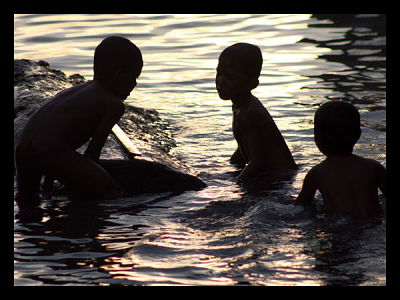
If you think back to your days as a kindergartner, you may remember the first time you learned the water cycle. Equipped with a blue crayon, you replicated what your teacher described in a simple picture: rain falls, people drink it, the water evaporates and the whole thing repeats. You learned that water is renewable.
But renewable does not mean unlimited, a fact constantly recognized by the 780 million people who lack access to clean drinking water.
Freshwater, the largest source of our drinking water, makes up only 2.5 percent of the planet’s water. Only 1 percent of freshwater is actually available, as most of it is frozen. This leaves 0.007 percent of the Earth’s water left for an ever-growing population that exceeds 7 billion. This is a water crisis.
“Why can’t we use ocean water?” one might ask. The answer is, well, we can.
Desalination, the removal of salt from saltwater, makes the use of ocean water possible. But breaking the strong bonds that salt forms with water molecules requires a lot of energy, and this energy is expensive.
As Peter Gleick, president of the environmental think-tank Pacific Institute, says, “It can cost from just under $1 to well over $2 to produce one cubic meter (264 gallons) of desalted water from the ocean.”
Considering that 99 percent of water-related illnesses occur in developing countries, desalination is simply an unrealistic option for most who suffer from the water crisis.
But what if there were some way to desalinate without such steep energy requirements?
A team of scientists believe they know how to do so.
Martin Bazant and Daosheng Deng of the Massachusetts Institute of Technology (MIT) have developed a process that they believe will more efficiently and effectively desalinate water. They call it “shock electrodialysis.”
Today, the two cheapest methods of desalination are reverse osmosis and electrodialysis.
Reverse osmosis works by pumping water through a membrane that does not allow salts to pass. Although it requires less energy than older methods, it works too slowly.
Building on reverse osmosis, electrodialysis tried the opposite: pumping salts through an electrified membrane until only pure water is left. This process is significantly cheaper than reverse osmosis but is not without shortcomings. It fails to decontaminate water of dirt and bacteria without additional filtration methods.
Bazant and Deng say that shock electrodialysis can produce clean, bacteria-free drinking water in one step. How? They placed an additional filter made of porous glass near the electrified membrane. Based on Bazant and Deng’s observations, dirt particles and bacteria are unable to fit through the tiny pores in the glass material.
If it turns out that this MIT development can be produced at a low cost on a large scale, shock electrodialysis could provide millions of people with access to drinking water.
– Shehrose Mian
Sources: UNICEF, National Geographic, Scientific American, Technology Review
Photo: Technology Review

Katra and India’s Women’s Rights Problem
Two 12 and 15-year-old girls were lynched last week in western Uttar Pradesh in India after being abducted, gang raped and hanged by their attackers. The Indian village, known as Katra in the Badaun district, is one of the world’s most impoverished areas.
Most of its citizens work as tillers or take up small, part-time jobs in order to make a living. With hardly any money, most cannot afford a functioning toilet, so they relieve themselves in nearby fields.
Yet this is exactly what would lead to the death of two young cousins after being abducted by three men in the fields of their village. Their attackers hanged the two girls on a tree in the village, which would be on display for the entire community.
Thought by medical experts to have been hanged alive, many are wondering how and why these gruesome attacks could have taken place in a day and age where feminism is, in most parts of the world, on the rise.
India has had a history of women’s rights problems for years. After the gang rape case of a 23-year-old girl in Delhi in 2012, in which four men were all found guilty and given the death penalty, India has been making a concerted effort to tighten their rules regarding violence against women.
Yet this has by no means actually prevented or improved cases of violence against women in the country; in most cases, police insensitivity has been proliferated by patriarchal attitudes of those in governmental power.
The Samajwadi Party is just one example of misogyny’s power in Indian politics. The senior Samajwadi Party leader, Ram Gopal Yadav, spoke of the most recent incident, stating, “[In] many places, when the relationship between girls and boys come out in the open, it is termed as rape.”
Two months ago, party patriarch Mulayam Singh Yadav claimed that “boys will be boys” and vehemently opposed the death penalty as punishment for acts of rape.
The three men responsible for the two teenage girls’ deaths in Katra have been arrested, and two policemen are being held on suspicion for trying to cover up the crimes.
This is not an uncommon occurrence: while a rape is reported every 21 minutes in India, law enforcement failure often results in crimes not being reported or investigated fully. Yet as the case rises in power, world officials are continuing to speak out against these acts of misogyny.
U.N. Secretary General Ban Ki-moon, who stated that he was “appalled” by these recent acts, is just one of many to have spoken out. “We say no to the dismissive, destructive attitude of ‘boys will be boys,’” he said. As the government continues to crack down on these acts, many hope its citizens will listen.
— Nick Magnanti
Sources: The Diplomat, ODT, Scroll, Times of India 1, Times of India 2
Photo: The Story Exchange
Breakthrough Discovered in the Treatment of TB in Children
New findings in tuberculosis among children could mean that diagnosing the disease could be faster, cheaper and more effective for the millions of people infected by the disease each year.
Tuberculosis (TB) is the second largest killer due to a single infectious agent worldwide, only following HIV/AIDS, and is the leading killer of people with HIV. The ones most affected by the disease are low to middle-income countries, where upwards of 95 percent of TB deaths occur.
Developing countries where malnutrition and compromised immune systems affect the overwhelming majority see the most cases of TB. Even though all groups are at risk, children and young adults are at a greater risk of contracting the disease.
The disease is very difficult to diagnose in children — the early symptoms of TB are also present in dozens of other illnesses — and by the time a positive diagnosis is reached, the disease has already spread throughout the lungs, brain and other organs.
In 2012 alone, there were 530,000 cases of TB in children, and out of the children who were HIV-negative, 74,000 died of the disease because of late and improper diagnosis.
A better diagnosis is needed so that doctors can start treating TB earlier (in its early stages) for better chances of overcoming the disease and so children who show false positives for TB do not need to go through unnecessary treatment.
Health staff in several poor countries have been using a standard test for TB which has failed 93 percent of the time, showing false negatives, leaving thousands of infected children untreated.
Recently, after seven years of study and examining the blood of 2,800 children, an international team of researchers discovered that TB can be positively identified by examining 51 genes.
Over 80 percent of cases were discovered positive for TB by examining this specific gene signature. Researchers examined the blood samples to see which genes were activated or suppressed in samples testing positive.
It was found that TB could be distinguished from other diseases in 51 of the 30,000 genes that make up the human genome. A “risk score” was developed from the examination of this gene signature, and when tested, over 80 percent of the samples were accurately diagnosed positive for TB. Tests that were found negative ruled out TB as a diagnosis with just as much accuracy.
“Childhood TB is a major problem in African hospitals. An accurate test for childhood TB would be an enormous breakthrough, enabling earlier diagnosis, reducing long hospital admissions for investigation of TB suspects, and limiting the number of children treated inappropriately,” said head researcher Brian Eley. Eley is part of the University of Cape Town and lead the clinical study in South Africa.
Early, accurate diagnosis of TB would lead to reducing deaths related to TB in children. The discovery of what these 51 key genes demonstrate in relation to TB will help lead the way to a significant global decrease in the disease that currently affects millions.
— Jerilynn Haddow
Sources: WHO, IRIN Africa, Wellcome
Photo: Blogspot
NGO Under Investigation for Violating Anti-Homosexuality Act
LGBT rights seem to have a place in the politics of almost every nation in the world these days. The topic is one of the most polarizing as well. Some countries are spearheading the movement with full inclusiveness for LGBT citizens. Others, like the United States, seem to be floating somewhere in the middle. And then there are the countries pushing hard in the opposite direction, such as Russia.
However, when it comes to anti-gay legislation, the government of Uganda is in a league of its own. In February of this year, lawmakers in Uganda essentially made it illegal to be gay by passing the Anti-Homosexuality Act. The bill makes the promotion of homosexuality, in every general sense, punishable. The price to pay for the ultimate offense – actually being gay – is a life sentence.
The legislation also extends for interacting with LGBT people. Failure to report homosexual suspicion to the government will earn time behind bars. Even knowingly housing or renting an apartment to a gay person could warrant up to five years in prison.
In recent history, societies across the world have met very significant ethical milestones that make Uganda’s Anti-Homosexuality Act seem absurd. Doesn’t the Ugandan government, or any government for that matter, have more pressing issues than bedroom behavior that need attention? Would the Ugandan government actually spend the time and energy to enforce the law?
Apparently so.
The Refugee Law Project, a Uganda-based nongovernmental organization, recently came under investigation by the government over allegations of “promoting homosexuality and lesbianism.” Whether or not the NGO actually violated the Anti-Homosexuality Act is still being disputed as the investigation takes place.
The RLP operates at the School of Law of Makerere University in Uganda. Its aim is to enhance the mental health and psychosocial well-being of refugees and displaced people. The organization also explicitly states its intention to enforce sexuality and gender rights for those in need, which may have been a cause for government scrutiny.
The Refugee Law Project has taken to social media to inform the public that its operations are still running despite some interference. The organization has halted its one-on-one work with refugees at the moment, however. Some say that this inherently threatens the Refugee Law Project’s ability to accomplish its mission.
The standing of the Anti-Homosexuality Act in Uganda is debated on ethical grounds for human rights, but it has also been criticized as a scapegoat tool to target groups and individuals critical of President Yoweri Museveni’s regime. Regardless, the legislation takes significant time and energy to enact and reinforce – time and energy that could be better spent helping groups in need rather than ostracizing people further.
— Edward Heinrich
Sources: Advocate, BBC, Refugee Law Project
Photo: Al Jazeera American
Rape as a Weapon of War
Rape and sexual violence are used as weapons of war because they are inexpensive and have longer lasting effects than guns or other weapons. UNICEF has noted that sexual violence “erodes the fabric of a community in a way that few weapons can.” Sexual violence and rape not only have negative, long-term impacts on women, but also their children, their families and their communities.
The effects are far reaching. Women suffer both psychologically and physically, as well as socially and economically.
When women are victims of sexual violence, they often suffer physically from persistent pain, fistula and infertility. Women can also contract HIV or other STDs, that put them at a severely disadvantaged position for the rest of their lives. In instances where women are injured so severely that they are unable to work, they suffer economically as well.
Psychological effects can emerge years later and have a long lasting impact including depression, anxiety, post traumatic stress disorder (PTSD), low self esteem and suicidal thoughts.
During conflict, women are at risk for being victims of sexual violence, and in post-conflict societies, women are at risk of the social impacts resulting from being raped or experiencing sexual violence. Using rape as a weapon of war causes long lasting impact on the lives of the victims.
Due to the stigma of rape, women are often forced from their families or divorced by their husbands. This can be extremely problematic in societies where a woman’s economic security depends on marriage. When women are isolated, they are often forced into a life of poverty.
In instances where women become pregnant after being raped, they are isolated from their communities for birthing an “enemy child.” This is detrimental to a woman’s well-being in a multitude of ways, as they are cut from communities that once helped support them. The mental impact is equally severe, while it is even further enhanced by the economic impact of having to raise a child.
On the other hand, societies where a woman’s value is dependent on her ability to have children, infertility as a result of being raped or a victim of sexual violence can seriously affect a woman’s social standing and perceived worth.
Sexual violence and rape as weapons of war damage entire families and communities whether women stay within them or are outcast. As women are isolated, communities are broken. If they stay, men are affected as they feel they have failed in their role as “protector.” The physical, mental, social and economic impacts felt by women, men and children can last decades and even multiple generations.
— Kim Tierney
Sources: Harvard, The International Campaign to Stop Rape and Gender Violence in Conflict, ODI
Photo: Woodmark
Chemists Develop Solution to Water Crisis
If you think back to your days as a kindergartner, you may remember the first time you learned the water cycle. Equipped with a blue crayon, you replicated what your teacher described in a simple picture: rain falls, people drink it, the water evaporates and the whole thing repeats. You learned that water is renewable.
But renewable does not mean unlimited, a fact constantly recognized by the 780 million people who lack access to clean drinking water.
Freshwater, the largest source of our drinking water, makes up only 2.5 percent of the planet’s water. Only 1 percent of freshwater is actually available, as most of it is frozen. This leaves 0.007 percent of the Earth’s water left for an ever-growing population that exceeds 7 billion. This is a water crisis.
“Why can’t we use ocean water?” one might ask. The answer is, well, we can.
Desalination, the removal of salt from saltwater, makes the use of ocean water possible. But breaking the strong bonds that salt forms with water molecules requires a lot of energy, and this energy is expensive.
As Peter Gleick, president of the environmental think-tank Pacific Institute, says, “It can cost from just under $1 to well over $2 to produce one cubic meter (264 gallons) of desalted water from the ocean.”
Considering that 99 percent of water-related illnesses occur in developing countries, desalination is simply an unrealistic option for most who suffer from the water crisis.
But what if there were some way to desalinate without such steep energy requirements?
A team of scientists believe they know how to do so.
Martin Bazant and Daosheng Deng of the Massachusetts Institute of Technology (MIT) have developed a process that they believe will more efficiently and effectively desalinate water. They call it “shock electrodialysis.”
Today, the two cheapest methods of desalination are reverse osmosis and electrodialysis.
Reverse osmosis works by pumping water through a membrane that does not allow salts to pass. Although it requires less energy than older methods, it works too slowly.
Building on reverse osmosis, electrodialysis tried the opposite: pumping salts through an electrified membrane until only pure water is left. This process is significantly cheaper than reverse osmosis but is not without shortcomings. It fails to decontaminate water of dirt and bacteria without additional filtration methods.
Bazant and Deng say that shock electrodialysis can produce clean, bacteria-free drinking water in one step. How? They placed an additional filter made of porous glass near the electrified membrane. Based on Bazant and Deng’s observations, dirt particles and bacteria are unable to fit through the tiny pores in the glass material.
If it turns out that this MIT development can be produced at a low cost on a large scale, shock electrodialysis could provide millions of people with access to drinking water.
– Shehrose Mian
Sources: UNICEF, National Geographic, Scientific American, Technology Review
Photo: Technology Review
New High Commissioner For the UN
Prince Zeid al Hussein, longtime Jordan diplomat, ambassador and former U.N. peacekeeper, has been nominated to replace Navi Pillay as the new high commissioner for human rights for the U.N. Currently serving as the U.N. Ambassador for Jordan, Zeid has built a strong career rallying behind such issues as international justice and sexual violence. If appointed, many hope his position will help bring a voice to the Middle East, specifically at a time where many individual rights in the area are under strain.
Zeid will be replacing Navi Pillay, a South-African born woman who was the first female to have started a law practice in her home province of Natal in 1967. Pillay has additionally served on the South African High Court and for the U.N. General Assembly for a total of eight years.
Pillay, whose four-year term was extended for two years, has worked to fight against domestic violence, and to improve economic, social and cultural rights.
Many hope Zeid’s new position will work to give answers to some of the injustice happening in the Middle East, and Zeid seems to be obliging. Showing interest in addressing horrific abuses in the three-year conflict in Syria, Zeid’s future position may bring as many burdens as it does advantages.
“Obviously a challenge is that he has to be willing to speak frankly about the record of silencing civil society, crushing peaceful protests, which is endemic in that region at this stage,” said Peggy Hicks, global advocacy director for Human Rights Watch.
Jordan, with help from Luxembourg and Australia, has been working on a draft which would provide humanitarian aid into Syria through four border crossings without government approval. Hopeful that the new position will explore new possibilities for the U.N., fellow diplomats have continued to offer praise for Zeid’s nomination. “Great choice,” said France’s Gerard Araud, via Twitter. “A committed defender of human rights and international law.”
Zeid has appointed Dina Kawar as Jordan’s new representative to the U.N.
— Nicholas Magnanti
Sources: Fox News, DW, DNA India
Photo: Free Beacon
The Timbuktu Renaissance
In 2012, Jihadist forces invaded and occupied Northern Mali, forcing hundreds of thousands of civilians into exile. Among these individuals were musicians, artists and scholars.
Timbuktu is a city in the country of Mali, a western African country. Timbuktu is historically important as a trading post on the trans-Saharan caravan route. It was also the center of Islamic culture from 1400-1600. In 1988, the city was designated as a World Heritage Site.
Extremists invaded and immediately targeted Mali’s culture, notably music, including the world-renowned Festival Au Desert, as well as historic manuscripts that document Timbuktu’s position as the center of Islamic civilization in Africa during the Renaissance period.
The established culture is especially crucial in Mali, as it provides a guard against fundamentalism and the rigid Sharia law that outsiders have attempted to impose on the Mali people.
In an attempt to snuff out Mali’s culture, Islamic Jihadists sought to gain increasing levels of control. The extremist’s work to break down Mali’s culture was a strategic move, as culture is necessary for collective identity. When the collective body breaks down, a culture loses its cohesive nature — which is exactly what the extremists were trying to achieve. Due to the strength and perseverance of the Mali people, however, they were unsuccessful.
Invaders sought to silence the musical Internet for much of Mali, destroyed unique mud-brick shrines and tore down UNESCO World Heritage sites.
Despite Jihadist efforts, the Malians continued to blend music in hiding and in exile in neighboring countries. Under the leadership of Abdel Kader Haidara, a scholar and member of the Timbuktu Renaissance Action Group, individuals saved thousands of precious historical manuscripts, risking their lives to transport hundreds of cases on donkey-back.
Luckily, French forces worked to assist Mali in expelling the Jihadist takeover in the North. Now, as the country is working to re-unify the North and South, the current course of action comes in the revival of the Mali culture.
Mali’s President, Ibrahim Boubacar Keita, speaks openly about the crucial role culture plays in reunifying the country. The president spoke of Timbuktu’s symbolic importance as a major center of Islamic history during the concert of Malian music held during the UN General Assembly last September.
President Keita leads distinguished members of the Timbuktu Renaissance Action Group to revive and strengthen Mali’s rich cultural environment. This effort is for more than historical preservation, but works toward harvesting the potential for unity. Mali culture has the capability to promote peace, spur economic growth and attract tourists back to the region.
The Timbuktu Renaissance is alive and in full swing — and as the movement continues to grow, so does the potential for peace.
— Caroline Logan
Sources: Britannica, Brookings 1, Brookings 2
Photo: Flickr
Team UNICEF: Playtime at its Best
“You can discover more about a person in an hour of play than in a year of conversation,” said Plato. Playing is something that every child should be able to do, no matter the race, gender, language or religion. Playtime is not only something that every child wants to do, but it is necessary that children get the chance to play every day. It enhances a child’s learning ability, social skills and overall childhood enjoyment.
Many children in third-world countries do not have the chance to play because they do not have time, due to child labor.
Team UNICEF was built to help improve children’s lives, and was launched this past fall. Team UNICEF’s goal is to “amplify its existing sport-related programs and partnerships to improve the lives of children globally.”
UNICEF has partnered up with other major organizations, UNICEF ambassadors, and celebrities to make Team UNICEF a success. Athlete celebrities are great to have as ambassadors in this program, because they are very influential and are very well known. Some of the sport-related UNICEF ambassadors that have taken part in Team UNICEF are Serena Williams, David Beckham, Leo Messi and Yuna Kim.
Team UNICEF is trying to get everyone involved.
UNICEF believes that playing a sport that involves everyone will stop exclusion and discrimination. It is believed that through sport, a sense of community and union will be built.
Here are a few points about what good play could do for children:
– Increases self-esteem, self-respect and self-awareness
– Improves and maintain physical and mental health
– Gives them the opportunity to interact with other children
– Increases their confidence by developing new skills
– Increases their imagination, creativity and independence
– Mixing with children off all backgrounds
– Develops social skills and learning skills
– Helps them learn about their environment and community
Playing should not only be a privilege; it is a right that every child should have, no matter the background, ethnicity, language or religion. Team UNICEF has successfully gave children this right, and will continue to do so.
-Priscilla Rodarte
Sources: UNICEF ,Planning With Kids ,Play England
Poverty in Austria
As of 2010, 16.4 percent of the European population, 80 million people, was considered poor and lived below the poverty threshold.
The definition of being impoverished (or at high risk of being impoverished) is: households where the household income is less than 60 percent of the total median income.
According to the EU Social Report 2012 statistics, 1.2 million people were at risk of poverty in Austria, meaning that 14.4 percent of the Austrian population was in danger of poverty.
The report also declared that about 1.5 million people were either at risk of poverty in Austria or were in danger of being debarred from society (about 18.5 percent) in Austria. In the European Union, 124.5 million people (24.8 percent of the population) were at risk of poverty or social exclusion.
This 18.5 percent all fit at least one of the following conditions: not able to afford basic expenses, not able to pay their monthly bills, not having funds to eat meat or fish every other day, not able to afford a holiday, not able to pay for a car, not able to afford heating costs, or those who cannot pay for items such as a TV, telephone or washing machine.
Single-parent families are predominantly at risk of poverty, especially single women without an income. 36.9 percent of single-parent households were affected by poverty in 2010. The significant amount of poverty in single-parent families is because of their resources being based on only one income.
In the European Union, the poverty rate of women is higher than of men: it is at 17.1 percent against 15.7 percent for men. Austria has one of the highest gender gaps of poverty in the European Union.
The elderly in Austria are also at a great risk of poverty. 15.9 percent of Europeans 65 years or older are living in poverty. Austria has a significant gap between the general poverty rate and the elderly poverty rate.
Those who are not citizens are also at risk of poverty in Austria. The poverty rate of immigrants born outside the European Union is at 26.9 percent, versus 14.8 percent for those Europeans living in their country of origin. These differences can be due to many different factors. In some countries, some jobs may be forbidden for foreigners or immigrants.
-Colleen Moore
Sources: Austrian Times, Inequality Watch
Photo: Spiegal
Domestic Violence in Nepal
Radha Neupane, who is already married at the age of 12, lives and supports her family on $30 a month. She has no financial backing from her alcoholic husband and she is also a victim of domestic violence. She works for a cleaning service, cleaning over three houses a day to place food on the table for her young ones.
“I’m used to it now. What choice do I have?” said Neupane to IRIN, a service of the U.N. Office for the Coordination of Humanitarian Affairs.
Over the past decades, domestic violence in Nepal still remains an unsolved issue. Gender based violence, particularly toward females, is the main concern. The violence comes in all forms, including verbal abuse, beating and even more common, acid burning.
Saathi is an organization directed at helping victims of domestic violence. Activist and Saathi vice president Bhawana Rana states, “The office has barely changed because we hold the same patriarchal society where women’s equality is not accepted.”
Nepal is known to hold the worst rates of gender based violence in Asia. The current bill to hinder domestic violence from continuing to be a problem is currently on hold in Nepal’s government. As of now, the government is not taking any proactive actions to help relieve any of the domestic violence in Nepal.
In Nepal, domestic violence is considered to be more of a private family issue than a crime, thus resulting in a lack of outside interference. Abused women suffer from mental health problems like depression and physical reproductive health problems.
Violence against women in Nepal continues to grow every day. A total of 86 percent of women are unsafe in the communities they reside in. A disturbing 91 percent of women killed in Nepal have been killed by someone they know. Many of these abused adult females do not seek legal help in fear of more abuse from the government agencies and authorities.
Nepal does not provide secure areas for adult females who are victims of domestic abuse. This leaves women vulnerable and unable to escape the abuse. Over one-fifth of Nepal’s population deems domestic abuse acceptable. For most women the home is the most unsafe place to be. Women in the home are more likely to face marital rape and violence.
Activists are continuing their efforts to put an end to domestic violence and provide a safe environment for women and children to live in. The society is in need of political leadership to speak up for not only the women in Nepal, but all victims of domestic violence in the area. There is much improvement needed within Nepal’s government and legislature. Their view of domestic violence needs to change. Human rights activists have raised awareness of the social unjust in Nepal and continue to raise the question of providing necessary protocol and policies to end this epidemic.
– Rachel Cannon
Sources: IRIN, WOREC
Photo: World Bank