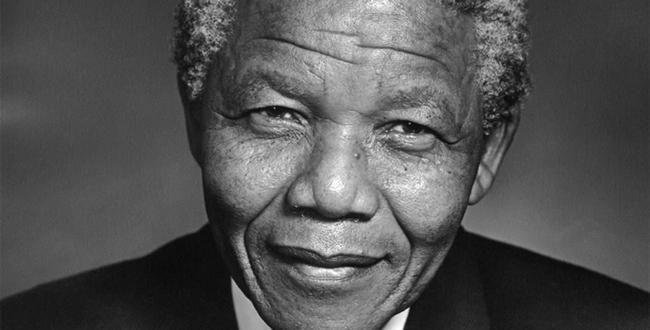
This month the international community celebrated Nelson Mandela International Day, the first time the day has been celebrated since the former South African President’s death.
Nelson Mandela Day, celebrated on July 18, the day of the former South African President’s birthday, was approved in 2009 by the United Nations. The day was created to inspire others to carry on the Nobel Peace Prize recipient’s legacy and to honor the beloved leader himself. On July 18, people around the world are encouraged to offer 67 minutes of their day to those less fortunate. After dedicating 67 years of his own life to working for social justice, Mandela passed away in his home in 2013 at the age of 95.
This year, a foundation spokeswoman from the Nelson Mandela Foundation estimated that 126 countries participated in Mandela Day, as over 1,200 positive deeds were registered on the foundation’s website.
“We have been heartened by the number of sustainable projects still thriving. At the same time it has been inspiring to see the range of innovative new projects to emerge,” said spokeswomen Danielle Melville.
Below are a collection of 10 quotes from Nelson Mandela himself, ranging from his time as prisoner 4664 on Robben Island to the occasion of his many accomplishments and rewards:
1. “There will always be good men on earth, in all countries, and even here at home.” -From a letter to his former wife Winnie Mandela, written in Robben Island, 1970
2. “These countless human beings, both inside and outside our country, had the nobility of spirit to stand in the path of tyranny and injustice, without seeking selfish gain. They recognized that an injury to one is an injury to all and therefore acted together in defense of justice and a common human decency. Because of their courage and persistence for many years, we can, today, even set the dates when all humanity will join together to celebrate one of the outstanding human victories of our century.” -From his Acceptance Speech at the Nobel Peace Prize Ceremony, Norway, 1993
3. “We understand it still that there is no easy road to freedom. We know it well that none of us acting alone can achieve success. We must therefore act together as a united people, for national reconciliation, for nation building, for the birth of a new world. Let there be justice for all. Let there be peace for all. Let there be work, bread, water and salt for all. Never, never and never again shall it be that this beautiful land will again experience the oppression of one by another and suffer the indignity of being the skunk of the world. Let freedom reign.” -From his Inauguration as President of South Africa, South Africa, 1994
4. “I learned that courage was not the absence of fear, but the triumph over it. I felt fear myself more times than I can remember, but I hid it behind a mask of boldness. The brave man is not he who does not feel afraid, but he who conquers that fear.” -From his book, Long Walk to Freedom, 1994
5. “If I were to be granted one wish on this occasion, it would be that all South Africans should rededicate ourselves to truing this into the land of our dreams; a place that is free of hatred and discrimination; a place from which hunger and homelessness have been banished; a safe place for our children to grow into our future leaders.” -From his 80th Birthday Celebration, South Africa, 1998
6. “My inspiration are men and women who have emerged throughout the globe, and who have chosen the world as the theatre of their operations and who fight socio-economic conditions which do not help towards the advancement of humanity wherever that occurs. Men and women who fight the suppression of the human voice, who fight disease, illiteracy, ignorance, poverty and hunger. Some are known, others are not. Those are the people who have inspired me.” -From a speech at London School of Economics, England, 2000
7. “What counts in life is not the mere fact that we have lived. It is what difference we have made to the lives of others that will determine the significance of the life we lead.” -From Walter Sisulu’s 90 Birthday Celebration, South Africa, 2002
8. “One of the most important lessons I learned in my life of struggle for freedom and peace is that in any conflict there comes a point when neither side can claim to be right and the other wrong, no matter how much that might have been the case at the start of the conflict.” -From a Video Message for the Signing of the Geneva Accord, 2003
9. “As I am former prisoner number 46664, there is a special place in my heart for all those that are denied access to their basic human rights. We urge countries to make the policy changes that are necessary to protect the human rights of those who suffer from unfair discrimination.” -From the Closing Ceremony of the XV International AIDS Conference, Thailand, 2004
10. “We are in some ways reminded today of the excitement and enthusiasm I our own country at the time of our transition to democracy. People, not only in our country, but around the world, were inspired to believe the through common human effort, injustice can be overcome and that together a better life for all can be achieved.” -From a letter to President Barack Obama on the occasion of his Inauguration, 2009
– Blythe Riggan
Sources: Citizen, Mandeladay.com, All Africa, NelsonMandela.org, New York Times, USA Today, Nelson Mandela by Himself
Photo: Telegraph

Scientists Remove HIV from Human Cells
Researchers at Philadelphia’s Temple University made medical history this week when they announced they were able to successfully remove HIV from human cells. Converting infected cells into uninfected cells, this breakthrough is revolutionary, as the current therapy simply suppresses the virus, as opposed to eliminating it.
More than 35 million people are HIV-positive today, two-thirds of whom are living in Sub-Saharan Africa, where more than one in six people are infected. HIV, a virus which attacks the immune system, destroys T-cells and CD4 cells, which are necessary for the body to fight infection and disease.
Once the virus kills enough of these cells, the body will become unable to attack against intruders — the final stage of the HIV virus, or AIDS.
While modern antiretroviral medication works to prevent the virus from reaching AIDS-status, there are still no known cures for the disease. Even though the current treatment has reduced the death rate of HIV by about 80 percent, drug use to combat the disease is incredibly expensive, as therapy can cost several thousand dollars per month.
Due to financial burden, the World Health Organization estimates about 19 million HIV-positive people still lack proper access to this medicine. And it still doesn’t eliminate the disease entirely; once the body is infected with HIV, it is there for life.
Now, however, we may see a change.
“We have a cure for HIV elimination,” said Dr. Kamel Khalili, head of the research team at Temple’s Center for Neurovirology. “It’s very exciting.”
Still, the team must figure out how to take the procedure from slides in the lab to animals and, eventually, humans.
Until then, the future of the virus still remains ominous. According to a recent study found by the CDC, the incidence of HIV-infection in young gay and bisexual men in America has doubled since 2002.
While new preventives — such as the new VivaGel condom, which is supposed to “inactivate” up to 99.9 percent of HIV — have hit the market, no recent findings have been quite as promising as Temple University’s.
“This is one important step on the path toward a permanent cure for AIDS,” Khalili said. “It’s an exciting discovery, but it’s not yet ready to go into the clinic. It’s a proof of concept that we’re moving in the right direction.”
– Nick Magnanti
Sources: New Now Next, DW, Huffington Post, AIDS.gov, The Grio, CBS Philly
Photo: Fox News
Canada’s Approach to AIDS Prevention
Since its discovery in the early 1980s, HIV/AIDS has been the subject of intense study and extensive prevention efforts, and for good reason. AIDS, the advanced condition that causes the human immune system to shut down, makes people vulnerable to infections that would otherwise not be life-threatening. As a result, the disease has claimed millions of lives in the last several decades and continues to wreak havoc today, especially in Sub-Saharan Africa where 70 percent of AIDS cases now occur.
Significant progress in AIDS prevention has been made since the discovery of the condition in 1981, but Canada has especially contributed to prevention efforts. Though it is often overlooked, Canada is actually a research and technology powerhouse in the fight against AIDS and was among the first countries to understand the urgency of prevention, especially as it relates to development.
What has made Canada so successful? Largely, it’s the country’s varied and unrelenting approach to designing and implementing prevention programs. AIDS first appeared in Canada in 1982, but even before it was detected there, Canadian researchers were hard at work devising prevention strategies.
Canadian research teams were instrumental in the realization that extended periods of breastfeeding dramatically increase an infant’s chances of contracting HIV from its mother. Together with Kenyan researchers, Canadians were responsible for bringing about education and counseling programs for African mothers with HIV in order to prevent both the mothers and their babies from eventually having AIDS.
Other innovations in the AIDS prevention field that were largely funded by or produced by Canada include affordable diagnostic technology, diagnostic education for health care workers in developing countries and the use of anti-retroviral therapy in preventing HIV transmission.
Canada was also one of the first nations to recognize and publicize the link between AIDS and food insecurity. AIDS as a cause of food insecurity is widely understood, but the transmission of HIV/AIDS as a result of food insecurity was an idea that was cutting-edge at the time Canada’s research teams pitched it.
For decades Canada has been committed to using youth education as a tool to prevent AIDS. Its educational programs have been responsible for saving millions from AIDS, as it equips at-risk youth with the knowledge necessary to protect themselves in situations where HIV/AIDS transmission is possible.
Canada’s dedication to fighting AIDS has been particularly commendable. Continued contribution from Canada and other countries alike will only bring closer the day that HIV/AIDS transmission is merely a memory.
– Elise L. Riley
Sources: IDRC, Centers for Disease Control and Prevention, National Institute of Health
Photo: Wikimedia
Talks Collapse as Argentina Defaults
Recent talks between Argentine economic officials and U.S. creditors have fallen through, forcing the South American country to default on billions of dollars in bonds. June 30 was the end of a 30 day grace period for Argentina to pay $539 million in interest to investors that hold $29 billion of the country’s restructured bonds. This is the second time in 13 years that the country has defaulted.
Negotiators from both the U.S. creditors and Argentinian representatives had until 04:00 GMT on June 30 to come to an agreement. The U.S. creditors have been holding out since Argentina restructured their debt in 2005 and 2010. At least 90 percent of the investors agreed to accept new bonds that had reduced payments.
The last remaining investors were holding out because they refused the terms of the most recent restructuring, and were eventually backed from a ruling by a U.S. District Court judge in New York. Argentina has tried offering these holdouts similar terms to those extended to the investors who had initially accepted the restructuring, but the holdouts continued to refuse the offers throughout the process.
The Argentine minister firmly held the position that the country would be unable to pay the holdout hedge funds an amount different from their most recent restructuring deal. They firmly held this stance throughout the negotiations, in spite of the ruling by a U.S. judge that requires them to pay the hedge funds.
Alex Kicillof, Argentina’s economic minister and representative at the talks, has repeatedly called the holdout investors “vultures,” and has placed the blame on the U.S. It’s still up for debate which side is at fault for Argentina’s predicament, but one lasting result from this situation is that it will create a new set of questions about what kind of and how much power U.S. courts have in cases that involve other nations.
This new default would place a new set of pressures on Argentina, which is still struggling to recover from its most recent recession. As of right now, it is anticipated that the currency will weaken, but it will take more time before other effects will be felt by the public. However, the general consensus is that this new default won’t have as drastic an effect on the country as their previous default in 2001.
Daniel Pollack, the mediator of these talks, however, indicated that there will be some demonstrable effect of Argentina’s default. As he explained, “Default is not a mere ‘technical’ condition, but rather a real and painful event that will hurt real people. The full consequences of default are not predictable, but they certainly are not positive.”
Despite the pessimistic future facing Argentina, there is a sign of hope. Even through the 30 day grace period has ended, both sides are still continuing their talks in an effort to mitigate the effects of the default before they worsen. As of this writing, though, no agreement has been reached, despite the efforts by both Argentine officials and U.S. creditors.
– Andre Gobbo
Sources: Wall Street Journal, BBC, Reuters
Photo: Reuters
Mozambique Receives Funding to Improve Infrastructure
A steadily growing economy and an ample supply of natural resources make Mozambique a natural target for foreign investment. The southern African country is classified as low-income and remains one of the most under-developed nations in the world, but it manages to attract millions of dollars every year in foreign aid and is working to continue economic development and build its infrastructure.
In fact, improving infrastructure in Mozambique is the purpose for the more than $32 billion that the U.S. plans to invest in the country within the next several years. Increased and updated infrastructure in Mozambique’s natural resource industries — including the natural gas and coal industries — will help maintain the nation’s economic growth, which is expected to be eight percent or higher until at least 2019.
Infrastructure investments will also be made for transportation, as improvements are needed desperately for roads, railway systems and ports. These investments will come in addition to the more than $5 billion that the U.S. has invested in Mozambique over the past two years.
If used effectively, this aid could make Mozambique one of the biggest coal and natural gas producers in Africa and significantly grow its gross domestic product (GDP.) Recent discoveries of additional natural gas reserves in the country have already brought in over $1 billion for Mozambique.
Financial services company Deutsche Bank has praised Mozambique for its “ambitious policy agenda,” which has attracted investors. Massive infrastructure renovations and additions are by no means a small task, and proposing them was risky for the Mozambican government; if foreign aid did not present itself, the government would be making a promise it could not keep.
To put the $32 billion U.S. investment into perspective, Mozambique’s current GDP is estimated at $15 billion. Despite this massive cash influx, Mozambique has become less reliant on foreign aid over the past few years. The economic growth America’s investment is projected to incite should allow Mozambique to become less and less dependent on foreign aid in the years to come.
The U.S. is likely to see at least a partial return on investment, as Mozambican industries reinvigorated by improved infrastructure will produce more exports, allowing the country to trade with the U.S. in global markets. A healthy economy for Mozambique also puts capital in the hands of people who can use it to purchase American goods.
– Elise L. Riley
Sources: Macau Hub, World Bank, AllAfrica
Photo: Maca Hub
10 Quotes from Nelson Mandela
This month the international community celebrated Nelson Mandela International Day, the first time the day has been celebrated since the former South African President’s death.
Nelson Mandela Day, celebrated on July 18, the day of the former South African President’s birthday, was approved in 2009 by the United Nations. The day was created to inspire others to carry on the Nobel Peace Prize recipient’s legacy and to honor the beloved leader himself. On July 18, people around the world are encouraged to offer 67 minutes of their day to those less fortunate. After dedicating 67 years of his own life to working for social justice, Mandela passed away in his home in 2013 at the age of 95.
This year, a foundation spokeswoman from the Nelson Mandela Foundation estimated that 126 countries participated in Mandela Day, as over 1,200 positive deeds were registered on the foundation’s website.
“We have been heartened by the number of sustainable projects still thriving. At the same time it has been inspiring to see the range of innovative new projects to emerge,” said spokeswomen Danielle Melville.
Below are a collection of 10 quotes from Nelson Mandela himself, ranging from his time as prisoner 4664 on Robben Island to the occasion of his many accomplishments and rewards:
1. “There will always be good men on earth, in all countries, and even here at home.” -From a letter to his former wife Winnie Mandela, written in Robben Island, 1970
2. “These countless human beings, both inside and outside our country, had the nobility of spirit to stand in the path of tyranny and injustice, without seeking selfish gain. They recognized that an injury to one is an injury to all and therefore acted together in defense of justice and a common human decency. Because of their courage and persistence for many years, we can, today, even set the dates when all humanity will join together to celebrate one of the outstanding human victories of our century.” -From his Acceptance Speech at the Nobel Peace Prize Ceremony, Norway, 1993
3. “We understand it still that there is no easy road to freedom. We know it well that none of us acting alone can achieve success. We must therefore act together as a united people, for national reconciliation, for nation building, for the birth of a new world. Let there be justice for all. Let there be peace for all. Let there be work, bread, water and salt for all. Never, never and never again shall it be that this beautiful land will again experience the oppression of one by another and suffer the indignity of being the skunk of the world. Let freedom reign.” -From his Inauguration as President of South Africa, South Africa, 1994
4. “I learned that courage was not the absence of fear, but the triumph over it. I felt fear myself more times than I can remember, but I hid it behind a mask of boldness. The brave man is not he who does not feel afraid, but he who conquers that fear.” -From his book, Long Walk to Freedom, 1994
5. “If I were to be granted one wish on this occasion, it would be that all South Africans should rededicate ourselves to truing this into the land of our dreams; a place that is free of hatred and discrimination; a place from which hunger and homelessness have been banished; a safe place for our children to grow into our future leaders.” -From his 80th Birthday Celebration, South Africa, 1998
6. “My inspiration are men and women who have emerged throughout the globe, and who have chosen the world as the theatre of their operations and who fight socio-economic conditions which do not help towards the advancement of humanity wherever that occurs. Men and women who fight the suppression of the human voice, who fight disease, illiteracy, ignorance, poverty and hunger. Some are known, others are not. Those are the people who have inspired me.” -From a speech at London School of Economics, England, 2000
7. “What counts in life is not the mere fact that we have lived. It is what difference we have made to the lives of others that will determine the significance of the life we lead.” -From Walter Sisulu’s 90 Birthday Celebration, South Africa, 2002
8. “One of the most important lessons I learned in my life of struggle for freedom and peace is that in any conflict there comes a point when neither side can claim to be right and the other wrong, no matter how much that might have been the case at the start of the conflict.” -From a Video Message for the Signing of the Geneva Accord, 2003
9. “As I am former prisoner number 46664, there is a special place in my heart for all those that are denied access to their basic human rights. We urge countries to make the policy changes that are necessary to protect the human rights of those who suffer from unfair discrimination.” -From the Closing Ceremony of the XV International AIDS Conference, Thailand, 2004
10. “We are in some ways reminded today of the excitement and enthusiasm I our own country at the time of our transition to democracy. People, not only in our country, but around the world, were inspired to believe the through common human effort, injustice can be overcome and that together a better life for all can be achieved.” -From a letter to President Barack Obama on the occasion of his Inauguration, 2009
– Blythe Riggan
Sources: Citizen, Mandeladay.com, All Africa, NelsonMandela.org, New York Times, USA Today, Nelson Mandela by Himself
Photo: Telegraph
Women in Science: Developing Countries
The role women play in the world’s technology and science movements has become increasingly prominent. Years ago, this field was primarily only led by men. Although education for women in general has improved in recent years, it still remains a problem around the globe.
A UNICEF study that researched the barriers to primary education revealed that 75 percent of children who are out of primary schools have mothers who did not receive any education, due in large part to poverty. In Asia, the Middle East and Africa, that number has risen to 80 percent of children who are out of primary school. This project reveals the importance of getting girls into education and supporting them in doing so.
In developing countries, women play an essential role in making change to communities. Mahatma Ghandi once said, “When a man is educated, an individual is educated; when a woman is educated, a family and a country are educated.” Historically, women have played a minor role in science-related fields, but many countries are making efforts to change that precedent.
Supporting women in science through funding, programs and scholarships is essential to building the next generation of women leaders and increasing science literacy in developing countries. Here are three nations creating increased opportunities for women in science, agriculture and technology:
1. South Sumatra (Indonesia):
Indonesia’s national program, Warintek Multipurpose Community Telecenters, focuses on promoting sustainable development through science and technology for women farmers located in South Sumatra. The program provides a variety of informational kiosks, available in both distance and in-person forms, for women to utilize regarding any farming needs of their local areas. In large part, the education aims to provide information on successful marketing and sustainable farming.
2. Burkina Faso:
Through the UNESCO Chair, Women, Science, and Development in Africa, the country is working to provide informal programs on health, water supplies, management and agriculture. University professors and students work in conjunction with women in communities, discussing topics and building relationships. The country has also connected with universities in other countries.
3. China:
The Women and Gender Development through the College of Rural Development at China Agricultural University is working to promote discussions on gender roles in agriculture and farming.
– Julia Thomas
Sources: Inter Academic Council, UNESCO, China Agricultural University, TWAS
Photo: Unesco
Girl Summit: Britain Takes Action
At the Girl Summit on July 22, 2014, Britain took the lead against combating female genital cutting (FGC) and child marriage on both the domestic and global level. The first-ever summit to address the issues women face around the world is occurring in London and is supported by the government of the United Kingdom and UNICEF.
The meeting includes government representatives, grass-root organization, NGOs and survivors from across the world.
In support of the Girl Summit and to increase women’s rights, the British Prime Minister David Cameron pledged over $2.4 million to help end FGC in the country. A portion of the money is also designated to help support survivors and to better train police on how to handle these cases.
Prevention initiatives are greatly needed throughout the country, as an estimated 20,000 girls are at risk of undergoing the procedure. FGC is a global problem that affects women in both developed and developing nations.
Now, under the enactment of a new law, teachers and health care workers in Britain must inform authorities of cases of FGC. From those reports officials will then prosecute the victim’s family and other parties involved.
FGC involves the partial or total removal of external female genitalia for non-medical reasons and is normally intended to prevent sexual pleasure. The procedure, a social norm in many African countries, denies a woman the rights over her body. FGC often has severe long-term physical and psychological effects.
In the next 10 years, over 30 million females are at risk of being cut globally. It is estimated that more than 125 million women have already been subjected to the practice.
In the United Kingdom, FGC has been outlawed since 1985. Laws enacted in 2003 also made it illegal for a British citizen to perform the procedure even in countries where it was legal. The government’s new law and monetary support to the Girl Summit initiative marks a continued commitment to end the dangerous practice.
The summit also seeks to address another pressing issue for females: child marriage. It hopes to form an international charter to address early marriage, as over 700 million women across the globe today were married before age 18.
The practice is most prevalent in Sub-Saharan Africa and South Asia, and those most at risk are girls from low-income families. In India, the issue is especially pervasive, as one in three of all child brides lives there.
Marrying early decreases a girl’s likelihood of attending school, increases her risk of falling victim to domestic violence and increases complications from pregnancy. To combat this, the British government expressed its support of prevention programs that will help to end child marriage in 12 developing nations.
The combined efforts of the UK government, UNICEF and other supporting organizations offer an impactful step in raising awareness about, and challenging the social norms that allow FGC and child marriage. Though the practice of FGC and child marriage is global and extensive, the Girl Summit is leading the fight to end violations of women’s rights.
– Kathleen Egan
Sources: Aljazeera, Girl Summit, CNN
Photo: CNN
ISIS Destroys Ancient Ruins
Sources: Bloomberg, BBC, BBC 2, The Guardian, The Guardian 2, NBC News, NY Times, UNESCO
Photo: BBC
Borgen Project Reviews
Thousands of people have volunteered or interned at The Borgen Project. Below are Borgen Project reviews and quotes from those who’ve volunteered or interned at the organization. If you’d like to get better insight into what it’s like volunteering or interning and would like to talk with someone in your area who volunteers at The Borgen Project, please contact info@borgenproject.org.
“Cutting edge, hip, non-partisan and a cause that is noble.”- Bill Childers, Charleston, SC
“The Borgen Project has the power to help the most people.” – A. L. Loy Fort Collins, CO
“The Borgen Project has a very clear mission and has a very realistic, solid plan for achieving its goals. It is well organized, well respected.” – Jessica Muller-Pearson, New Orleans, LA
“I have volunteered for organizations and food kitchens that help a handful of people or a specific family. This is great, however, I wanted to have a bigger impact and affect more people. That is what drew me to The Borgen Project: by influencing political leaders, we can help millions more people than would of been possible at the organizations I have previously worked with.” – Amelia Merritt, Mercer Island, WA
“The Borgen Project is the voice for the world’s voiceless.” Adrienne Ostrove, Albany, NY
“Most organizations focus on raising money to bring clean water and improve sanitation/living conditions, which is amazing, but The Borgen Project focuses on policy – which is where real changes can be made.” – Kayla Ring, Poway, CA
“I was interested in the advocacy aspect of The Borgen Project. Many non-profits seem to circumvent the political process when dealing with international aid and development, and I was impressed and intrigued with how The Borgen Project works through the political channels by lobbying Congressional leaders and staff, as well as engaging and mobilizing the greater population to do more to end global poverty.” – Cailyn Torpie, Seattle, WA
“For me, The Borgen Project is the gateway to the end of global poverty.” – Patricia Ashe, Birmingham, AL
“The Borgen Project is people who care about ending global poverty bringing it to the attention of the people in power.” – Sonya Servine, Seattle, WA
Dutch Liable in Bosnian Genocide
In the mid 90’s, the newly independent Bosnia-Herzegovina was divided by conflict and genocide. Led by Slobodan Milosevic, Bosnian Serbs wanted to create a Serbian state. When an independent Bosnia-Herzegovina was established, the Bosnian Serbs used their goal to commit widespread human rights violations. By 1995, Bosnian Serbs killed over 100,000 Bosnian Muslims and Croatians.
From July 11 to July 13, 1995, during the Bosnian Genocide, the Serbian nationalists killed nearly 10,000 Bosnian Muslims in the Srebrenica Massacre. During the massacre, Dutch peacekeepers, Dutchbat, who were supposed to guard the town, turned the targeted population away and, as the Daily Mail states, “handed them over to Bosnian Serb forces.”
The Srebrenica Massacre is often considered the worst massacre since World War II.
The Telegraph notes that after the Dutch failed to protect thousands of Bosnian Muslims, the Serbian nationalists divided them by gender, executed them and buried them in mass graves. These actions amassed to a genocide.
Mothers of Srebrenica, a group representing 6,000 survivors of the massacre, and families of 10 victims testified in the case Mothers of Srebrenica vs. The Netherlands and the U.N. that the Netherlands and the U.N. are responsible for failing to prevent the killings. However, The Hague upheld that the U.N. is immune to prosecution.
Last week, nearly 20 years after the massacre, The Hague found the Dutch liable for the deaths of 300 of the nearly 10,000 Bosnian Muslims killed. The Netherlands must now compensate those 300 families. The court argued that many of the Bosnian Muslims fled the Dutch compound for the woods, so the Dutch cannot be considered liable for all the deaths. The compensation amount is unknown. Though partial liability represents a partial victory for the victims and survivors, Mothers of Srebenica is currently considering appealing the decision.
According to The Guardian, the president of Mothers of Srebenica reacted by stating, “Obviously the court has no sense of justice. How is it possible to divide victims and tell one mother that the Dutch state is responsible for the death of her son on one side of the wire and not for the son on the other side?”
The ruling does establish a connection between the Dutch’s failure to peacekeep and the massacre, which has not been previously officially recognized as a cause of some of the deaths. The courts ruling places accountability on the peacekeeping missions and proves that the peacekeepers should have known that sending the Bosnian Muslims away would result in their execution.
However, the inability to try the U.N. highlights the inability of the U.N. to be held liable. This translates into an inability for national courts to challenge the U.N.’s actions. Further, this ruling could have significant implications for future peacekeeping missions and the accountability of those missions in war zones. While the ruling only represents a partial success for the families of victims and survivors, the ruling could motivate the U.N. and other nations to pay closer attention to their actions in other conflict regions, such as Syria and the Central African Republic.
– Tara Wilson
Sources: History Channel, International Business Times, The Guardian, Daily Mail, The Telegraph, International Crimes Databse, Vice, Deutsche Wells
Photo: Wikimedia