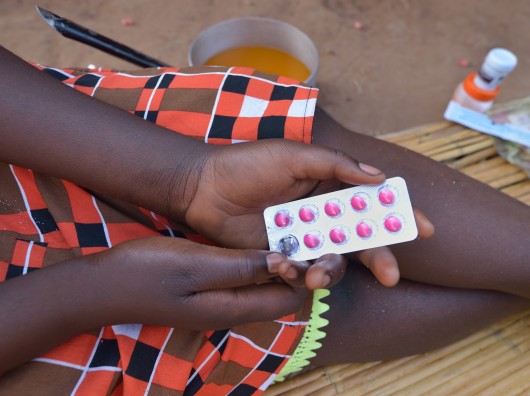
In many developing countries around the world, preventable, life-threatening diseases still ravage communities and affect significant numbers of people.
For countries like Kenya, diseases such as HIV/AIDS take precedence when it comes to allocating annual health budgets due to the vast majority of sufferers. According to the Thomas Reuters Foundation’s calculations, around 60% of Kenya’s annual $1.25 billion health budget goes towards the treatment of HIV/AIDS alone.
Despite generous funding from donors like the United States President’s Emergency Plan for AIDS Relief (PEPFAR) and the fact that HIV prevalence among adults has almost halved to 5.3% since the mid-1990s, HIV/AIDS remains the leading cause of death in Kenya.
With little to no symptoms experienced by HIV/AIDS victims, the progression of this incurable disease remains responsible for every 3 out of 10 deaths in this east African country. The government’s 2014 data reports that 1.6 million Kenyans are infected.
Although an alarming number of Kenyans suffer from HIV/AIDS, the government has recognized a disproportionate amount of aid and energy being focused on this one disease, which unfortunately means that those ailing from other diseases are being ignored.
This unequal distribution of funding and support means the current healthcare system in Kenya is unable to reach those living in slums and arid regions.
Now, Kenyan workers believe that reproductive illnesses should have been addressed alongside HIV/AIDS. Although the past cannot be altered, fortunately, change is in motion for the healthcare system in Kenya, which plans to eventually provide universal health coverage that is high quality and affordable.
“The new U.N. Sustainable Development Goals (SDGs), due to be agreed by world leaders later this month, seek to build on the Millennium Development Goals by reducing maternal mortality and ending the AIDS, tuberculosis and malaria epidemics by 2030,” states an article by the Thomas Reuters Foundation.
To reach these goals, a shift from investing in solely HIV/AIDS treatment must begin in order to benefit and strengthen the health system as a whole.
According to Peter Kimuu, head of the health ministry’s Directorate of Policy, Planning and Health Care Financing, complications such as corruption and inefficiency affect nearly half of Kenya’s health budget.
The World Health Organization (WHO) also estimates that 20% to 40% of global health budgets are wasted, which impacts the level of trust, making donors less likely to support the health sector.
These disparaging numbers reflect the need for leaders to change from a “revenue-agenda” focus to an “efficiency agenda” one.
The Thomas Reuters Foundation states that “Although maternity, under-five and emergency services are nominally free in Kenya, cash-strapped government facilities are overstretched, forcing patients to buy their own medicines.”
Consequently, the behavior of dissatisfied healthcare workers has resulted in the deaths of patients due to ongoing strikes by nurses not receiving their salary pay, which creates an environment of low morale and abuse within hospitals.
Plans to invest in Kenya’s healthcare system would require compulsory health insurance, “entitling Kenyans to a package of services from 4,000 public or 6,000 private health facilities,” Kimuu said.
This investment would benefit those seeking treatment and encourage better service because government medical centers would be paid by the number of patients treated.
At last, it is only through a shift in focus that the healthcare system can start its transformation, which will further the lives of many and ultimately enable Kenya to achieve the U.N.’s SDGs.
– Nikki Schaffer
Sources: Reuters, AIDS.gov
Photo: Rand

Rebuilding the Healthcare System in Kenya
In many developing countries around the world, preventable, life-threatening diseases still ravage communities and affect significant numbers of people.
For countries like Kenya, diseases such as HIV/AIDS take precedence when it comes to allocating annual health budgets due to the vast majority of sufferers. According to the Thomas Reuters Foundation’s calculations, around 60% of Kenya’s annual $1.25 billion health budget goes towards the treatment of HIV/AIDS alone.
Despite generous funding from donors like the United States President’s Emergency Plan for AIDS Relief (PEPFAR) and the fact that HIV prevalence among adults has almost halved to 5.3% since the mid-1990s, HIV/AIDS remains the leading cause of death in Kenya.
With little to no symptoms experienced by HIV/AIDS victims, the progression of this incurable disease remains responsible for every 3 out of 10 deaths in this east African country. The government’s 2014 data reports that 1.6 million Kenyans are infected.
Although an alarming number of Kenyans suffer from HIV/AIDS, the government has recognized a disproportionate amount of aid and energy being focused on this one disease, which unfortunately means that those ailing from other diseases are being ignored.
This unequal distribution of funding and support means the current healthcare system in Kenya is unable to reach those living in slums and arid regions.
Now, Kenyan workers believe that reproductive illnesses should have been addressed alongside HIV/AIDS. Although the past cannot be altered, fortunately, change is in motion for the healthcare system in Kenya, which plans to eventually provide universal health coverage that is high quality and affordable.
“The new U.N. Sustainable Development Goals (SDGs), due to be agreed by world leaders later this month, seek to build on the Millennium Development Goals by reducing maternal mortality and ending the AIDS, tuberculosis and malaria epidemics by 2030,” states an article by the Thomas Reuters Foundation.
To reach these goals, a shift from investing in solely HIV/AIDS treatment must begin in order to benefit and strengthen the health system as a whole.
According to Peter Kimuu, head of the health ministry’s Directorate of Policy, Planning and Health Care Financing, complications such as corruption and inefficiency affect nearly half of Kenya’s health budget.
The World Health Organization (WHO) also estimates that 20% to 40% of global health budgets are wasted, which impacts the level of trust, making donors less likely to support the health sector.
These disparaging numbers reflect the need for leaders to change from a “revenue-agenda” focus to an “efficiency agenda” one.
The Thomas Reuters Foundation states that “Although maternity, under-five and emergency services are nominally free in Kenya, cash-strapped government facilities are overstretched, forcing patients to buy their own medicines.”
Consequently, the behavior of dissatisfied healthcare workers has resulted in the deaths of patients due to ongoing strikes by nurses not receiving their salary pay, which creates an environment of low morale and abuse within hospitals.
Plans to invest in Kenya’s healthcare system would require compulsory health insurance, “entitling Kenyans to a package of services from 4,000 public or 6,000 private health facilities,” Kimuu said.
This investment would benefit those seeking treatment and encourage better service because government medical centers would be paid by the number of patients treated.
At last, it is only through a shift in focus that the healthcare system can start its transformation, which will further the lives of many and ultimately enable Kenya to achieve the U.N.’s SDGs.
– Nikki Schaffer
Sources: Reuters, AIDS.gov
Photo: Rand
Success for the FAO in Mozambique
In Mozambique, 95 percent of the country’s agricultural production comes from farmers owning small pieces of land. Previously these farms were for subsistence, but the recent U.N.’s Food and Agricultural Organization initiative has helped to improve post-harvest practices enabling farmers to sell their crops for profits.
Because the vast majority of farms in Mozambique are small-scale subsistence farms, the communities relying on them are more vulnerable to the shocks of events such as conflict and climatic change. In addition, because yields are low, these farms barely cover subsistence needs, let alone enable families to save any income for the future.
One-third of the Mozambique population is chronically food-insecure. Half a million children are reported as being undernourished and 43 percent of children under five are considered malnourished.
Issues contributing to the lack of food security in Mozambique include a lack of diet diversity, poor agricultural yields and high rates of HIV infection impacting worker productivity, thus affecting agricultural efficiency and production.
It should be no surprise then, that with the high levels of food insecurity and HIV infection in Mozambique, poverty is widespread. The country ranks 178 out of 187 on the UNDP Human Development Index. Mozambique is receiving significant amounts of aid from the U.N.; the country is also a U.N.
“Delivering as One” country, meaning that the country is part of a pilot initiative to improve the partnership between the U.N. and the national government.
As part of Mozambique’s Poverty Reduction Strategy, the country along with the U.N. are working to help farmers absorb less of a loss with regards to climatic shocks and protracted natural disasters.
One way to help farmers is to increase the length of time crops are able to be kept, eaten, and sold. The U.N.’s Food and Agricultural Organization (FAO) is teaching farmers how to store crops for maximum post-harvest storage. With the present technology, farmers lose an average of 30 percent of their harvest.
Currently, farmers sell the bulk of their crops immediately after the harvest. This is because farms in Mozambique often lack storage facilities to keep crops for a later sale, during which they could have a later price. By being able to control when crops are sold, farmers have greater potential to earn an income.
The FAO in Mozambique is teaching farmers about various post-harvest techniques; specifically, the FAO is training artisans in the construction of Gorongosa silos, which are durable, prevent crops from pests, and utilize locally developed technology. The Gorongosa silo is made from clay and mud. With proper care, it can last for twenty years.
This silo is a more valuable option than the traditional silos used in Mozambique, which offer little to no protection from pests or the elements. The Gorongosa silo keeps crops viable for ten months post-harvest, which gives more control to the farmers over their sales and reduces the need for chemical treatments.
This FAO initiative began in 2013 and intends to be a five-year project. Since its inception, 260 artisans have been trained in Gorongosa silo making in fifteen districts throughout Mozambique. Ultimately, the project hopes to train 20,000 farmers in the usage of Gorongosa silos and build 10,000 silos.
This initiative, in conjunction with other strategies to reduce HIV/AIDS in the region and promote economic growth, offers much to improve the livelihoods of those in Mozambique. With greater crop volume post-harvest, farmers can earn more of an income and reduce food insecurity for their families.
– Priscilla McCelvey
Sources: FAO, U.N., World Food Programme
Photo: Flickr
Opportunities Bloom for Women in Gaza
The United Nations Relief and Works Agency (UNRWA) Job Creation Program (JCP) gives women in Gaza the opportunity to work from 6:30 a.m. -12:30 p.m. on a carnation farm, which in turn, allows them to support their families.
A typical day begins with women picking flowers in the cool hours of the morning before later retreating into their tents. There, flowers are carefully bundled into decorative bouquets to be exported and sold at local Gaza markets.
According to an article in the UNRWA, 34-year-old worker Ghanda Na’ana’ has finally found a way to provide for her children in the absence of a husband through her employment with the farm.
“The chance to work here is life-saving for me. I am truly happy to be able to work on this farm together with other women. My husband left me three years ago for another woman; I am the only one who supports my children. We survive because of the food assistance we receive from UNRWA,” she says.
An overarching goal and initiative of the UNRWA JCP addresses the problem of female unemployment while also supporting the agricultural sector of the region.
The UNRWA aims to improve the “quality and output of production by increasing manpower to assist with planting, maintenance and harvesting crops while reducing labor costs, which presumably translates into a reduction of market costs for the consumer and ultimately contributes to local food security.”
According to the Palestinian Central Bureau of Statistics, in the first quarter of 2015, female unemployment in Gaza reached 55.2 percent. This can be attributed to the 2007 blockade which limited exports, obliterating trading opportunities with the rest of the world and severely affecting the agricultural sector of the region.
Raza Hijazi, the owner of the farm where Ghanda works, formerly employed 20 laborers before he was forced to reduce that number to only three. With the 2007 blockade, his business opportunities dwindled as he could no longer export his flowers to Europe. Only with support from the UNRWA, was he able to increase his business and number of employees.
Overall, the JCP has significantly improved the livelihoods for many since its inception in 2006 when 18,385 opportunities were created in the agricultural sector alone (6,350 for female and 12,035 male). Of this number, 2,571 were counted for in the carnation sector.
As of 2014 the UNRWA has calculated that “a total of 20,545 refugees were employed through the JCP, and UNRWA injected US$ 18.1 million into the Gaza economy. In the first quarter of 2015, the Agency created 12,646 JCP opportunities and injected US$ 7 million into the Gaza economy.”
With tremendous efforts currently underway by UNRWA’S JCP, hope is alive for both business owners and women seeking jobs in a country with one of the highest levels of unemployment in the world.
– Nikki Schaffer
Sources: UNRWA, Reuters
Photo: alarabiya
The Secret of Sari Cloth
Water filtration is no doubt important; clean water is a basic necessity of human life used for drinking, cooking and cleaning. Many diseases are directly caused by unclean water. One such disease is cholera, which researchers have estimated is responsible for up to 142,000 deaths every year.
However, an unexpected water filtration technique has been shown to reduce the incidence of cholera in parts of Bangladesh by up to 48%. Also, the technique does not require expensive technology or devices, but actually uses an already available and widely popular material.
Saris are the traditional garments that are worn by many females in much of South-East Asia, including India. The sari cloth, when folded several times, acts as a filtration system that catches impurities and bacilli, making even water collected from streams or canals safe to consume.
The technique was introduced in several Indian villages by researchers from the University of Maryland in 2003. They noticed that many women in Indian villages would filter water in their homes with a thin, single layer of cloth. While this would strain out larger, visible particles, the material’s pores were not thick enough to remove unseen particles or plankton.
https://www.youtube.com/watch?v=NB_HQBgIP0Y
Five years after the initial study, researchers returned to investigate how effective the method was and if people were still using it. What they found was fairly surprising. Out of the more than 7,000 village women from the original trail, only 31% of them continued to filter their water in some way. Of this 31%, 60% used the sari method.
Considering the low percentage of villagers who continued to use the practice, the reduction of cholera incidences by 25% was still impressive. However, they could have been higher if more people chose to filter their drinking water.
Furthermore, the researchers found that 25% of neighboring households that did not receive the filtering instruction during the first study had begun using it, demonstrating that community members shared the knowledge they received and trickled down the benefits of this simple, yet effective technique.
While the sari filtration method is not perfect, it does make water considerably safer for consumption rather than leaving it entirely unfiltered. With this cost effective, reasonably successful solution known and available, it seems that the final obstacle is spreading, encouraging and maintaining the practice within communities.
– Brittney Dimond
Sources: The Hummingbird Project, mBio, NY Times, WHO
Photo: Wikimedia
Healthabitat: Helping Disadvantaged People Worldwide
Operating in countries all over the world including Nepal, the United States and Bangladesh, Healthabitat’s goal is to make the world a healthier, cleaner place for everyone. Their projects focus on improving sanitation, helping people gain access to clean water and providing housing for those in need.
Healthabitat was formed in 1985 when the directors came together to improve the health environment in the Anangu Pitjantjatjara lands of northwest South Australia. Since then, Healthabitat has expanded out of Australia to help disadvantaged people all around the world.
When it was formed in 1985, the directors of Healthabitat put together a list of nine steps to healthy living, which has been used as a guideline for their practices ever since.
These steps ensure that people not only improve their sanitation and living conditions but that they are provided with adequate housing to help decrease mortality rates, particularly among children under the age of 5.
The members of Healthabitat follow a constrained methodology aimed at improving the lives of all involved. This methodology is then improved to accommodate for changes in lifestyles. Data is collected to monitor improvements and is used to better designs.
They then do applied research and develop projects based on the results. Their projects typically involve the help of indigenous people, with 75% of all volunteers coming from their respective local communities. Lastly, the methodology is staged and developed.
In addition to these practices, Healthabitat also works on health hardware for disadvantaged people. This includes a water supply, pumps, tanks, pipes, valves, taps, hot water system, tub and drainage pipes.
The overall goal of Healthabitat is to decrease the number of sick people in the world. The three partners, Paul Pholeros, Dr. Paul Torzillo and Stephan Rainow, along with the guidance of Yami Lester, former director of the controlled health service, Nganampa Health Council, put their minds together to make it all happen.
Healthabitat continues to help people all over the world. Right now, a project they are focusing on is providing the victims of the Nepal earthquake with toilets and housing, while continuing to work in South Australia and the surrounding areas.
– Julia Hettiger
Sources: Health Habitat, Top Masters in Healthcare, World Habitat Awards
Photo: cusphabitat
Expanding Universal Health Care in Asia
Universal health care (UHC) is not easy to measure. It is a set of defined protocols that are usually recognized when a combination of population coverage, services and financial protection work together to provide for people.
With China rapidly increasing its coverage since 2009, data shows that Southeast Asia contains more people without coverage than any other region survey by the World Health Organization (WHO).
For example, India currently has 40 million pushed into poverty each year due to health care costs. Hospitals in the country are known to simply not give health to those in need unless payment is made up front. In Indonesia, only 0.9 percent of the GDP is used to finance the public health sector.
Furthermore, only people pre-identified as being poor are entitled to be covered. This has left millions of people impoverished each year because they just aren’t able to afford adequate coverage and don’t qualify for universal health care for expensive treatments.
However, coverage varies depending on the nation. South Asia has some of the most celebrated examples of countries that have worked hard to achieve UHC. Bangladesh and Nepal have received international recognition for their expansion of coverage of cost-effective health services.
Another country that has offered universal health care in Asia is Thailand, where health care coverage has taken the name of a program called Universal Coverage Scheme. The plan was introduced in 2002 by pressure from civil society and is financed solely from general tax revenue.
The scheme covers 74.6 percent of the population as of 2007 estimates. The benefits package is a comprehensive package of care, including both curative and preventive care. Public hospitals are the main providers, covering more than 95 percent of the insured. About 60 private hospitals joined the system and register around 4 percent of the beneficiaries.
A large factor of success seems to be based on the level of government spending. The better-off countries have seen their governments’ increase in public financing to fund services for previously uncovered groups. These governments have also increased awareness among citizens and have encouraged their people to use the facilities because they are in adequate condition.
For the five top countries in Southeast Asia, government spending has only averaged to 2.9 percent of the GDP. For nations that are trying to build their educational institutions and economy, healthy workers are necessary.
The United States and other wealthy nations must continue to support Southeast Asia through education and funded public health works projects. Many developed nations will be able to import American goods once their people have a healthy standard of living.
– Adnan Khalid
Sources: Health Market Innovations, WHO, The World Bank
Photo: Pixabay
Bayern Munich Donates $1 Million to Refugees
The 2013 UEFA Champions League winner, FC Bayern Munich, is donating $1.11 million to refugees in Germany who arrived via Hungary and Austria. There is a training camp set up to supply food and enroll refugees in German classes. Bayern Munich will also donate soccer equipment to the incoming refugees.
Germany has taken 20,000 refugees in Munich alone and plans on taking 800,000 asylum seekers before the year is over. In 2014, the entire European Union took 626,000 refugees.
There are many aspects about Germany that makes it attractive for refugees. Germany has the strongest economy in Europe and is one of the safest countries in the world. Refugees in Germany get to enjoy a strong human rights record and free education for their children.
The police force in Germany asked Germans to stop donating items for the incoming refugees because the volume of aid they were taking in became overwhelming.
Germany estimates that each refugee costs about $14,500, which means 800,000 refugees will cost $11 billion this year. There will be $6.7 billion set aside in 2016 for refugees agreed to by the government.
Bayern Munich’s example is just a small package of what Germany is offering to refugees. The entire community has been involved in aiding refugees. Industries are going to provide job opportunities for refugees in Germany and there will be recruitment at refugee centers.
On September 12, Bayern Munich walked out with one German child and one refugee child to symbolize integration and to encourage Germany.
– Donald Gering
Sources: Al Jazeera 1, Al Jazeera 2, The Guardian, The Independent, UNHCR
Photo: PBS
Fighting for Yemeni Children: More Aid Needed
The civil war in Yemen has led to the deaths and injuries of over 1,000 children, and 4,300 total deaths, according to Save The Children. The crisis is worsening as the number of recruits to join the fighting has increased to 377 this year from 156 last year, according to Children Under Threat.
Just as concerning is the inadequate amount of humanitarian aid that is being sent to the country. Only 18 percent of the funding needed to address immediate needs has been received.
Stephen O’Brien, UN under-secretary-general for humanitarian affairs had to persuade the UN Security Council to increase aid. O’Brien saw first-hand that 4 out of 5 Yemenis need aid, while 1.5 million are internally displaced.
According to the World Food Program about 13 million, or half of the population is going hungry and 6 million face starvation.
The conflict is preventing the importation of food and other aid. The conflict has also led to the doubling of gas prices, a resource needed for cooking.
On top of the malnutrition among 2 million people, over 2.5 million Yemeni children under age 15 are at risk of contracting measles, which would be 1 million more than 2014.
The months of ongoing conflict is between Houthi rebels, backed by Iran, and forces loyal to exiled government, backed by Saudi Arabia. O’Brien has called for the international community to get the opposing parties to negotiate.
– Paula Acevedo
Sources: ABC, Thomson Reuters Foundation
Photo: Huffington Post
New Horticultural System Improves Harvests in Balkh Province
As Afghanistan struggles to build a secure economic infrastructure after decades of war, producers of agricultural products are among those gaining traction. A program called the National Horticulture and Livestock Project (NHLP) has successfully promoted the adoption of improved production practices among farmers growing produce in the Balkh Province.
“We have built the capacity of local farmers to enable them to use the modern horticulture system even without our assistance in the future,” said Mohammad Ghaos Langary, NHLP provincial project coordinator in the Balkh Province. NHLP is supported by the Afghanistan Reconstruction Trust Fund (ARTF), which is financed by 34 donors and administered by the World Bank.
Agriculture is essential to the growth and prosperity of developing countries and is the main source of income for people in living in poverty worldwide. In Balkh Province, NHLP introduced a new horticultural trellis system to help solve the problem of insufficient space for vines and to improve harvests.
The new system factors in the local natural conditions, such as the type of soil, local area climate, regular irrigation system and other crucial conditions for agriculture. Under the new system, farmers are learning to use fertilizers, prune, weed and irrigate their orchards appropriately, which improves their harvests.
“For the first time, our grapevines have grown so well. It makes me very happy to see that our hard work is paying off,” said Allah Mohammad, a 45-year-old farmer who has worked in horticulture and agriculture for 20 years. “In the past, our vineyard was not producing higher and quality yield because of the traditional systems we would apply. Those problems are gone now, thanks to the new trellis system.”
NHLP has been operating in northern Balkh since 2008 and with the help of local farmers has turned around 1,290 hectares of land into orchards there. Besides grapevines, the orchards also grow various trees, such as apple, pomegranate, pear, cherry, almond, plum, and apricot. With the goals of increased production of horticultural products and improved animal production and health, NHLP currently has activities in 120 districts in 23 target provinces.
“With NHLP support, farmers can now easily sell their products in the market,” says Ahmad Fahim Jabbari, NHLP coordinator in northern Afghanistan. “Many farmers who were not interested in horticulture before are now applying to enroll for support so that they can modify their orchards based on the standards and guidelines provided by NHLP.”
- Shengyu Wang
Sources: The World Bank, ResearchGate
Photo: borgenproject
German Organization Connects Individuals with Refugees
Today in Germany hundreds of thousands of refugees arrive each year, looking for asylum and safety. Many are from primarily Islamic nations.
The massive influx of people has strained local officials— finding adequate housing for everyone is a challenge.
Many cities have put massive amounts of refugees in old schools or re-purposed shipping containers. Often, the refugees are not welcome in their new neighborhoods due to religious tension. According to National Public Radio, “The western German city of Schwerte even proposed placing 21 refugees in a barracks on the grounds of a Nazi-era concentration camp.”
Berlin Residents Mareike Geiling and Jonas Kakoschke believe that refugees deserve a more humane treatment than mass, impersonal accommodations. This prompted them to create the organization Refugees Welcome— a website that matches refugees looking for asylum with people in Germany and Austria willing to open their homes to these people in need.
“We don’t like the idea of putting these people into one place where many, many people live,” explained Geiling to NPR.
“Many asylum-seekers have to stay there for years … doing nothing, because they are not allowed to do anything. They are not allowed to work, they are not allowed to have German classes sometimes and sometimes it’s not a city, it’s a village and there’s nothing to do and so you get depressed after years and stuff like this,” said Kakoschke.
Kakoschke and Geiling are a couple living in Berlin, and they were the first to open their doors to a refugee in need. The couple matched with a thirty-nine year old Muslim man from Mali, who had recently applied for asylum and is waiting for a working permit. For this reason, Kakoschke and Geiling raise money to cover their new roommates cost of rent and utilities.
NPR reports that the Malian man is afraid to give his name for safety reasons, but said “It surprised me a lot because … the people here don’t want to see people like us in their land.”
Before Kakoschke and Geiling opened their doors to him, the roommate was homeless. “Sometimes I’d take the bus from different sector to different sector at nighttime until, you know, 2:30” in the morning, he says. Then he’d “get out and sleep for 20 minutes and go back on the train again sometimes and go back in the mosque and pray there for 30 minutes and sleep there for one hour.”
Refugees Welcome has been very successful so far on a small scale. The website has matched 122 refugees to welcoming German and Austrian flatmates.
Refugees Welcome reports, “Through Refugees Welcome people have moved in to 80 homes in Augsburg, Berlin, Bonn, Darmstadt, Dortmund, Dresden, Frankfurt, Hamburg, Hanover, Konstanz, Leipzig, Marburg, Munich, Munster, Norderstedt, Offenburg and Wolfratshausen. Through Refugees Welcome Austria (our Austrian sister-organisation) people have moved in to 44 places in Eisenstadt, Knittelfeld, Salzburg and Vienna. The new flatmates are from Afghanistan, Algeria, Bangladesh, Burkina Faso, Cameroon, Gambia, Ghana, Kenya, Liberia, Mali, Niger, Nigeria, Iraq, Iran, Pakistan, Russia, Senegal, Somalia, Sri Lanka, Syria and Tunisia.”
– Aaron Andree
Sources: NPR, Refugees-Welcome
Photo: thegaurdian